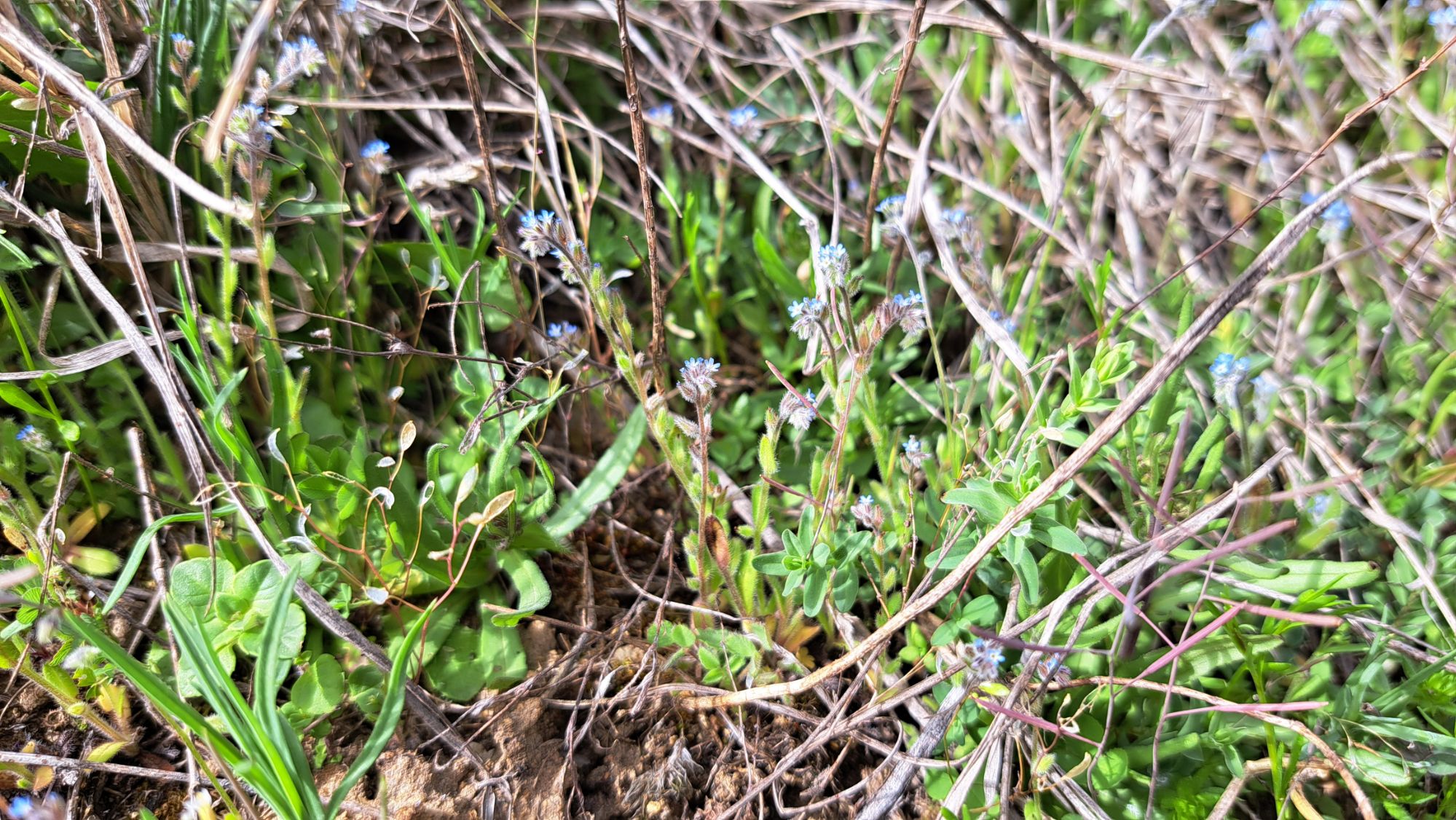
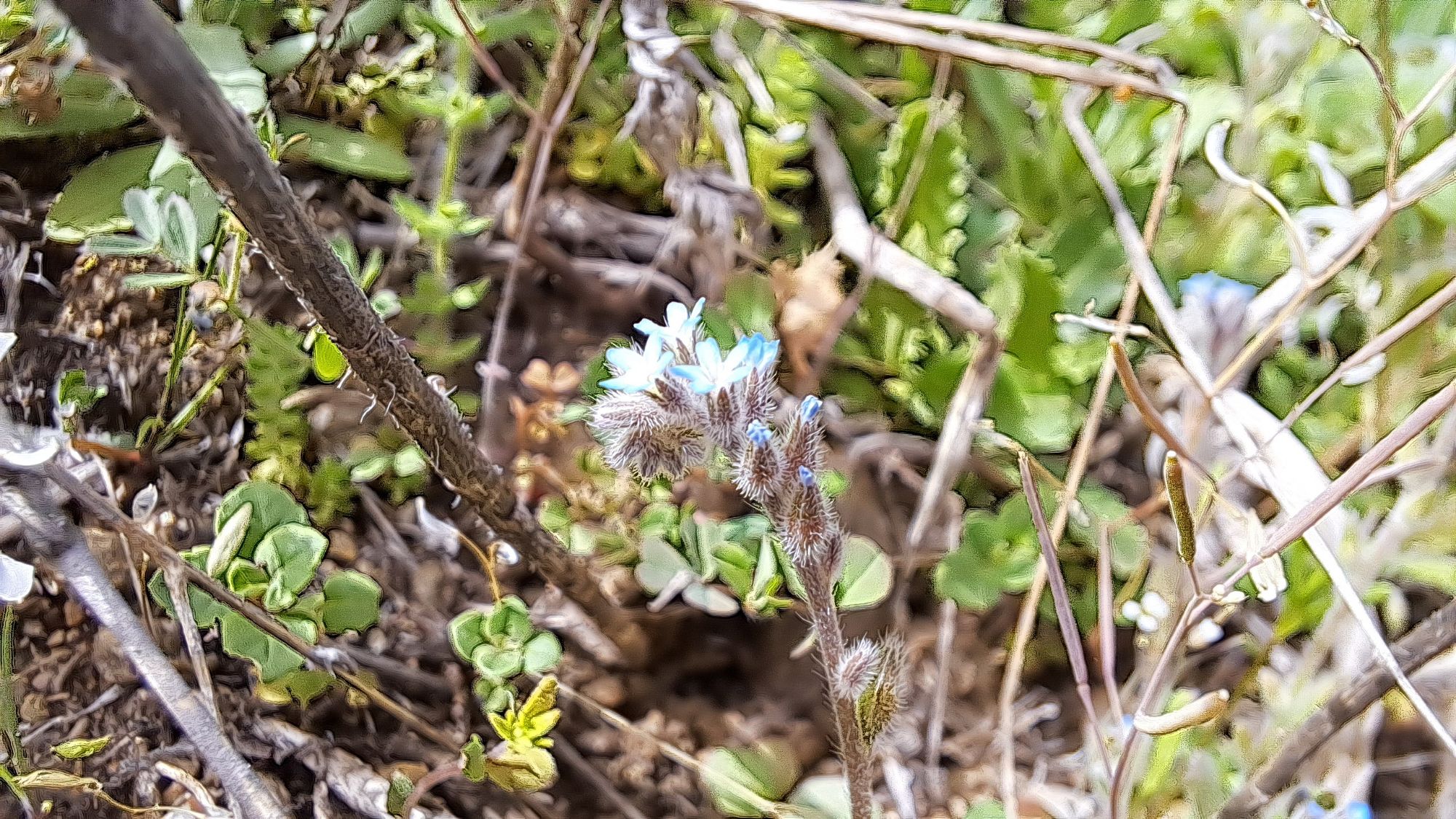
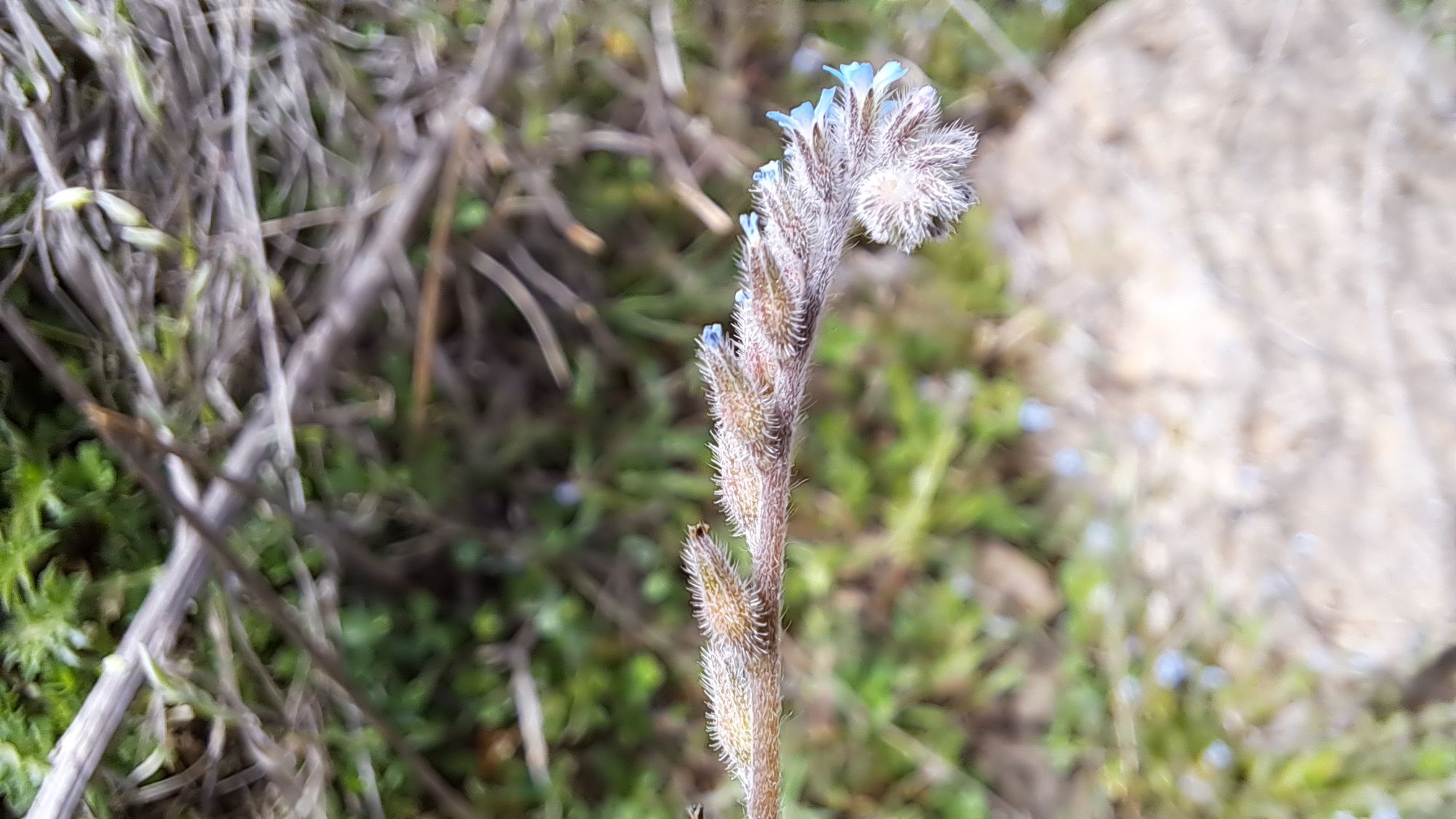
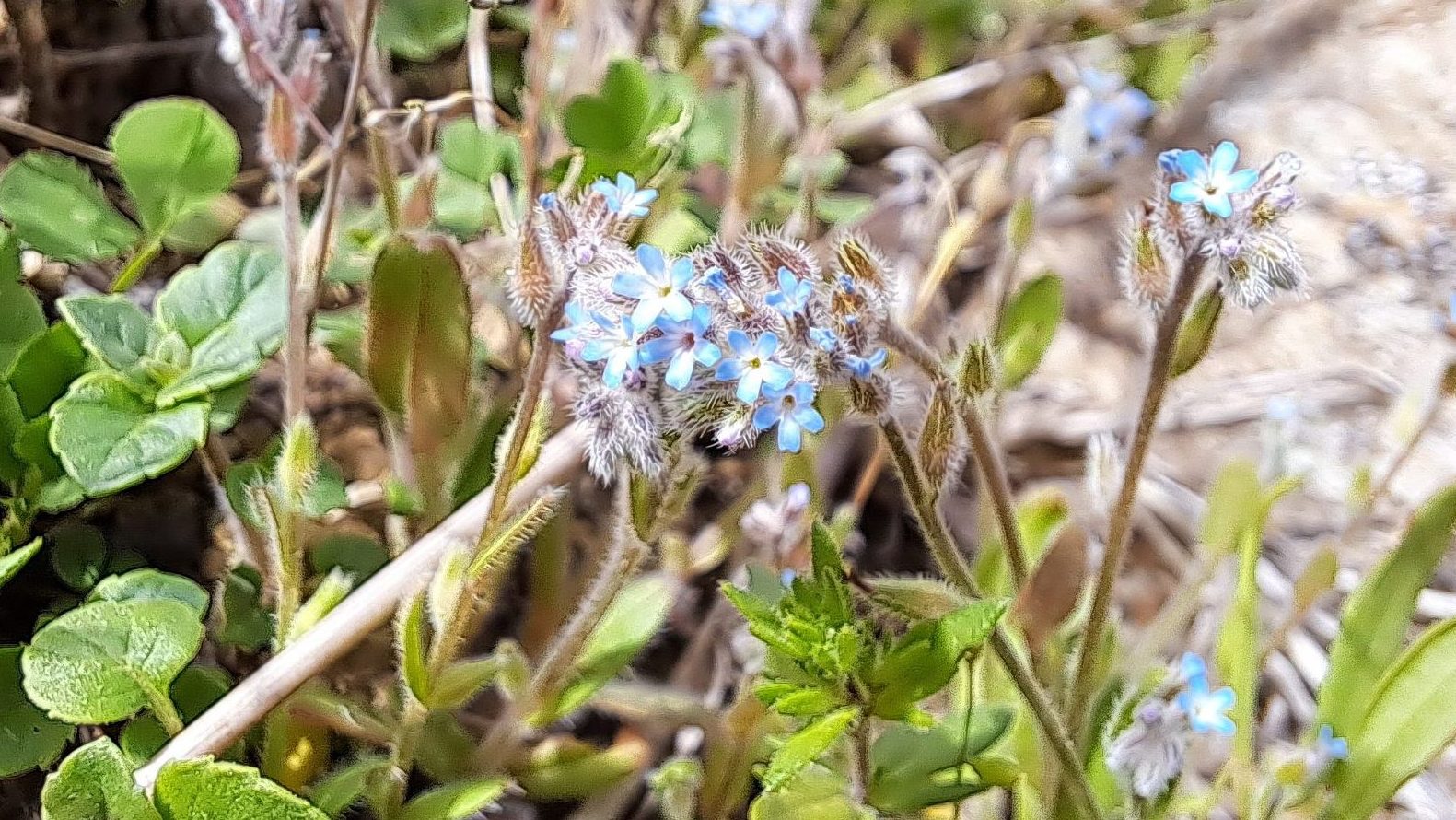
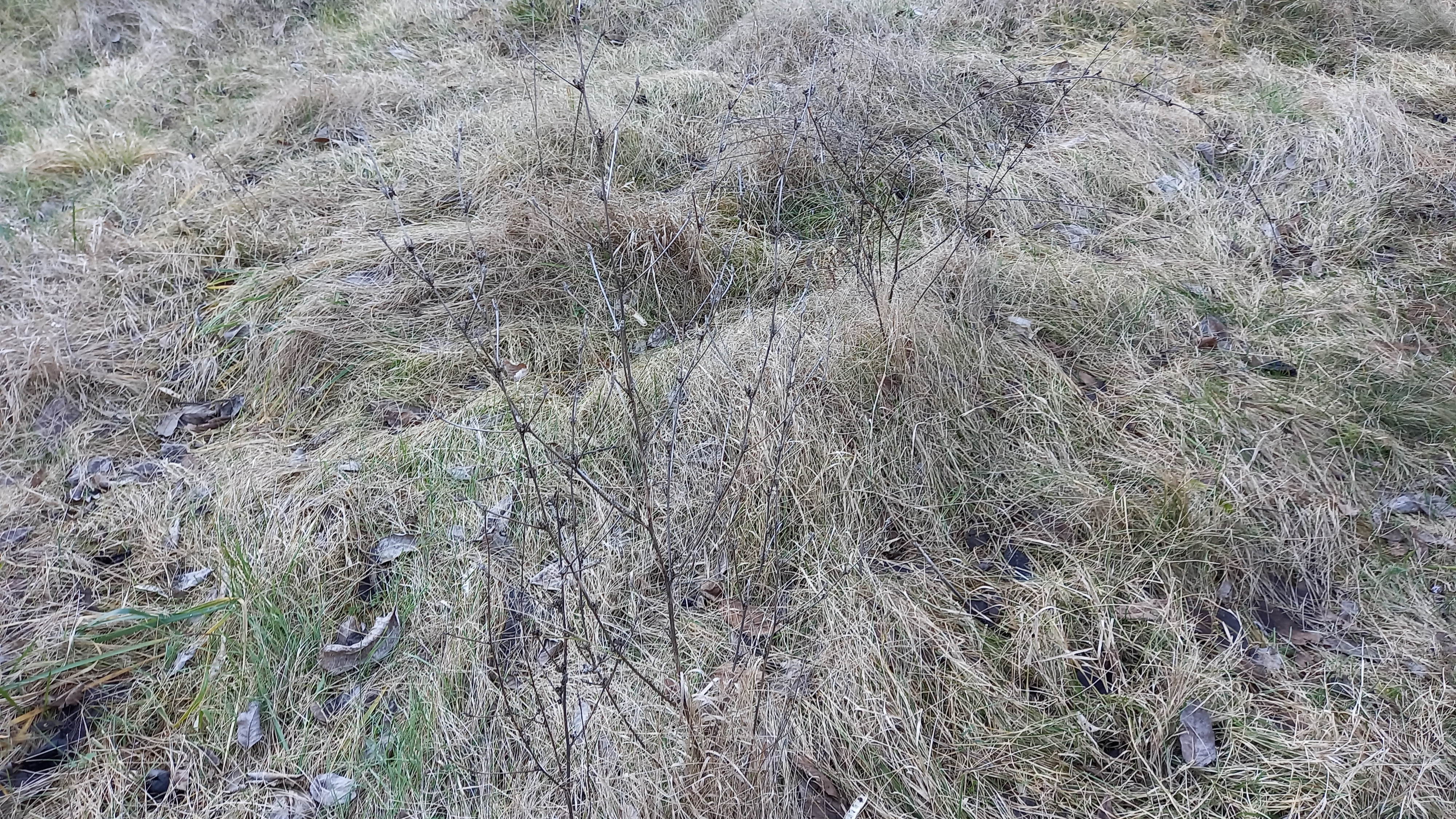
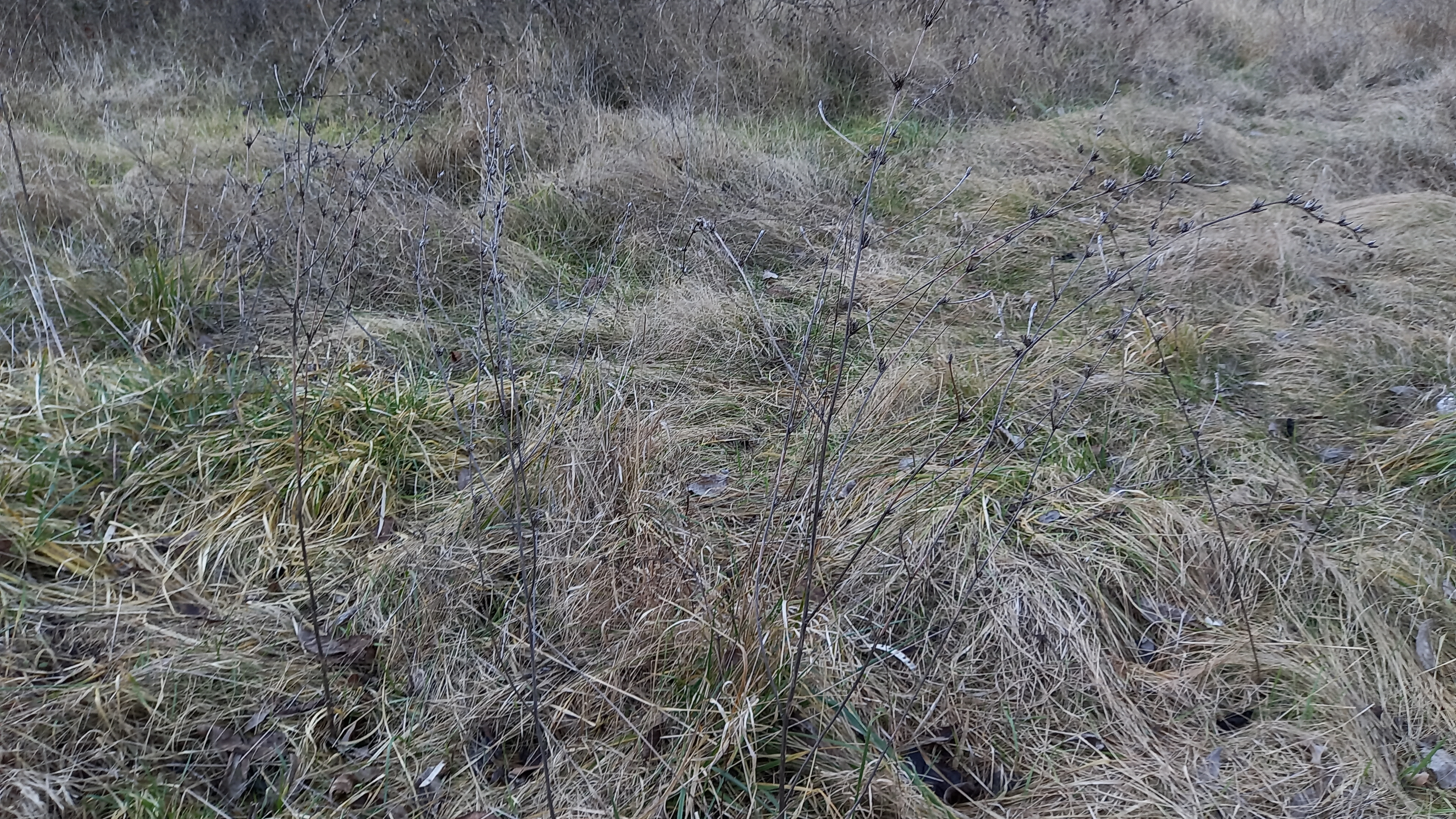
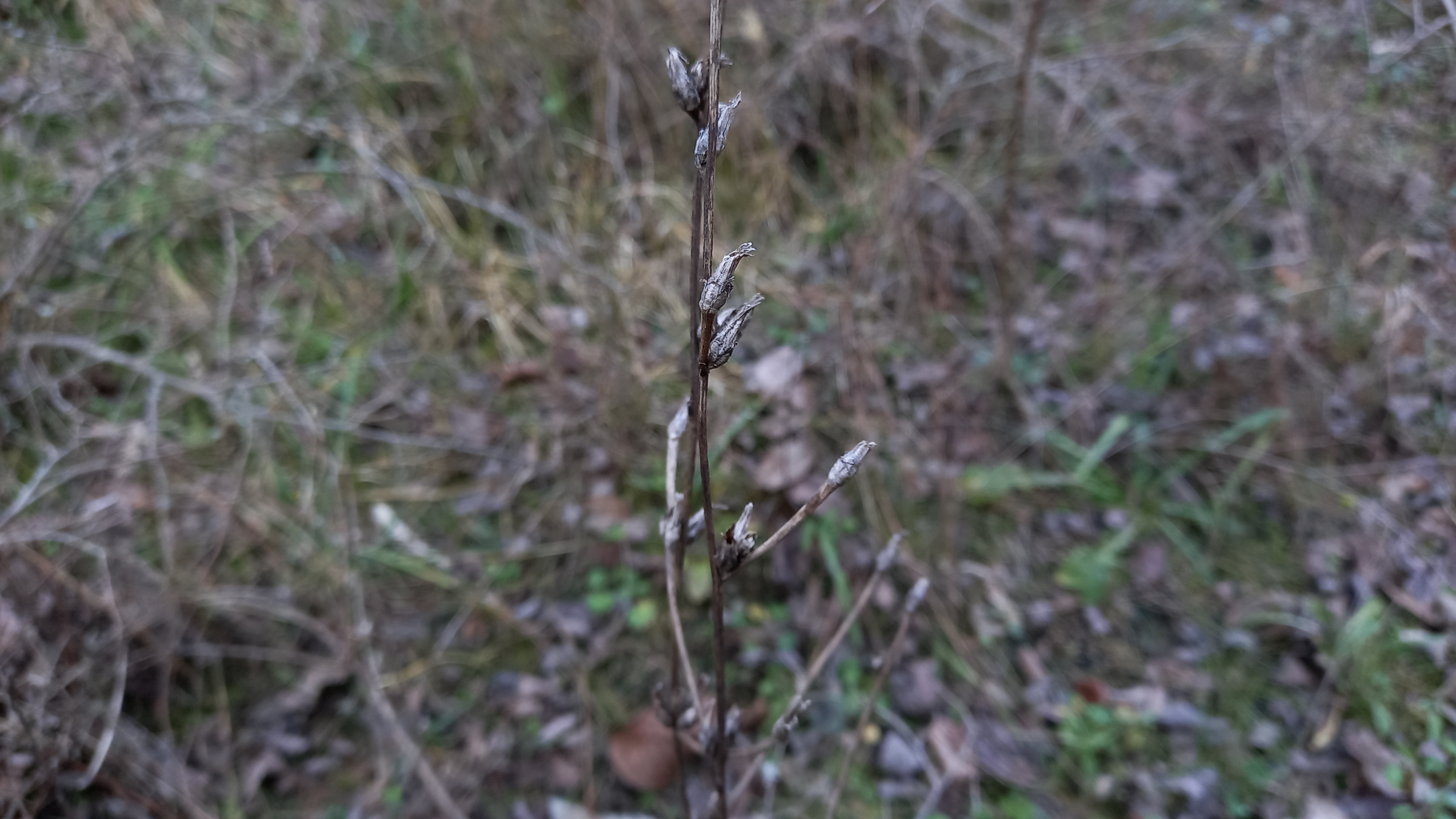
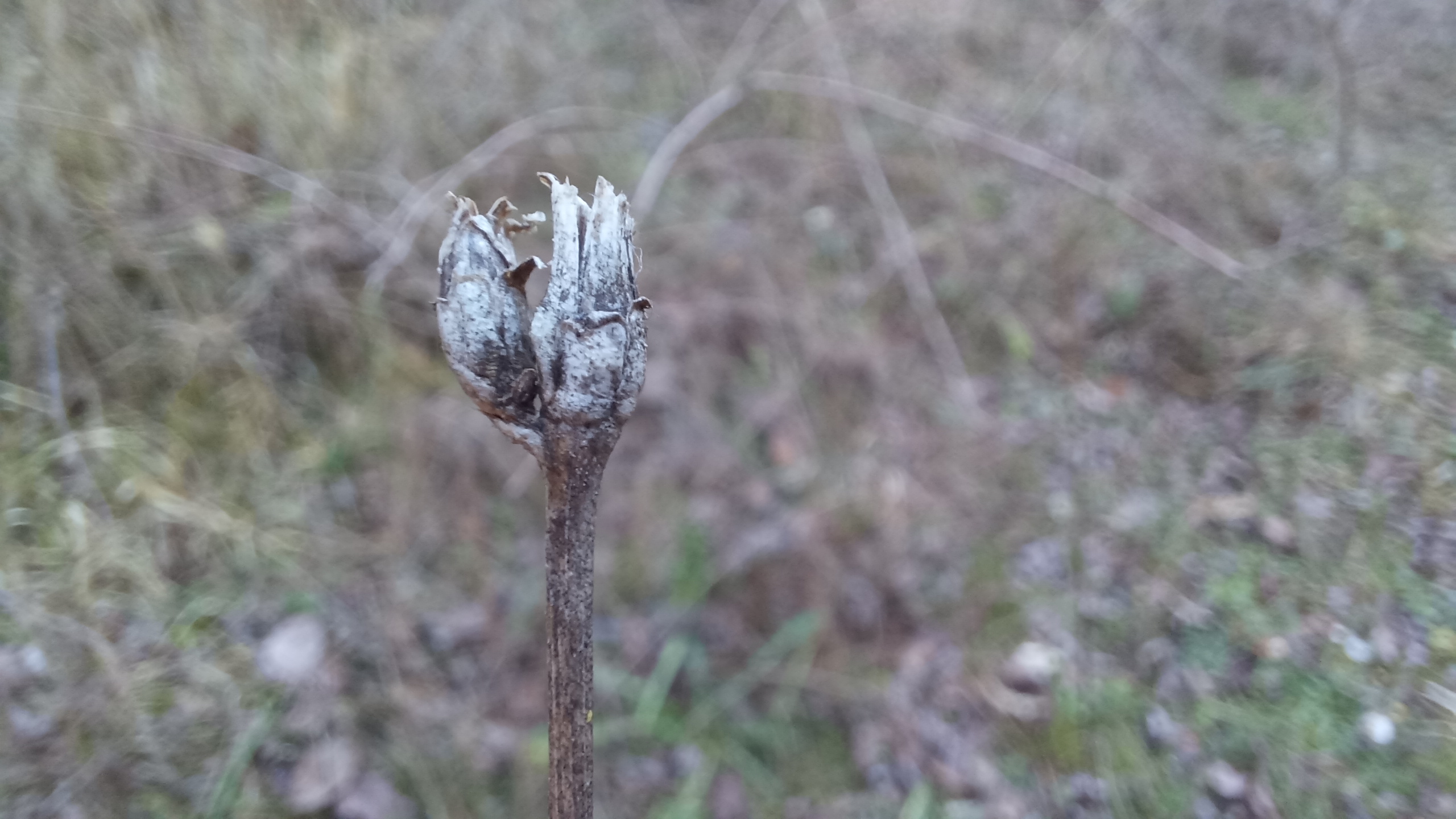
Determined according to the botanical key provided by Matevski and Melovski in Matevski (2010).
Lifeform: Annual; Therophyte according to the Raunkiær system.
Distribution: Native from Europe to Central Siberia, Mongolia, West Himalaya and Iran; Northwest Africa according to the distribution information provided by the Plants of the World Online portal (Royal Botanic Gardens, Kew).
Habitat: Open habitats- dry grasslands, pastures, rocky terrains.
Flowering period: Spring: MAR, APR, MAY.
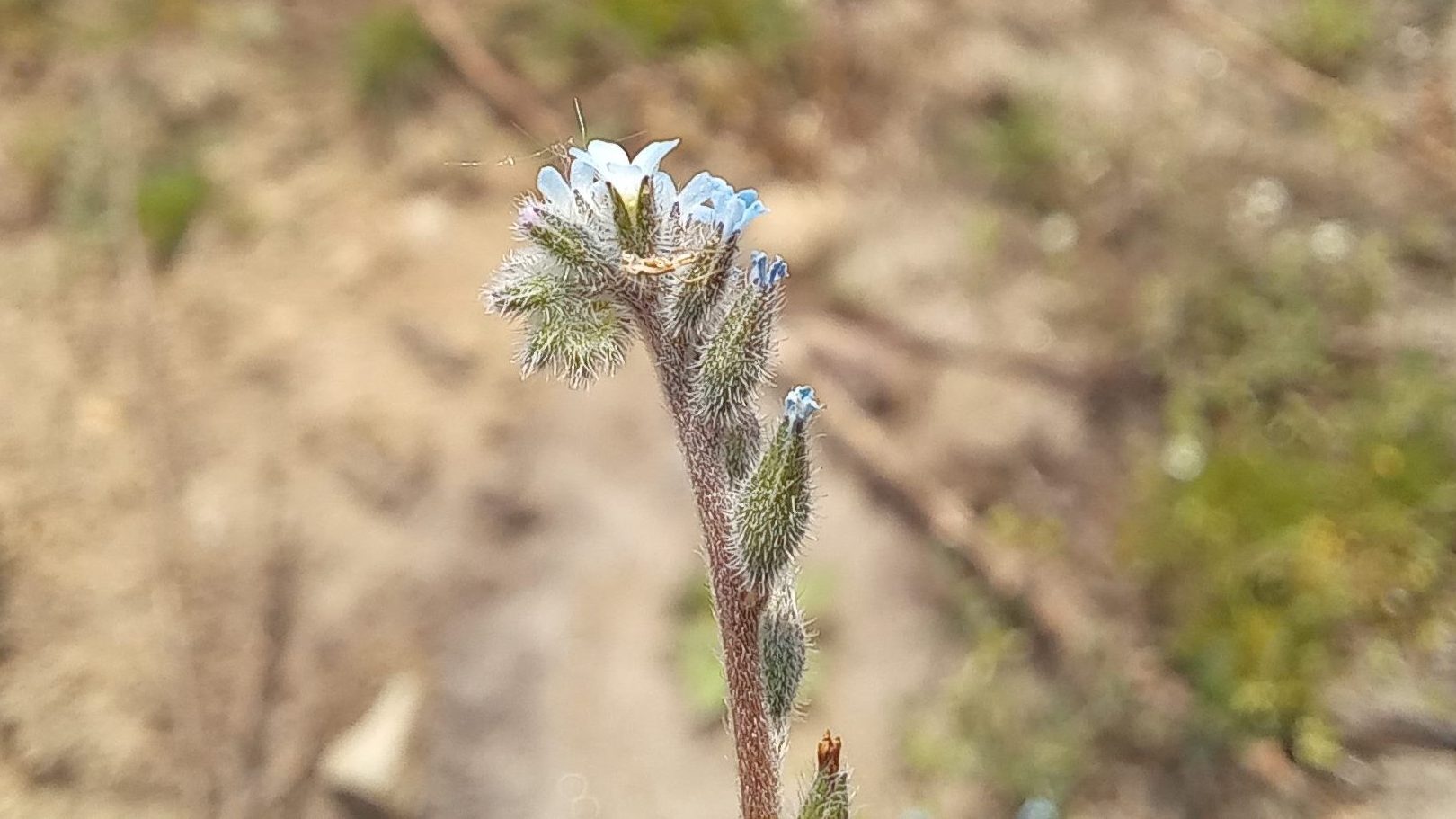
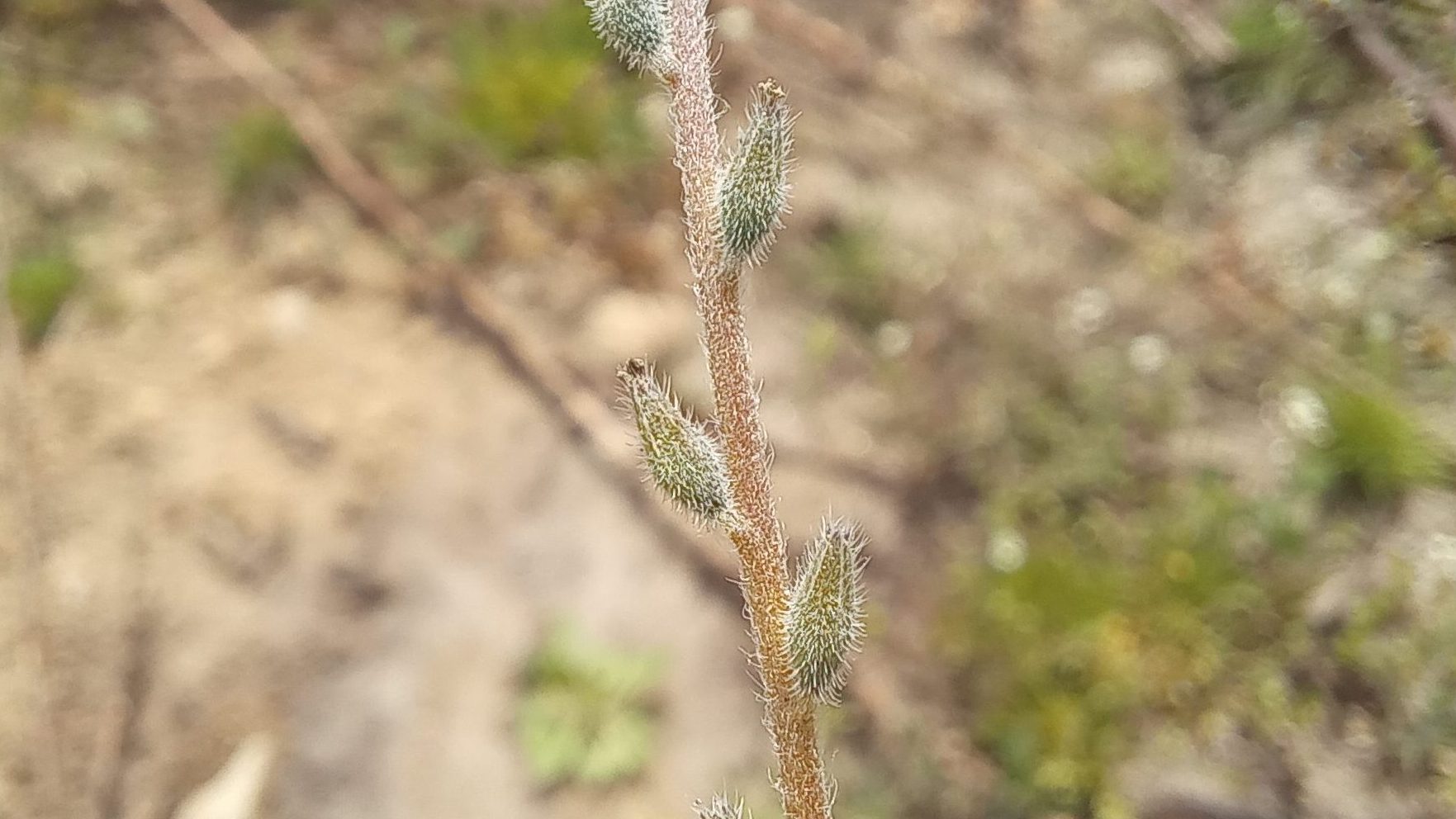
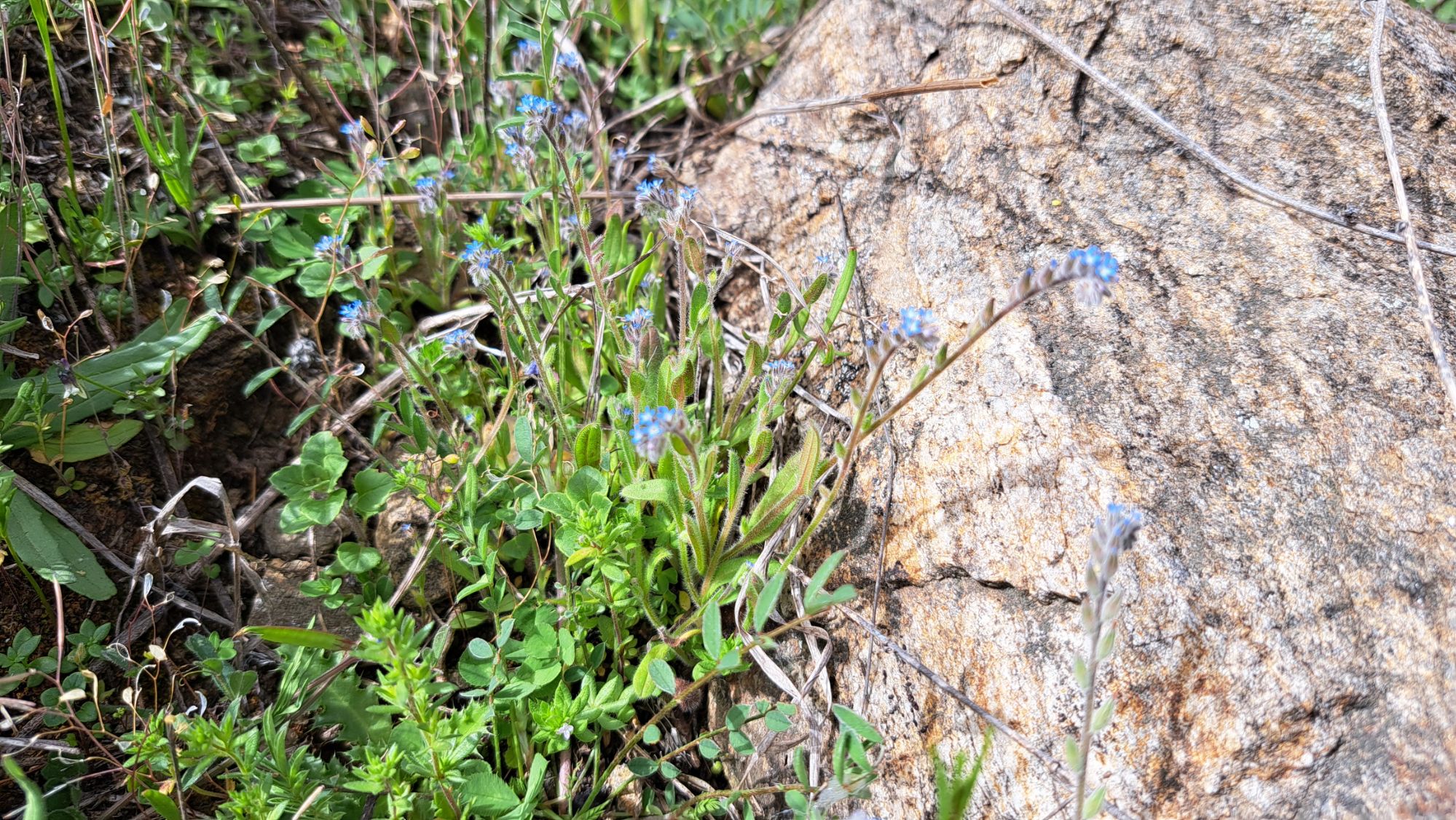
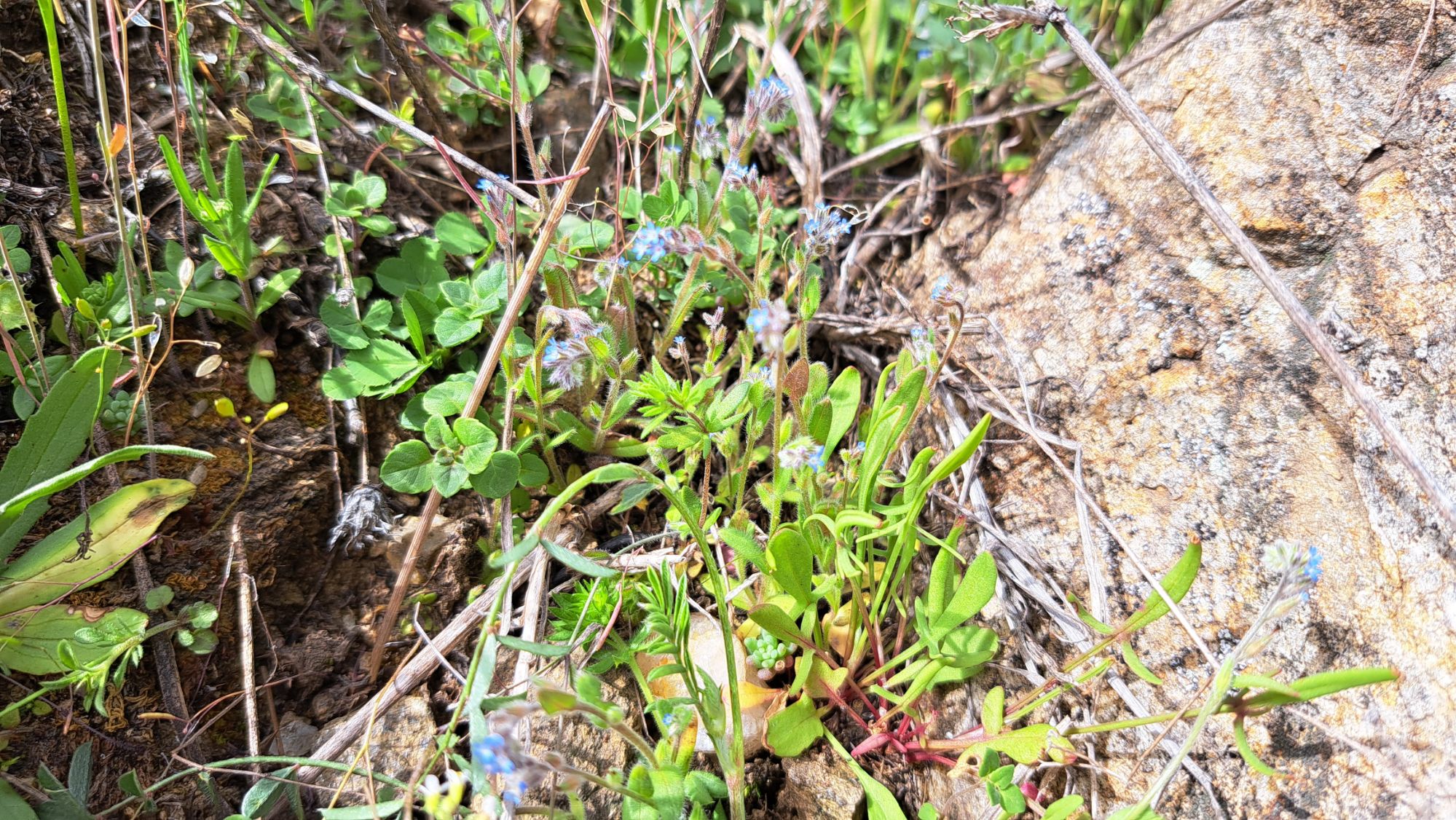
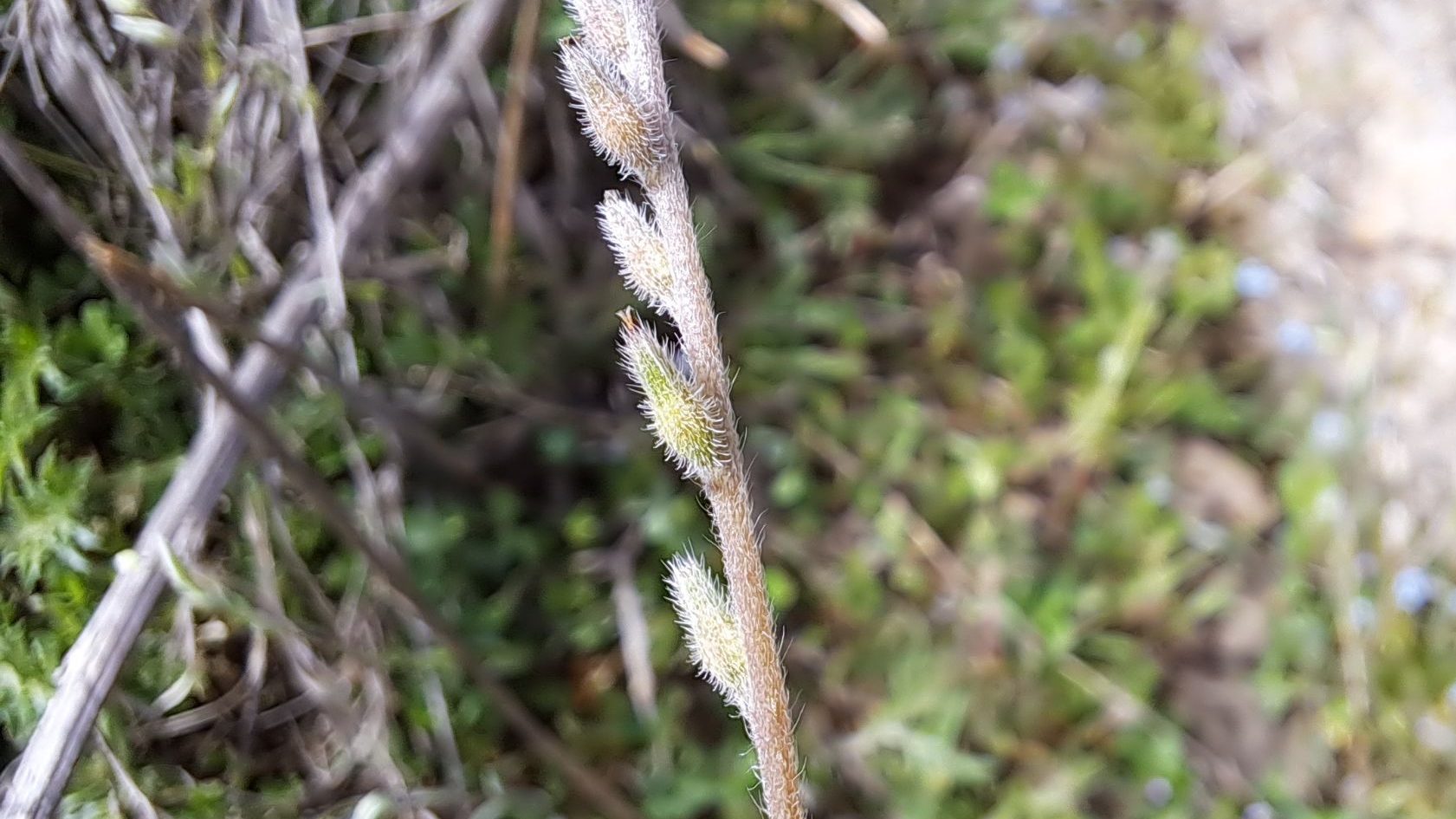
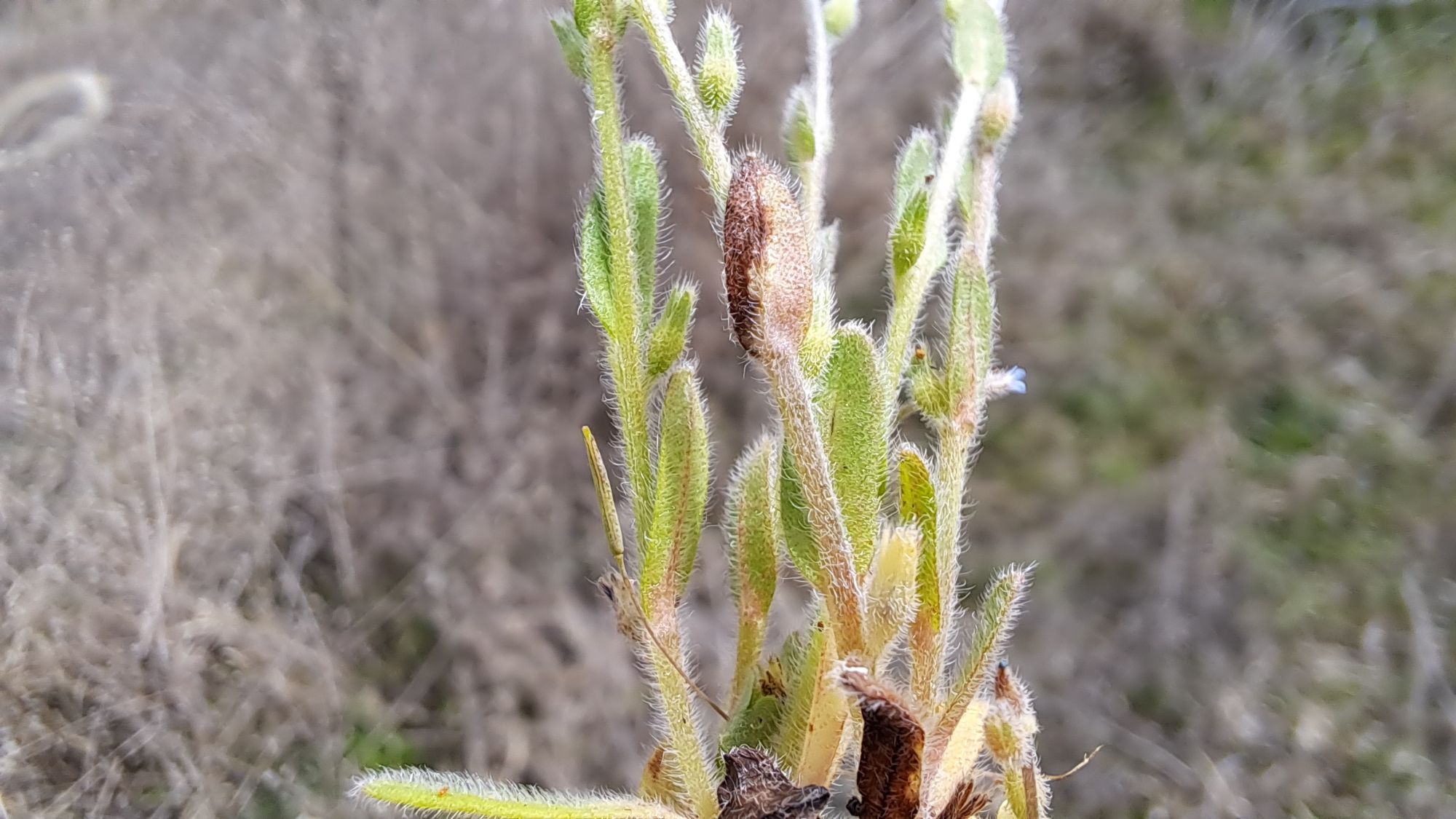
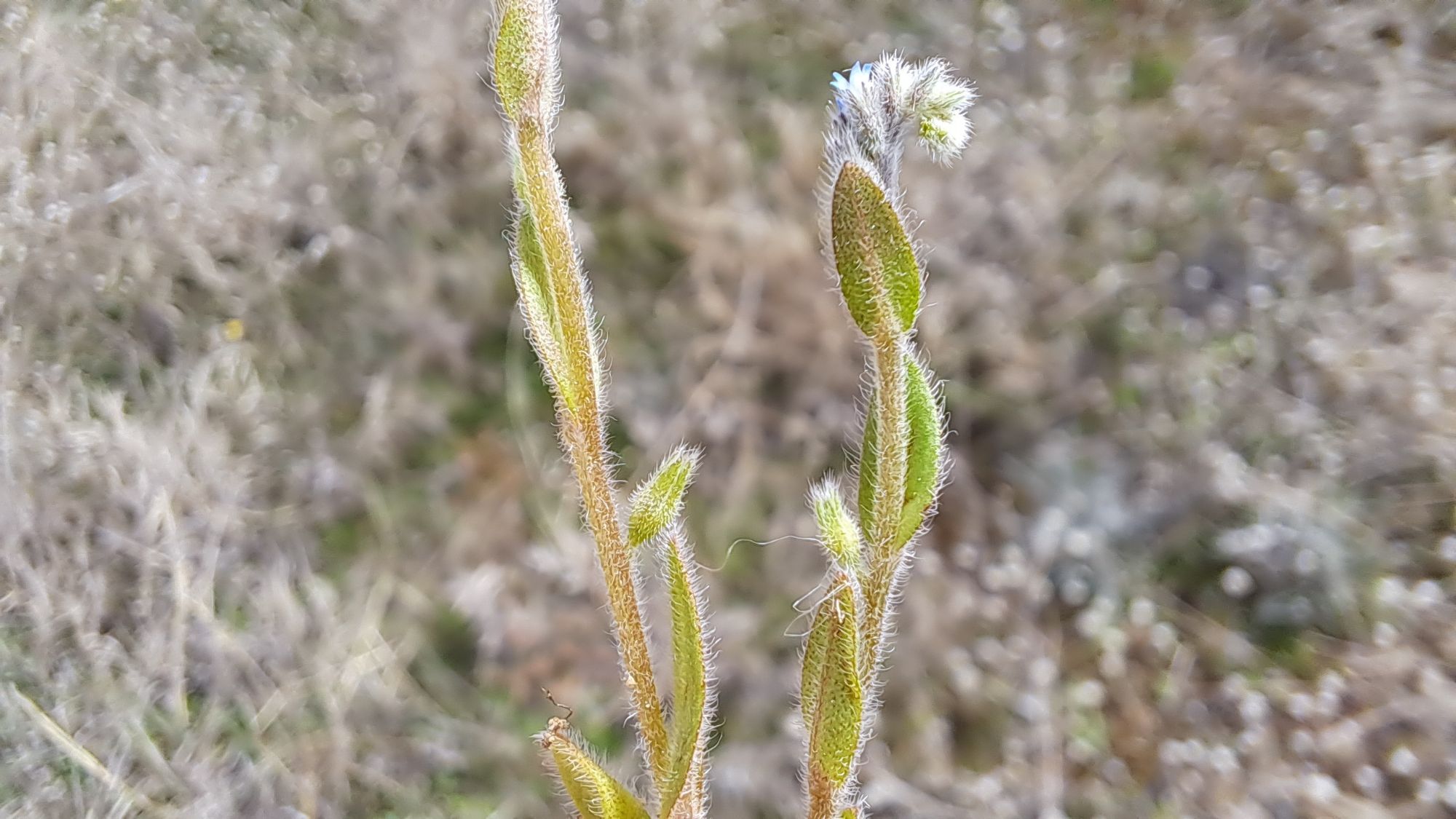
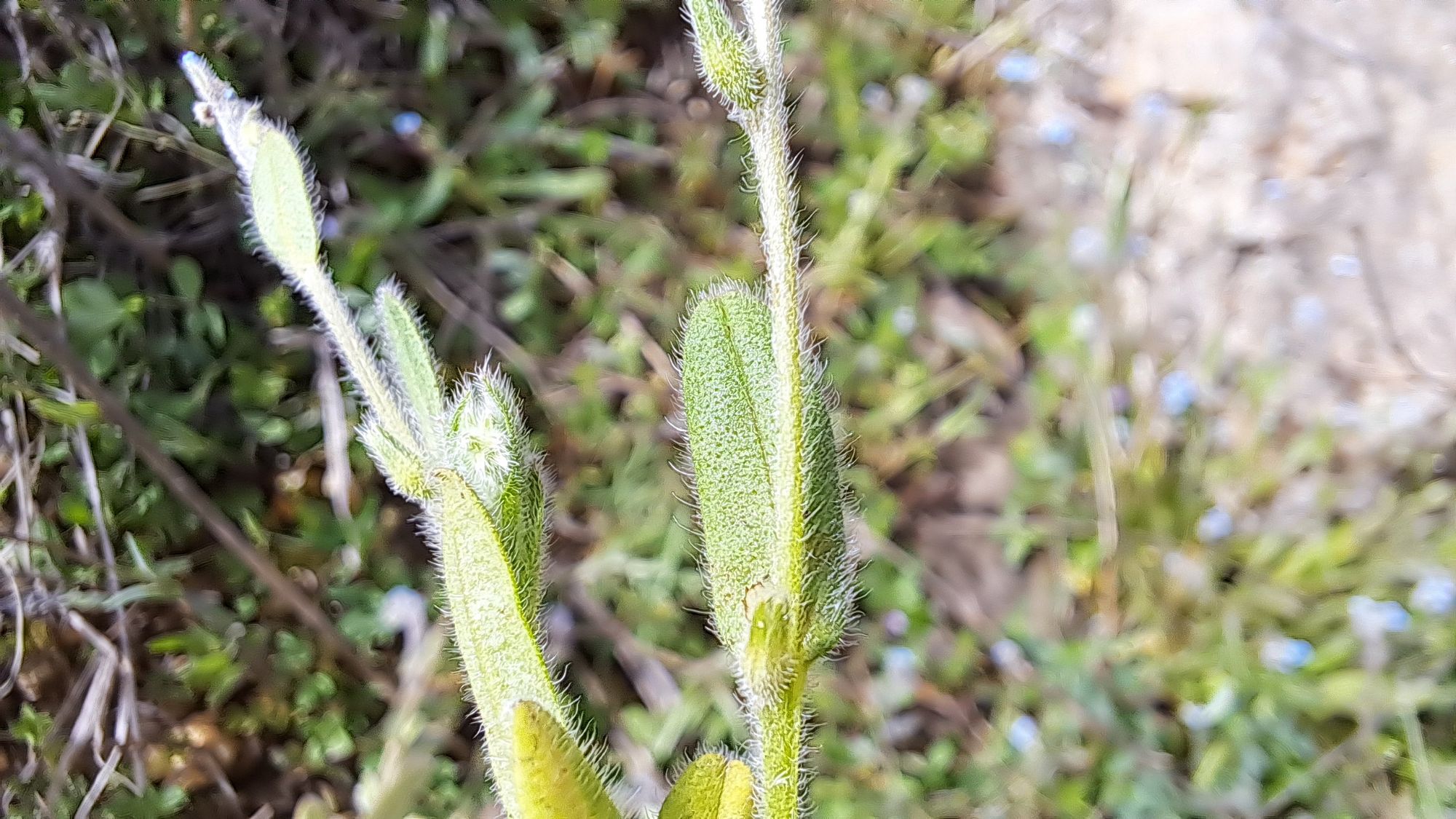
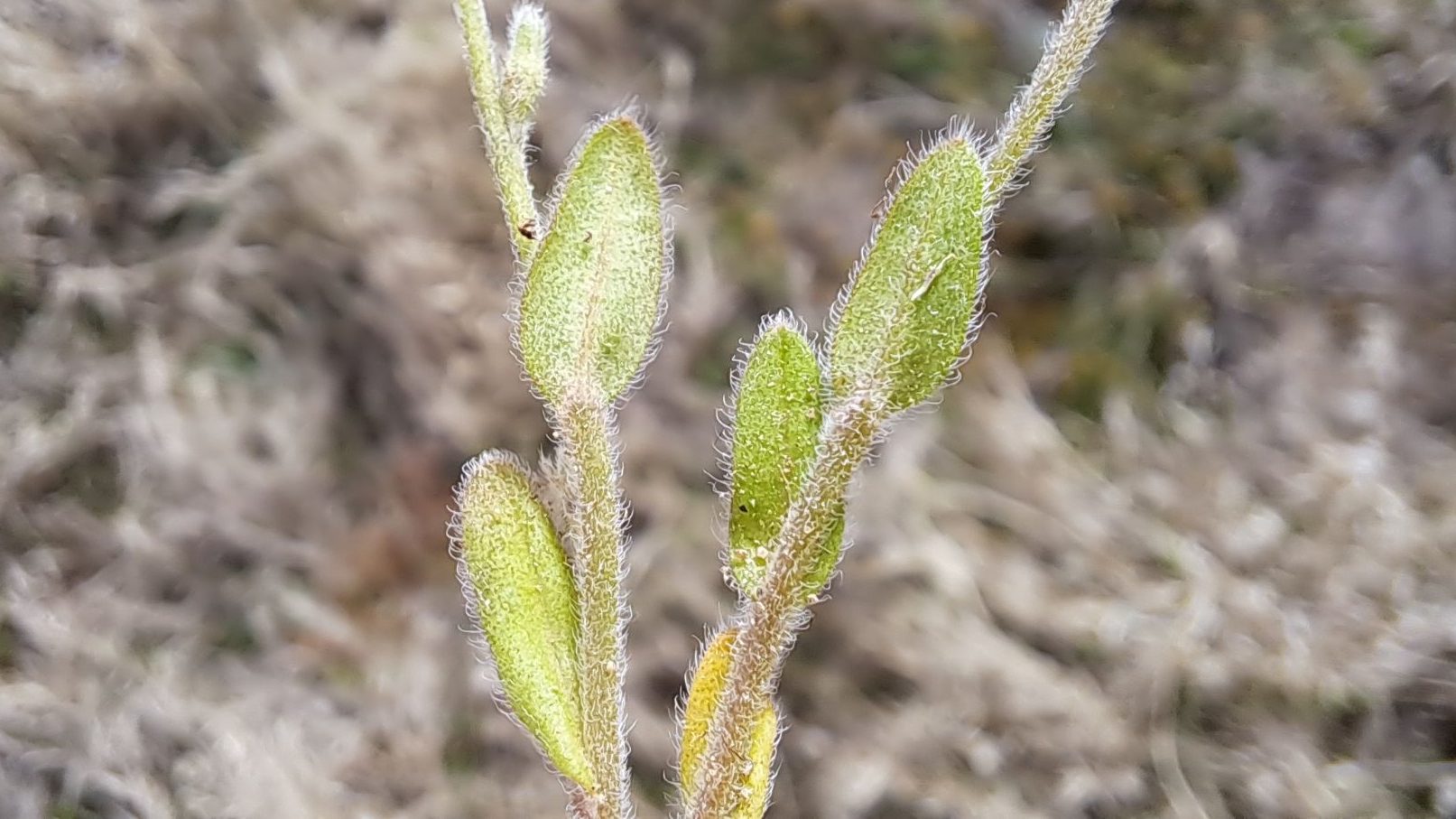
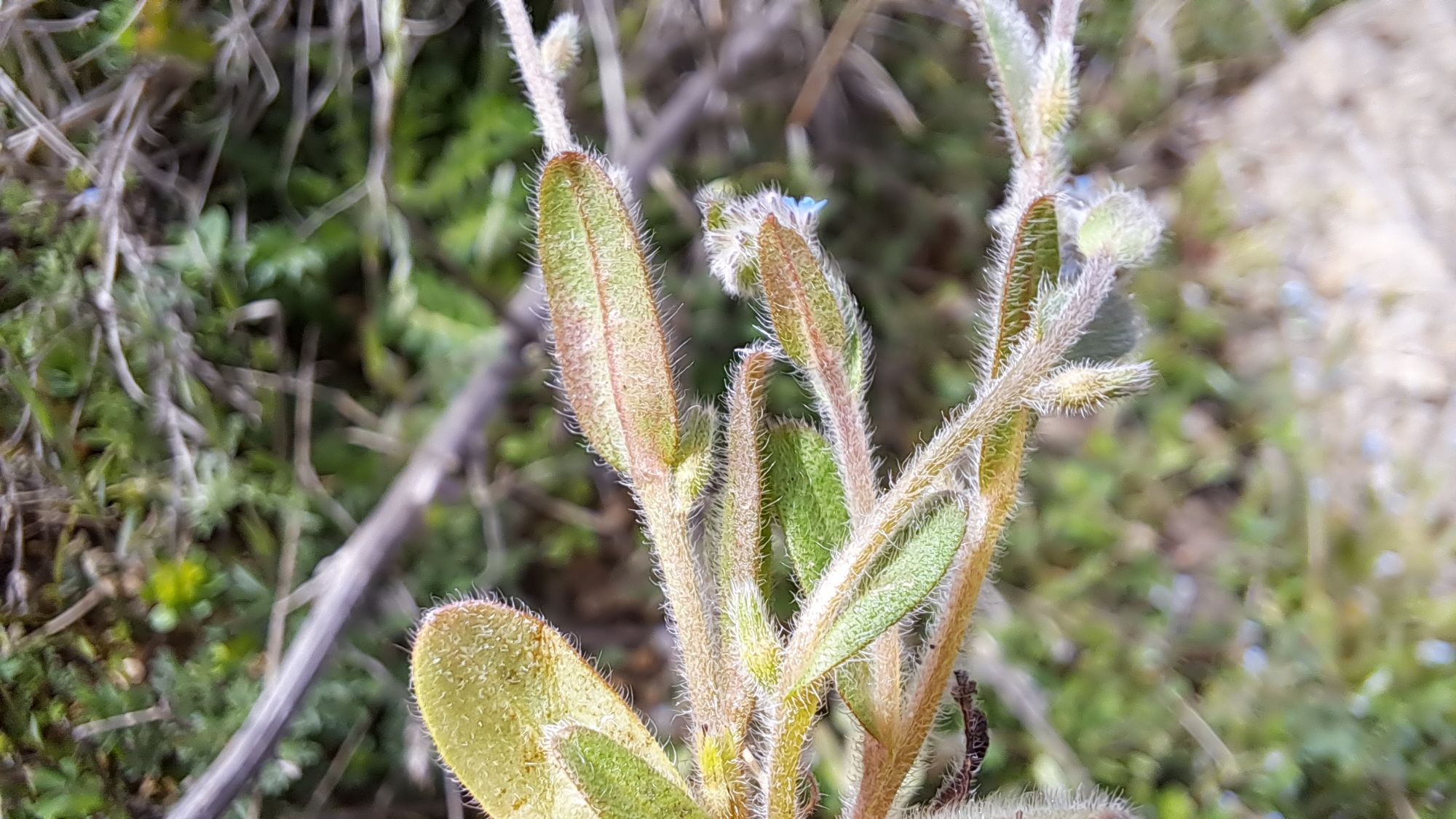
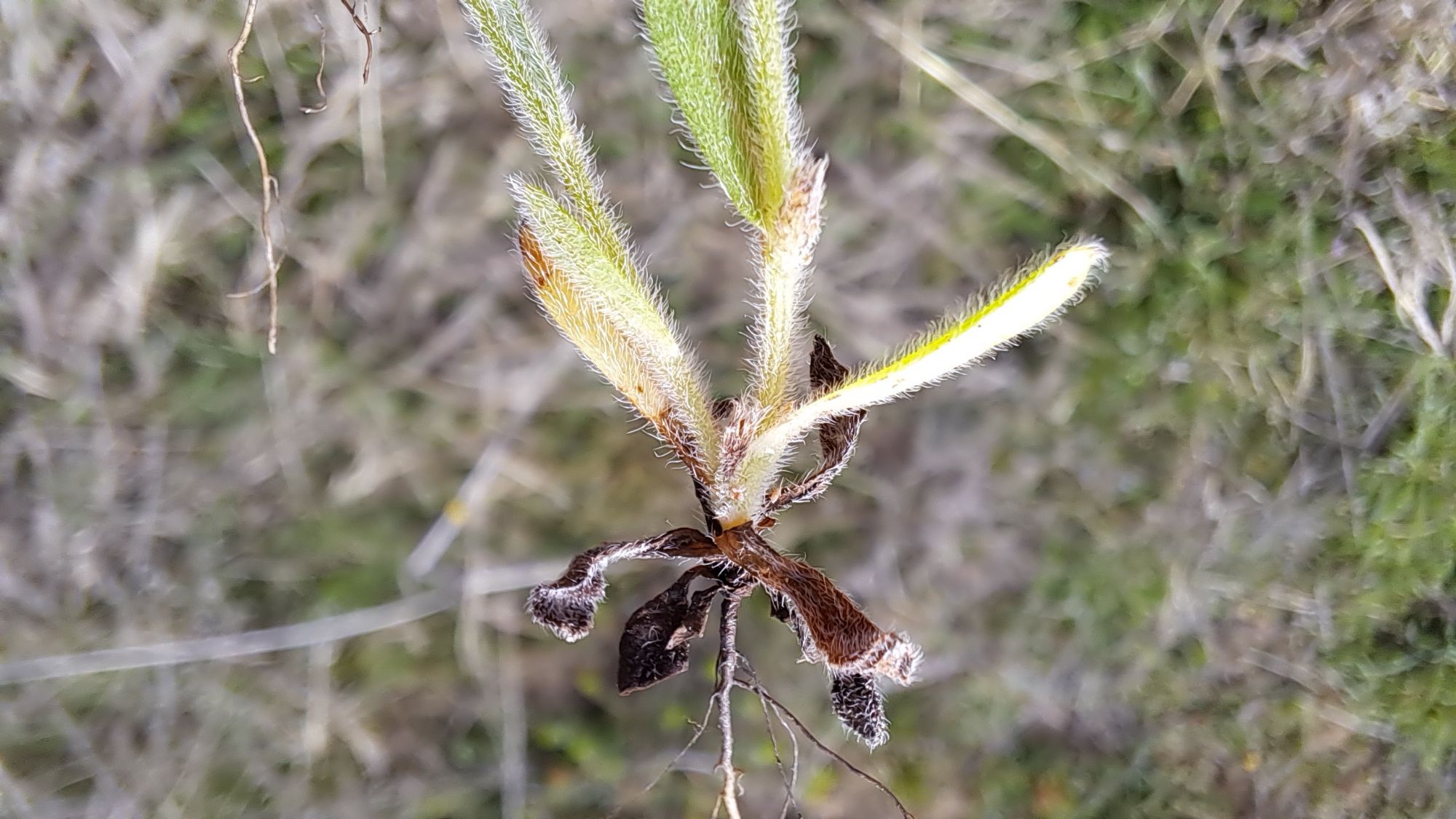
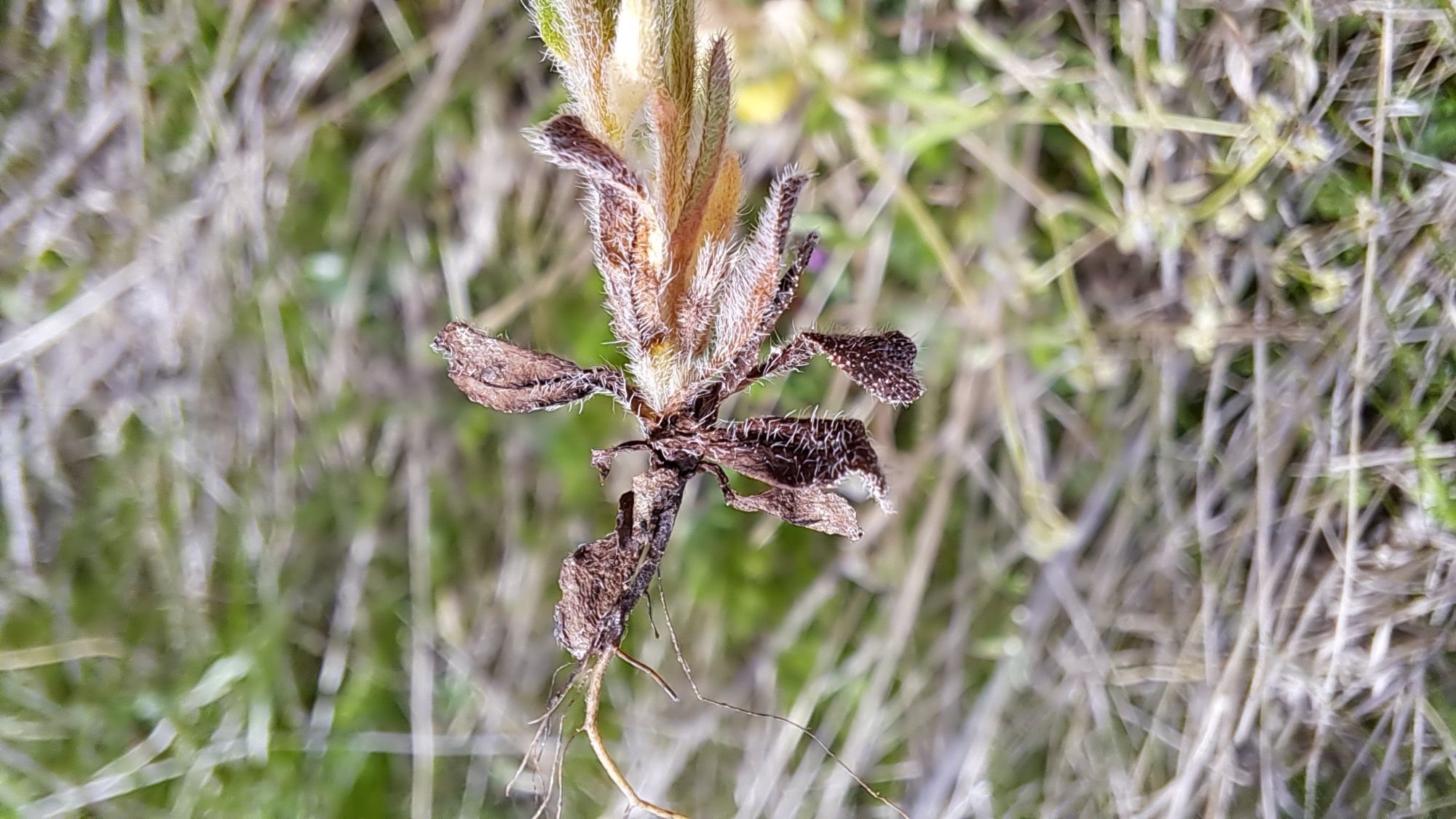
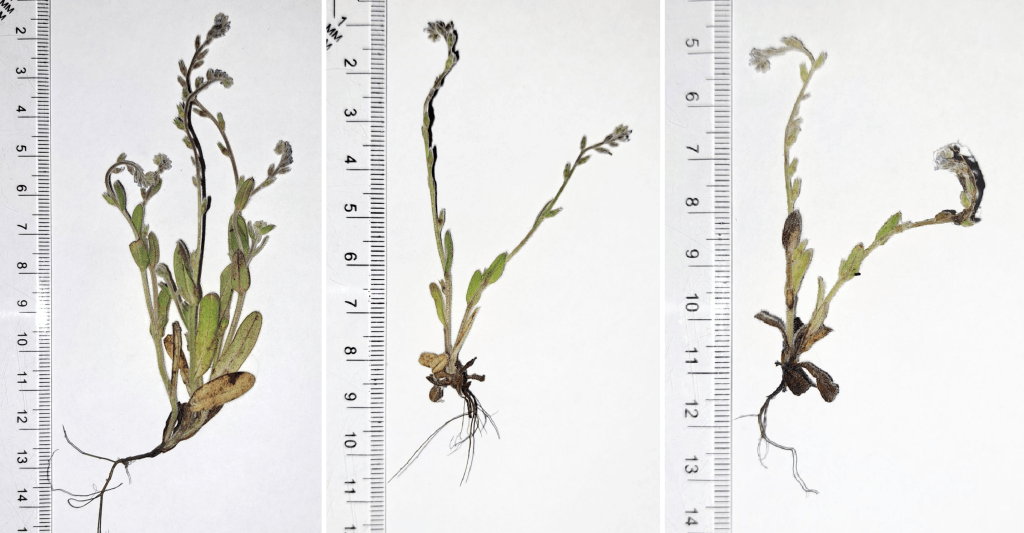
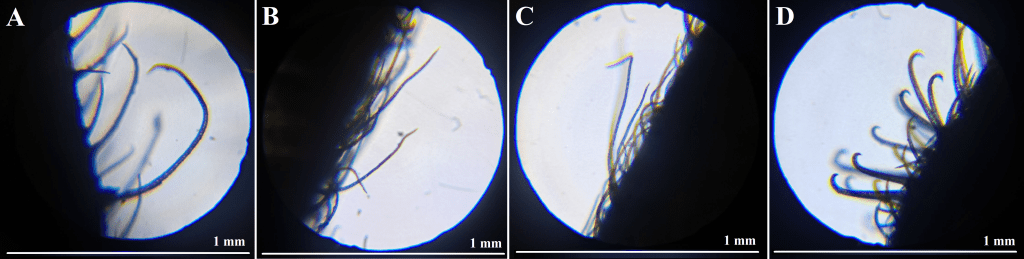
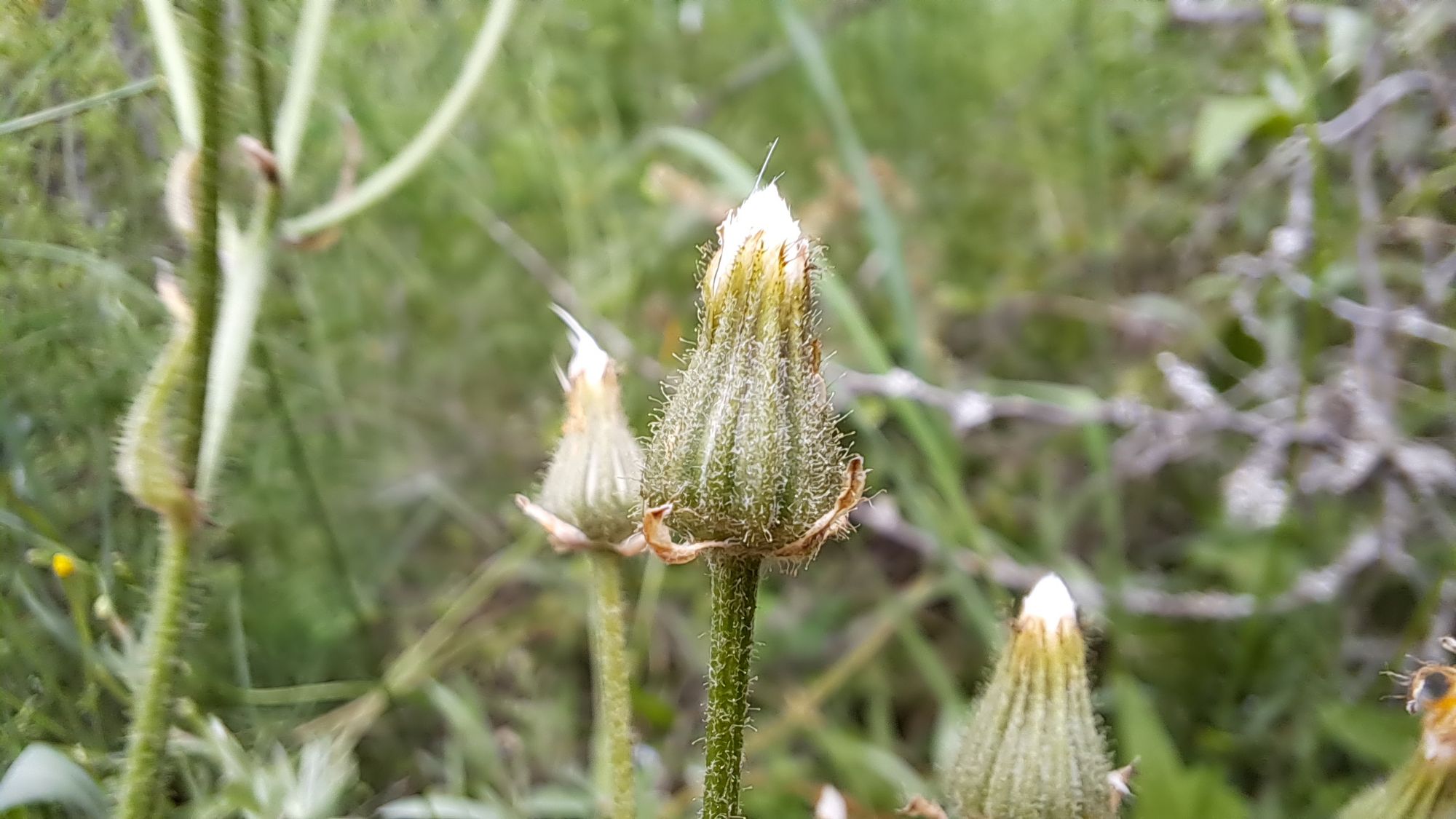
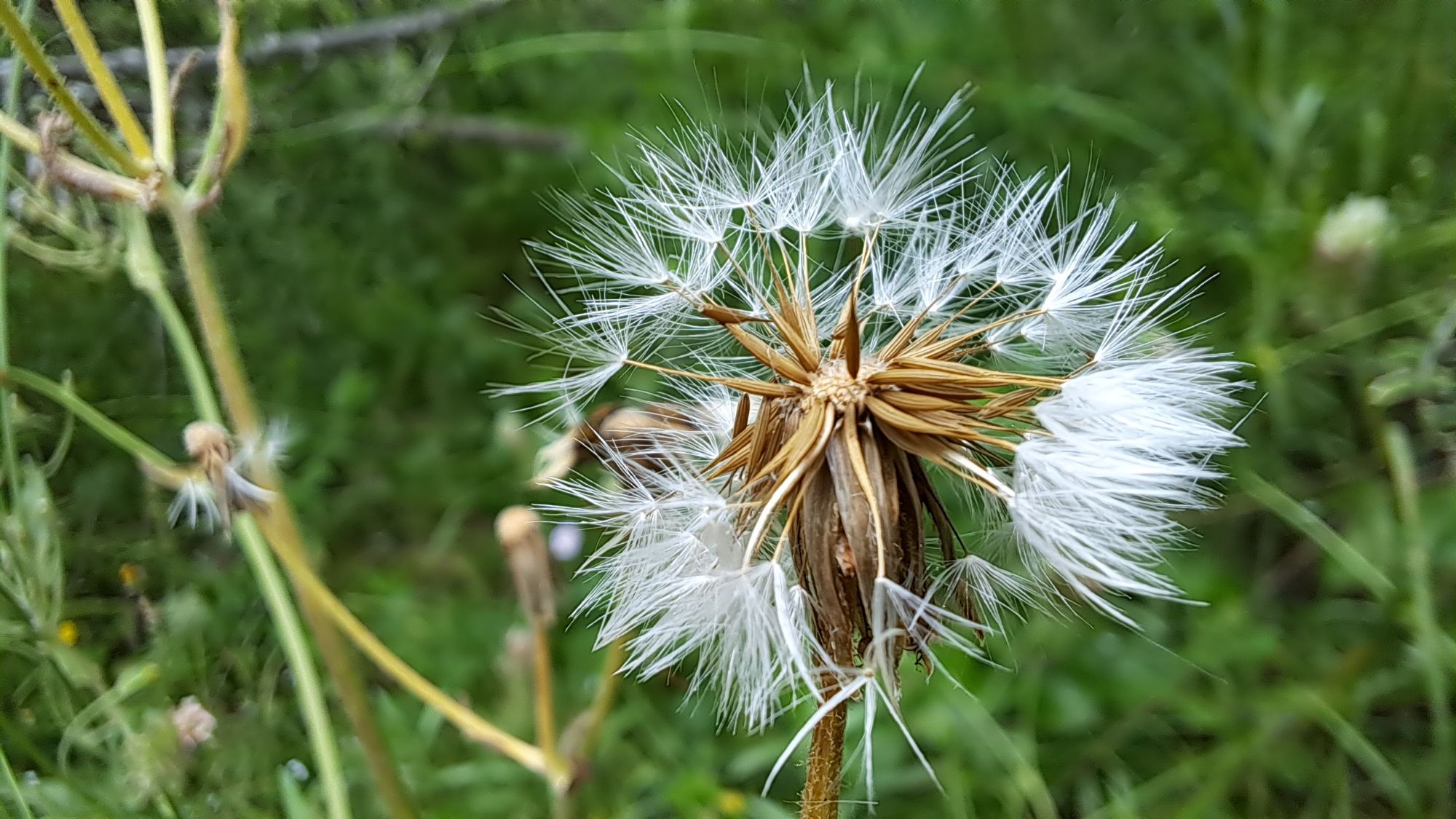
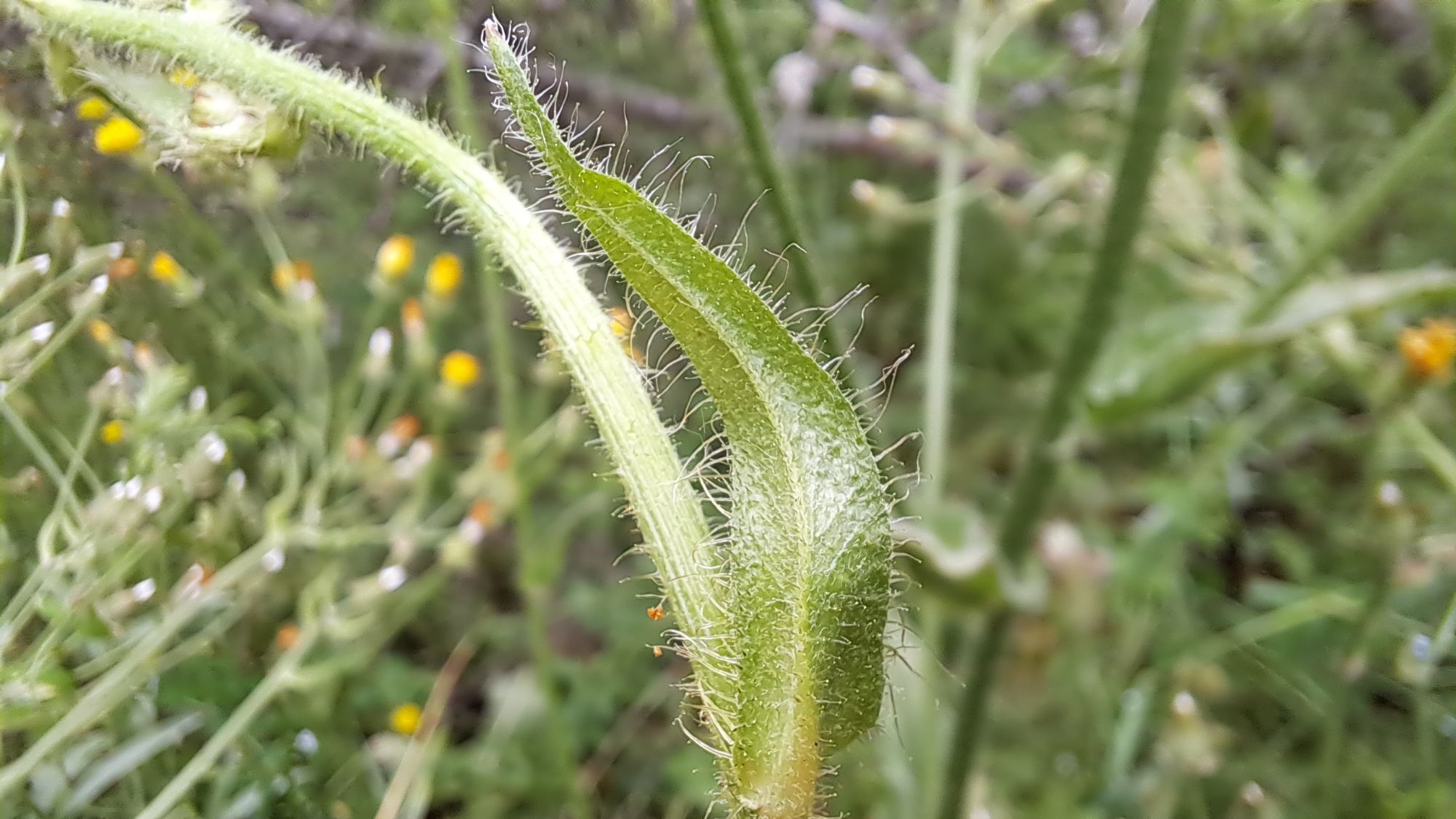
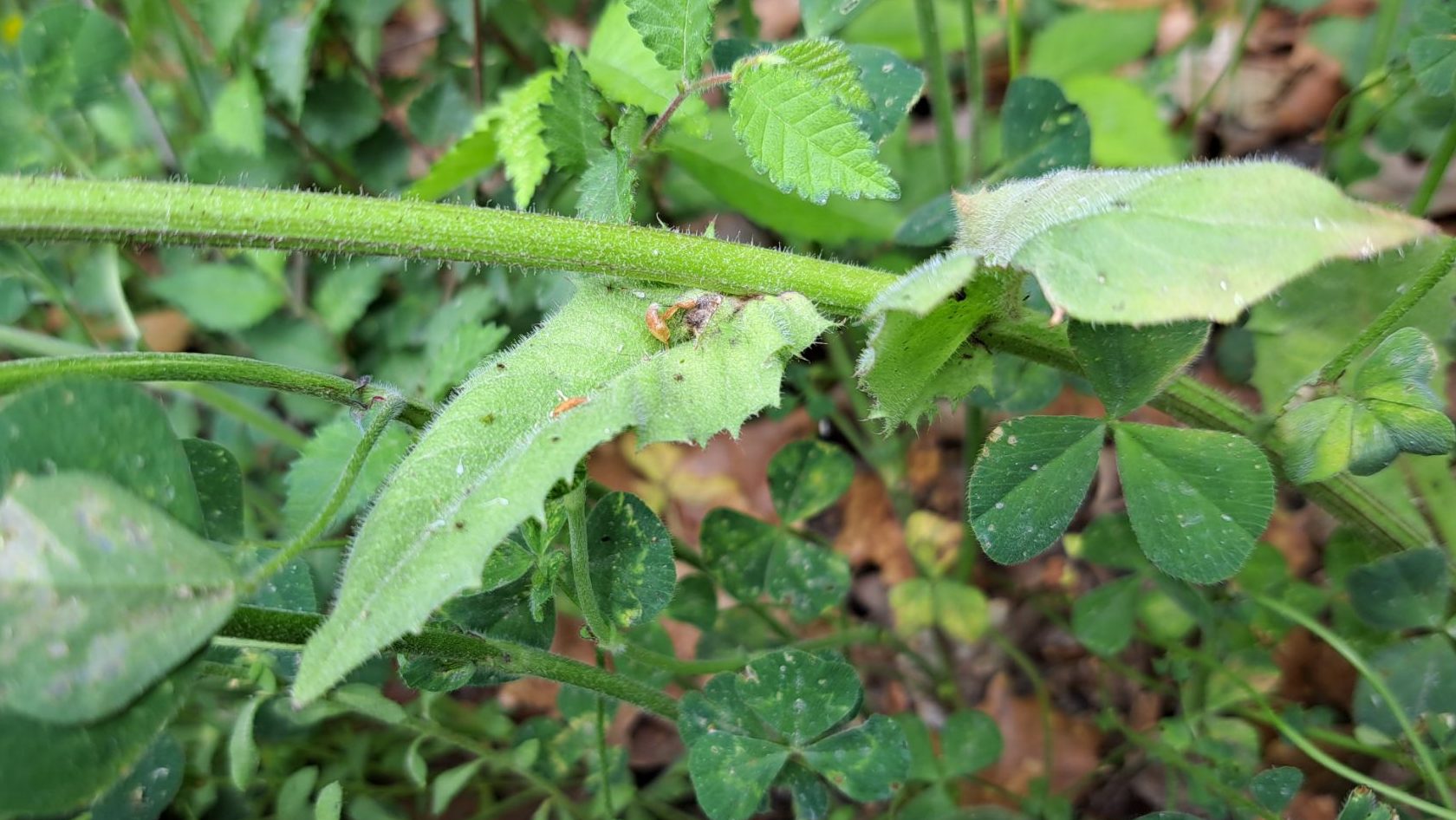
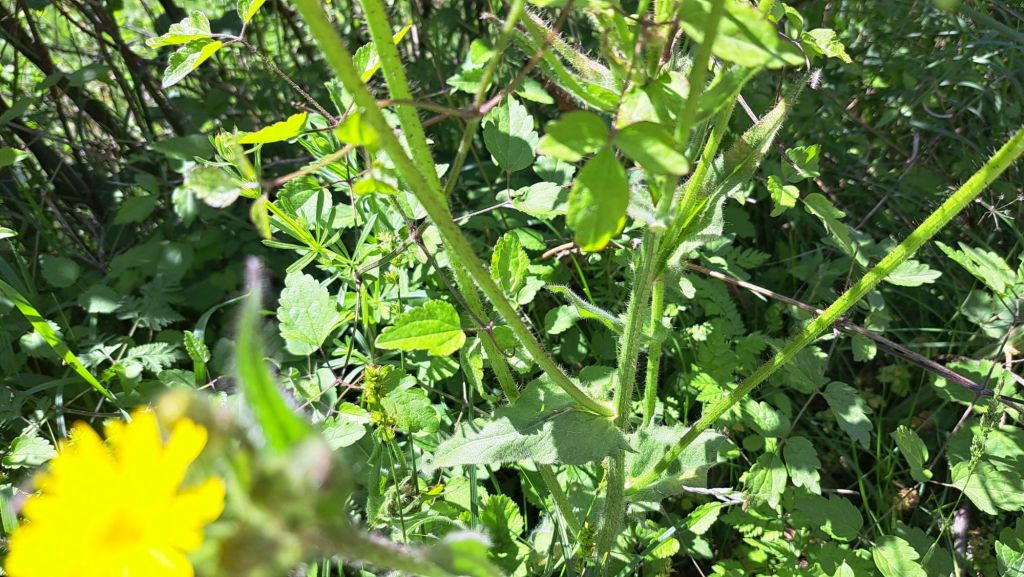
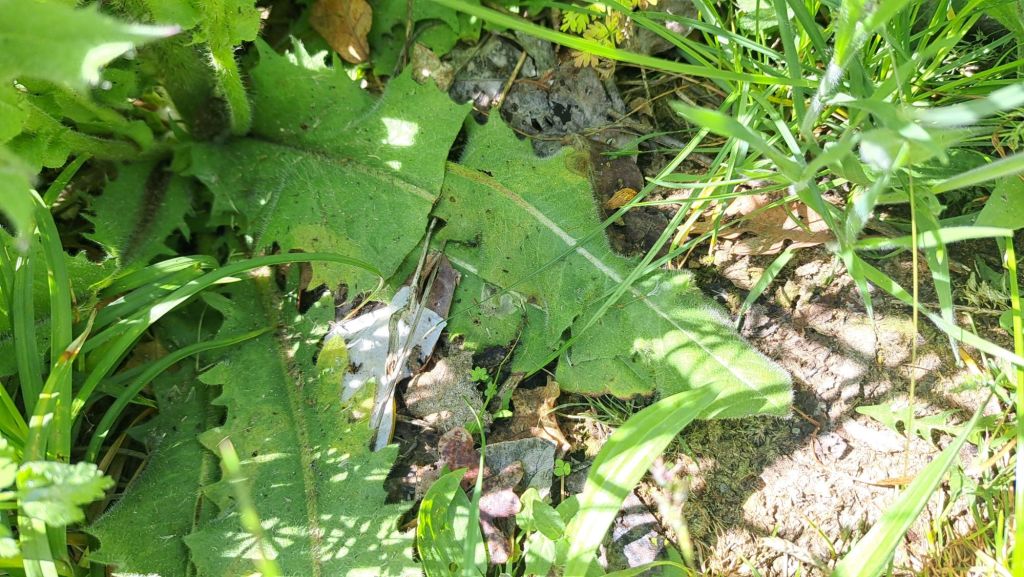
Myosotis stricta – habit. Hills near Kochani, between the gorges of “Kochanska” River and “Orizarska” River, 16.04.2022. Photo by Trajche Dimitrovski.Myosotis stricta – habit. Hills near Kochani, between the gorges of “Kochanska” River and “Orizarska” River, 16.04.2022. Photo by Trajche Dimitrovski.Myosotis stricta – flowering stems. Hills near Kochani, between the gorges of “Kochanska” River and “Orizarska” River, 16.04.2022. Photo by Trajche Dimitrovski.Myosotis stricta – inflorescence. Hills near Kochani, between the gorges of “Kochanska” River and “Orizarska” River, 16.04.2022. Photo by Trajche Dimitrovski.Myosotis stricta – flowers. Hills near Kochani, between the gorges of “Kochanska” River and “Orizarska” River, 16.04.2022. Photo by Trajche Dimitrovski.Myosotis stricta – flowers. Hills near Kochani, between the gorges of “Kochanska” River and “Orizarska” River, 16.04.2022. Photo by Trajche Dimitrovski.Myosotis stricta – inflorescence with fruiting calyces. Hills near Kochani, between the gorges of “Kochanska” River and “Orizarska” River, 16.04.2022. Photo by Trajche Dimitrovski.Myosotis stricta – inflorescence with fruiting calyces. Hills near Kochani, between the gorges of “Kochanska” River and “Orizarska” River, 16.04.2022. Photo by Trajche Dimitrovski.Myosotis stricta – stems with upper cauline leaves. Hills near Kochani, between the gorges of “Kochanska” River and “Orizarska” River, 16.04.2022. Photo by Trajche Dimitrovski.Myosotis stricta – basal leaves and stems with cauline leaves. Hills near Kochani, between the gorges of “Kochanska” River and “Orizarska” River, 16.04.2022. Photo by Trajche Dimitrovski.Myosotis stricta – basal leaves and stems with cauline leaves. Hills near Kochani, between the gorges of “Kochanska” River and “Orizarska” River, 16.04.2022. Photo by Trajche Dimitrovski.Myosotis stricta – habit. Hills near Kochani, between the gorges of “Kochanska” River and “Orizarska” River, 31.03.2024. Photo by Trajche Dimitrovski.Myosotis stricta – habit. Hills near Kochani, between the gorges of “Kochanska” River and “Orizarska” River, 31.03.2024. Photo by Trajche Dimitrovski.Myosotis stricta – habit. Hills near Kochani, between the gorges of “Kochanska” River and “Orizarska” River, 31.03.2024. Photo by Trajche Dimitrovski.Myosotis stricta – habit. Hills near Kochani, between the gorges of “Kochanska” River and “Orizarska” River, 31.03.2024. Photo by Trajche Dimitrovski.Myosotis stricta – inflorescence. Hills near Kochani, between the gorges of “Kochanska” River and “Orizarska” River, 31.03.2024. Photo by Trajche Dimitrovski.Myosotis stricta – inflorescence. Hills near Kochani, between the gorges of “Kochanska” River and “Orizarska” River, 31.03.2024. Photo by Trajche Dimitrovski.Myosotis stricta – inflorescence. Hills near Kochani, between the gorges of “Kochanska” River and “Orizarska” River, 31.03.2024. Photo by Trajche Dimitrovski.Myosotis stricta – fruiting calyces. Hills near Kochani, between the gorges of “Kochanska” River and “Orizarska” River, 31.03.2024. Photo by Trajche Dimitrovski.Myosotis stricta – fruiting calyces. Hills near Kochani, between the gorges of “Kochanska” River and “Orizarska” River, 31.03.2024. Photo by Trajche Dimitrovski.Myosotis stricta – stems with leaves. Hills near Kochani, between the gorges of “Kochanska” River and “Orizarska” River, 31.03.2024. Photo by Trajche Dimitrovski.Myosotis stricta – stems with leaves. Hills near Kochani, between the gorges of “Kochanska” River and “Orizarska” River, 31.03.2024. Photo by Trajche Dimitrovski.Myosotis stricta – stems with leaves. Hills near Kochani, between the gorges of “Kochanska” River and “Orizarska” River, 31.03.2024. Photo by Trajche Dimitrovski.Myosotis stricta – stem with leaf. Hills near Kochani, between the gorges of “Kochanska” River and “Orizarska” River, 31.03.2024. Photo by Trajche Dimitrovski.Myosotis stricta – stem and abaxial side of leaves. Hills near Kochani, between the gorges of “Kochanska” River and “Orizarska” River, 31.03.2024. Photo by Trajche Dimitrovski.Myosotis stricta – stem and abaxial side of leaves. Hills near Kochani, between the gorges of “Kochanska” River and “Orizarska” River, 31.03.2024. Photo by Trajche Dimitrovski.Myosotis stricta – basal and lower cauline leaves. Hills near Kochani, between the gorges of “Kochanska” River and “Orizarska” River, 31.03.2024. Photo by Trajche Dimitrovski.Myosotis stricta – basal and lower cauline leaves. Hills near Kochani, between the gorges of “Kochanska” River and “Orizarska” River, 31.03.2024. Photo by Trajche Dimitrovski.Myosotis stricta – basal and lower cauline leaves. Hills near Kochani, between the gorges of “Kochanska” River and “Orizarska” River, 31.03.2024. Photo by Trajche Dimitrovski.Myosotis stricta – habit. Photo by Trajche Dimitrovski.Myosotis stricta – indumentum of lower part of stem (A), stem in the inflorescence region (B and C) and calyx (D). Photo by Trajche Dimitrovski.
References:
Myosotis L. Matevski, V. and Melovski, Lj. in Matevski (2010). The Flora of the Republic of Macedonia Vol. II, Book 1. Macedonian Academy of Sciences and Arts, pp. 141 – 163.
Determined according to the botanical key provided by Micevski (2001) to species level and Coombe in Tutin et al. (1968) to subspecies level.
Species variability:Trifolium repens L. shows considerable amount of variation. In the Osogovo region two forms can be distinguished according to the key provided by Coombe in Tutin et al. (1968): Trifolium repens L. subsp. repens and Trifolium repens subsp. prostratum Nyman. Distinction between subspecies:
– Trifolium repens L. subsp. repens: flowers white (sometimes pink), peduncle of inflorescence glabrous or glabrescent; pedicels up to twice as long as calyx; leaves with glabrous petioles up to 15 (-20) cm long and leaflets 10 to 20+ mm long. Leaf petioles generally erect.
– Trifolium repens L. subsp.prostratum Nyman: flowers pink, inflorescence with distinctly hairy peduncle; pedicles shorter to almost equaling calyx; leaves with distinctly hairy petioles and leaflets up to 10 (-15) mm long. Petioles and peduncles generally shorter as compared to subsp. repens. Leaf petioles generally appressed to the ground or semi-erect.
Lifeform: Perrenial; Hemicryptophyte according to the Raunkiær system.
Distribution: Native from West and South Europe to Turkey according to the distribution information provided by The Euro+Med PlantBase (source: ILDIS World Database of Legumes, 2010); France and parts of South Europe to Turkey and Syria according to the Plants of the World Online (Royal Botanic Gardens, Kew).
Habitat: Grasslands and pastures, clearings of oak forests.
Flowering period: Late spring – summer: MAY, JUN, JUL.
Trifolium repens subsp. prostratum – habit. Osogovo, mountain ridge between lake “Gradche” and the gorge of “Orizarska” River, 04.07.2021. Photo by Trajche Dimitrovski.Trifolium repens subsp. prostratum – habit. Osogovo, mountain ridge between lake “Gradche” and the gorge of “Orizarska” River, 04.07.2021. Photo by Trajche Dimitrovski.Trifolium repens subsp. prostratum – habit. Osogovo, mountain ridge between lake “Gradche” and the gorge of “Orizarska” River, 04.07.2021. Photo by Trajche Dimitrovski.Trifolium repens subsp. prostratum – habit. Osogovo, mountain ridge between lake “Gradche” and the gorge of “Orizarska” River, 04.07.2021. Photo by Trajche Dimitrovski.Trifolium repens subsp. prostratum – flowering stems. Osogovo, mountain ridge between lake “Gradche” and the gorge of “Orizarska” River, 04.07.2021. Photo by Trajche Dimitrovski.Trifolium repens subsp. prostratum – flowering stems. Osogovo, mountain ridge between lake “Gradche” and the gorge of “Orizarska” River, 04.07.2021. Photo by Trajche Dimitrovski.Trifolium repens subsp. prostratum – inflorescences. Osogovo, mountain ridge between lake “Gradche” and the gorge of “Orizarska” River, 04.07.2021. Photo by Trajche Dimitrovski.Trifolium repens subsp. prostratum – inflorescences. Osogovo, mountain ridge between lake “Gradche” and the gorge of “Orizarska” River, 04.07.2021. Photo by Trajche Dimitrovski.Trifolium repens subsp. prostratum – inflorescences. Osogovo, mountain ridge between lake “Gradche” and the gorge of “Orizarska” River, 04.07.2021. Photo by Trajche Dimitrovski.Trifolium repens subsp. prostratum – inflorescences. Osogovo, mountain ridge between lake “Gradche” and the gorge of “Orizarska” River, 04.07.2021. Photo by Trajche Dimitrovski.Trifolium repens subsp. prostratum – inflorescence. Osogovo, mountain ridge between lake “Gradche” and the gorge of “Orizarska” River, 04.07.2021. Photo by Trajche Dimitrovski.Trifolium repens subsp. prostratum – inflorescence. Osogovo, mountain ridge between lake “Gradche” and the gorge of “Orizarska” River, 04.07.2021. Photo by Trajche Dimitrovski.Trifolium repens subsp. prostratum – inflorescence. Osogovo, mountain ridge between lake “Gradche” and the gorge of “Orizarska” River, 04.07.2021. Photo by Trajche Dimitrovski.Trifolium repens subsp. prostratum – spent inflorescence. Osogovo, mountain ridge between lake “Gradche” and the gorge of “Orizarska” River, 04.07.2021. Photo by Trajche Dimitrovski.Trifolium repens subsp. prostratum – spent inflorescence. Osogovo, mountain ridge between lake “Gradche” and the gorge of “Orizarska” River, 04.07.2021. Photo by Trajche Dimitrovski.Trifolium repens subsp. prostratum – leaves. Osogovo, mountain ridge between lake “Gradche” and the gorge of “Orizarska” River, 04.07.2021. Photo by Trajche Dimitrovski.Trifolium repens subsp. prostratum – leaves. Osogovo, mountain ridge between lake “Gradche” and the gorge of “Orizarska” River, 04.07.2021. Photo by Trajche Dimitrovski.Trifolium repens subsp. prostratum – leave with hairy peduncle. Osogovo, mountain ridge between lake “Gradche” and the gorge of “Orizarska” River, 04.07.2021. Photo by Trajche Dimitrovski.Trifolium repens subsp. prostratum – petiole and peduncle with hairs. Osogovo, mountain ridge between lake “Gradche” and the gorge of “Orizarska” River, 04.06.2022. Photo by Trajche Dimitrovski.
References:
Trifolum L. Coombe, D. E. in Raven, P.H. in Tutin, T.G., Heywood, V.H., Burges, N.A., Moore, D.M., Valentine, D.H., Walters, S.M. & Webb, D.A. (1968). Flora Europaea. Volume 2: Rosaceae to Umbelliferae. Cambridge: Cambridge University Press, pp. 157 – 172.
Trifolium L. Micevski, K. (2001). The Flora of the Republic of Macedonia Vol. I, Book 5. Macedonian Academy of Sciences and Arts, pp. 1290-1345.
Determined according to the botanical keys provided by Werner (1976 in Tutin et al.) to species level and Gajić (1975 in Josifović) to subspecies level.
Species variability: Two subspecies of Cirsium ligulare Boiss. occur in the Osogovo region: Cirsium ligulare subsp. albanum Wettst. and Cirsium ligulare subsp. armatum (Velen.) Petr. Distinction between subspecies:
–Cirsium ligulare subsp. albanum Wettst:Involucral bracts distinctly widened (lanceolate) below the apical spine; apical spine up to 6 mm long. Widely distributed from the lowland up to 1600 m;
– Cirsium ligulare subsp. armatum (Velen.) Petr.: Involucral bracts gradually narrowed into the apical spine, not distinctly widened (lanceolate) in the apical part; apical spine usually longer as compared to subsp. albanum; found in the higher parts of the Osogovo region;
Lifeform: Biennial; the first year of the lifecycle is vegetative (basal rosette stage). Flowering and fruiting occurs in the second year.
Distribution: Native from the Balkan Peninsula according to the distribution information provided by The Euro+Med PlantBase (source: Greuter, 2006+) and the Plants of the World Online portal (Royal Botanic Gardens, Kew).
Habitat: Grasslands and pastures, at higher altitudes of c. 1600 m.
Flowering period: Summer- autumn: AUG, SEP.
Locality: Ponikva. Date: 27.08.2022.
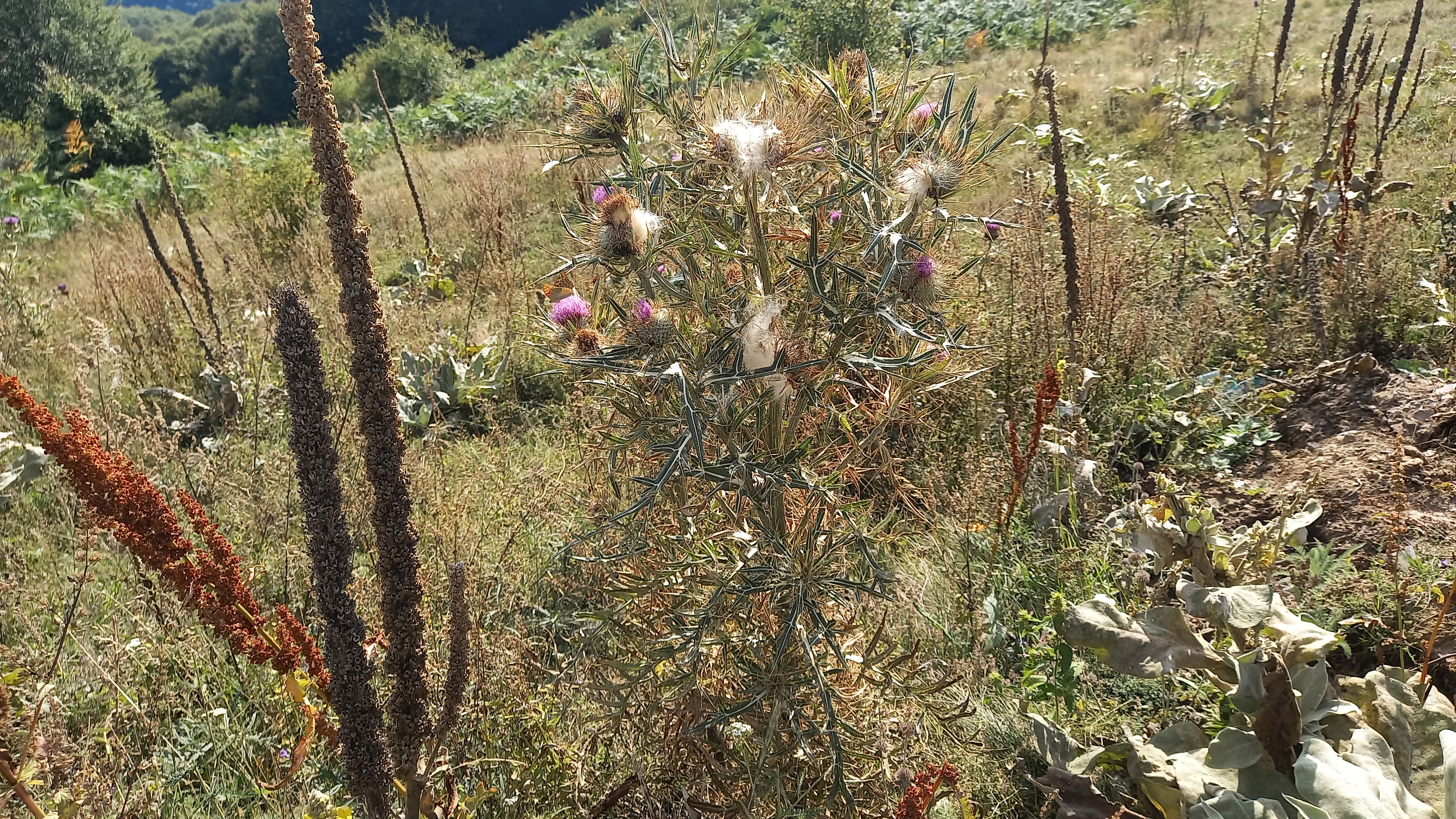
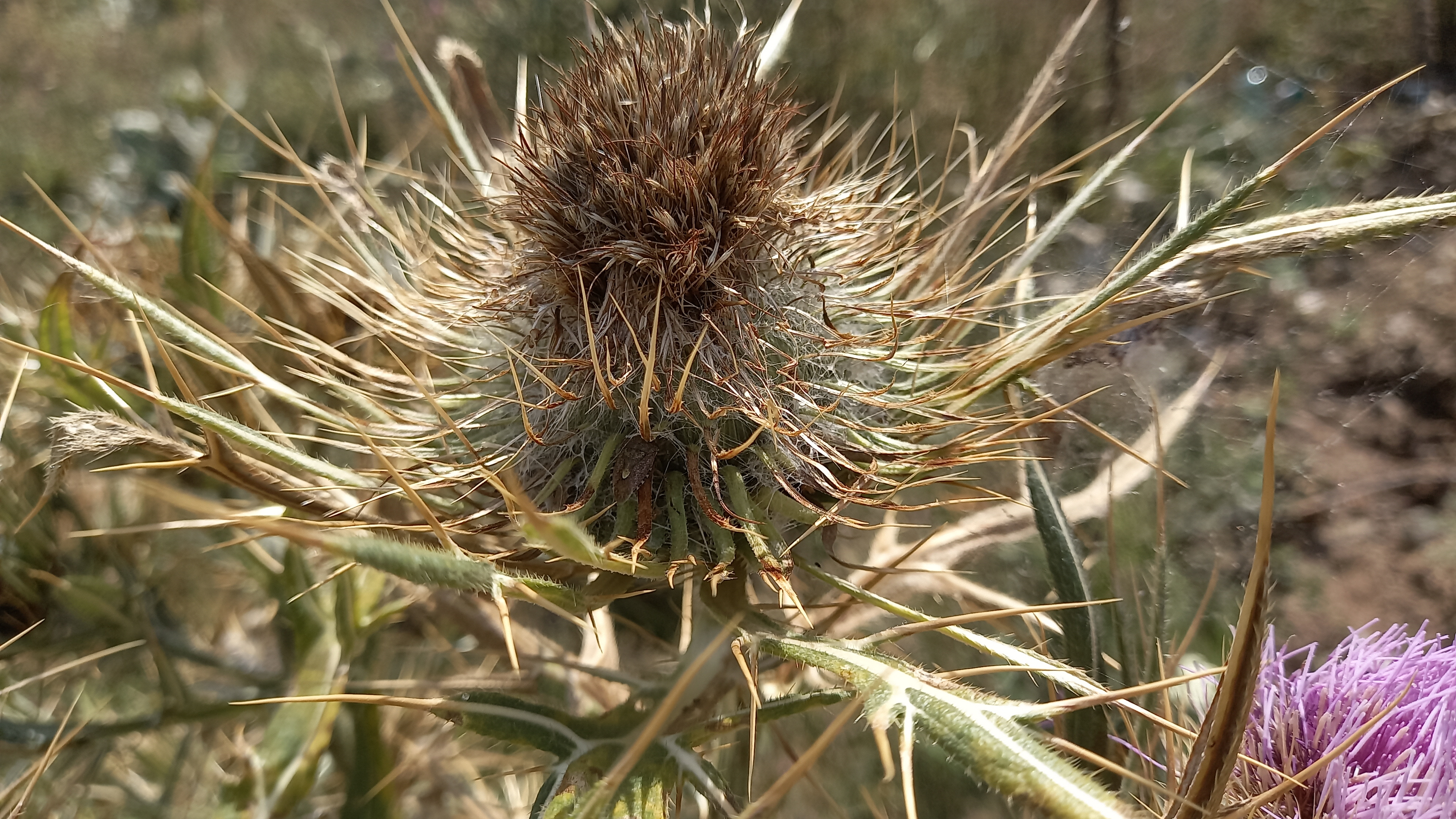
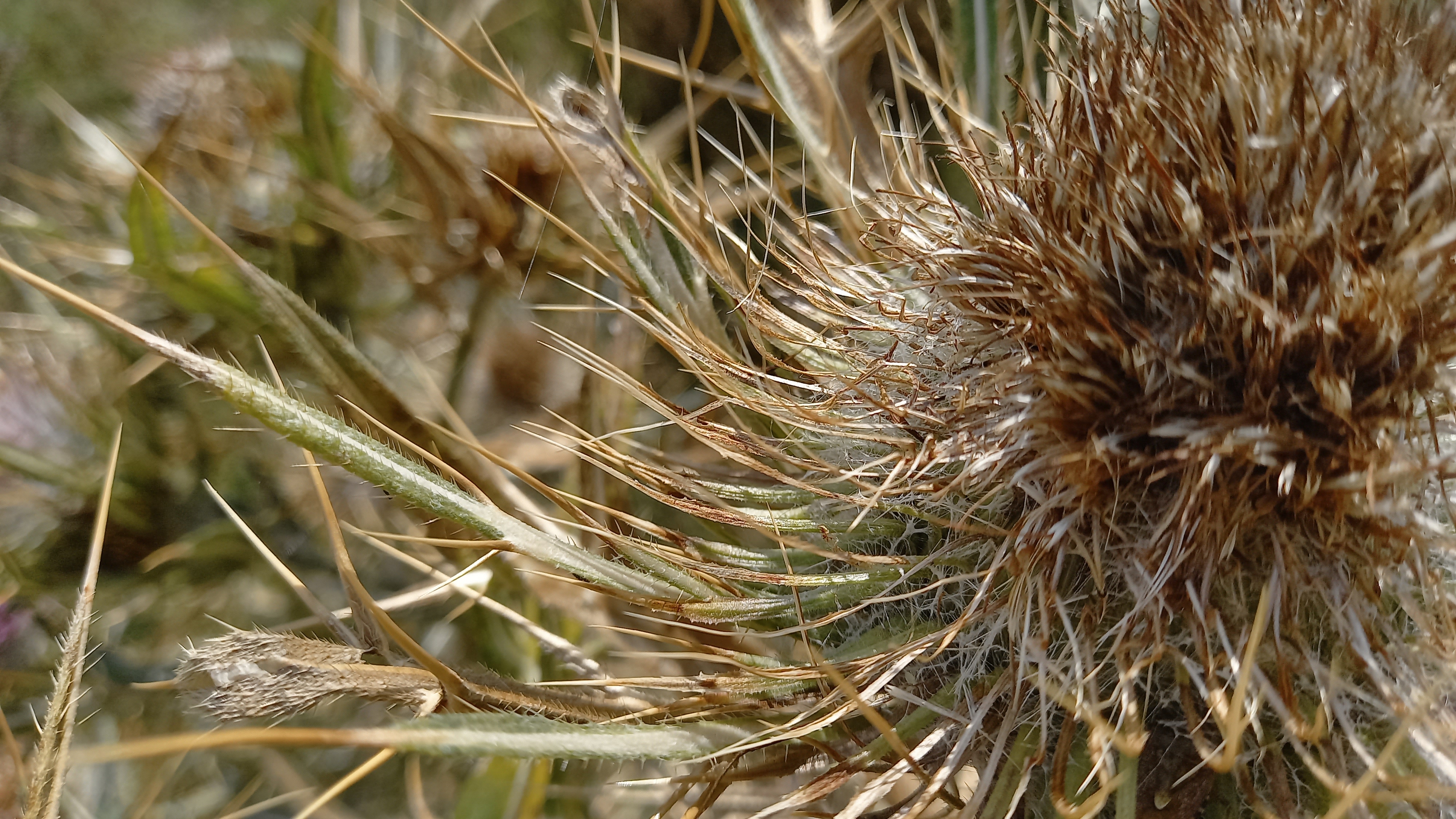
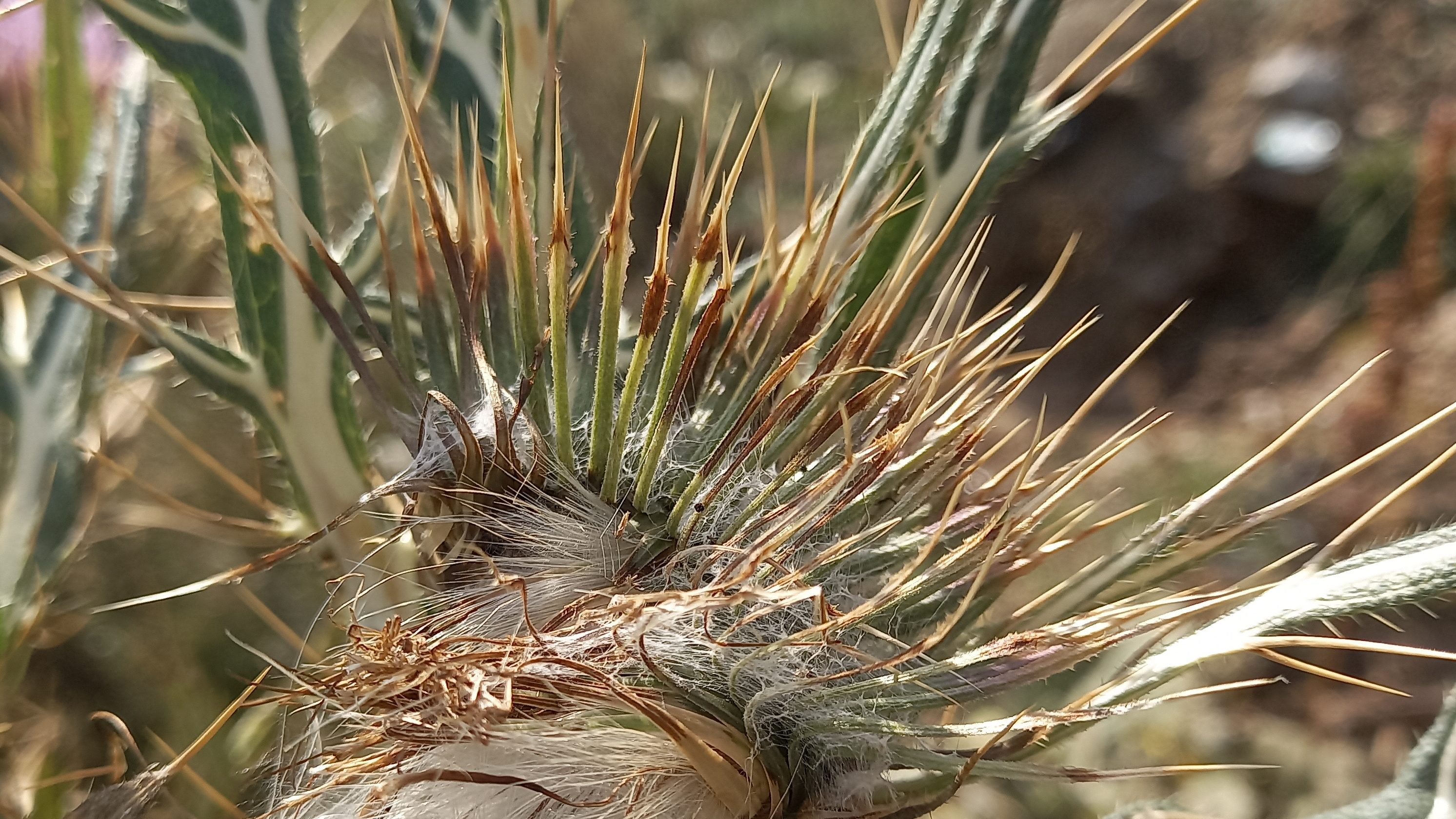
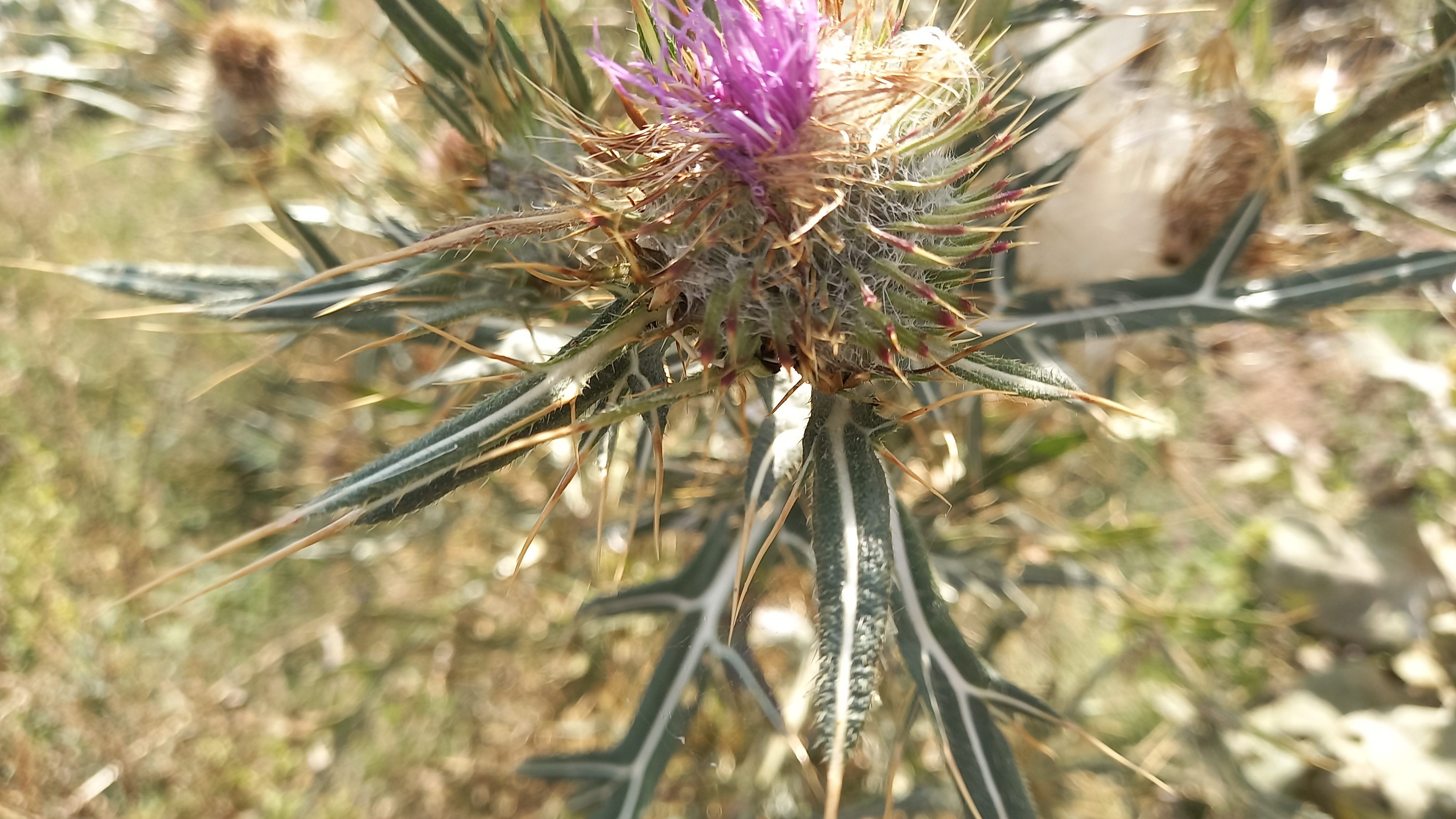
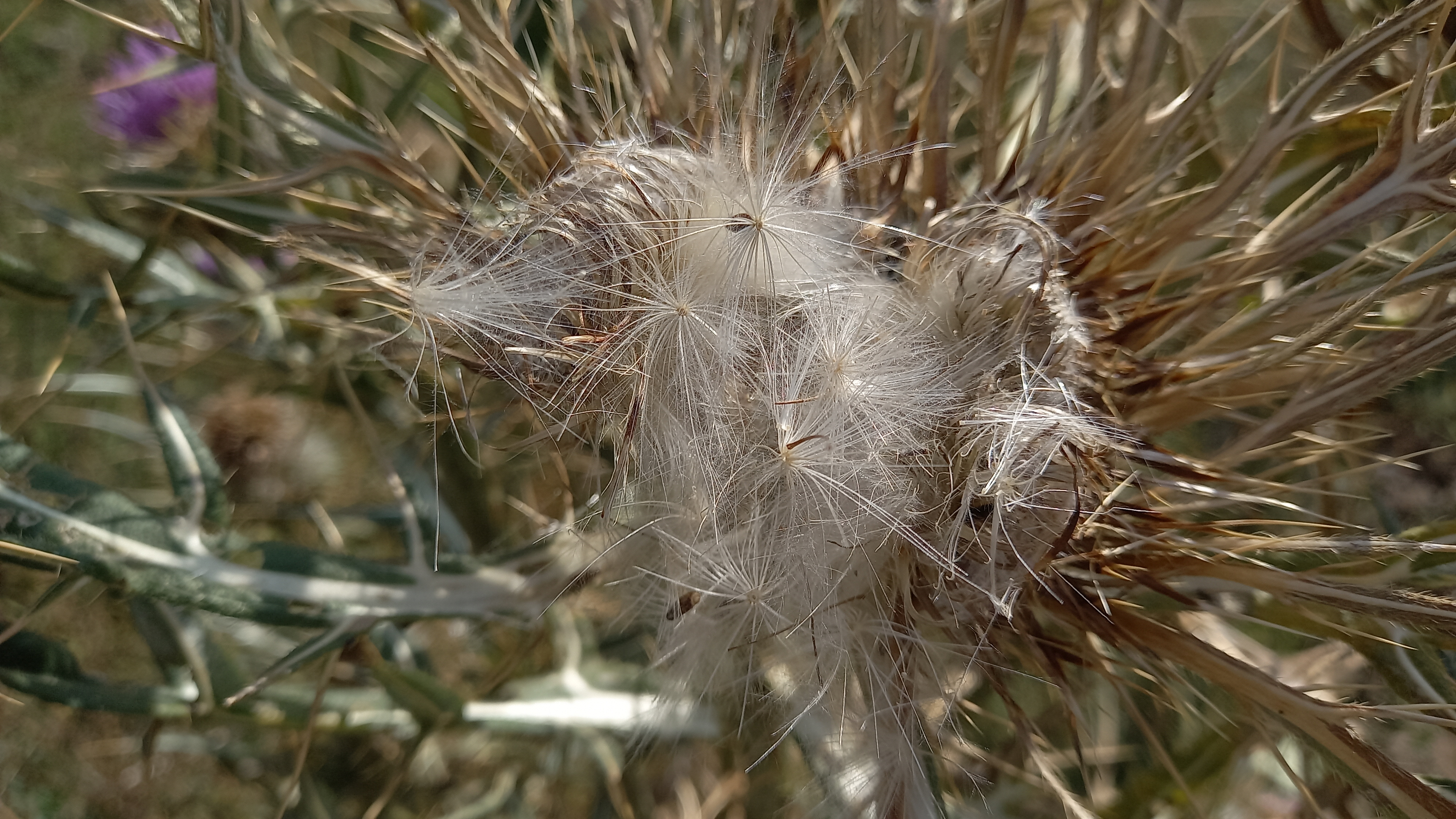
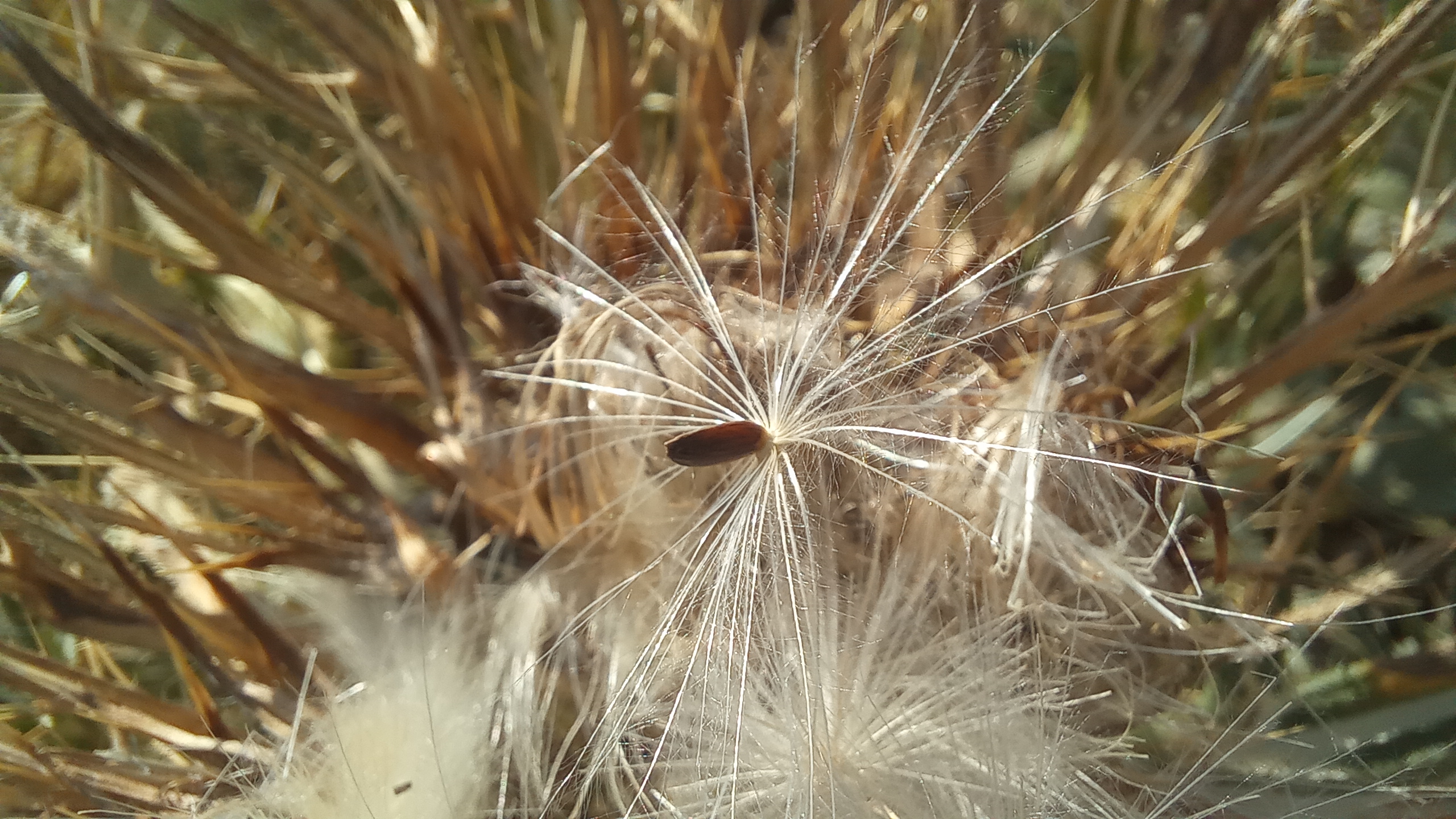
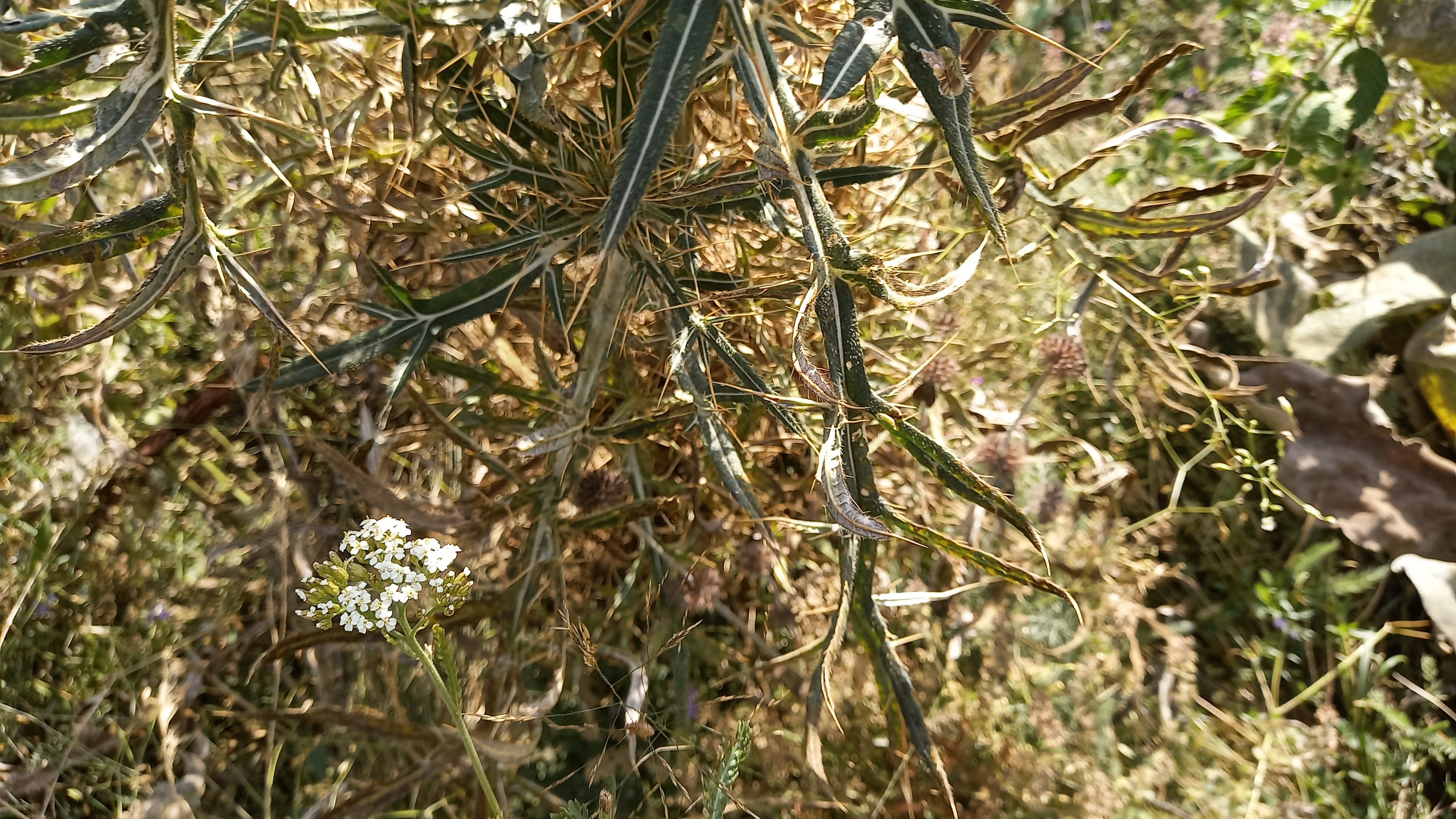
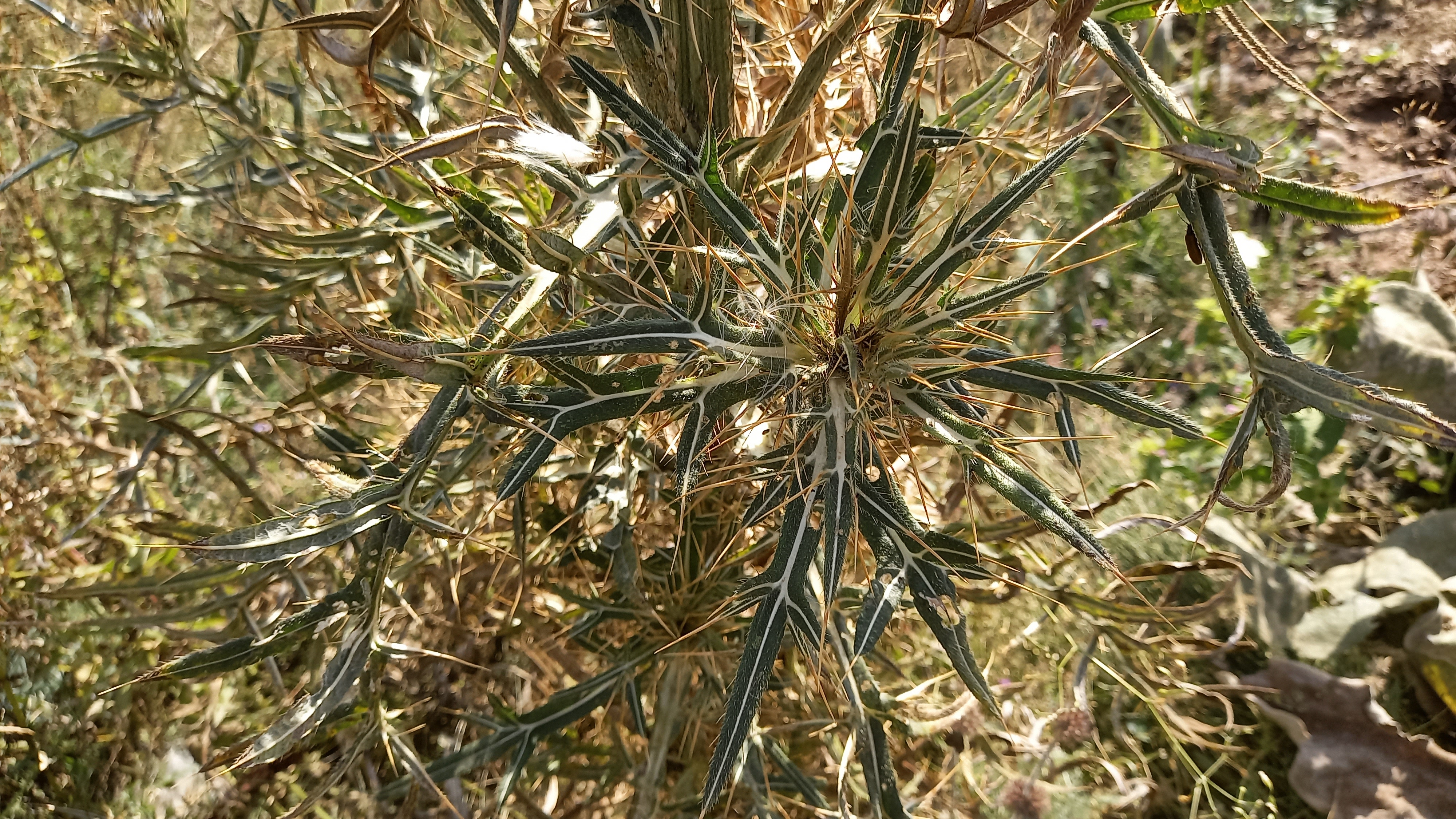
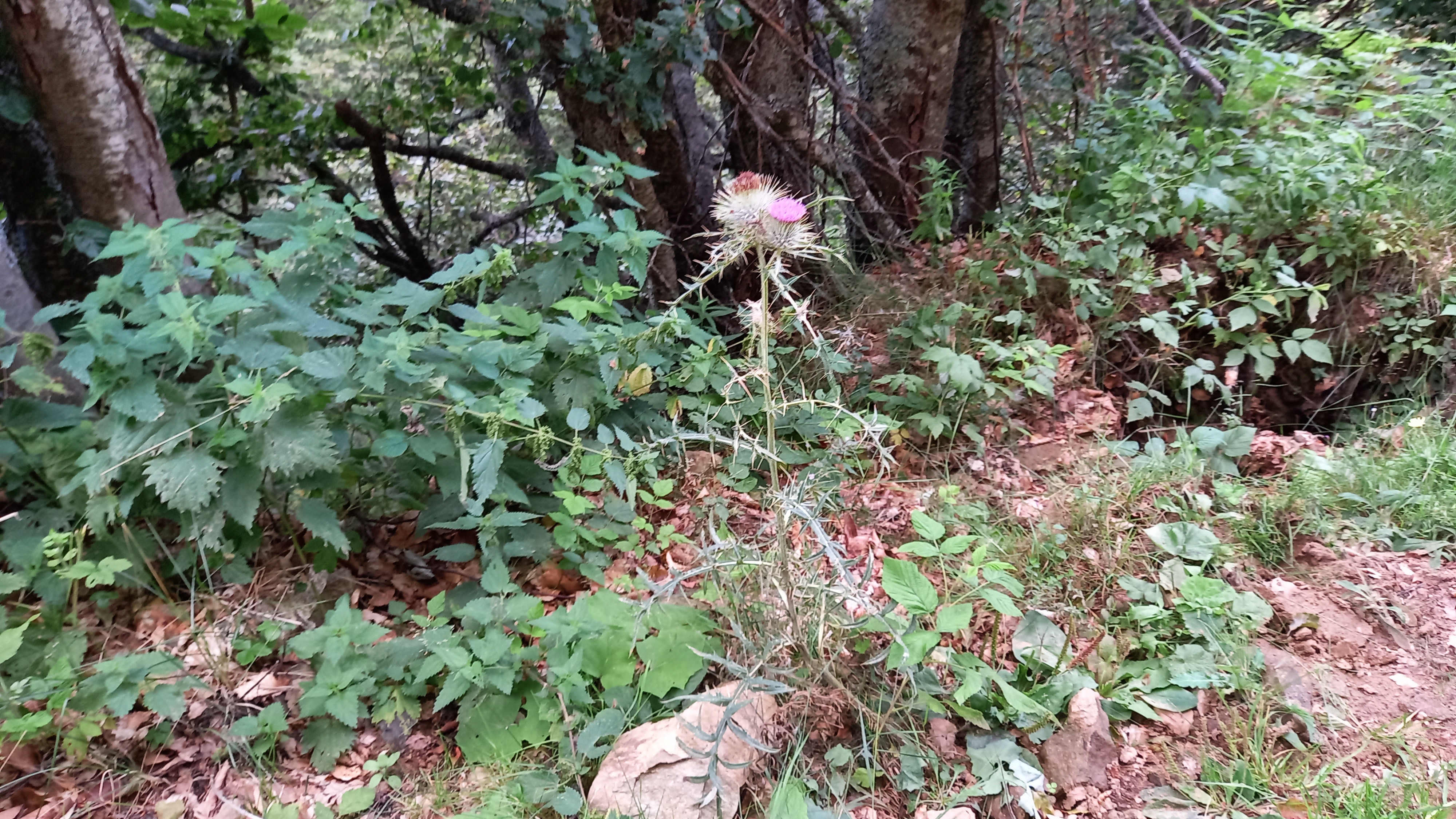
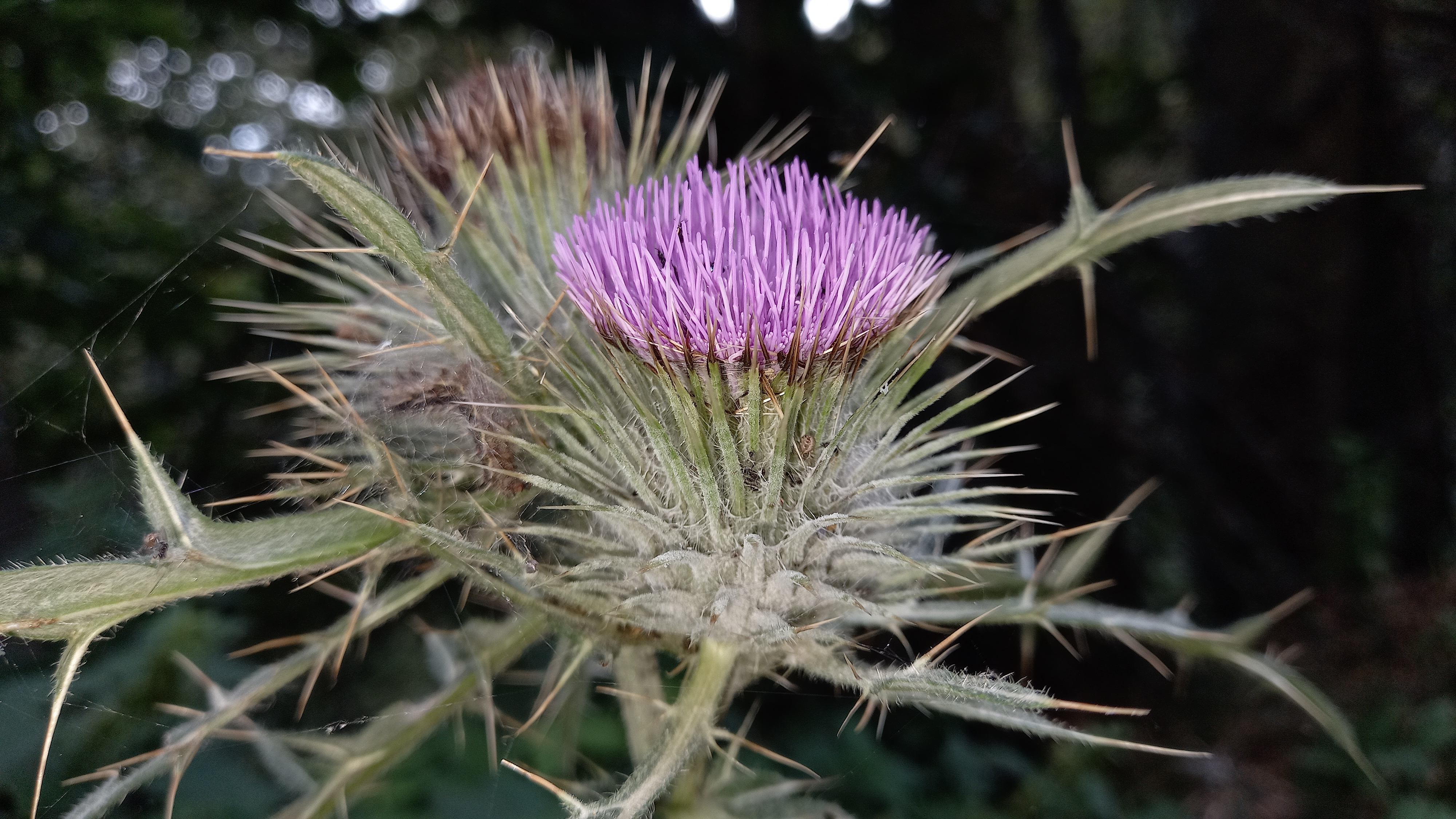
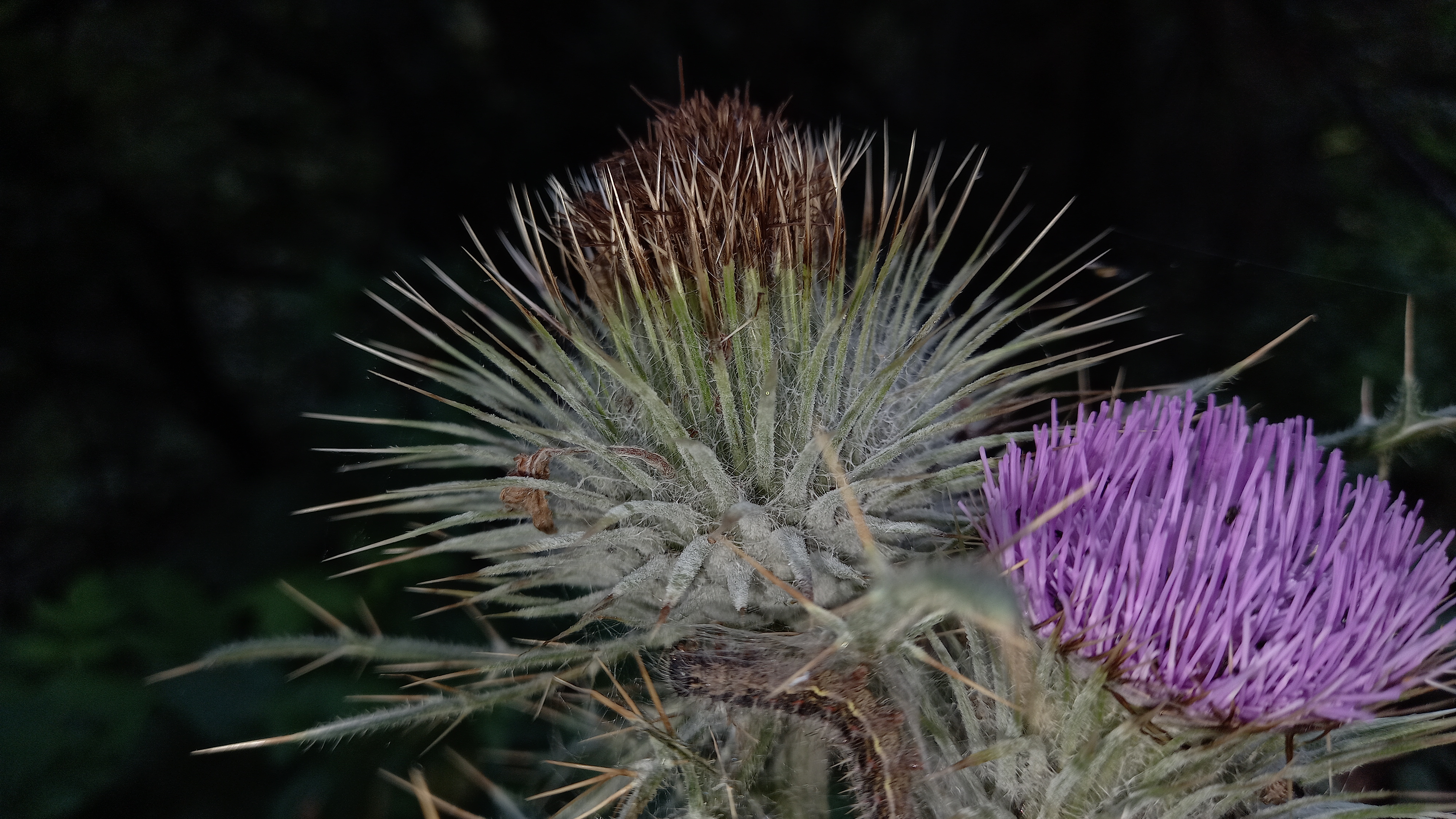
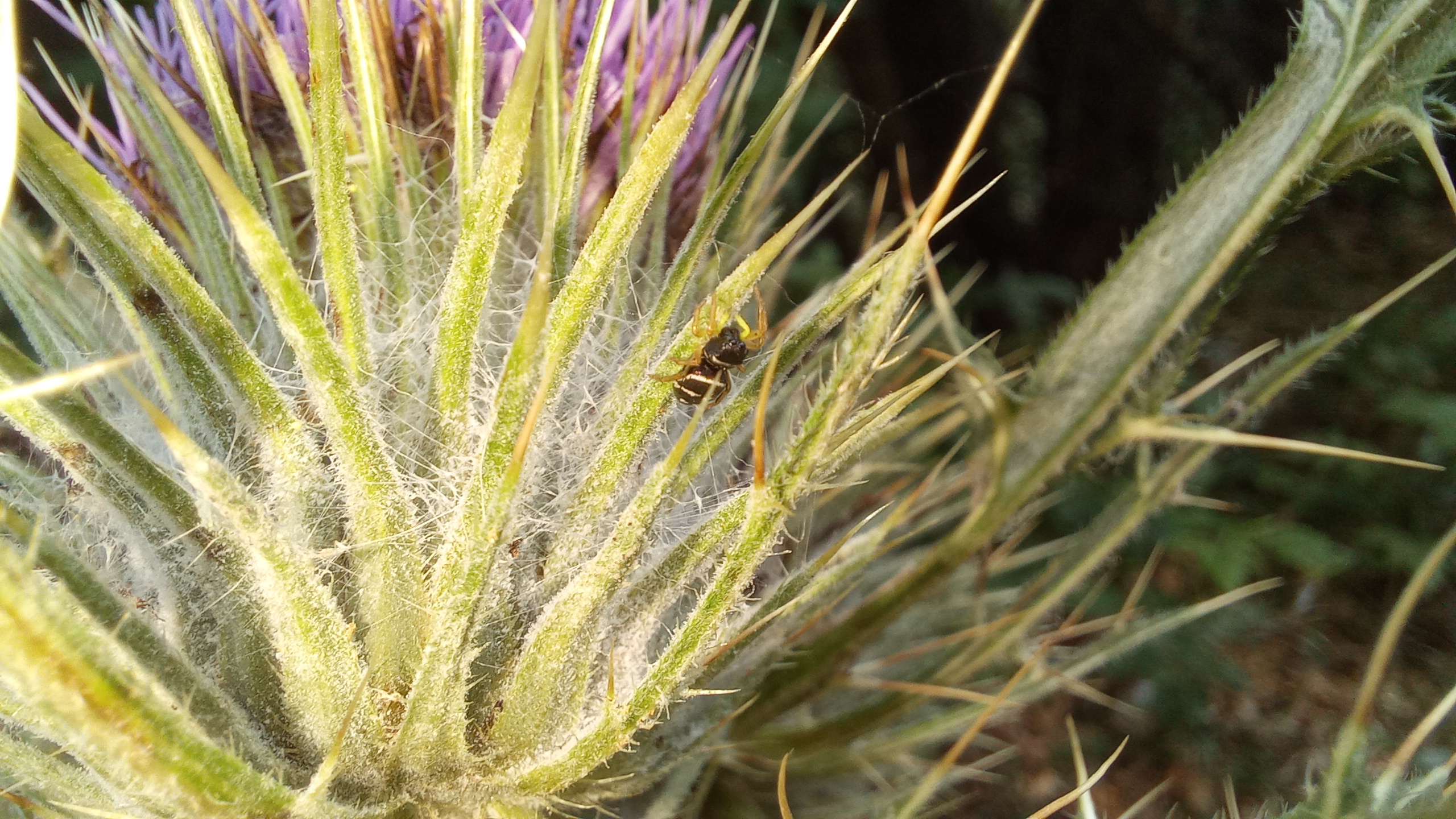
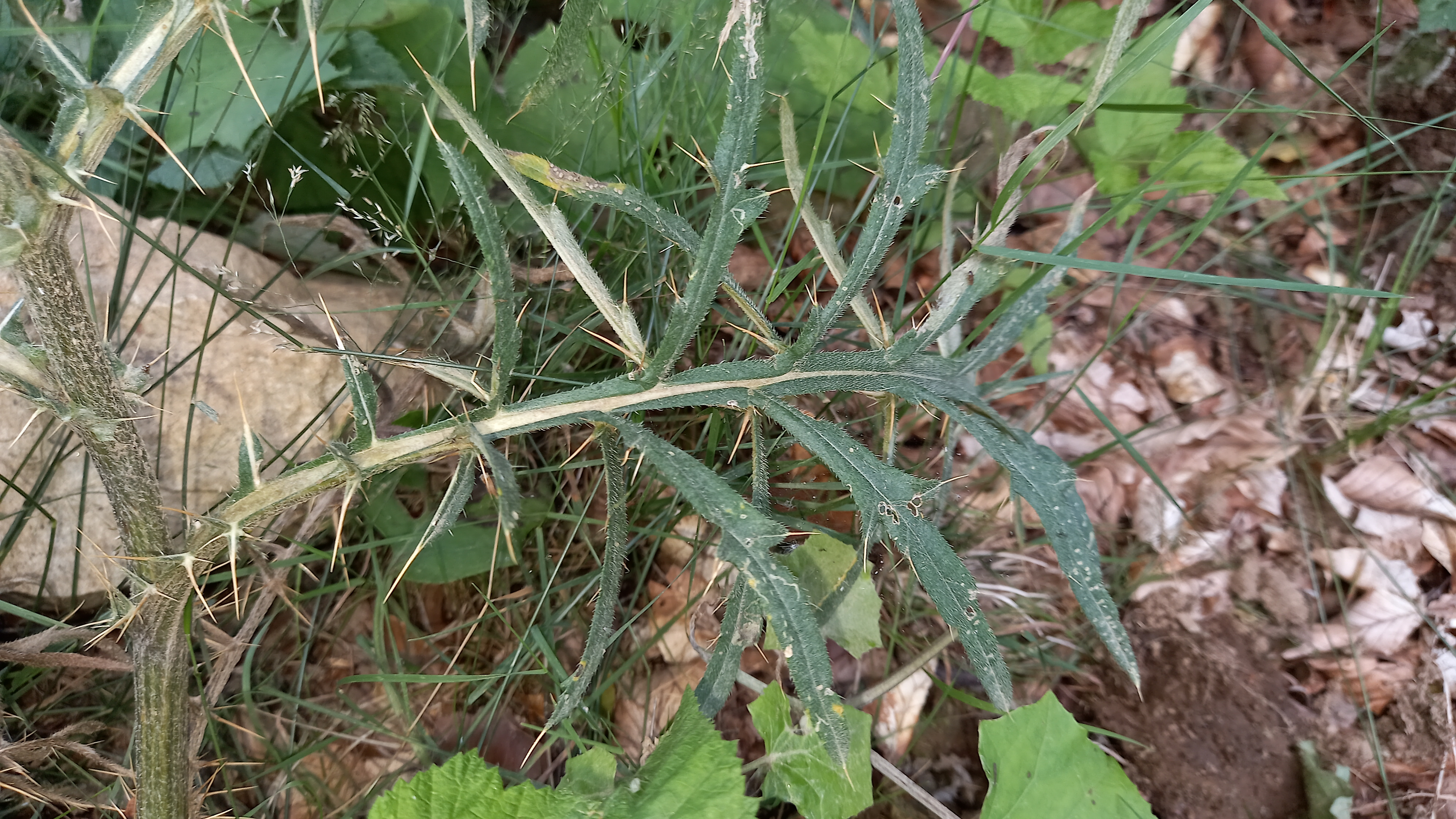
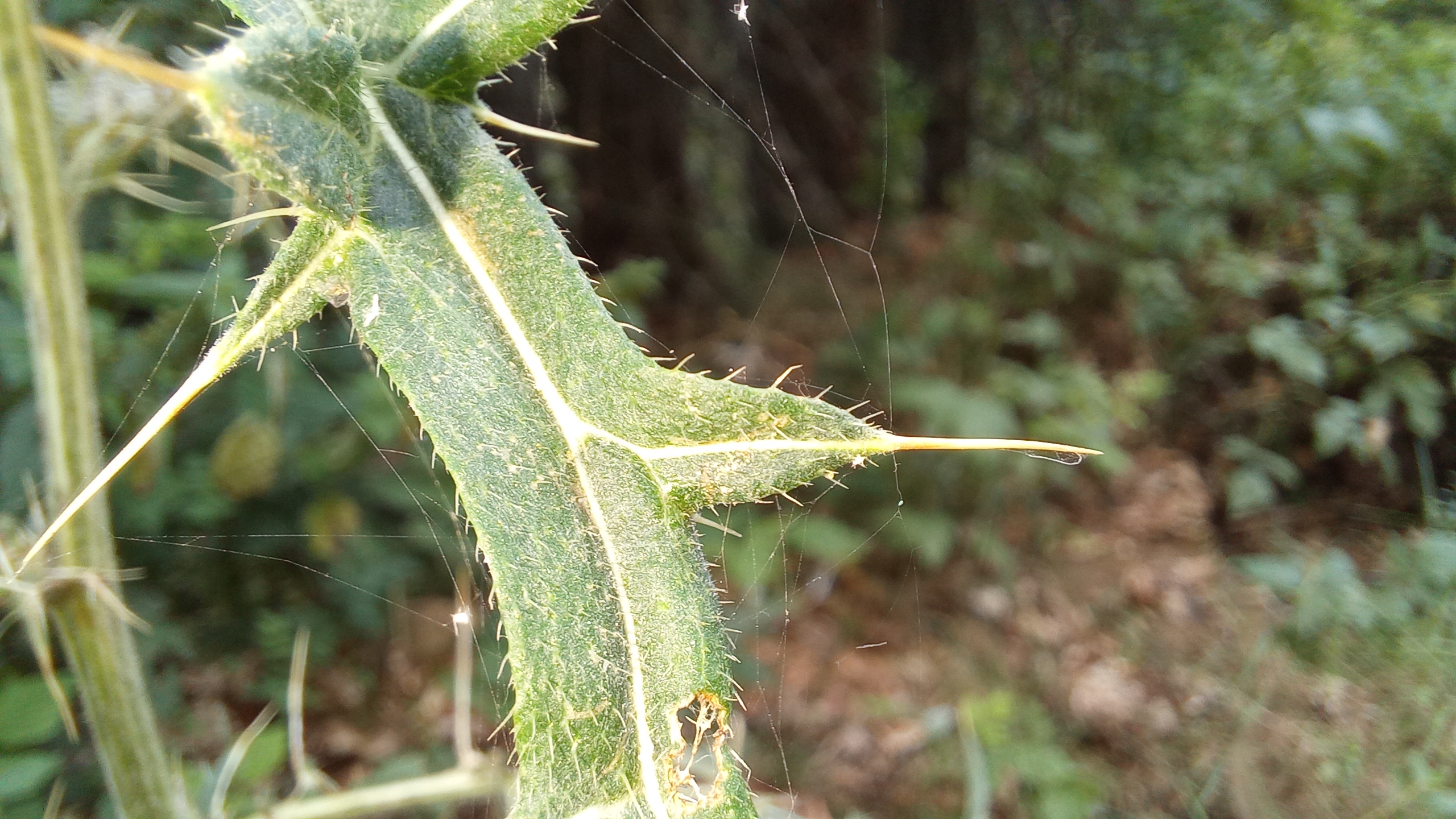
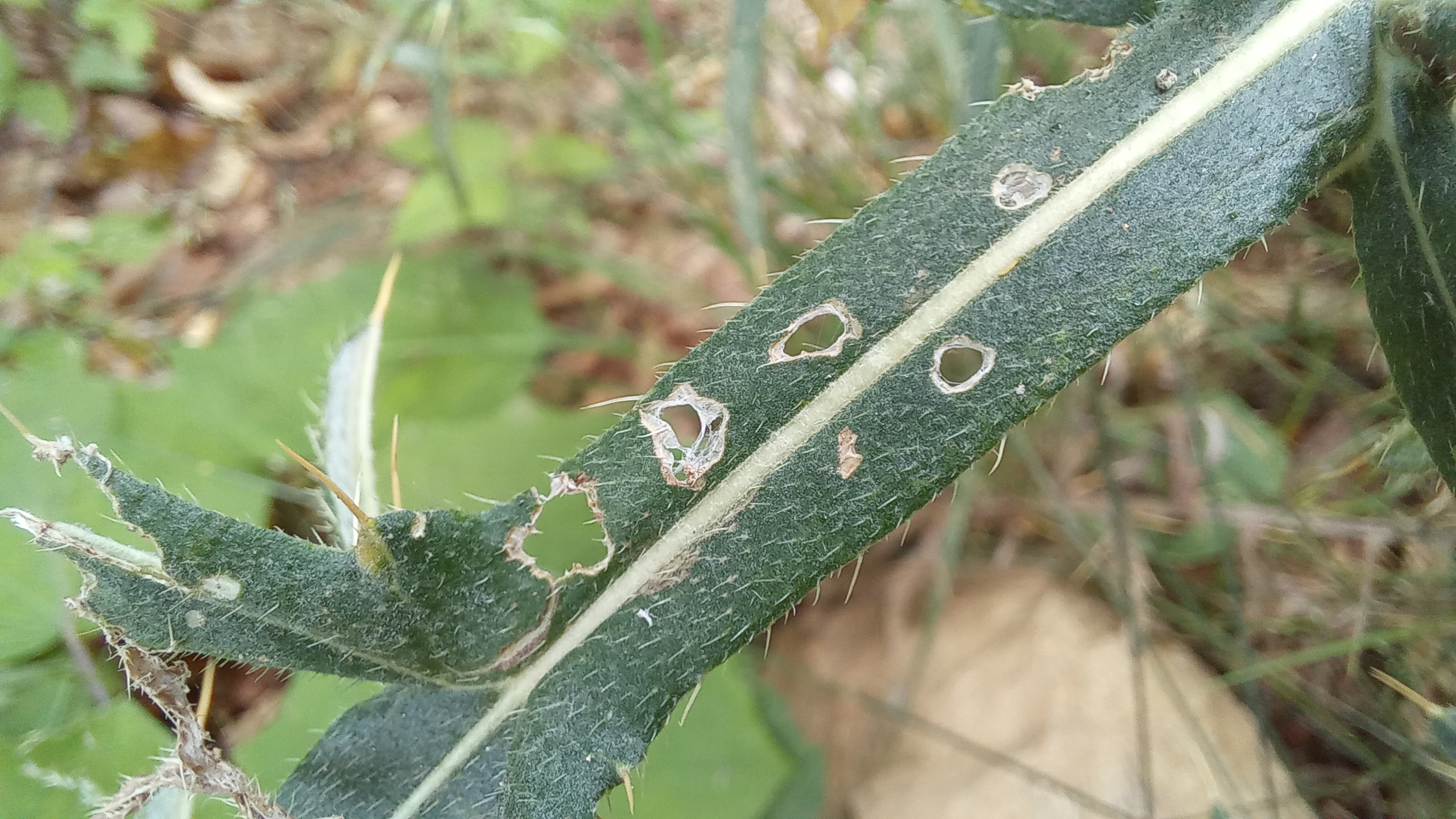
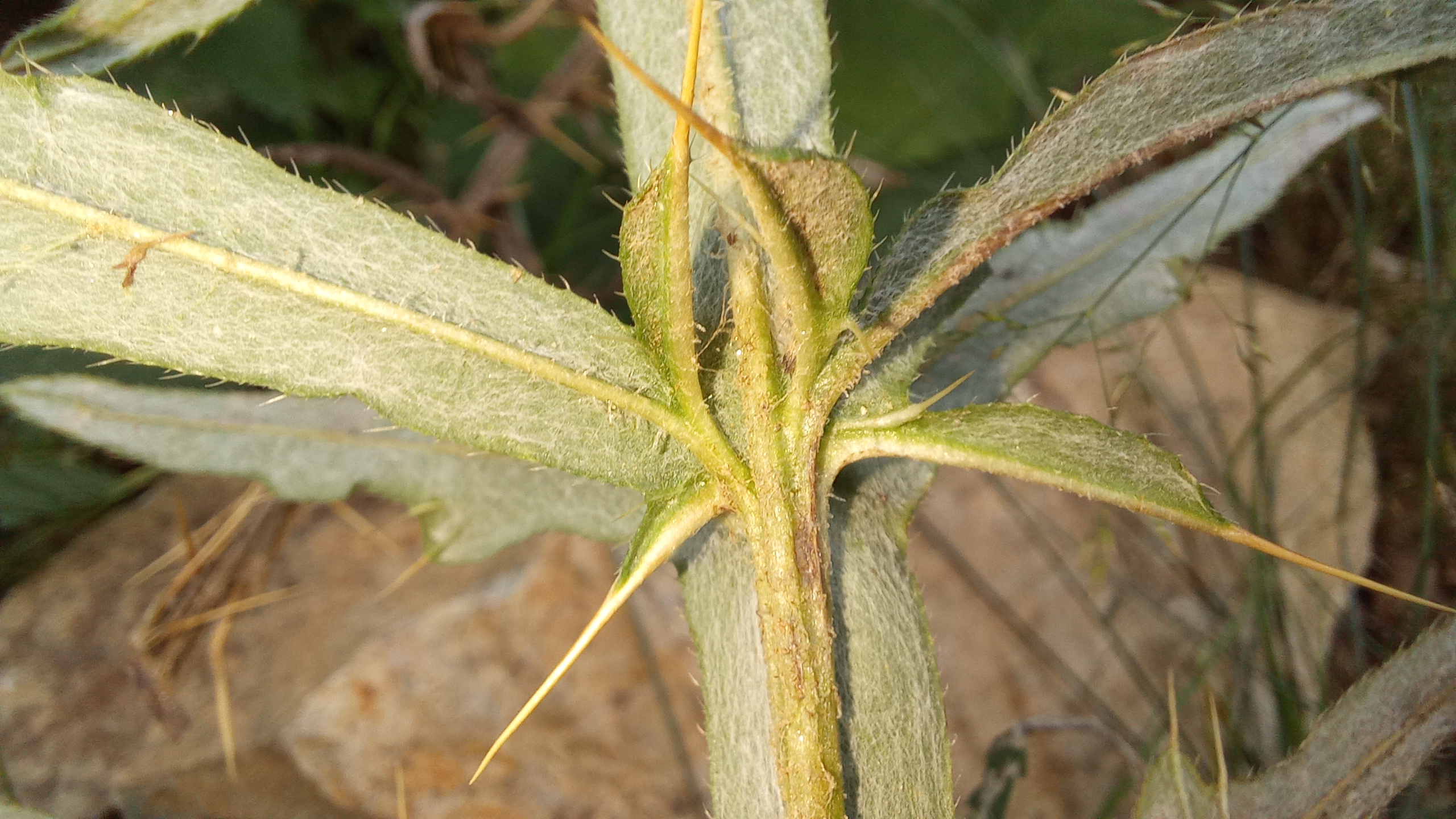
Cirsium ligulare subsp. armatum – habit. Osogovo – Ponikva, 27.08.2022. Photo by Trajche Dimitrovski.Cirsium ligulare subsp. armatum – fruiting capitulum. Osogovo – Ponikva, 27.08.2022. Photo by Trajche Dimitrovski.Cirsium ligulare subsp. armatum – fruiting capitulum. Osogovo – Ponikva, 27.08.2022. Photo by Trajche Dimitrovski.Cirsium ligulare subsp. armatum – involucral bracts. Osogovo – Ponikva, 27.08.2022. Photo by Trajche Dimitrovski.Cirsium ligulare subsp. armatum – involucral bracts. Osogovo – Ponikva, 27.08.2022. Photo by Trajche Dimitrovski.Cirsium ligulare subsp. armatum – capitulum with subtending leaves. Osogovo – Ponikva, 27.08.2022. Photo by Trajche Dimitrovski.Cirsium ligulare subsp. armatum – fruiting capitulum with achenes. Osogovo – Ponikva, 27.08.2022. Photo by Trajche Dimitrovski.Cirsium ligulare subsp. armatum – achene. Osogovo – Ponikva, 27.08.2022. Photo by Trajche Dimitrovski.Cirsium ligulare subsp. armatum – cauline leaves. Osogovo – Ponikva, 27.08.2022. Photo by Trajche Dimitrovski.Cirsium ligulare subsp. armatum – cauline leaves. Osogovo – Ponikva, 27.08.2022. Photo by Trajche Dimitrovski.Cirsium ligulare subsp. armatum – habit. Osogovo – Ponikva, 27.08.2022. Photo by Trajche Dimitrovski.Cirsium ligulare subsp. armatum – capitulum. Osogovo – Ponikva, 27.08.2022. Photo by Trajche Dimitrovski.Cirsium ligulare subsp. armatum – capitulum. Osogovo – Ponikva, 27.08.2022. Photo by Trajche Dimitrovski.Cirsium ligulare subsp. armatum – involucral bracts. Osogovo – Ponikva, 27.08.2022. Photo by Trajche Dimitrovski.Cirsium ligulare subsp. armatum – subtending leaves. Osogovo – Ponikva, 27.08.2022. Photo by Trajche Dimitrovski.Cirsium ligulare subsp. armatum – stem and cauline leaves. Osogovo – Ponikva, 27.08.2022. Photo by Trajche Dimitrovski.Cirsium ligulare subsp. armatum – adaxial side of cauline leaf. Osogovo – Ponikva, 27.08.2022. Photo by Trajche Dimitrovski.Cirsium ligulare subsp. armatum – adaxial side of cauline leaf. Osogovo – Ponikva, 27.08.2022. Photo by Trajche Dimitrovski.Cirsium ligulare subsp. armatum – abaxial side of cauline leaf. Osogovo – Ponikva, 27.08.2022. Photo by Trajche Dimitrovski.Cirsium ligulare subsp. armatum – abaxial side of cauline leaf. Osogovo – Ponikva, 27.08.2022. Photo by Trajche Dimitrovski.
References:
Cirsium ligulare subsp. armatum. Greuter, W. (2006+): Compositae (pro parte majore). – In: Greuter, W. & Raab-Straube, E. von (ed.): Compositae. Euro+Med Plantbase – the information resource for Euro-Mediterranean plant diversity. https://europlusmed.org/cdm_dataportal/taxon/496171e8-6df5-4613-9609-ebd22fe46a37 [Accessed 26.01.2023].
Gajić, M. 1975. Rod Cirsium Adans. In Josifović (ed.), Flora SR Srbije, VII. Beograd: Srpska Akademija Nauka i Umetnosti, pp. 197–220.
Werner, K. 1976. Cirsium Miller. In Tutin, T. G., Heywood, V. H., Burges, N. A., Moore, D. M., Valentine, D. H., Walters, S. M. & Webb, D. A. (eds.), Flora Europaea. Volume 4. Plantaginaceae to Compositae (and Rubiaceae). Cambridge: Cambridge University Press, pp. 232–242.
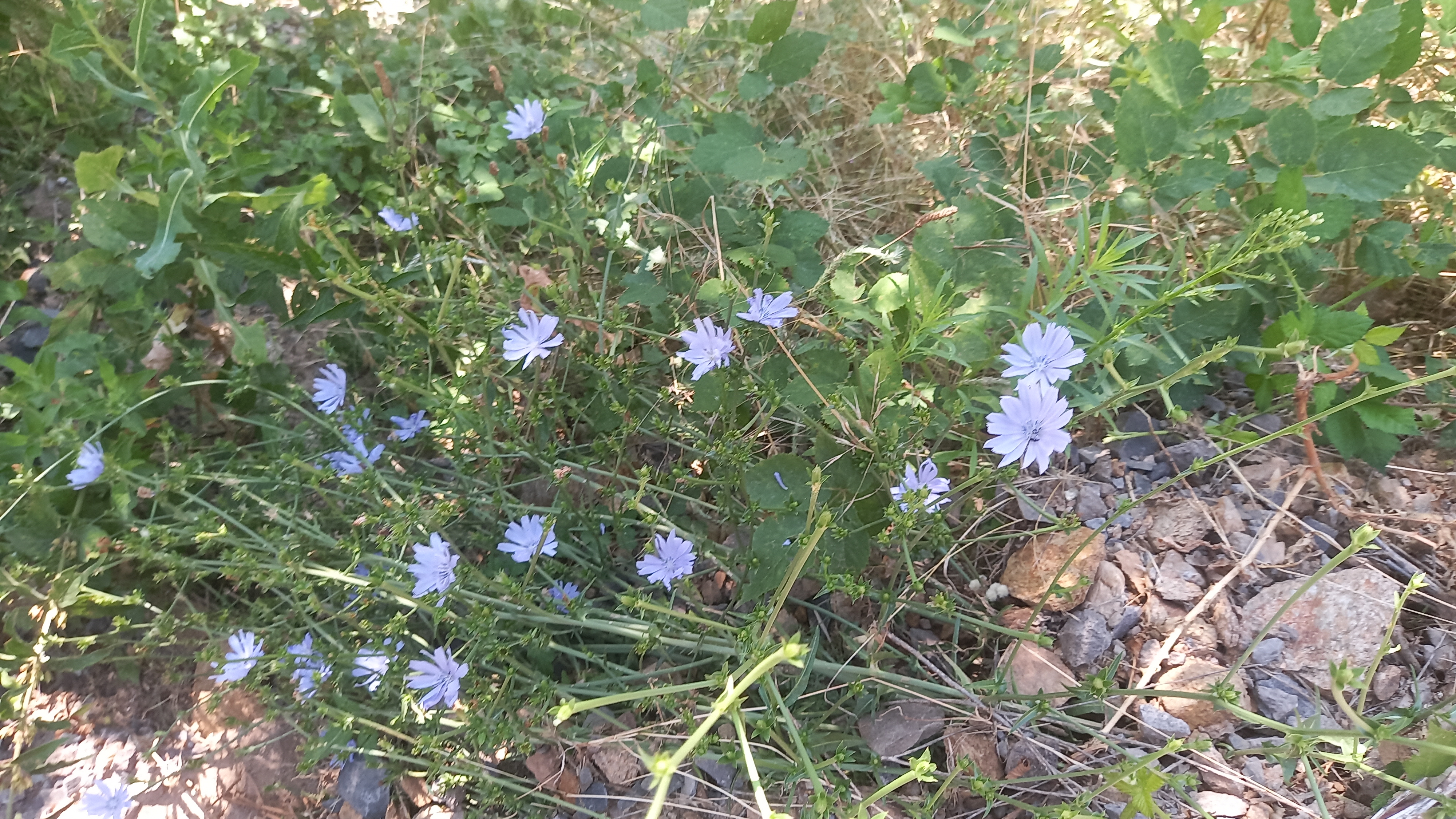
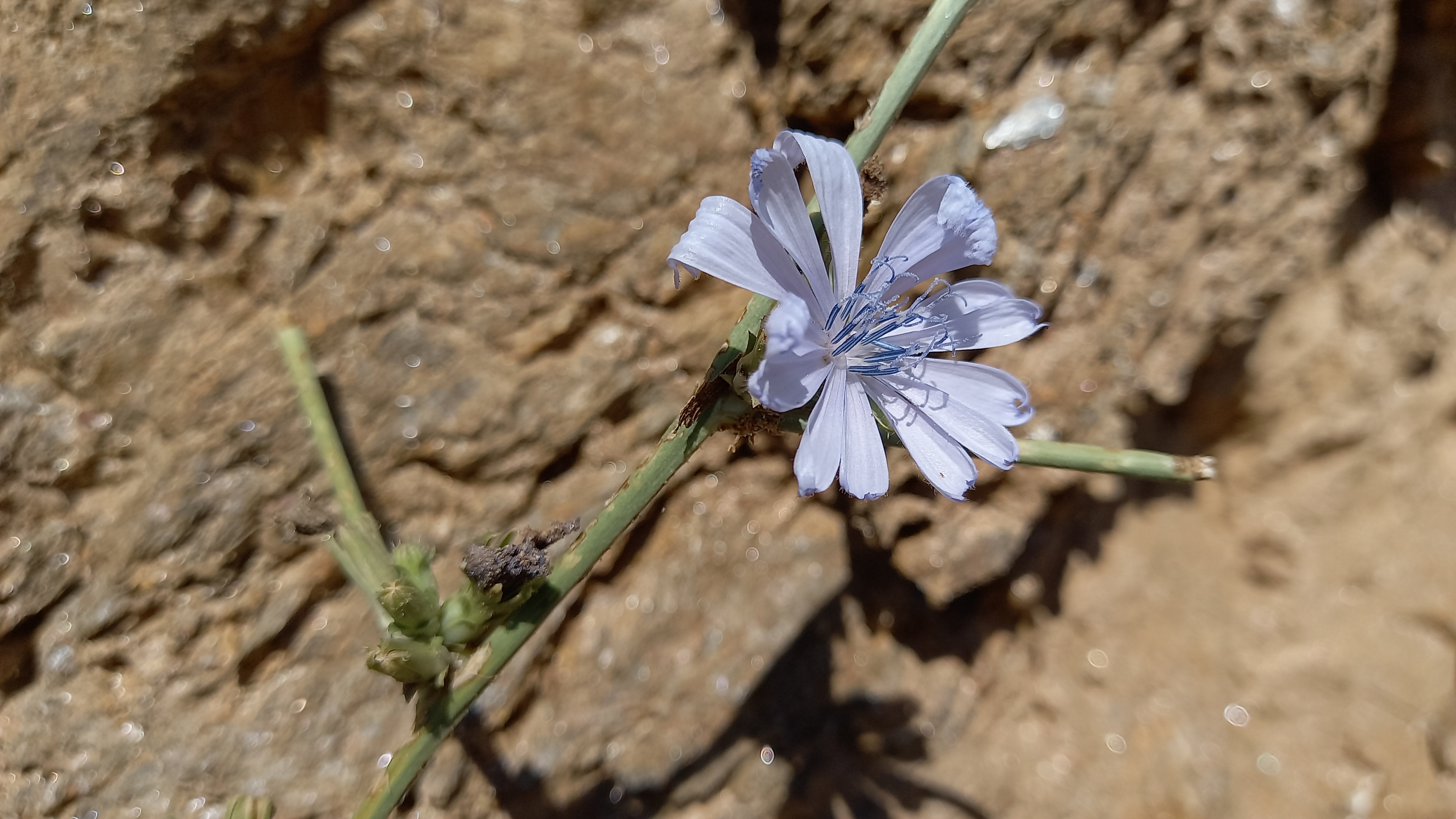
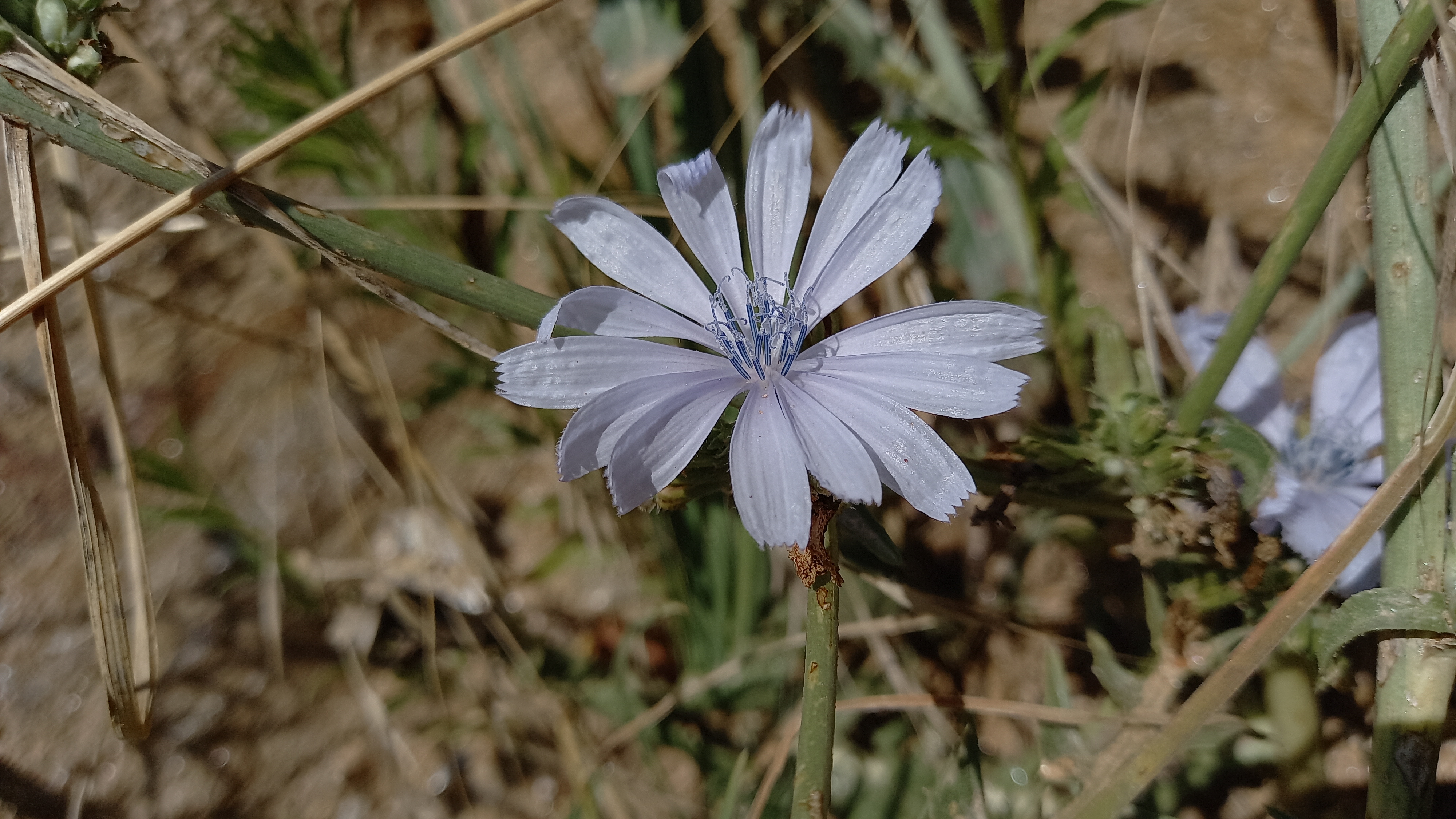
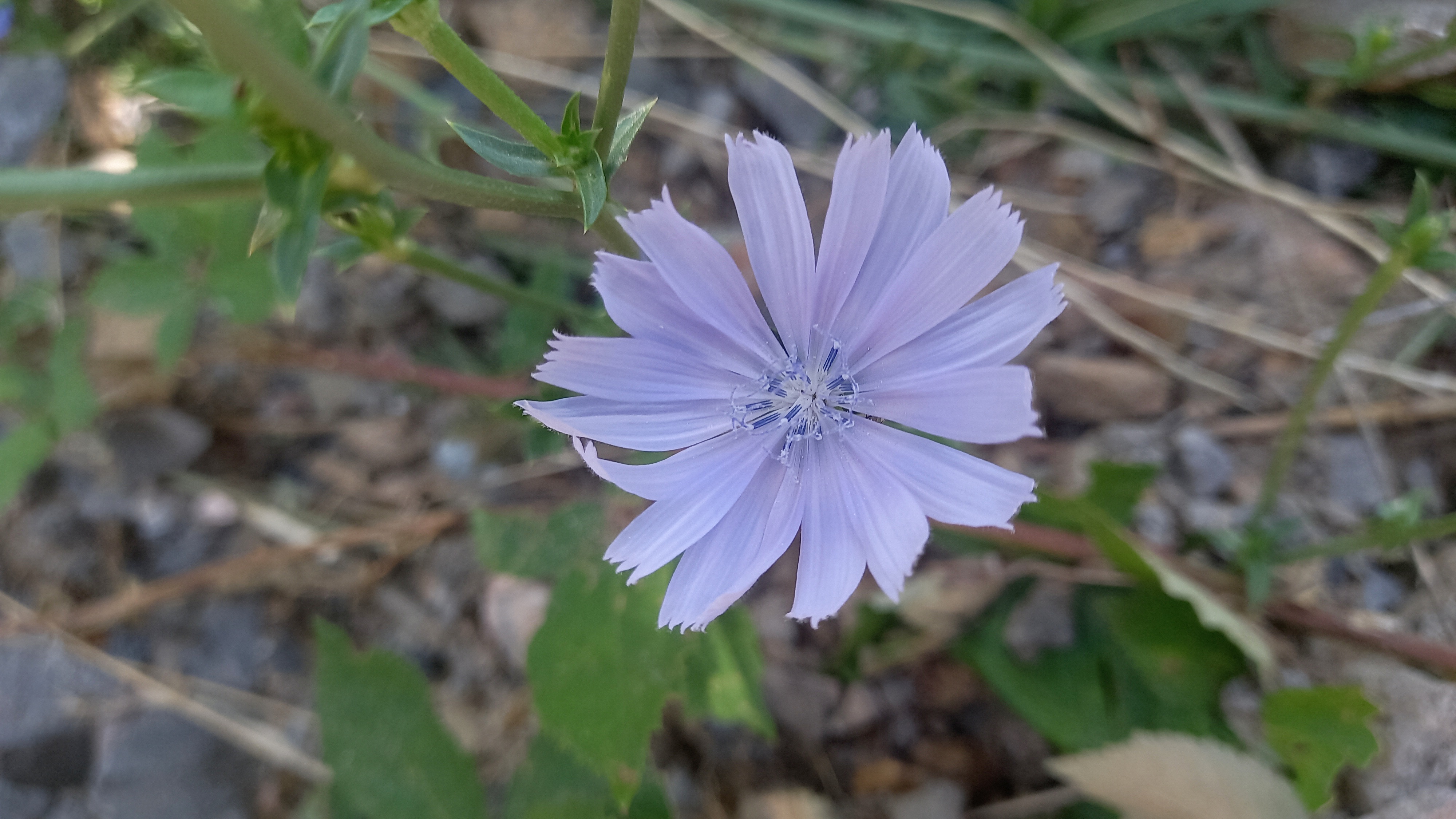
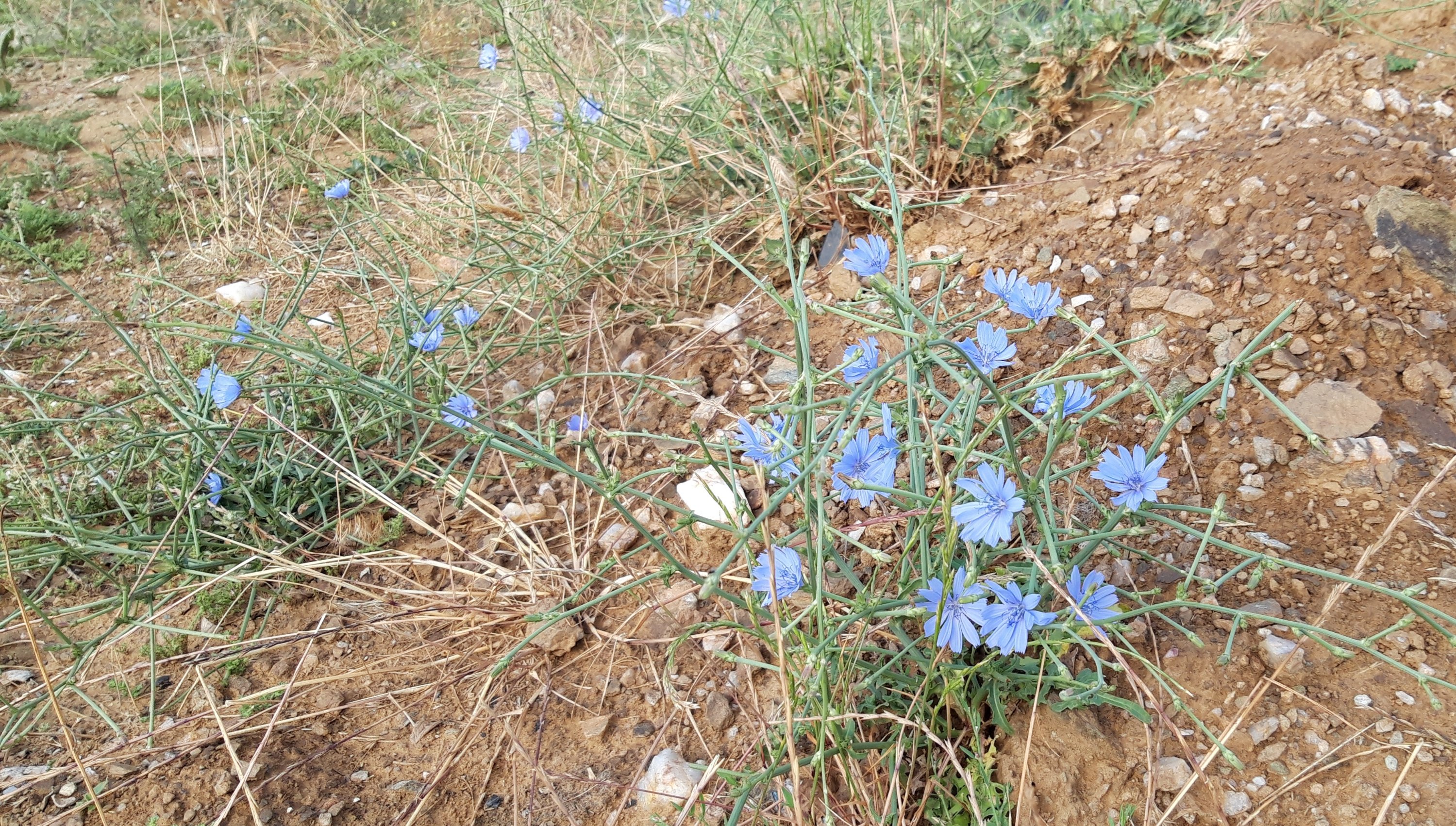
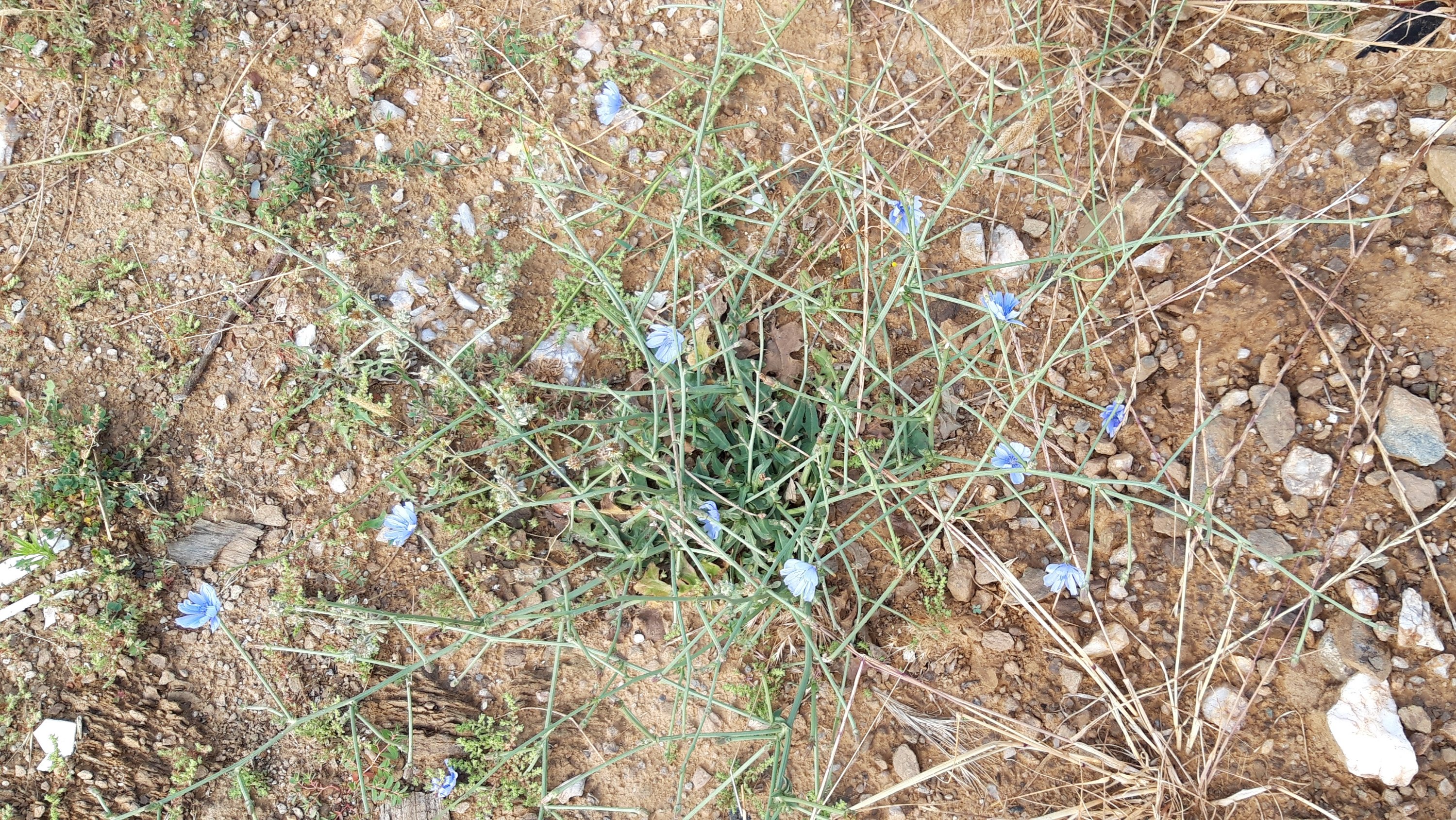
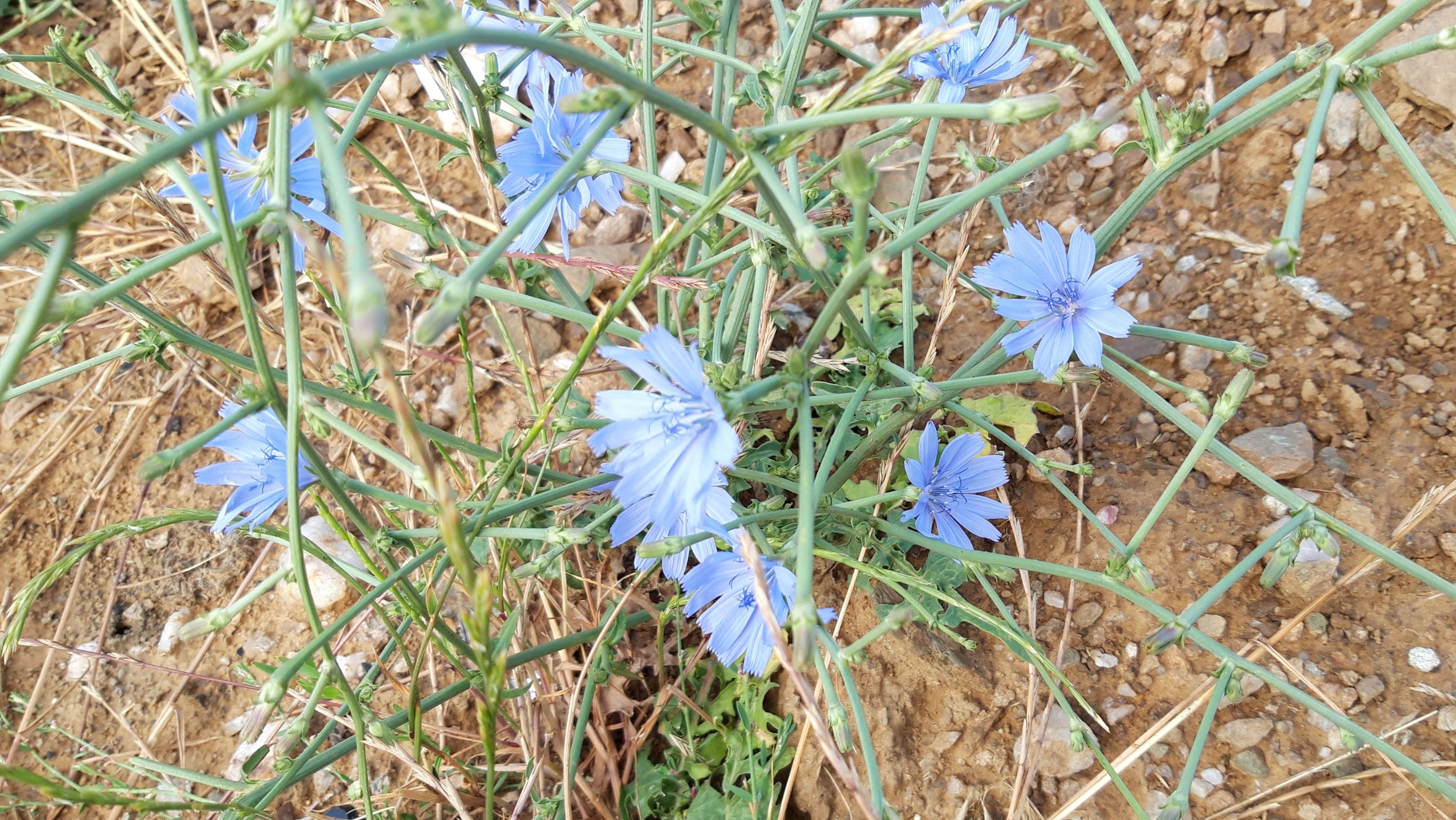
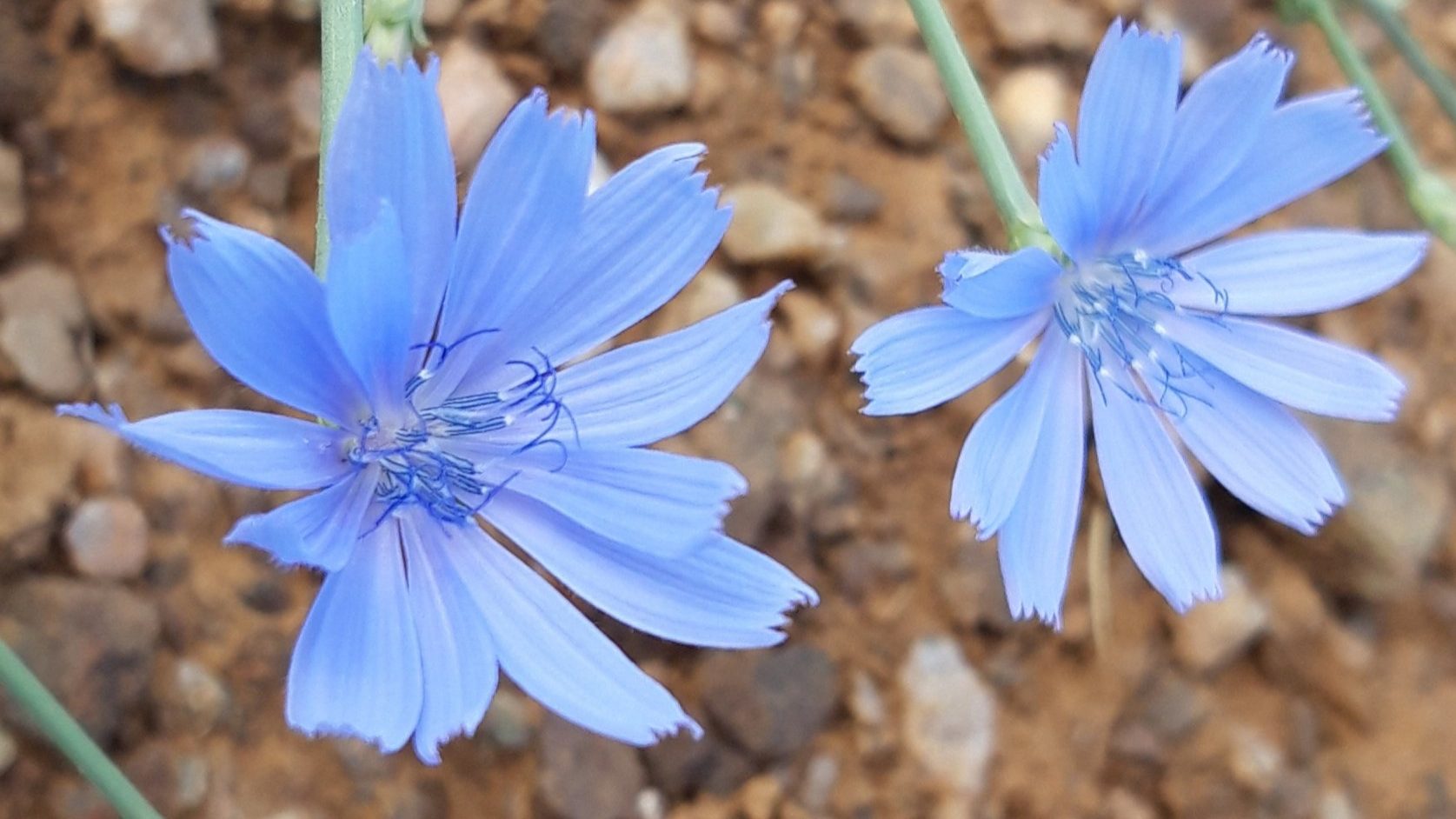
Taxonomy: Fam. Compositae// Genus: Cichorium// Species: Cichorium intybus L.
Determined according to the botanical key provided by Sell (1976 in Tutin et al.).
Lifeform: Perennial plant. Hemicryptophyte according to the Raunkiær system.
Distribution: Native from Europe to Central Asia and West Himalaya, Macaronesia to North Africa according to the distribution information provided by the Plants of the World Online portal (Royal Botanic Gardens, Kew).
Habitat: Clearings of forests, pastures, disturbed ground, roadsides and other ruderal areas.
Flowering period: Summer to fall (JUN, JUL, AUG, SEP).
Locality: ridge between the gorges of “Golema” River and “Orizarska” River near village of Krushka. Date: 08.08.2022.
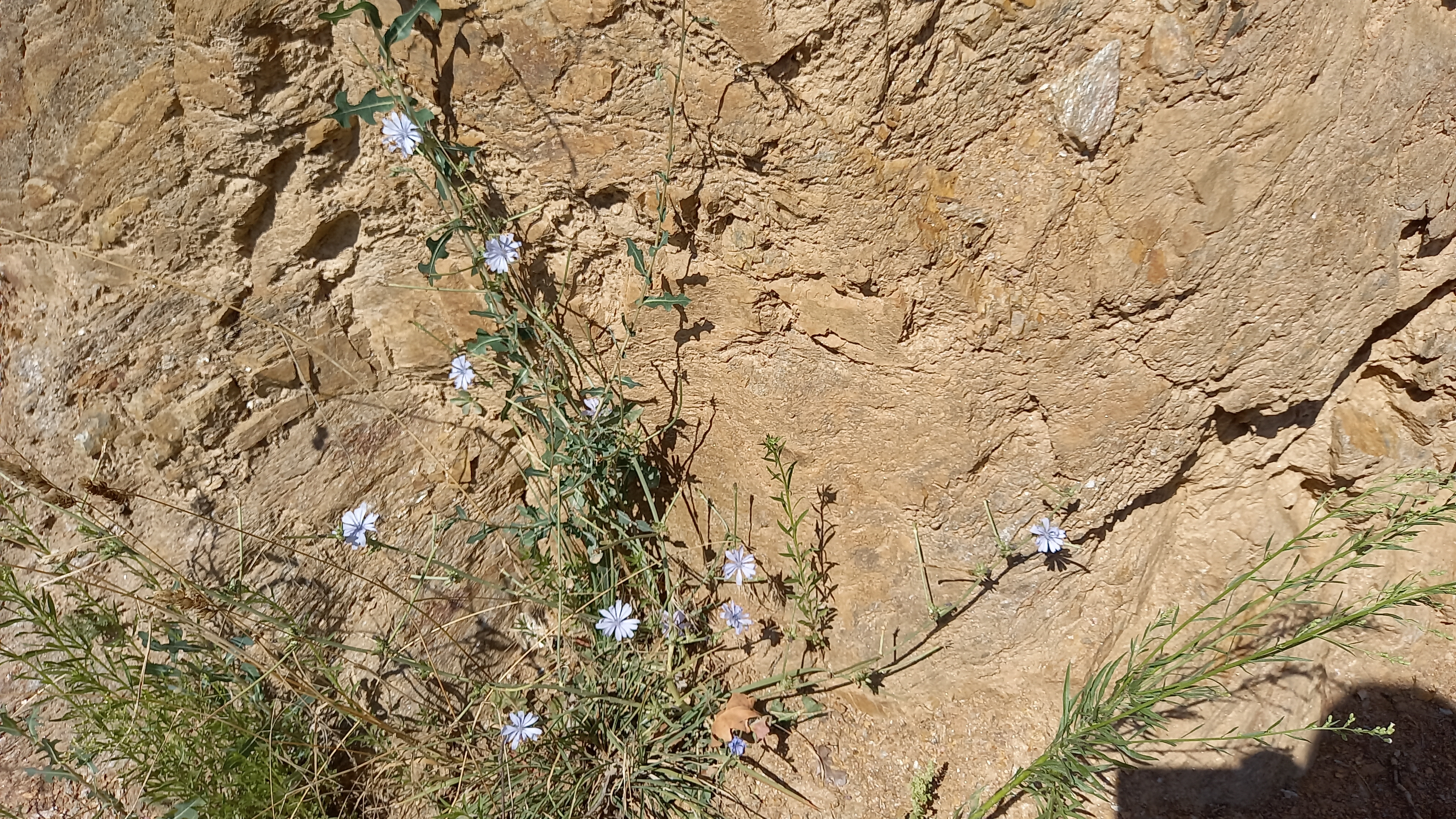
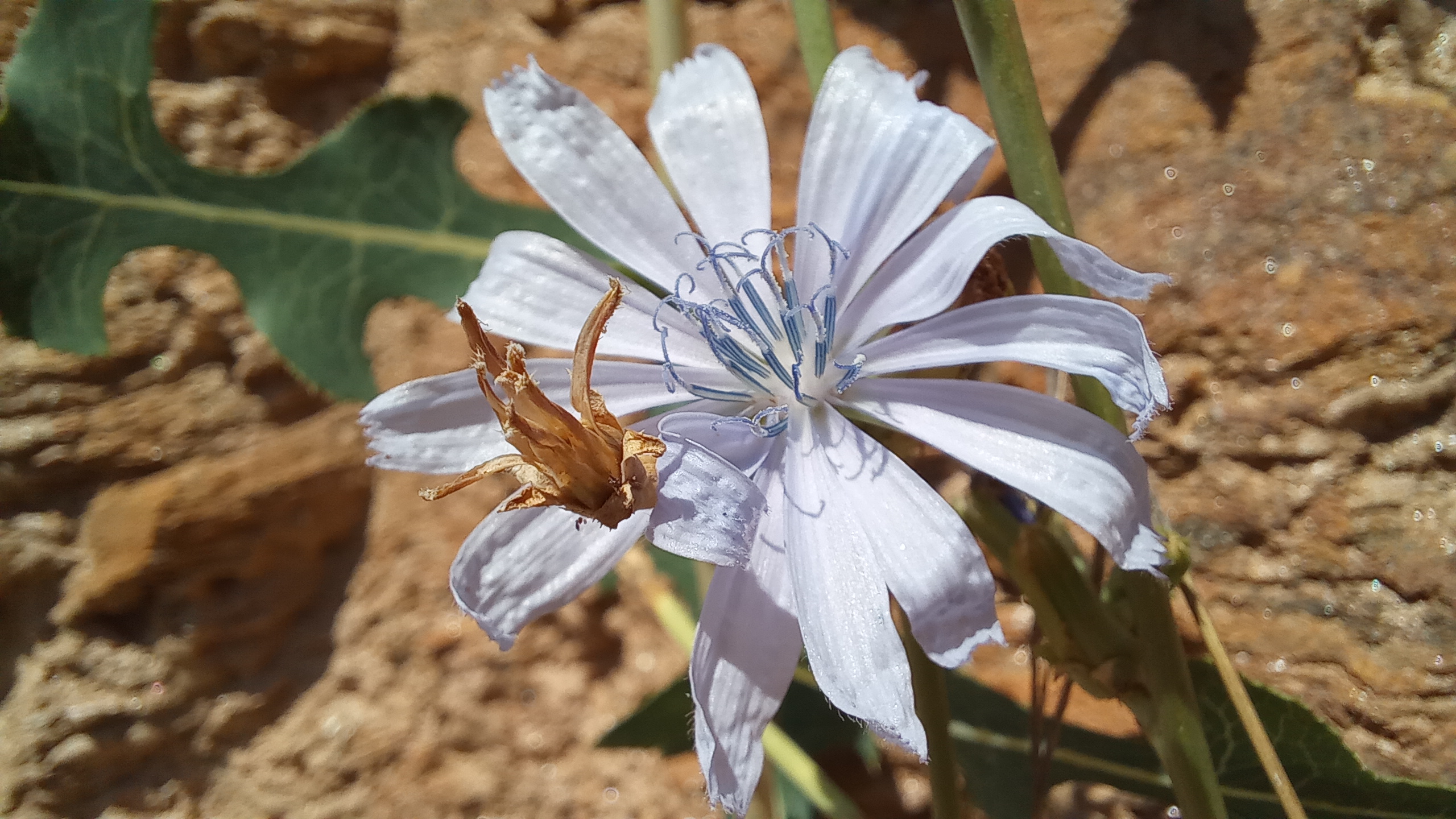
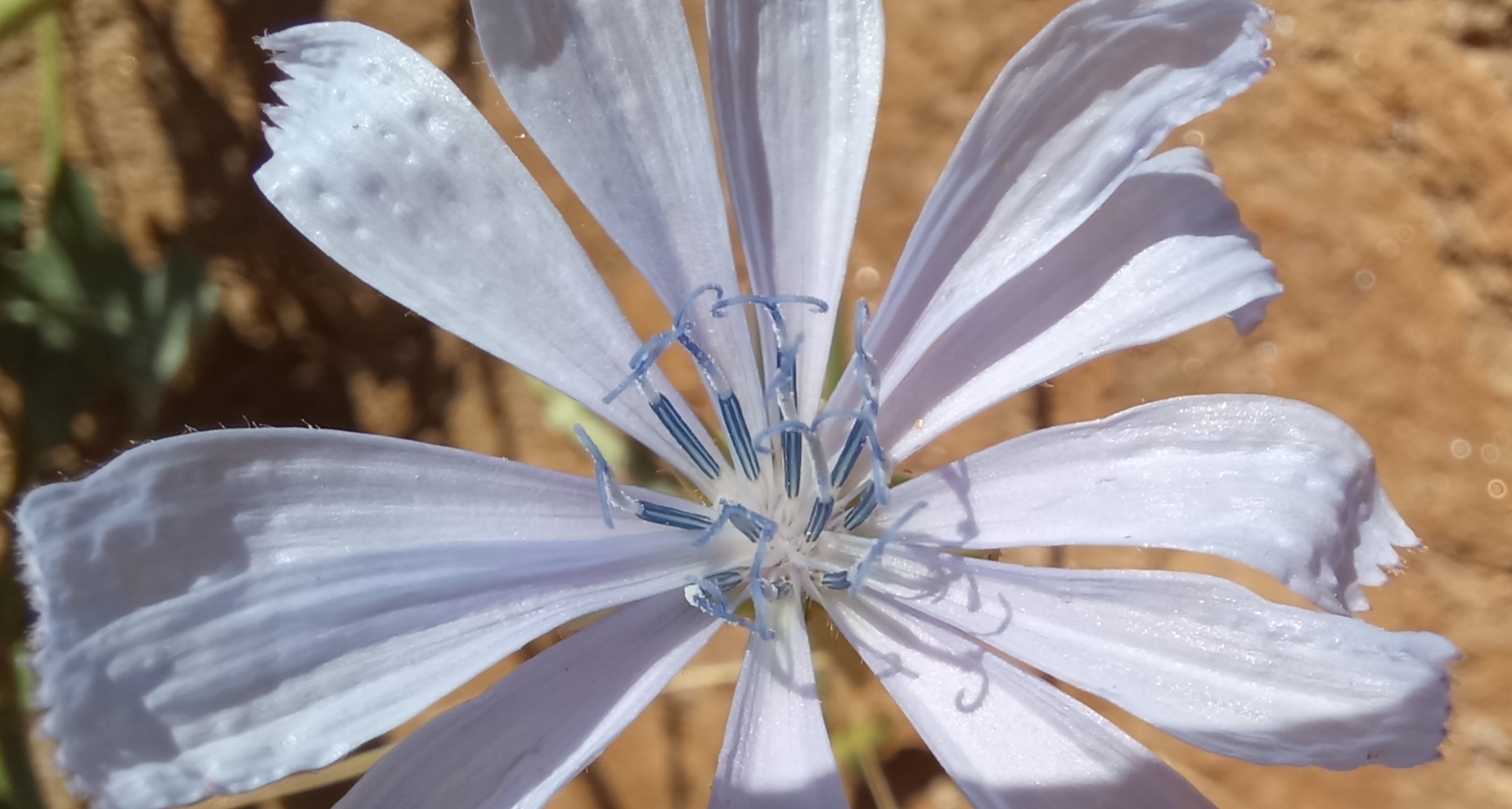
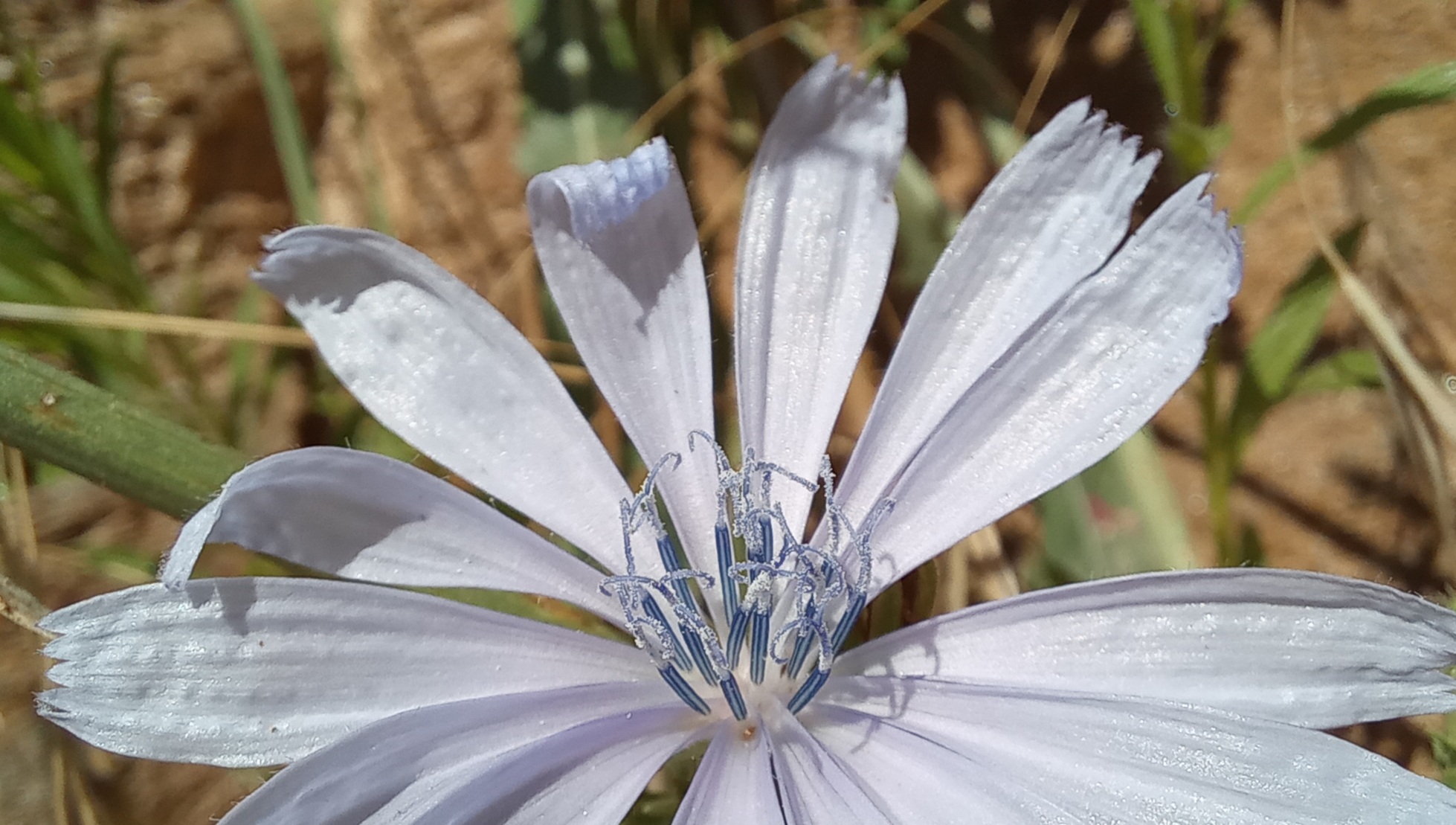
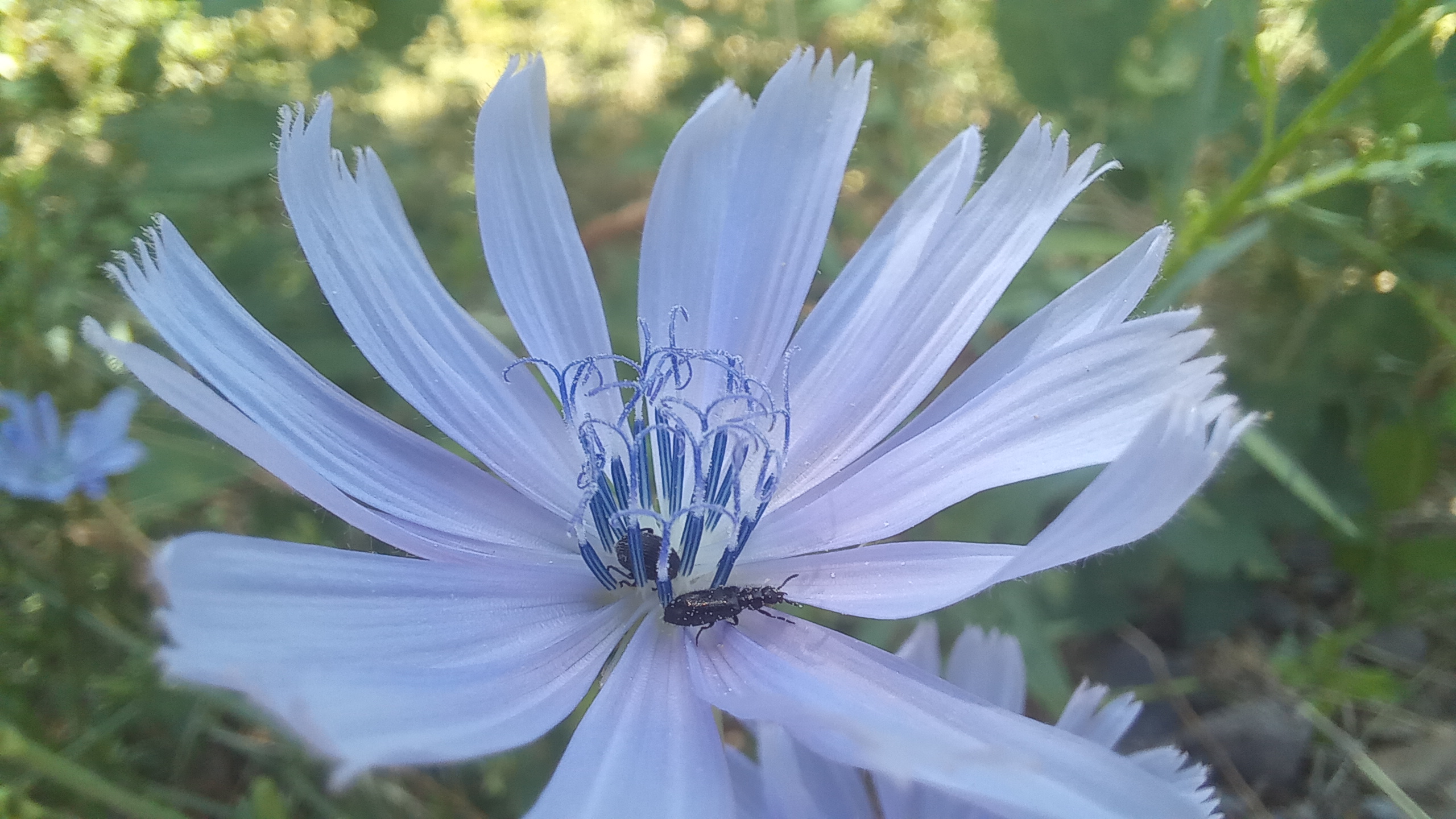
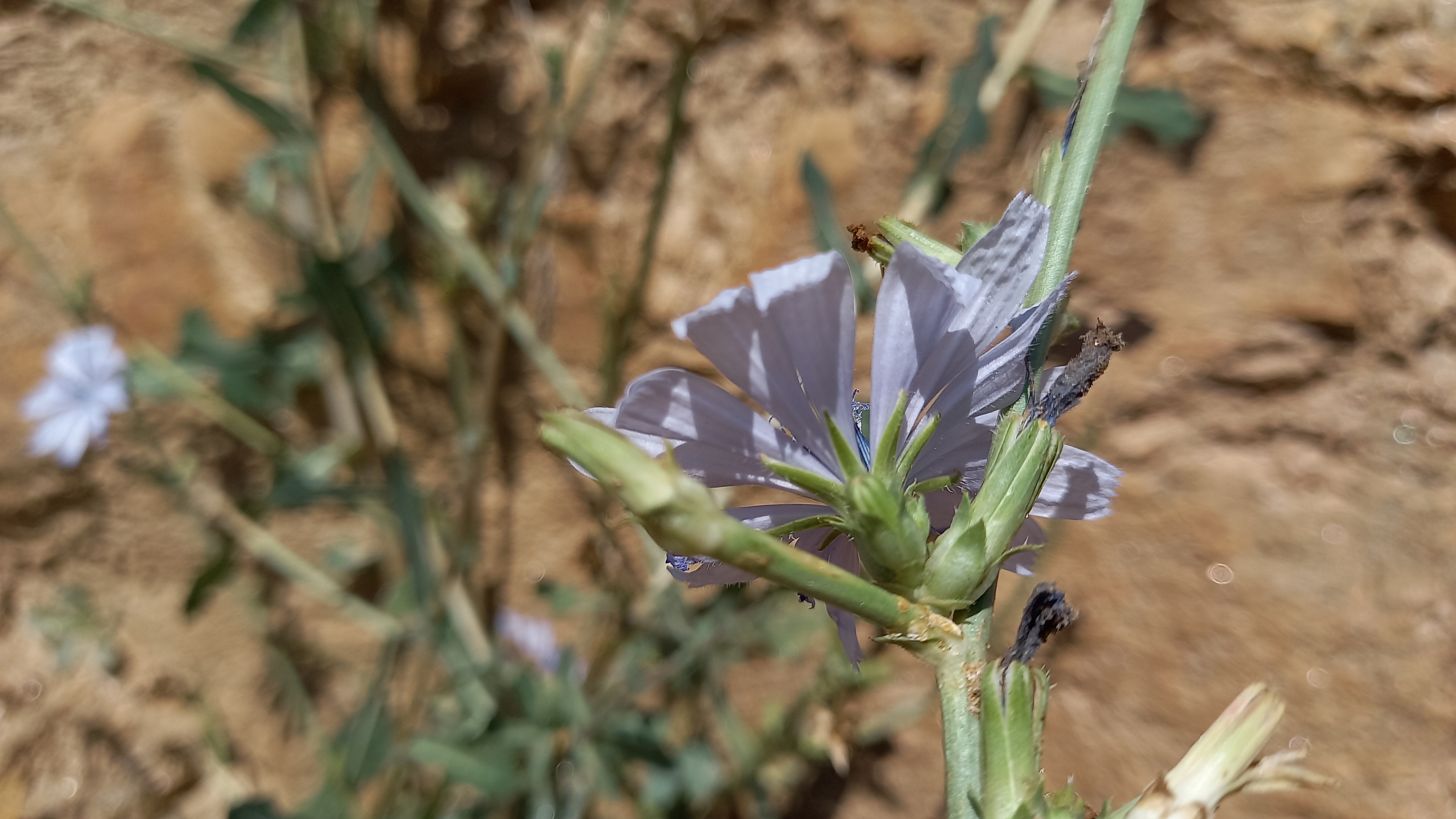
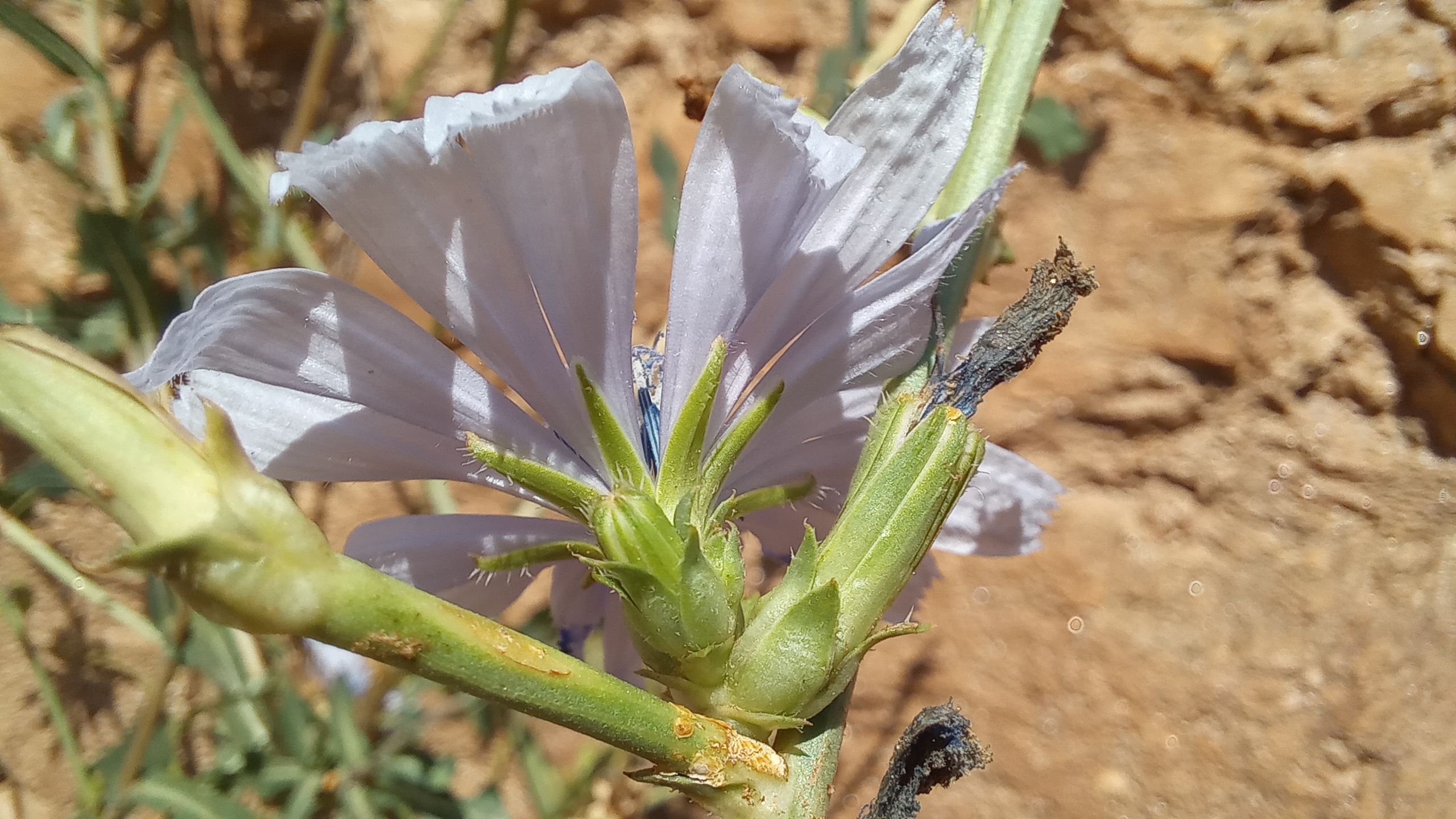
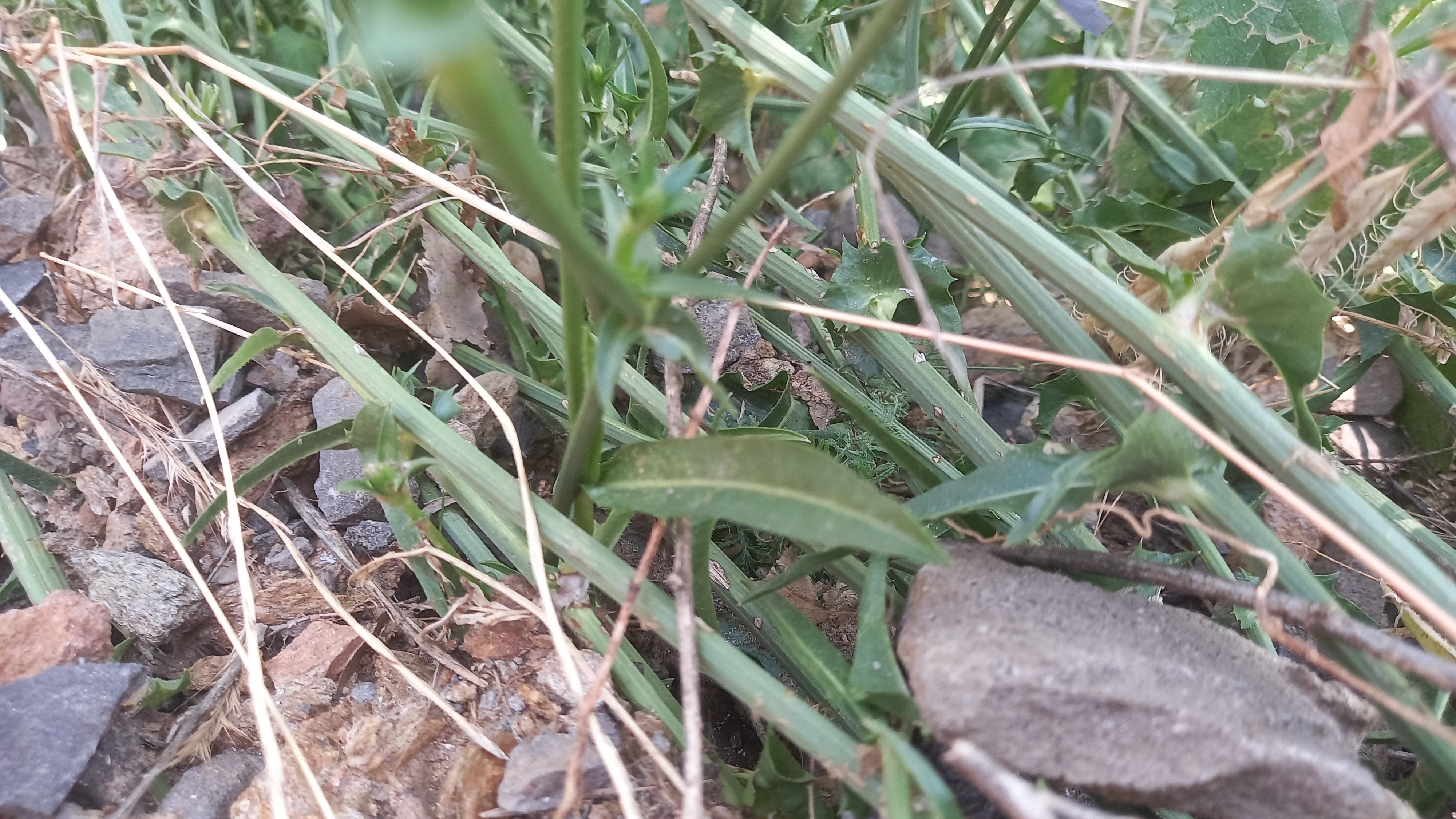
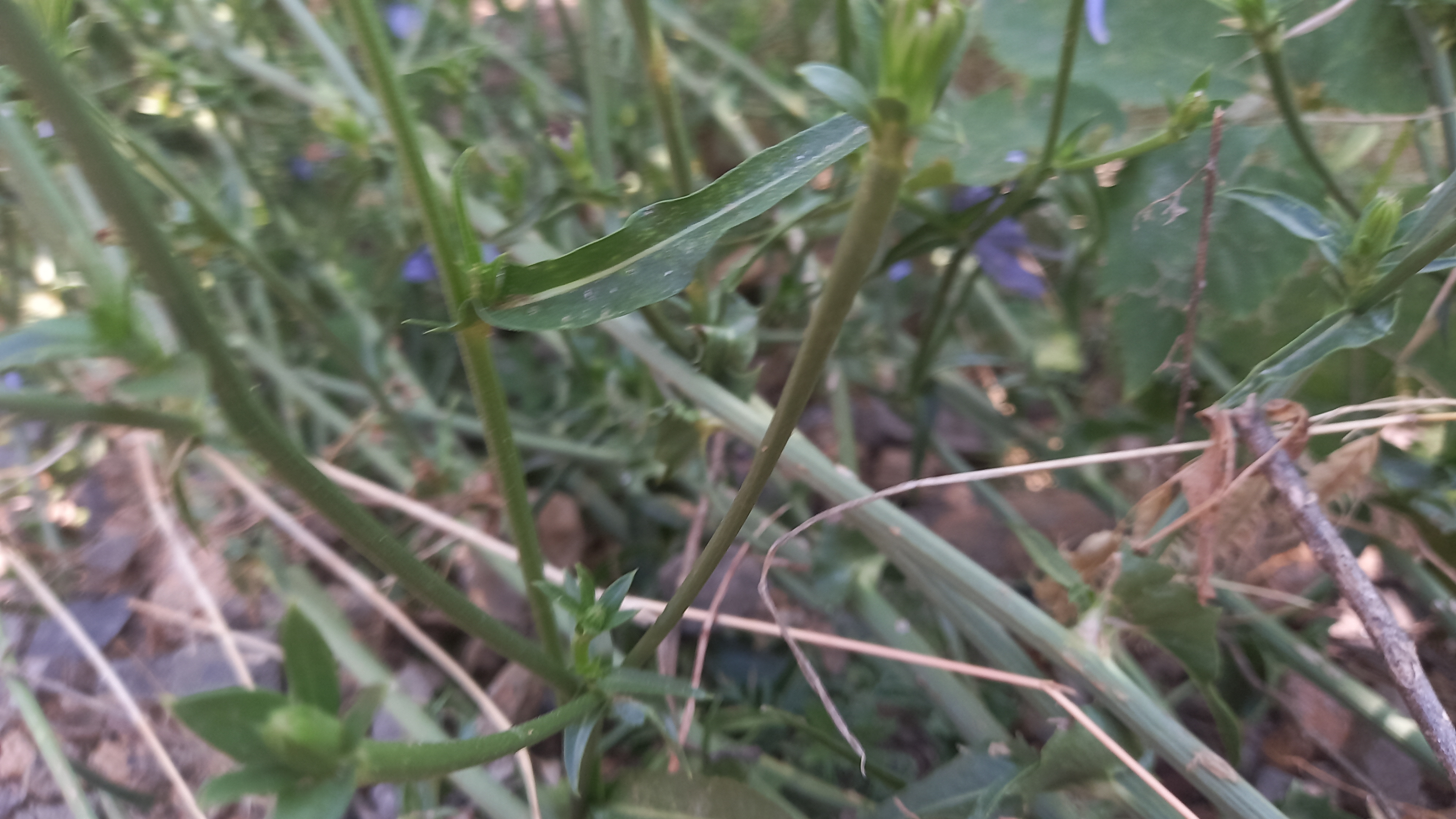
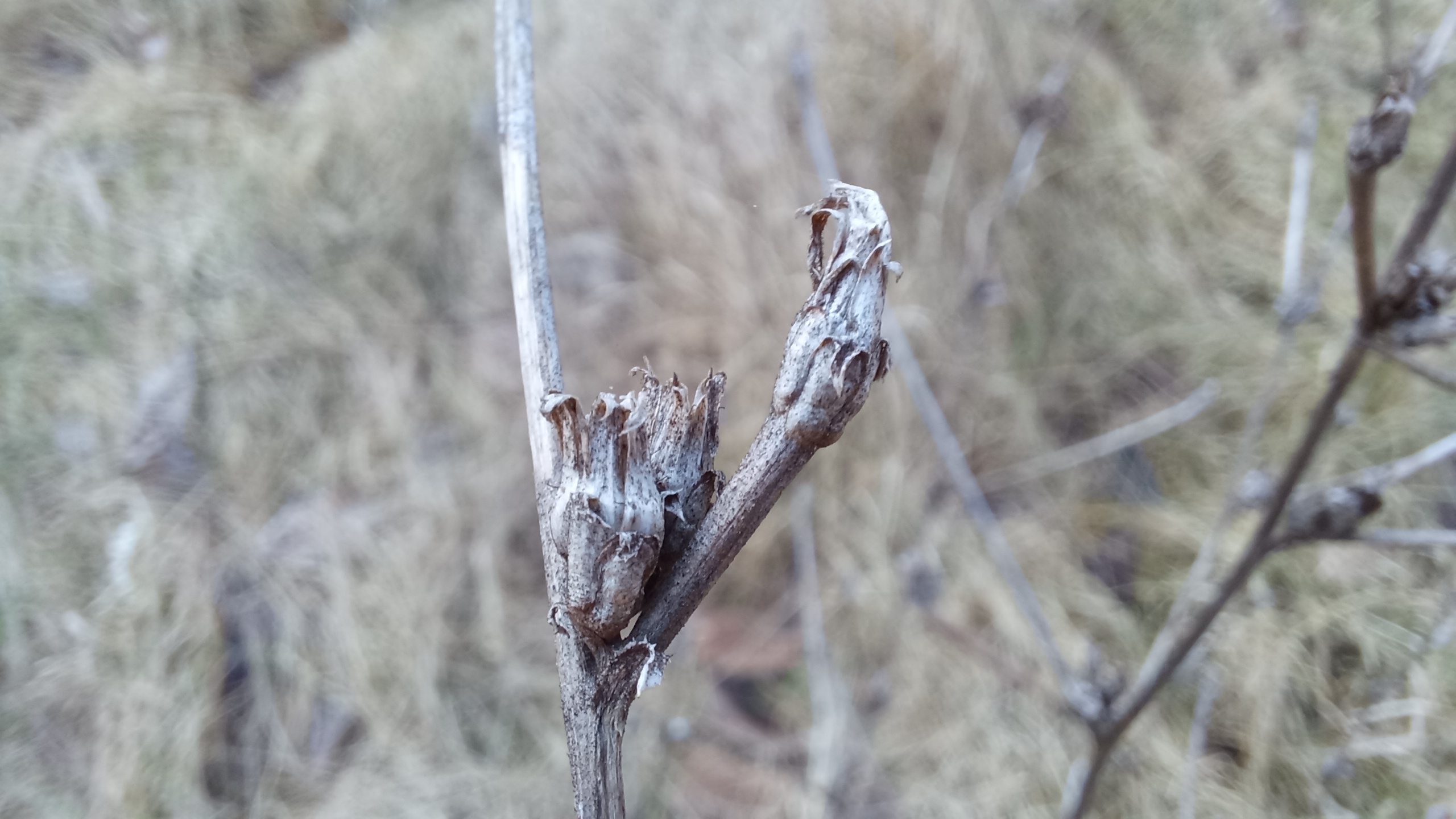
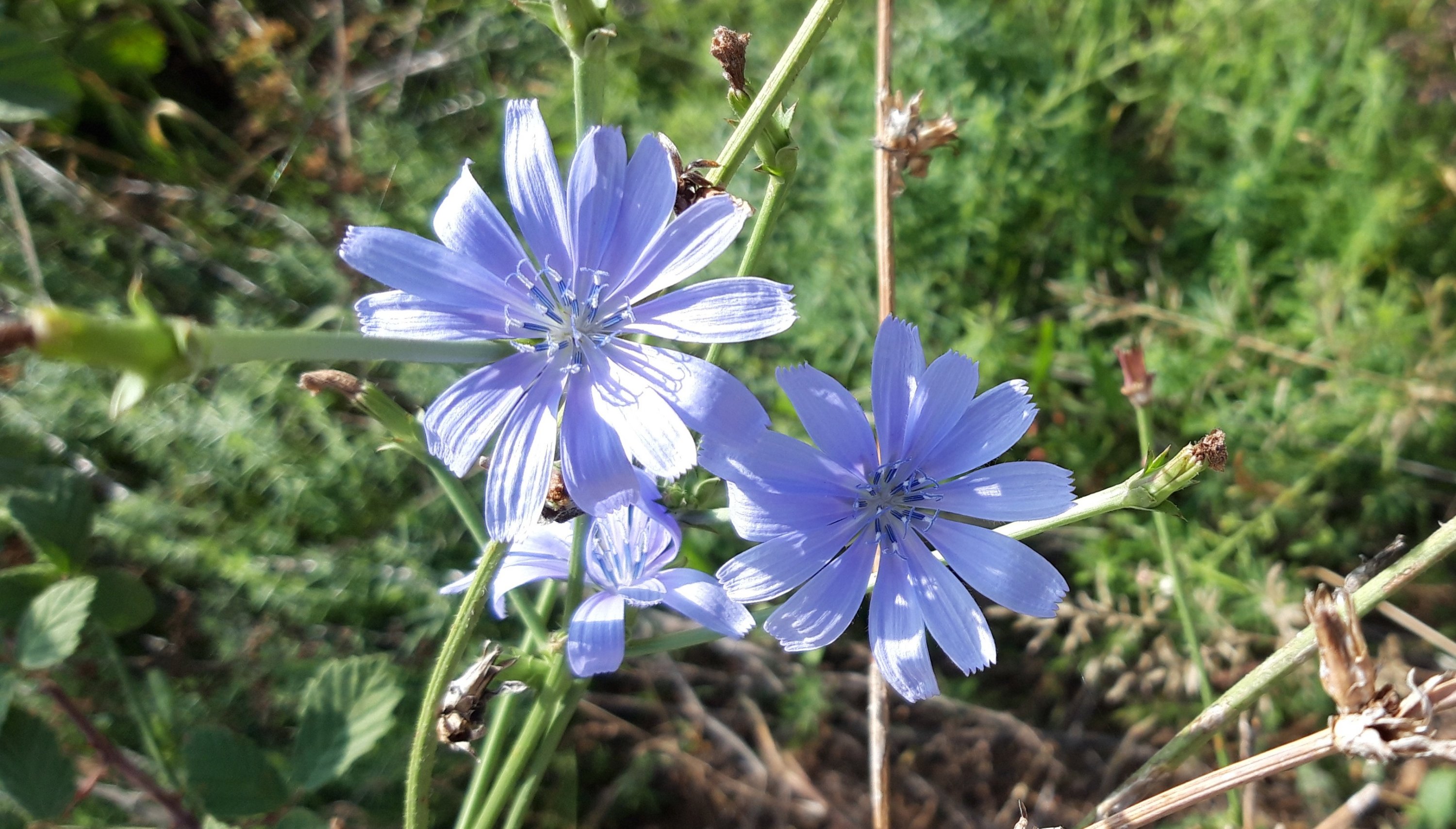
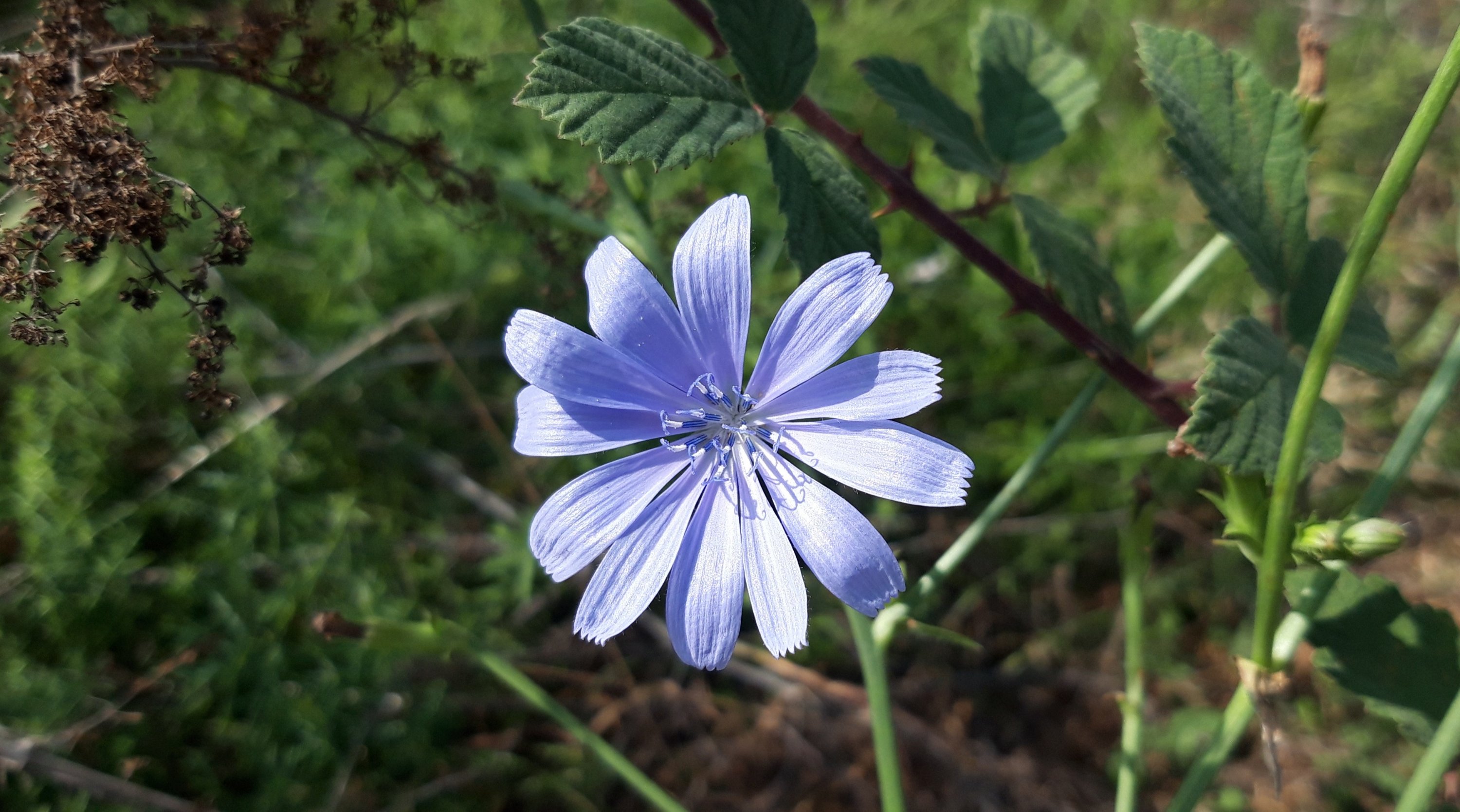
Cichorium intybus – habit. Osogovo, mountain ridge between the gorges of “Golema” River and “Orizarska” River near village of Krushka, 08.08.2022. Photo by Trajche Dimitrovski.Cichorium intybus – habit. Osogovo, mountain ridge between the gorges of “Golema” River and “Orizarska” River near village of Krushka, 08.08.2022. Photo by Trajche Dimitrovski.Cichorium intybus – capitulum. Osogovo, mountain ridge between the gorges of “Golema” River and “Orizarska” River near village of Krushka, 08.08.2022. Photo by Trajche Dimitrovski.Cichorium intybus – capitulum. Osogovo, mountain ridge between the gorges of “Golema” River and “Orizarska” River near village of Krushka, 08.08.2022. Photo by Trajche Dimitrovski.Cichorium intybus – capitulum. Osogovo, mountain ridge between the gorges of “Golema” River and “Orizarska” River near village of Krushka, 08.08.2022. Photo by Trajche Dimitrovski.Cichorium intybus – capitulum. Osogovo, mountain ridge between the gorges of “Golema” River and “Orizarska” River near village of Krushka, 08.08.2022. Photo by Trajche Dimitrovski.Cichorium intybus – florets. Osogovo, mountain ridge between the gorges of “Golema” River and “Orizarska” River near village of Krushka, 08.08.2022. Photo by Trajche Dimitrovski.Cichorium intybus – florets. Osogovo, mountain ridge between the gorges of “Golema” River and “Orizarska” River near village of Krushka, 08.08.2022. Photo by Trajche Dimitrovski.Cichorium intybus – capitulum. Osogovo, mountain ridge between the gorges of “Golema” River and “Orizarska” River near village of Krushka, 08.08.2022. Photo by Trajche Dimitrovski.Cichorium intybus – involucre of capitula. Osogovo, mountain ridge between the gorges of “Golema” River and “Orizarska” River near village of Krushka, 08.08.2022. Photo by Trajche Dimitrovski.Cichorium intybus – involucre of capitula. Osogovo, mountain ridge between the gorges of “Golema” River and “Orizarska” River near village of Krushka, 08.08.2022. Photo by Trajche Dimitrovski.Cichorium intybus – stems with leaves. Osogovo, mountain ridge between the gorges of “Golema” River and “Orizarska” River near village of Krushka, 08.08.2022. Photo by Trajche Dimitrovski.Cichorium intybus – stems with leaves. Osogovo, mountain ridge between the gorges of “Golema” River and “Orizarska” River near village of Krushka, 08.08.2022. Photo by Trajche Dimitrovski.
Locality: gorge of Kochanska River. Date: 22.01.2023.
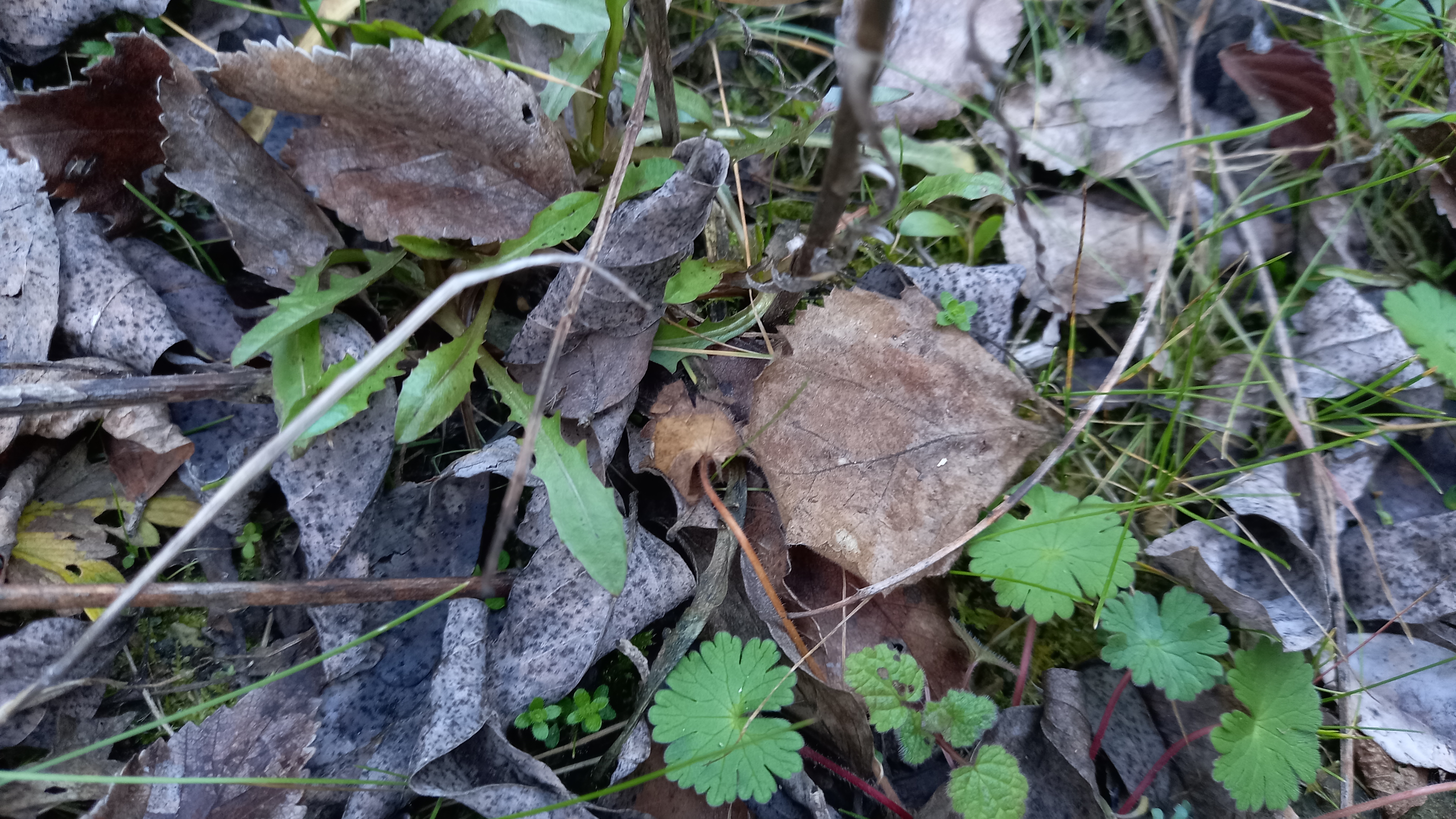
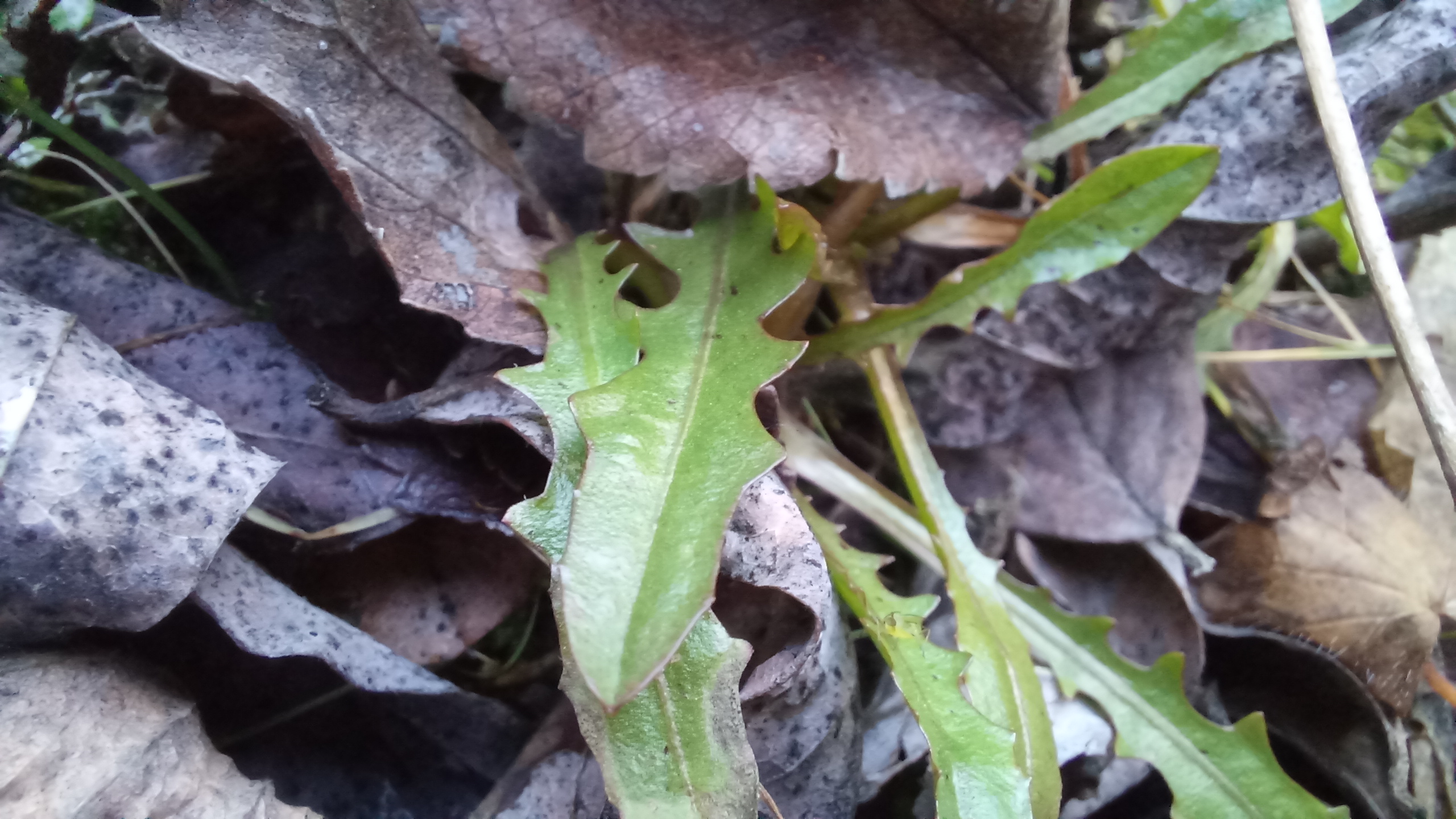
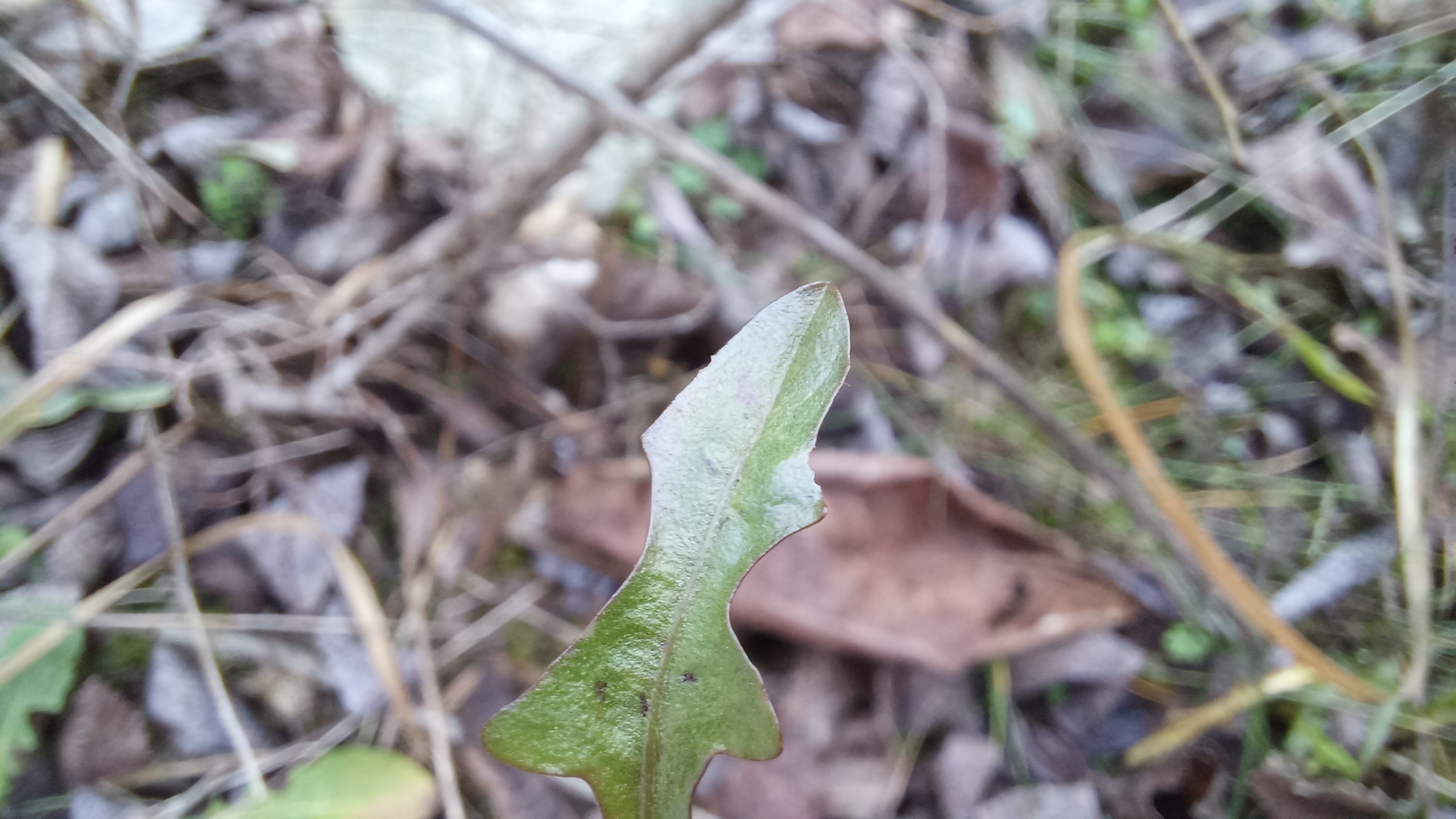
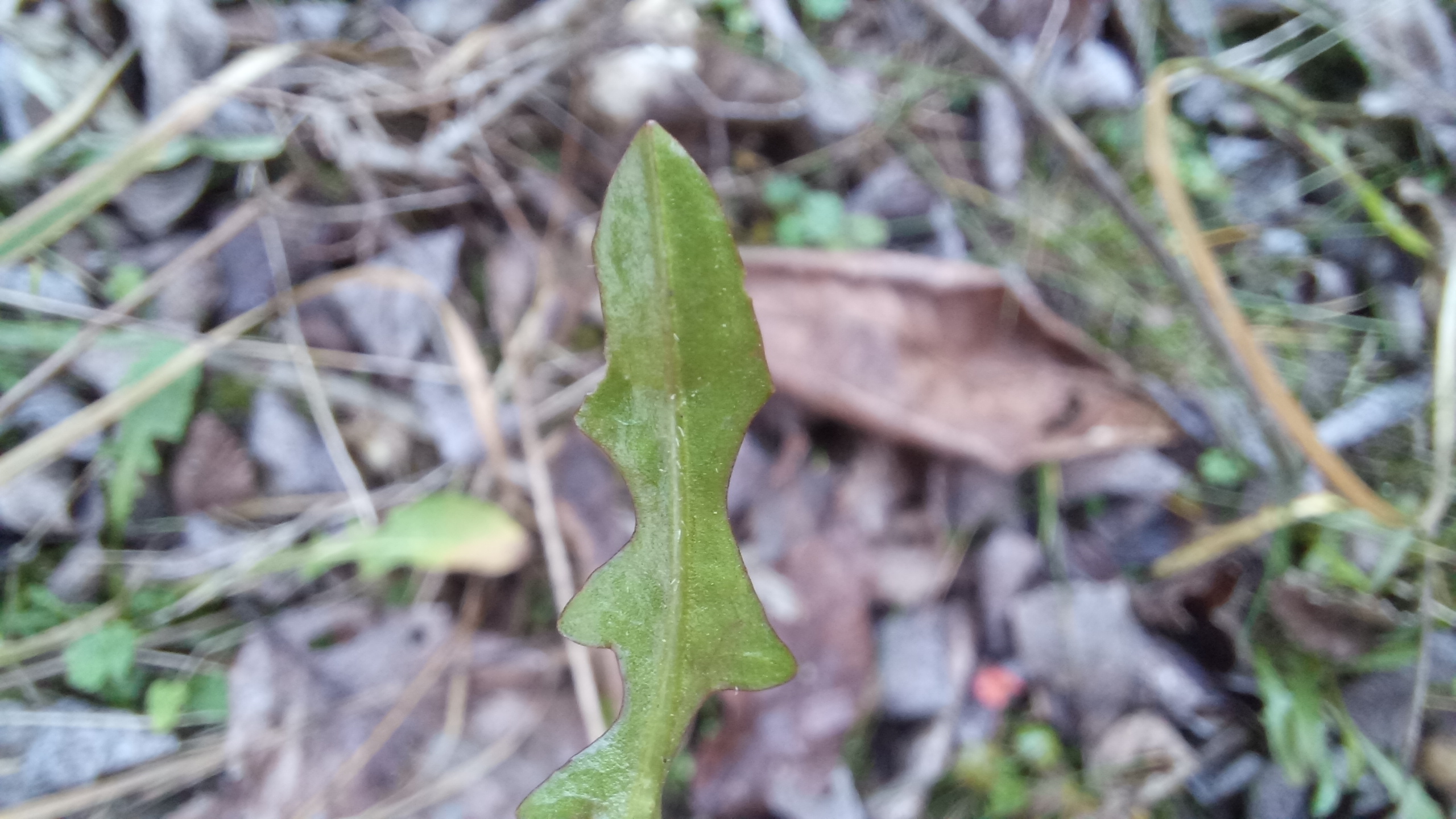
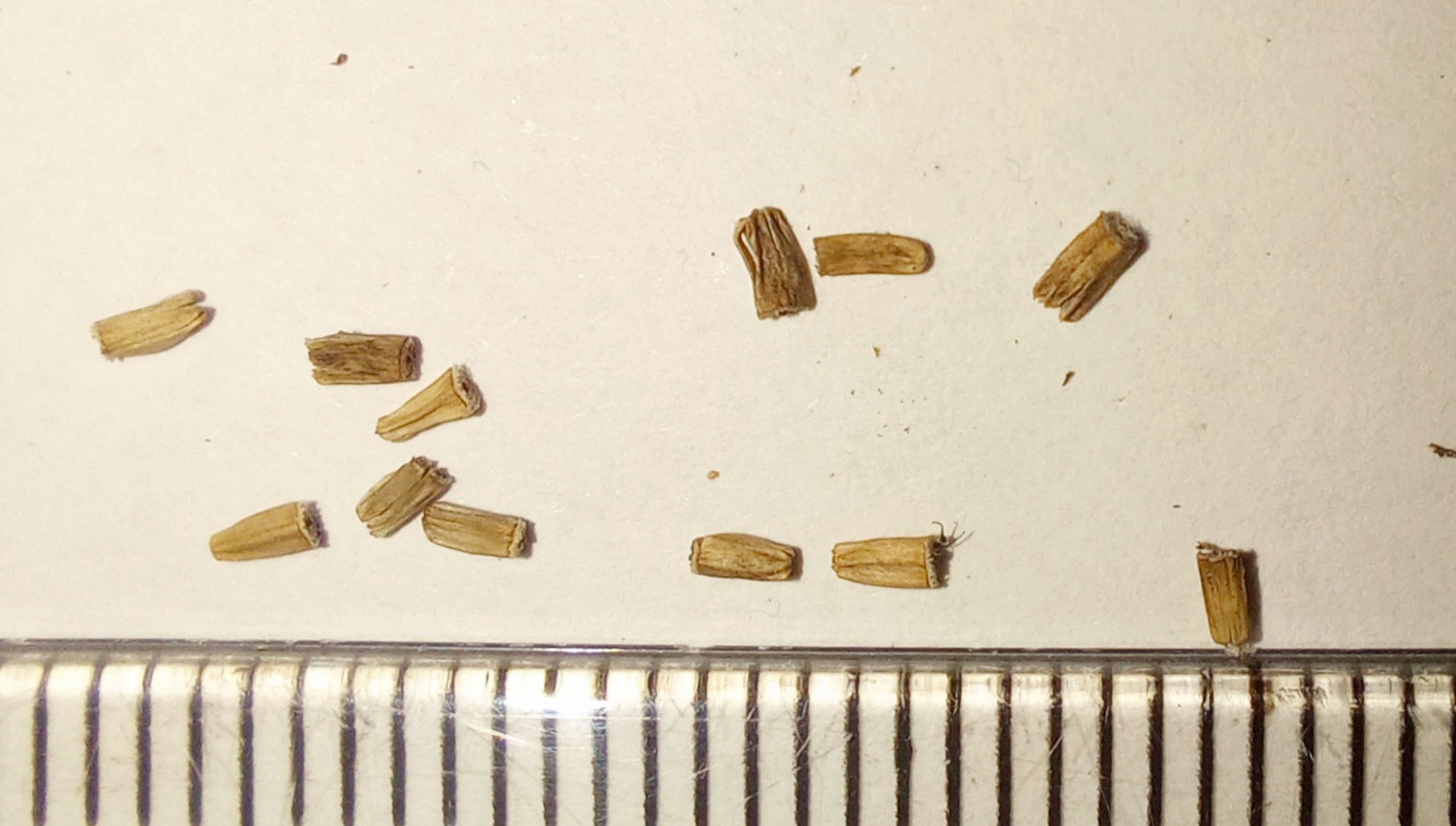
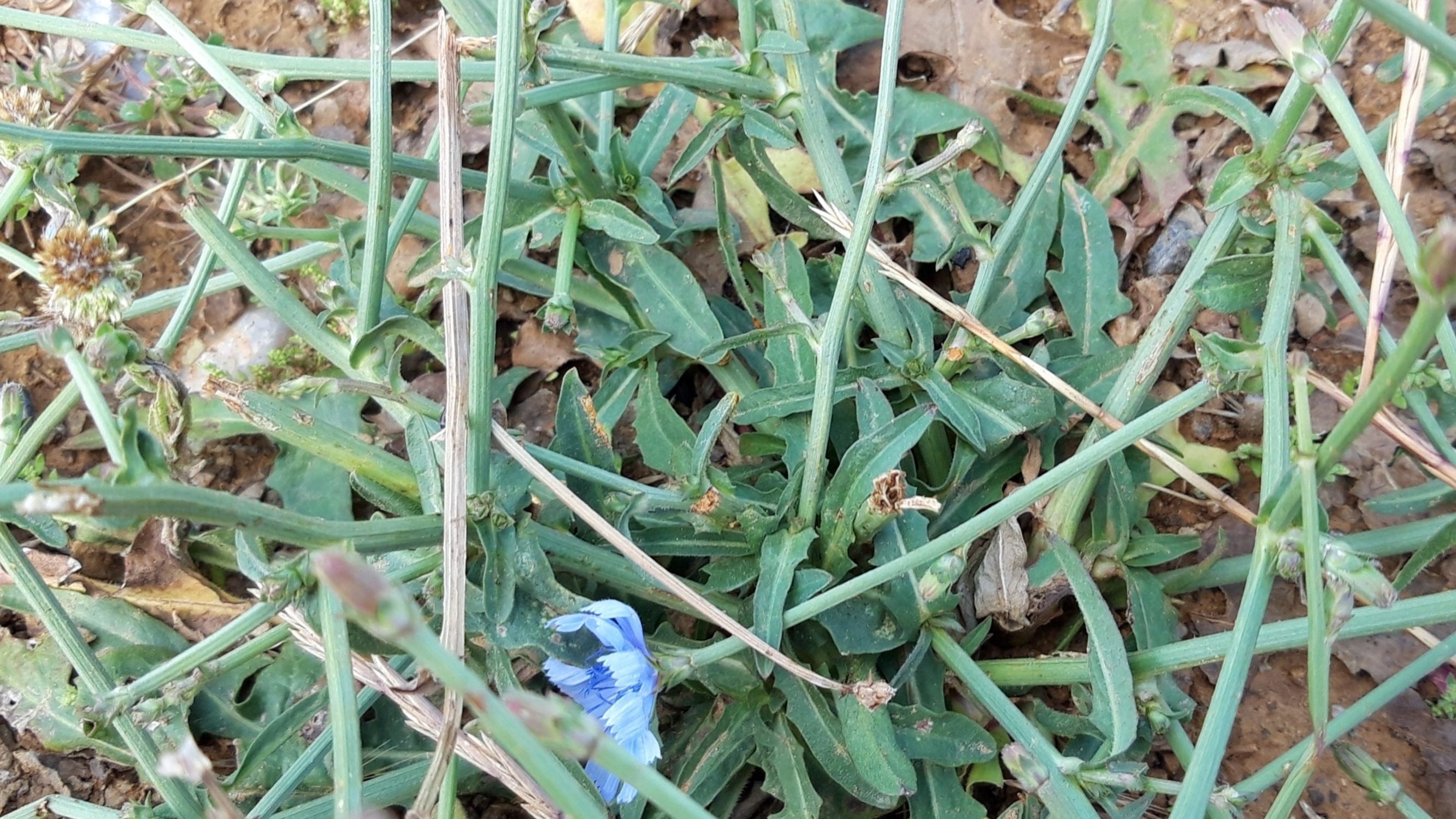
Cichorium intybus – plant senescence. Gorge of “Kochanska” River, 22.01.2023. Photo by Trajche Dimitrovski.Cichorium intybus – plant senescence. Gorge of “Kochanska” River, 22.01.2023. Photo by Trajche Dimitrovski.Cichorium intybus – stem with fruiting capitula. Gorge of “Kochanska” River, 22.01.2023. Photo by Trajche Dimitrovski.Cichorium intybus – capitula with achenes. Gorge of “Kochanska” River, 22.01.2023. Photo by Trajche Dimitrovski.Cichorium intybus – capitula with achenes. Gorge of “Kochanska” River, 22.01.2023. Photo by Trajche Dimitrovski.Cichorium intybus – capitula with achenes. Gorge of “Kochanska” River, 22.01.2023. Photo by Trajche Dimitrovski.Cichorium intybus – basal leaves. Gorge of “Kochanska” River, 22.01.2023. Photo by Trajche Dimitrovski.Cichorium intybus – basal leaves. Gorge of “Kochanska” River, 22.01.2023. Photo by Trajche Dimitrovski.Cichorium intybus – adaxial side of leaf. Gorge of “Kochanska” River, 22.01.2023. Photo by Trajche Dimitrovski.Cichorium intybus – adaxial side of leaf. Gorge of “Kochanska” River, 22.01.2023. Photo by Trajche Dimitrovski.Cichorium intybus – achenes. Gorge of “Kochanska” River, 22.01.2023. Photo by Trajche Dimitrovski.
Locality: hilly region near village of Beli. Date: 21.09.2020.
Cichorium intybus – habit. Hilly region near village of Beli, 21.09. 2020. Photo by Trajche Dimitrovski.Cichorium intybus – capitula. Hilly region near village of Beli, 21.09. 2020. Photo by Trajche Dimitrovski.Cichorium intybus -capitulum. Hilly region near village of Beli, 21.09. 2020. Photo by Trajche Dimitrovski.Cichorium intybus – flowering capitulum and fruiting capitula. Hilly region near village of Beli, 21.09. 2020. Photo by Trajche Dimitrovski.
Locality: hills near Kochani. Date: 05.07.2020.
Cichorium intybus – habit. Hills near Kochani, 05.07.2020. Photo by Trajche Dimitrovski.Cichorium intybus – habit. Hills near Kochani, 05.07.2020. Photo by Trajche Dimitrovski.Cichorium intybus – hills near Kochani, 05.07.2020. Photo by Trajche Dimitrovski.Cichorium intybus – capitula. Hills near Kochani, 05.07.2020. Photo by Trajche Dimitrovski.Cichorium intybus – stems with cauline leaves and plant base with basal leaves. Hills near Kochani, 05.07.2020. Photo by Trajche Dimitrovski.
Sell, P. D. 1976. Cichorium L. In Tutin, T. G., Heywood, V. H., Burges, N. A., Moore, D. M., Valentine, D. H., Walters, S. M. & Webb, D. A. (eds.), Flora Europaea. Volume 4: Plantaginaceae to Compositae (and Rubiaceae), Cambridge: Cambridge University Press, pp. 304–305.
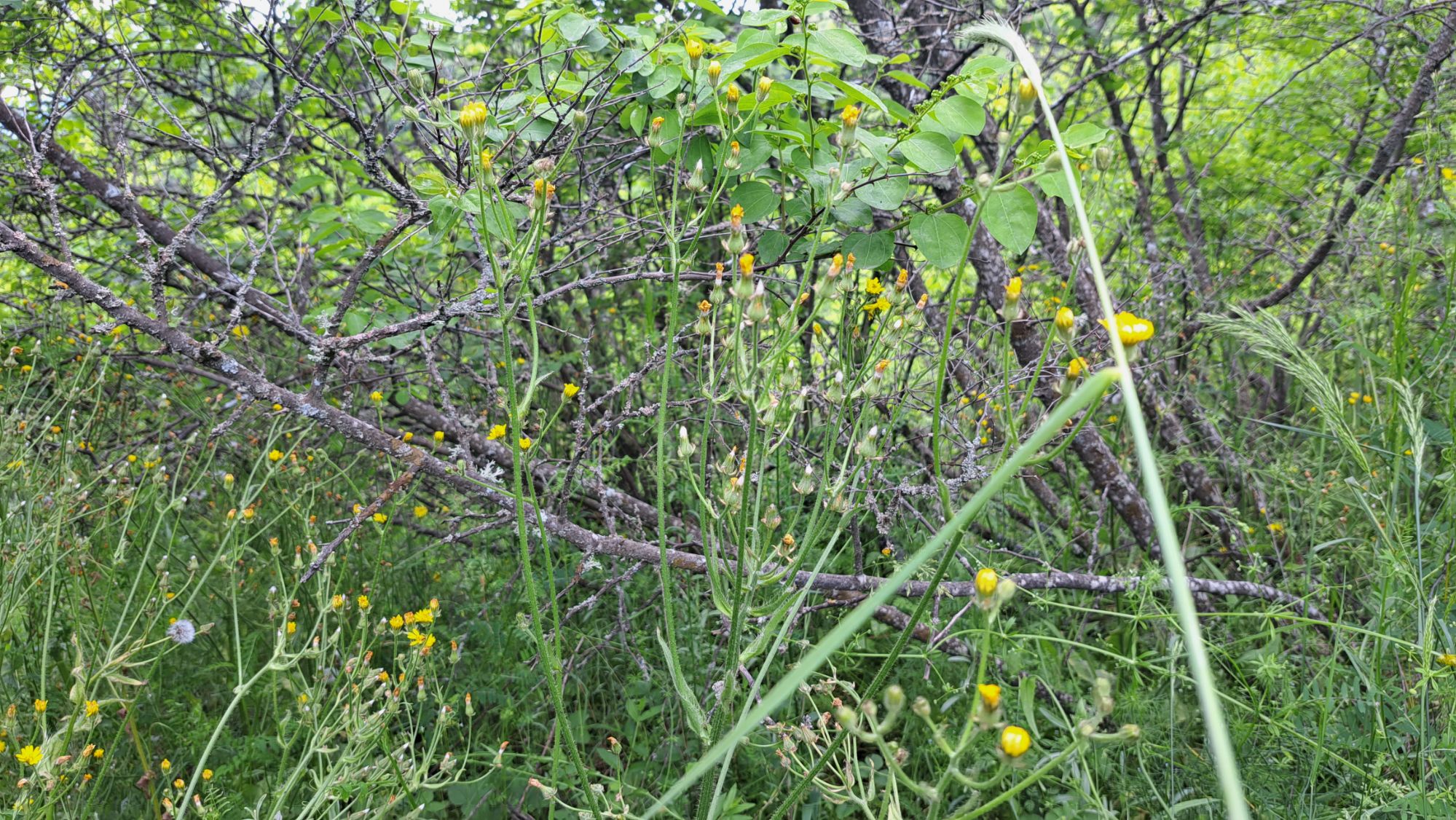
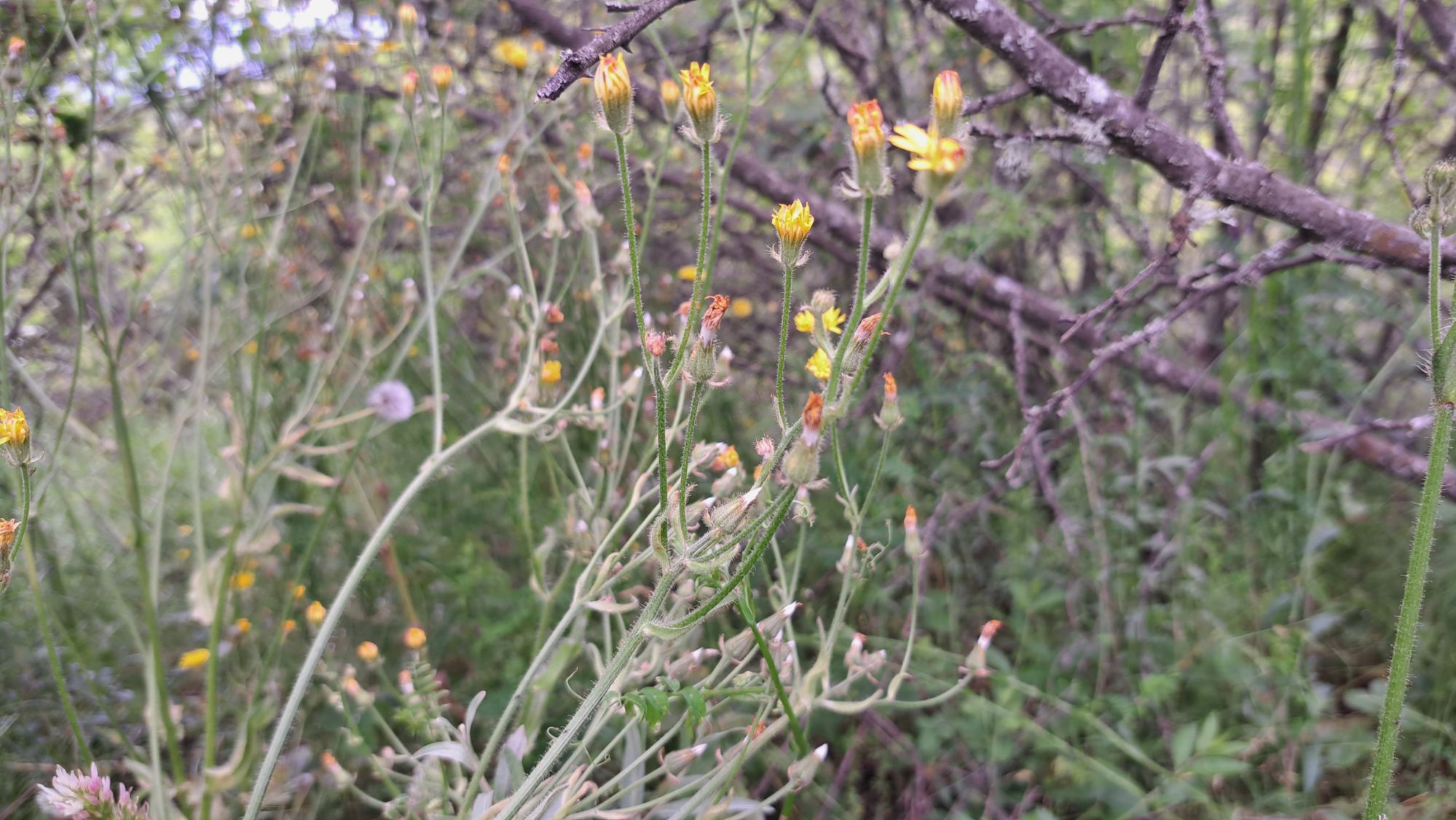
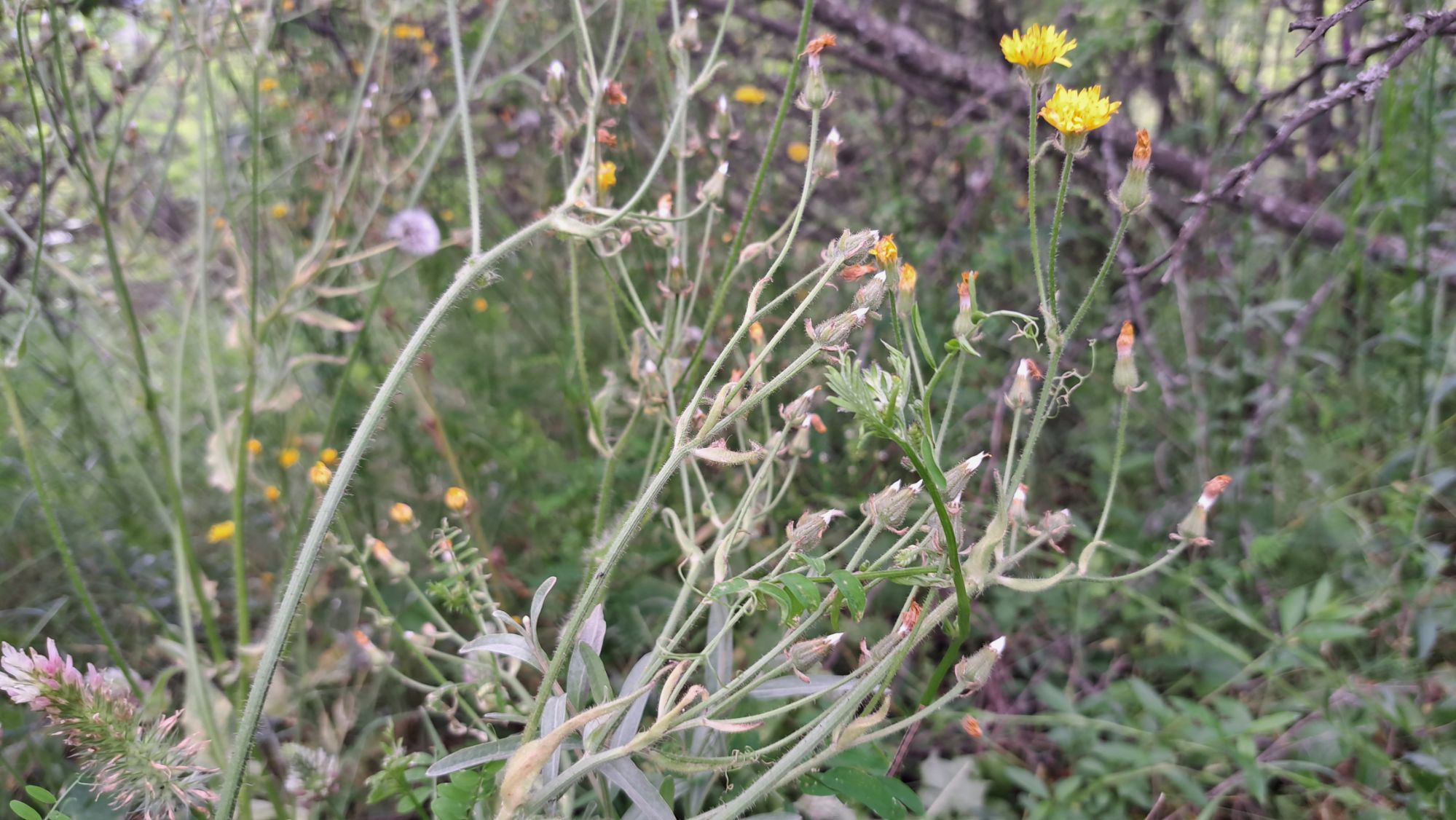
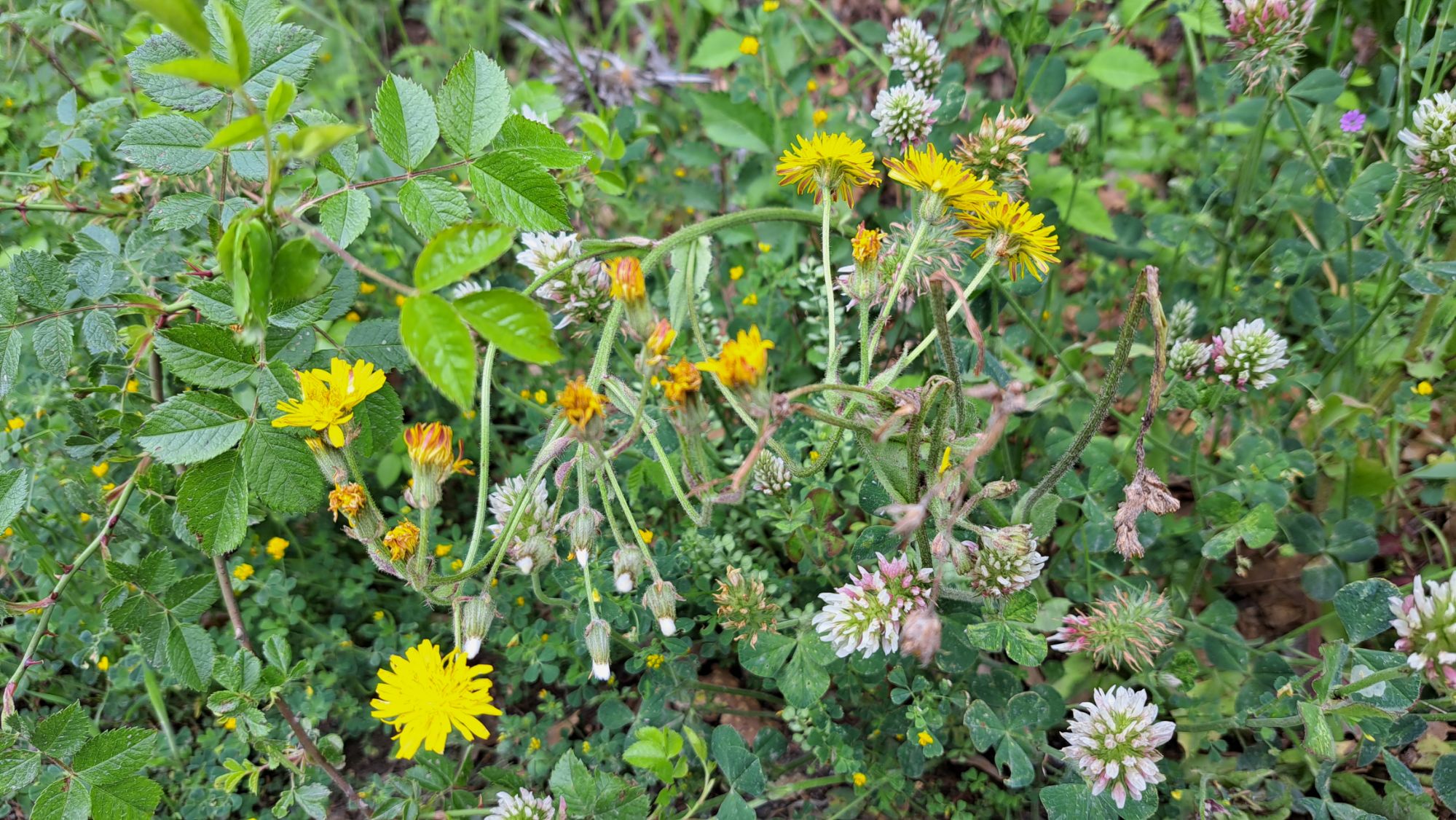
Determined according to the botanical key provided by Sell (1976 in Tutin et al.) as Crepis vesicaria subsp. haenseleri (DC.) P. D. Sell. The accepted name in The Euro+Med PlantBase (Greuter, 2006+) is Crepis vesicaria subsp. taraxacifolia (Thuill.) Thell.
Lifeform: Annual plan. Therophyte according to the Raunkiær system.
Distribution: Native from Central to South Europe and the Balkan peninsula; Northwest Africa according to the distribution information provided by the Plants of the World Online portal (Royal Botanic Gardens, Kew) and The Euro+Med PlantBase (Greuter, 2006+).
Habitat: Open habitats- grasslands/ hill pastures, sparse woods and clarings of oak forests, disturbed ground: roadsides, near cultivated land and other ruderal areas.
Flowering period: Spring to early summer (APR, MAY, JUN).
Locality: village of Beli.
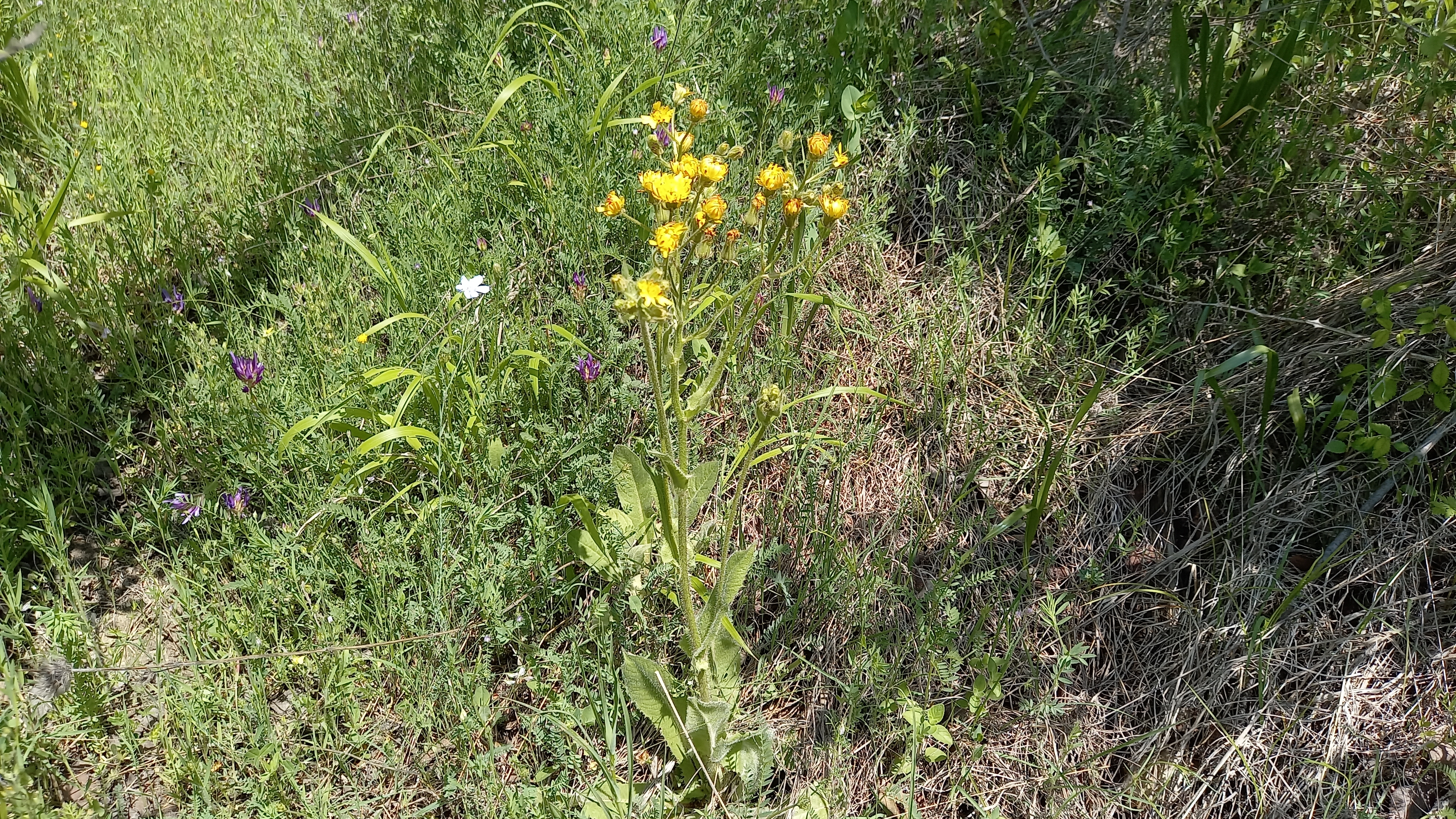
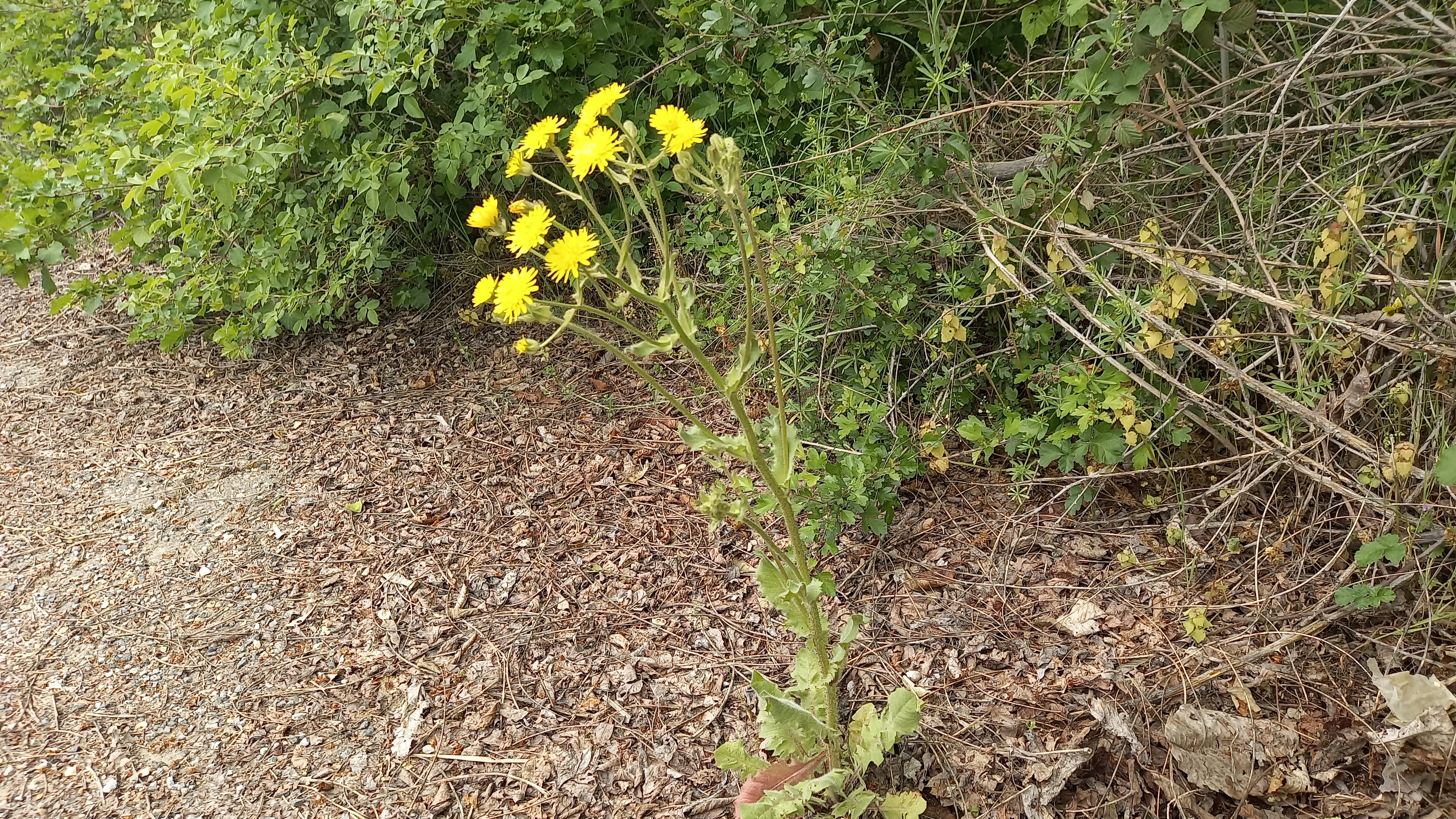
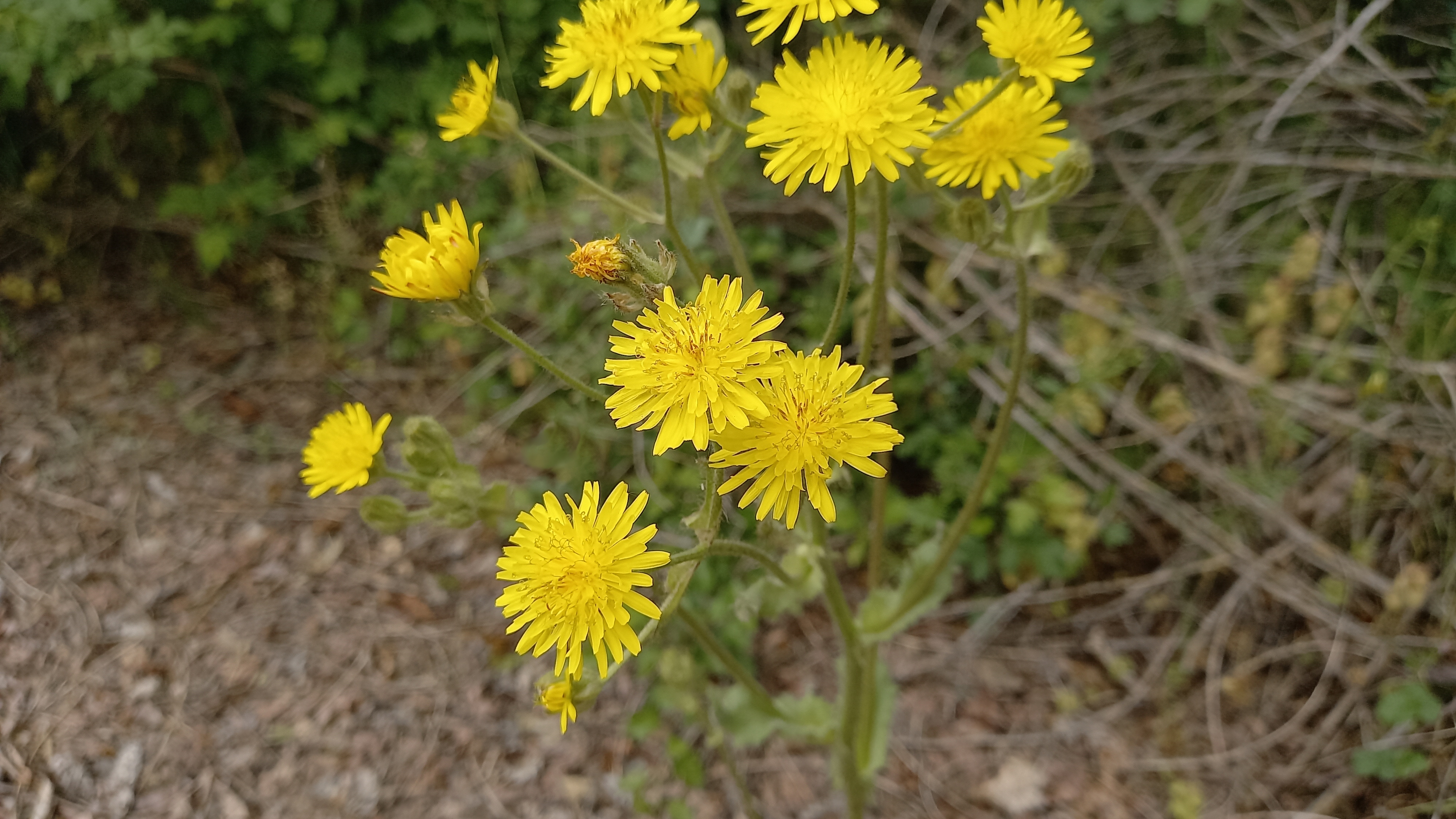
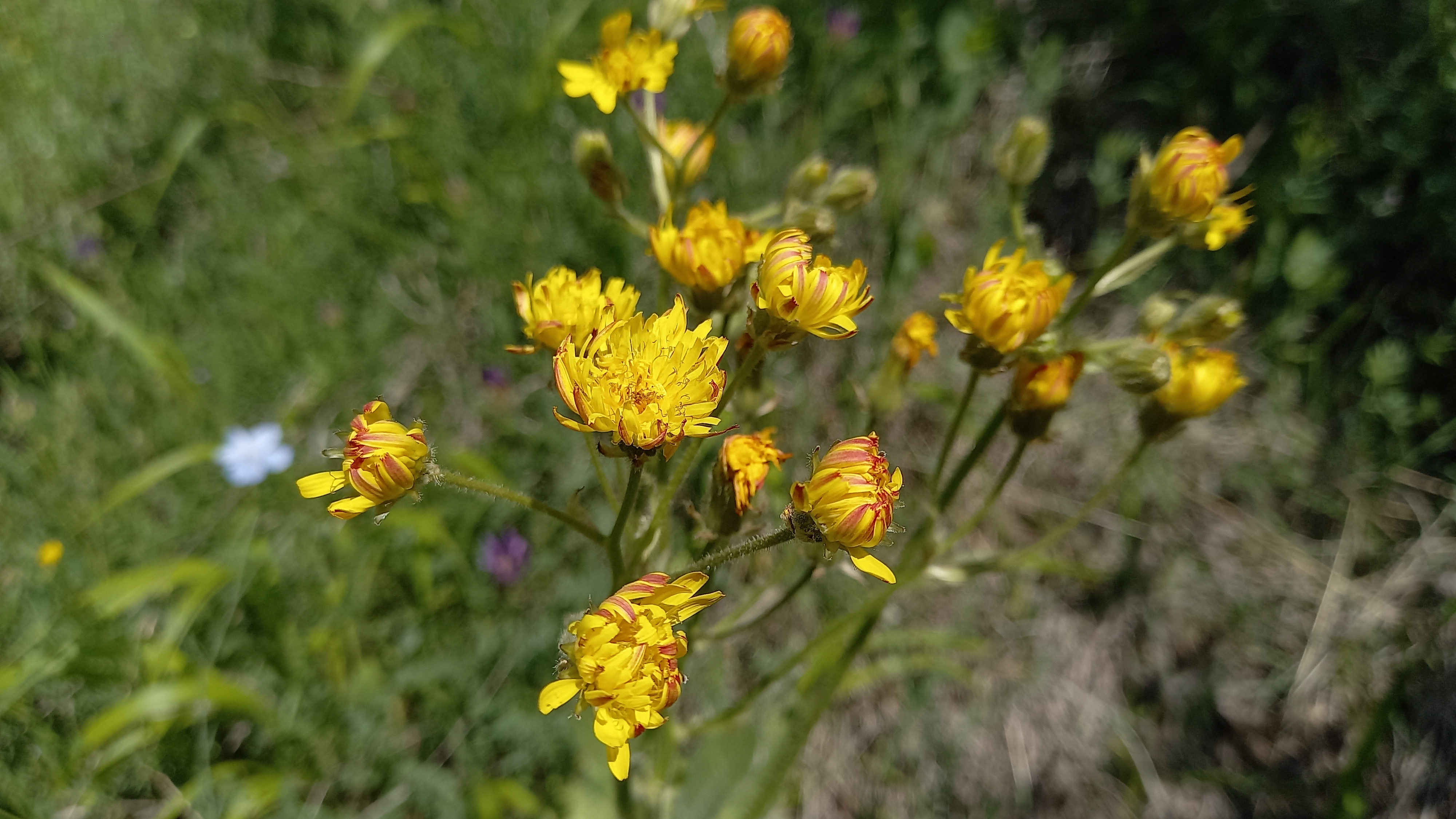
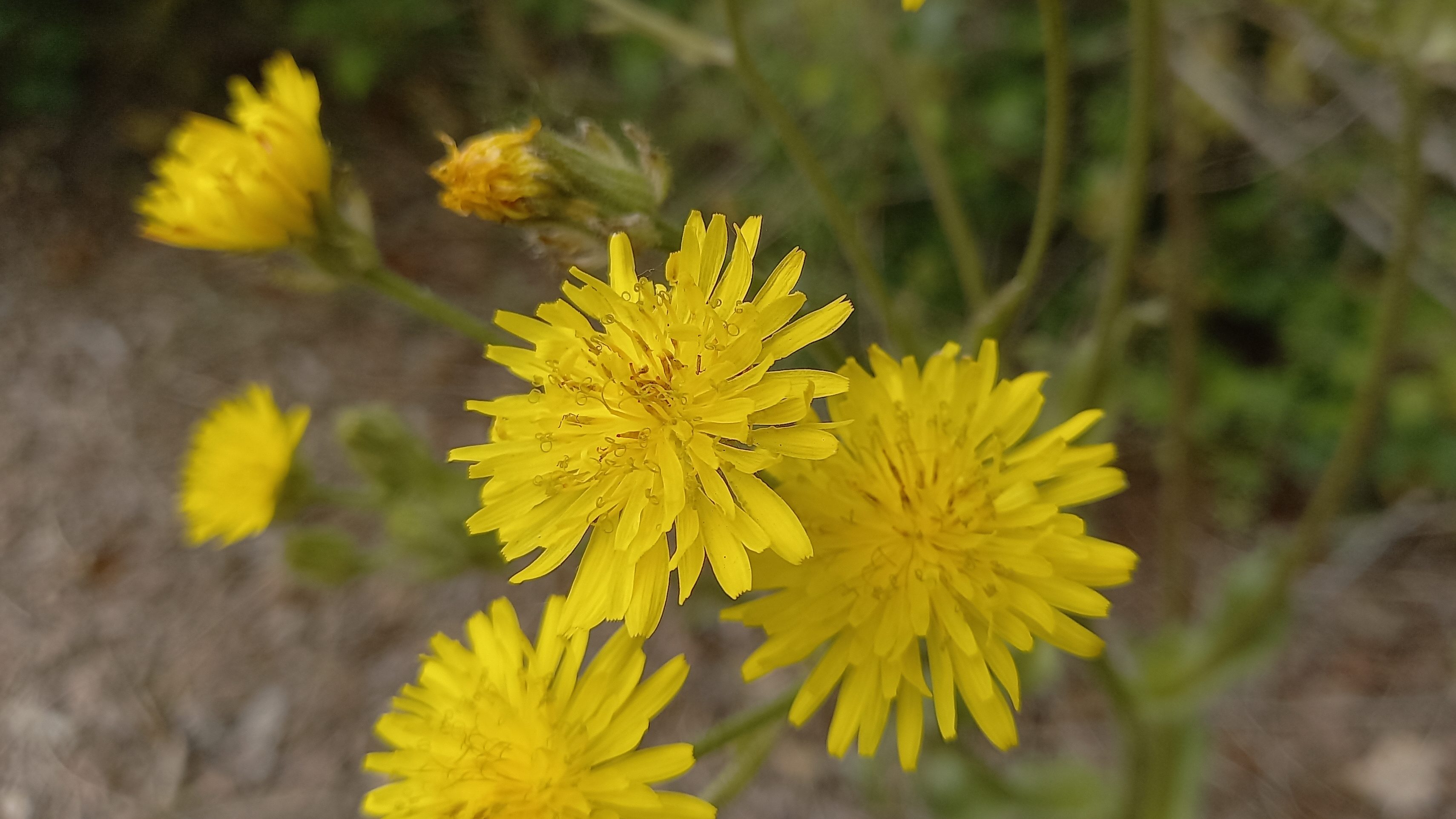
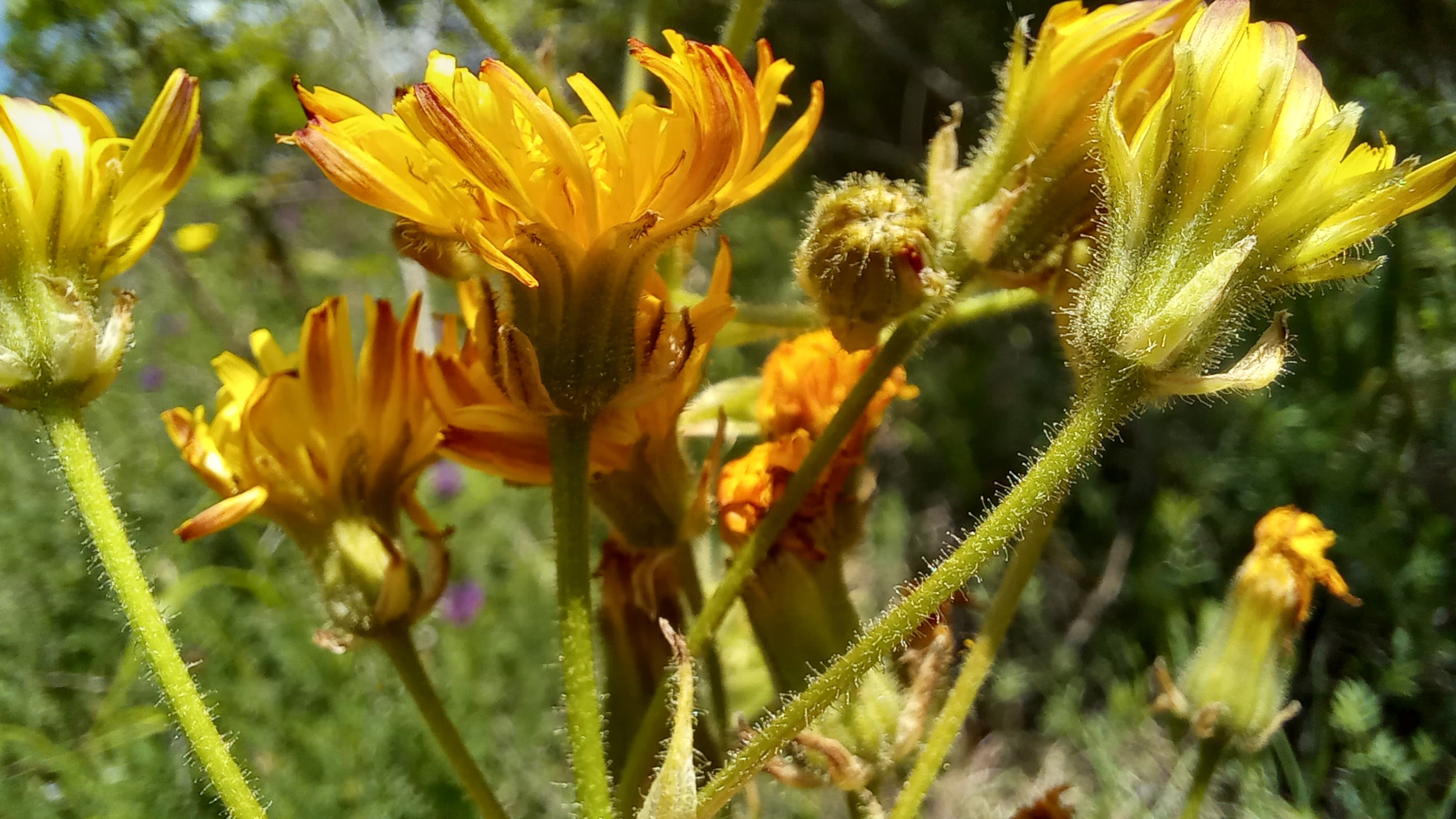
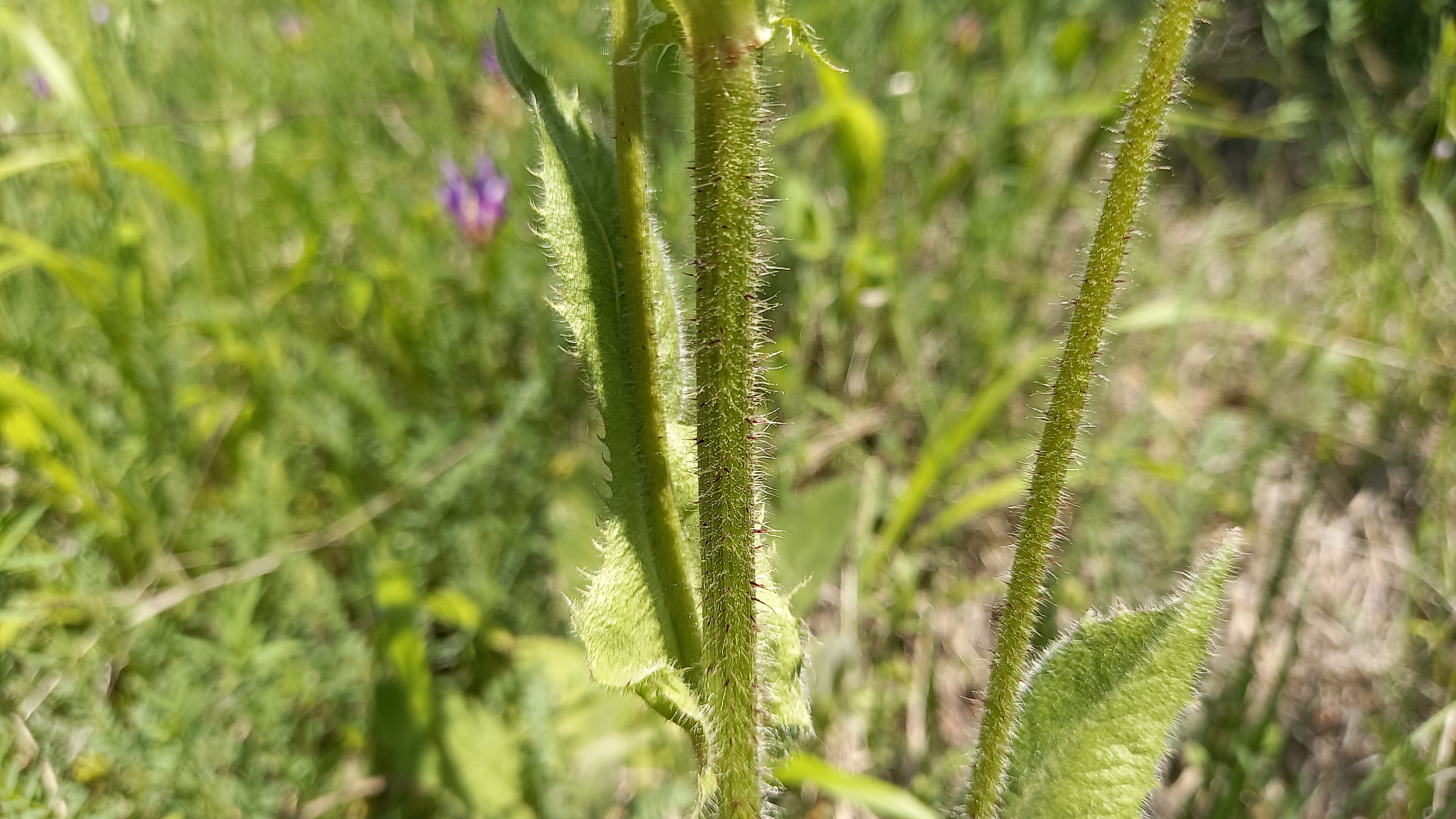
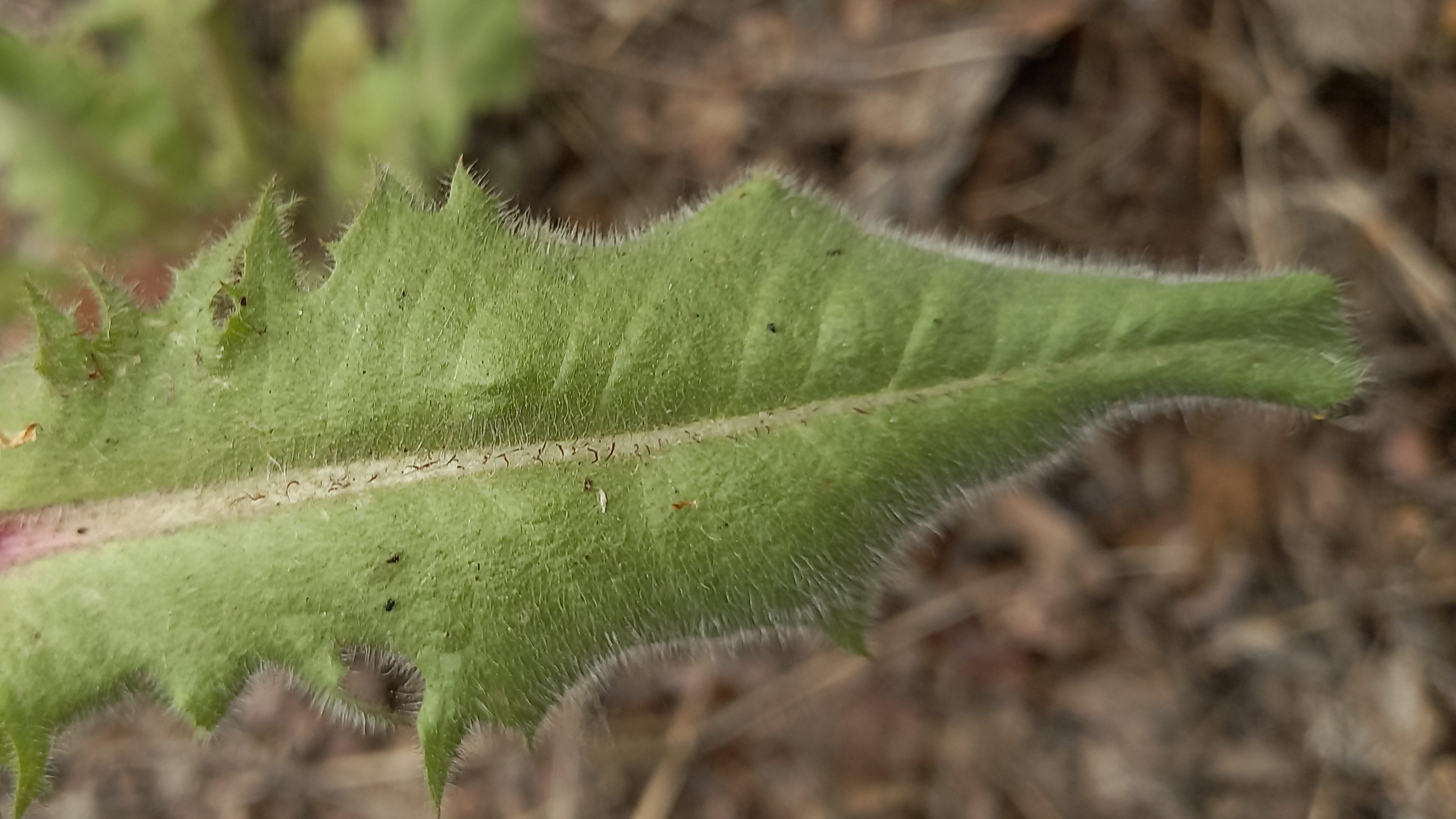
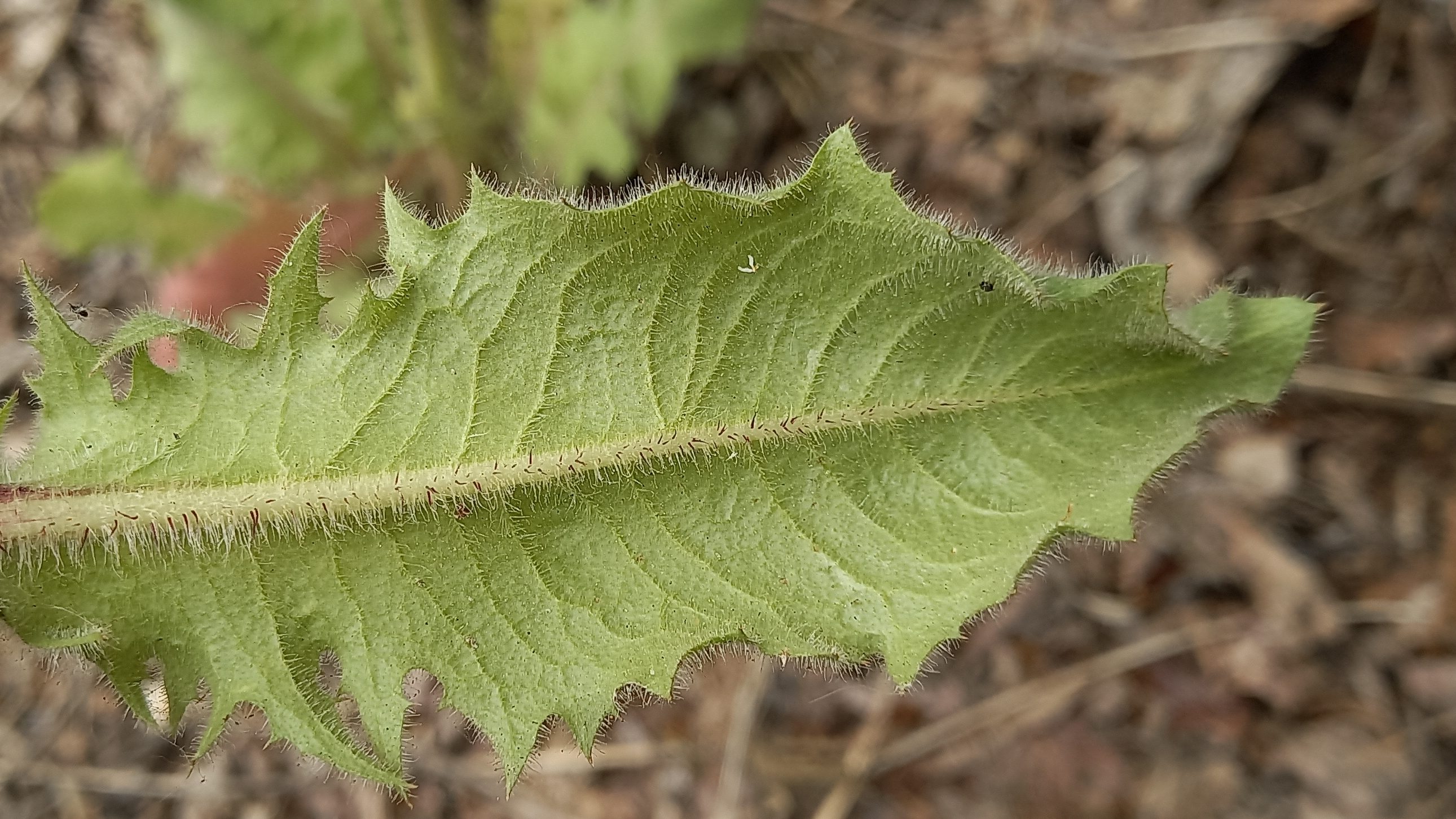
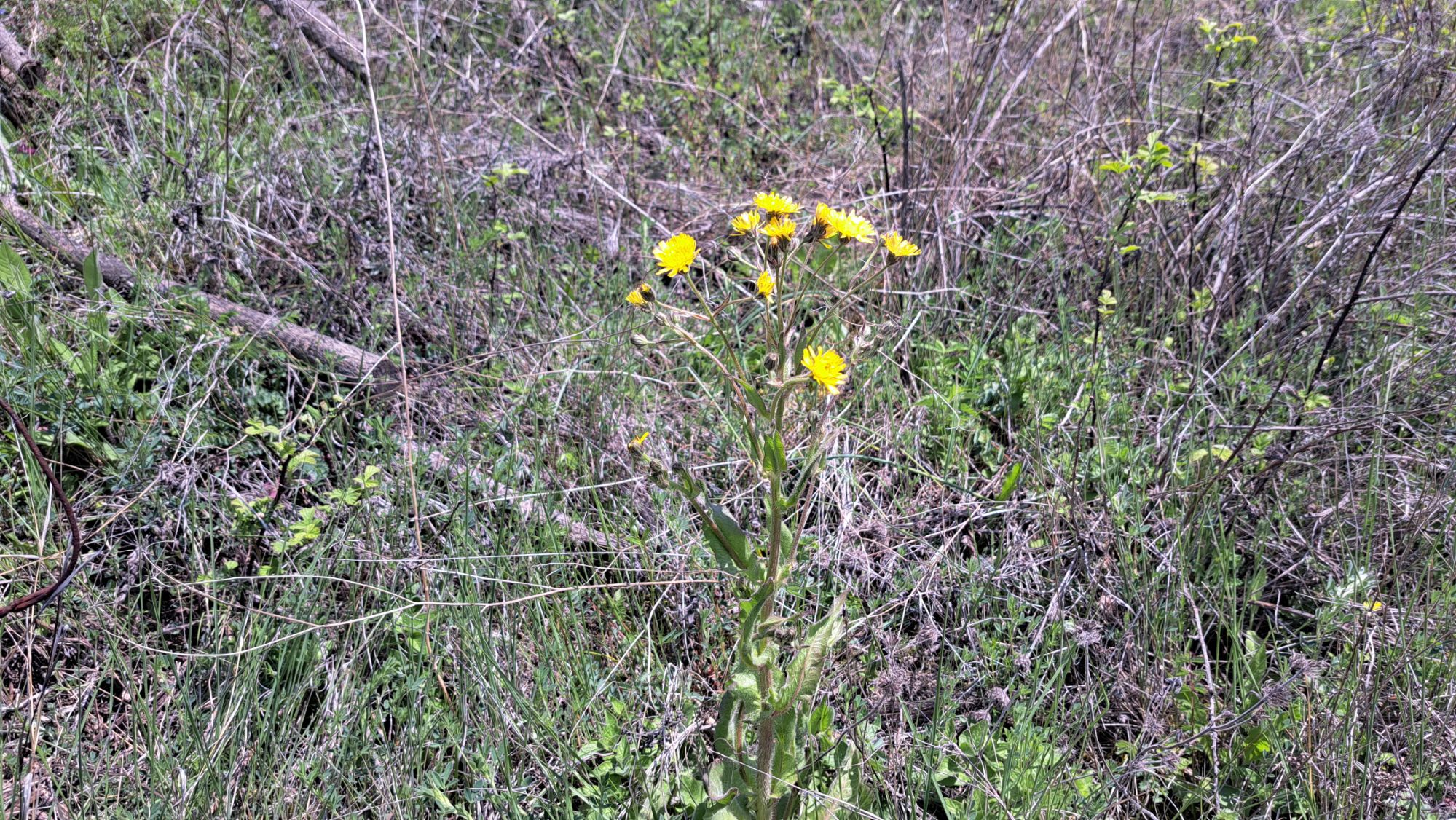
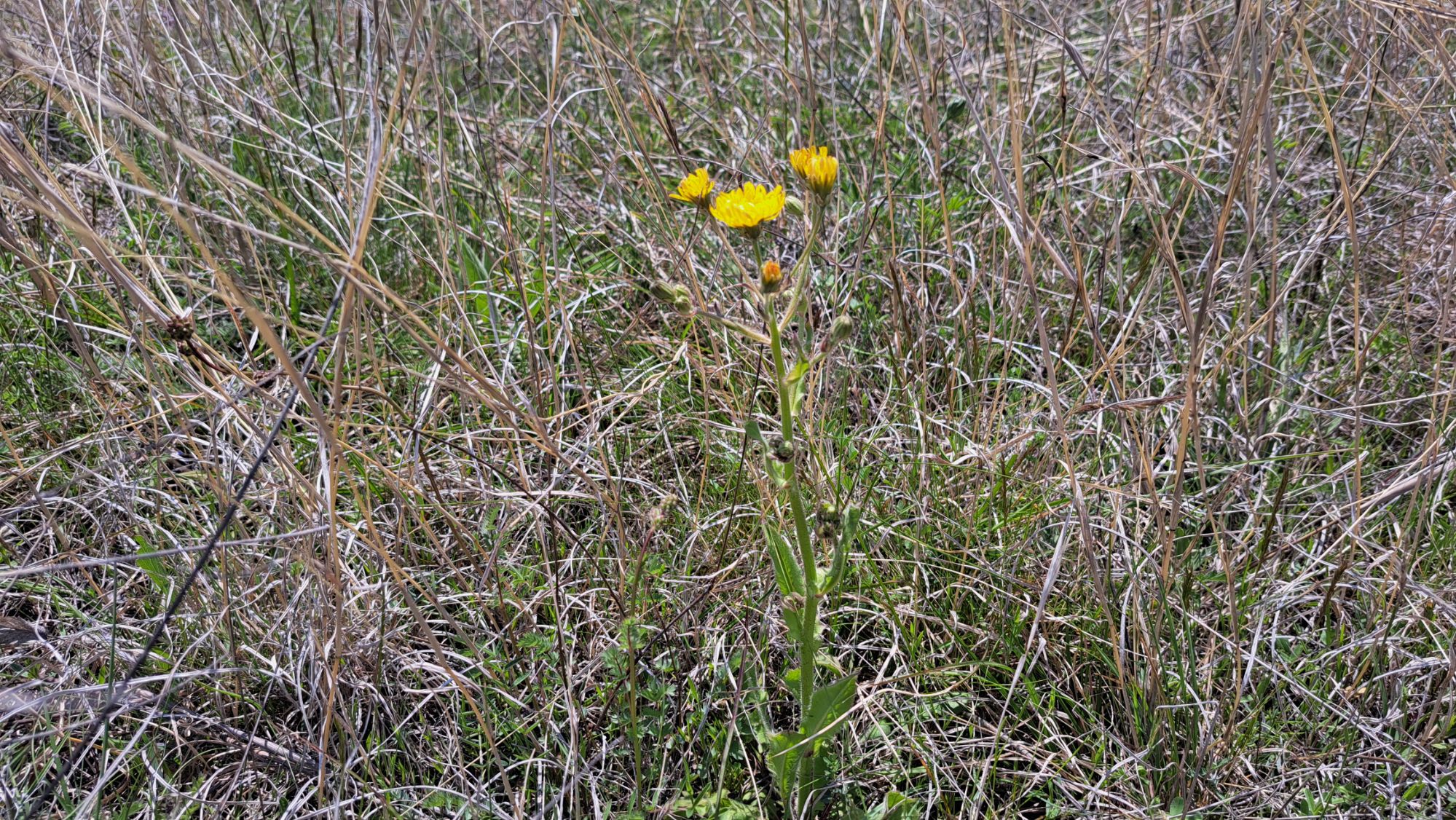
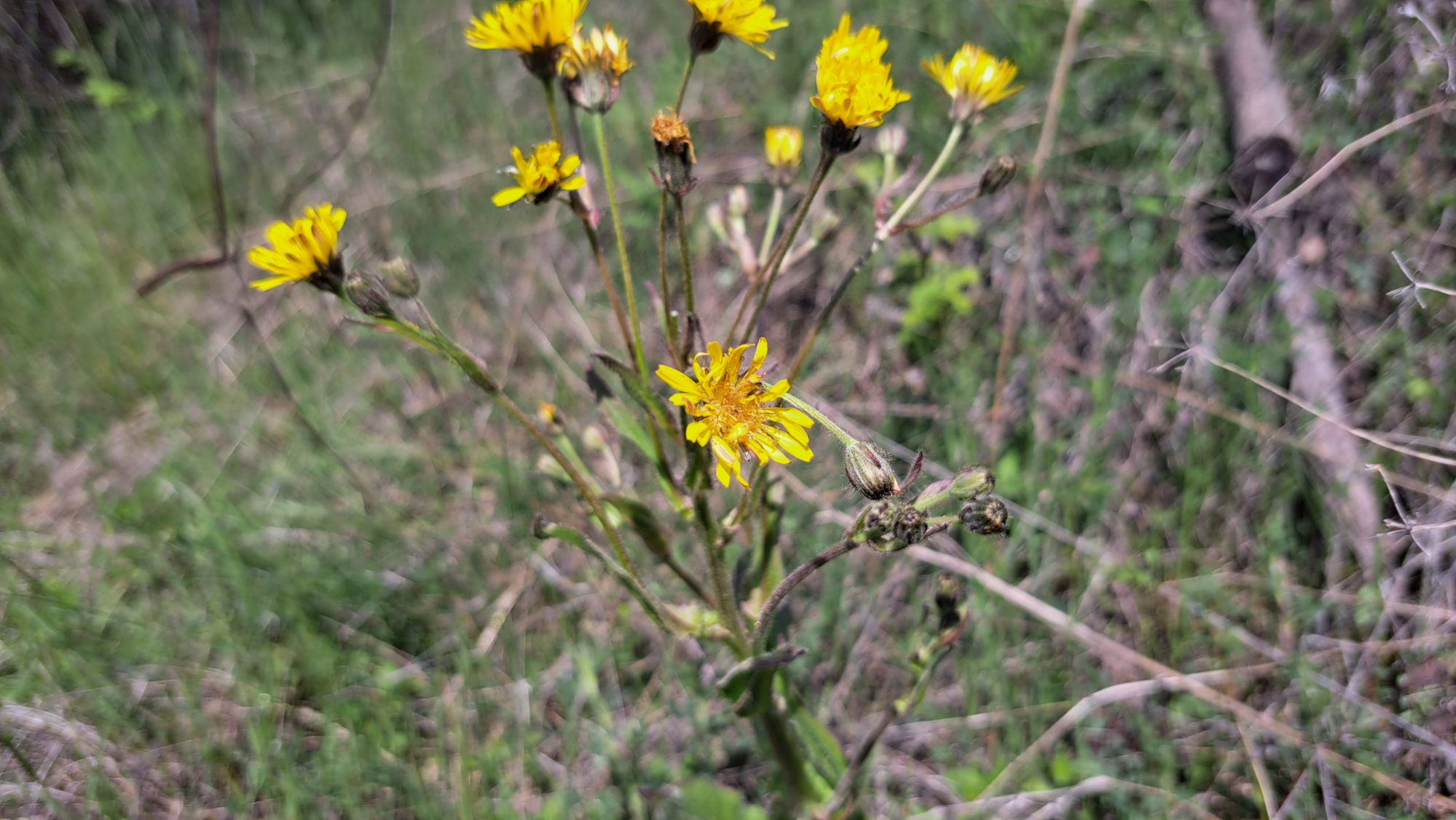
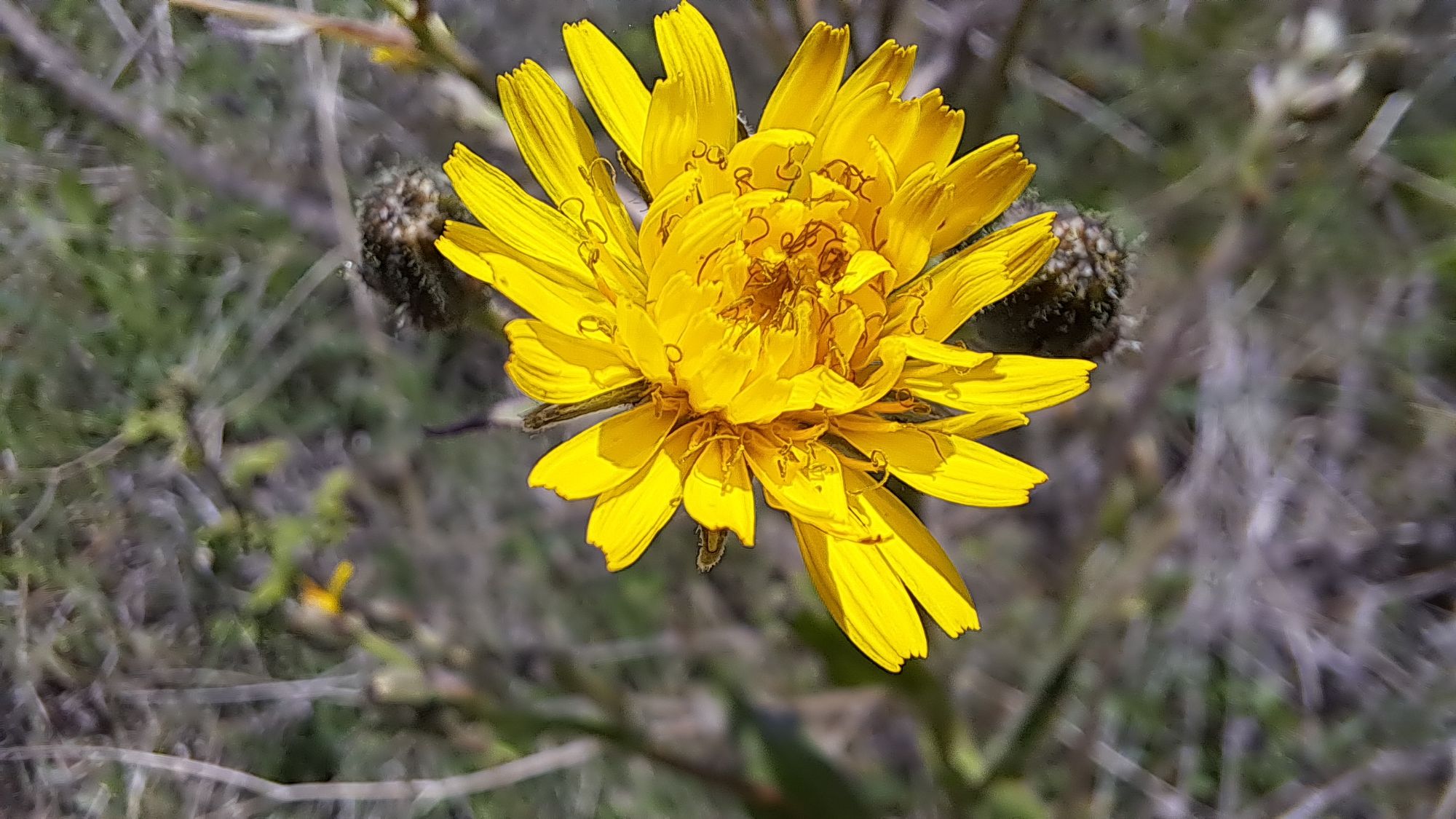
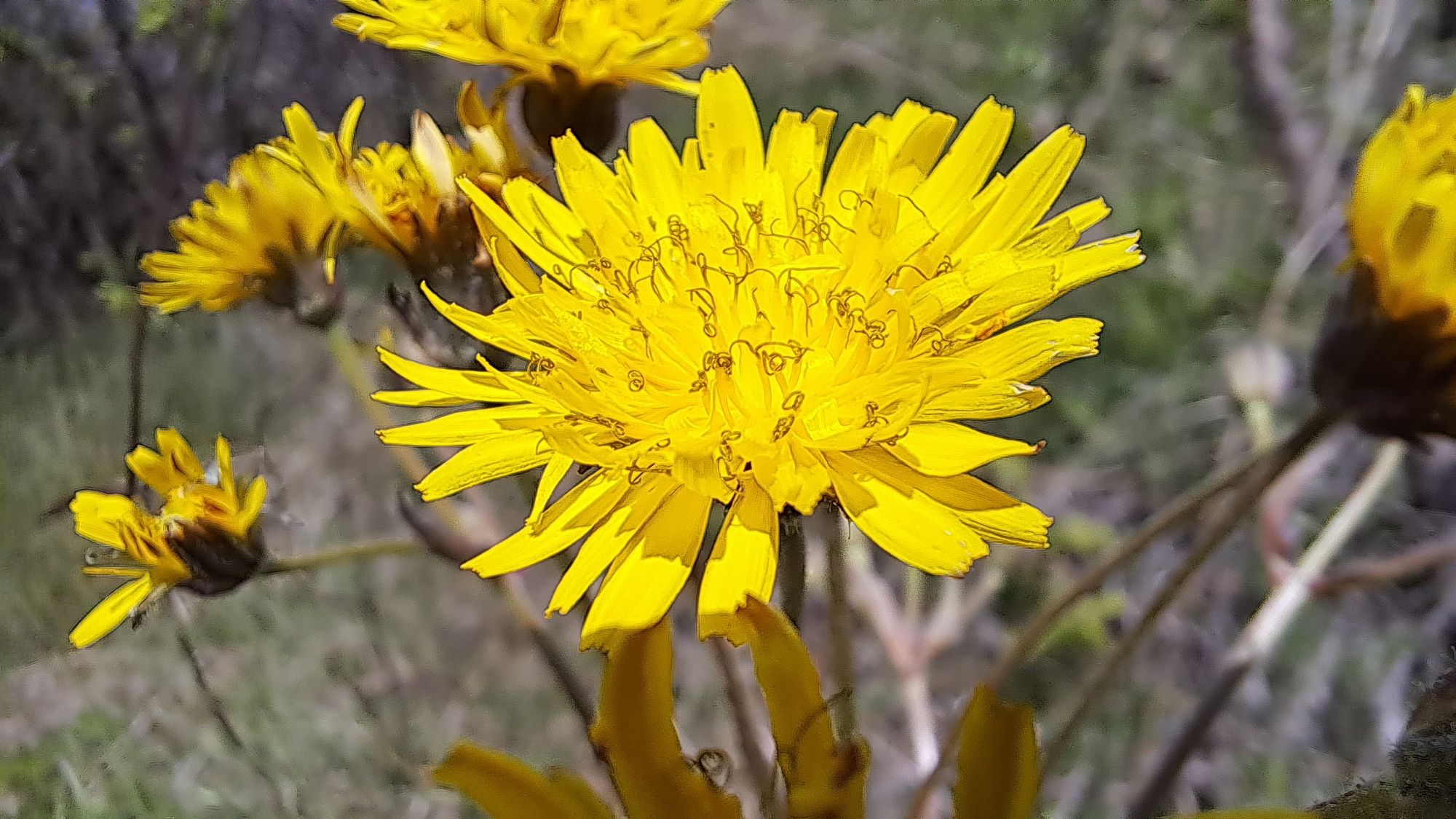
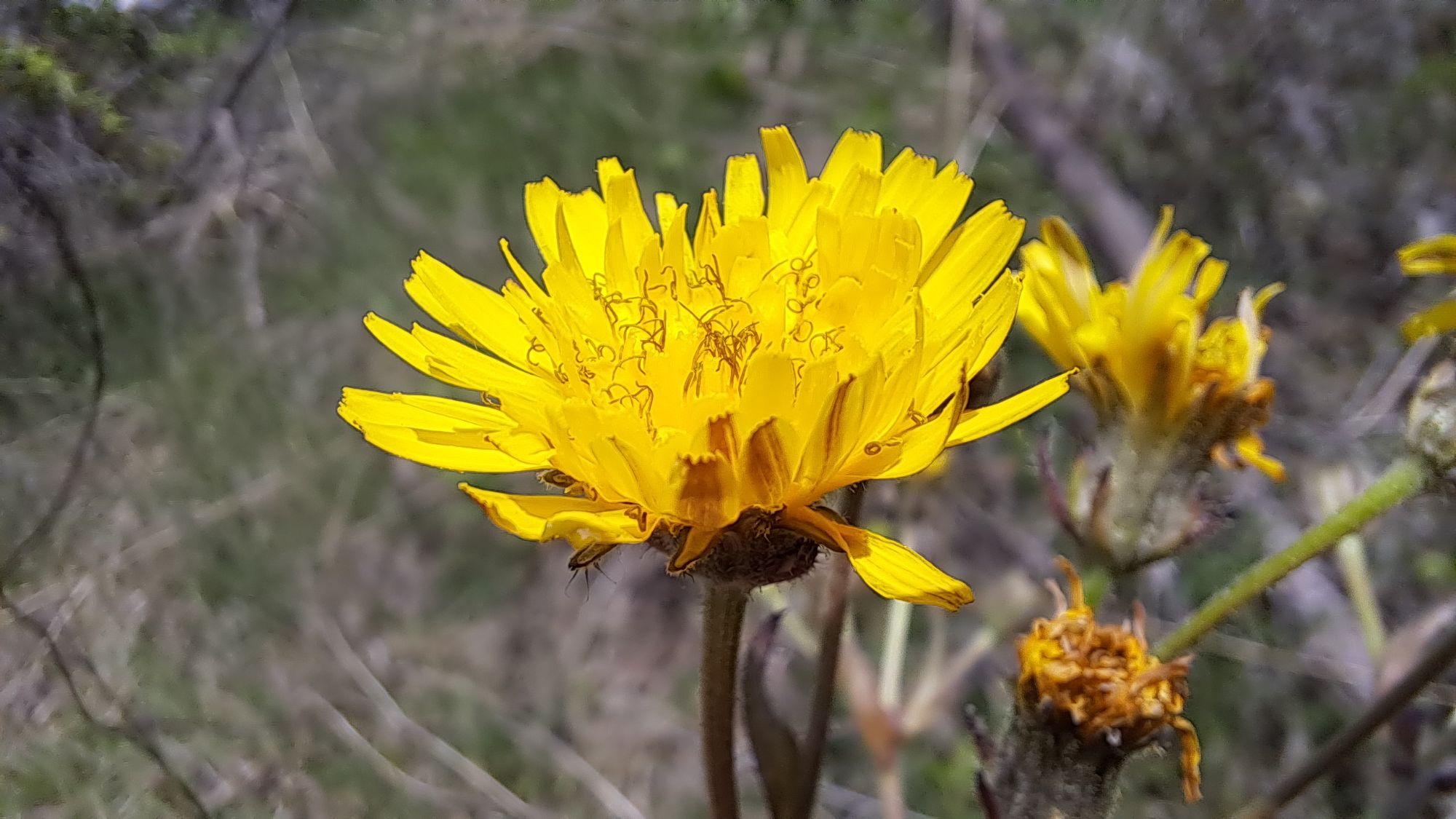
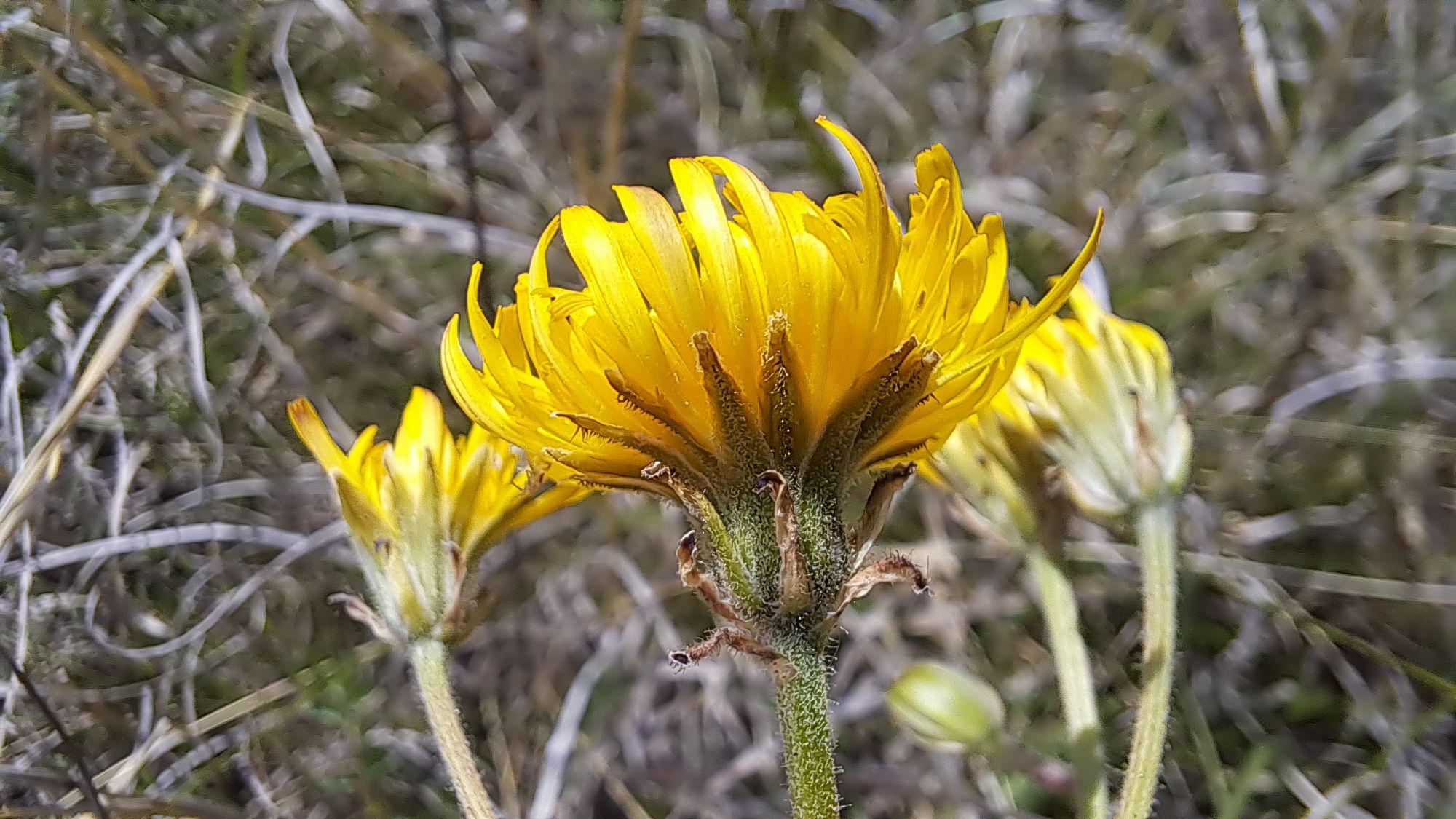
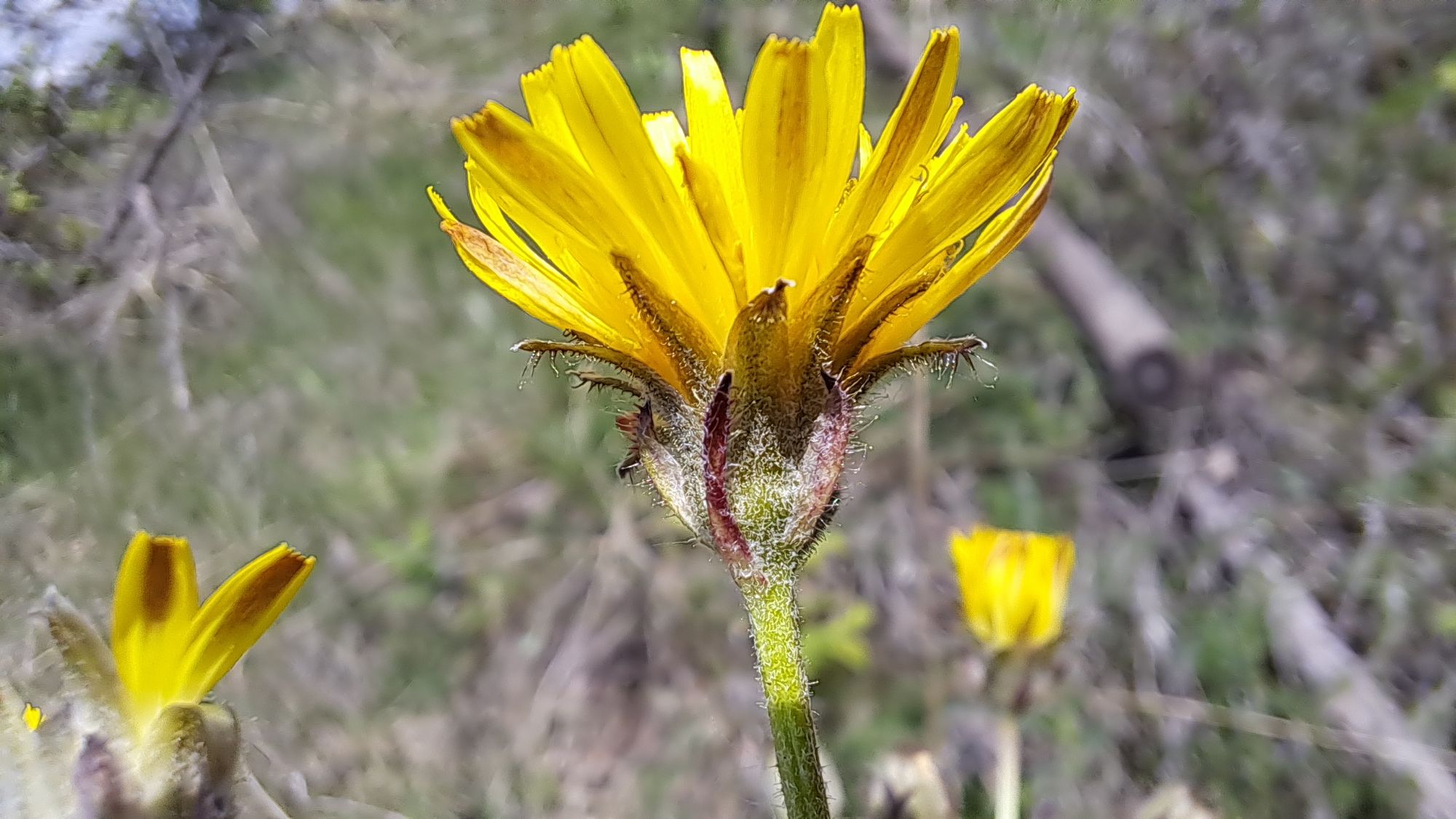
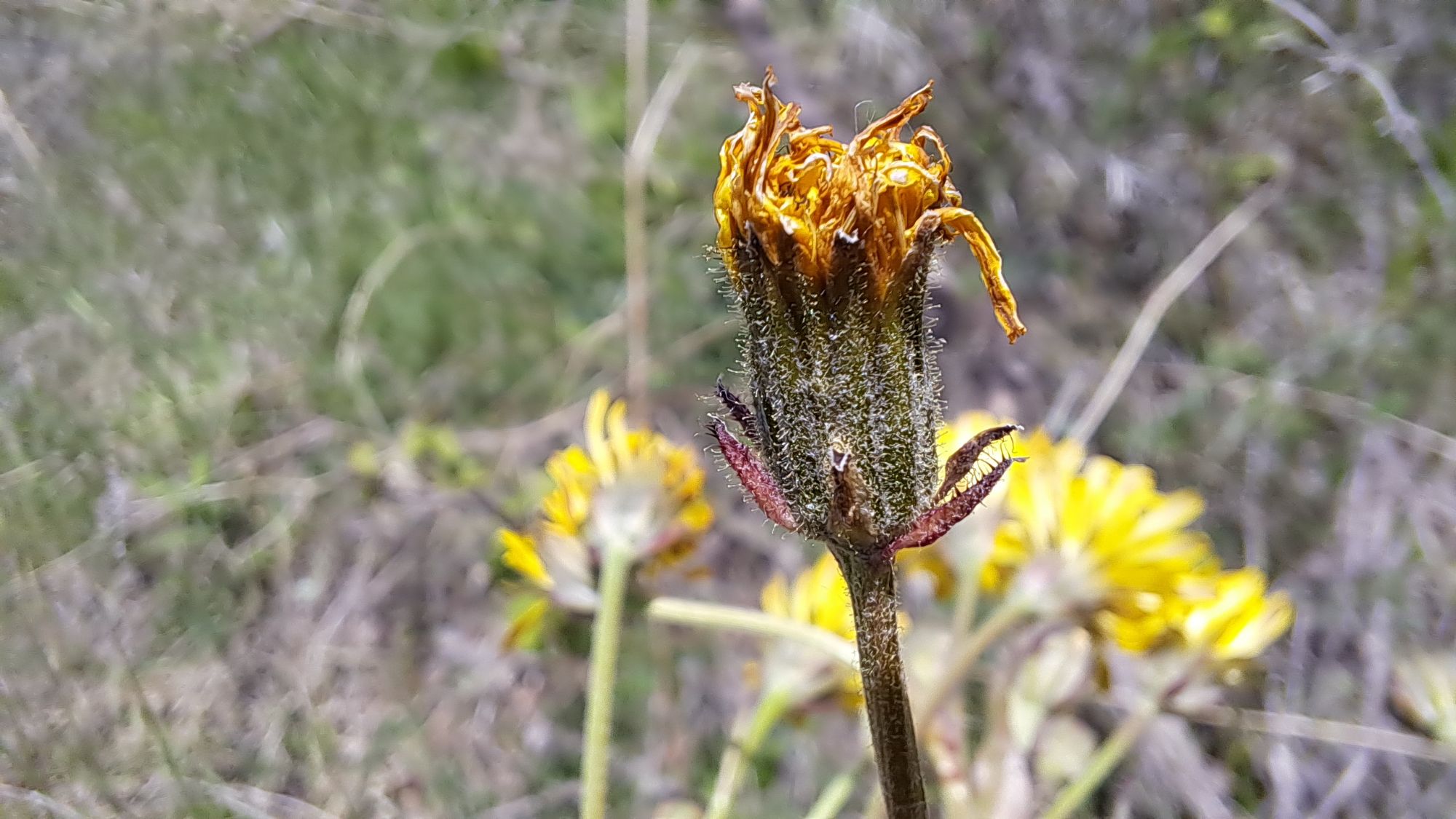
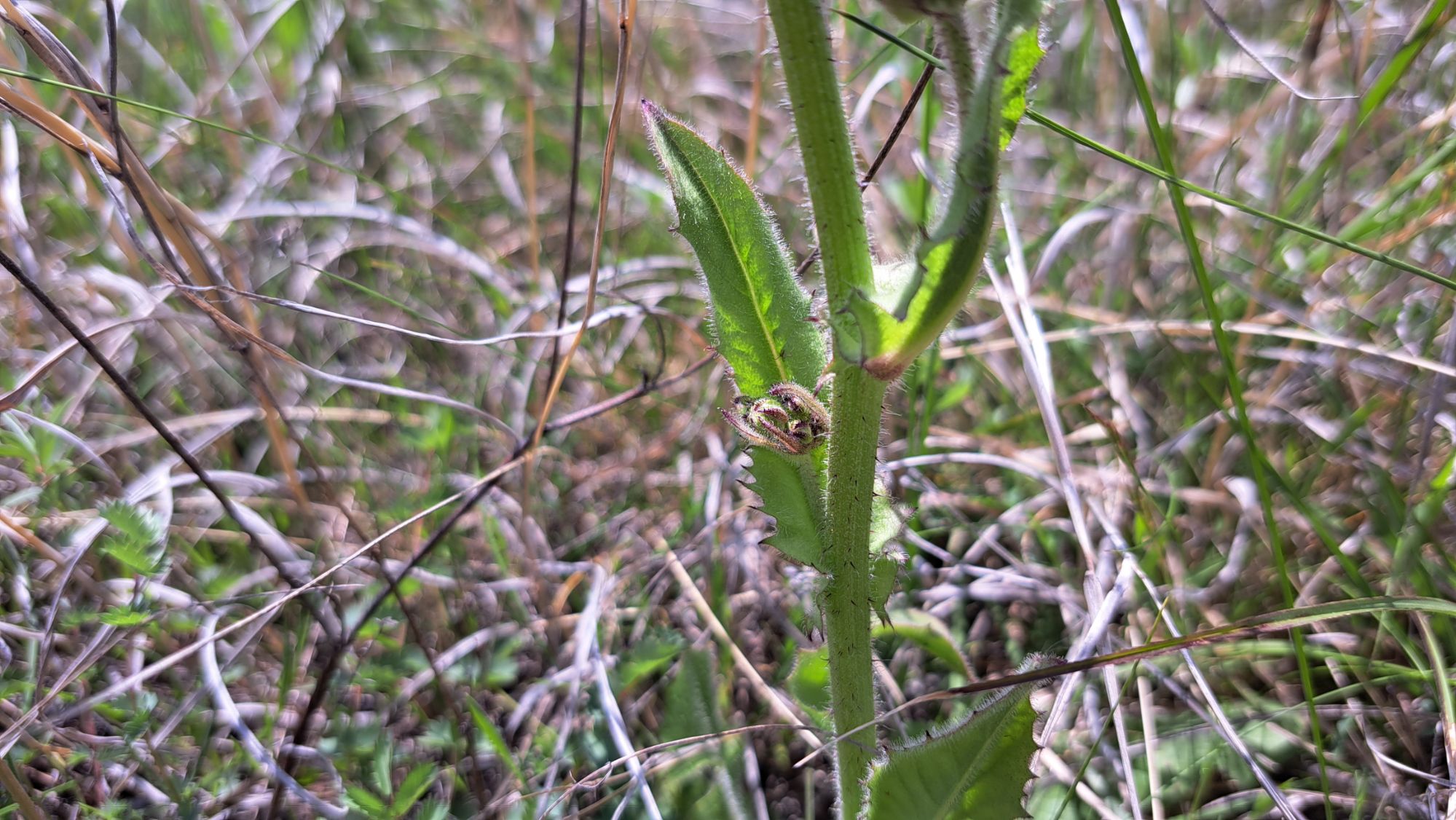
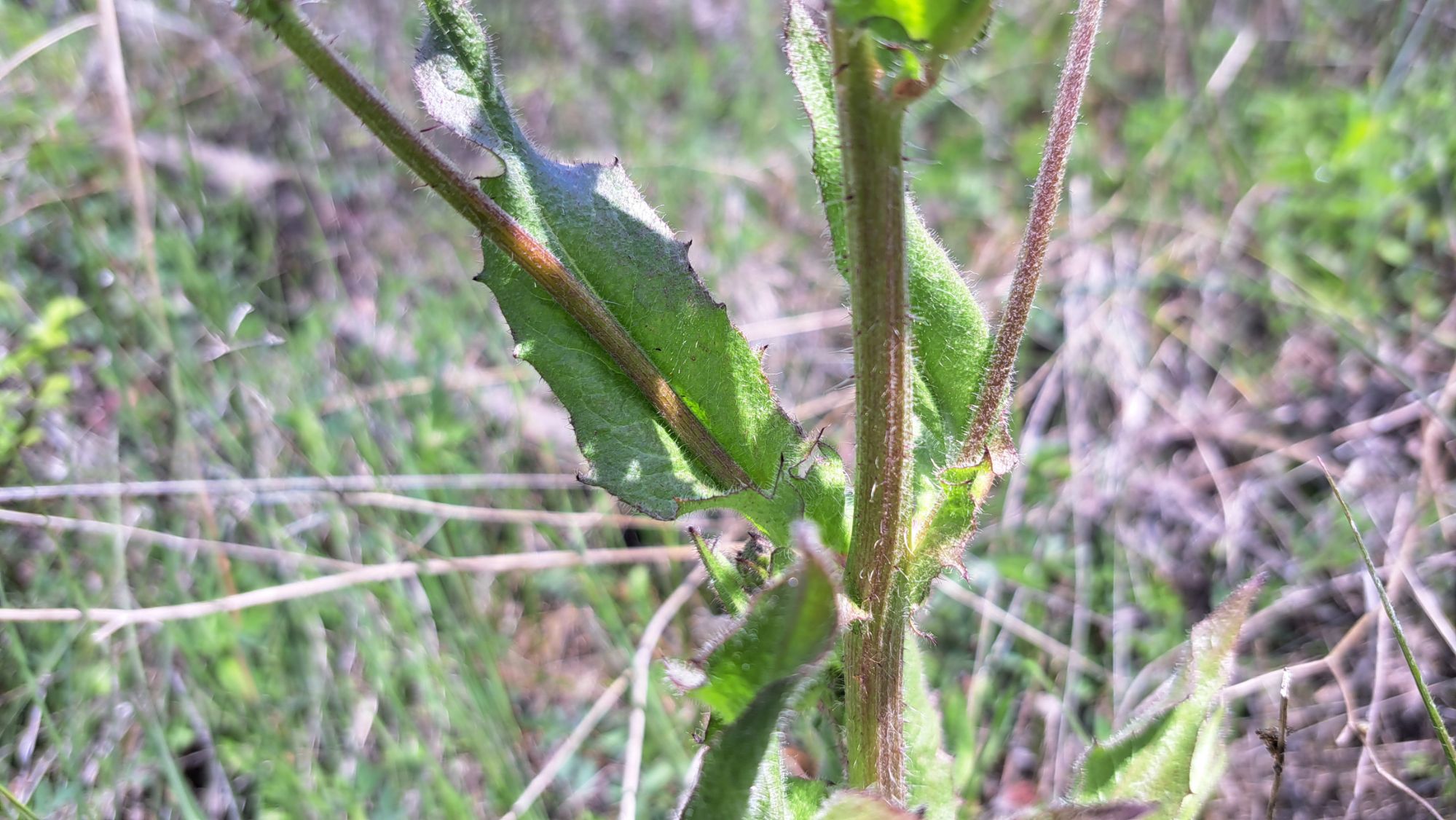
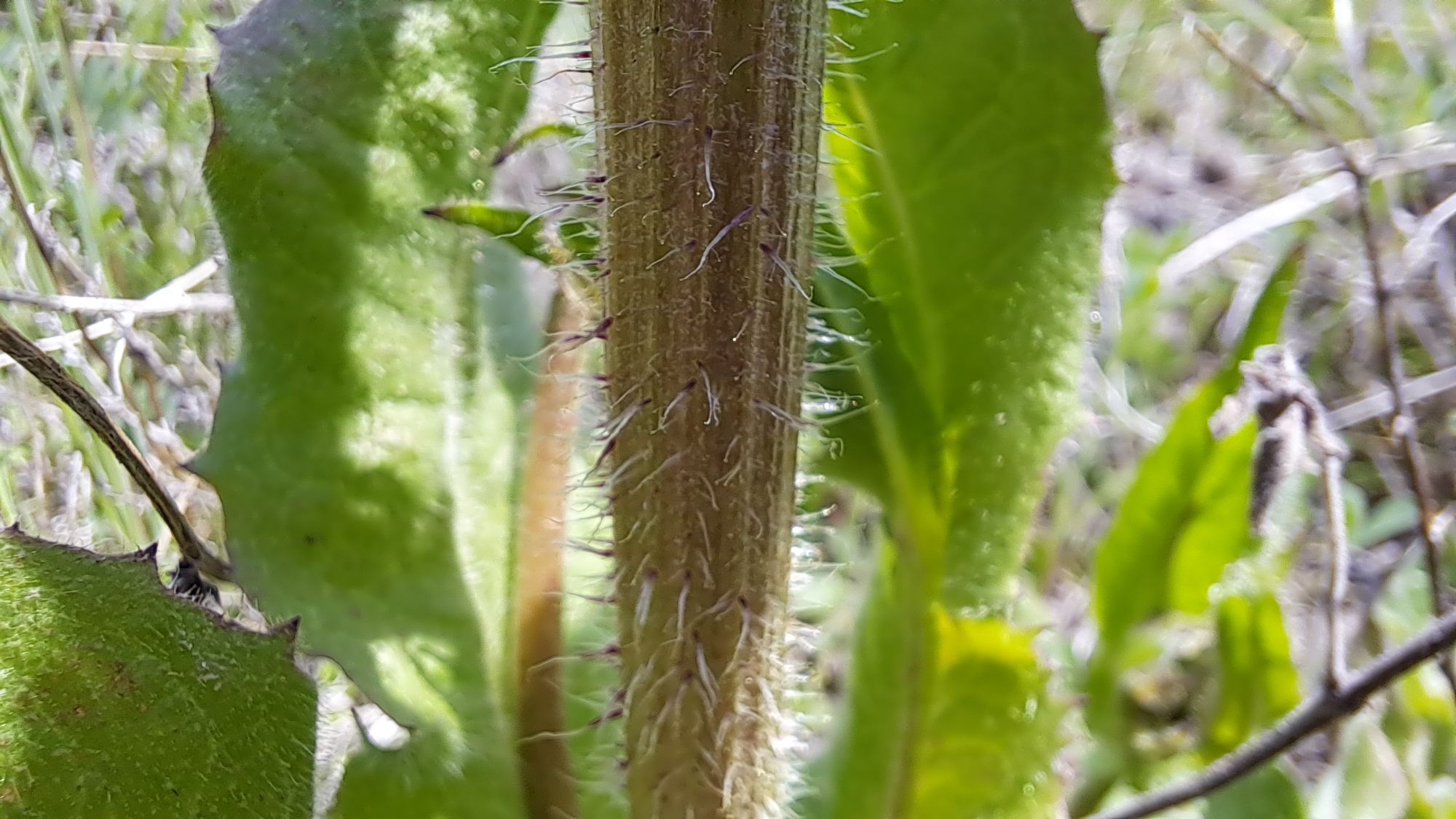
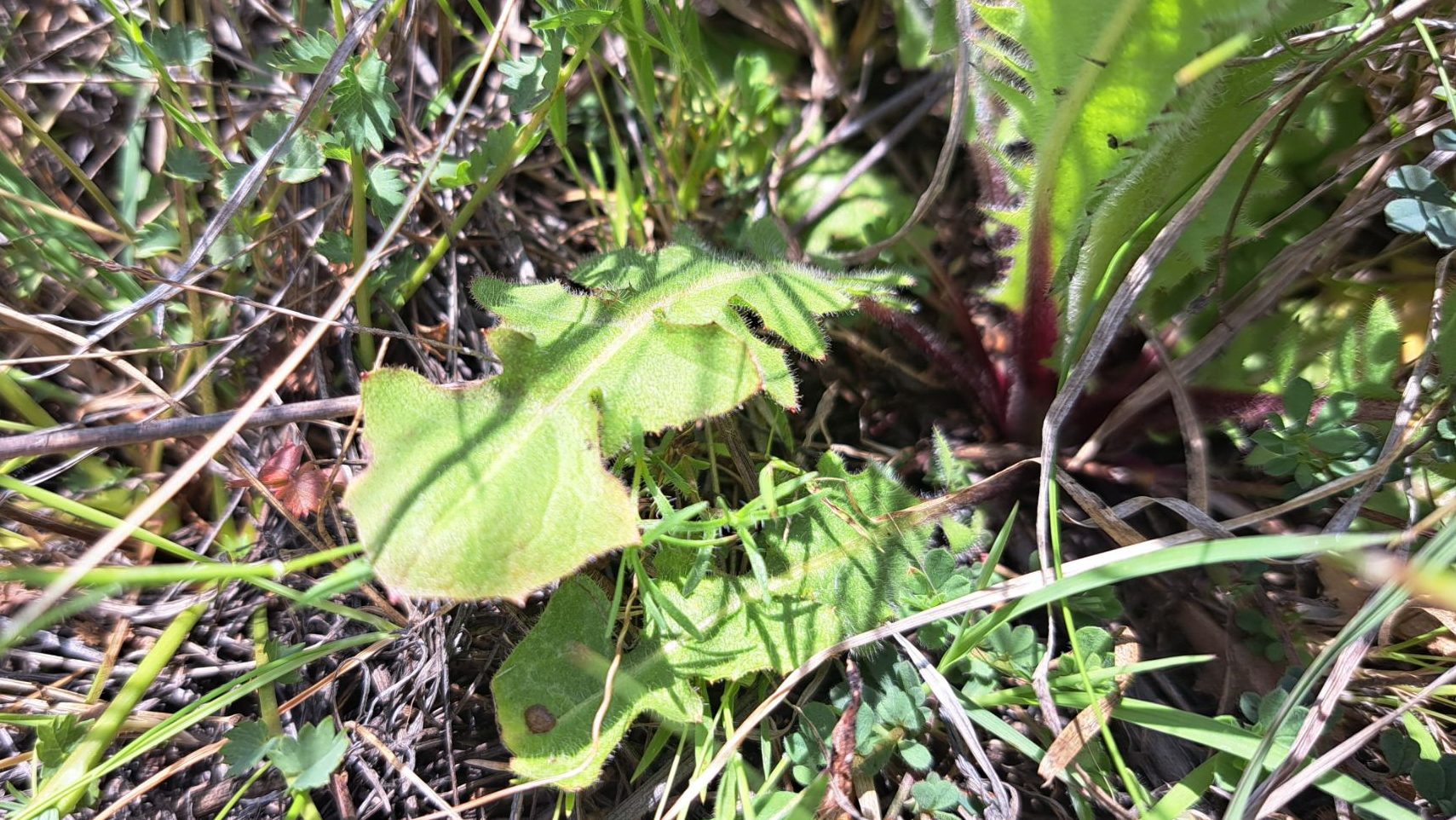
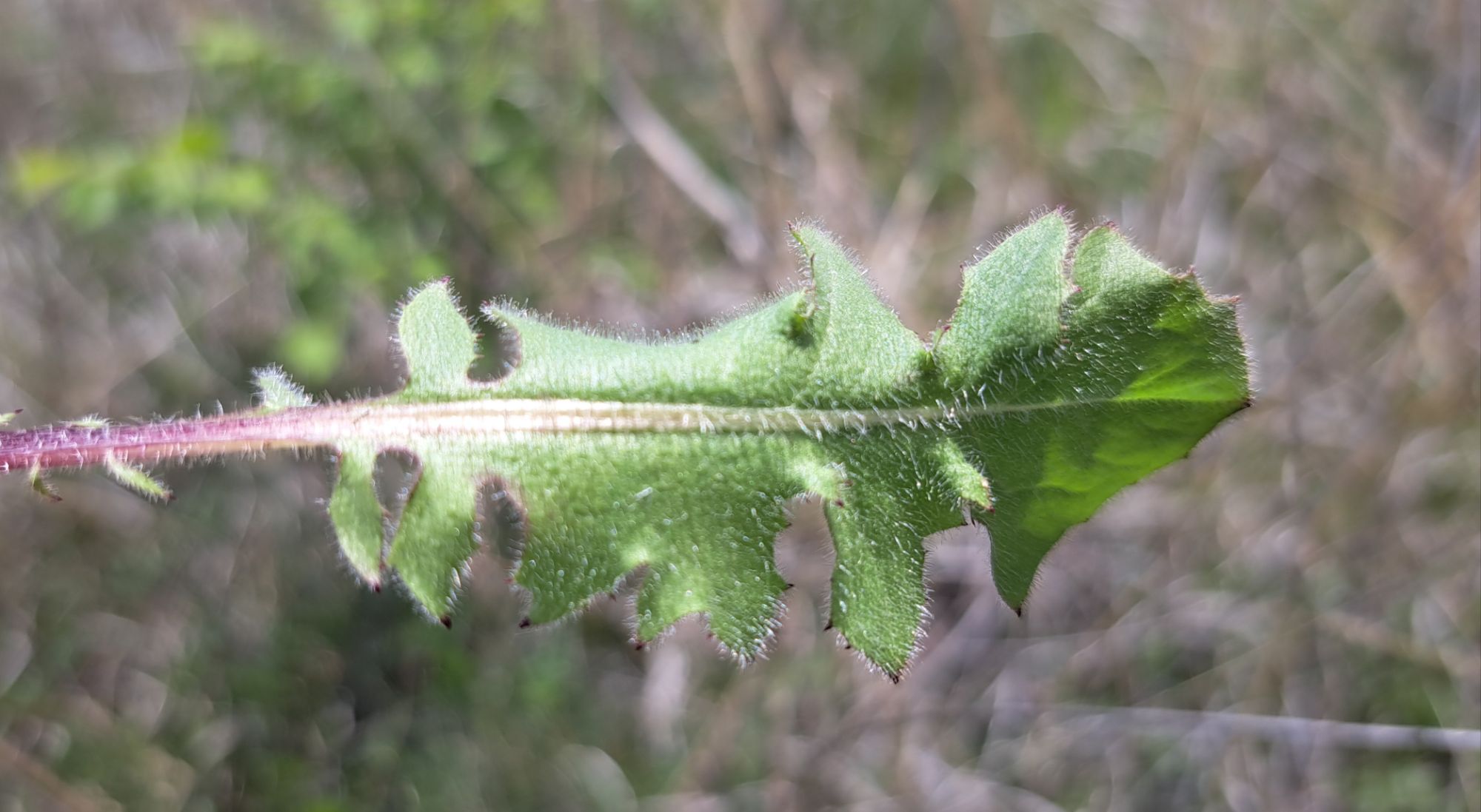
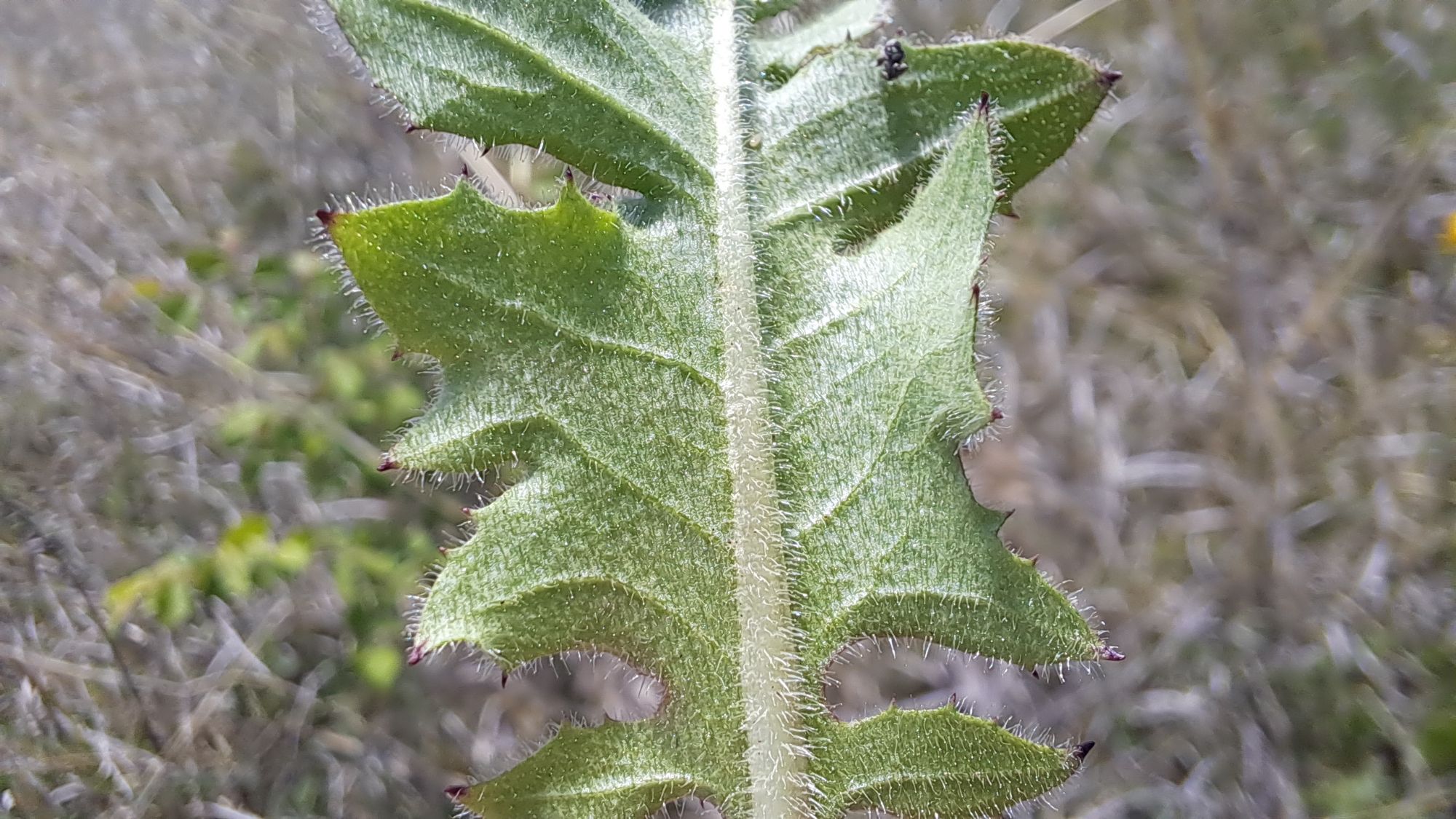
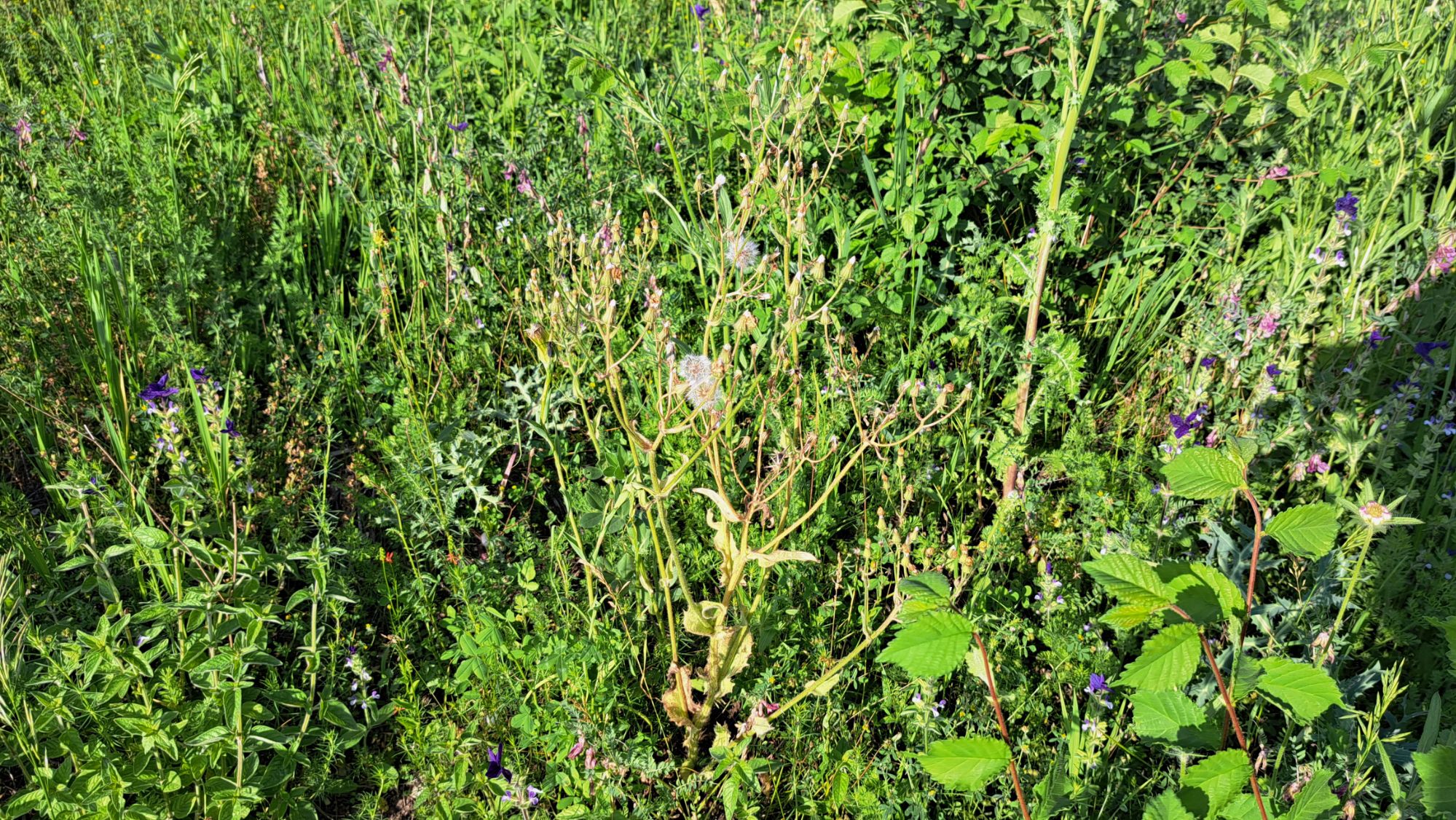
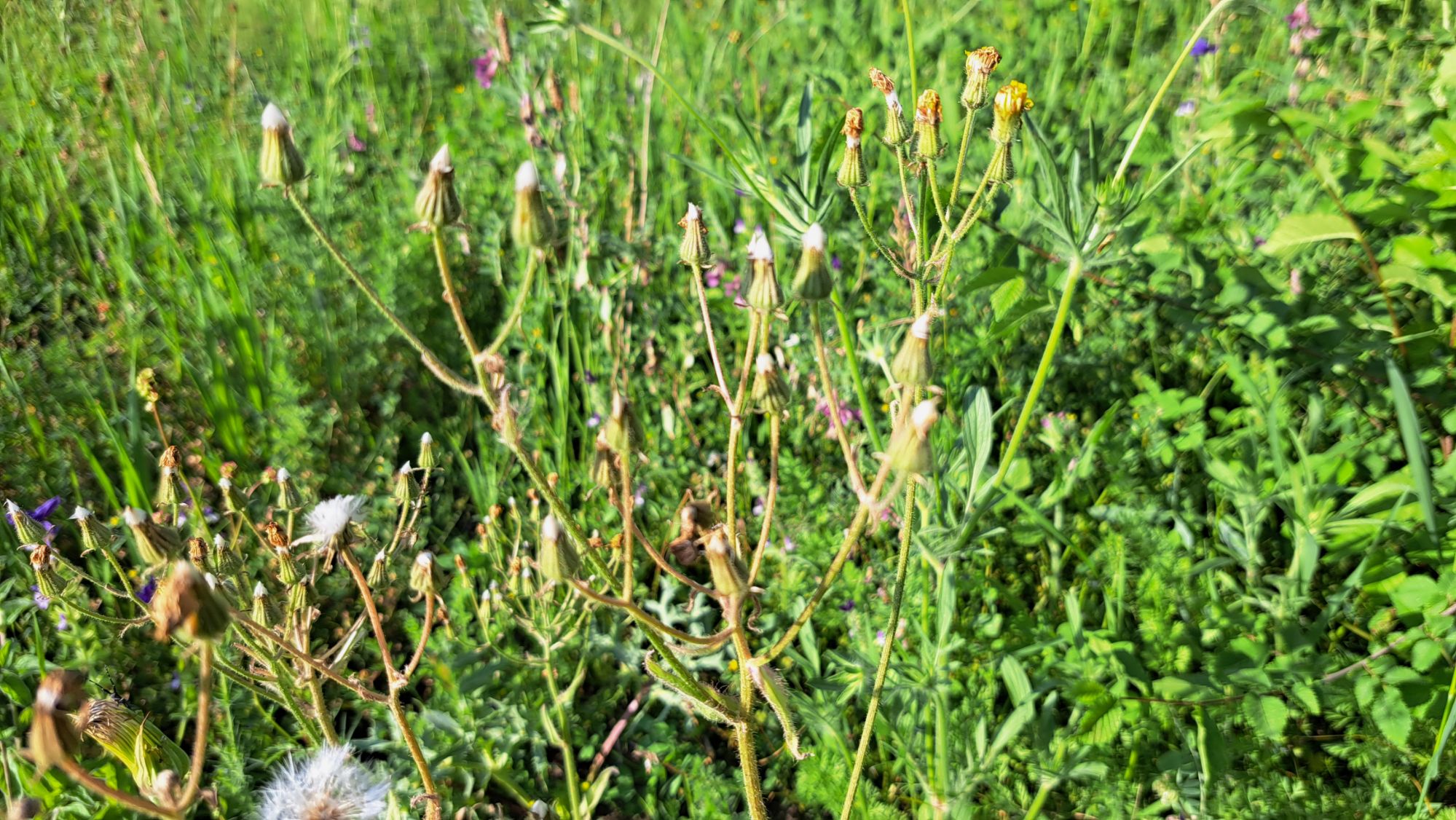
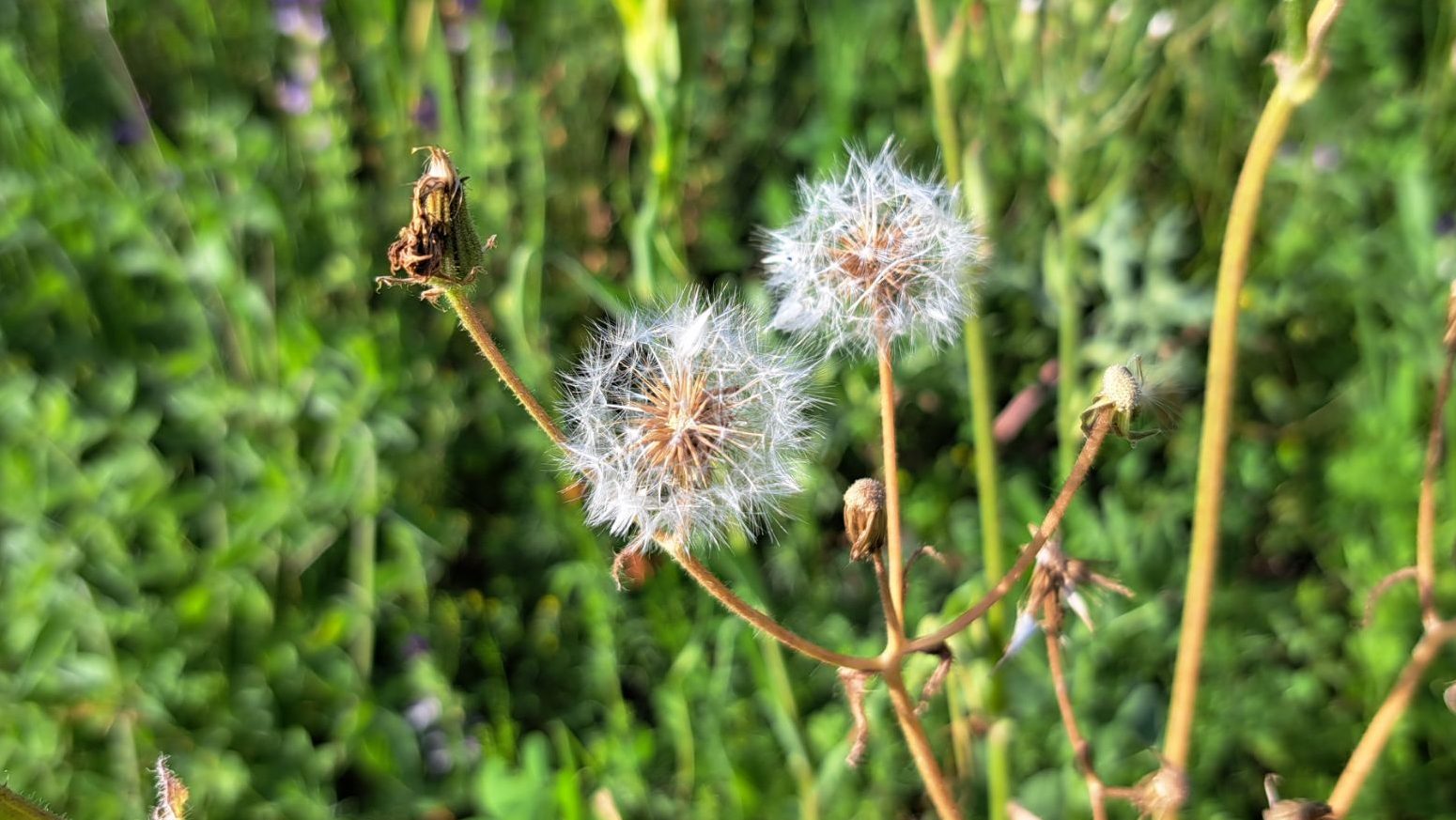
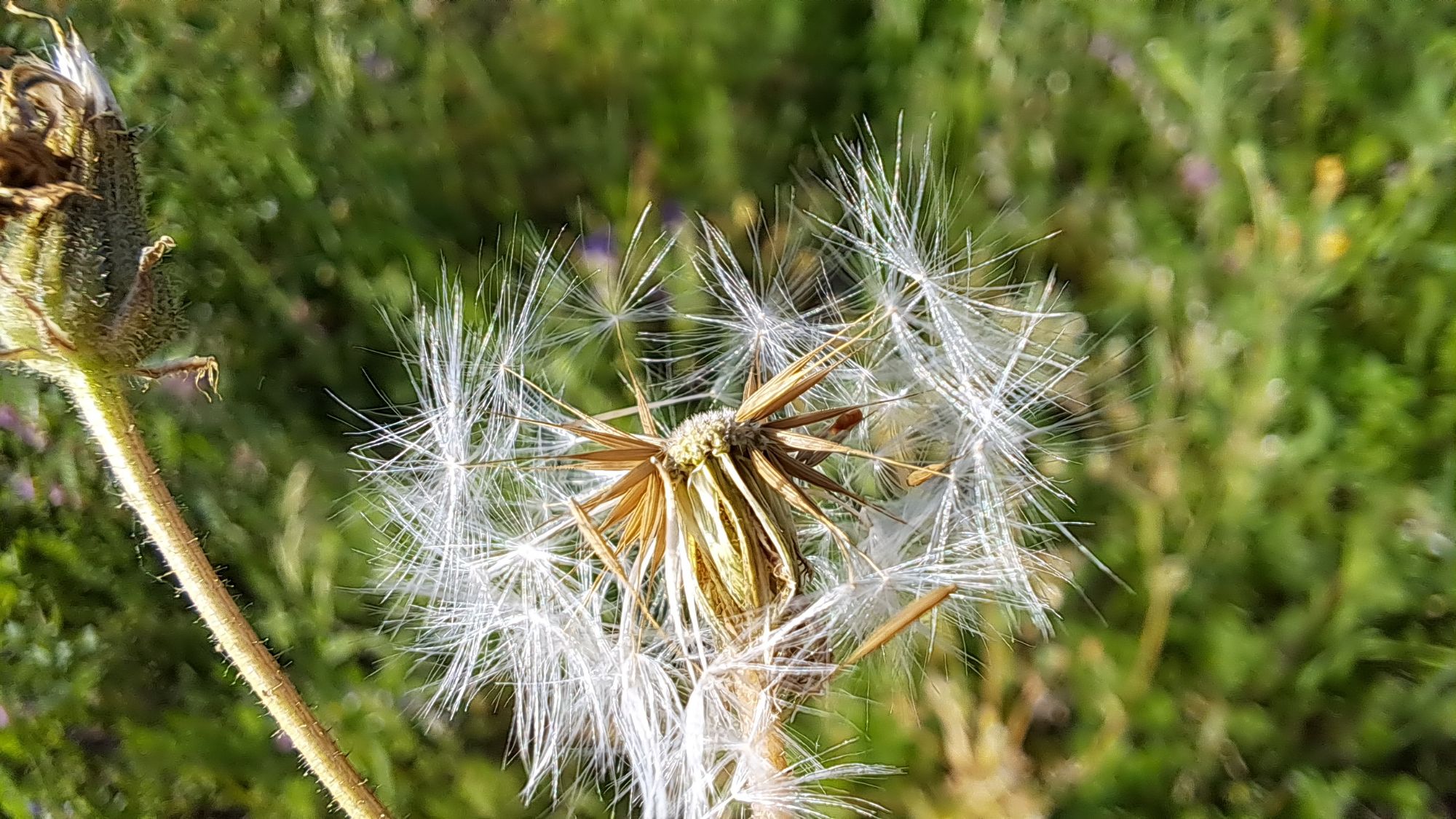
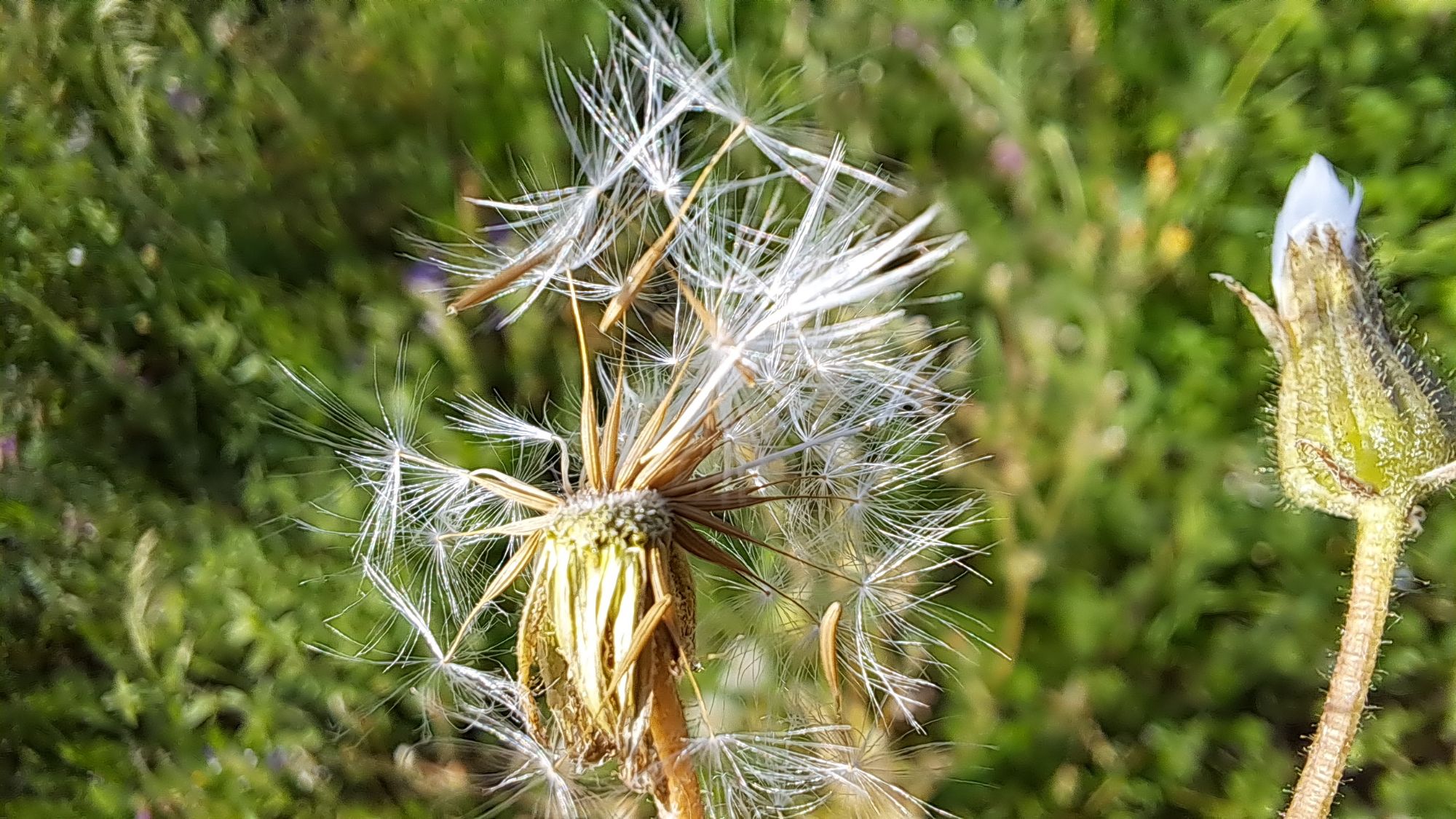
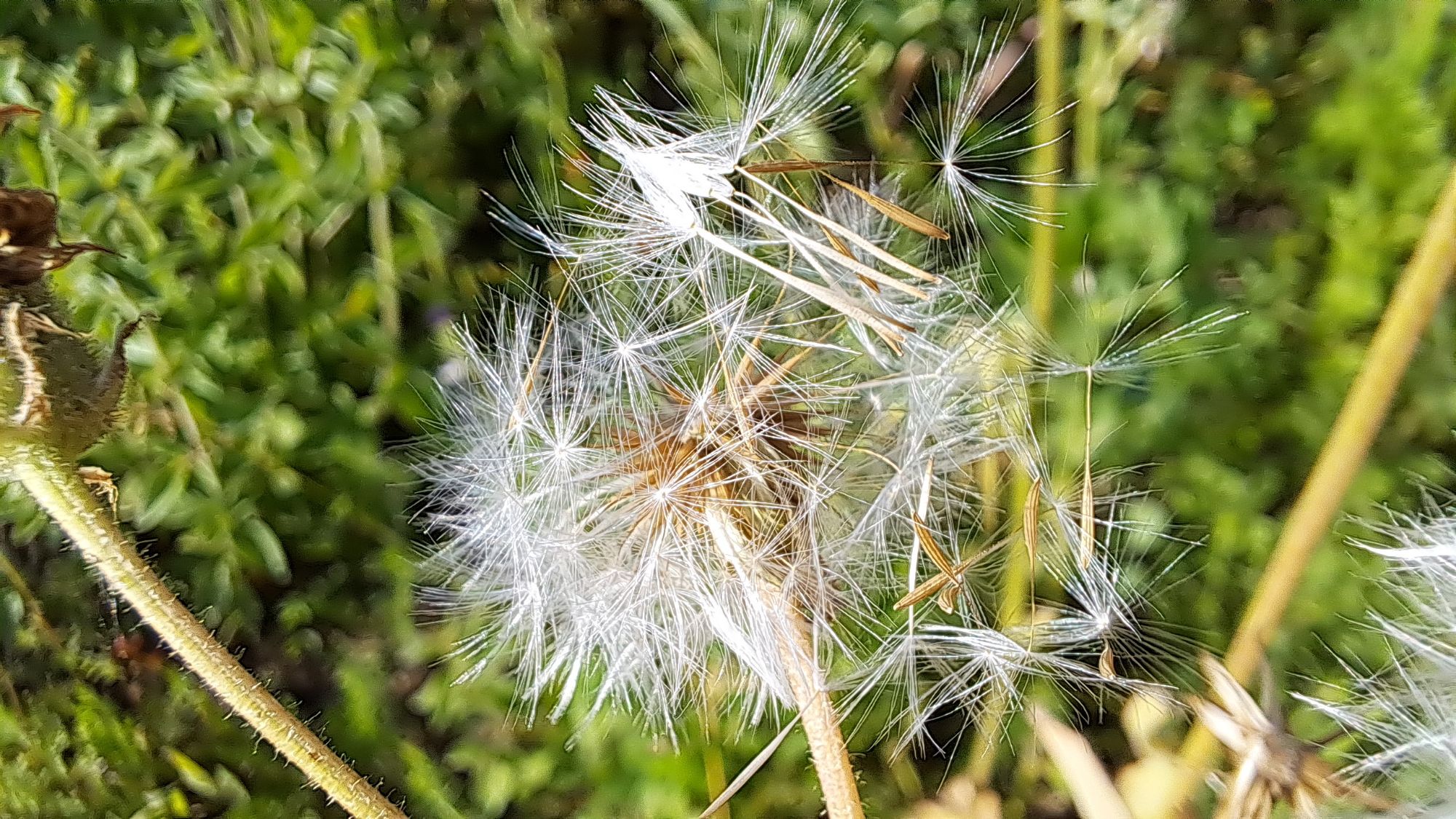
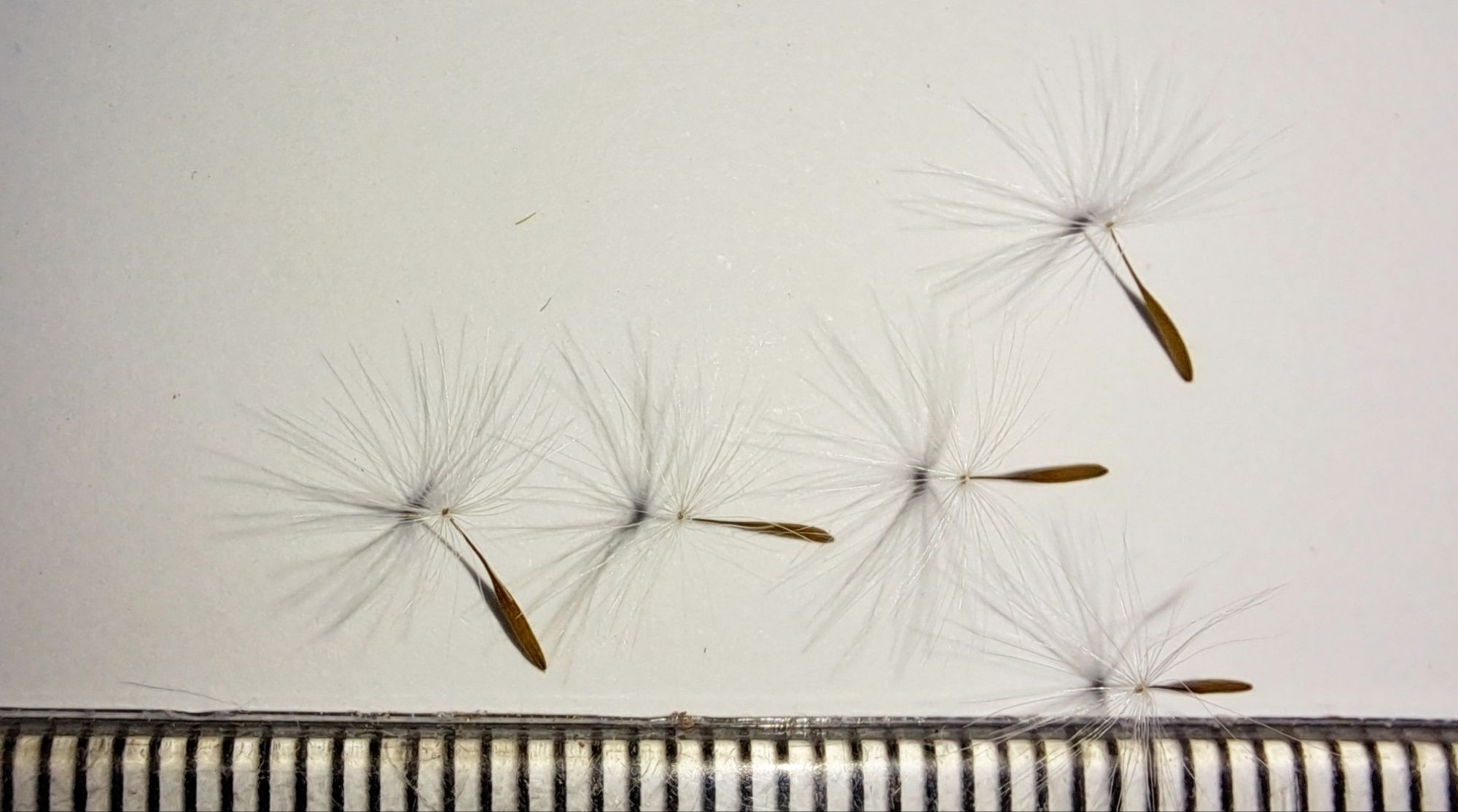
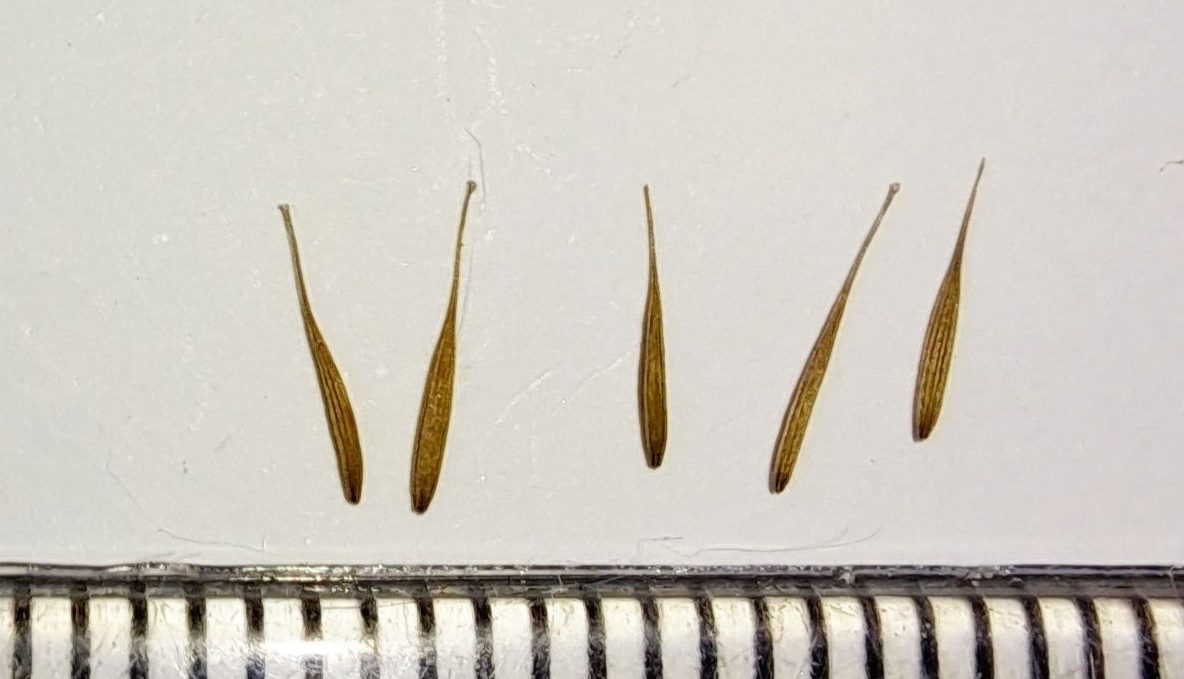
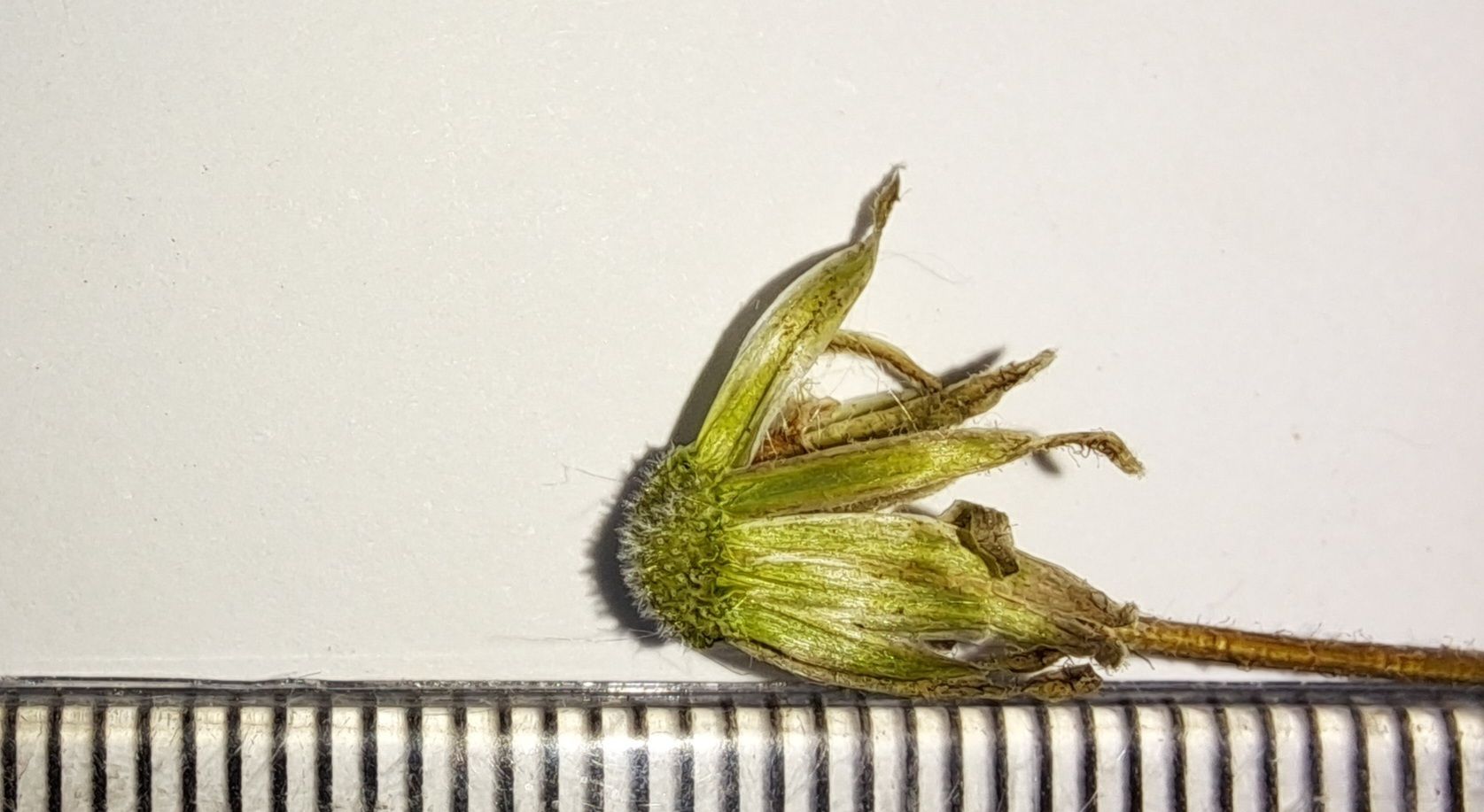
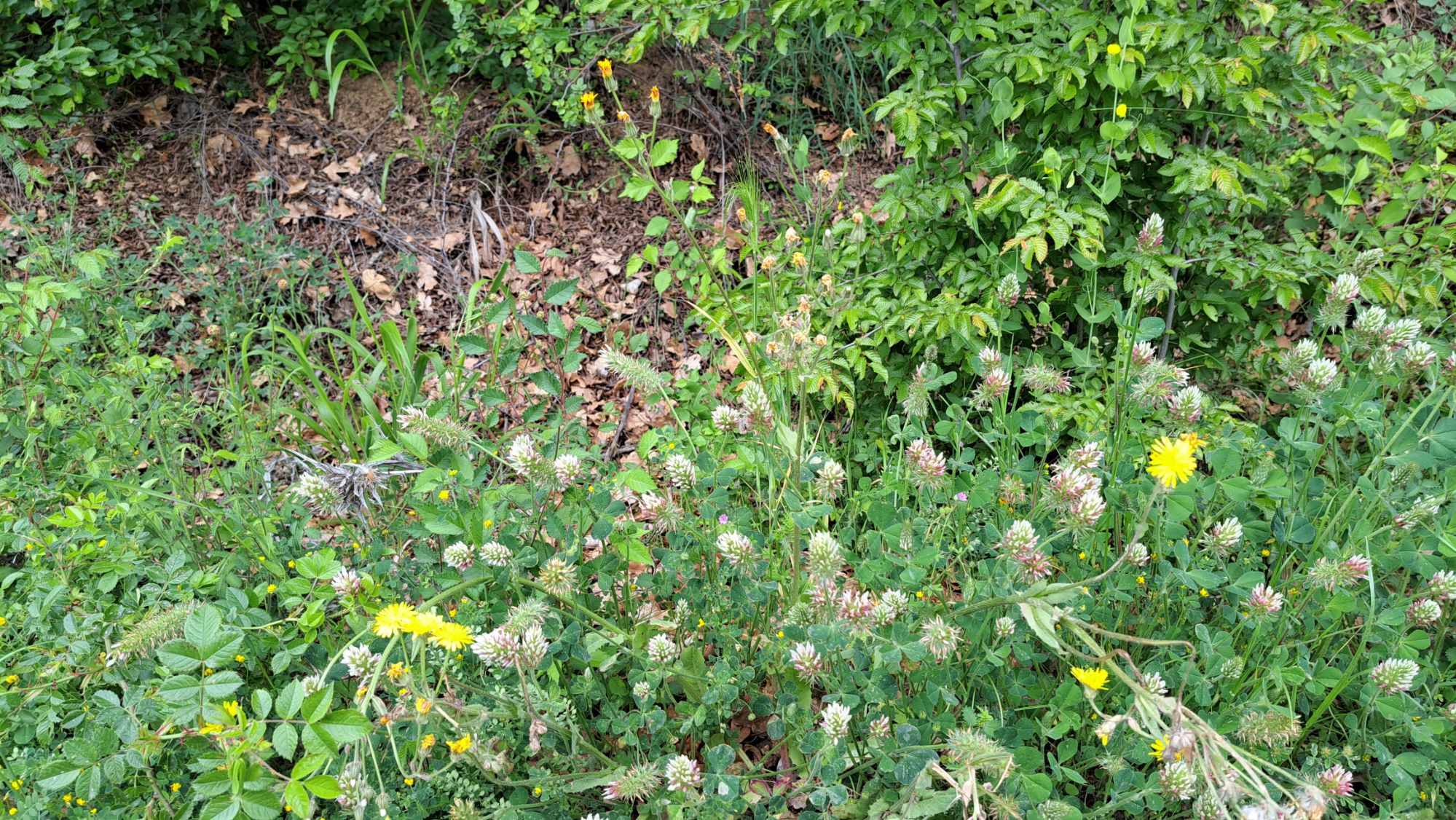
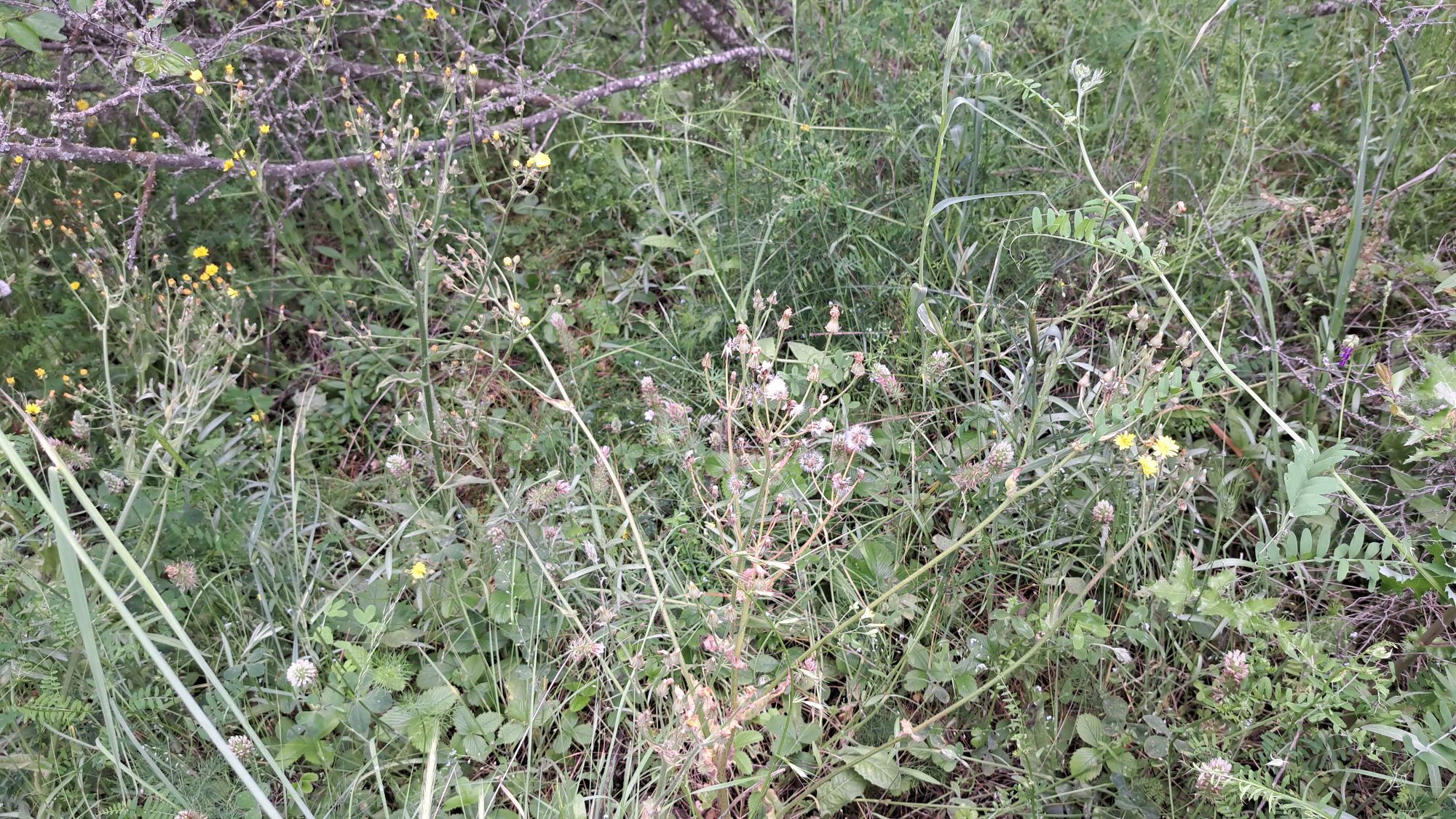
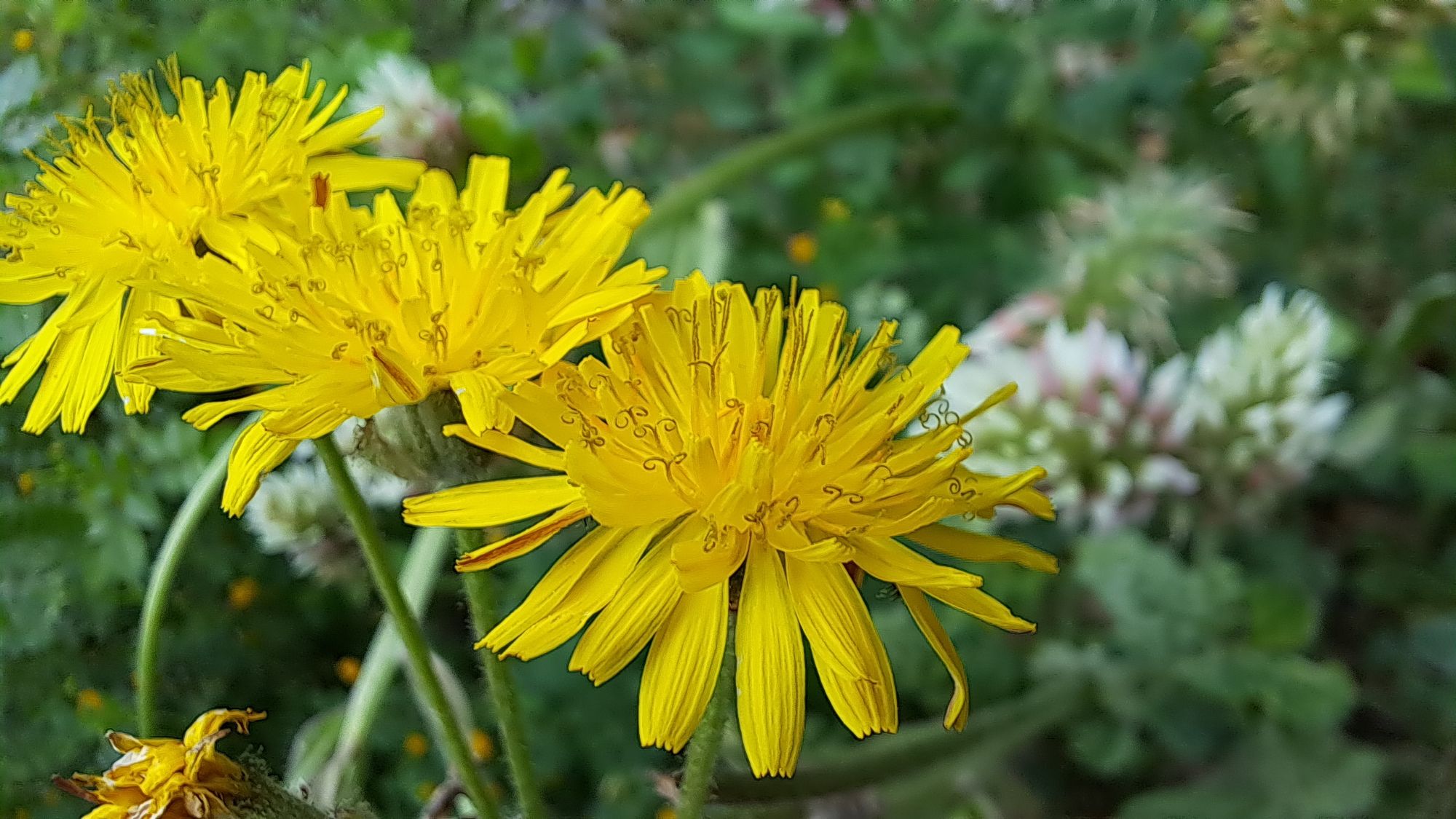
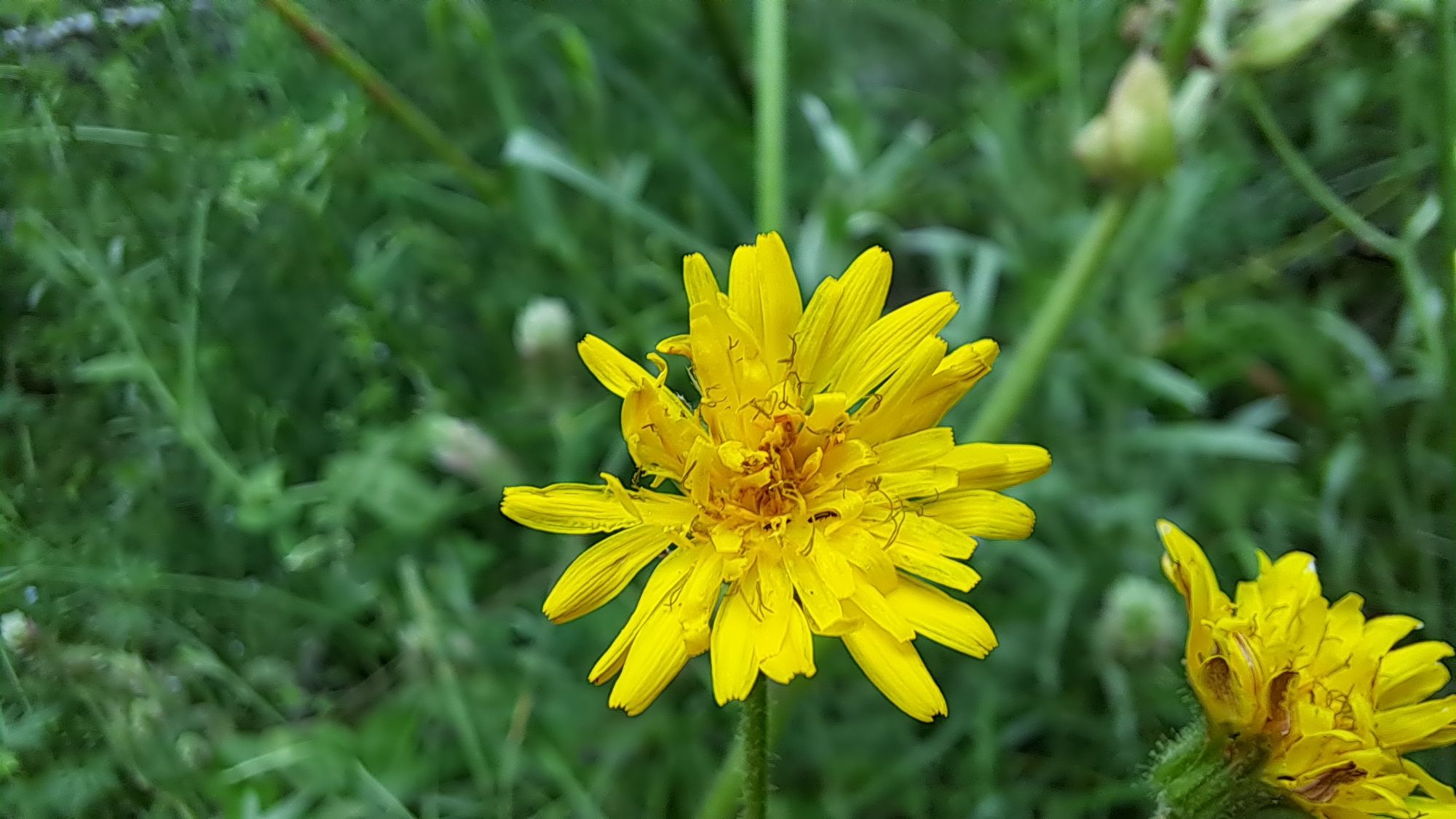
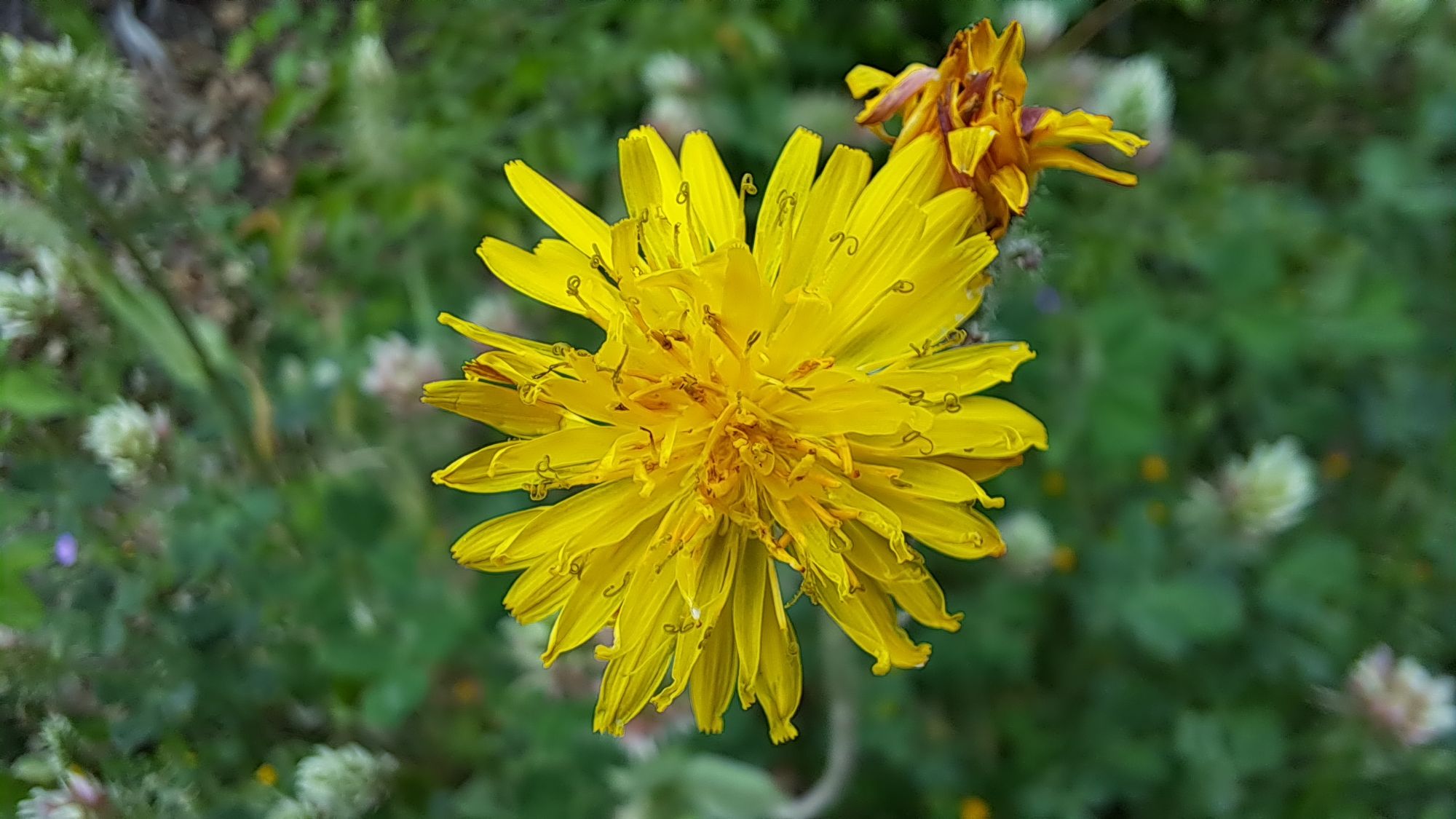
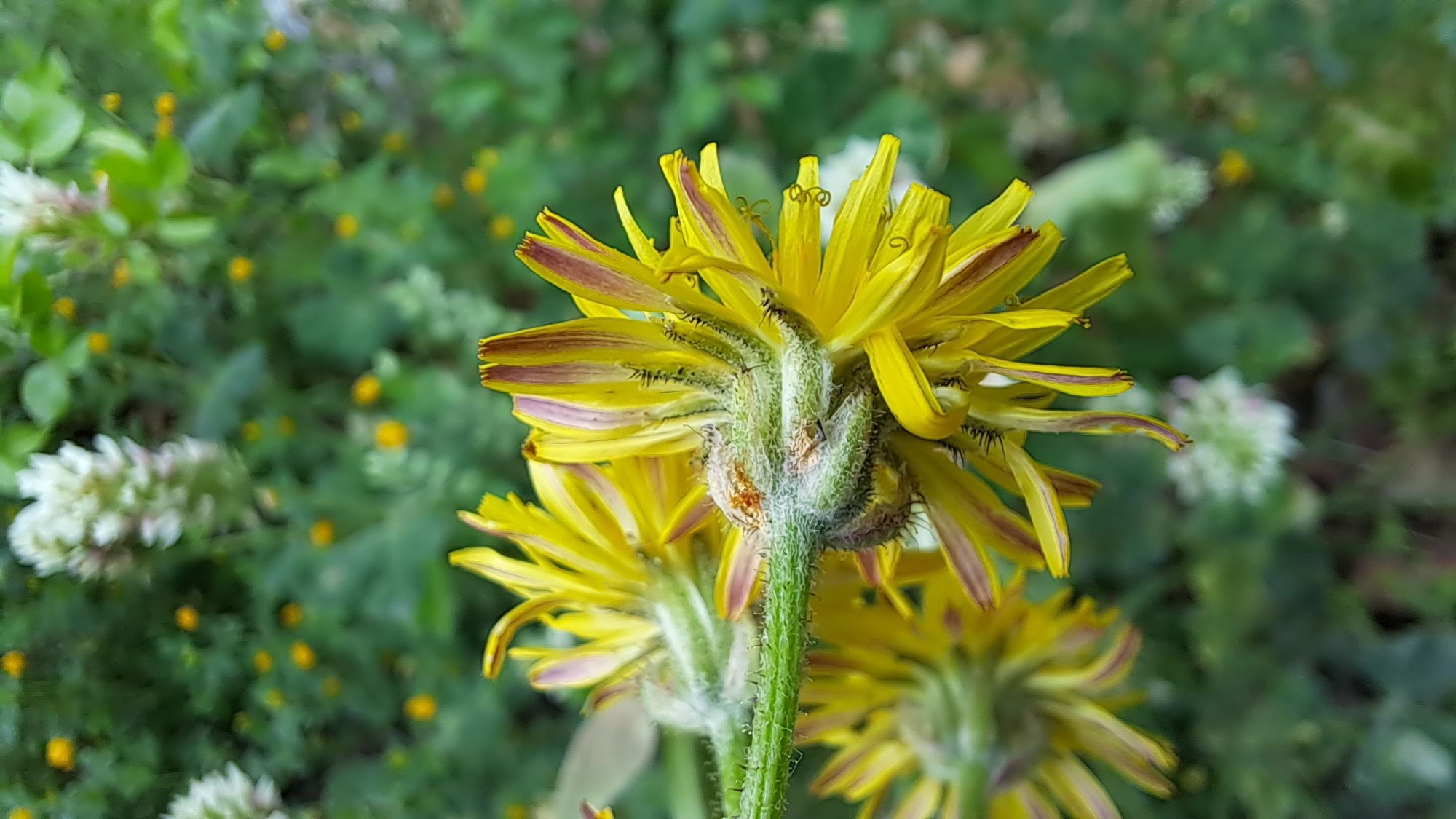
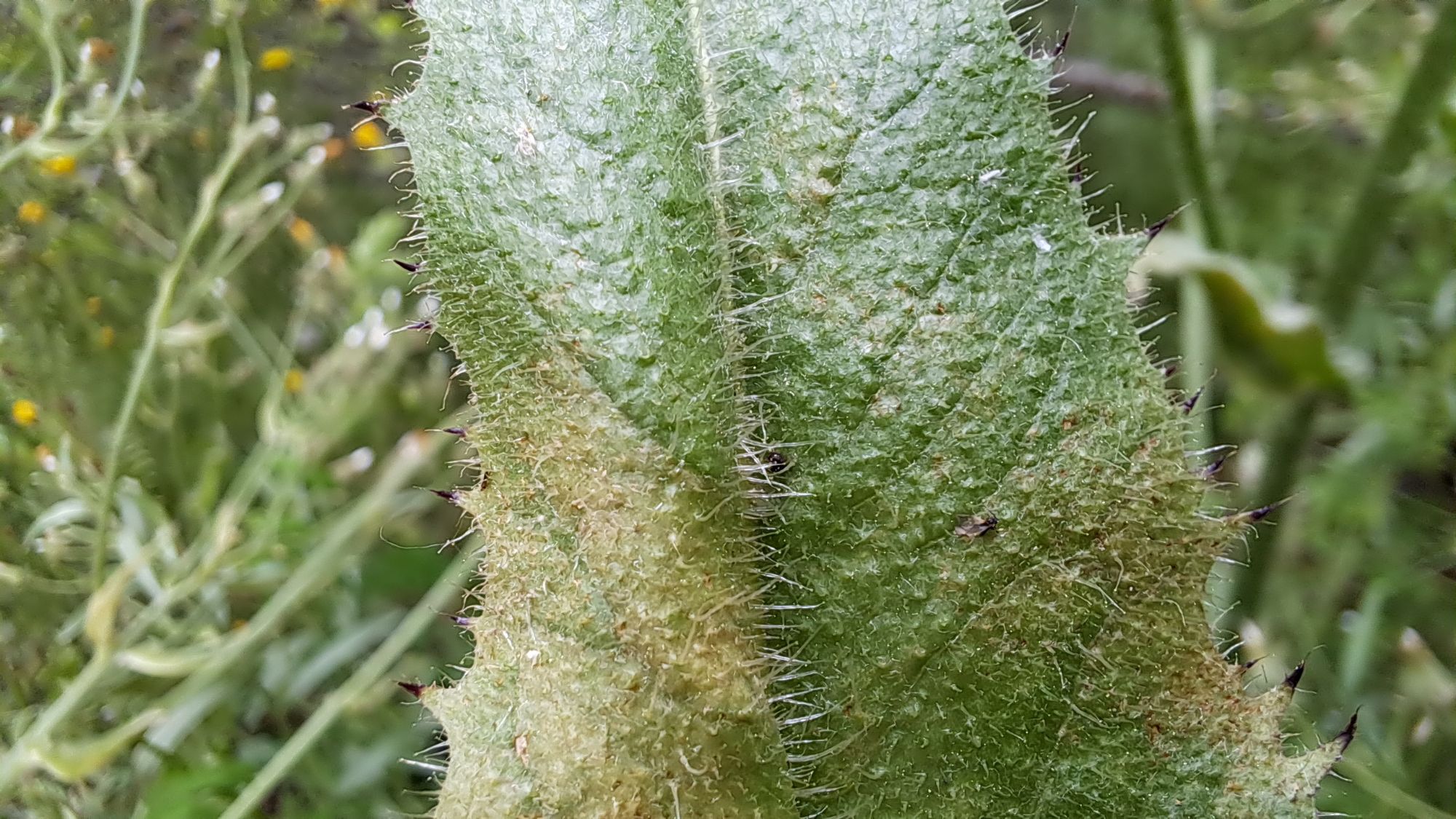
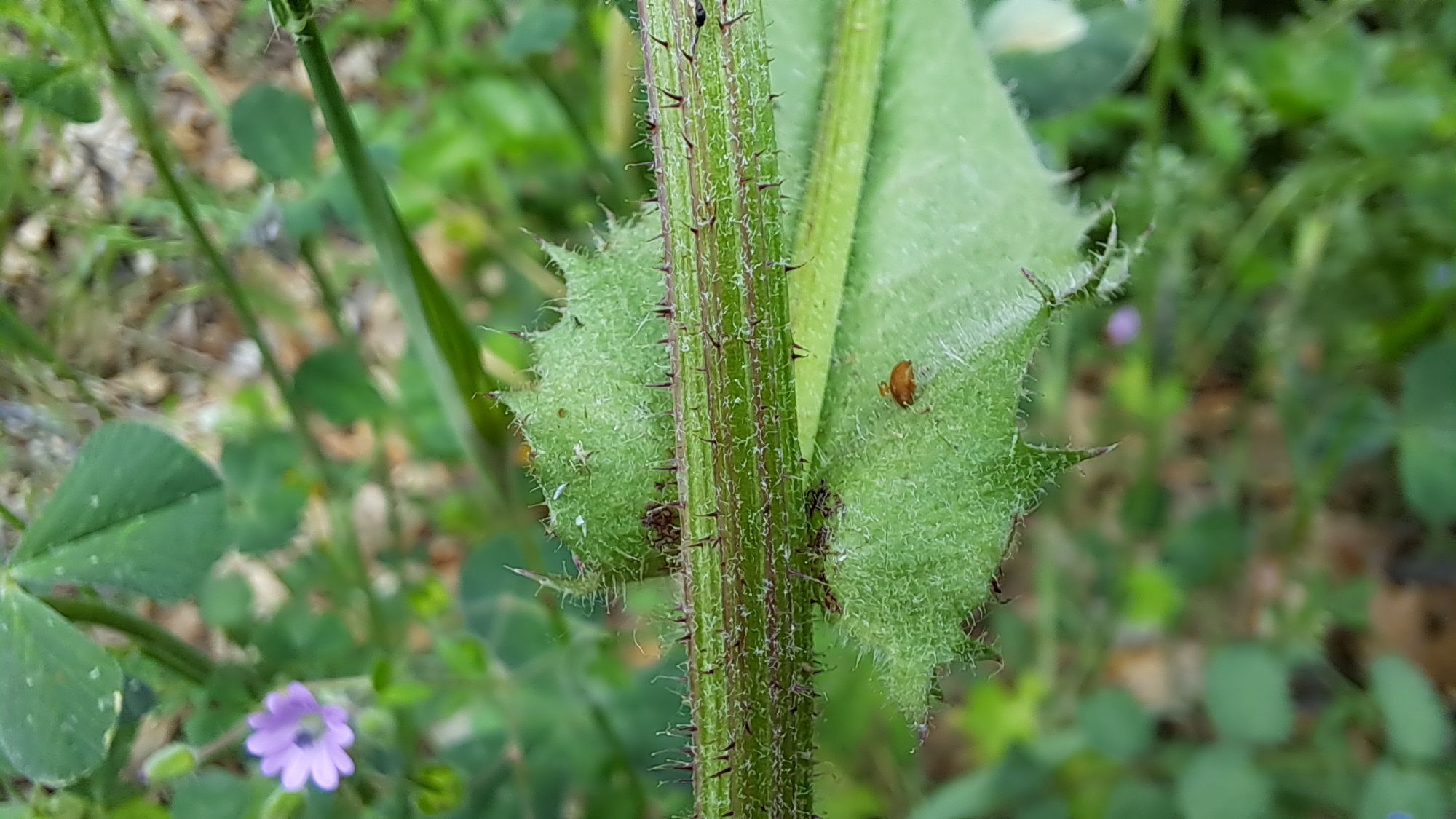
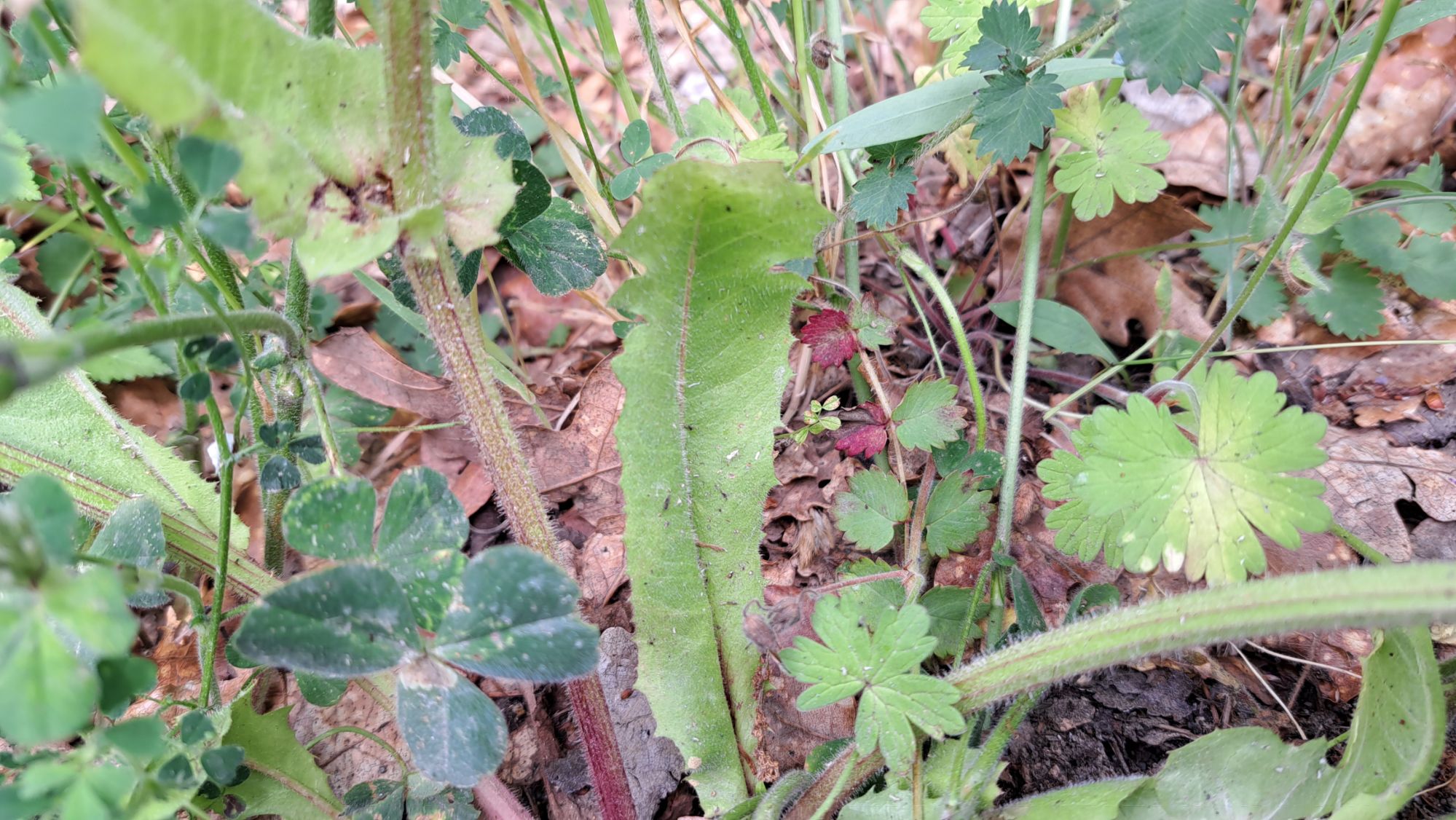
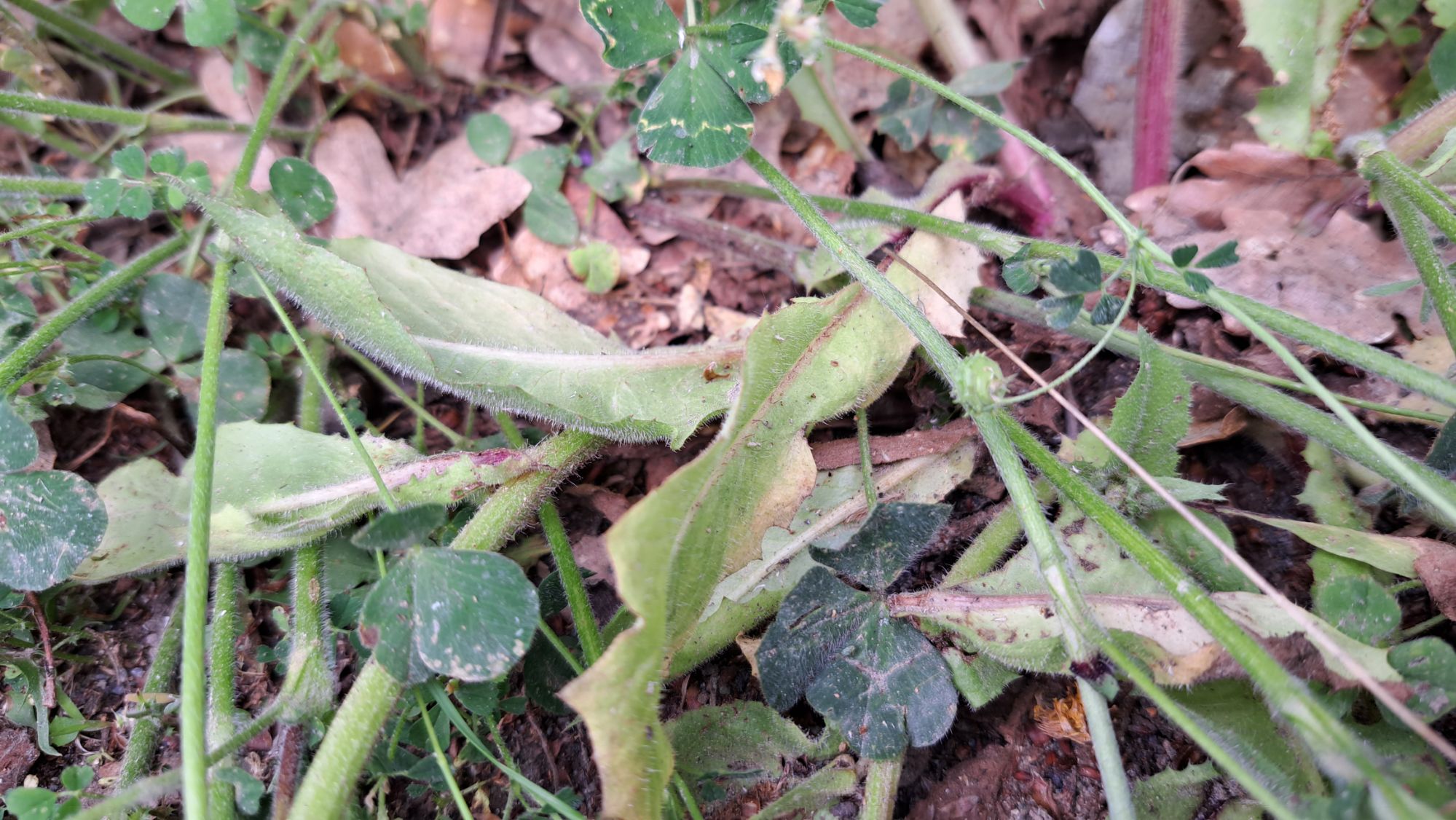
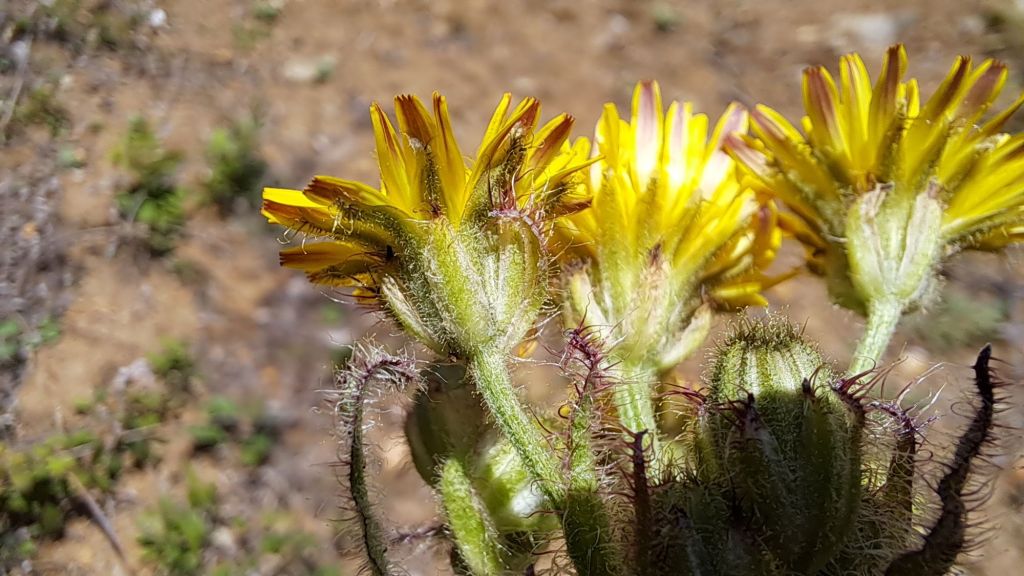
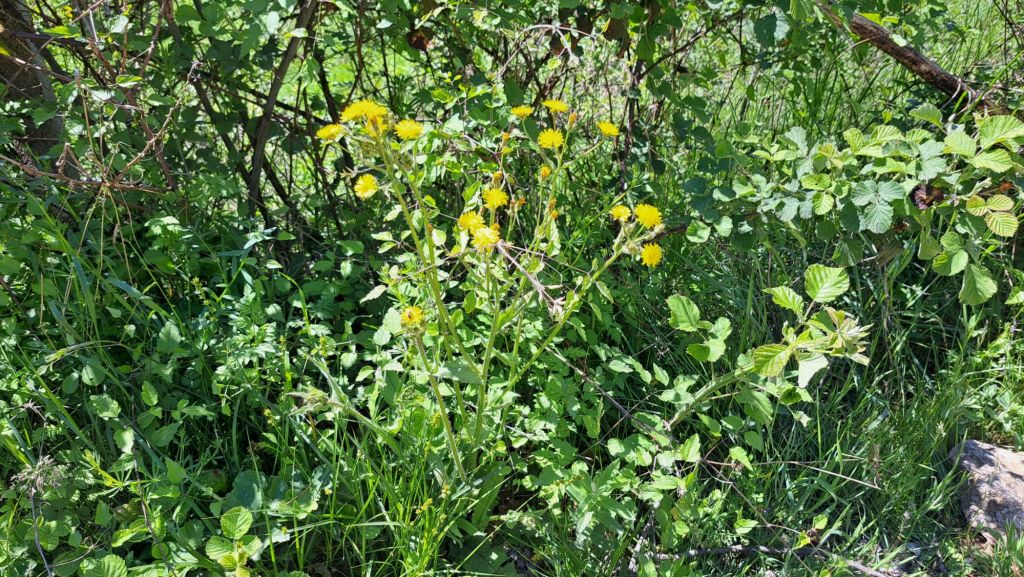
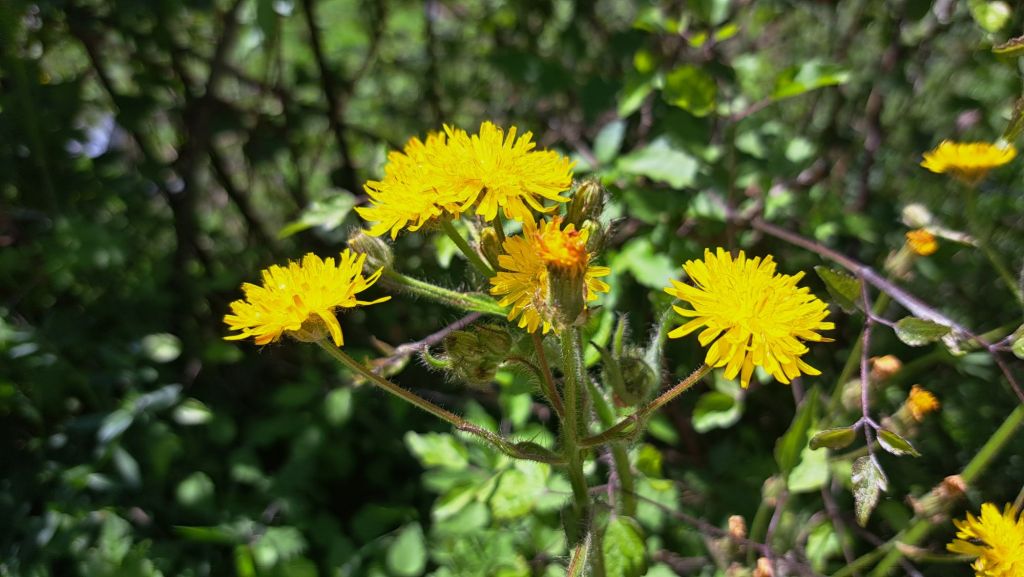
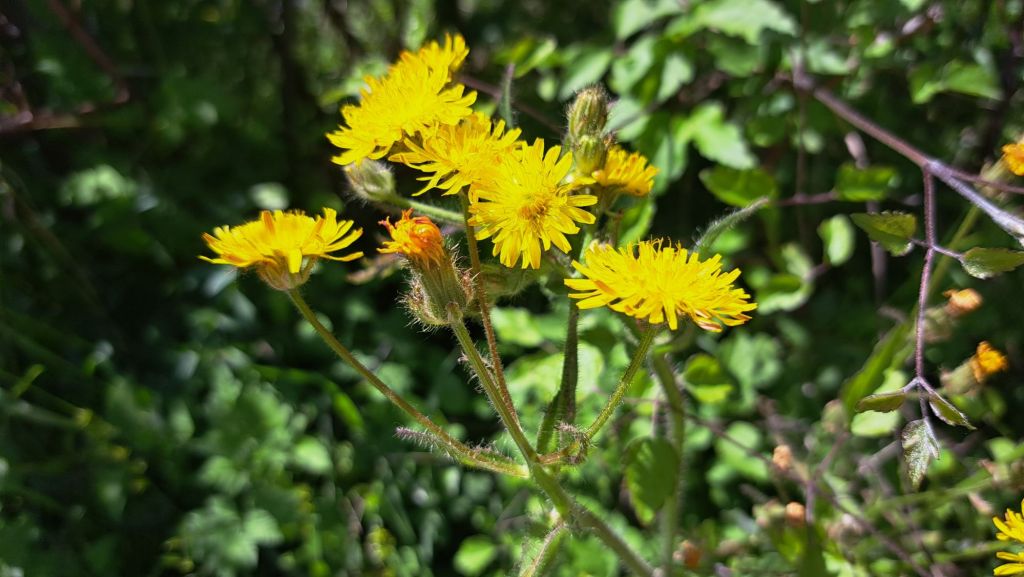
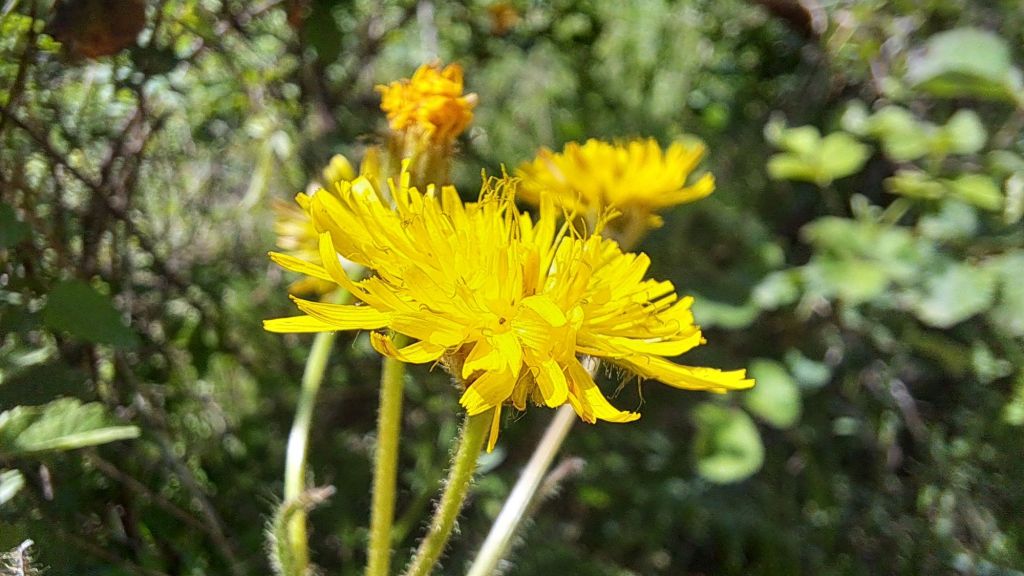
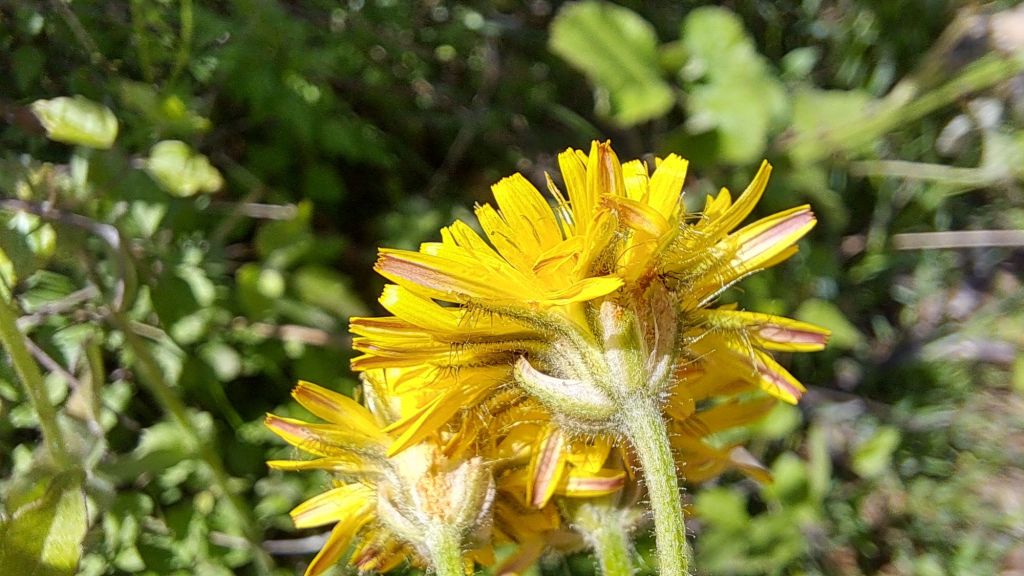
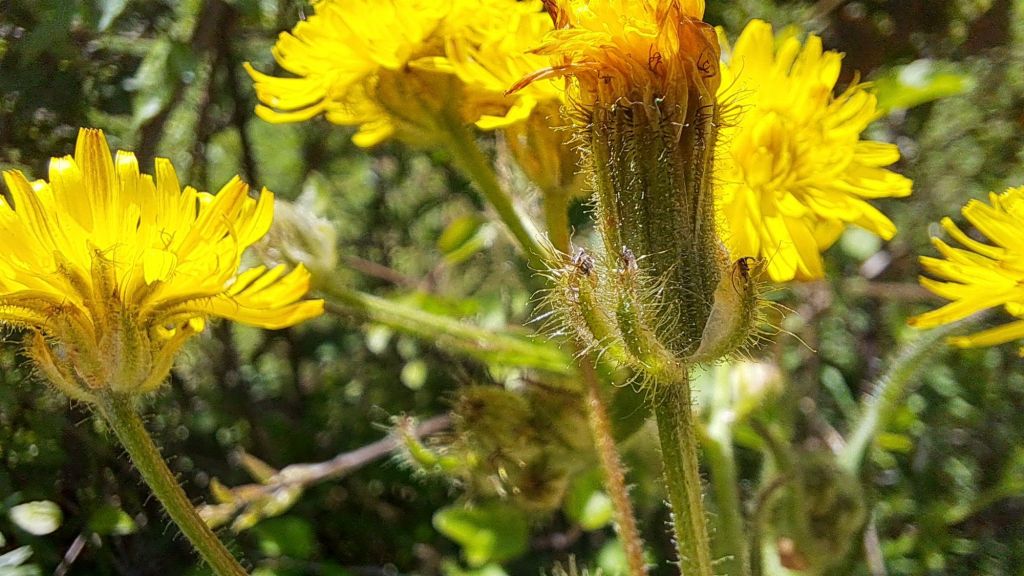
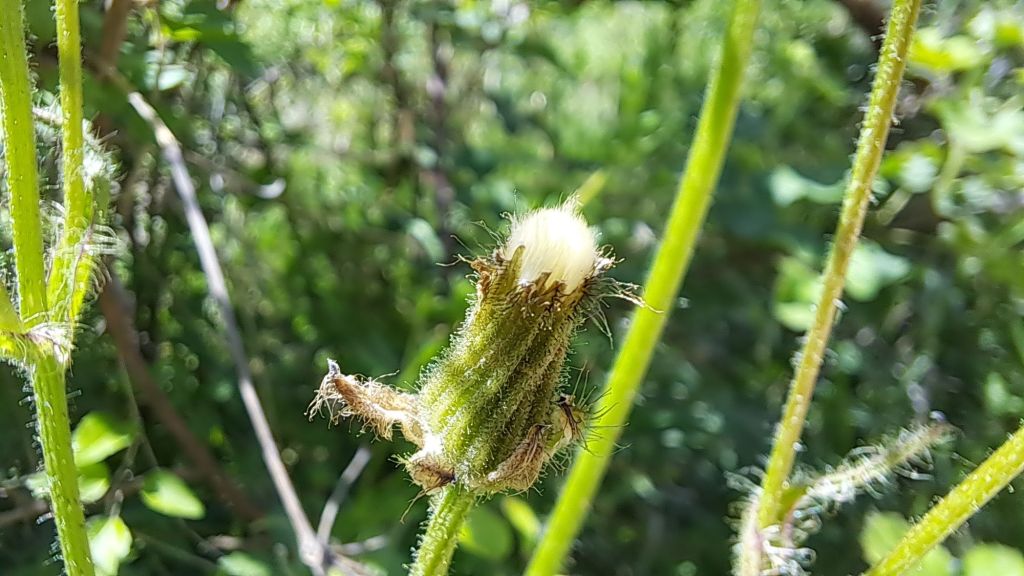
Crepis vesicaria subsp. taraxacifolia – habit. Osogovo, hilly region near village of Beli, 15.05.2022. Photo by Trajche Dimitrovski.Crepis vesicaria subsp. taraxacifolia – habit. Osogovo, hilly region near village of Beli, 15.05.2022. Photo by Trajche Dimitrovski.Crepis vesicaria subsp. taraxacifolia – upper part of plant with capitula. Osogovo, hilly region near village of Beli, 15.05.2022. Photo by Trajche Dimitrovski.Crepis vesicaria subsp. taraxacifolia – upper part of plant with capitula. Osogovo, hilly region near village of Beli, 15.05.2022. Photo by Trajche Dimitrovski.Crepis vesicaria subsp. taraxacifolia – capitula. Osogovo, hilly region near village of Beli, 15.05.2022. Photo by Trajche Dimitrovski.Crepis vesicaria subsp. taraxacifolia – capitula. Osogovo, hilly region near village of Beli, 15.05.2022. Photo by Trajche Dimitrovski.Crepis vesicaria subsp. taraxacifolia – involucre. Osogovo, hilly region near village of Beli, 15.05.2022. Photo by Trajche Dimitrovski.Crepis vesicaria subsp. taraxacifolia – involucre. Osogovo, hilly region near village of Beli, 15.05.2022. Photo by Trajche Dimitrovski.Crepis vesicaria subsp. taraxacifolia – stem with cauline leaf. Osogovo, hilly region near village of Beli, 15.05.2022. Photo by Trajche Dimitrovski.Crepis vesicaria subsp. taraxacifolia – lower cauline leaves and basal leaves. Osogovo, hilly region near village of Beli, 15.05.2022. Photo by Trajche Dimitrovski.Crepis vesicaria subsp. taraxacifolia – basal leaves. Osogovo, hilly region near village of Beli, 15.05.2022. Photo by Trajche Dimitrovski. Crepis vesicaria subsp. taraxacifolia – adaxial side of basal leaf. Osogovo, hilly region near village of Beli, 15.05.2022. Photo by Trajche Dimitrovski.Crepis vesicaria subsp. taraxacifolia – abaxial side of basal leaf. Osogovo, hilly region near village of Beli, 15.05.2022. Photo by Trajche Dimitrovski.Crepis vesicaria subsp. taraxacifolia – habit. Osogovo, hilly region near village of Beli, 01.05.2023. Photo by Trajche Dimitrovski.Crepis vesicaria subsp. taraxacifolia – habit. Osogovo, hilly region near village of Beli, 01.05.2023. Photo by Trajche Dimitrovski.Crepis vesicaria subsp. taraxacifolia – flowering stem with capitula. Osogovo, hilly region near village of Beli, 01.05.2023. Photo by Trajche Dimitrovski.Crepis vesicaria subsp. taraxacifolia – capitulum. Osogovo, hilly region near village of Beli, 01.05.2023. Photo by Trajche Dimitrovski.Crepis vesicaria subsp. taraxacifolia – capitulum. Osogovo, hilly region near village of Beli, 01.05.2023. Photo by Trajche Dimitrovski.Crepis vesicaria subsp. taraxacifolia – capitulum. Osogovo, hilly region near village of Beli, 01.05.2023. Photo by Trajche Dimitrovski.Crepis vesicaria subsp. taraxacifolia – involucre. Osogovo, hilly region near village of Beli, 01.05.2023. Photo by Trajche Dimitrovski.Crepis vesicaria subsp. taraxacifolia – involucre. Osogovo, hilly region near village of Beli, 01.05.2023. Photo by Trajche Dimitrovski.Crepis vesicaria subsp. taraxacifolia – involucre. Osogovo, hilly region near village of Beli, 01.05.2023. Photo by Trajche Dimitrovski.Crepis vesicaria subsp. taraxacifolia – spent capitulum. Osogovo, hilly region near village of Beli, 01.05.2023. Photo by Trajche Dimitrovski.Crepis vesicaria subsp. taraxacifolia – stem with cauline leaves. Osogovo, hilly region near village of Beli, 01.05.2023. Photo by Trajche Dimitrovski.Crepis vesicaria subsp. taraxacifolia – stem with cauline leaves. Osogovo, hilly region near village of Beli, 01.05.2023. Photo by Trajche Dimitrovski.Crepis vesicaria subsp. taraxacifolia – plant base. Osogovo, hilly region near village of Beli, 01.05.2023. Photo by Trajche Dimitrovski.Crepis vesicaria subsp. taraxacifolia – stem. Osogovo, hilly region near village of Beli, 01.05.2023. Photo by Trajche Dimitrovski.Crepis vesicaria subsp. taraxacifolia – basal leaves. Osogovo, hilly region near village of Beli, 01.05.2023. Photo by Trajche Dimitrovski.Crepis vesicaria subsp. taraxacifolia – basal leaf. Osogovo, hilly region near village of Beli, 01.05.2023. Photo by Trajche Dimitrovski.Crepis vesicaria subsp. taraxacifolia – abaxial side of basal leaf. Osogovo, hilly region near village of Beli, 01.05.2023. Photo by Trajche DimitrovskiCrepis vesicaria subsp. taraxacifolia – habit in fruiting stage. Osogovo, hilly region near village of Beli, 01.06.2023. Photo by Trajche Dimitrovski.Crepis vesicaria subsp. taraxacifolia – stemwith fruiting capitula. Osogovo, hilly region near village of Beli, 01.06.2023. Photo by Trajche Dimitrovski.Crepis vesicaria subsp. taraxacifolia – capitula with achenes. Osogovo, hilly region near village of Beli, 01.06.2023. Photo by Trajche Dimitrovski.Crepis vesicaria subsp. taraxacifolia – capitulum with achenes. Osogovo, hilly region near village of Beli, 01.06.2023. Photo by Trajche Dimitrovski.Crepis vesicaria subsp. taraxacifolia – achenes. Osogovo, hilly region near village of Beli, 01.06.2023. Photo by Trajche Dimitrovski.Crepis vesicaria subsp. taraxacifolia – achenes. Osogovo, hilly region near village of Beli, 01.06.2023. Photo by Trajche Dimitrovski.Crepis vesicaria subsp. taraxacifolia – achenes. Osogovo, hilly region near village of Beli, 01.06.2023. Photo by Trajche Dimitrovski.Crepis vesicaria subsp. taraxacifolia – achenes. Scale in mm. Specimen from Osogovo, hilly region near village of Beli. Photo by Trajche Dimitrovski.Crepis vesicaria subsp. taraxacifolia – achenes. Scale in mm. Specimen from Osogovo, hilly region near village of Beli. Photo by Trajche Dimitrovski.Crepis vesicaria subsp. taraxacifolia – body of achenes. Scale in mm. Specimen from Osogovo, hilly region near village of Beli. Photo by Trajche Dimitrovski.Crepis vesicaria subsp. taraxacifolia – invulucral bracts and receptacle. Scale in mm. Specimen from Osogovo, hilly region near village of Beli. Photo by Trajche Dimitrovski.
Locality: hilly region between the villages of Pantelej and Rajchani.
Crepis vesicaria subsp. taraxacifolia – habit. Osogovo, hilly region between the villages of Pantelej and Rajchani, 28.05.2023. Photo by Trajche Dimitrovski.Crepis vesicaria subsp. taraxacifolia – habit. Osogovo, hilly region between the villages of Pantelej and Rajchani, 28.05.2023. Photo by Trajche Dimitrovski.Crepis vesicaria subsp. taraxacifolia – habit. Osogovo, hilly region between the villages of Pantelej and Rajchani, 28.05.2023. Photo by Trajche Dimitrovski.Crepis vesicaria subsp. taraxacifolia – flowering stems with capitula. Osogovo, hilly region between the villages of Pantelej and Rajchani, 28.05.2023. Photo by Trajche Dimitrovski.Crepis vesicaria subsp. taraxacifolia – flowering stems with capitula. Osogovo, hilly region between the villages of Pantelej and Rajchani, 28.05.2023. Photo by Trajche Dimitrovski.Crepis vesicaria subsp. taraxacifolia – flowering stem with capitula. Osogovo, hilly region between the villages of Pantelej and Rajchani, 28.05.2023. Photo by Trajche Dimitrovski.Crepis vesicaria subsp. taraxacifolia – capitula. Osogovo, hilly region between the villages of Pantelej and Rajchani, 28.05.2023. Photo by Trajche Dimitrovski.Crepis vesicaria subsp. taraxacifolia – capitula. Osogovo, hilly region between the villages of Pantelej and Rajchani, 28.05.2023. Photo by Trajche Dimitrovski.Crepis vesicaria subsp. taraxacifolia – capitula. Osogovo, hilly region between the villages of Pantelej and Rajchani, 28.05.2023. Photo by Trajche Dimitrovski.Crepis vesicaria subsp. taraxacifolia – involucre. Osogovo, hilly region between the villages of Pantelej and Rajchani, 28.05.2023. Photo by Trajche Dimitrovski.Crepis vesicaria subsp. taraxacifolia – involucre. Osogovo, hilly region between the villages of Pantelej and Rajchani, 28.05.2023. Photo by Trajche Dimitrovski.Crepis vesicaria subsp. taraxacifolia – involucre. Osogovo, hilly region between the villages of Pantelej and Rajchani, 28.05.2023. Photo by Trajche Dimitrovski.Crepis vesicaria subsp. taraxacifolia – fruiting capitulum. Osogovo, hilly region between the villages of Pantelej and Rajchani, 28.05.2023. Photo by Trajche Dimitrovski.Crepis vesicaria subsp. taraxacifolia – achenes. Osogovo, hilly region between the villages of Pantelej and Rajchani, 28.05.2023. Photo by Trajche Dimitrovski.Crepis vesicaria subsp. taraxacifolia – upper cauline leaf. Osogovo, hilly region between the villages of Pantelej and Rajchani, 28.05.2023. Photo by Trajche Dimitrovski.Crepis vesicaria subsp. taraxacifolia – upper cauline leaf. Osogovo, hilly region between the villages of Pantelej and Rajchani, 28.05.2023. Photo by Trajche Dimitrovski.Crepis vesicaria subsp. taraxacifolia – cauline leaves. Osogovo, hilly region between the villages of Pantelej and Rajchani, 28.05.2023. Photo by Trajche Dimitrovski.Crepis vesicaria subsp. taraxacifolia – cauline leaves. Osogovo, hilly region between the villages of Pantelej and Rajchani, 28.05.2023. Photo by Trajche Dimitrovski.Crepis vesicaria subsp. taraxacifolia – adaxial side of leaf. Osogovo, hilly region between the villages of Pantelej and Rajchani, 28.05.2023. Photo by Trajche Dimitrovski.Crepis vesicaria subsp. taraxacifolia – adaxial side of leaf. Osogovo, hilly region between the villages of Pantelej and Rajchani, 28.05.2023. Photo by Trajche Dimitrovski.Crepis vesicaria subsp. taraxacifolia – stem. Osogovo, hilly region between the villages of Pantelej and Rajchani, 28.05.2023. Photo by Trajche Dimitrovski..Crepis vesicaria subsp. taraxacifolia – base of stems and basal leaf. Osogovo, hilly region between the villages of Pantelej and Rajchani, 28.05.2023. Photo by Trajche Dimitrovski..Crepis vesicaria subsp. taraxacifolia – lower part of stems with lower cauline and basal leaves. Osogovo, hilly region between the villages of Pantelej and Rajchani, 28.05.2023. Photo by Trajche Dimitrovski..Crepis vesicaria subsp. taraxacifolia – basal leaves. Osogovo, hilly region between the villages of Pantelej and Rajchani, 28.05.2023. Photo by Trajche Dimitrovski.
Locality: village of Pantelej region.
Crepis vesicaria subsp. taraxacifolia – habit. Osogovo, village of Pantelej region, 20.04.2024. Photo by Trajche Dimitrovski.Crepis vesicaria subsp. taraxacifolia – involucral bracts of capitula. Osogovo, village of Pantelej region, 20.04.2024. Photo by Trajche Dimitrovski.
Locality: village of Shtalkovica
Crepis vesicaria subsp. taraxacifolia – habit. Osogovo, village of Shtalkovica, 06.05.2024. Photo by Trajche Dimitrovski.Crepis vesicaria subsp. taraxacifolia – flowering stem with capitula. Osogovo, village of Shtalkovica, 06.05.2024. Photo by Trajche Dimitrovski.Crepis vesicaria subsp. taraxacifolia – flowering stem with capitula. Osogovo, village of Shtalkovica, 06.05.2024. Photo by Trajche Dimitrovski.Crepis vesicaria subsp. taraxacifolia – capitulum. Osogovo, village of Shtalkovica, 06.05.2024. Photo by Trajche Dimitrovski.Crepis vesicaria subsp. taraxacifolia – capitulum. Osogovo, village of Shtalkovica, 06.05.2024. Photo by Trajche Dimitrovski.Crepis vesicaria subsp. taraxacifolia – involucre. Osogovo, village of Shtalkovica, 06.05.2024. Photo by Trajche Dimitrovski.Crepis vesicaria subsp. taraxacifolia – involucre. Osogovo, village of Shtalkovica, 06.05.2024. Photo by Trajche Dimitrovski.Crepis vesicaria subsp. taraxacifolia – involucre. Osogovo, village of Shtalkovica, 06.05.2024. Photo by Trajche Dimitrovski.Crepis vesicaria subsp. taraxacifolia – fruiting capitulum. Osogovo, village of Shtalkovica, 06.05.2024. Photo by Trajche Dimitrovski.Crepis vesicaria subsp. taraxacifolia – fruiting capitulum. Osogovo, village of Shtalkovica, 06.05.2024. Photo by Trajche Dimitrovski.Crepis vesicaria subsp. taraxacifolia – stem with leaves. Osogovo, village of Shtalkovica, 06.05.2024. Photo by Trajche Dimitrovski.Crepis vesicaria subsp. taraxacifolia – stem and leaf. Osogovo, village of Shtalkovica, 06.05.2024. Photo by Trajche Dimitrovski.Crepis vesicaria subsp. taraxacifolia – basal leaves. Osogovo, village of Shtalkovica, 06.05.2024. Photo by Trajche Dimitrovski.
References:
Sell, P. D. 1976. Crepis L. In Tutin, T. G., Heywood, V. H., Burges, N. A., Moore, D. M., Valentine, D. H., Walters, S. M. & Webb, D. A. (eds.). Flora Europaea. Volume 4: Plantaginaceae to Compositae (and Rubiaceae), Cambridge: Cambridge University Press, pp. 344–357.
Crepis vesicaria subsp. taraxacifolia. Greuter, W. (2006+): Compositae (pro parte majore). – In: Greuter, W. & Raab-Straube, E. von (ed.): Compositae. Euro+Med Plantbase – the information resource for Euro-Mediterranean plant diversity. Published on the Internet https://europlusmed.org/cdm_dataportal/taxon/2d5e586a-8144-4bc9-b40f-e9fa204bd414 [Accessed 24.01.2023].
Determined according to the botanical key provided by (Micevski, 1993) and Tutin in Tutin et al. (1964).
Two subspecies of Dianthus gracilis Sm. occur in the Osogovo region: Dianthus gracilis Sm. subsp. gracilis and Dianthus gracilis subsp. armerioides (Griseb.) Tutin. Distinction between subspecies:
–Dianthus gracilisSm. subsp.gracilis: Epicalyx-scales reaching up to c. 1/2 of the calyx length. Bracts very short, reaching the lower 1/3 of the calyx;
–Dianthus gracilis subsp. armerioides (Griseb.) Tutin: Epicalyx-scales reaching min 3/4 of the calyx length. Bracts conspicuously longer- as long as the calyx or almost so.
Lifeform: Perennial, sub-shrub; chamaephyte according to the Raunkiaer system.
Habitat: Found from the lowland up to mid-altitudes (c. 800-900 m) mainly on rocky substrates in open and semi-open habitats- dry grasslands, edges of forests, rocky terrains, river gorges.
Distribution: Native to the Balkan peninsula according to The Euro+Med PlantBase (Marhold, 2011+) and the Plants of the World Online portal (Royal Botanic Gardens, Kew).
Flowering period: Summer. In favorable condition plans can be found in bloom from late June until October. Peak flowering occurs in July: JUN, JUL, AUG, SEP (-OCT).
Dianthus gracilissubsp. gracilis – habit. Gorge of “Kochanska” River, 16.07.2022. Photo by Trajche Dimitrovski.Dianthus gracilissubsp. gracilis – habit. Gorge of “Kochanska” River, 16.07.2022. Photo by Trajche Dimitrovski.Dianthus gracilissubsp. gracilis – habit. Gorge of “Kochanska” River, 16.07.2022. Photo by Trajche Dimitrovski.Dianthus gracilissubsp. gracilis – habit. Gorge of “Kochanska” River, 16.07.2022. Photo by Trajche Dimitrovski.Dianthus gracilissubsp. gracilis – habit. Gorge of “Kochanska” River, 16.07.2022. Photo by Trajche Dimitrovski.Dianthus gracilissubsp. gracilis – flowering stem with flowers. Gorge of “Kochanska” River, 16.07.2022. Photo by Trajche Dimitrovski.Dianthus gracilissubsp. gracilis – flowering stem with flowers. Gorge of “Kochanska” River, 16.07.2022. Photo by Trajche Dimitrovski.Dianthus gracilissubsp. gracilis – flowering stems with flowers. Gorge of “Kochanska” River, 16.07.2022. Photo by Trajche Dimitrovski.Dianthus gracilissubsp. gracilis – flowering stem with spent flowers. Gorge of “Kochanska” River, 16.07.2022. Photo by Trajche Dimitrovski.Dianthus gracilissubsp. gracilis – flowering stem with flowers. Gorge of “Kochanska” River, 16.07.2022. Photo by Trajche Dimitrovski.Dianthus gracilissubsp. gracilis – flower. Gorge of “Kochanska” River, 16.07.2022. Photo by Trajche Dimitrovski.Dianthus gracilissubsp. gracilis – flower. Gorge of “Kochanska” River, 16.07.2022. Photo by Trajche Dimitrovski.Dianthus gracilissubsp. gracilis – flower. Gorge of “Kochanska” River, 16.07.2022. Photo by Trajche Dimitrovski.Dianthus gracilissubsp. gracilis – flower. Gorge of “Kochanska” River, 16.07.2022. Photo by Trajche Dimitrovski.Dianthus gracilissubsp. gracilis – flower. Gorge of “Kochanska” River, 16.07.2022. Photo by Trajche Dimitrovski.Dianthus gracilissubsp. gracilis – flower. Gorge of “Kochanska” River, 16.07.2022. Photo by Trajche Dimitrovski.Dianthus gracilissubsp. gracilis – flower – calyx, epicalyx and bracts. Gorge of “Kochanska” River, 16.07.2022. Photo by Trajche Dimitrovski.Dianthus gracilissubsp. gracilis – flowers – calyx, epicalyx and bracts. Gorge of “Kochanska” River, 16.07.2022. Photo by Trajche Dimitrovski.Dianthus gracilissubsp. gracilis – flowers – calyx, epicalyx and bracts. Gorge of “Kochanska” River, 16.07.2022. Photo by Trajche Dimitrovski.Dianthus gracilissubsp. gracilis – flowers – calyx, epicalyx and bracts. Gorge of “Kochanska” River, 16.07.2022. Photo by Trajche Dimitrovski.Dianthus gracilissubsp. gracilis – calyx, epicalyx and bracts. Gorge of “Kochanska” River, 16.07.2022. Photo by Trajche Dimitrovski.Dianthus gracilissubsp. gracilis – calyx and epicalyx. Gorge of “Kochanska” River, 16.07.2022. Photo by Trajche Dimitrovski.Dianthus gracilissubsp. gracilis – stem and cauline leaves . Gorge of “Kochanska” River, 16.07.2022. Photo by Trajche Dimitrovski.Dianthus gracilissubsp. gracilis – leaf sheath of cauline leaves. Gorge of “Kochanska” River, 16.07.2022. Photo by Trajche Dimitrovski.Dianthus gracilissubsp. gracilis – abaxial side of leaf. Gorge of “Kochanska” River, 16.07.2022. Photo by Trajche Dimitrovski.Dianthus gracilissubsp. gracilis – lower part of flowering stems and vegetative stems. Gorge of “Kochanska” River, 16.07.2022. Photo by Trajche Dimitrovski.Dianthus gracilissubsp. gracilis – vegetative stems. Gorge of “Kochanska” River, 16.07.2022. Photo by Trajche Dimitrovski.Dianthus gracilissubsp. gracilis – vegetative stems. Gorge of “Kochanska” River, 16.07.2022. Photo by Trajche Dimitrovski.Dianthus gracilissubsp. gracilis – leaves of vegetative stems. Gorge of “Kochanska” River, 16.07.2022. Photo by Trajche Dimitrovski.Dianthus gracilissubsp. gracilis – plant base- woody stems. Gorge of “Kochanska” River, 16.07.2022. Photo by Trajche Dimitrovski.
Taxonomy: Fam. Ranunculaceae// Genus: Consolida// Species: Consolida regalis Gray// Subspecies: Consolida regalis Gray subsp. regalis.
Determined according to the botanical key provided by Micevski (1985).
Lifeform: Annual; Therophyte according to the Raunkiær system.
Distribution: Native from Europe to Siberia and Iran according to the distribution information provided by the Plants of the World Online portal, Royal Botanic Gardens Kew (accepted as Delphinium consolida L.).
Habitat: Found in open habitats grasslands/ pastures and disturbed gr, usually on disturbed ground- near arable land, roads.
Flowering period: Late spring- summer: MAY, JUN, JUL.
Consolida regalissubsp. regalis– habit. Hilly region near village of Beli, 18.06.2022. Photo by Trajche Dimitrovski.Consolida regalissubsp. regalis – habit. Hilly region near village of Beli, 18.06.2022. Photo by Trajche Dimitrovski.Consolida regalissubsp. regalis– habit. Hilly region near village of Beli, 18.06.2022. Photo by Trajche Dimitrovski.Consolida regalissubsp. regalis – habit. Hilly region near village of Beli, 18.06.2022. Photo by Trajche Dimitrovski.Consolida regalissubsp. regalis – inflorescence. Hilly region near village of Beli, 18.06.2022. Photo by Trajche Dimitrovski.Consolida regalissubsp. regalis – flowers. Hilly region near village of Beli, 18.06.2022. Photo by Trajche Dimitrovski.Consolida regalissubsp. regalis – flowers. Hilly region near village of Beli, 18.06.2022. Photo by Trajche Dimitrovski.Consolida regalissubsp. regalis – fruits. Hilly region near village of Beli, 18.06.2022. Photo by Trajche Dimitrovski.Consolida regalissubsp. regalis – fruit. Hilly region near village of Beli, 18.06.2022. Photo by Trajche Dimitrovski.Consolida regalissubsp. regalis – fruits. Hilly region near village of Beli, 18.06.2022. Photo by Trajche Dimitrovski.Consolida regalissubsp. regalis – ripe fruit with seeds. Hilly region near village of Beli, 18.06.2022. Photo by Trajche Dimitrovski.Consolida regalissubsp. regalis – ripe fruit with seeds. Hilly region near village of Beli, 18.06.2022. Photo by Trajche Dimitrovski.Consolida regalissubsp. regalis – stem with cauline leaves. Hilly region near village of Beli, 18.06.2022. Photo by Trajche Dimitrovski.Consolida regalissubsp. regalis – stem with cauline leaves. Hilly region near village of Beli, 18.06.2022. Photo by Trajche Dimitrovski.Consolida regalissubsp. regalis – stem with cauline leaves. Hilly region near village of Beli, 18.06.2022. Photo by Trajche Dimitrovski.Consolida regalissubsp. regalis – abaxial side off leaves. Hilly region near village of Beli, 18.06.2022. Photo by Trajche Dimitrovski.
References:
Consolida (DC.) Gray. Micevski, K. (1985). The Flora of SR Macedonia Vol. 1, Book 1. Macedonian Academy of Sciences and Arts, pp. 101 – 104.
Determined according to the botanical key provided by Ernet and Richardson in Tutin et al., 1976 (Flora Europaea Vol. 4) as Valerianella pumila (Willd.) DC in, Lam. & DC., Fl. Fr. ed. 3, 4: 242(1805) = V. tridentata (Steven) Betcke. In The Euro+Med PlantBase (source: Raab-Straube, 2017+) this taxon is not accepted at the species level- it is considered a synonym of Valerianella coronata (L.) DC.
In the Osogovo region the typical form of Valerianella coronata (L.) DC. occurs as well as Valerianella pumila (Willd.)
Differentiation between the two forms:
-typical form of Valerianella coronata: calyx well developed, campanulate, as long as the fruit, conspicuously divided halfway thru in 6 large triangular teeth; fruits 4 angled, oblong, densely villous.
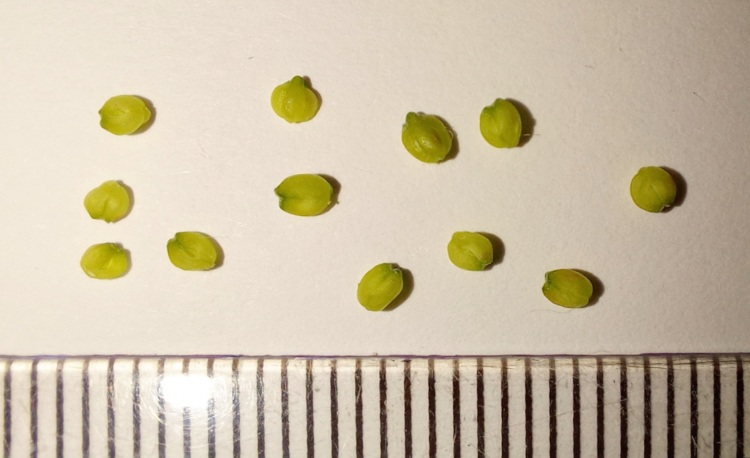
-Valerianella pumila: calyx reduced to a rim or shortly cupuliform, irregularly toothed, much shorter (5 or more times) than the fruit; fruits obtusely 3 angled, hemispherical, glabrous.
Lifeform: Annual; therophyte according to the Raunkiaer system.
Distribution: According to the Plants of the World Online portal (Royal Botanic Gardens, Kew), Valerianella coronata is native from Europe to Central Asia and Pakistan; Northwest Africa (accepted as Valeriana coronata (L.) Mill.); Valerianella pumila is native from Hungary to the Mediterranean and Iran (accepted as Valeriana pumila (L.) Willd).
Habitat: Open terrains – grasslands/ pastures, rocky terrains.
Flowering period: Spring: MAR, APR.
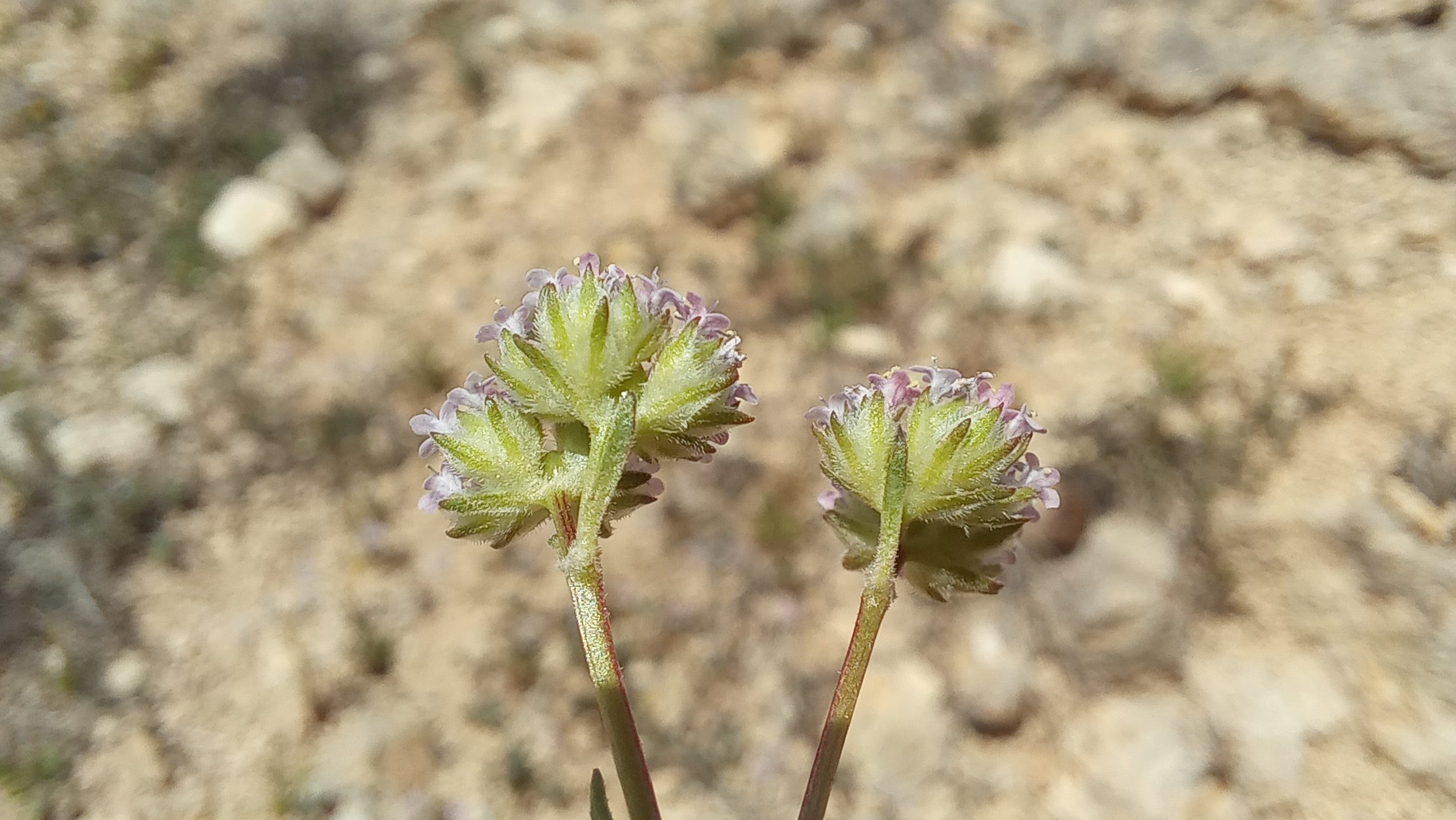
Valerianella pumila – habit in habitat. Osogovo, hilly region near village of Beli, 23.04.2022. Photo by Trajche Dimitrovski.Valerianella pumila – habit. Osogovo, hilly region near village of Beli, 23.04.2022. Photo by Trajche Dimitrovski.Valerianella pumila – habit. Osogovo, hilly region near village of Beli, 23.04.2022. Photo by Trajche Dimitrovski.Valerianella pumila – habit. Osogovo, hilly region near village of Beli, 23.04.2022. Photo by Trajche Dimitrovski.Valerianella pumila – habit. Osogovo, hilly region near village of Beli, 23.04.2022. Photo by Trajche Dimitrovski.Valerianella pumila – stems with inflorescences. Osogovo, hilly region near village of Beli, 23.04.2022. Photo by Trajche Dimitrovski.Valerianella pumila – stem with inflorescence and upper cauline leaves. Osogovo, hilly region near village of Beli, 23.04.2022. Photo by Trajche Dimitrovski.Valerianella pumila – flowers. Osogovo, hilly region near village of Beli, 23.04.2022. Photo by Trajche Dimitrovski.Valerianella pumila – flowers. Osogovo, hilly region near village of Beli, 23.04.2022. Photo by Trajche Dimitrovski.Valerianella pumila – flowers. Osogovo, hilly region near village of Beli, 23.04.2022. Photo by Trajche Dimitrovski.Valerianella pumila – bracts of inflorescence. Osogovo, hilly region near village of Beli, 23.04.2022. Photo by Trajche Dimitrovski.Valerianella pumila – bracts of inflorescence. Osogovo, hilly region near village of Beli, 23.04.2022. Photo by Trajche Dimitrovski.Valerianella pumila – fruits. Osogovo, hilly region near village of Beli, 23.04.2022. Photo by Trajche Dimitrovski.Valerianella pumila – fruits. Osogovo, hilly region near village of Beli, 23.04.2022. Photo by Trajche Dimitrovski.Valerianella pumila – fruits. Osogovo, hilly region near village of Beli, 23.04.2022. Photo by Trajche Dimitrovski.Valerianella pumila – fruits. Osogovo, hilly region near village of Beli, 23.04.2022. Photo by Trajche Dimitrovski.Valerianella pumila – fruits. Osogovo, hilly region near village of Beli, 23.04.2022. Photo by Trajche Dimitrovski.Valerianella pumila – stem with cauline leaves. Osogovo, hilly region near village of Beli, 23.04.2022. Photo by Trajche Dimitrovski.Valerianella pumila – stem with cauline leaves. Osogovo, hilly region near village of Beli, 23.04.2022. Photo by Trajche Dimitrovski.Valerianella pumila – stem with cauline leaves. Osogovo, hilly region near village of Beli, 23.04.2022. Photo by Trajche Dimitrovski.Valerianella pumila – stem with cauline leaves. Osogovo, hilly region near village of Beli, 23.04.2022. Photo by Trajche Dimitrovski.Valerianella pumila – abaxial side of cauline leaf. Osogovo, hilly region near village of Beli, 23.04.2022. Photo by Trajche Dimitrovski.Valerianella pumila – basal leaves and stem with cauline leaves. Osogovo, hilly region near village of Beli, 23.04.2022. Photo by Trajche Dimitrovski.Valerianella pumila – basal leaves and stem with cauline leaves. Osogovo, hilly region near village of Beli, 23.04.2022. Photo by Trajche Dimitrovski.Valerianella pumila – basal leaves. Osogovo, hilly region near village of Beli, 23.04.2022. Photo by Trajche Dimitrovski.Valerianella pumila – fruits. Scale in mm. Specimen from Osogovo, hilly region near village of Beli, 23.04.2022. Photo by Trajche Dimitrovski.Valerianella pumila – transverse section of fruits, showing the fertile and sterile loci. Scale in mm. Specimen from Osogovo, hilly region near village of Beli, 23.04.2022. Photo by Trajche Dimitrovski.
References:
Valerianella coronata. Raab-Straube, E. von (2017+): Valerianella. – In: Raab-Straube, E. von & Henning, T. (2017+): Valerianaceae. Euro+Med Plantbase – the information resource for Euro-Mediterranean plant diversity. Published on the Internet https://europlusmed.org/cdm_dataportal/taxon/3e38dc5f-3048-4bef-9214-046c21482804 [Accessed 15.01.2023].
Valerianella Miller. Ernet, D. and Richardson, I.B.K. in Tutin, T.G., Heywood, V.H., Burges, N.A., Moore, D.M., Valentine, D.H., Walters, S.M. & Webb, D.A. (1976). Flora Europaea. Volume 4: Plantaginaceae to Compositae (and Rubiaceae). Cambridge: Cambridge University Press, 48 – 52.
Valerianella pumila. Raab-Straube, E. von (2017+): Valerianella. – In: Raab-Straube, E. von & Henning, T. (2017+): Valerianaceae. Euro+Med Plantbase – the information resource for Euro-Mediterranean plant diversity. Published on the Internet http://ww2.bgbm.org/EuroPlusMed/PTaxonDetail.asp?NameId=34791&PTRefFk=7500000 [Accessed 24.04.2022].
Determined according to the botanical key provided by Micevski (1993) and Halliday in Tutin et al. (1964).
Distribution: Minuartia hybrida (Vill.) is native from West and Central Europe to Central Asia and Pakistan, Mediterranean to Arabian Peninsula according to the distribution information provided by the Plants of the World Online portal (accepted as Sabulina tenuifolia subsp. tenuifolia).
Habitat: Found in open habitats – grasslands, pastures, rocky terrains.
Lifeform: Annual; Therophyte according to the Raunkiær system.
Flowering period: Spring-summer: APR, MAY, JUN.
Minuartia hybrida subsp. hybrida – habit. Osogovo – Ponikva, 19.06.2022. Photo by Trajche Dimitrovski. Minuartia hybrida subsp. hybrida – habit. Osogovo – Ponikva, 19.06.2022. Photo by Trajche Dimitrovski.Minuartia hybrida subsp. hybrida – inflorescence. Osogovo – Ponikva, 19.06.2022. Photo by Trajche Dimitrovski.Minuartia hybrida subsp. hybrida – inflorescence. Osogovo – Ponikva, 19.06.2022. Photo by Trajche Dimitrovski.Minuartia hybrida subsp. hybrida – inflorescence. Osogovo – Ponikva, 19.06.2022. Photo by Trajche Dimitrovski.Minuartia hybrida subsp. hybrida – inflorescence with fruits. The capsules are equal to longer than the calyx. Osogovo – Ponikva, 19.06.2022. Photo by Trajche Dimitrovski.Minuartia hybrida subsp. hybrida – inflorescence with fruits. The capsules are equal to longer than the calyx. Osogovo – Ponikva, 19.06.2022. Photo by Trajche Dimitrovski.Minuartia hybrida subsp. hybrida – inflorescence with fruits. The capsules are equal to longer than the calyx. Osogovo – Ponikva, 19.06.2022. Photo by Trajche Dimitrovski.Minuartia hybrida subsp. hybrida – stem with leaves. Osogovo – Ponikva, 19.06.2022. Photo by Trajche Dimitrovski.
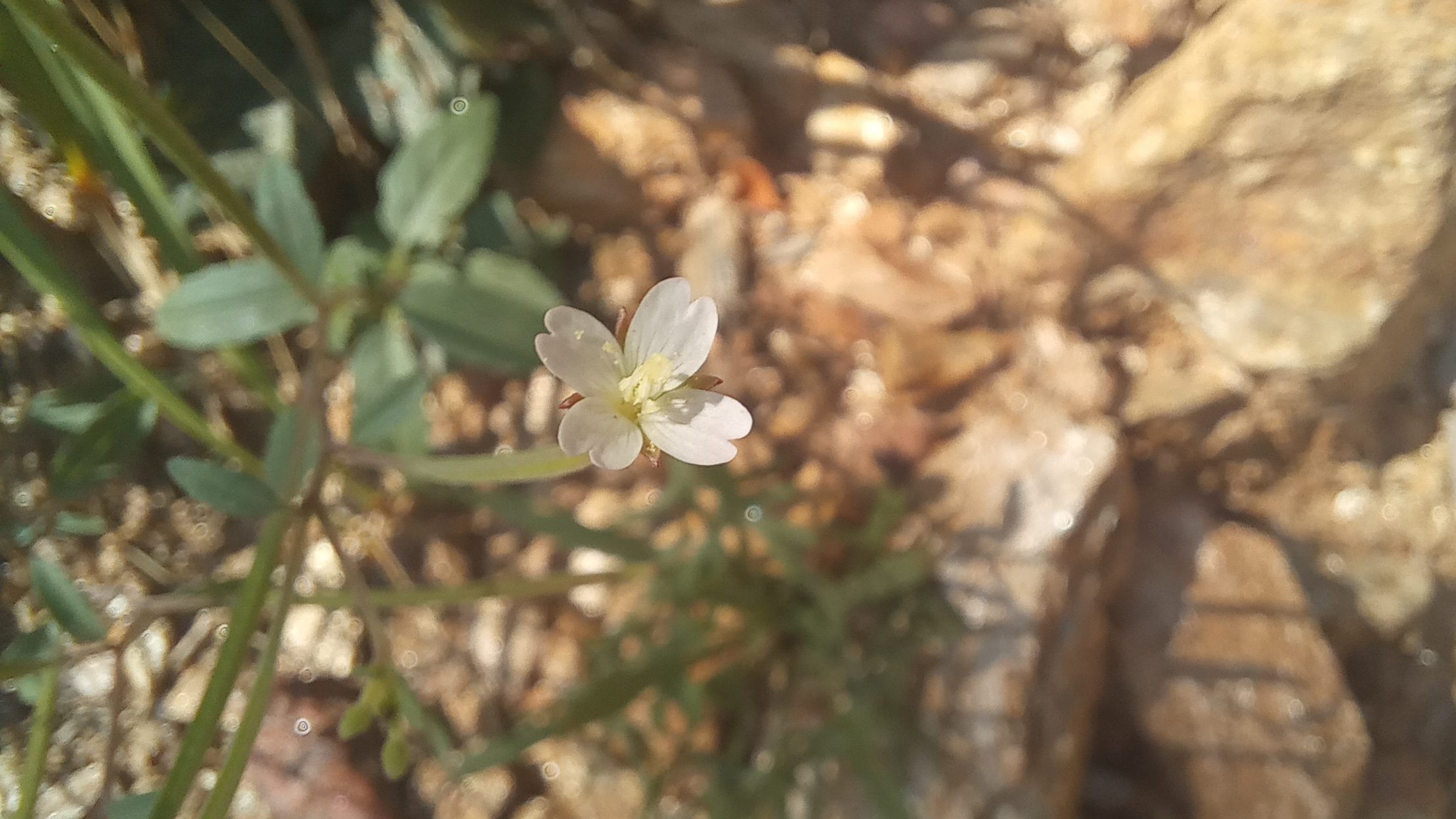
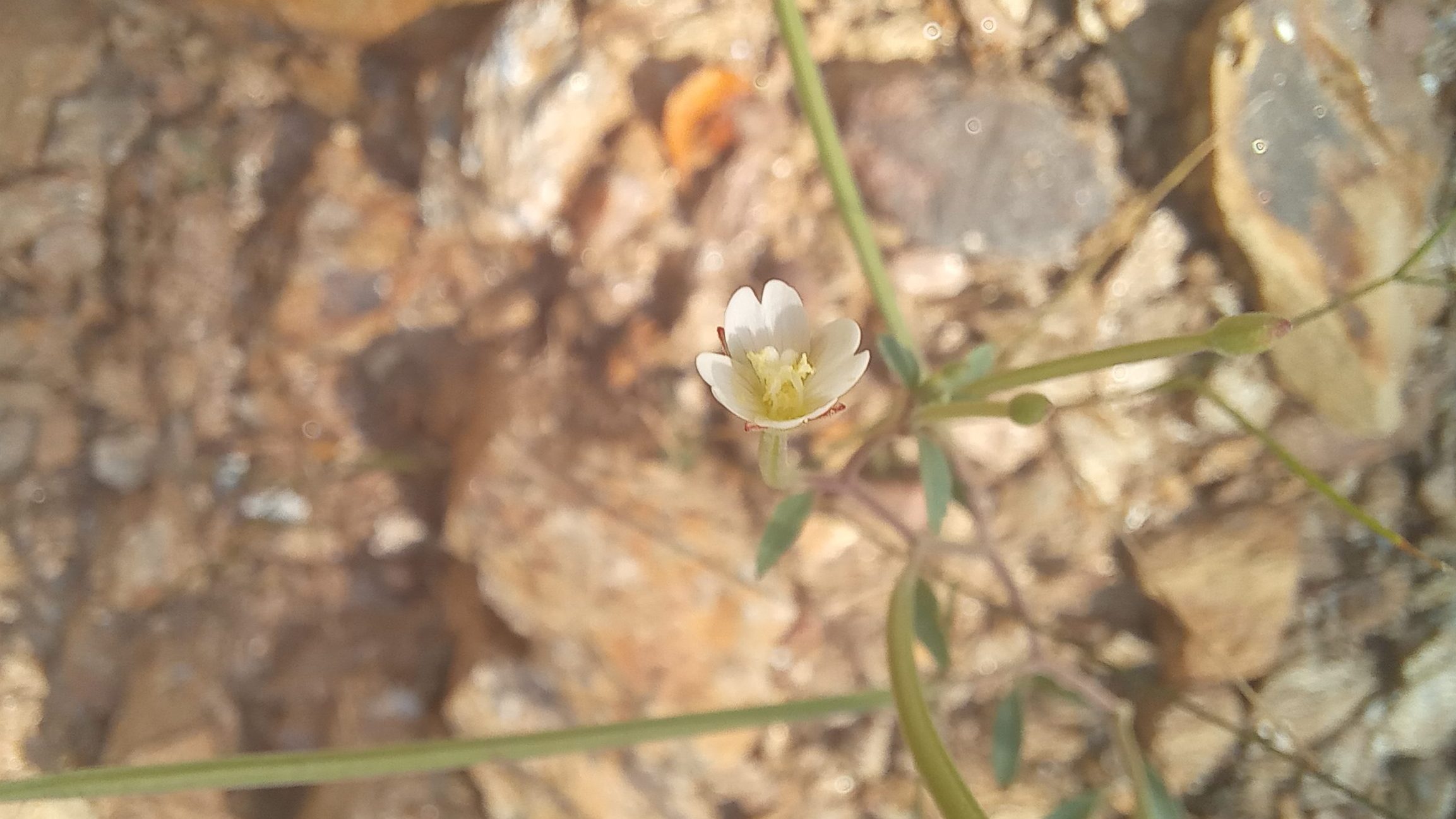
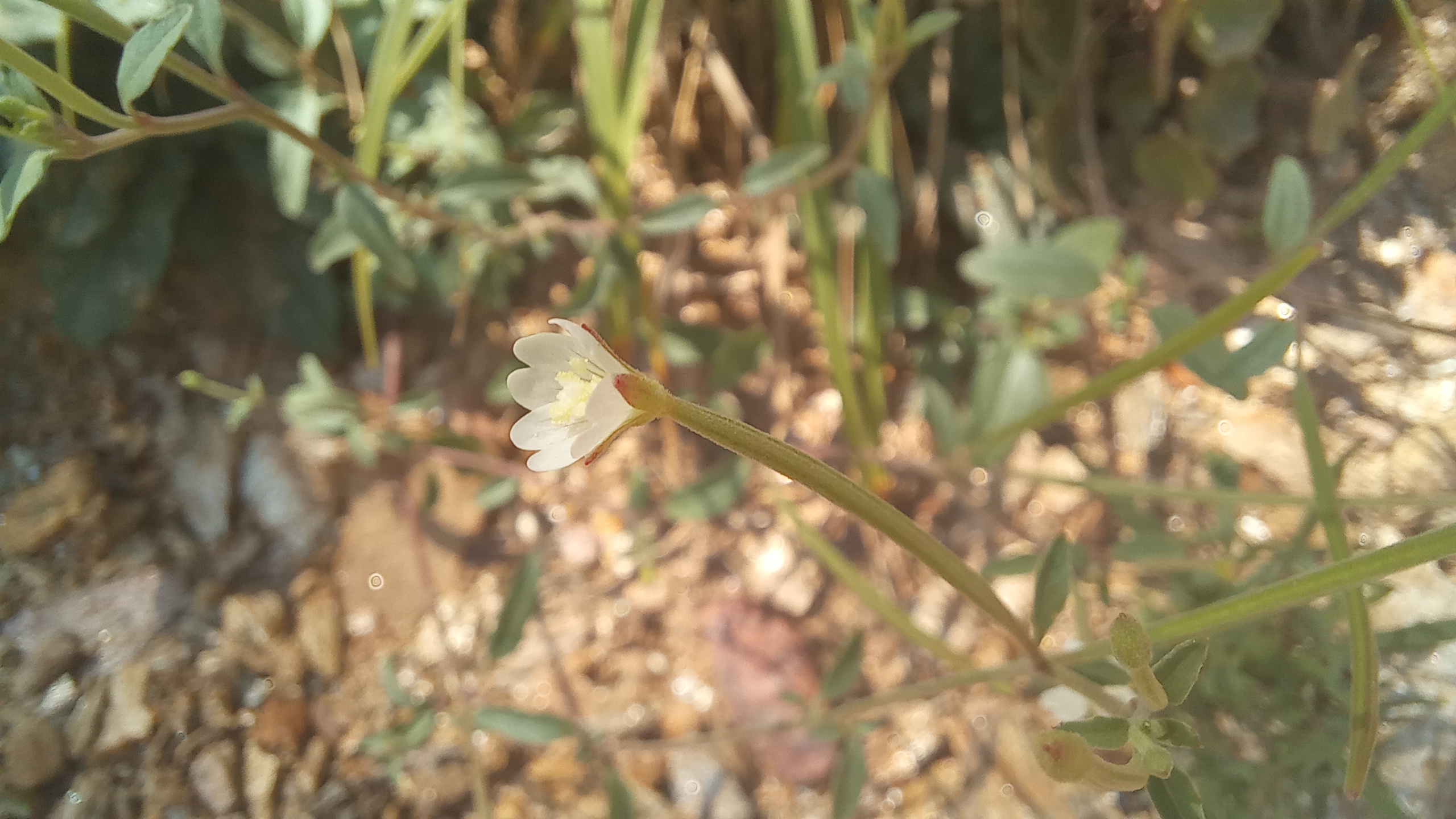
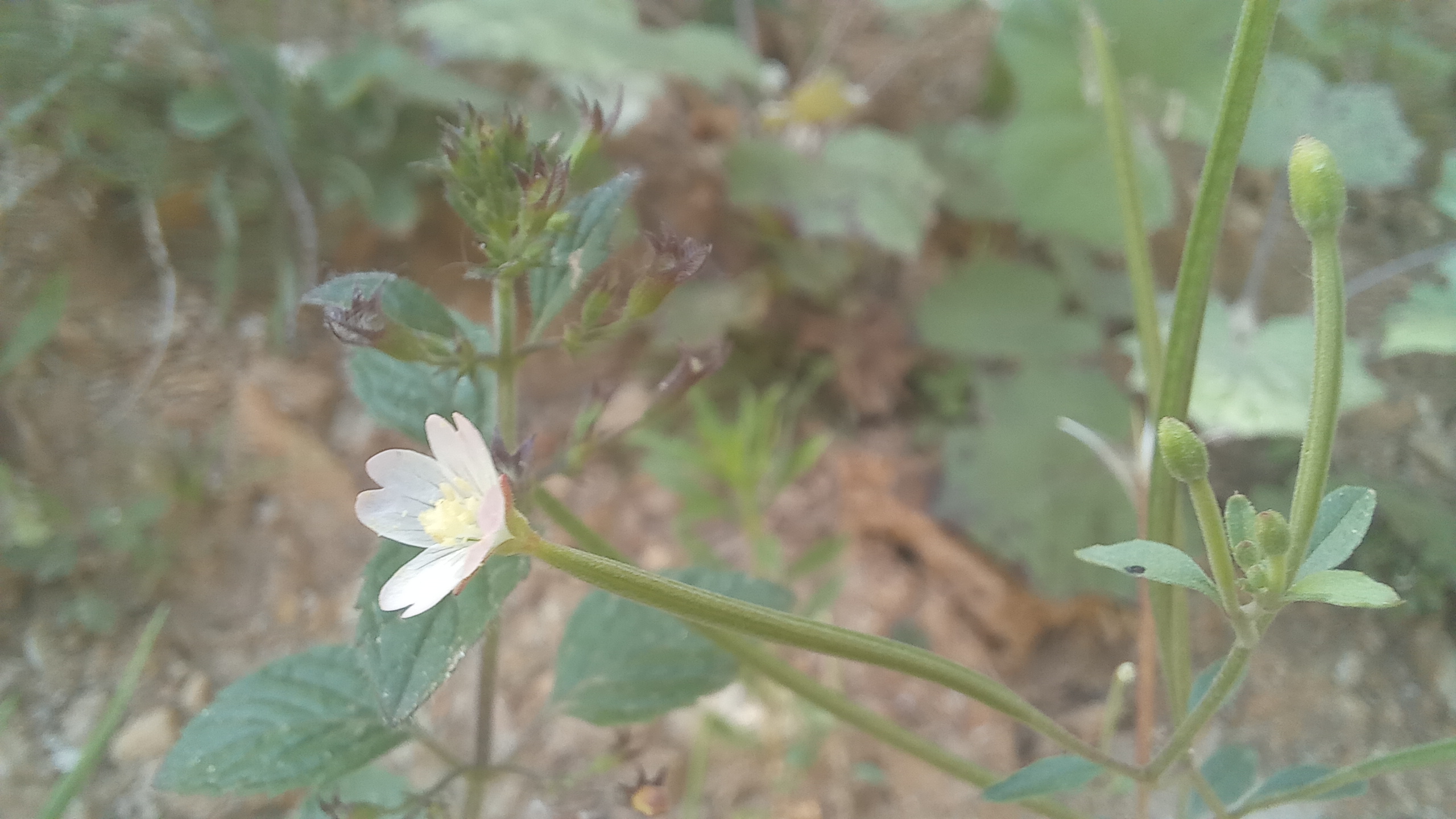
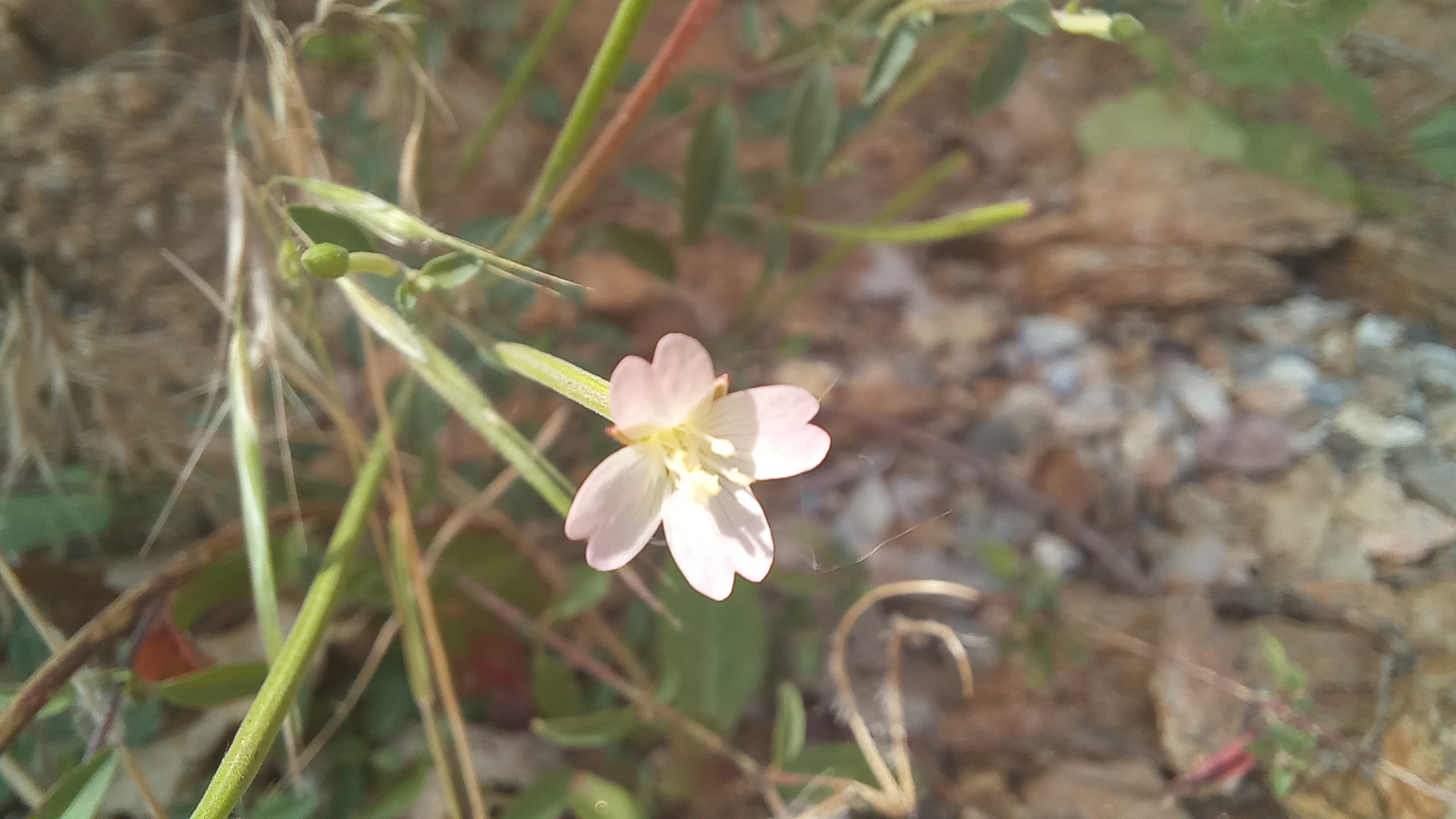
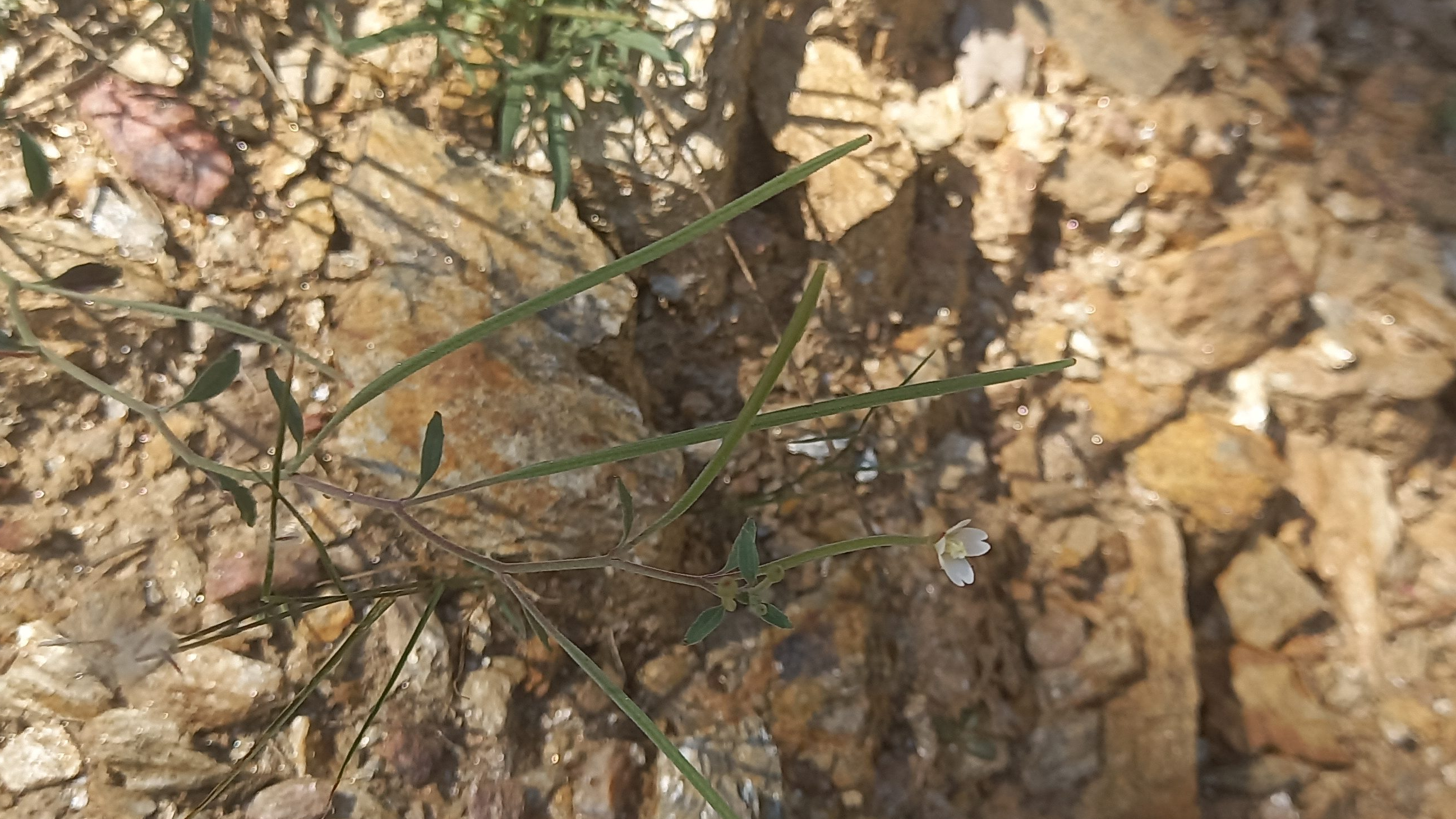
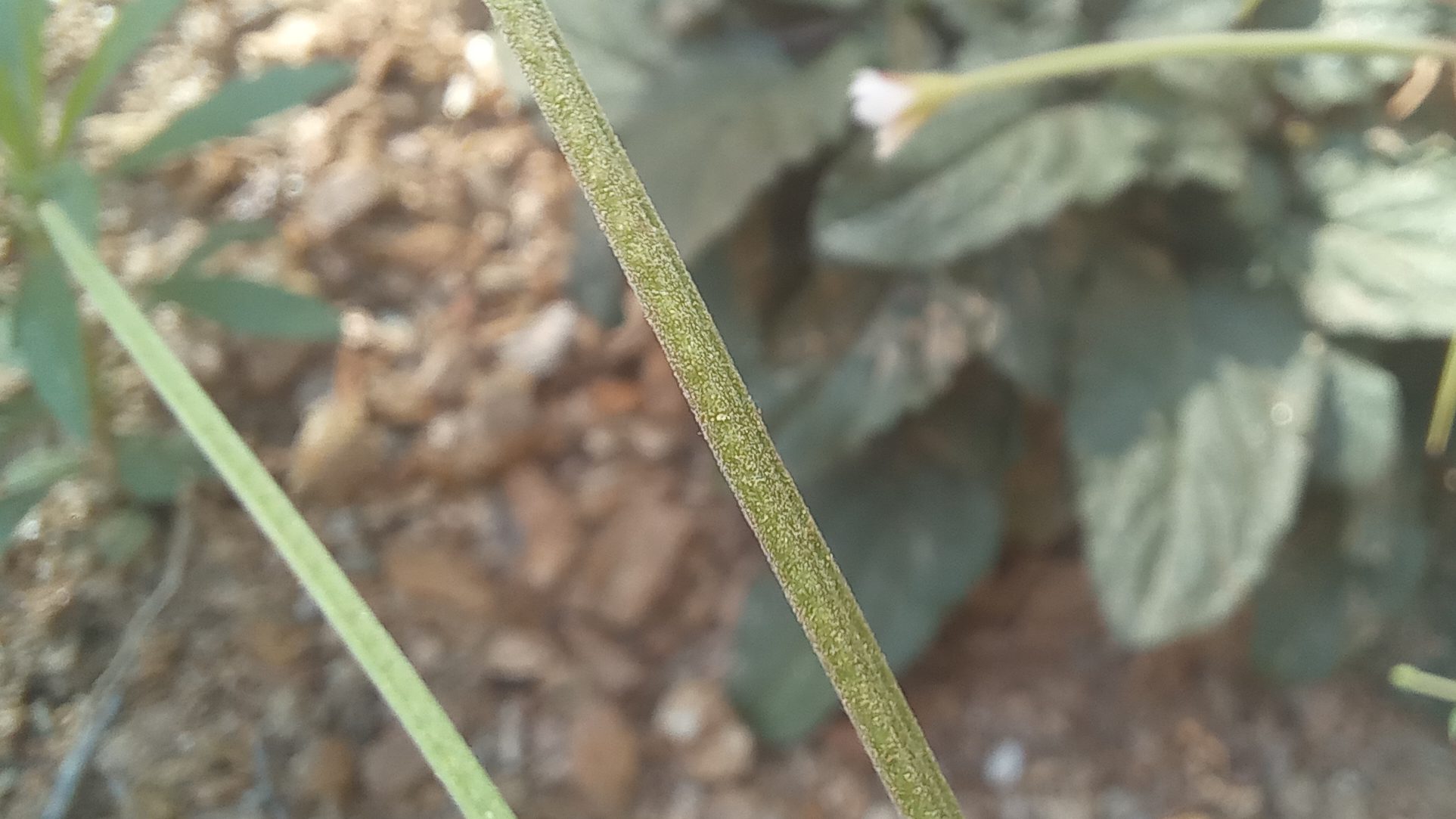
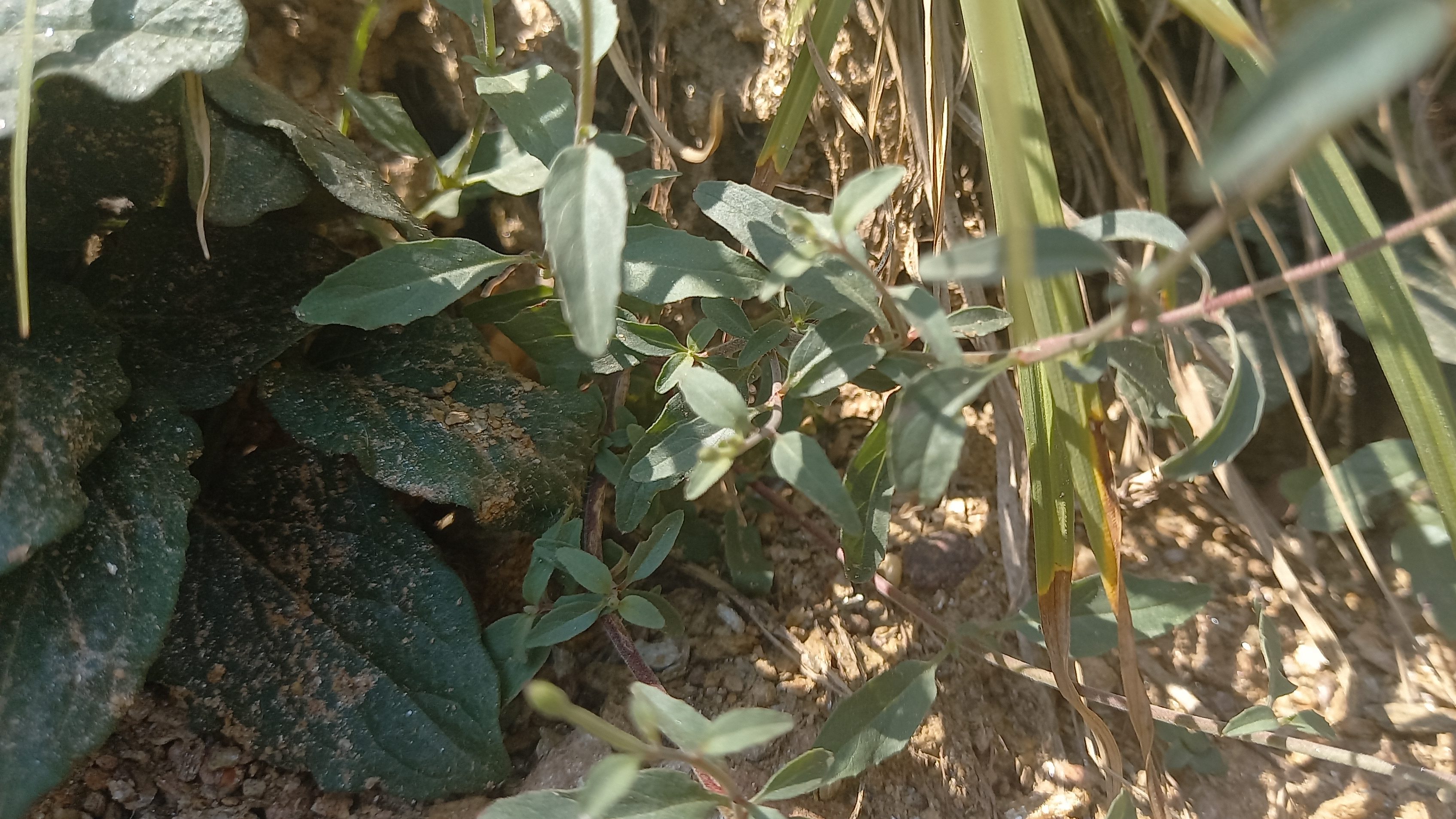
Determined according to the botanical keys provided by Raven in Tutin et al. (1968) and Micevski (2001).
Distribution: Native to Madeira, West, Central and South Europe to Caucasus and Turkey; Algeria according to the distribution information provided by the Plants of the World Online portal (Royal Botanic Gardens, Kew).
Habitat: Edges of forests, mountain roads.
Lifeform: Perennial, hemicryptophyte according to the Raunkiaer system.
Flowering period: Summer: JUN, JUL, AUG.
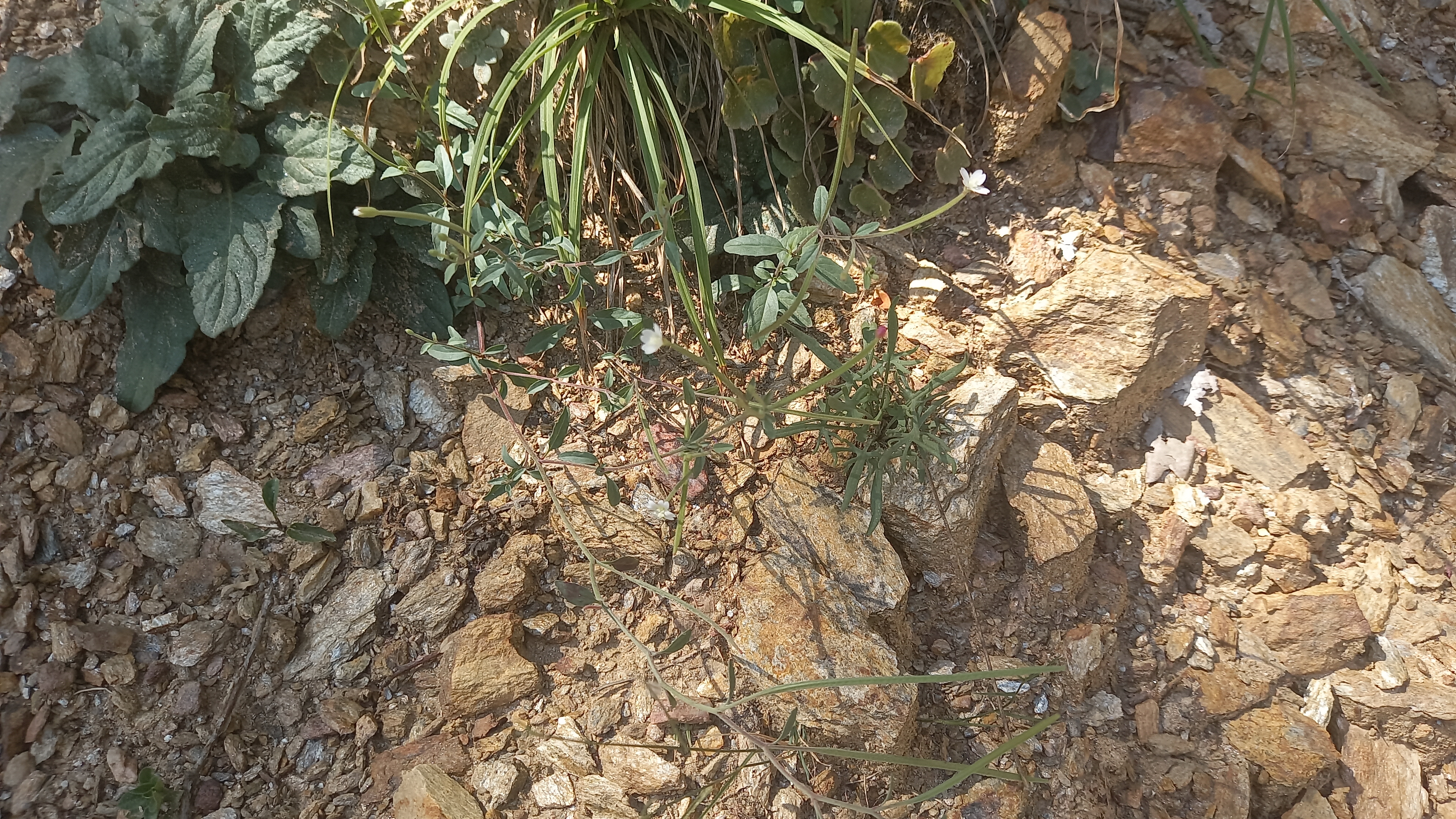
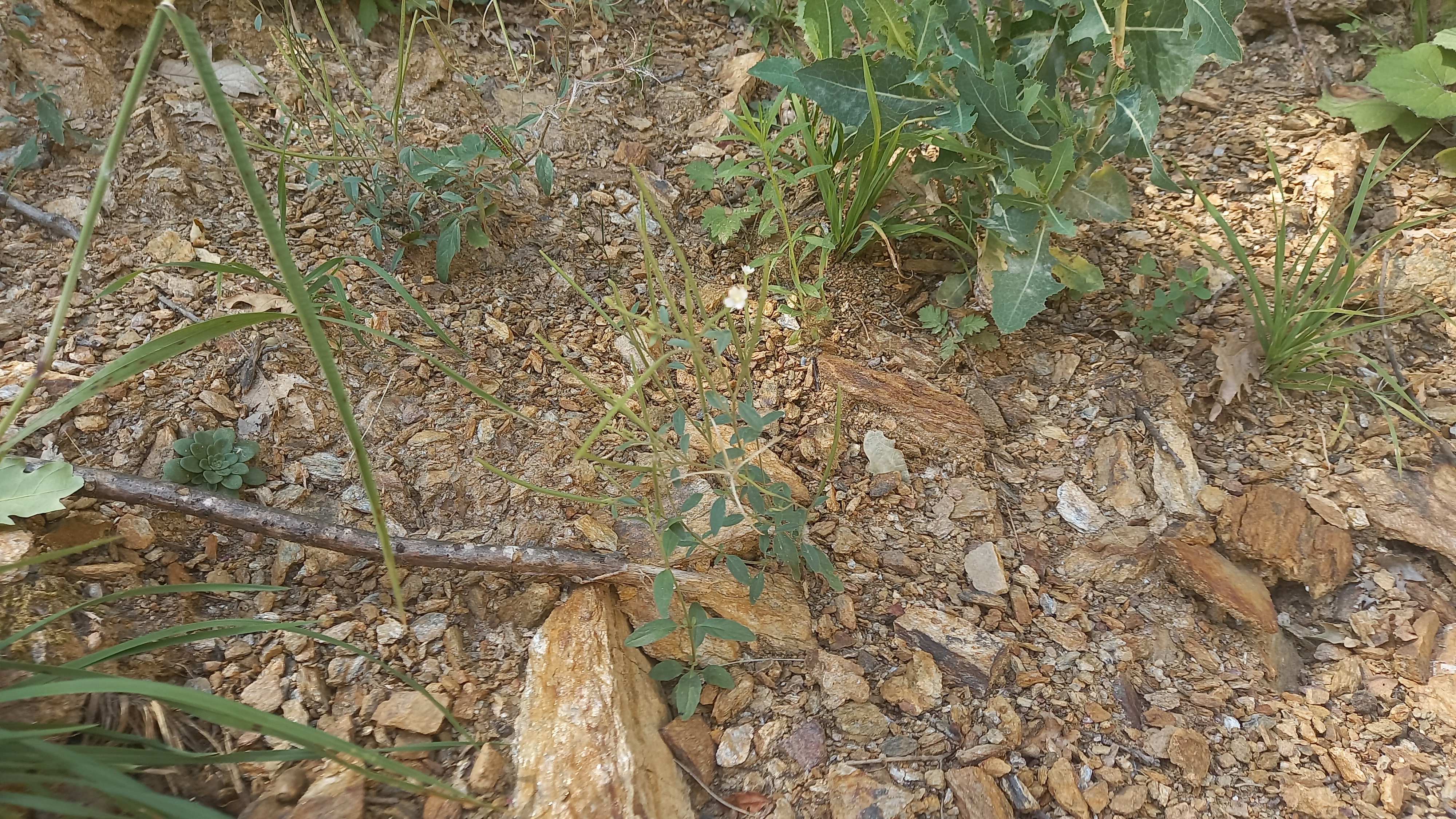
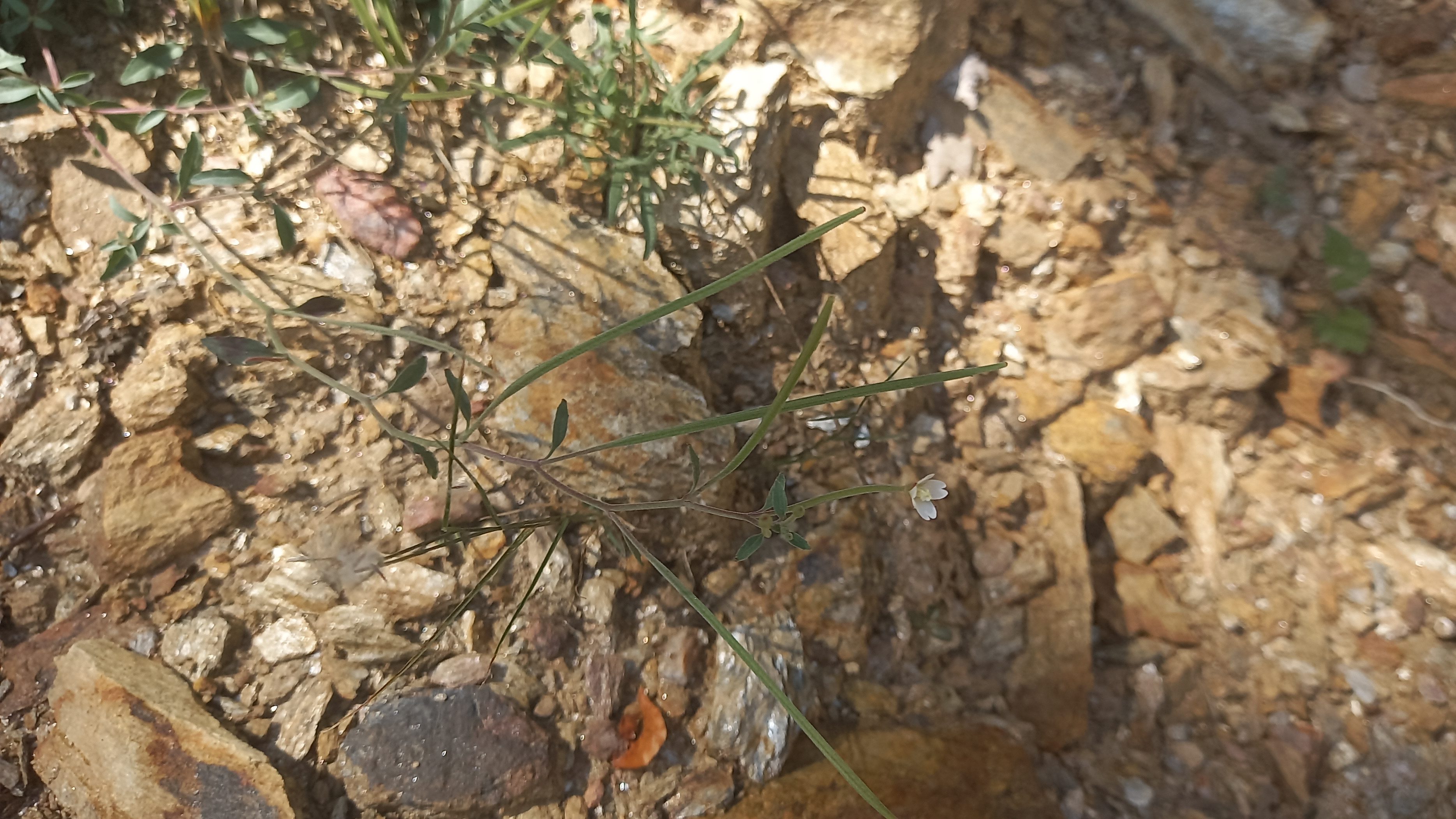
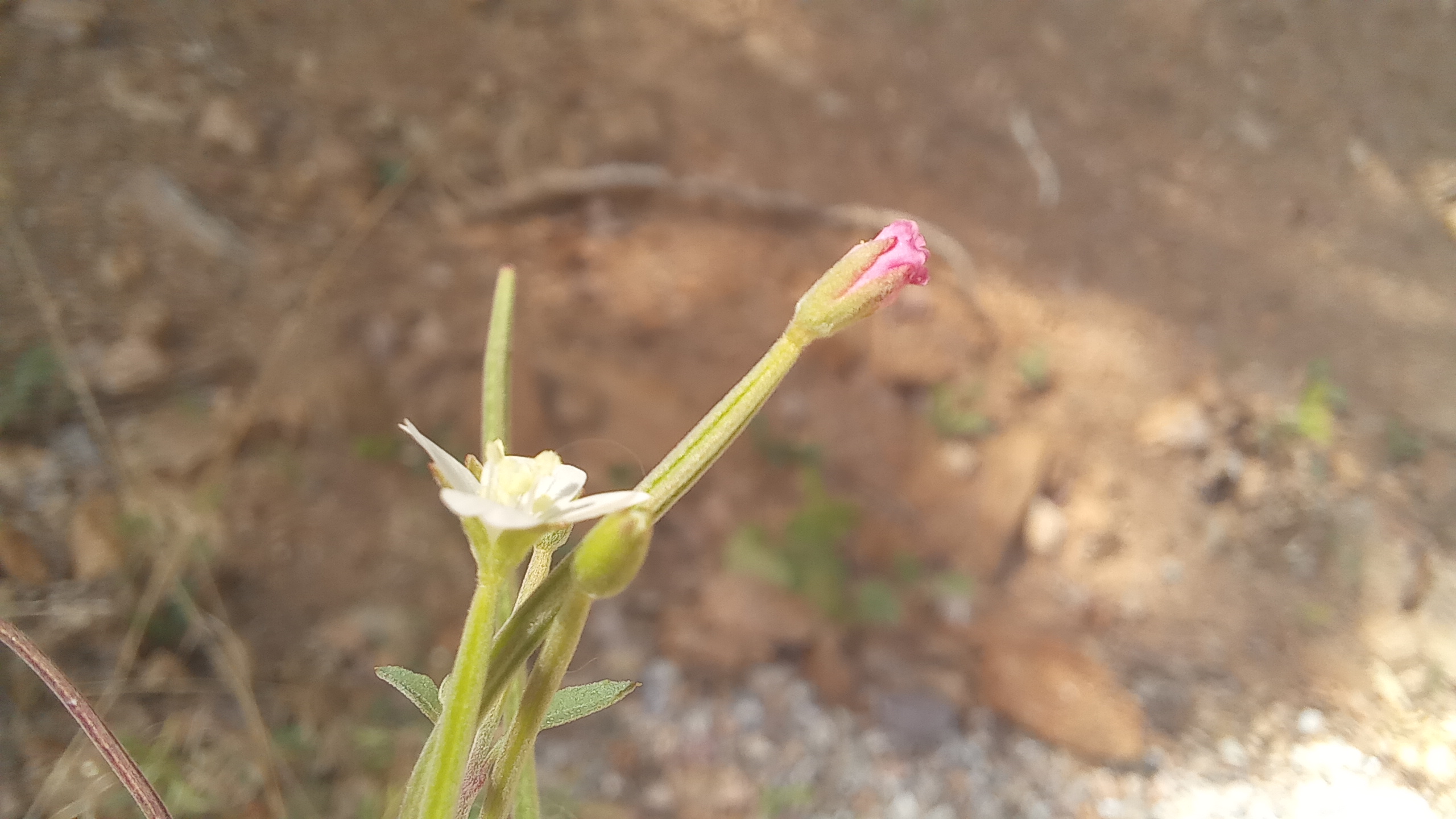
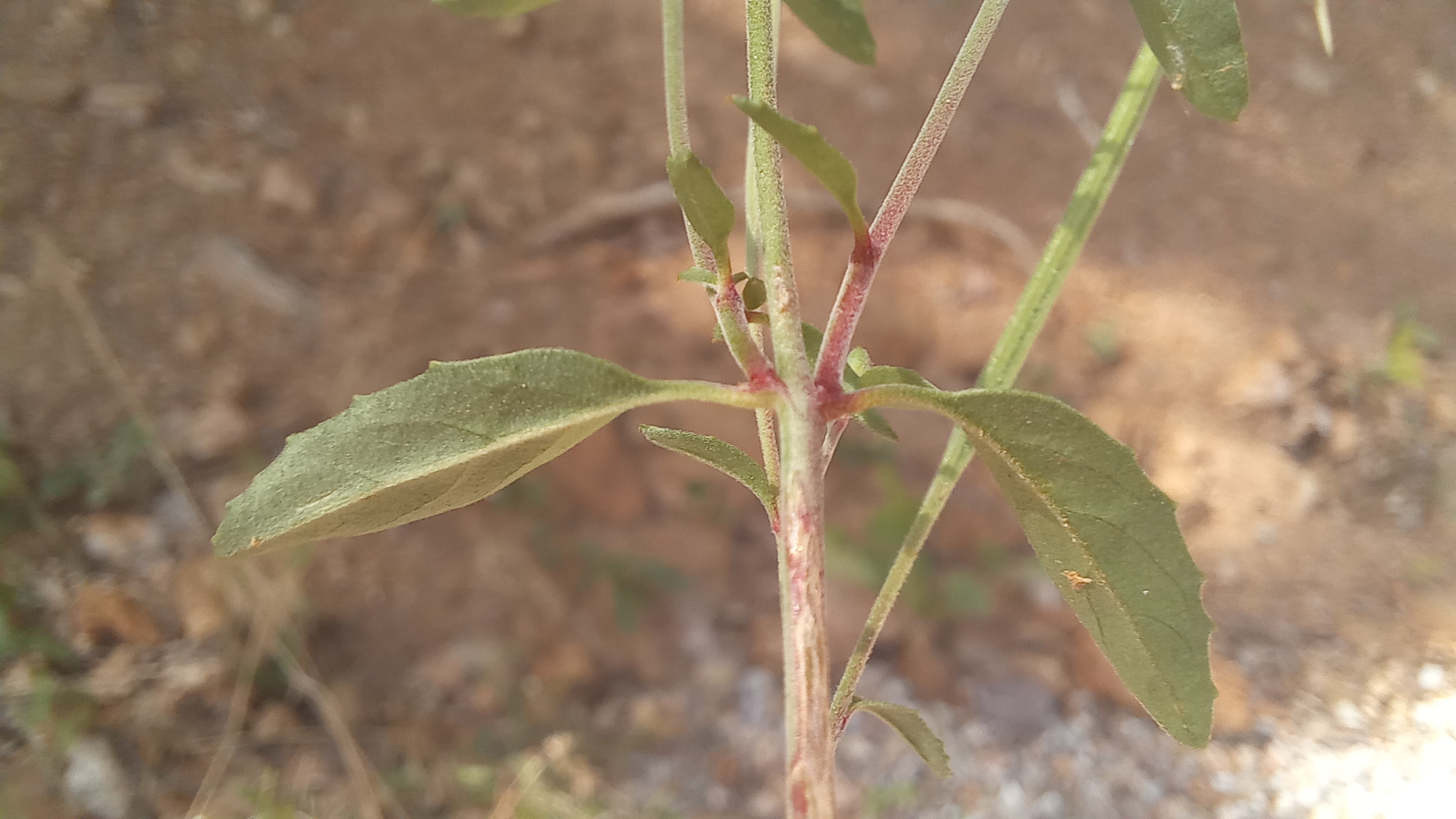
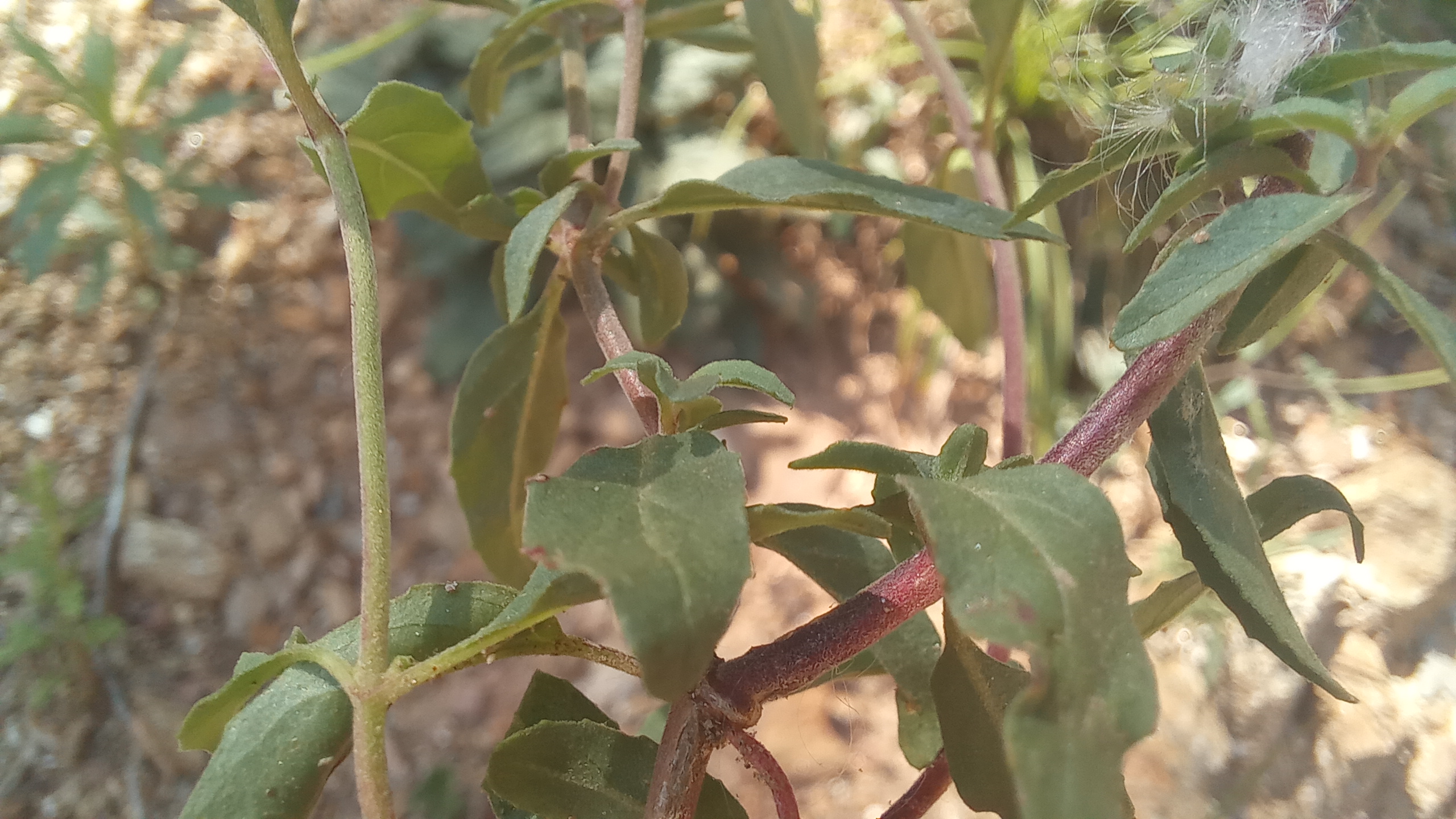
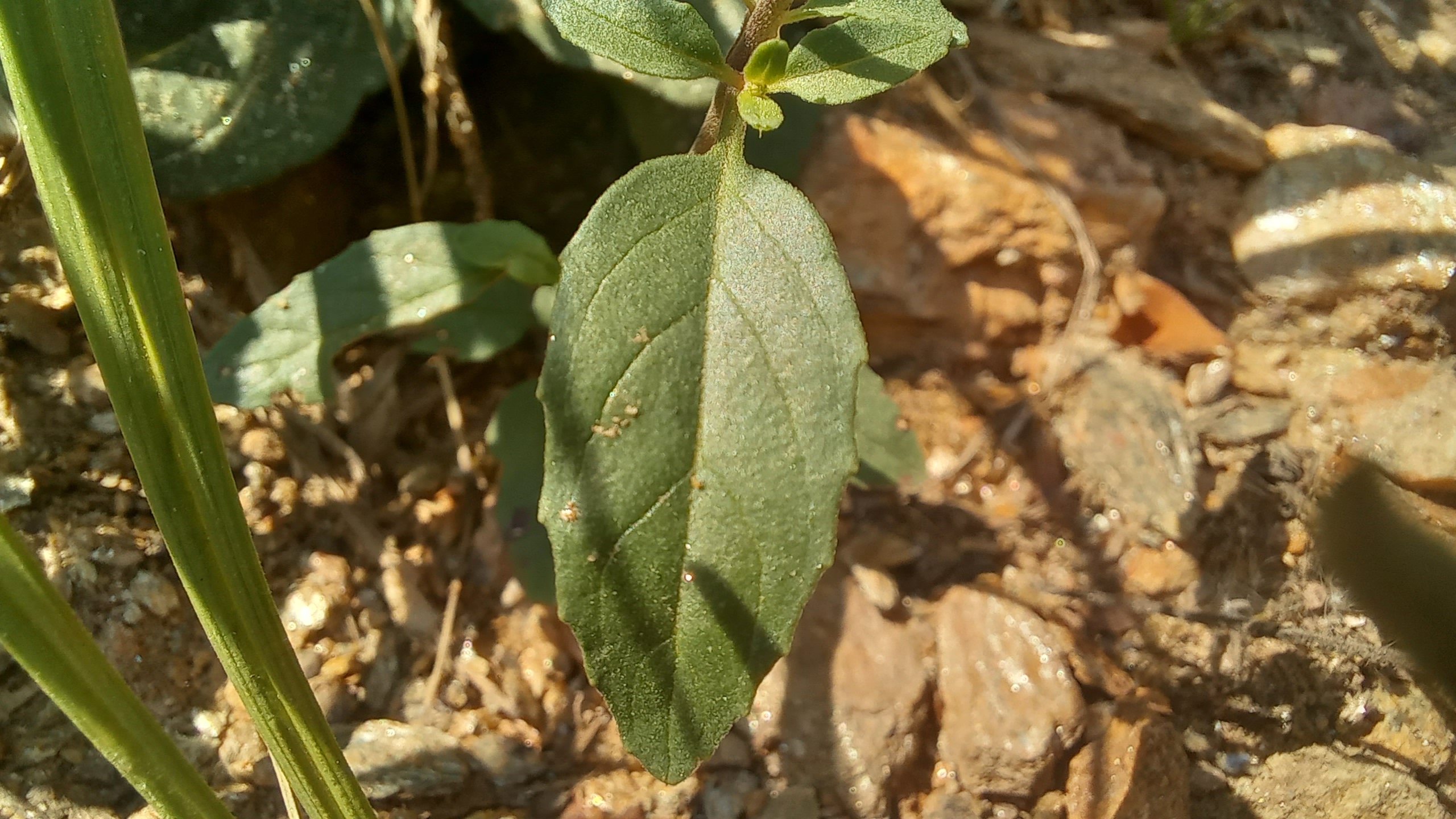
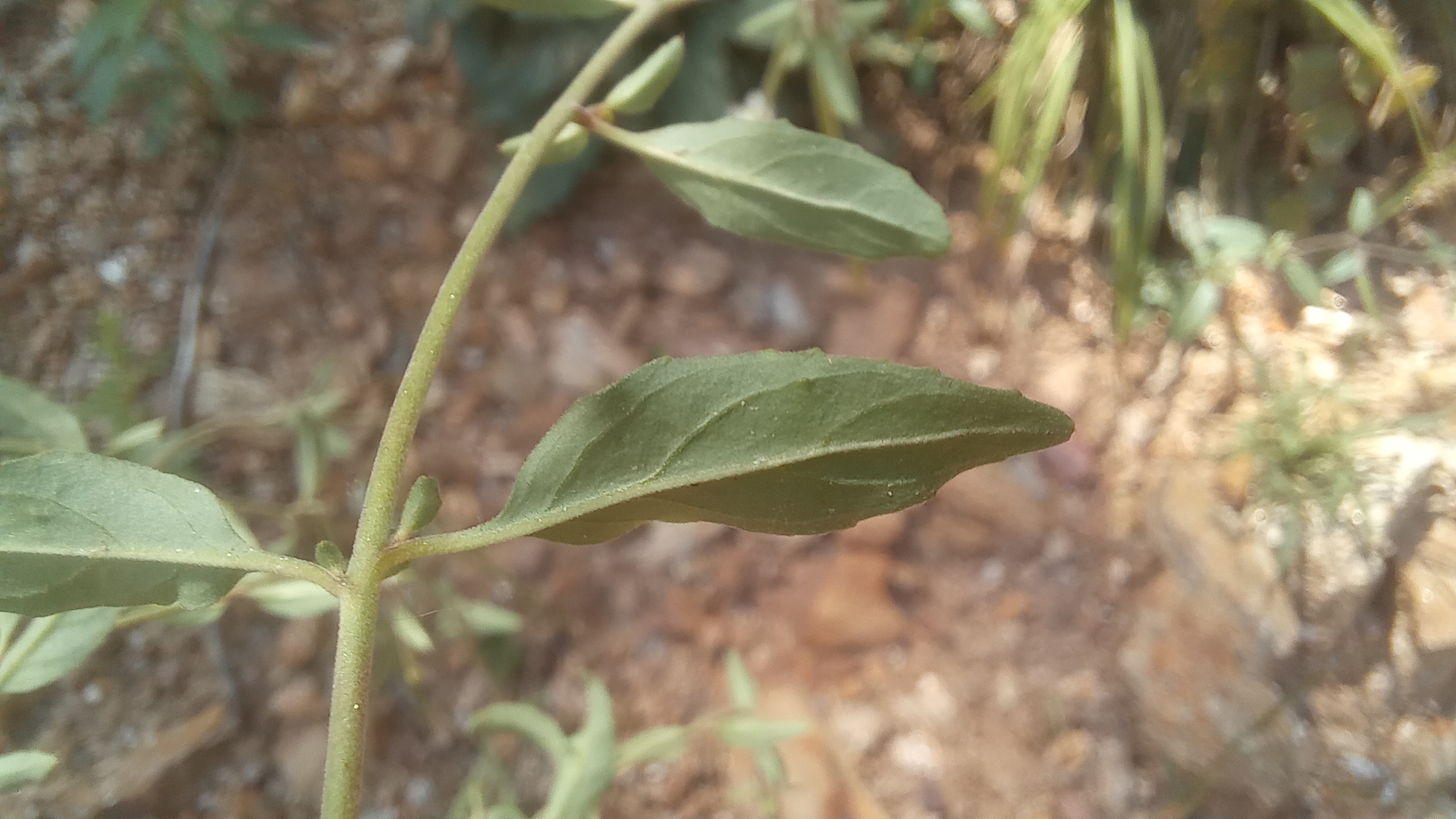
Epilobium lanceolatum – habit. Osogovo, mountain ridge between the gorges of “Golema” River and “Orizarska” River near village of Krushka, 08.08.2022. Photo by Trajche Dimitrovski.Epilobium lanceolatum – habit. Osogovo, mountain ridge between the gorges of “Golema” River and “Orizarska” River near village of Krushka, 08.08.2022. Photo by Trajche Dimitrovski. Epilobium lanceolatum – flowering stems with flowers and fruits. Osogovo, mountain ridge between the gorges of “Golema” River and “Orizarska” River near village of Krushka, 08.08.2022. Photo by Trajche Dimitrovski.Epilobium lanceolatum – flower, flower bud and spent flower. Flowers are white at first and later turn pinkish. Osogovo, mountain ridge between the gorges of “Golema” River and “Orizarska” River near village of Krushka, 08.08.2022. Photo by Trajche Dimitrovski. Epilobium lanceolatum – flower. Osogovo, mountain ridge between the gorges of “Golema” River and “Orizarska” River near village of Krushka, 08.08.2022. Photo by Trajche Dimitrovski. Epilobium lanceolatum – flower. Osogovo, mountain ridge between the gorges of “Golema” River and “Orizarska” River near village of Krushka, 08.08.2022. Photo by Trajche Dimitrovski.Epilobium lanceolatum – flower. Osogovo, mountain ridge between the gorges of “Golema” River and “Orizarska” River near village of Krushka, 08.08.2022. Photo by Trajche Dimitrovski.Epilobium lanceolatum – flower. Osogovo, mountain ridge between the gorges of “Golema” River and “Orizarska” River near village of Krushka, 08.08.2022. Photo by Trajche Dimitrovski.Epilobium lanceolatum – flower. Osogovo, mountain ridge between the gorges of “Golema” River and “Orizarska” River near village of Krushka, 08.08.2022. Photo by Trajche Dimitrovski.Epilobium lanceolatum – fruits. Osogovo, mountain ridge between the gorges of “Golema” River and “Orizarska” River near village of Krushka, 08.08.2022. Photo by Trajche Dimitrovski.Epilobium lanceolatum – fruit. Osogovo, mountain ridge between the gorges of “Golema” River and “Orizarska” River near village of Krushka, 08.08.2022. Photo by Trajche Dimitrovski. Epilobium lanceolatum – stems with leaves. Osogovo, mountain ridge between the gorges of “Golema” River and “Orizarska” River near village of Krushka, 08.08.2022. Photo by Trajche Dimitrovski.Epilobium lanceolatum – stem with leaves. Osogovo, mountain ridge between the gorges of “Golema” River and “Orizarska” River near village of Krushka, 08.08.2022. Photo by Trajche Dimitrovski.Epilobium lanceolatum – stems with leaves. Osogovo, mountain ridge between the gorges of “Golema” River and “Orizarska” River near village of Krushka, 08.08.2022. Photo by Trajche Dimitrovski.Epilobium lanceolatum – adaxial side of leaf. Osogovo, mountain ridge between the gorges of “Golema” River and “Orizarska” River near village of Krushka, 08.08.2022. Photo by Trajche Dimitrovski.Epilobium lanceolatum – abaxial side of leaves. Osogovo, mountain ridge between the gorges of “Golema” River and “Orizarska” River near village of Krushka, 08.08.2022. Photo by Trajche Dimitrovski.