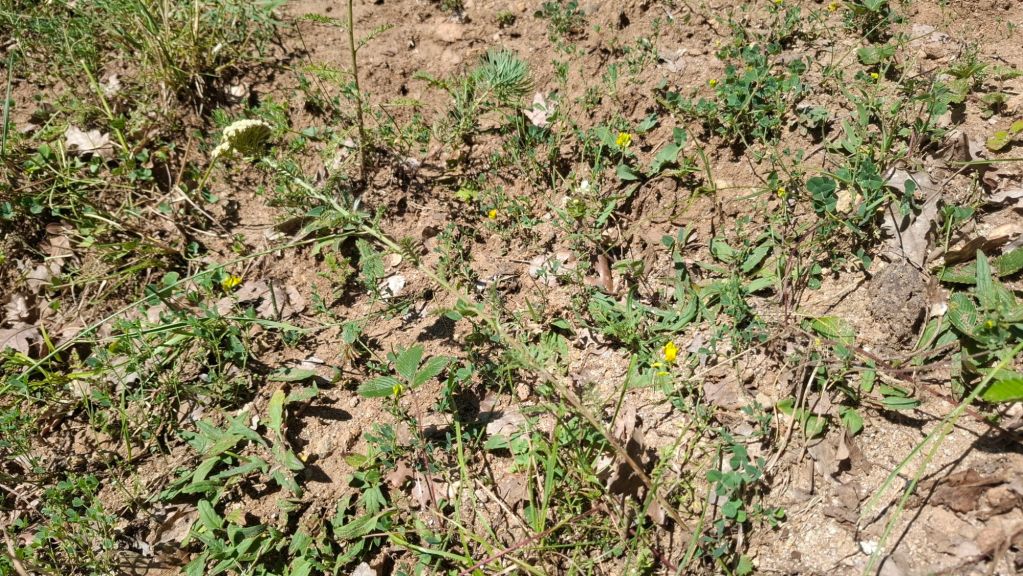
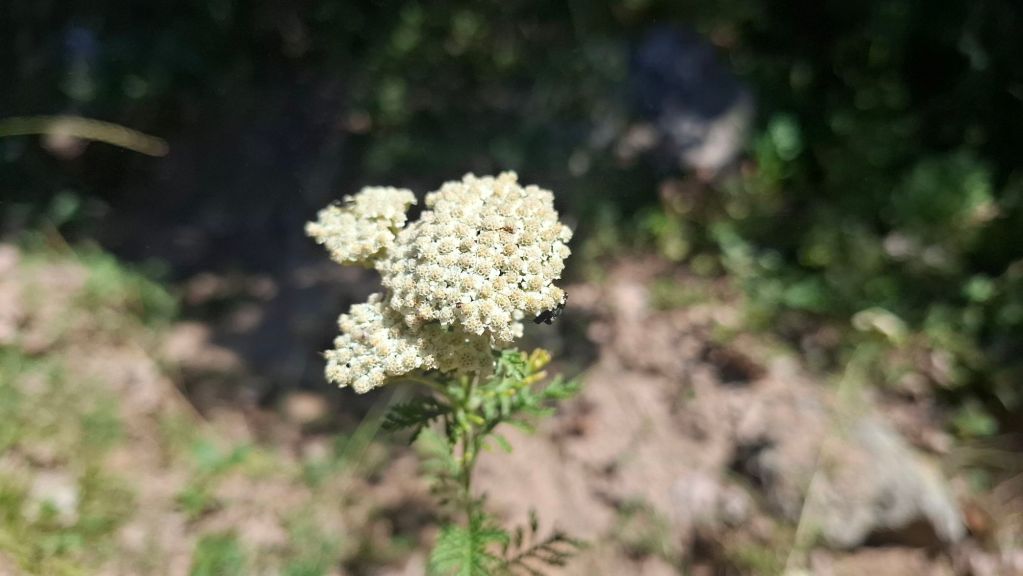
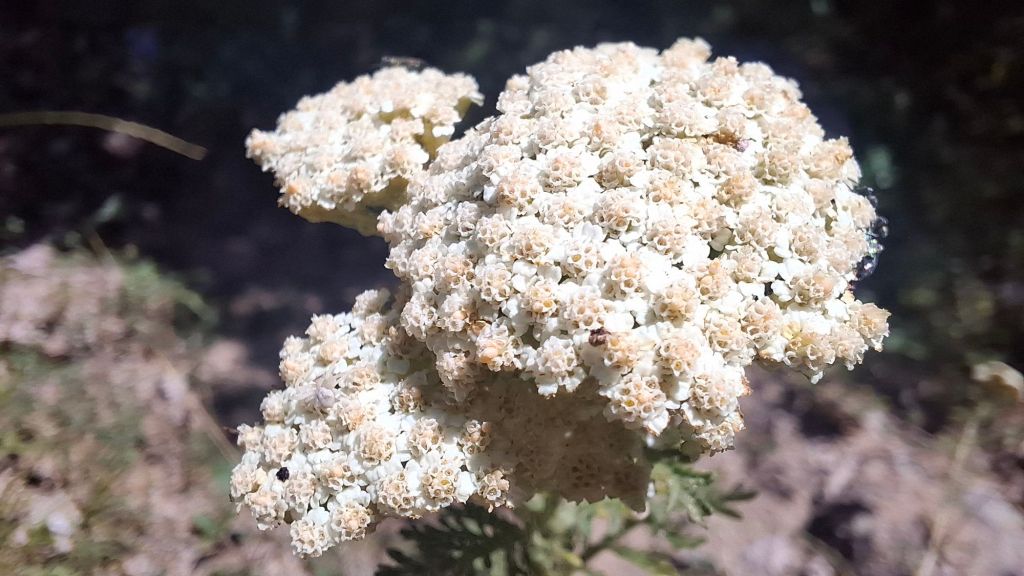
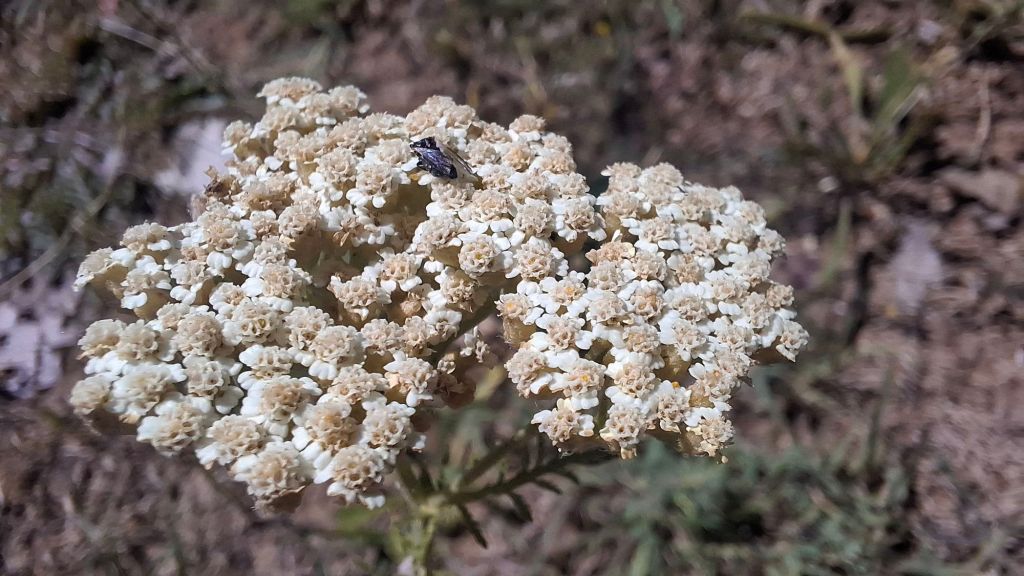
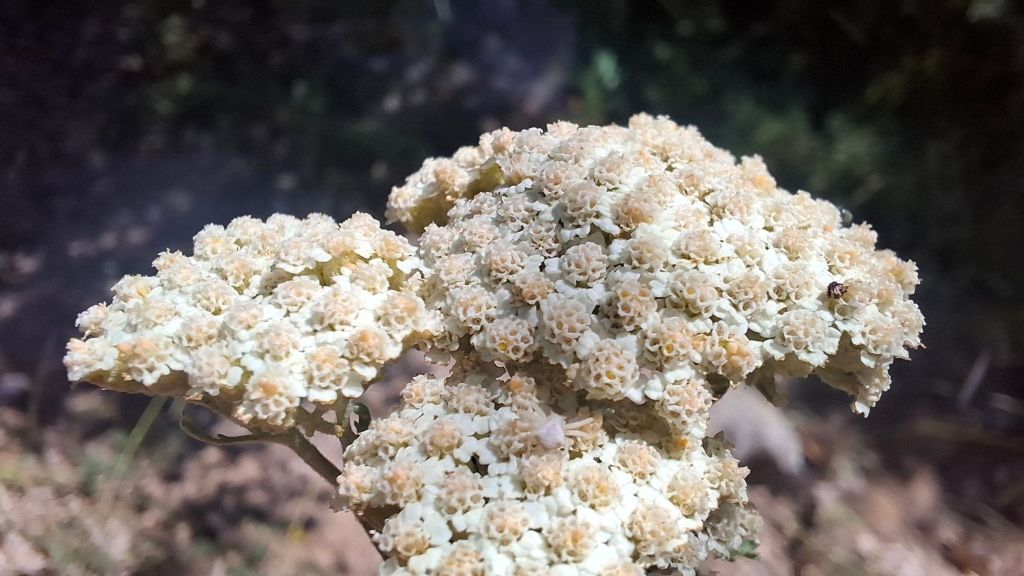
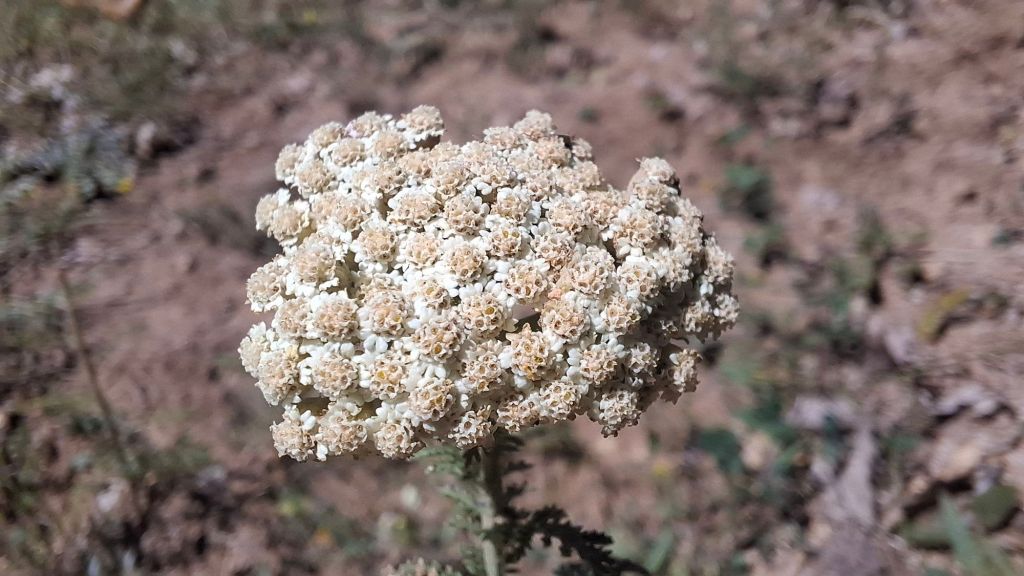
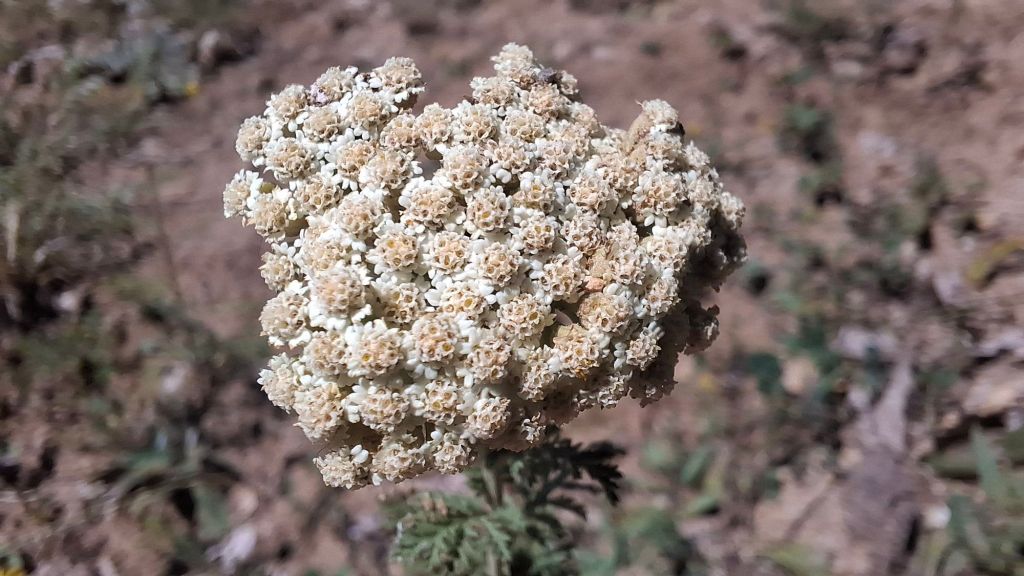
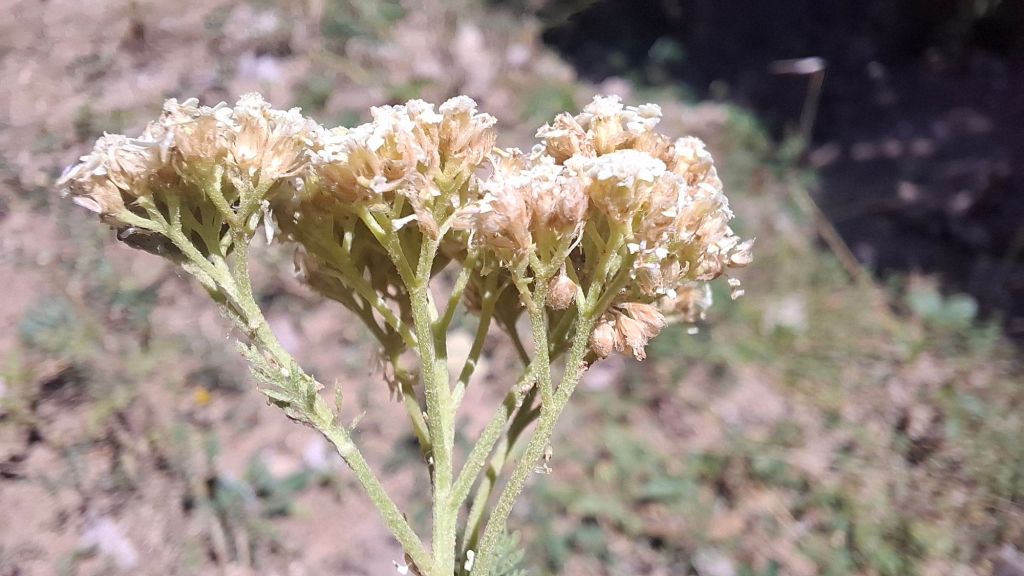
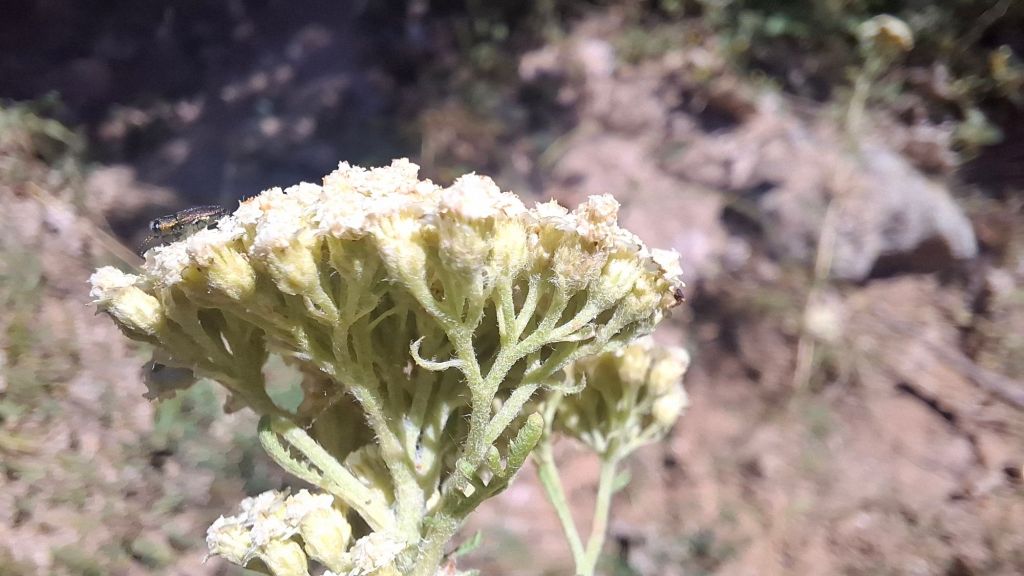
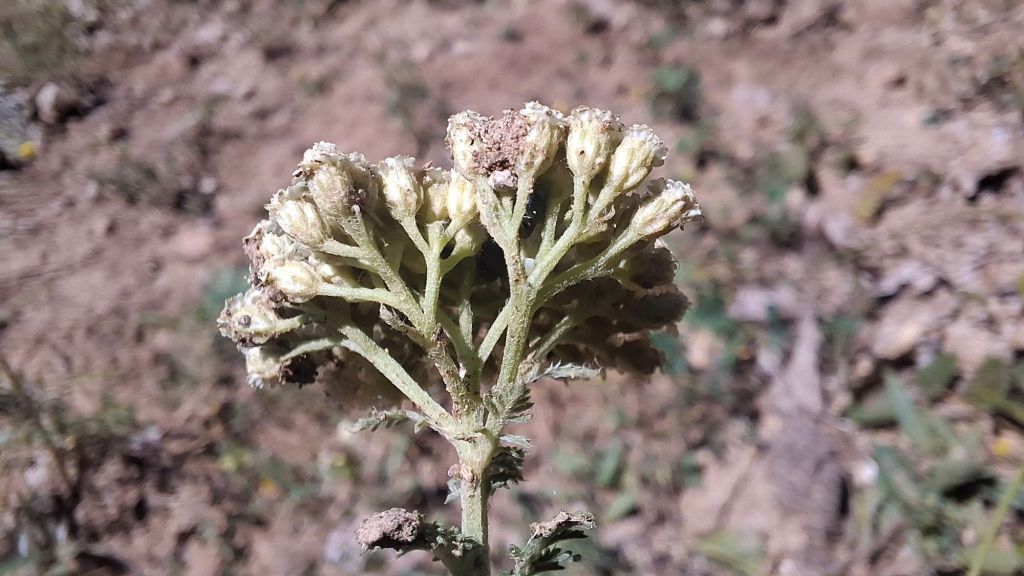
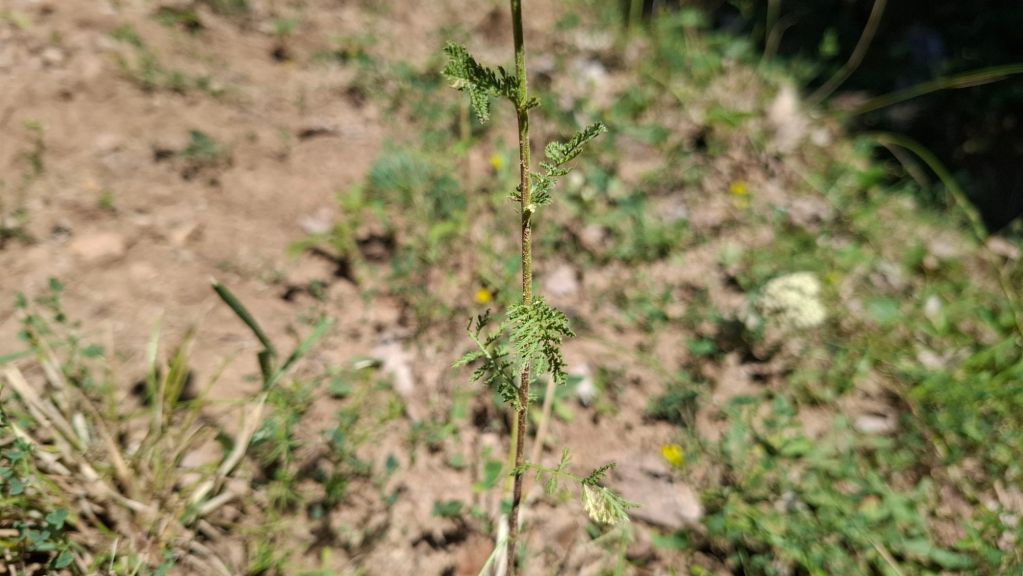
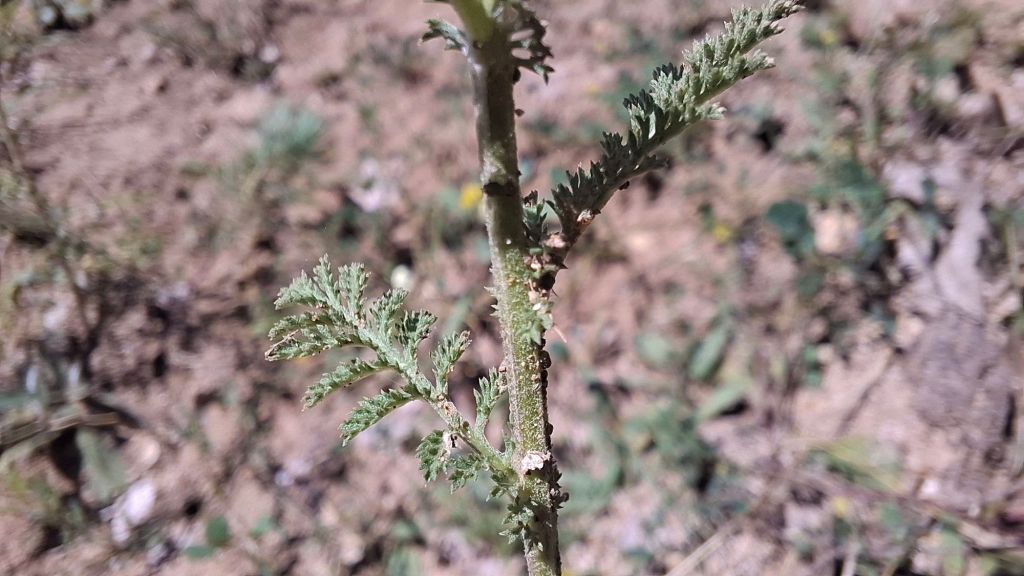
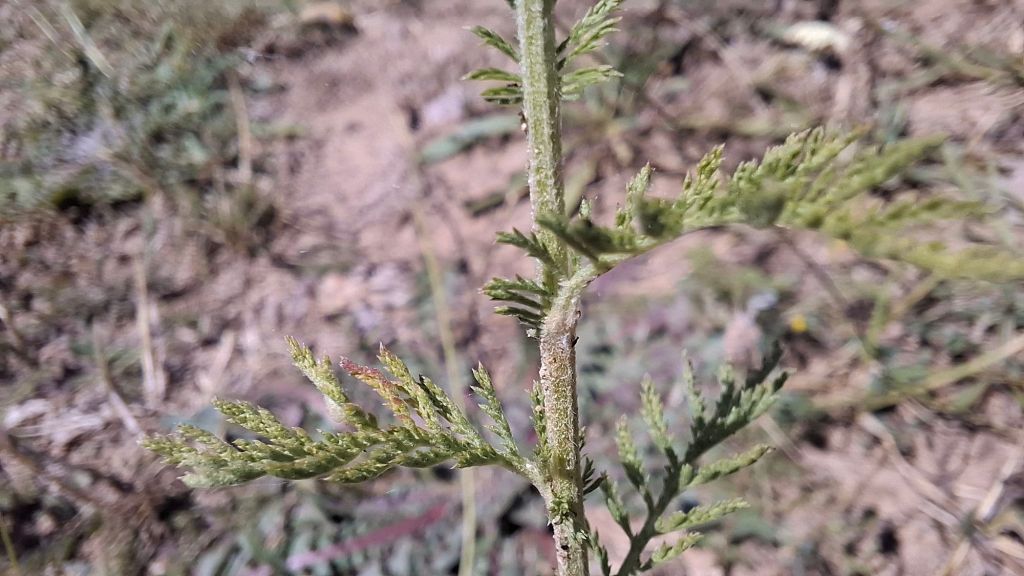
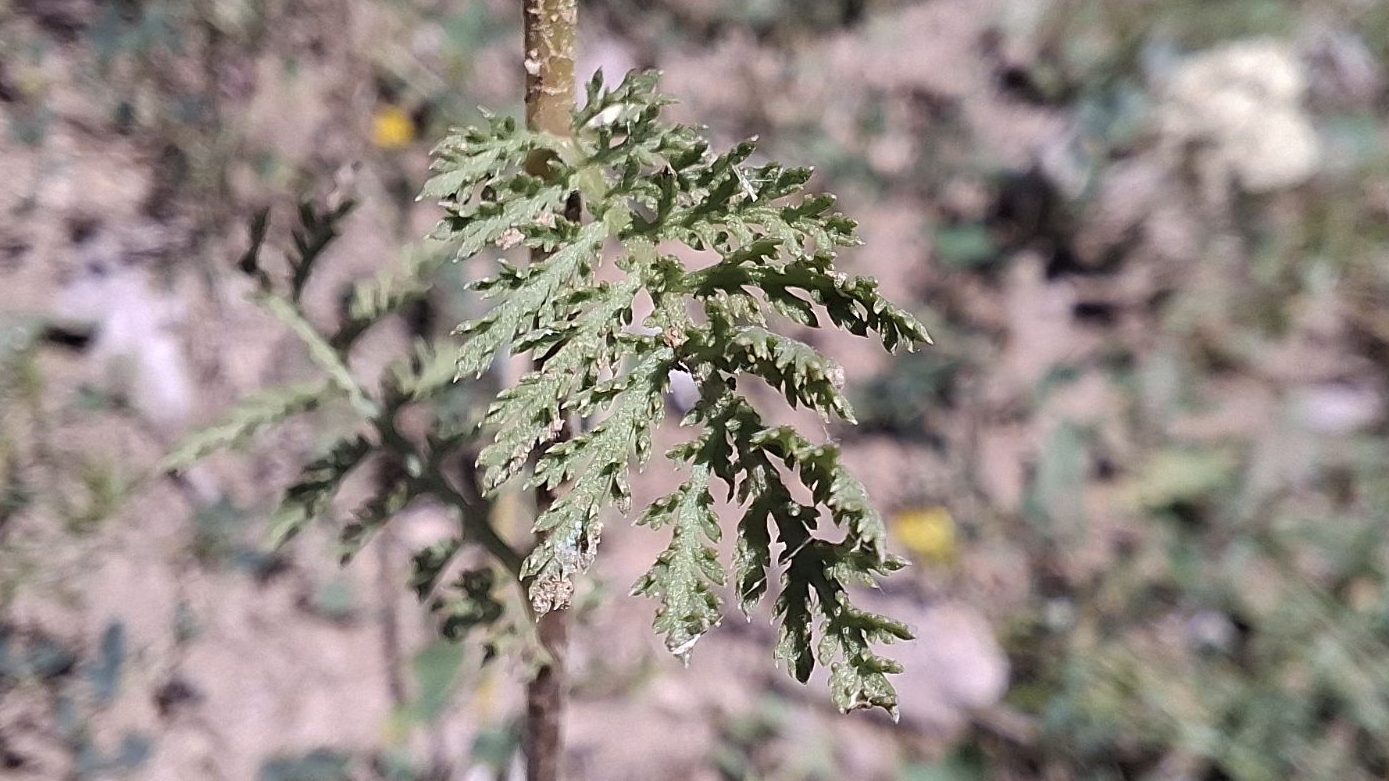
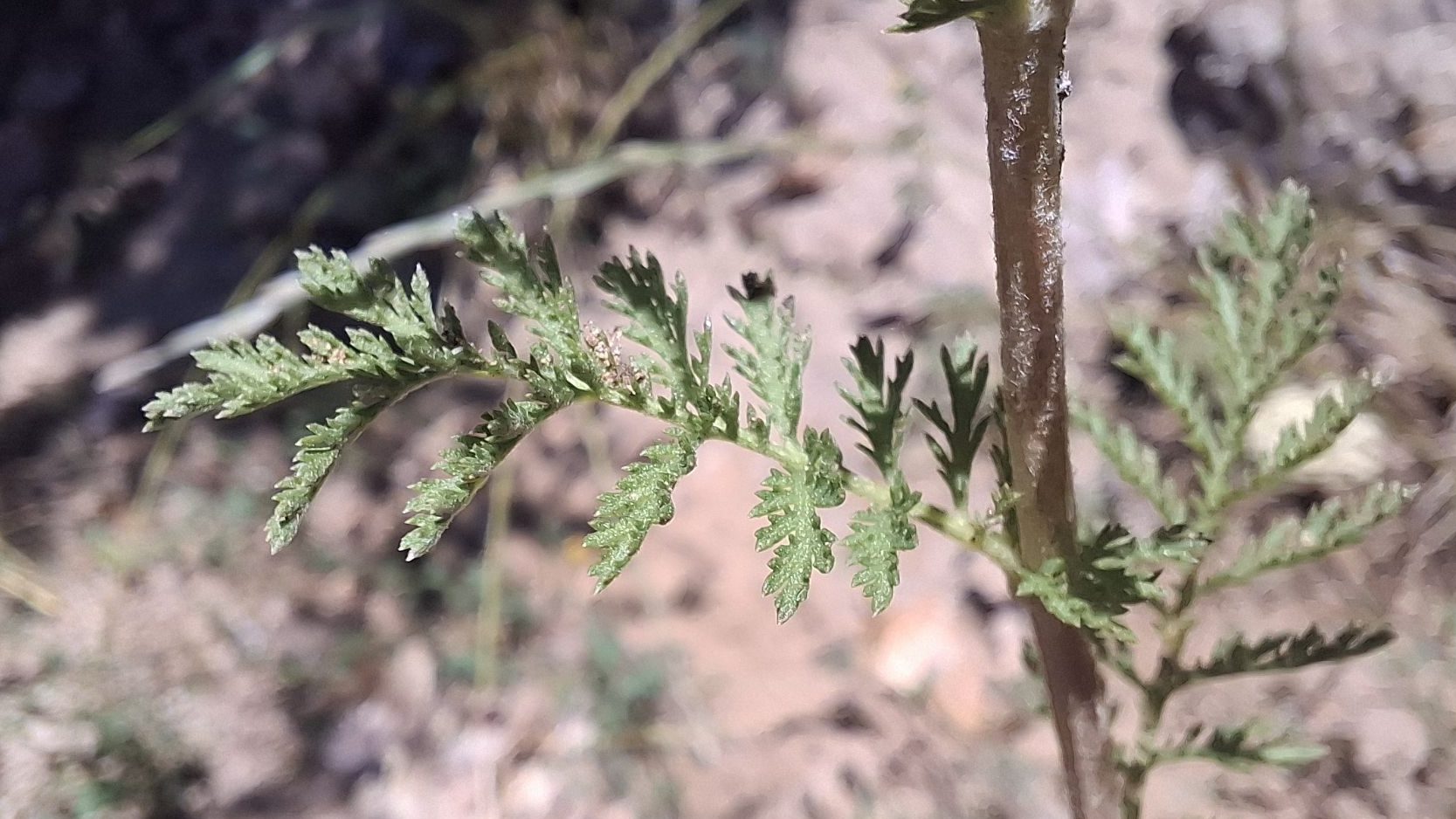
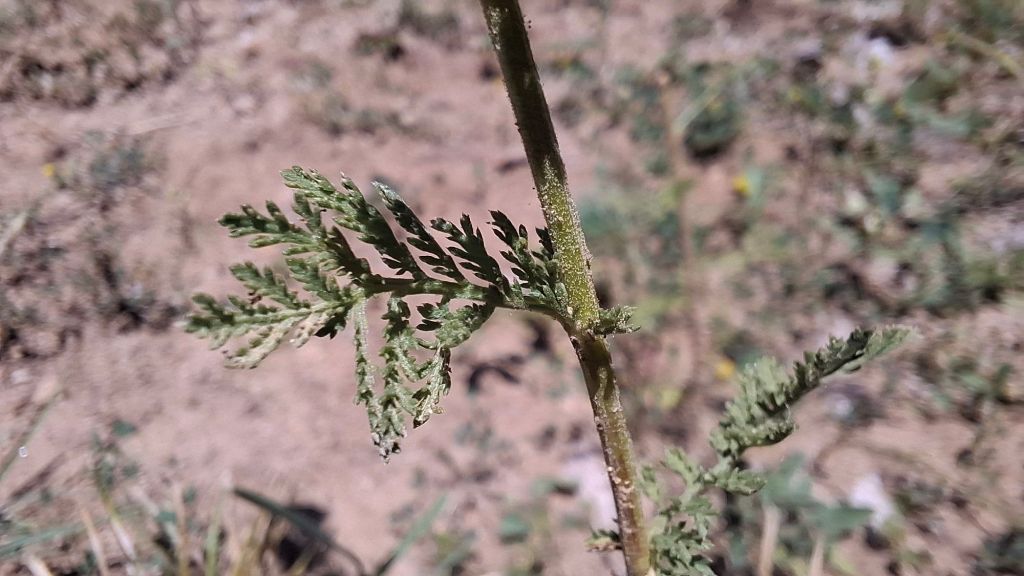
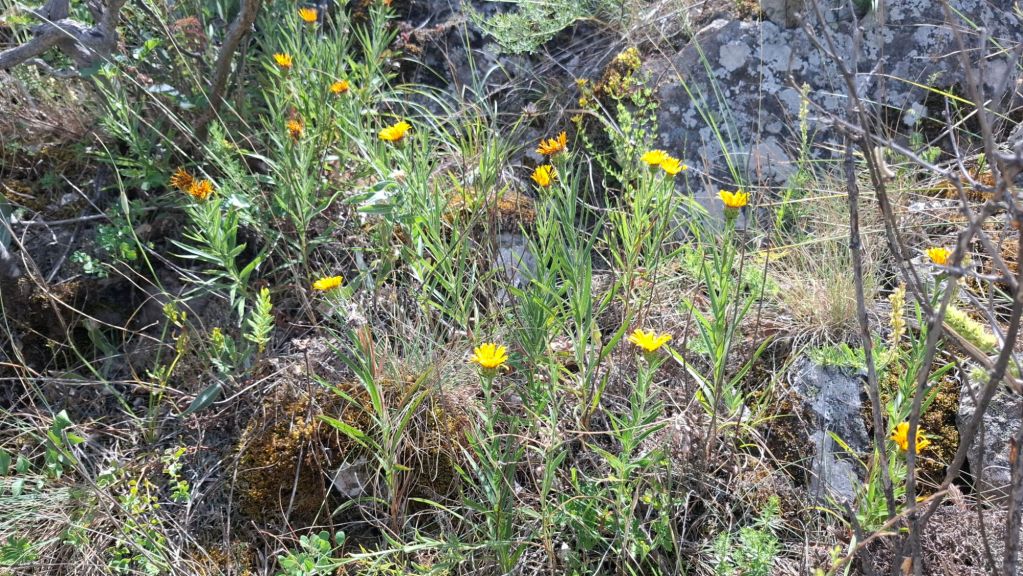
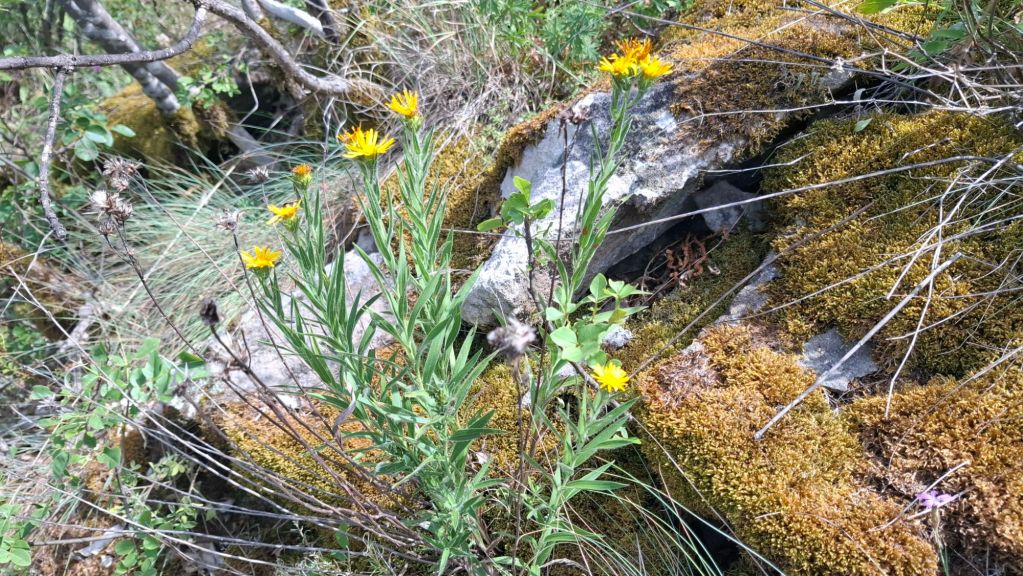
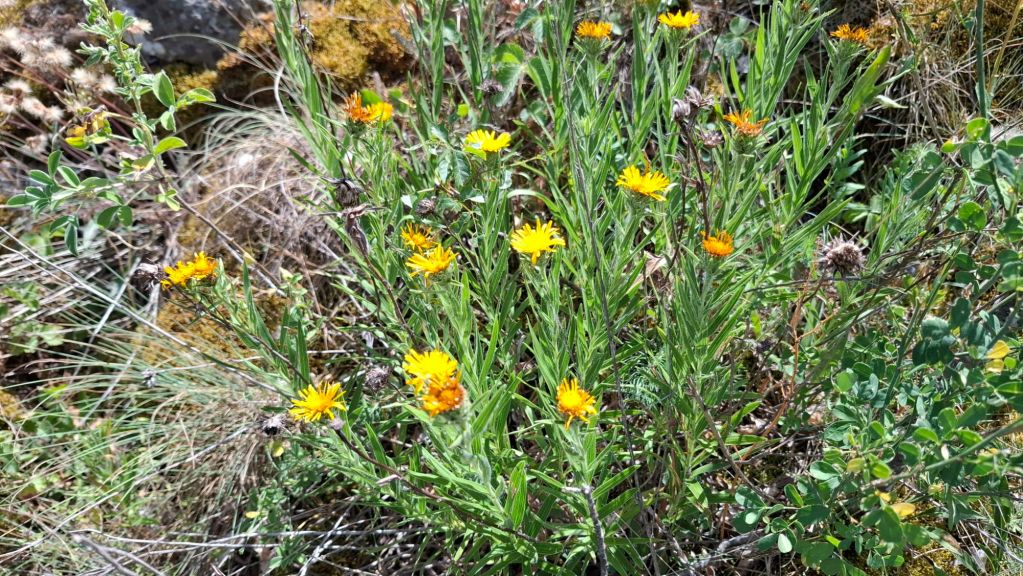
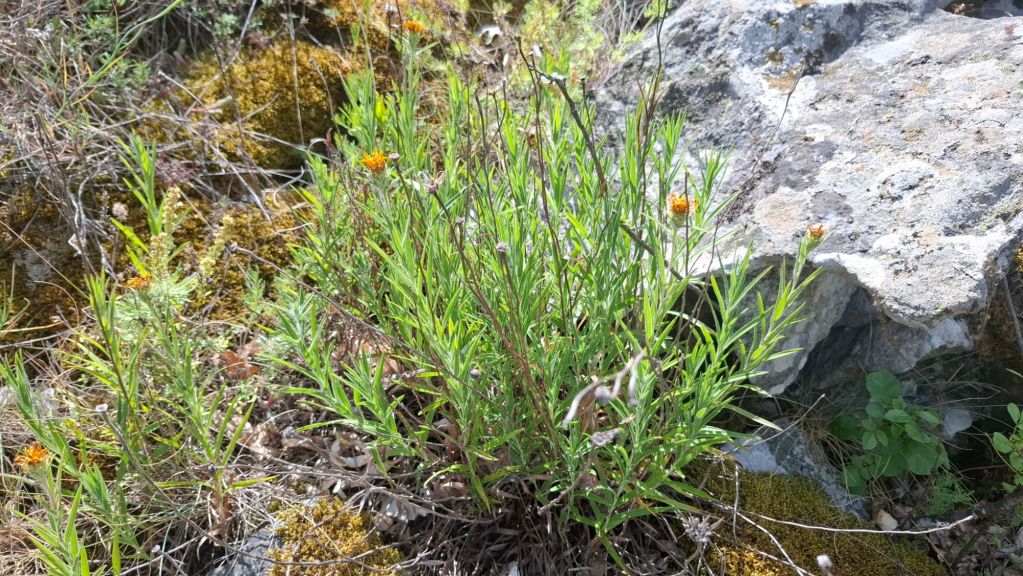
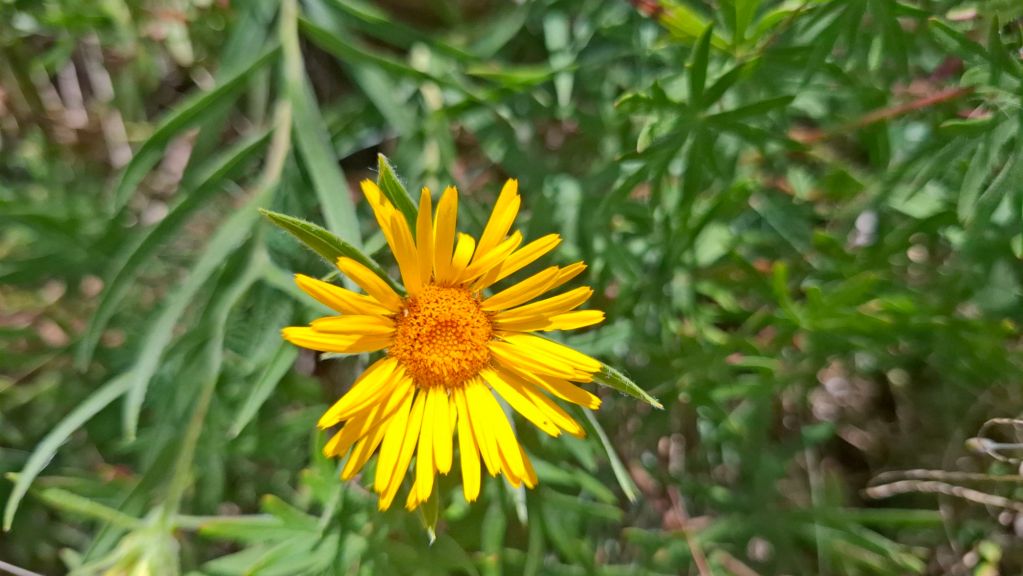
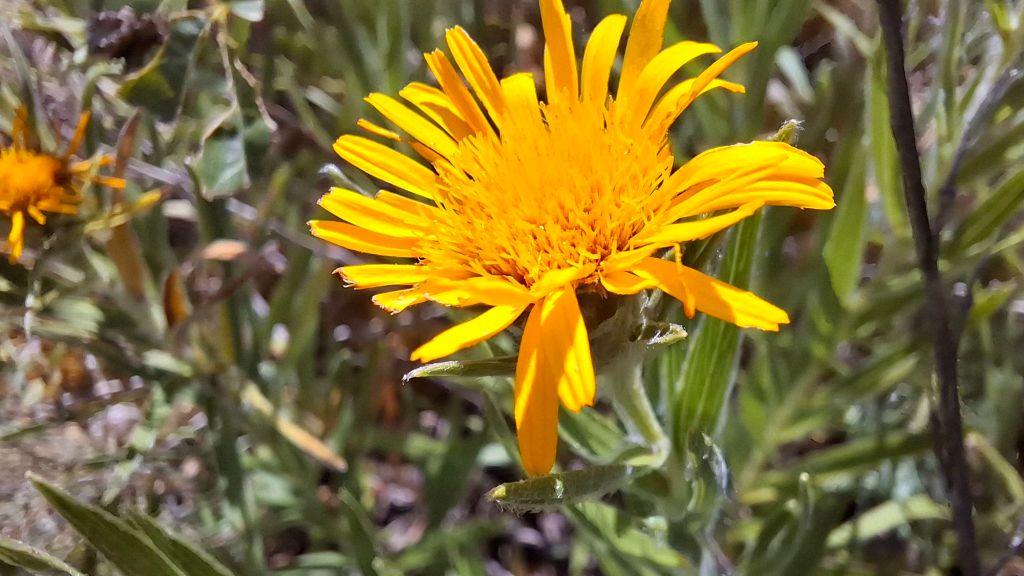
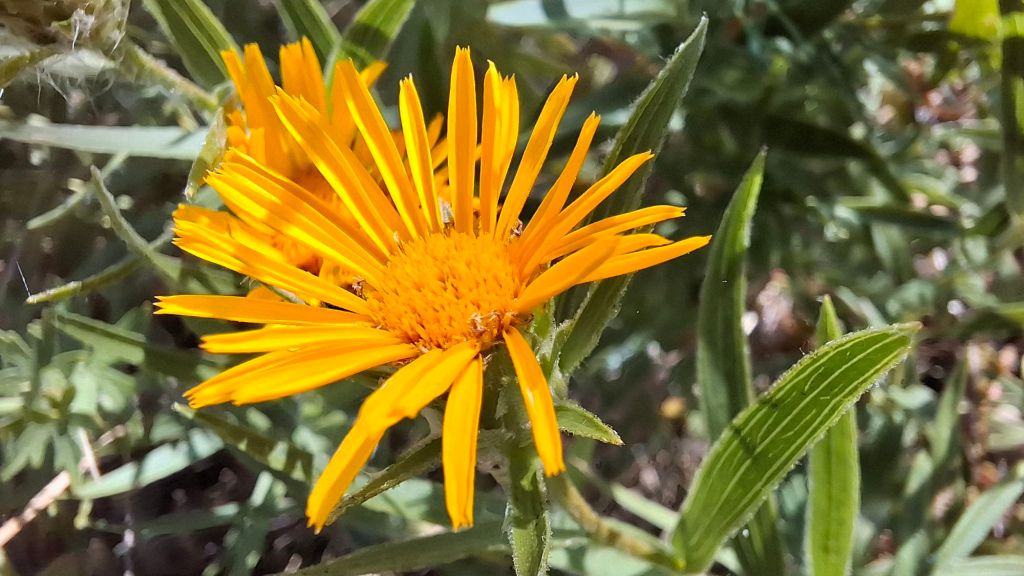
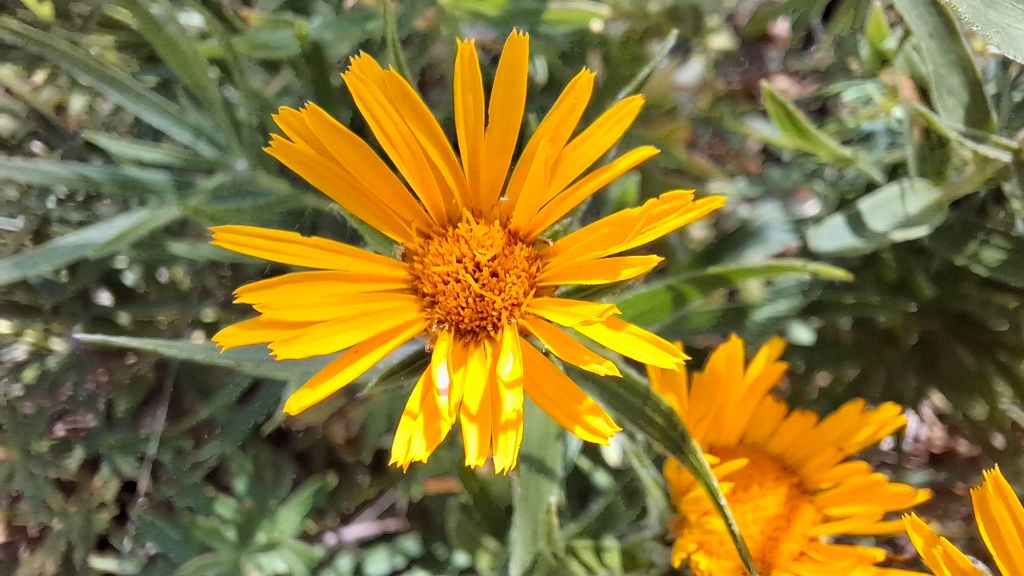
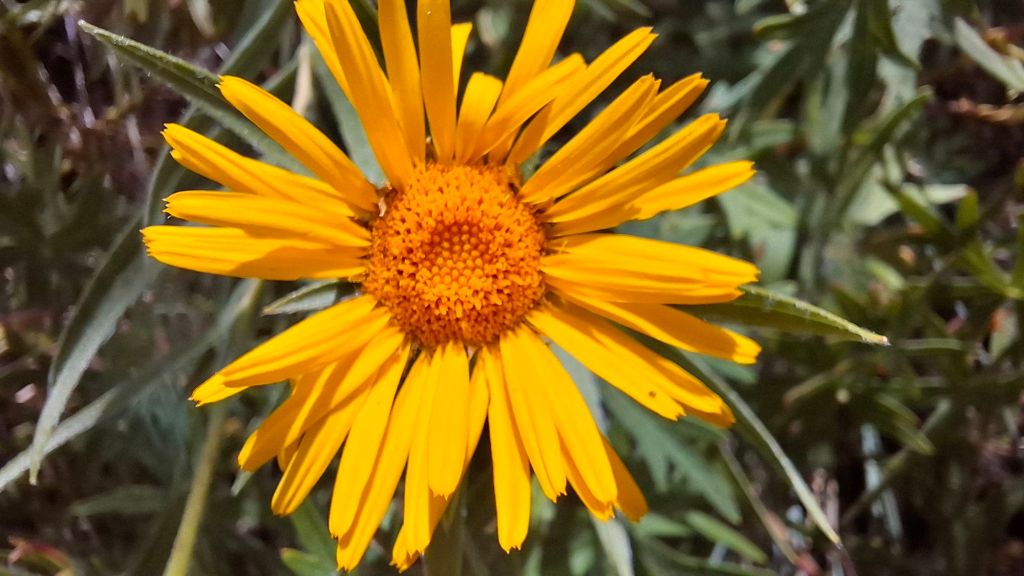
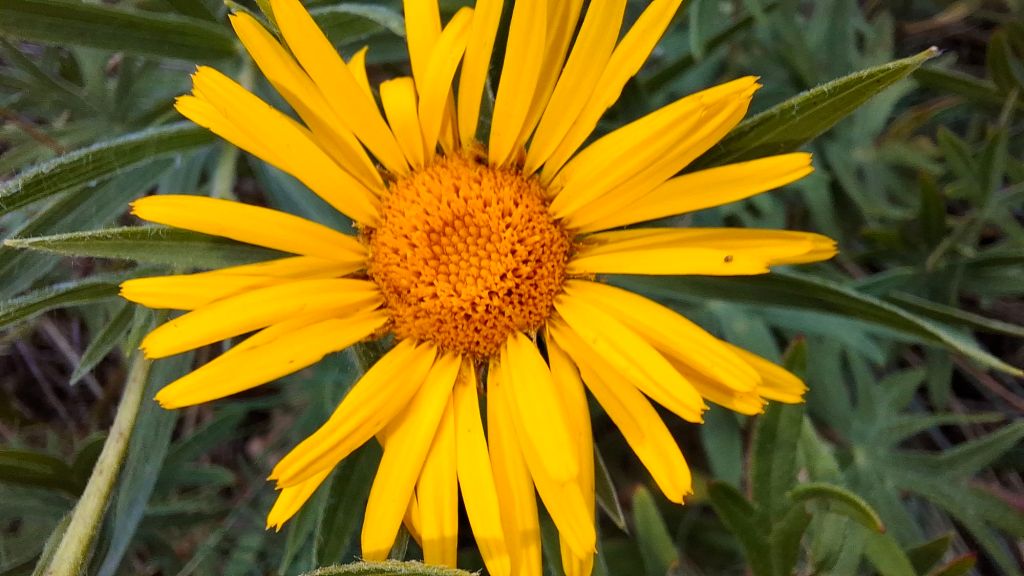
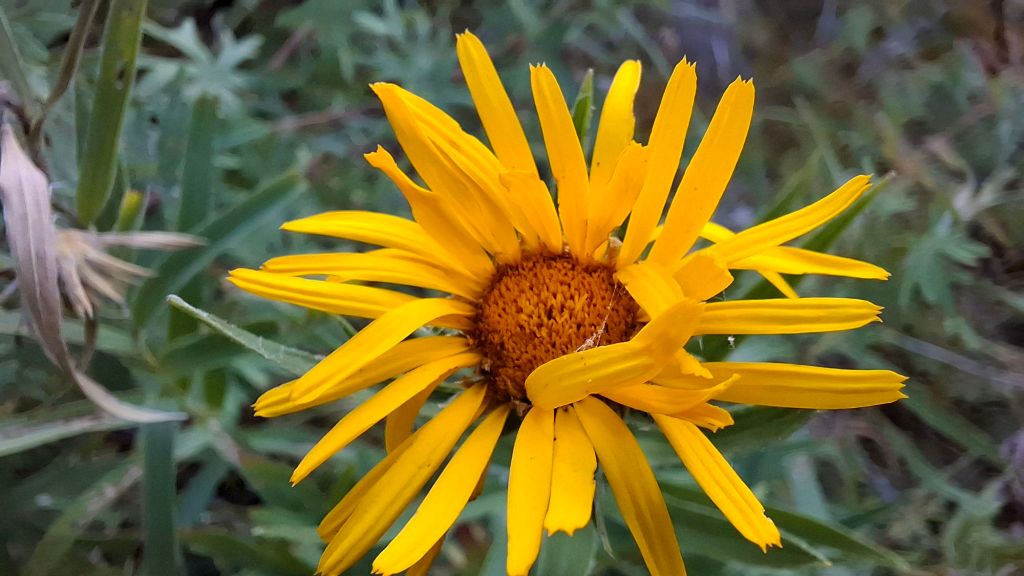
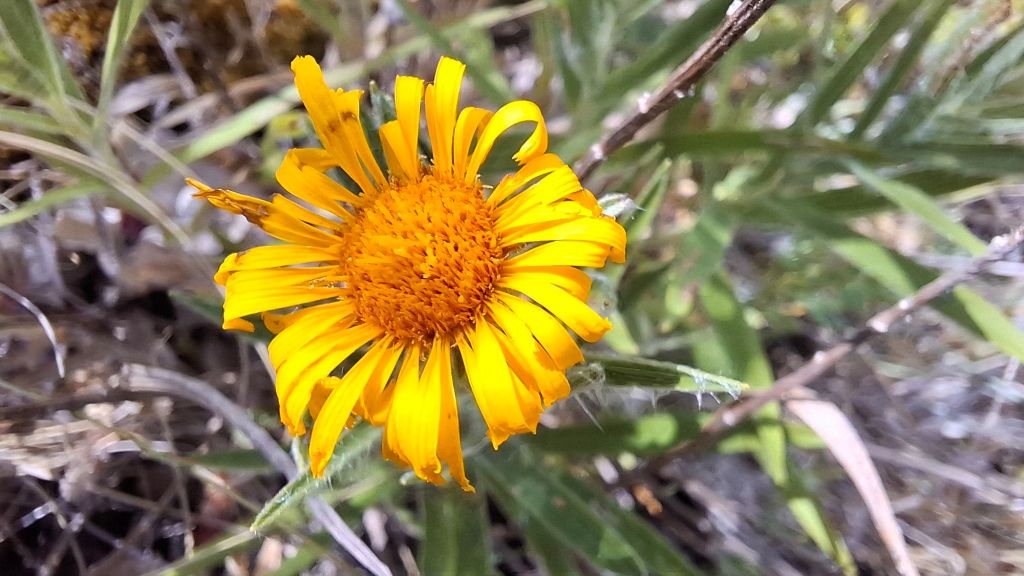
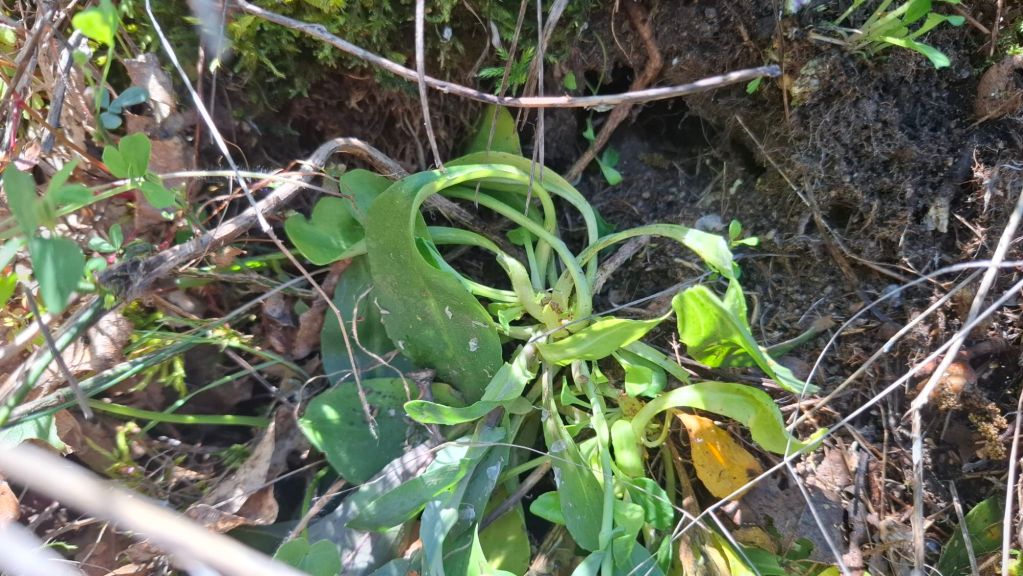
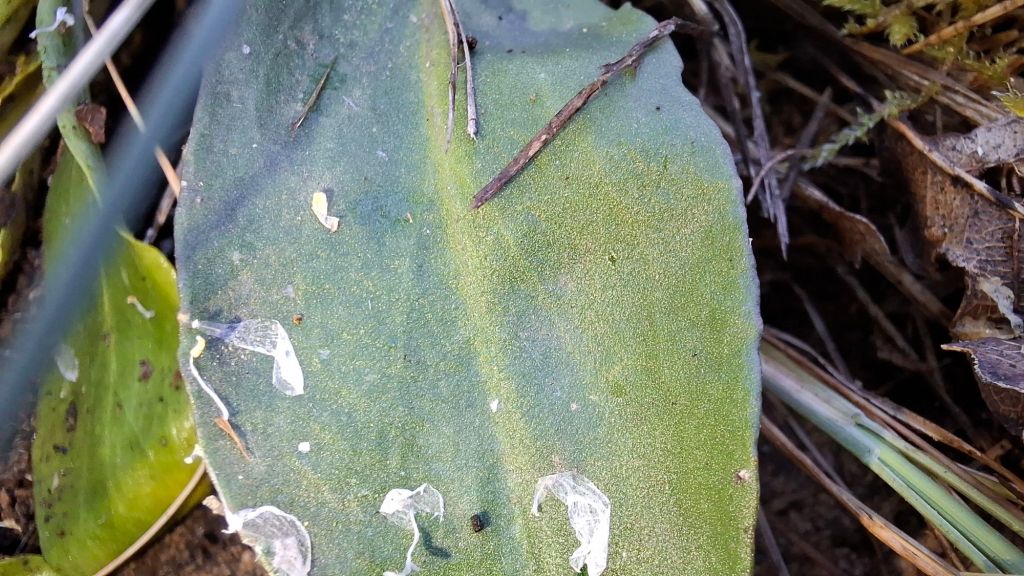
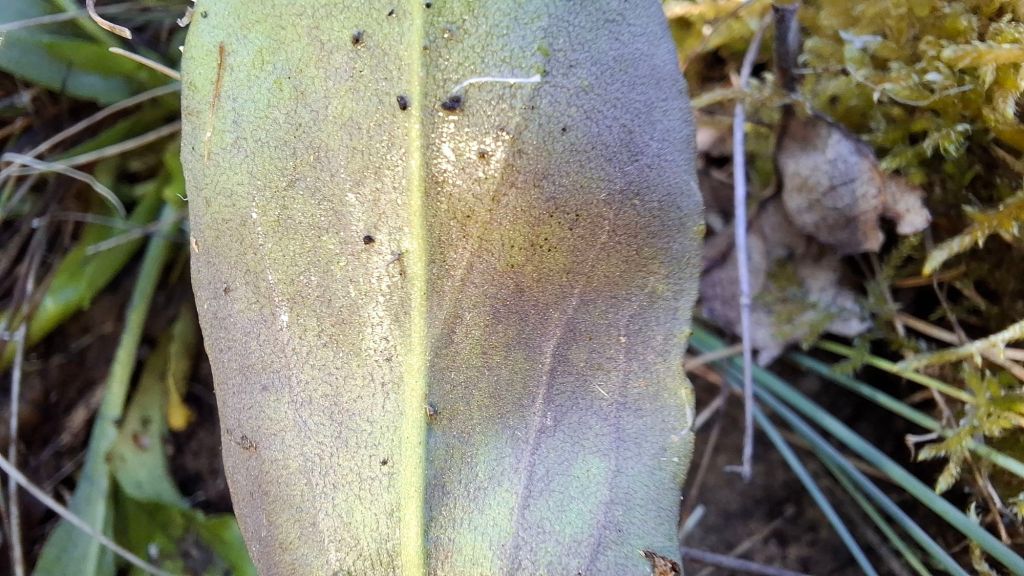
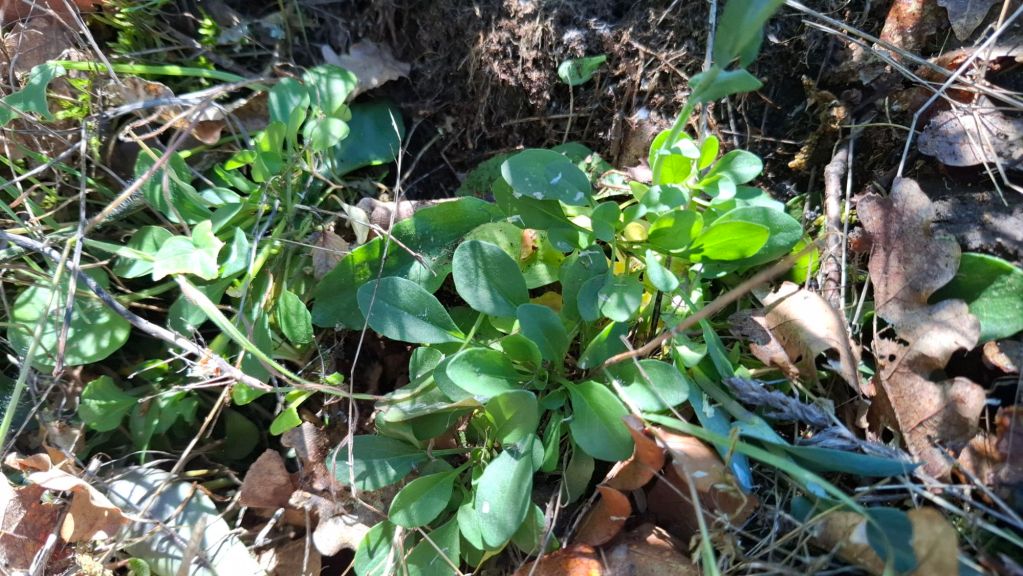
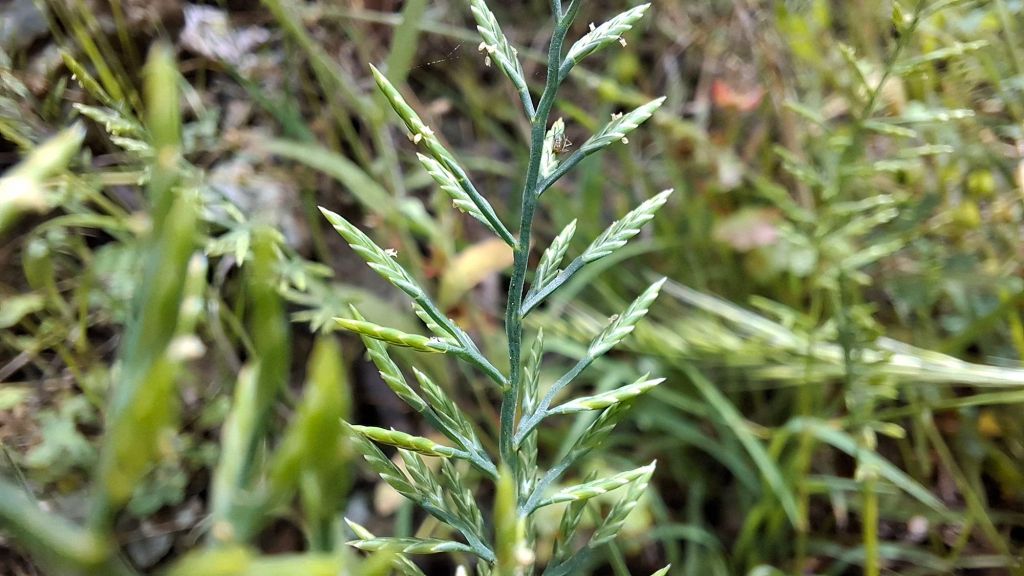
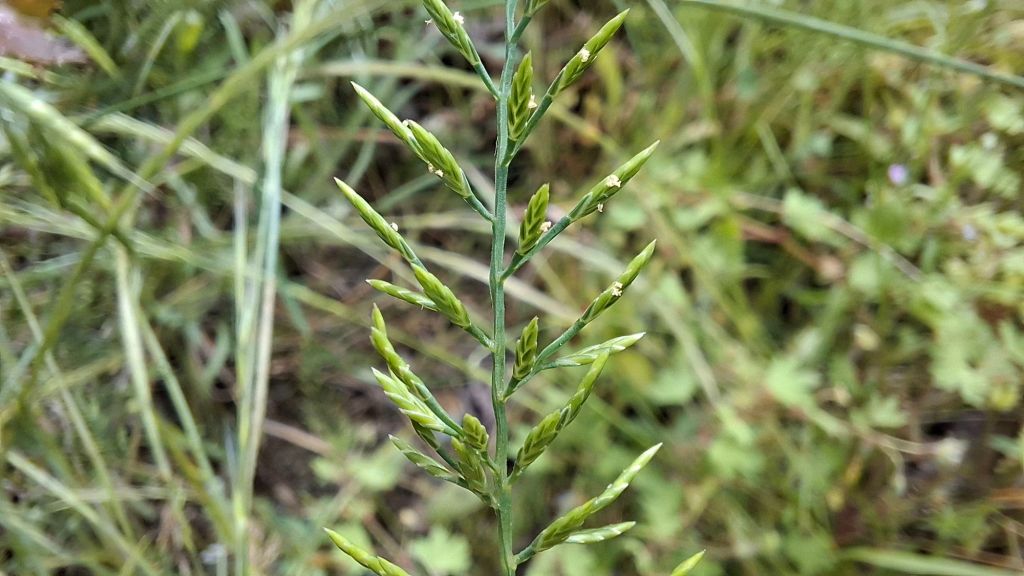
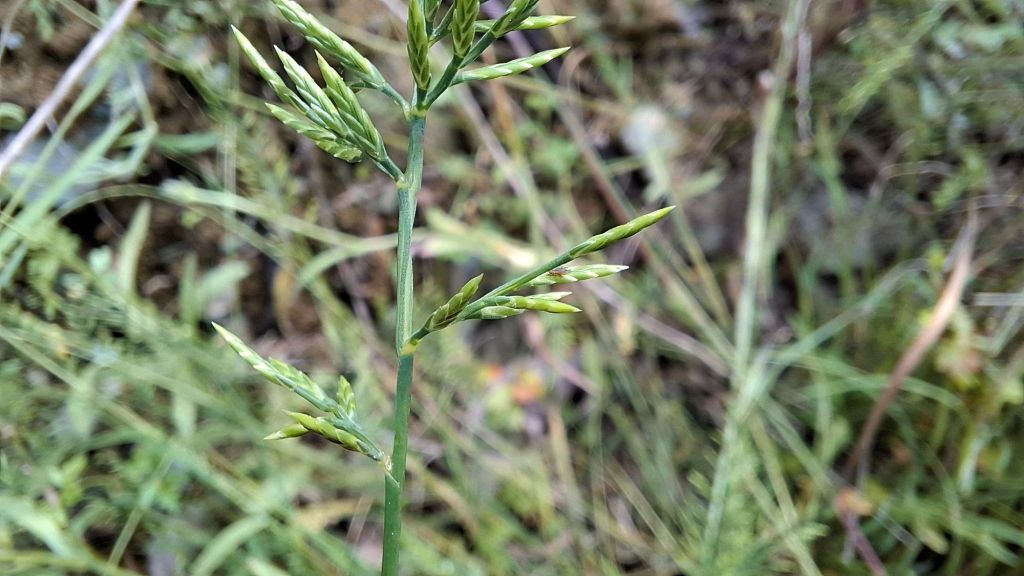
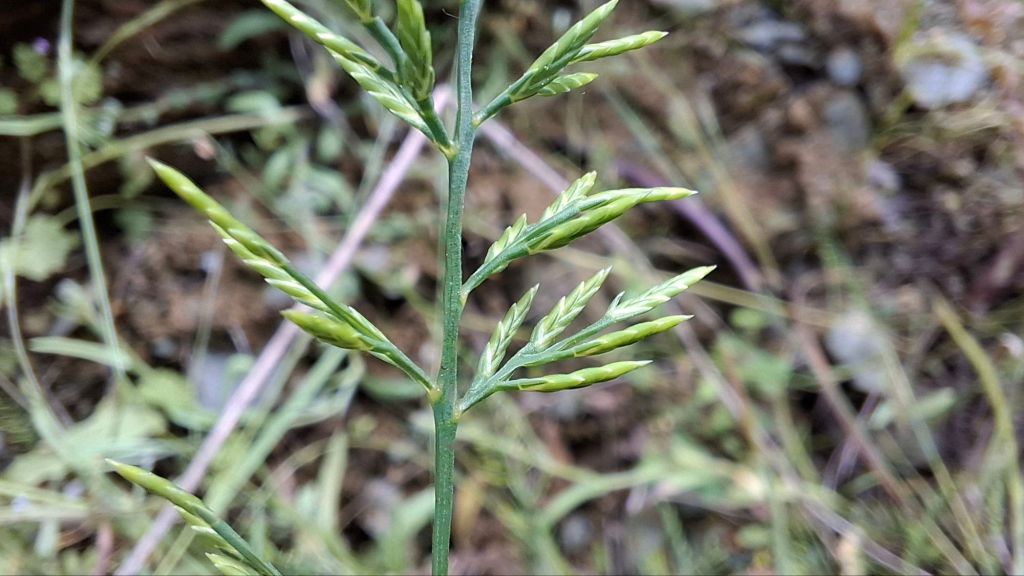
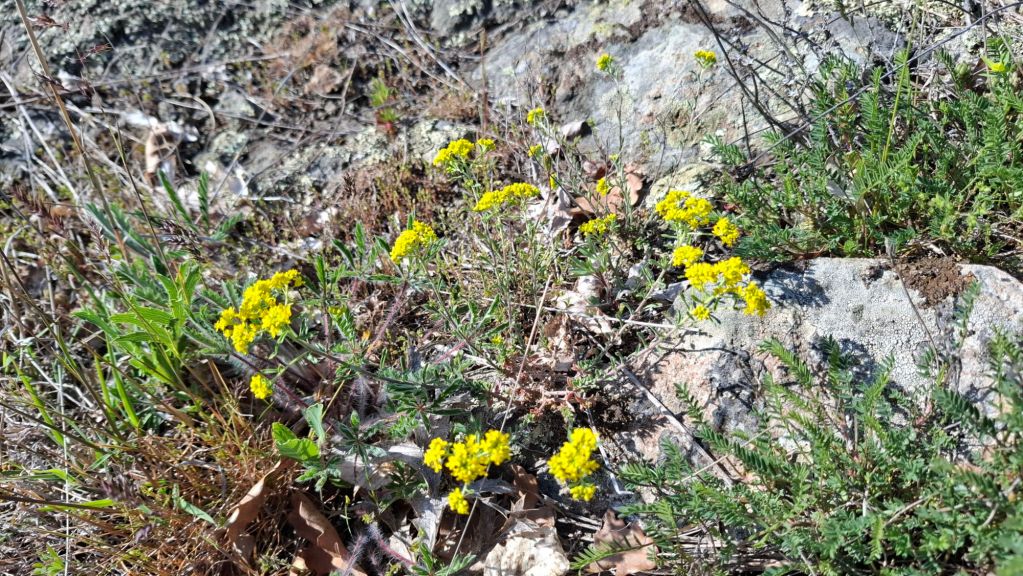
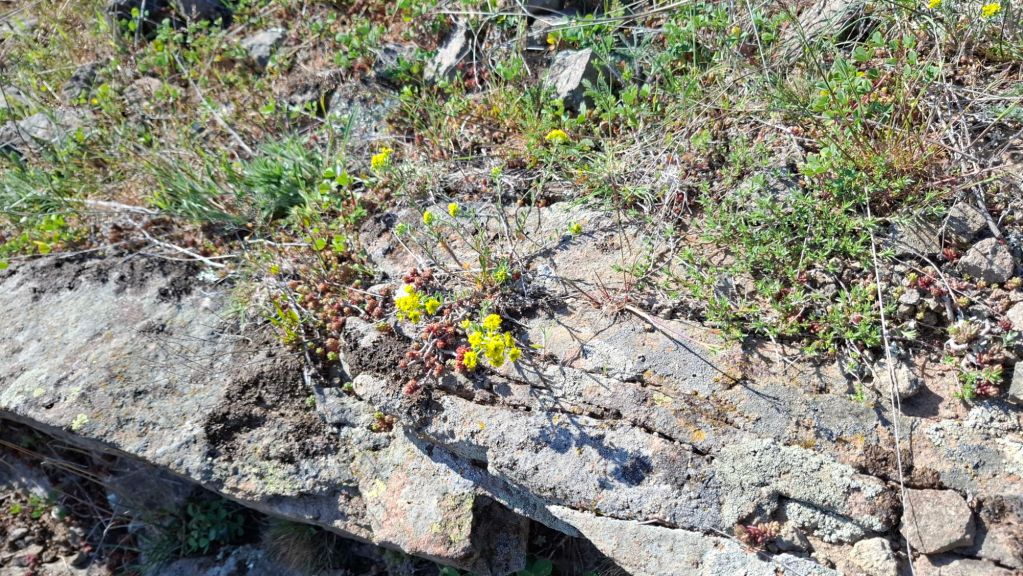
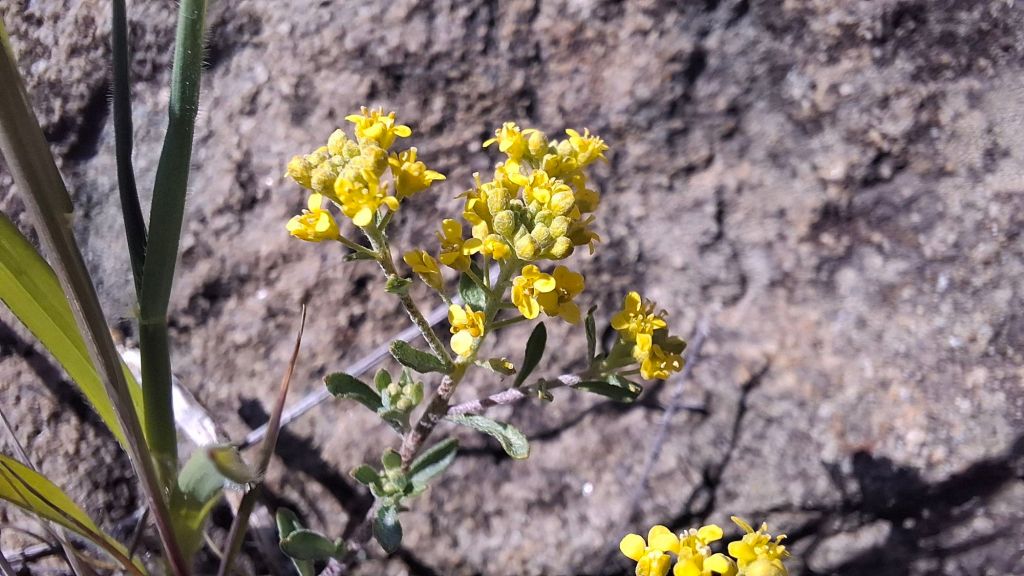
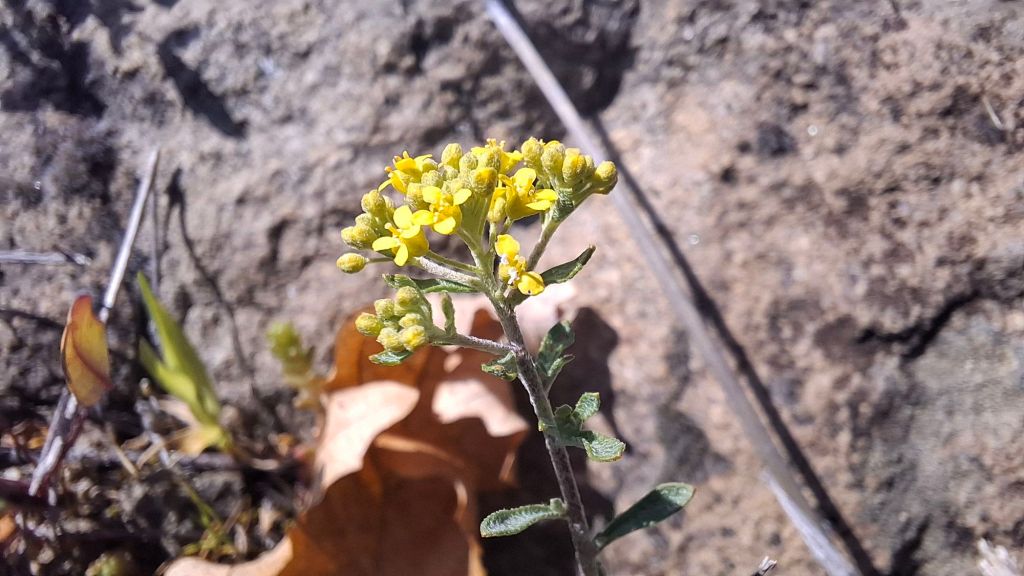
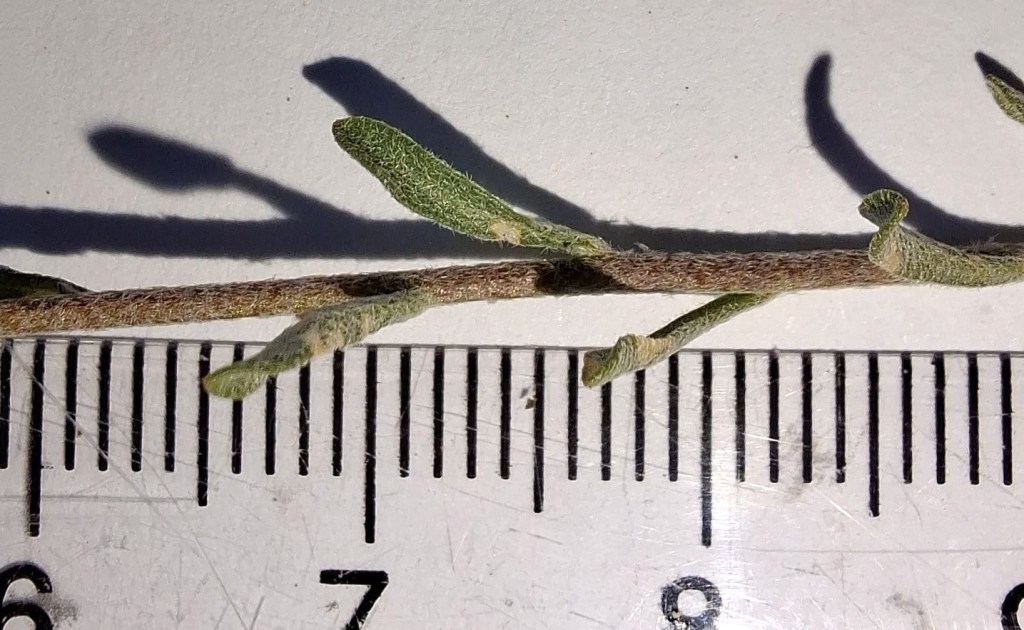
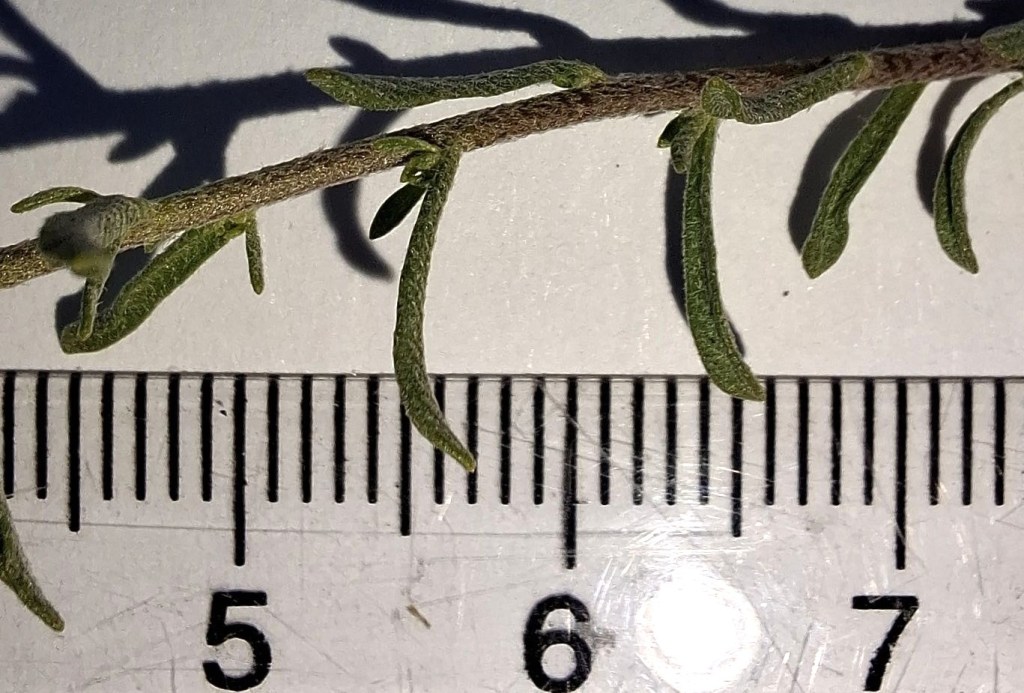
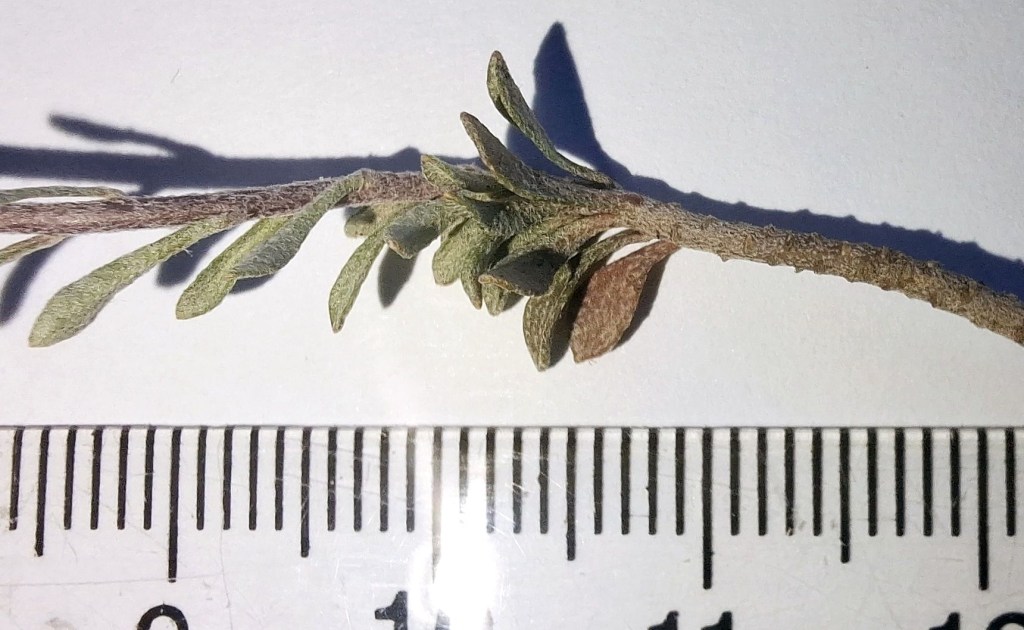
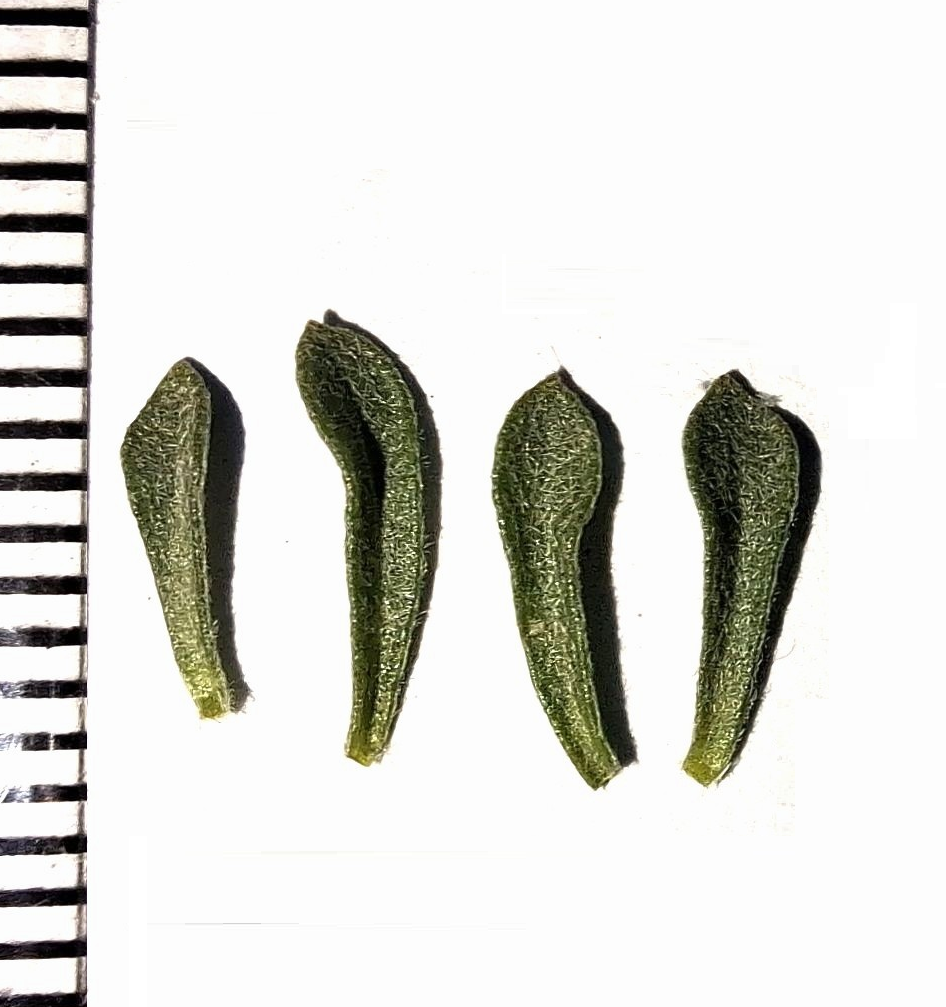
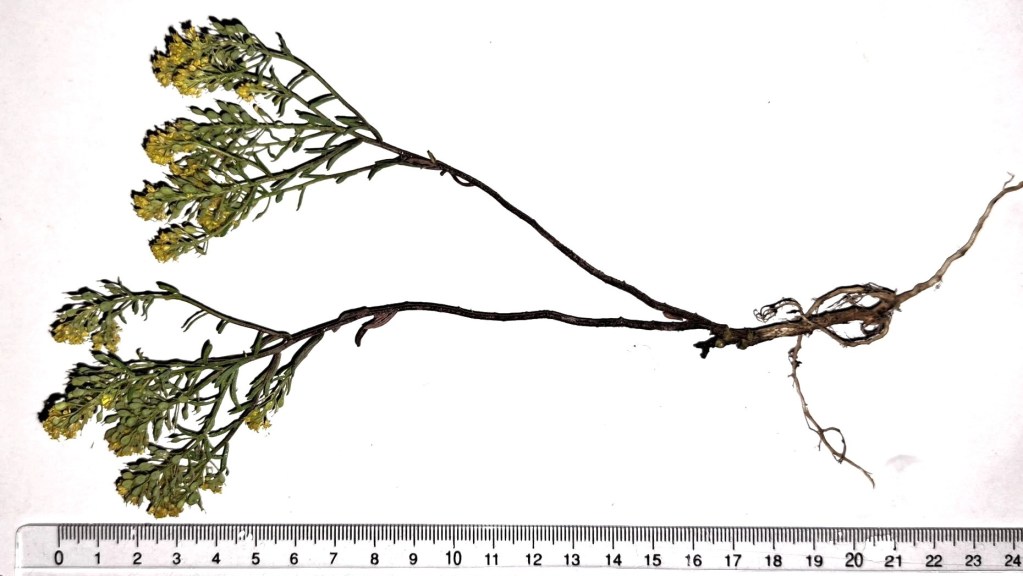
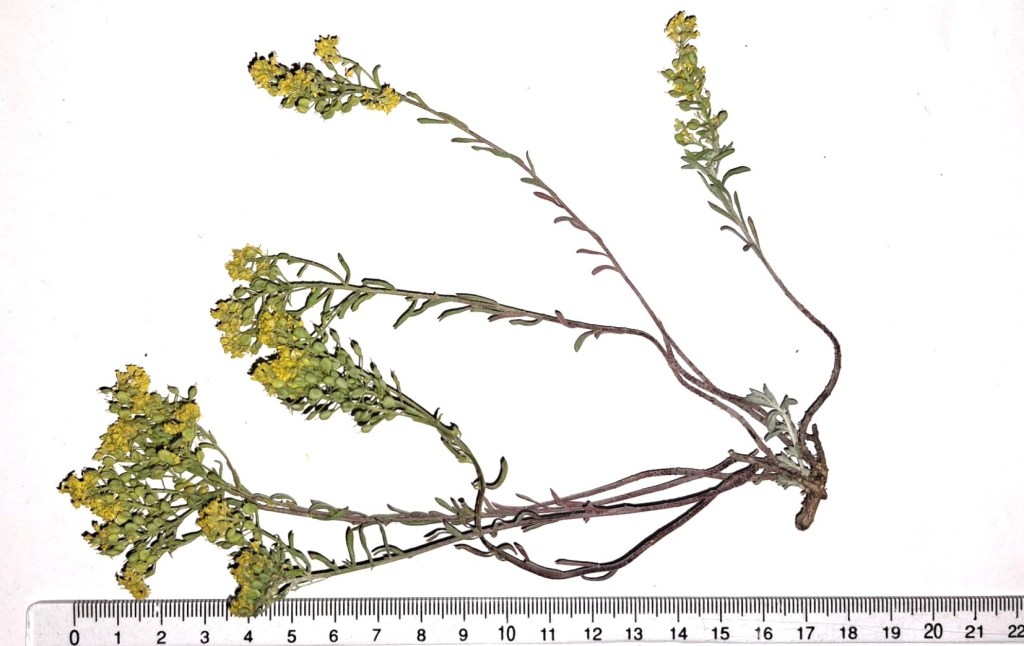
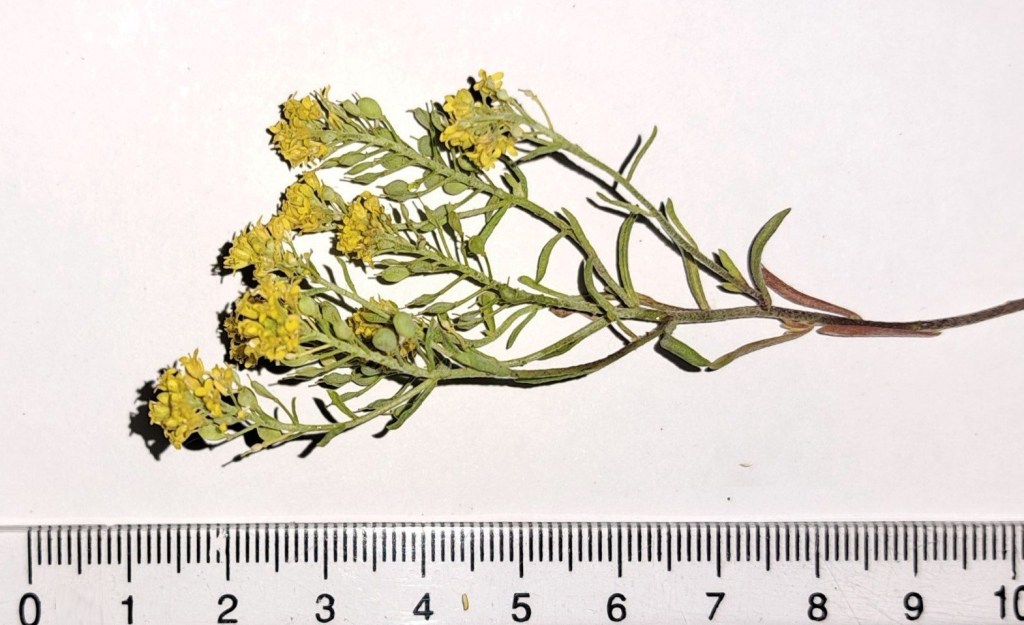
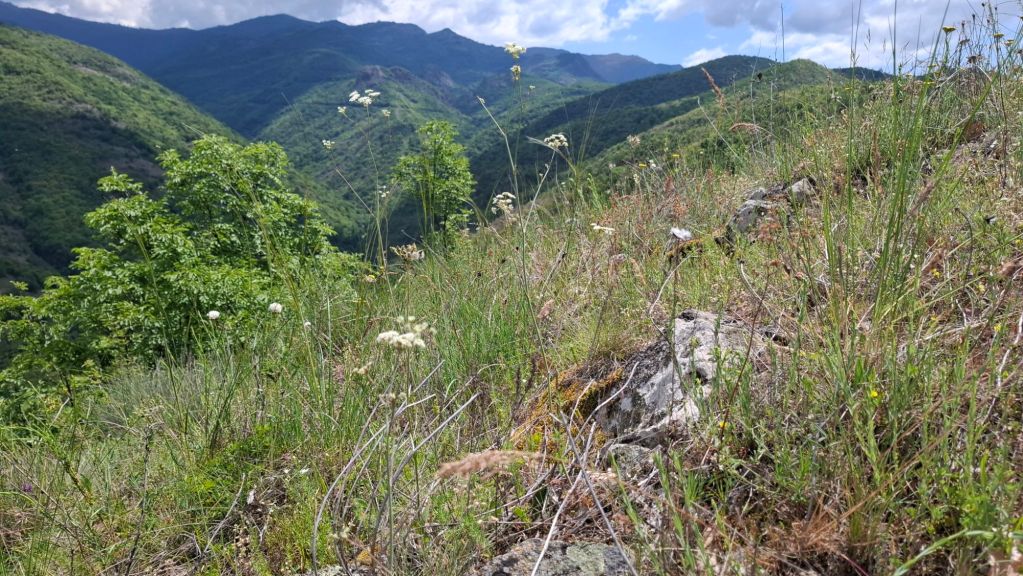
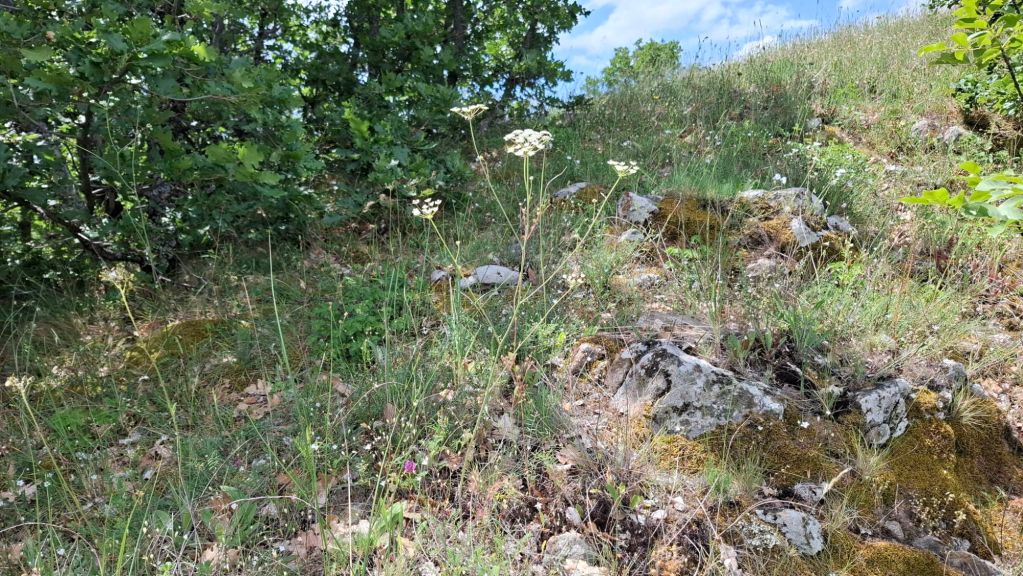
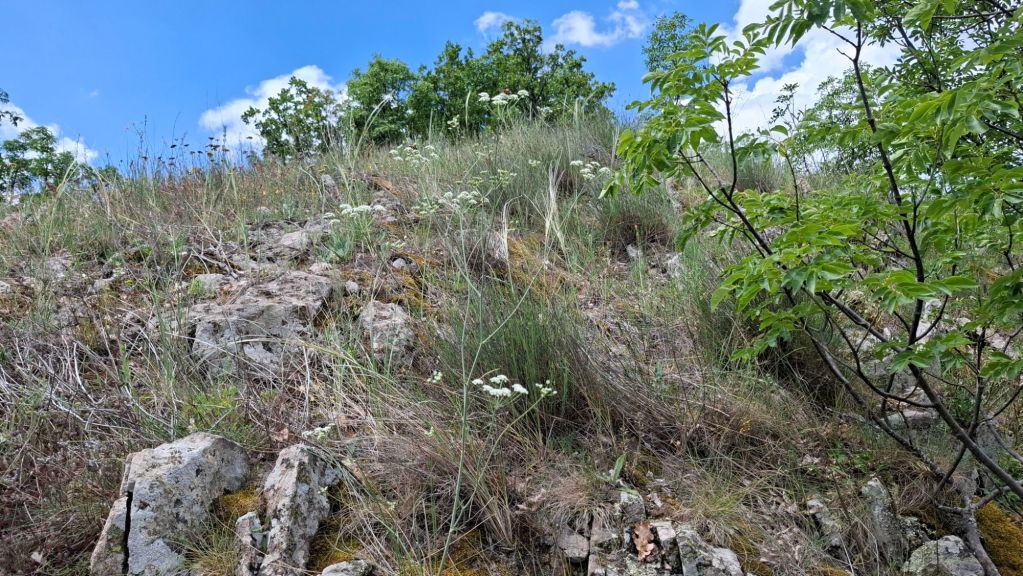
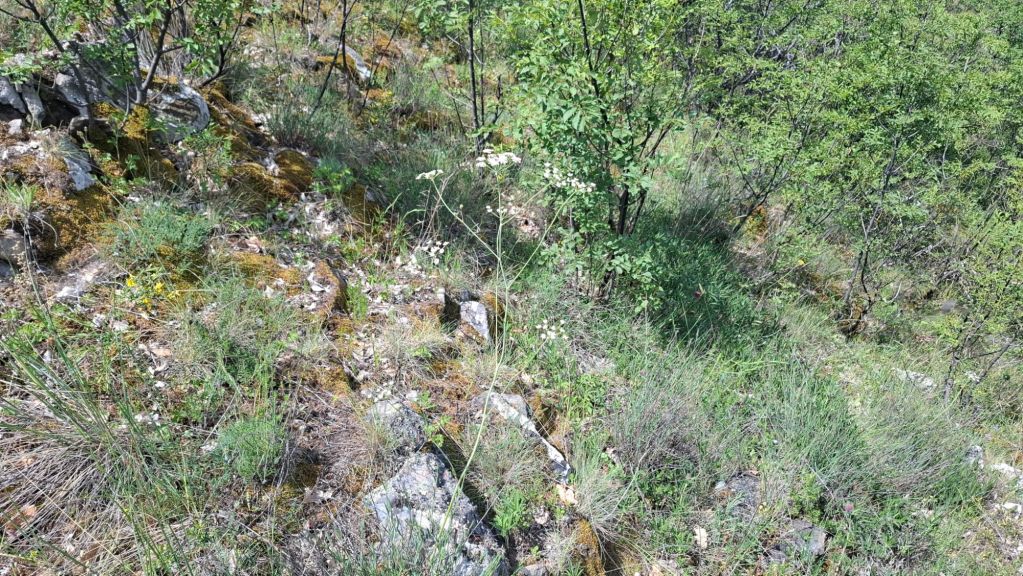
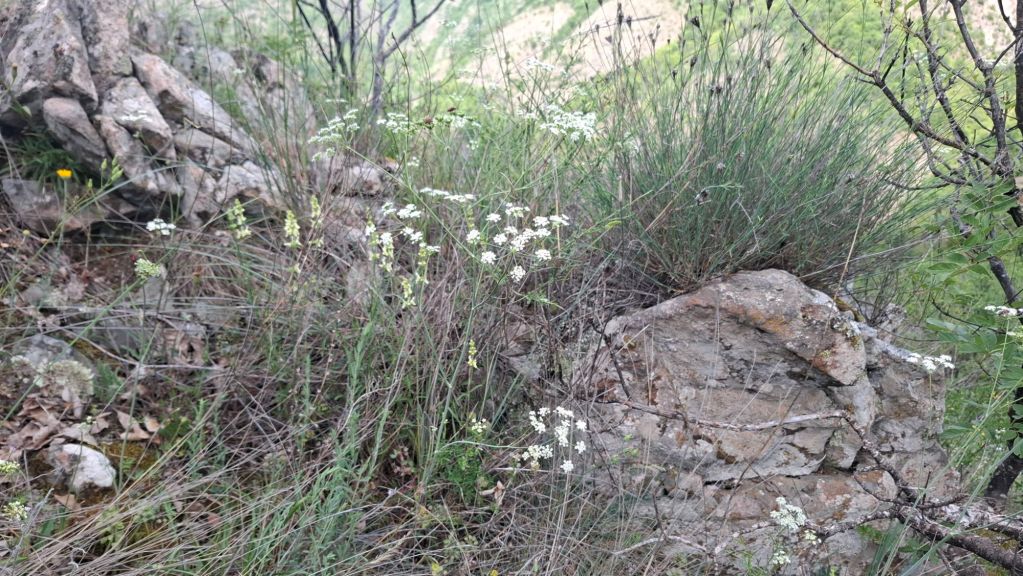
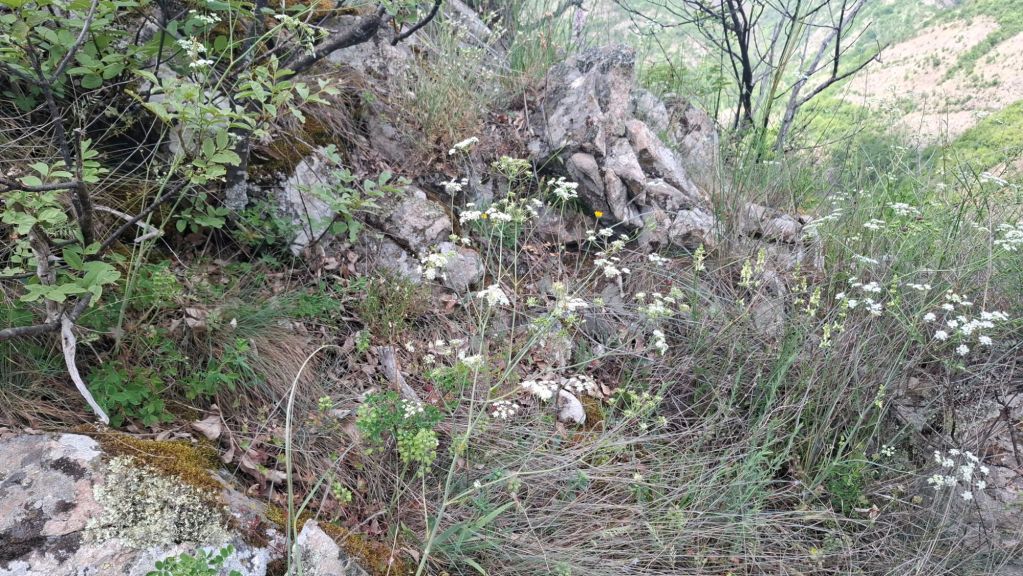
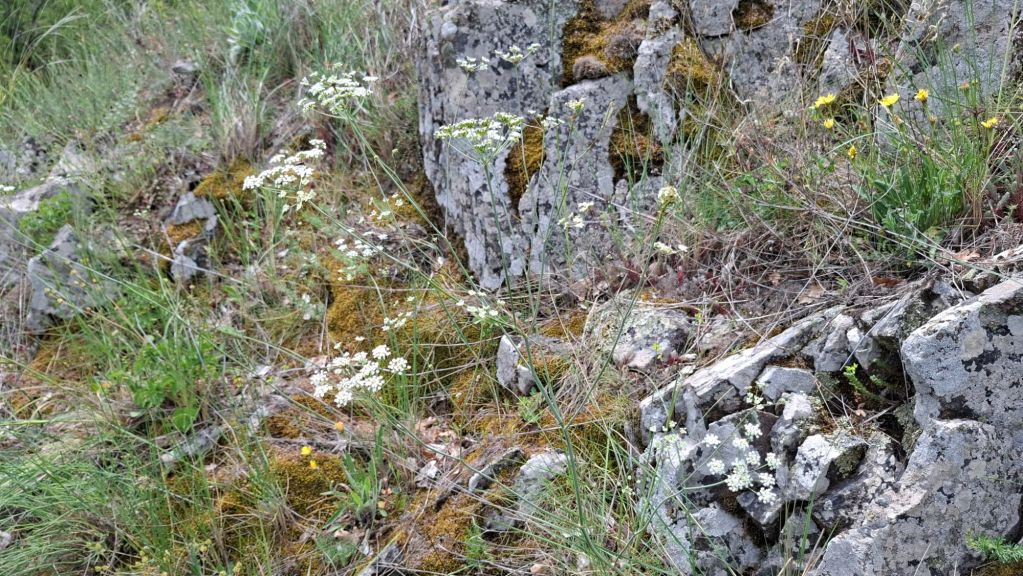
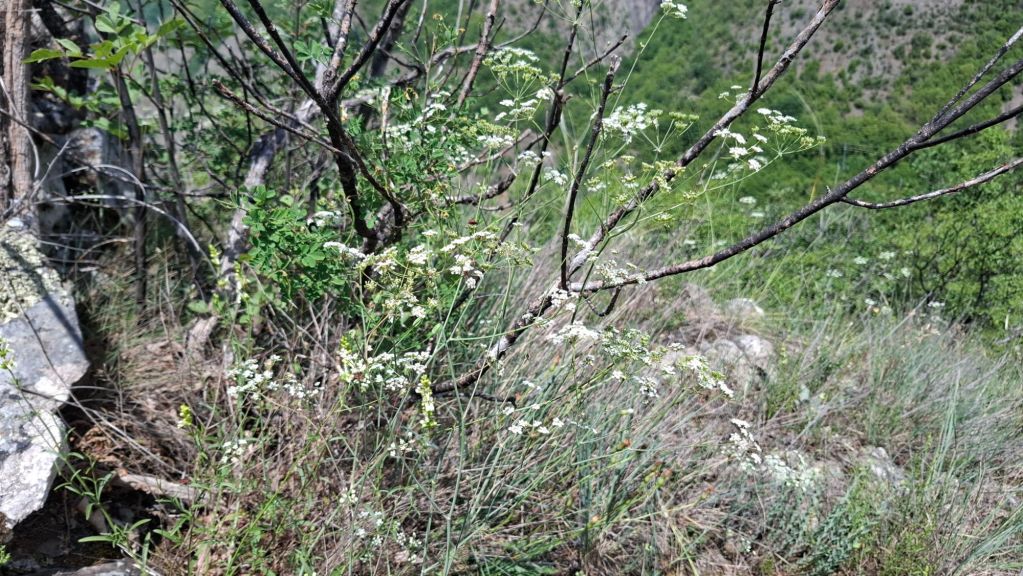
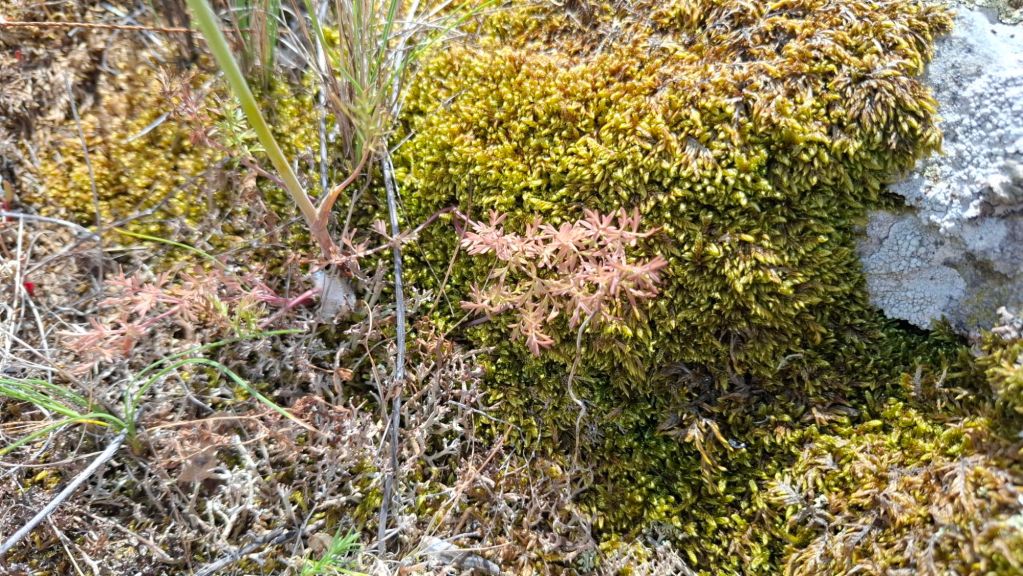
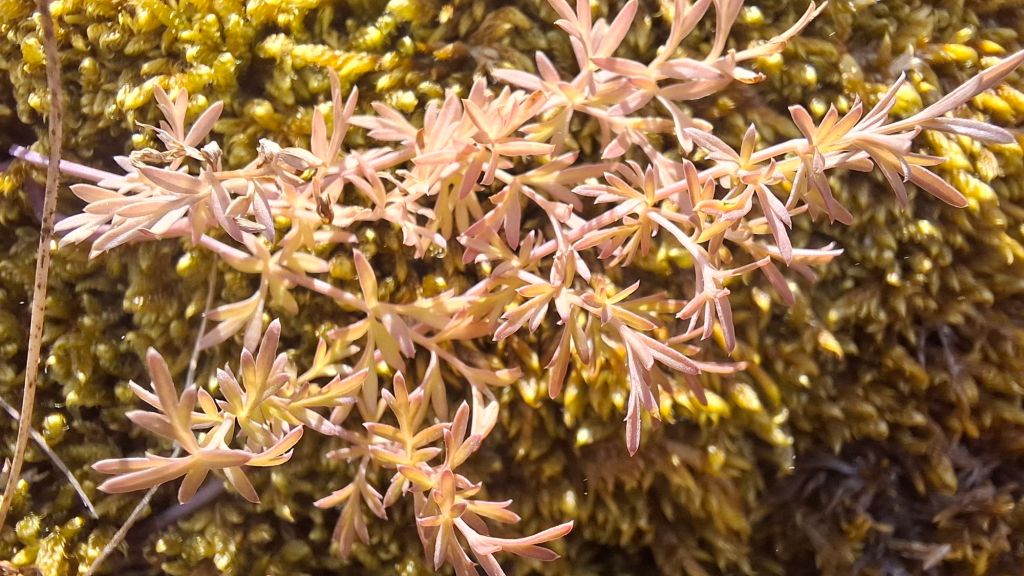
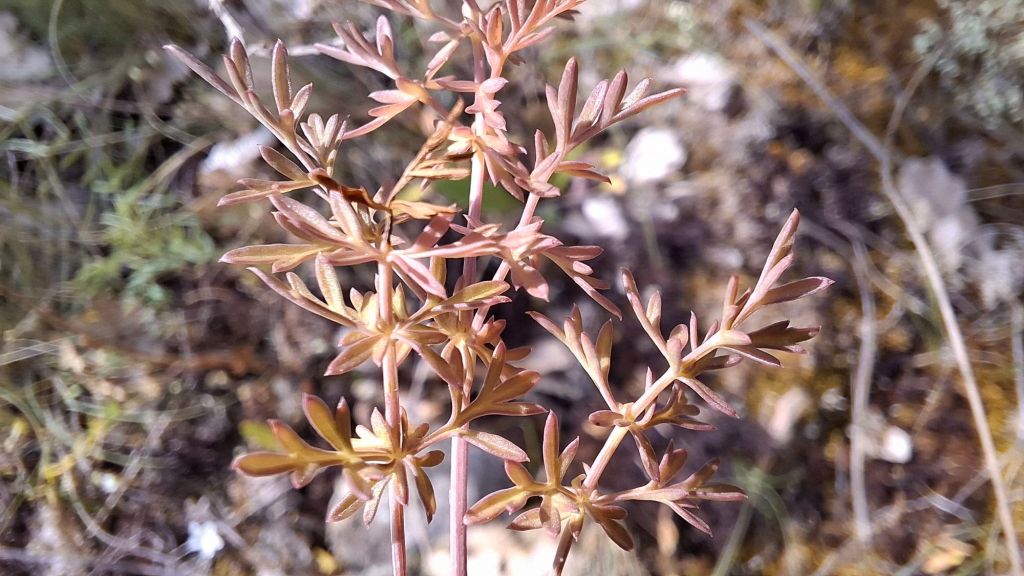
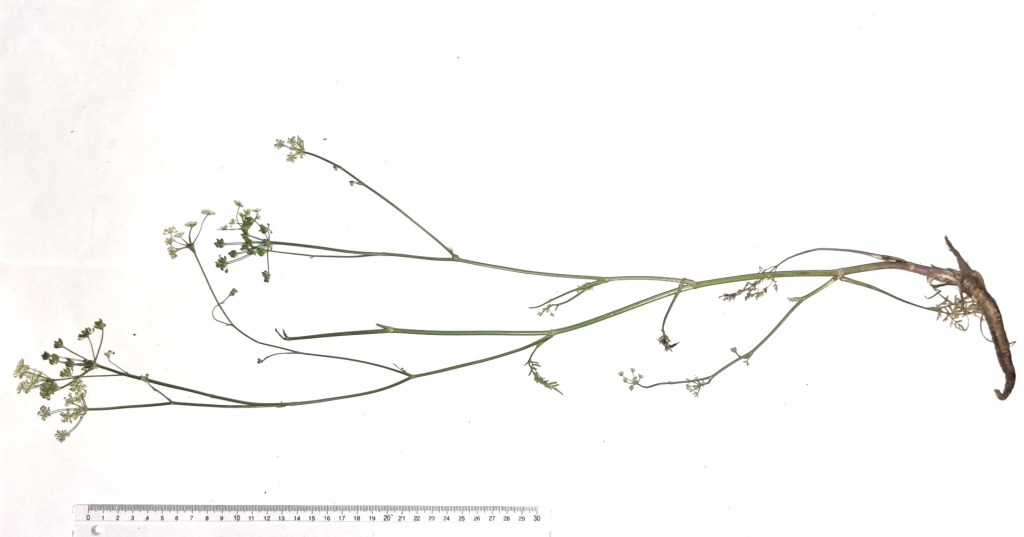
Taxonomy: Fam. Compositae// Genus: Achillea// Species: Achillea nobilis L.
Determined according to the botanical keys provided by Richardson (1976 in Tutin et al.).
Note: The Osogovo population has white ligules, corresponding to subsp. nobilis. According to Richardson (1976 in Tutin et al.) and The Euro+Med PlantBase (Greuter, 2006+) this taxon does not occur on the Balkan Peninsula. Instead, for this region is reported Achillea nobilis subsp. neilreichii (A. Kern.) Velen. (= Achillea nobilis var. ochroleuca Boiss.), which has pale yellow ligules. According to the Plants of the World Online (Royal Botanic Gardens, Kew), A. nobilis subsp. nobilis is listed as native for Northwest Balkan, including the territory of North Macedonia.
Lifeform: Perennial plant. Hemicryptophyte according to the Raunkiær system.
Distribution:A. nobilis is a polymorphic species native from Europe to Caucassus and Siberia according to the distribution information provided by the Plants of the World Online portal (Royal Botanic Gardens, Kew). As stated above, there are contradictory statements regarding its variability in the Balkan Peninsula.
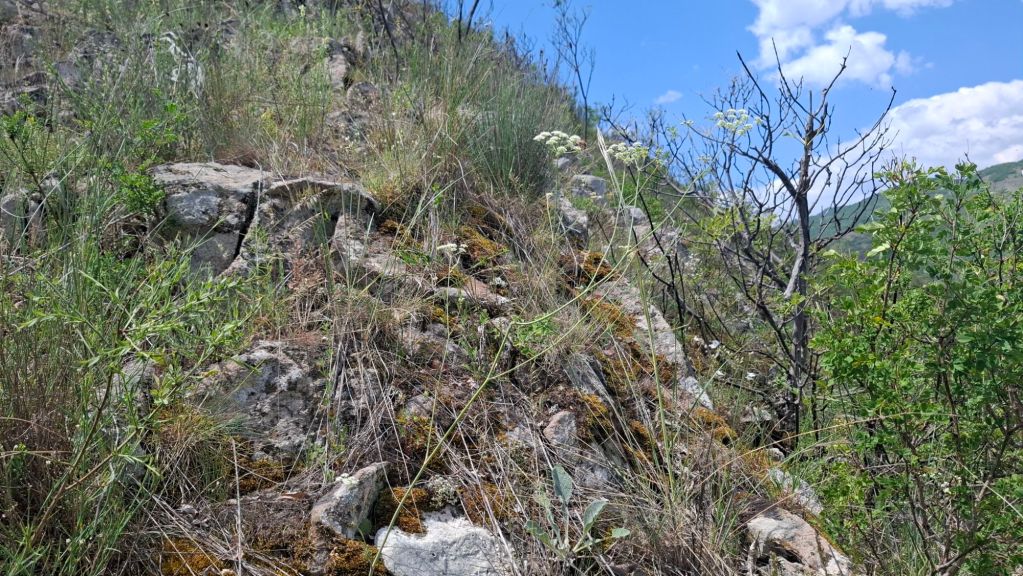
Habitat: Hill pastures, clearings of forests.
Flowering period: Summer (JUN, JUL).
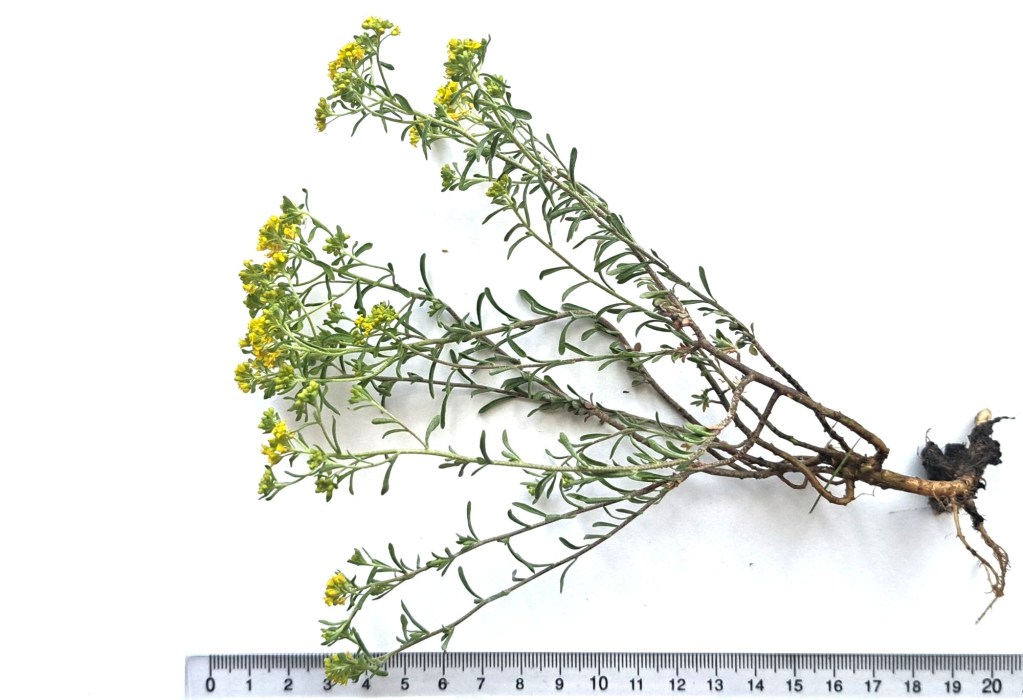
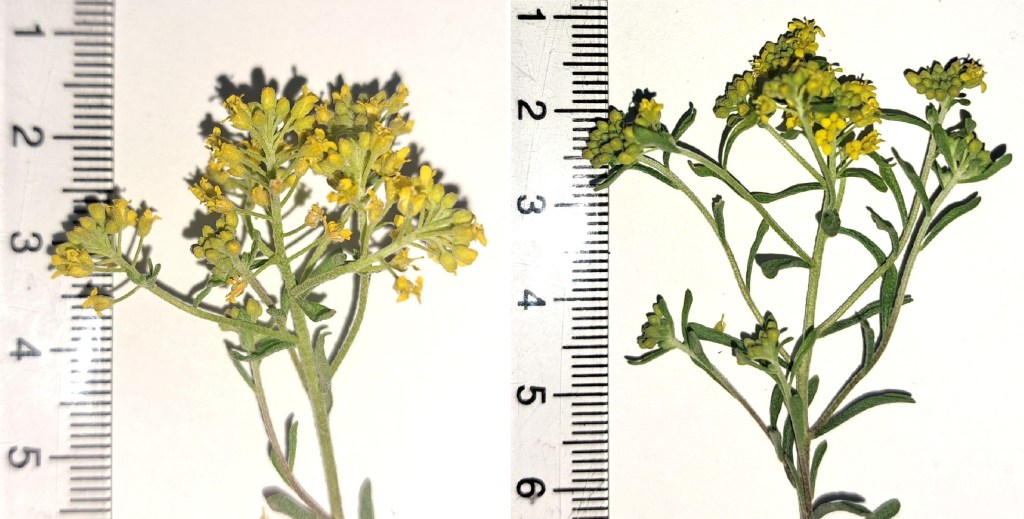
Locality: Probishtip, village of Shtalkovica. Date: 05.07.2026.
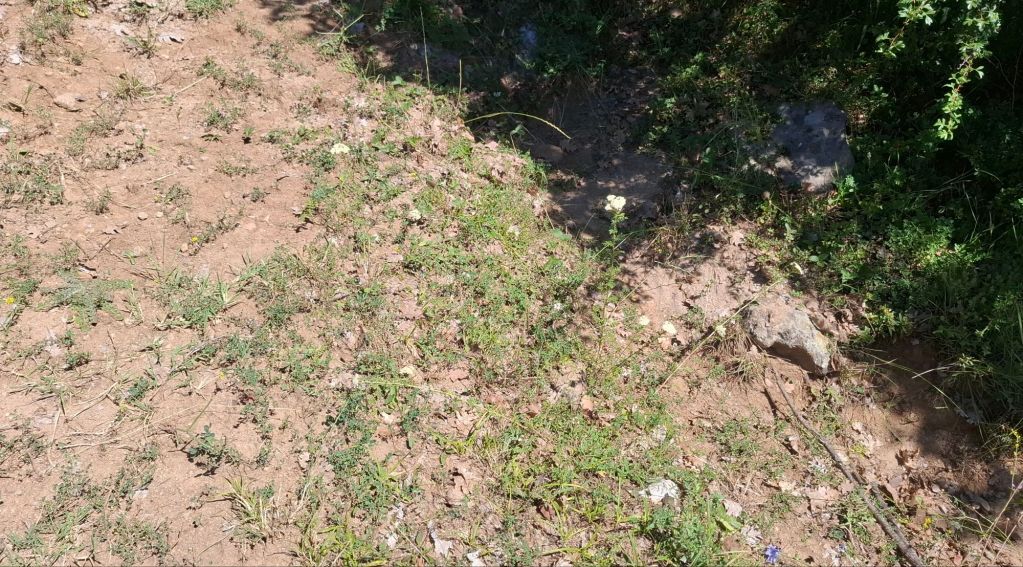
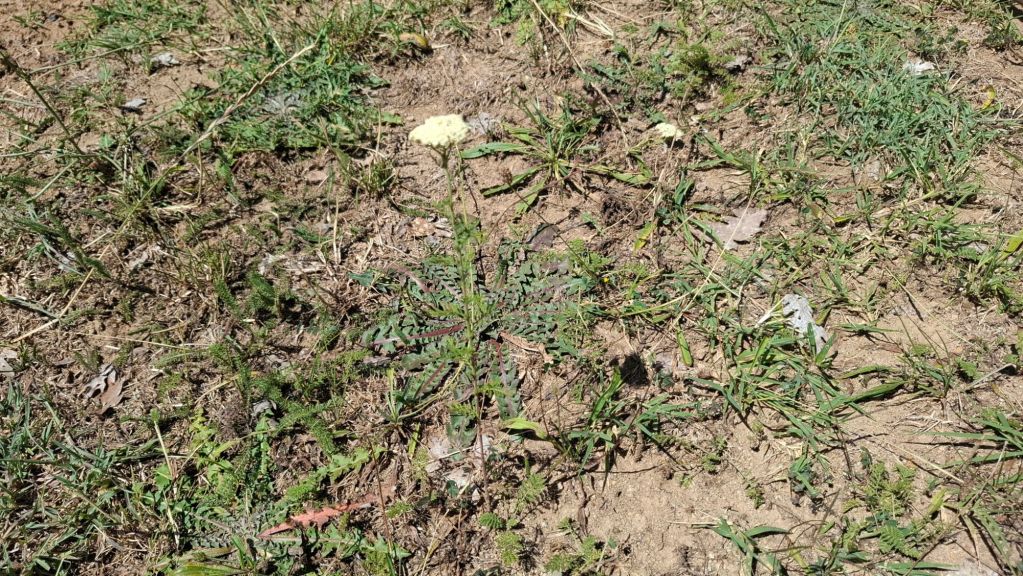
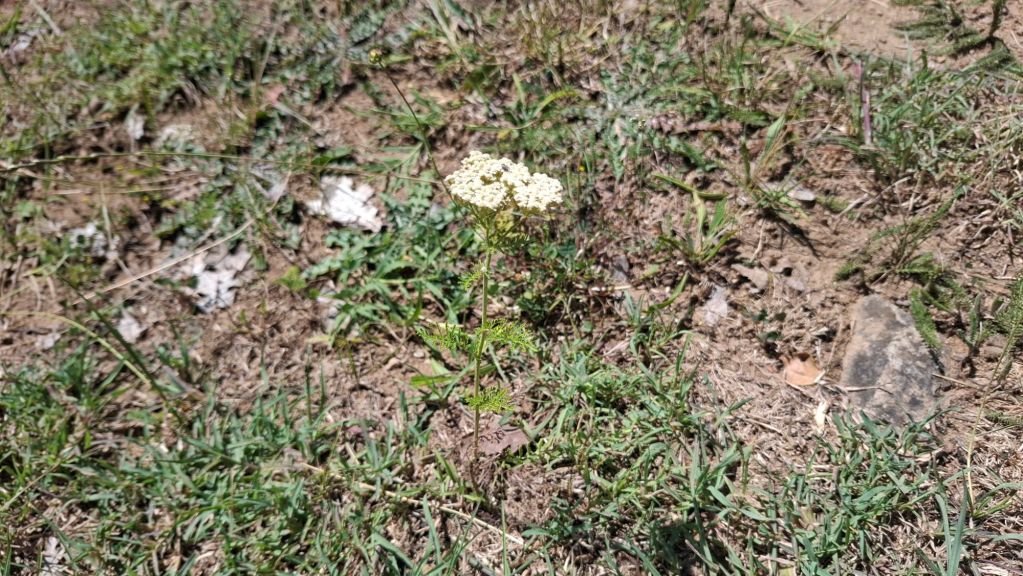
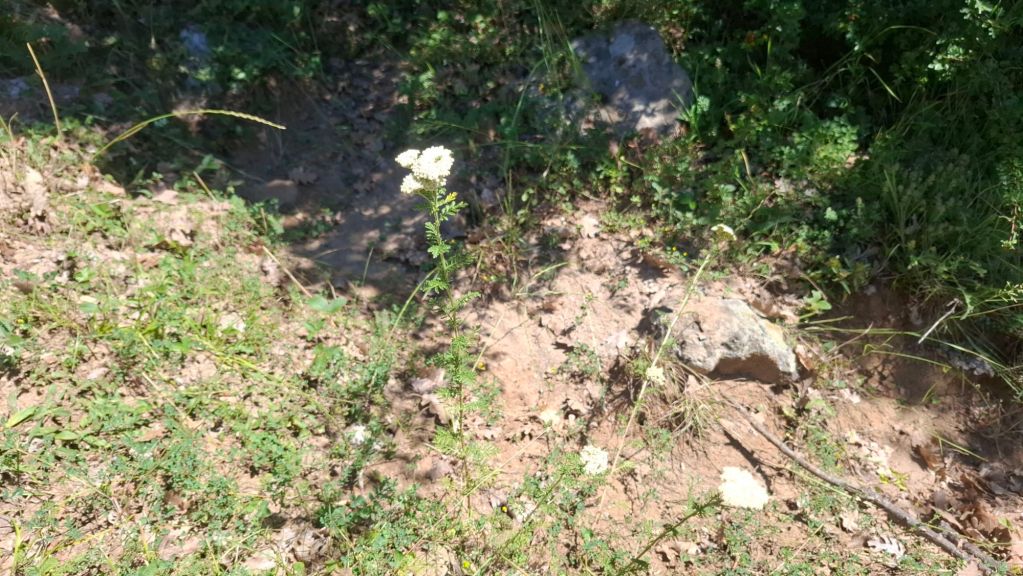
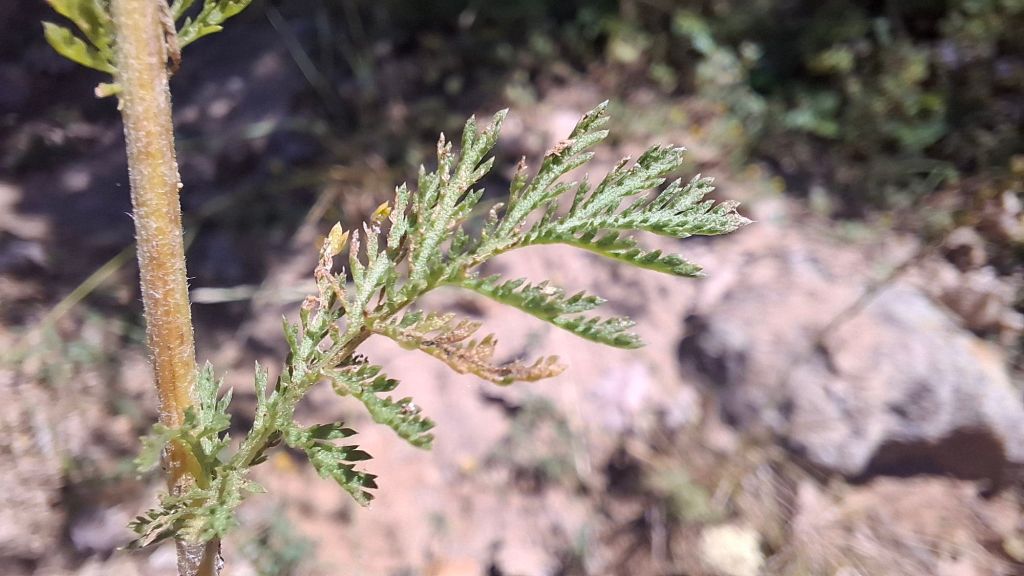
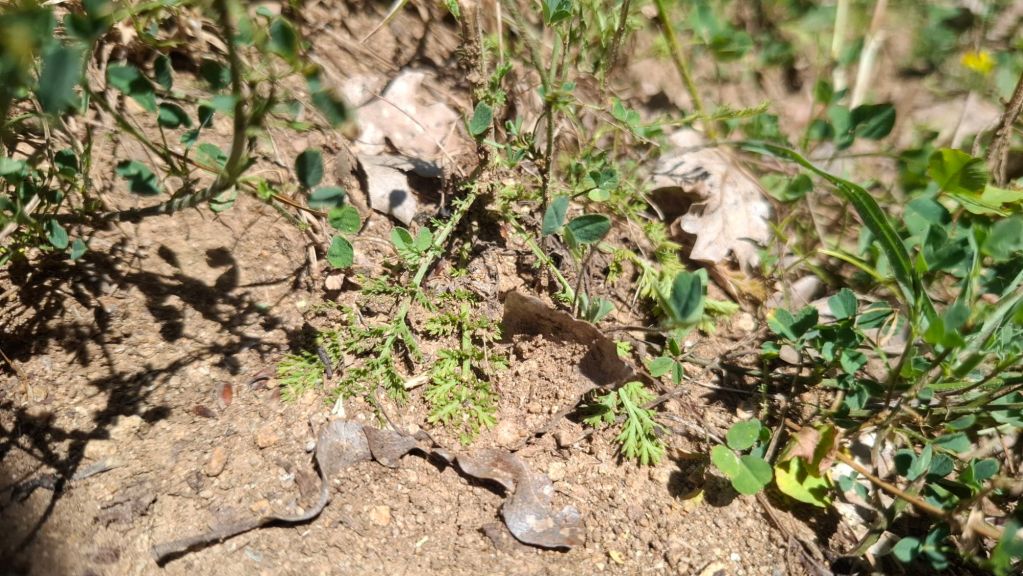
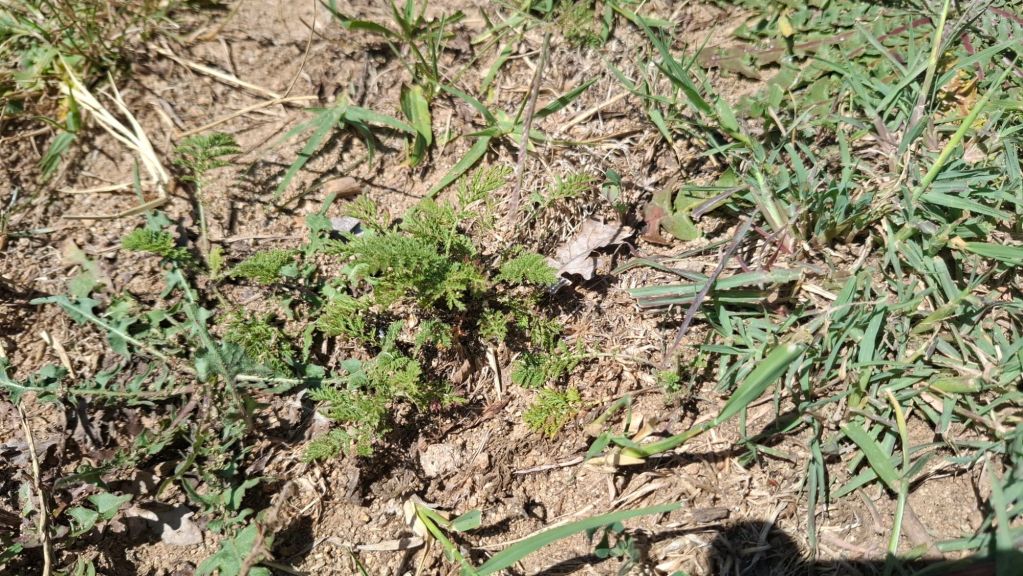
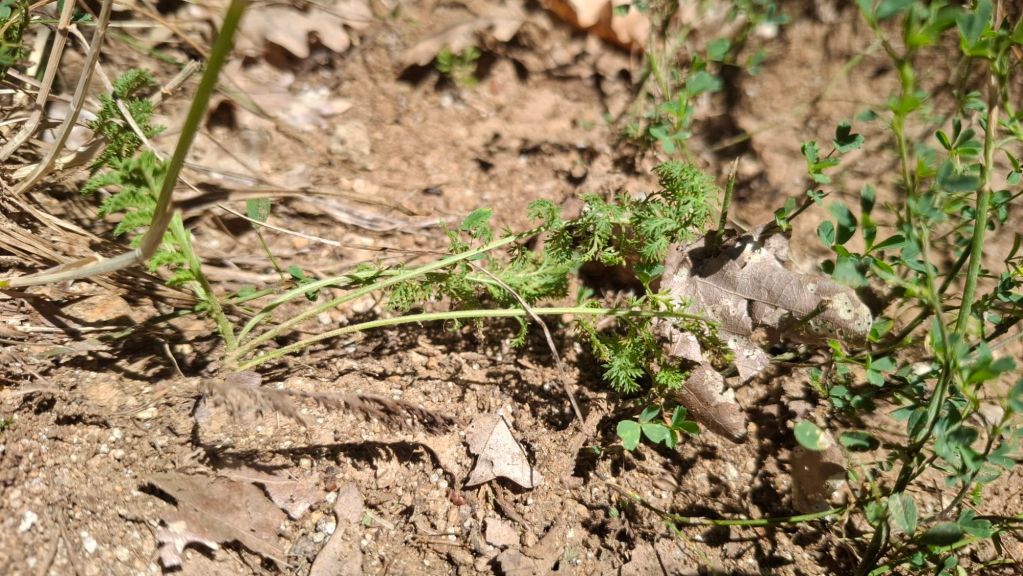
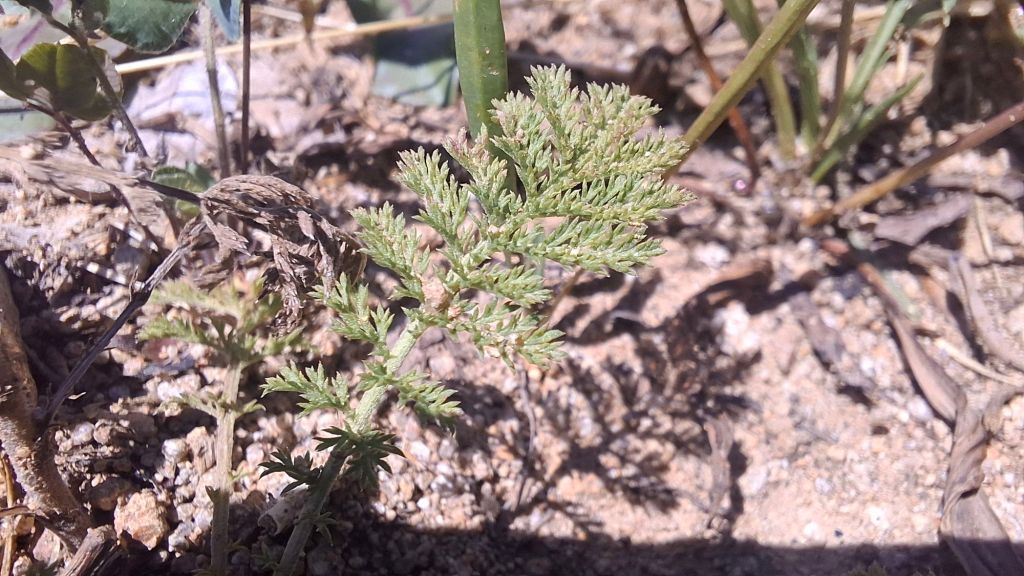
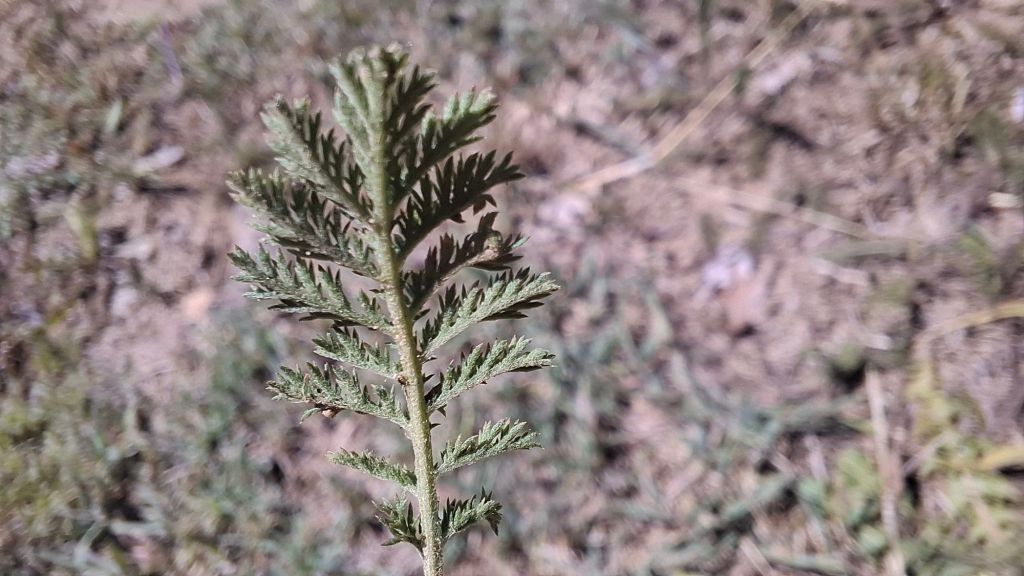
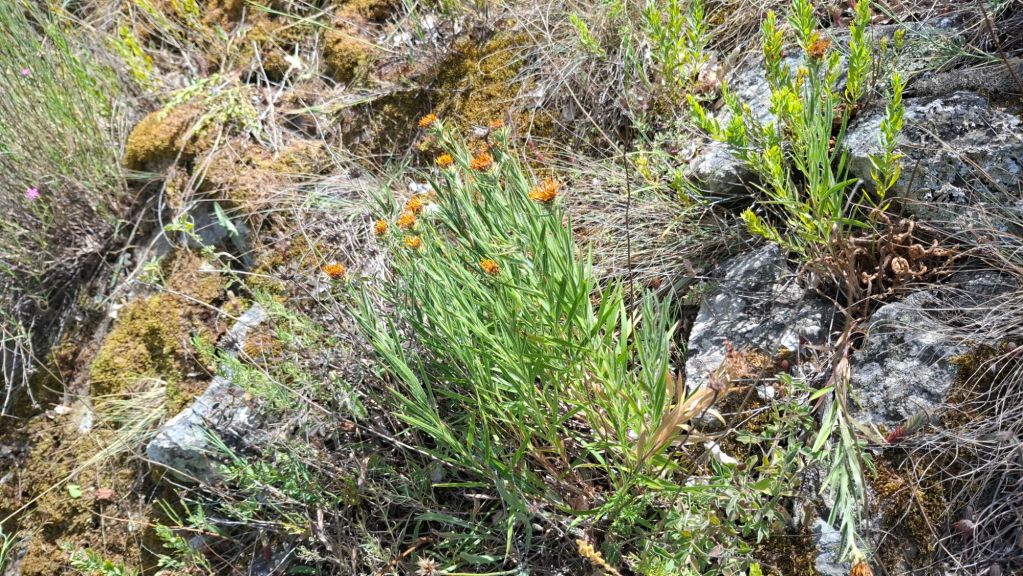
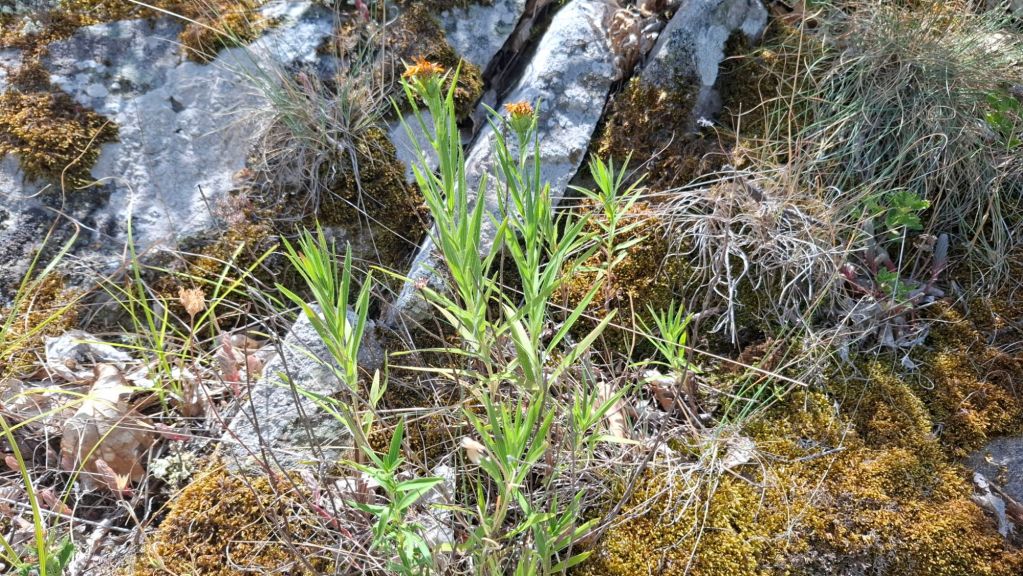
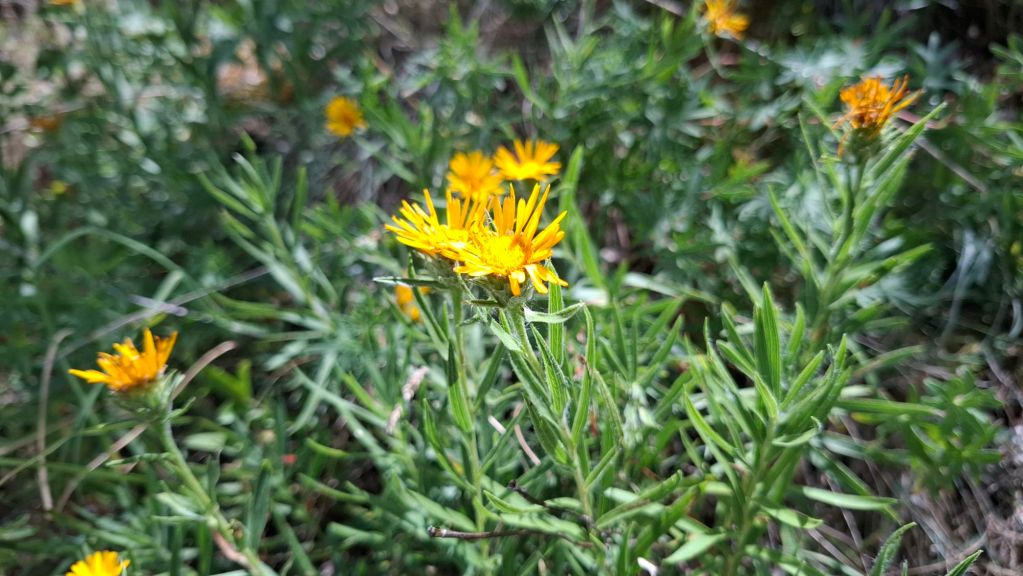
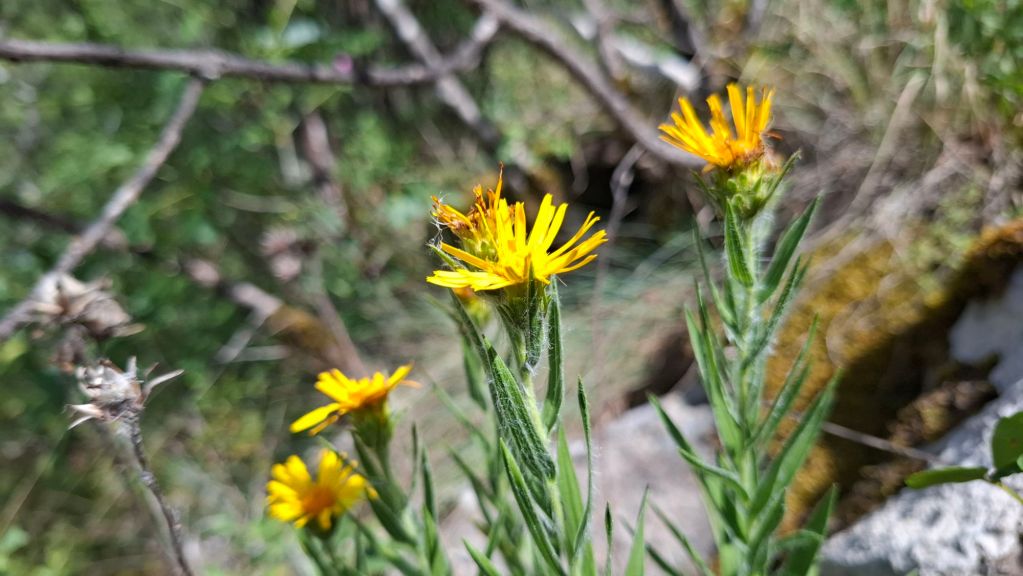
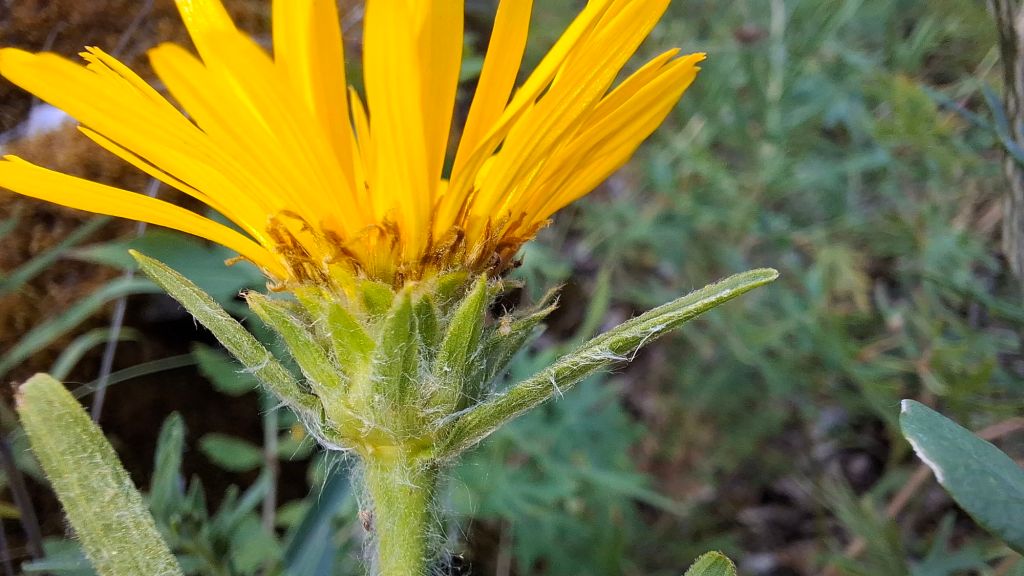
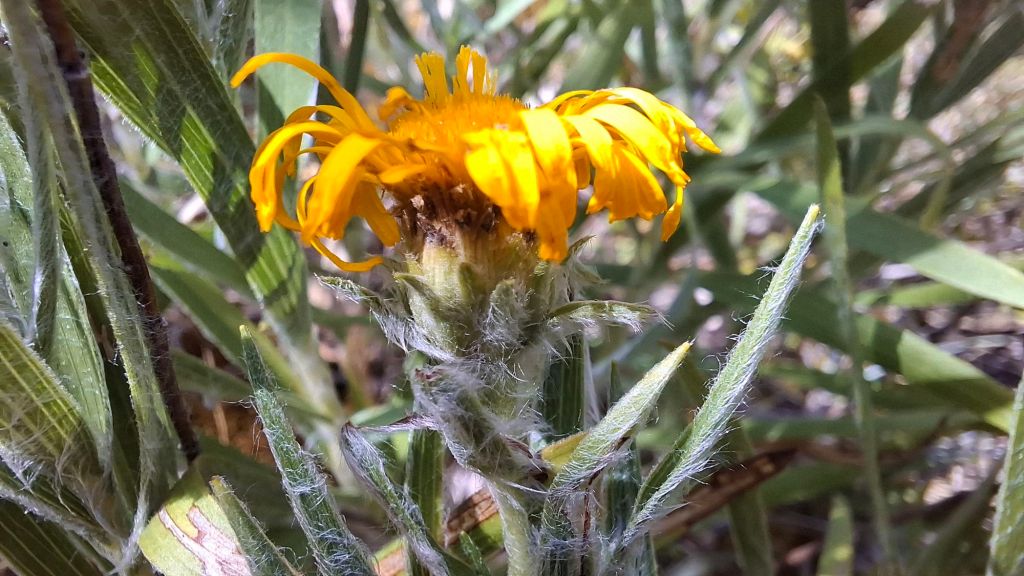
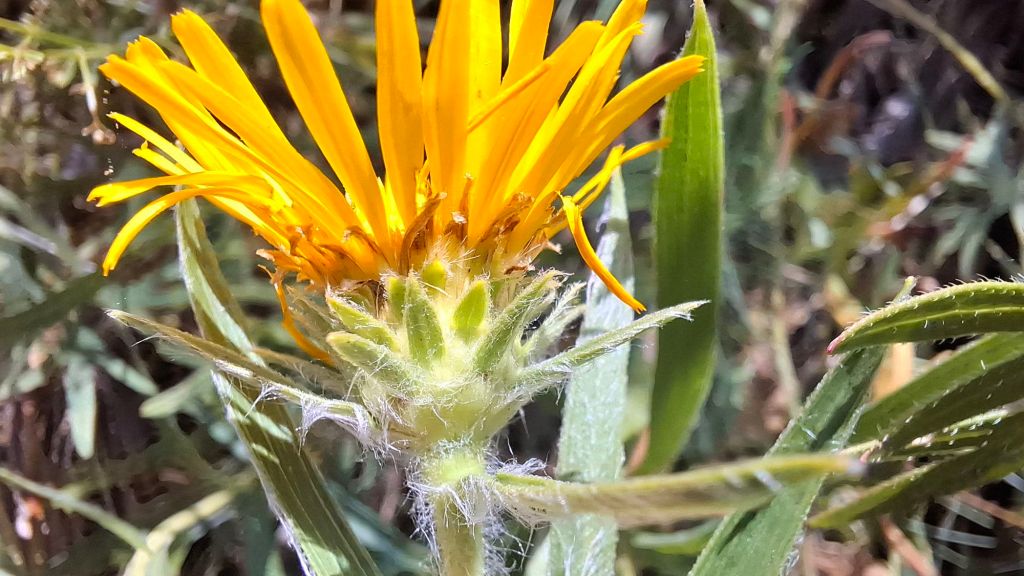
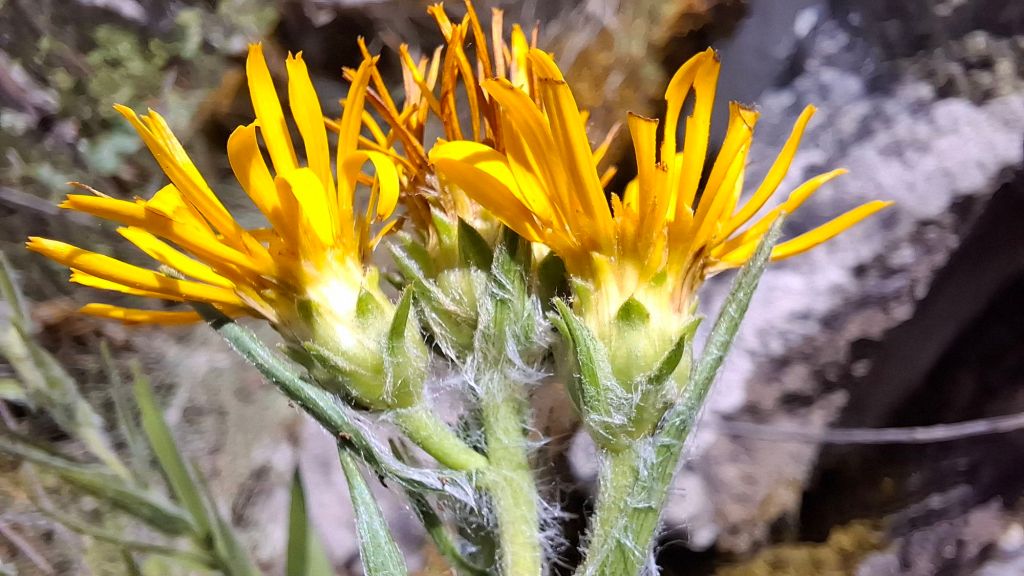
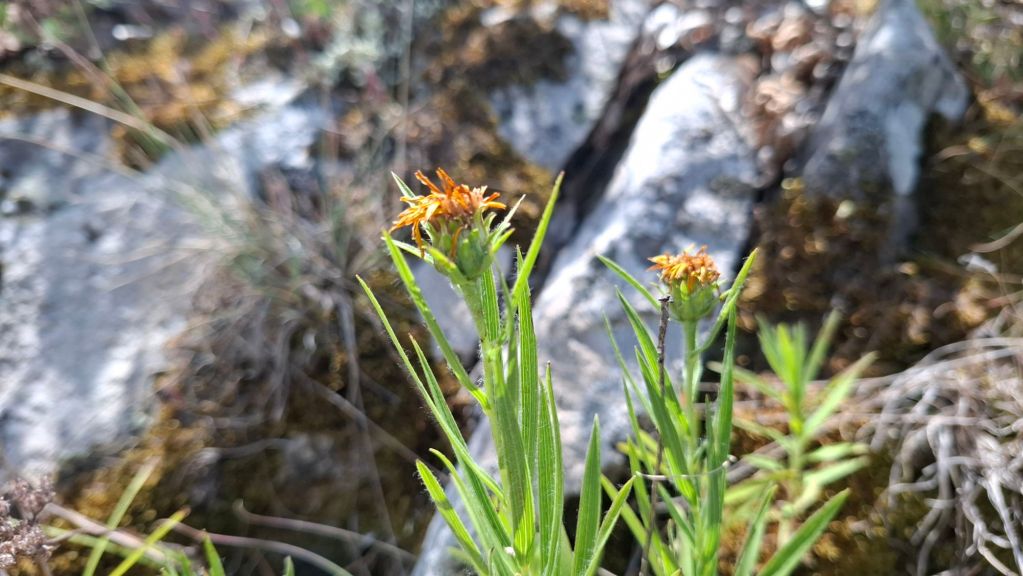
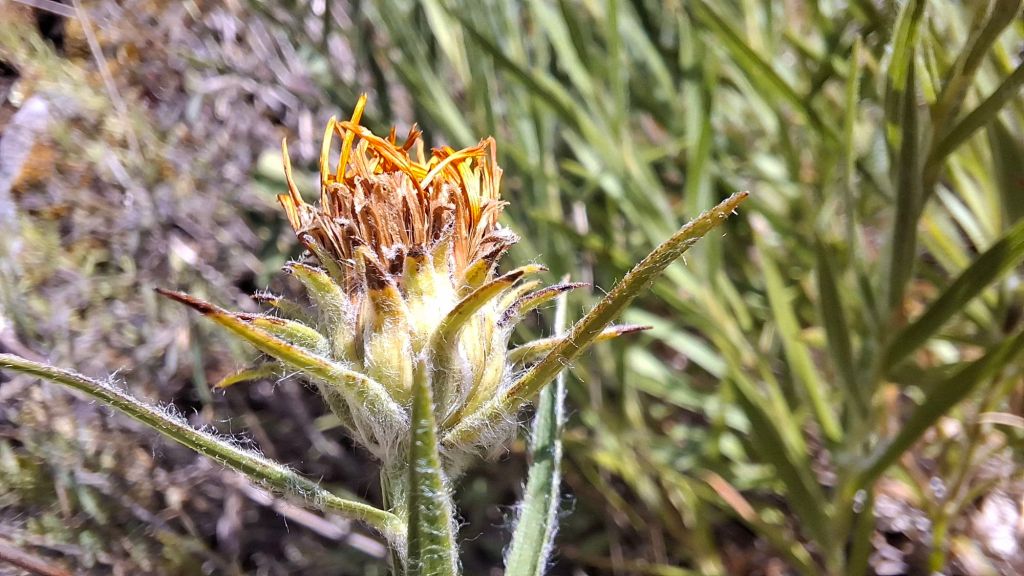
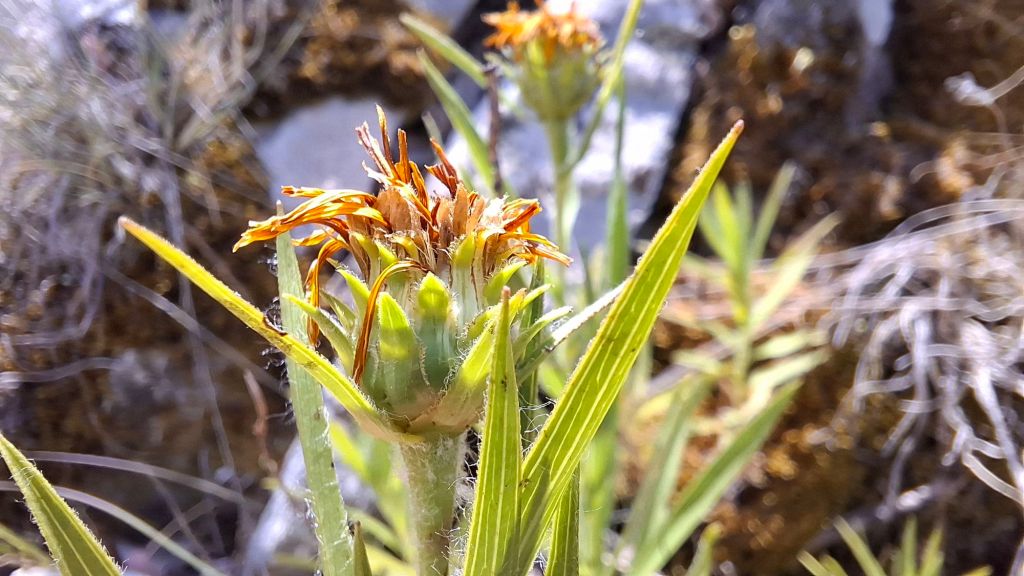
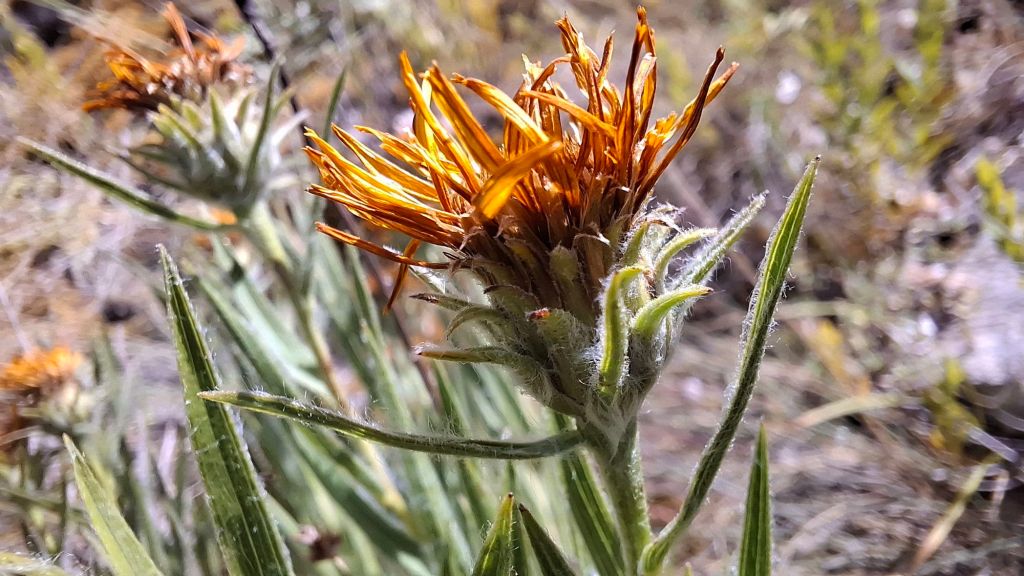
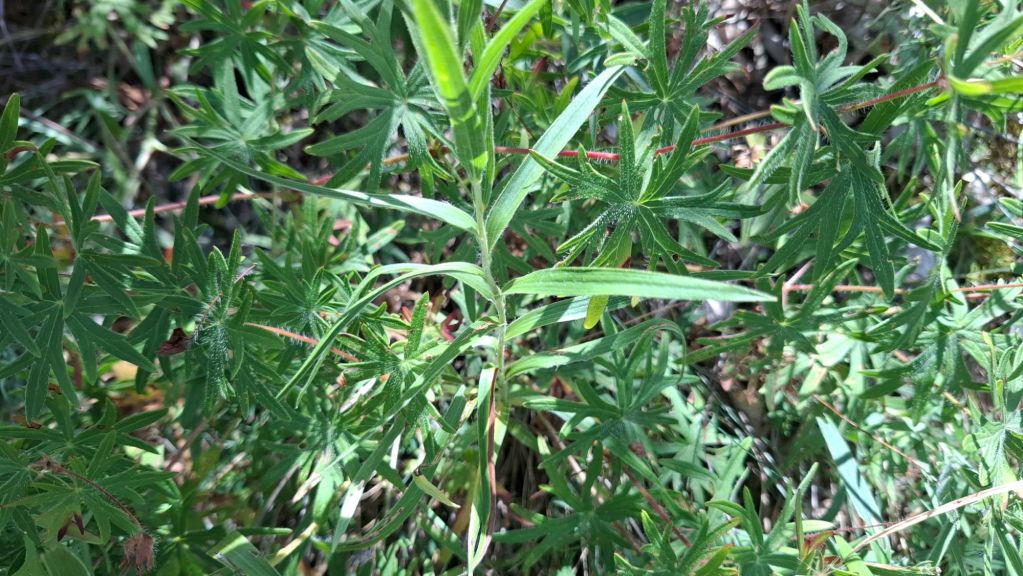
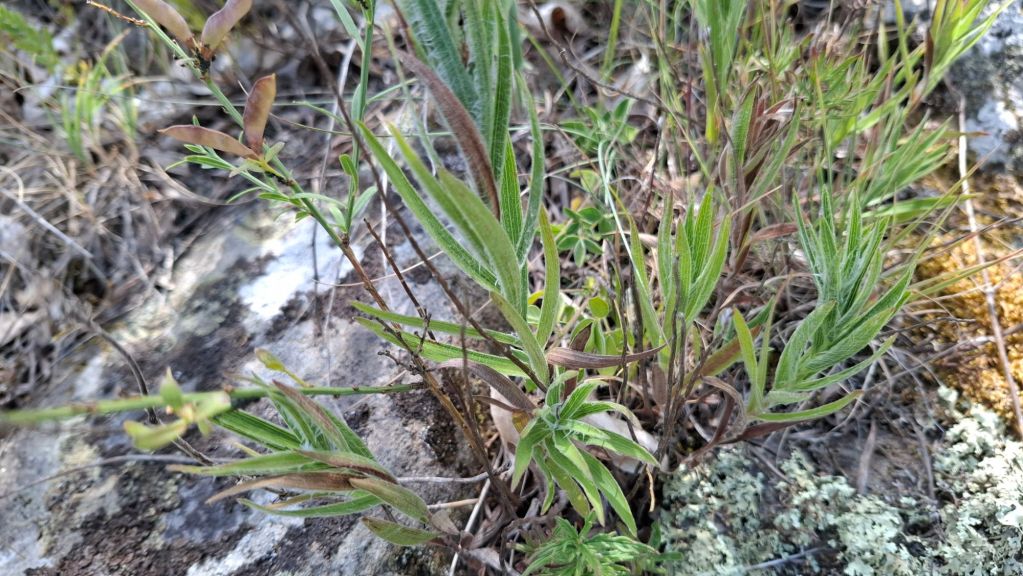
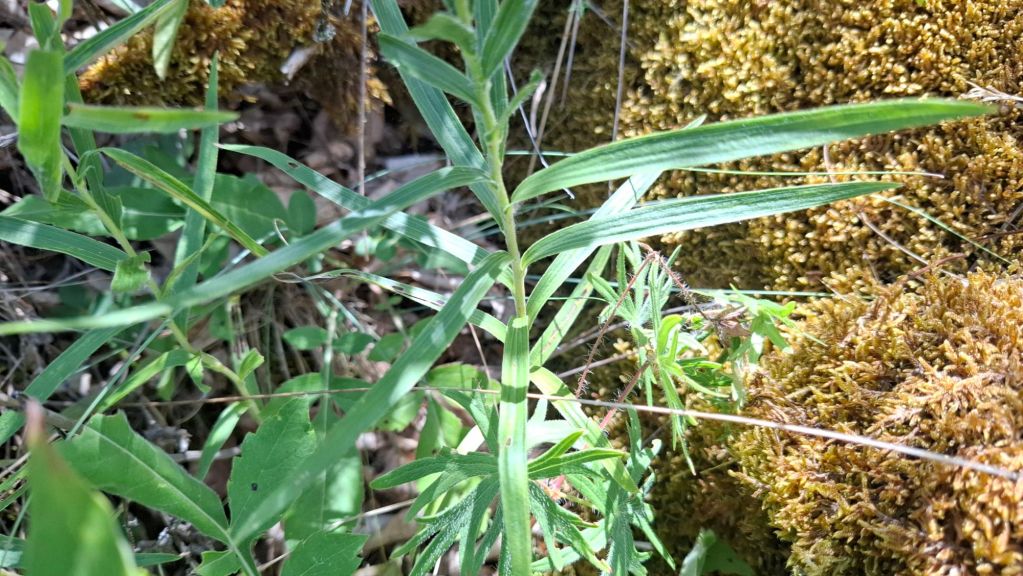
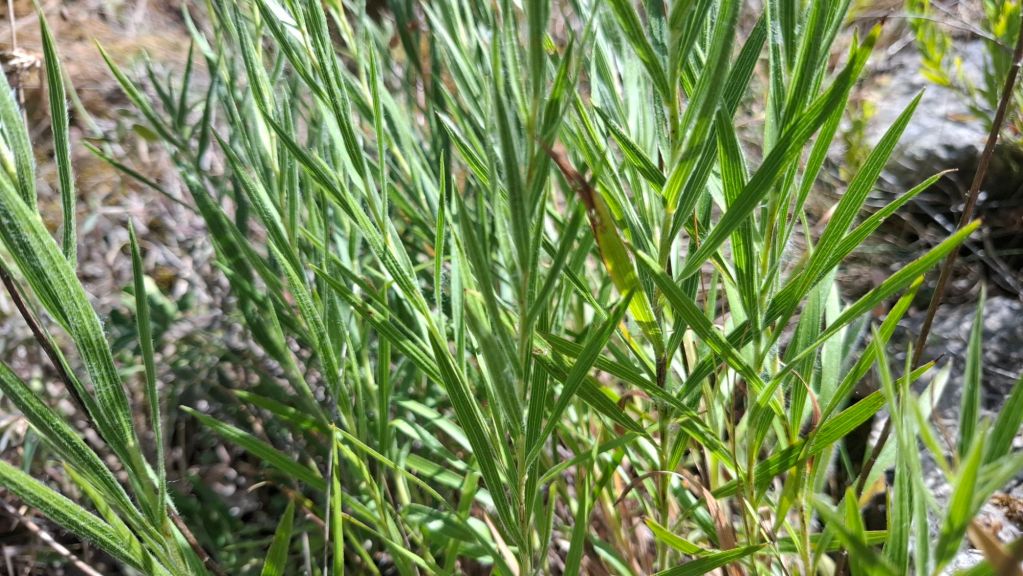
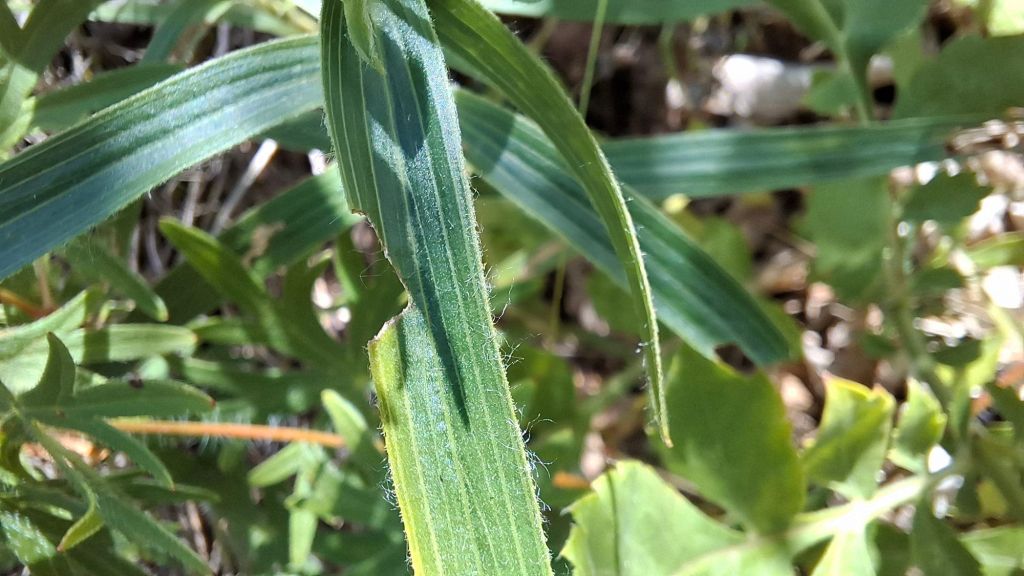
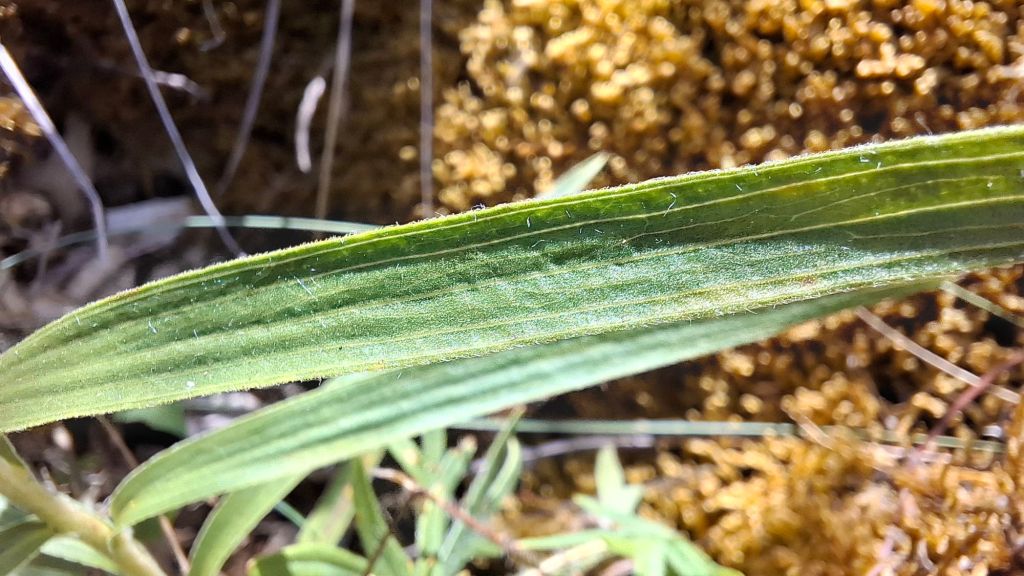
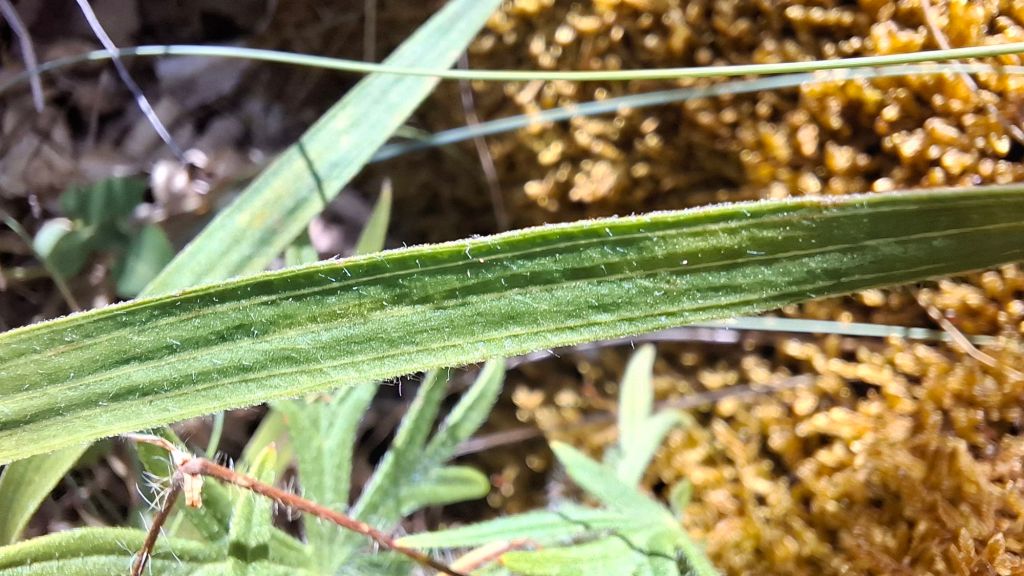
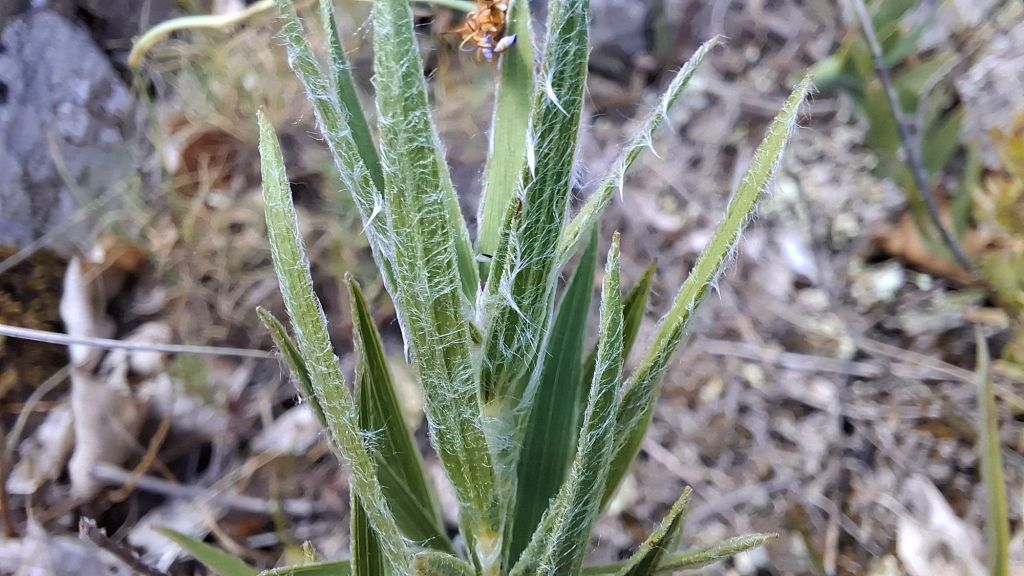
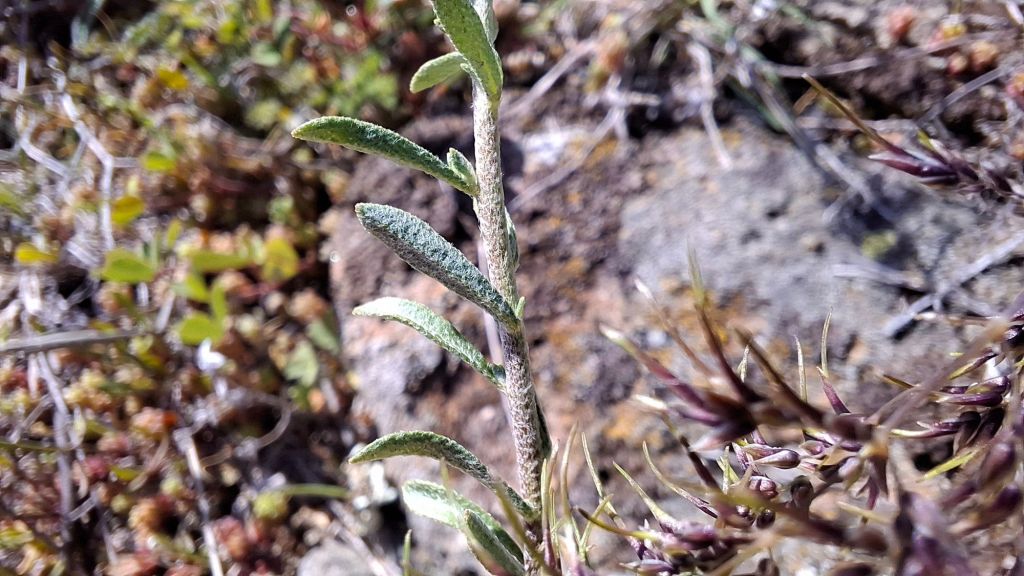
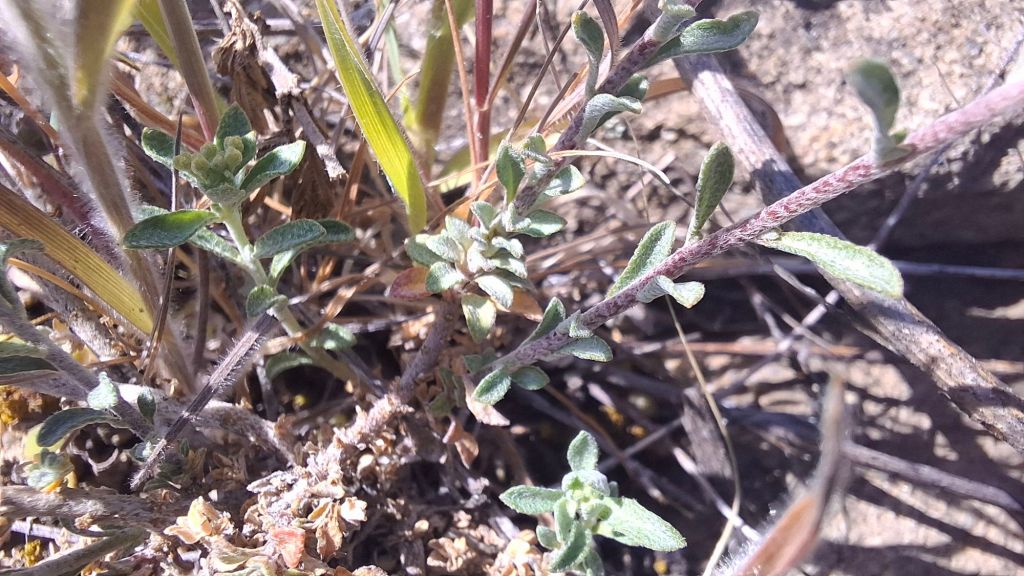
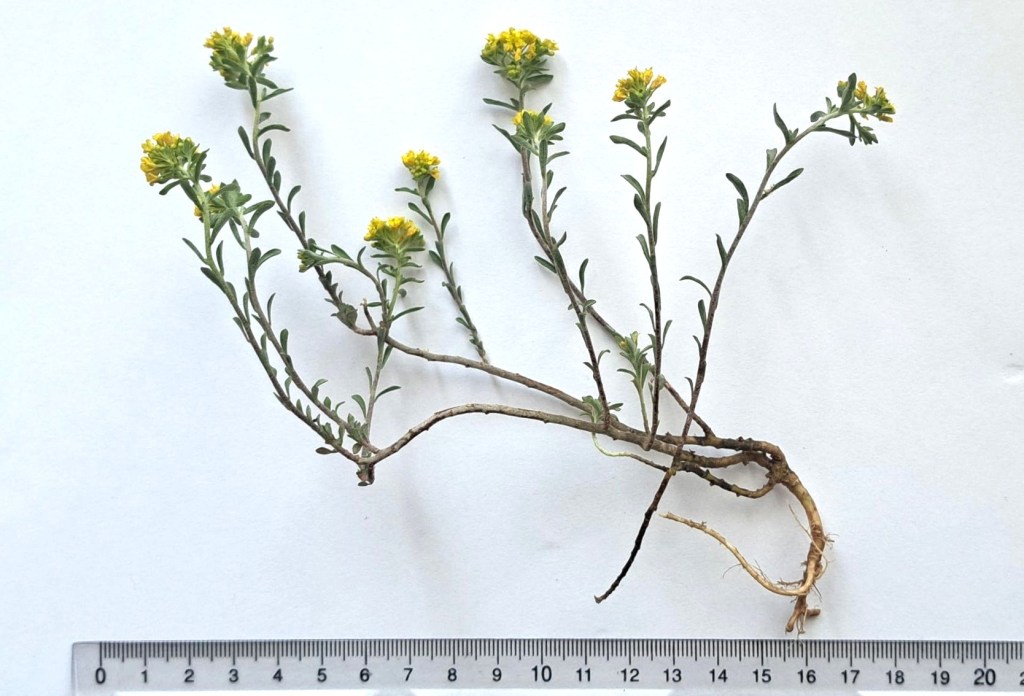
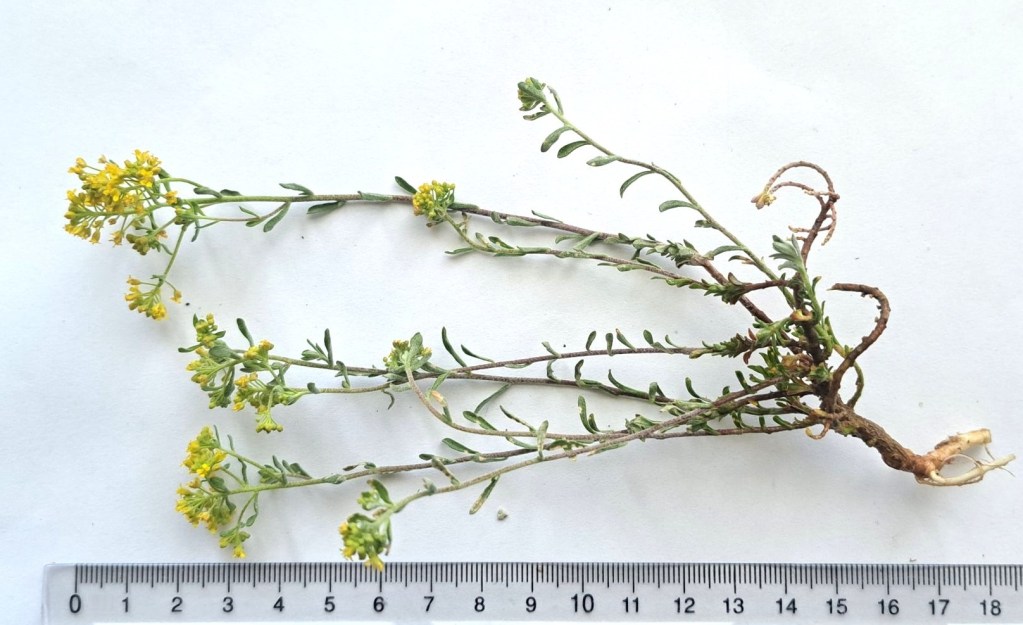
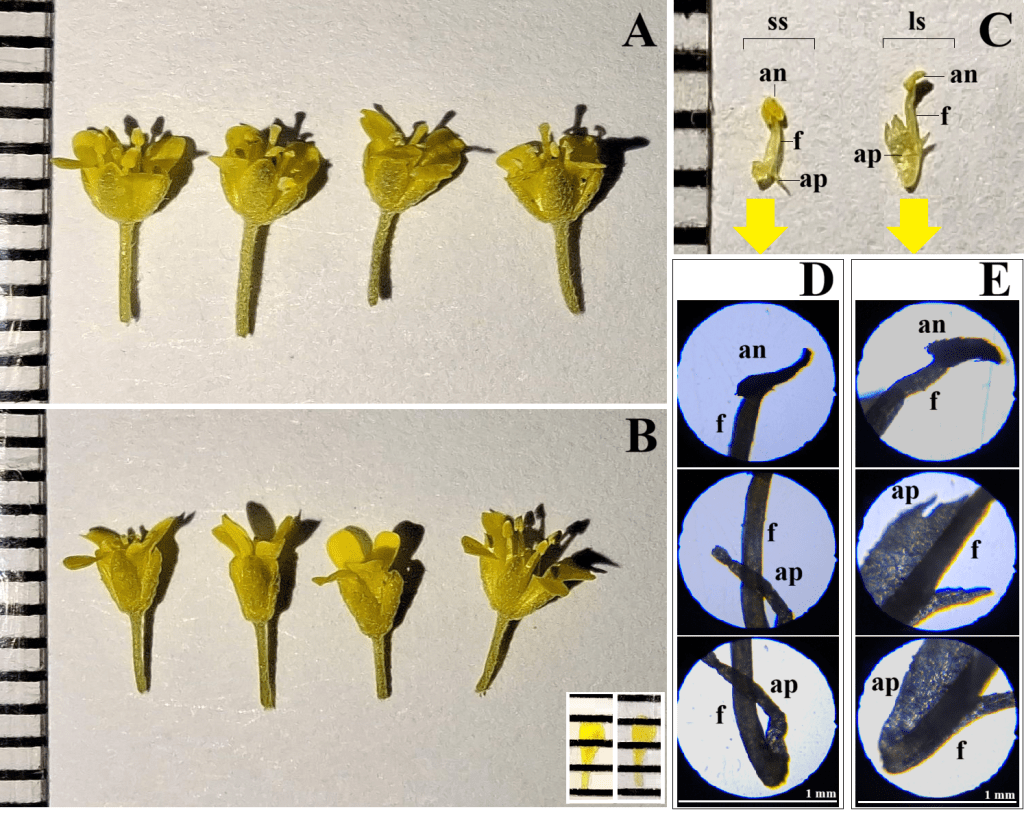
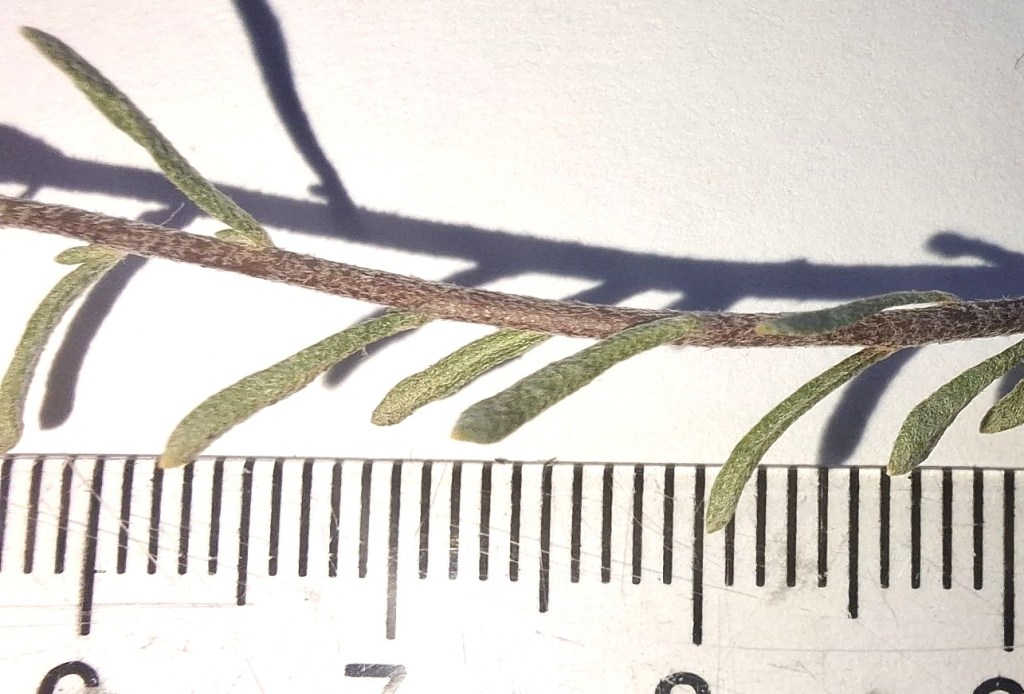
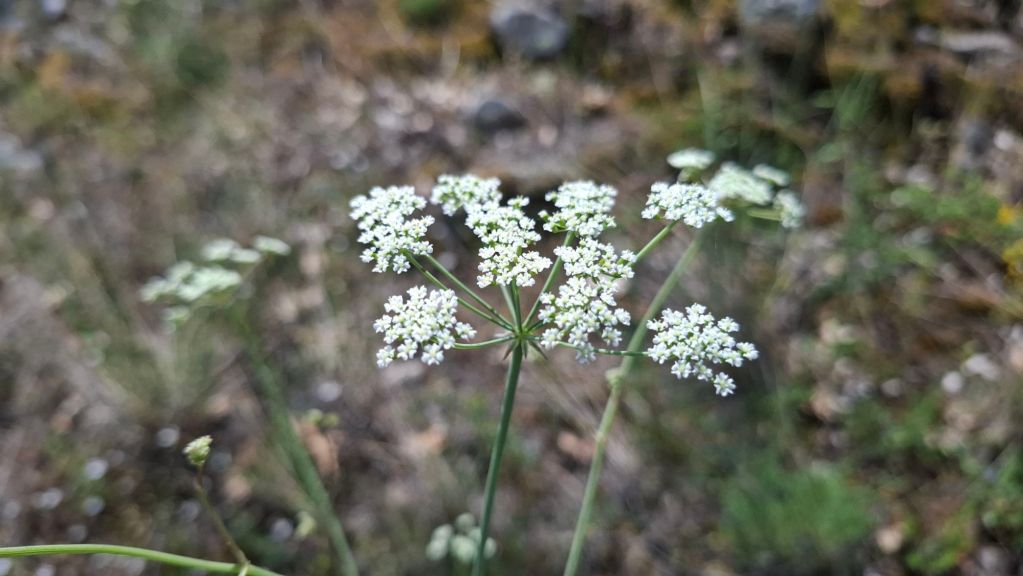
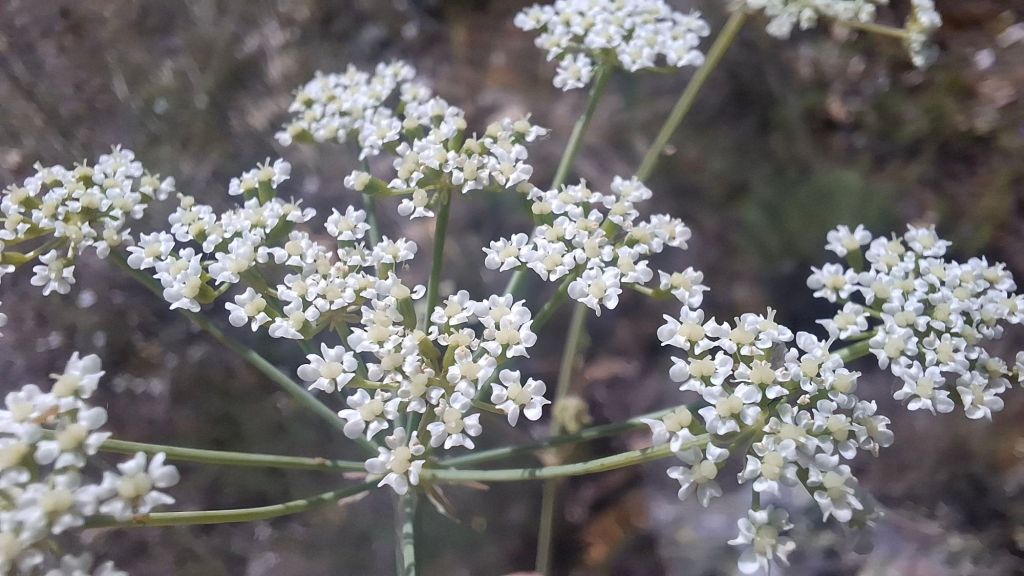
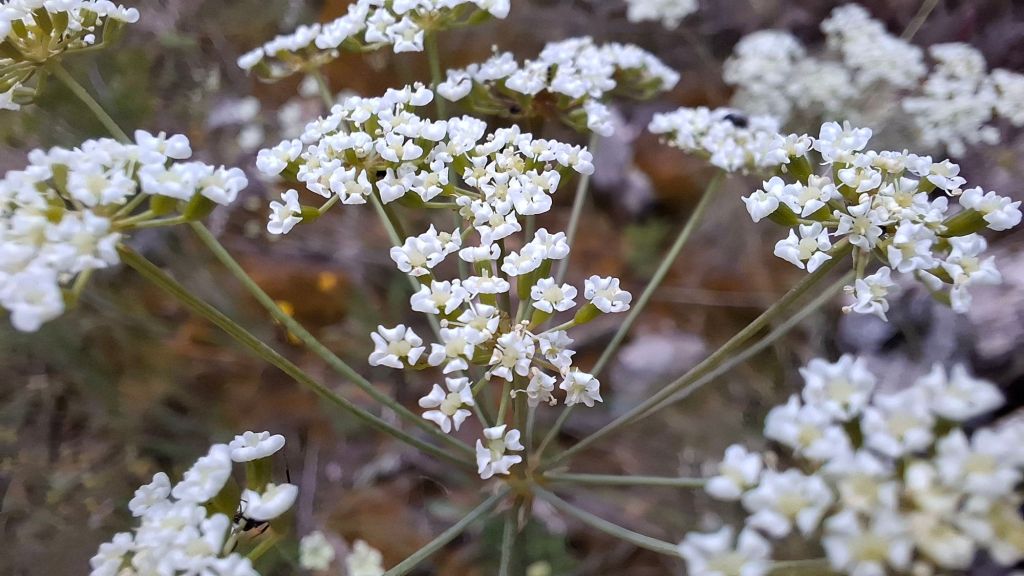
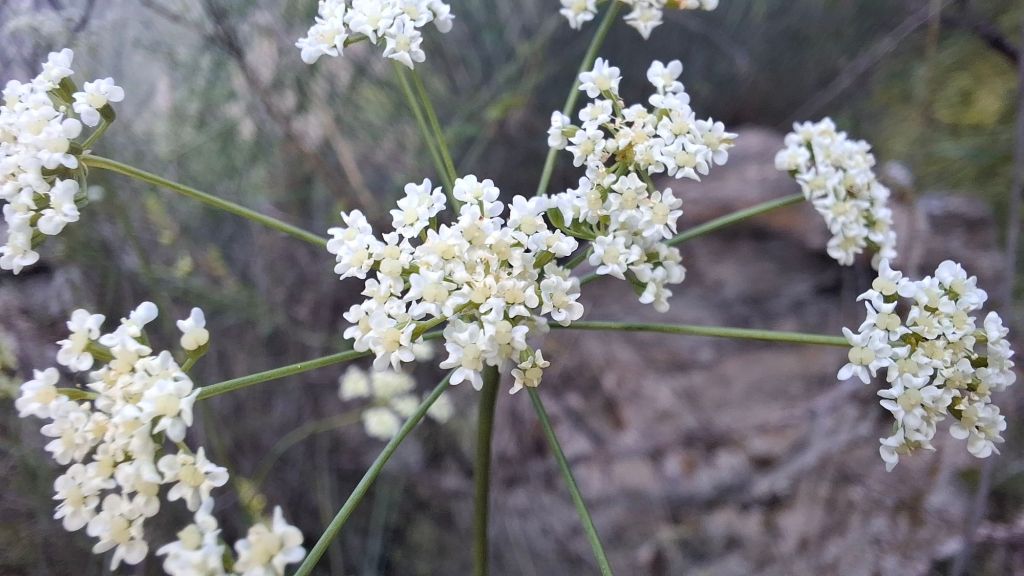
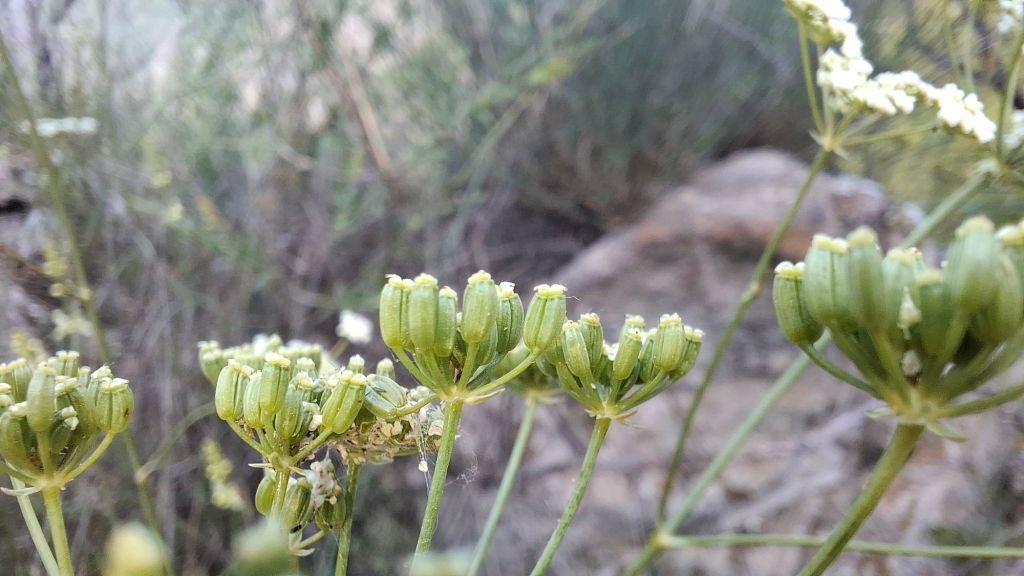
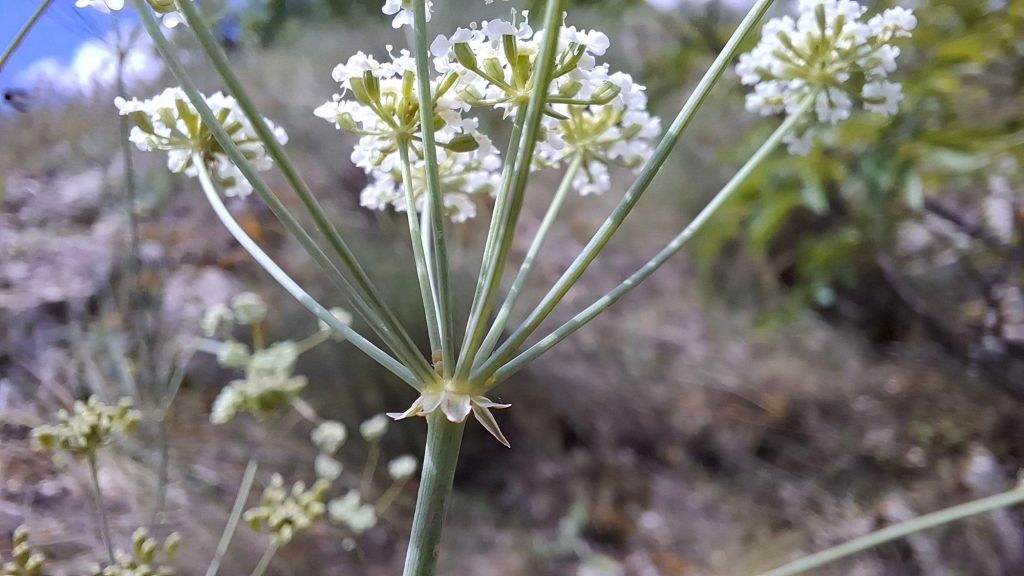
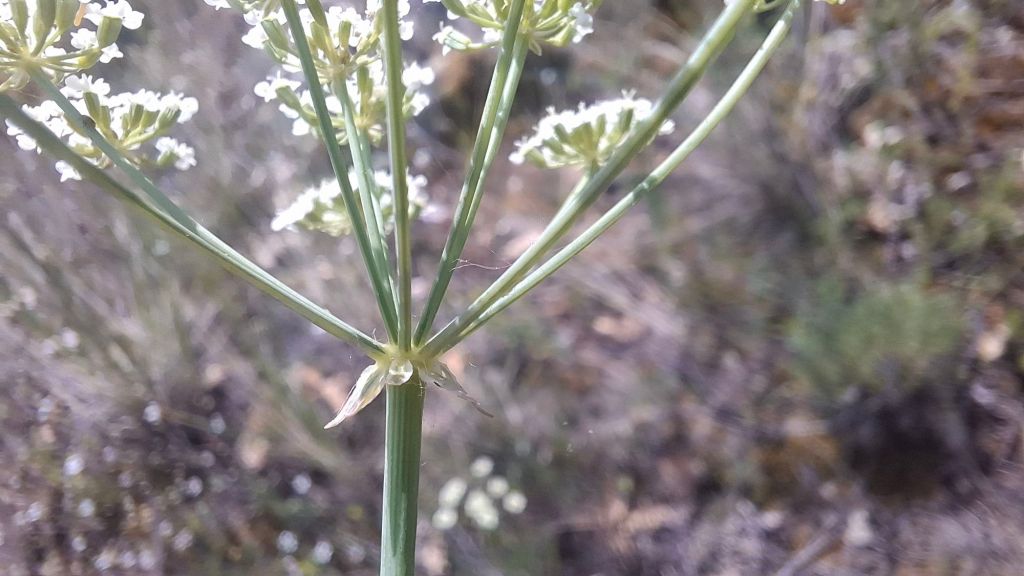
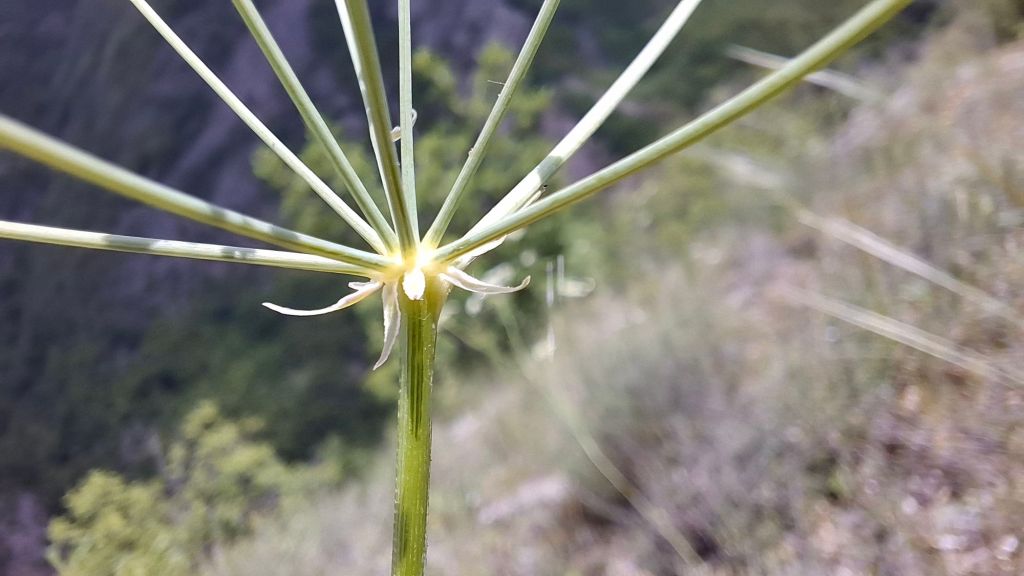
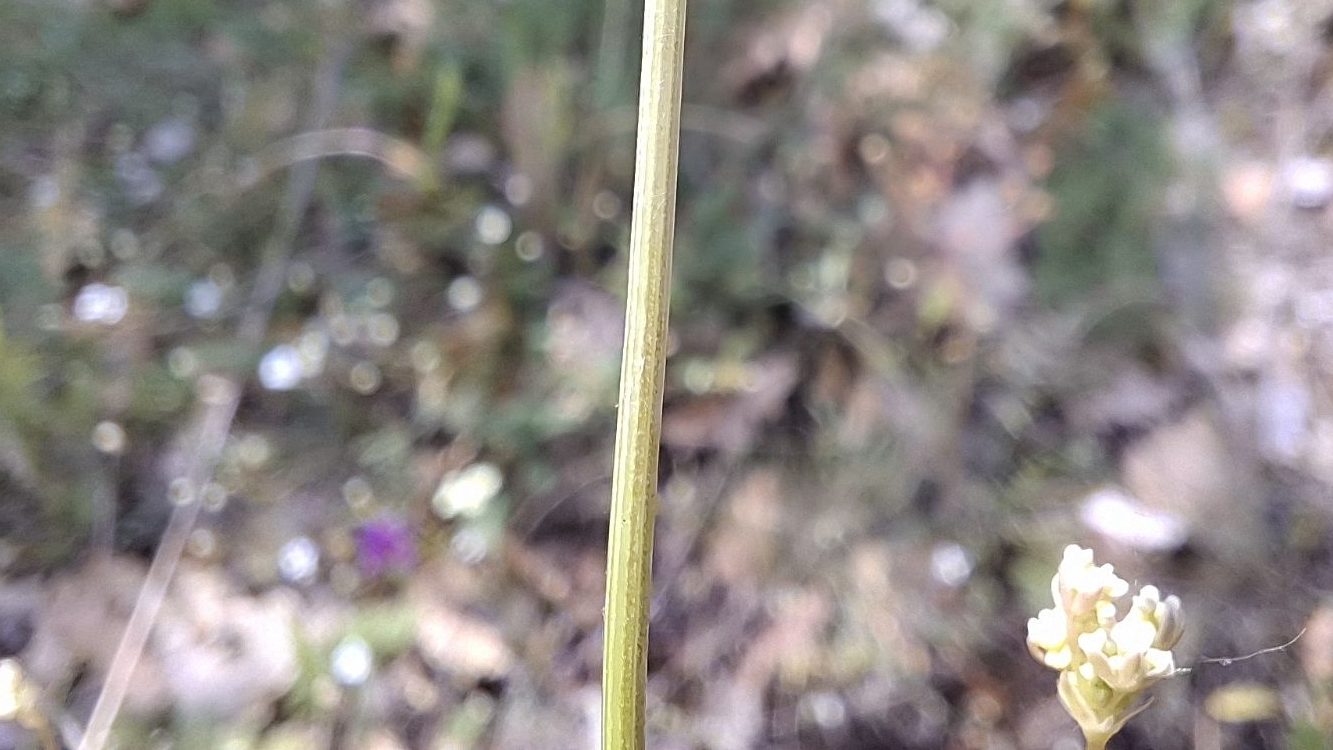
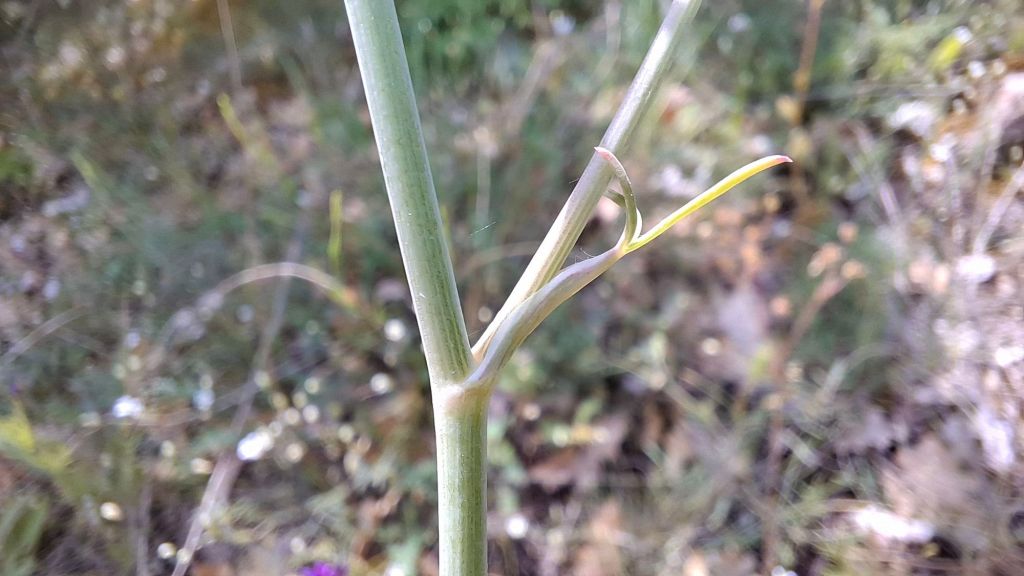
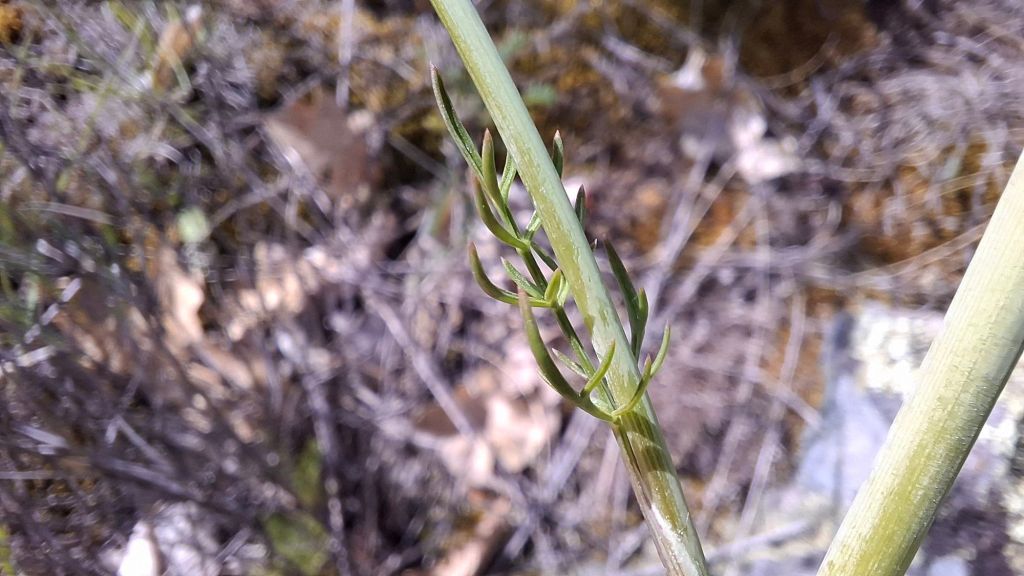
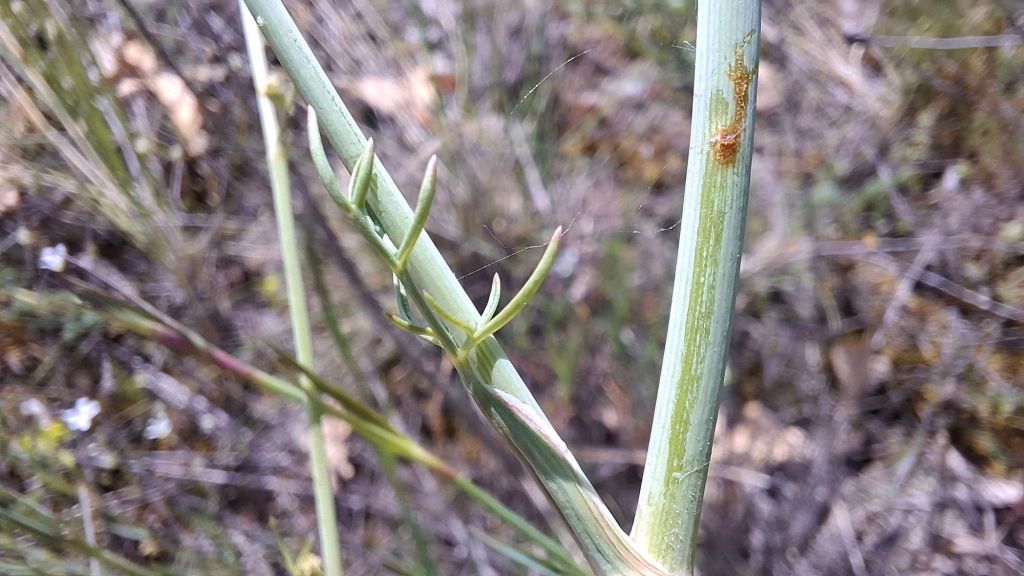
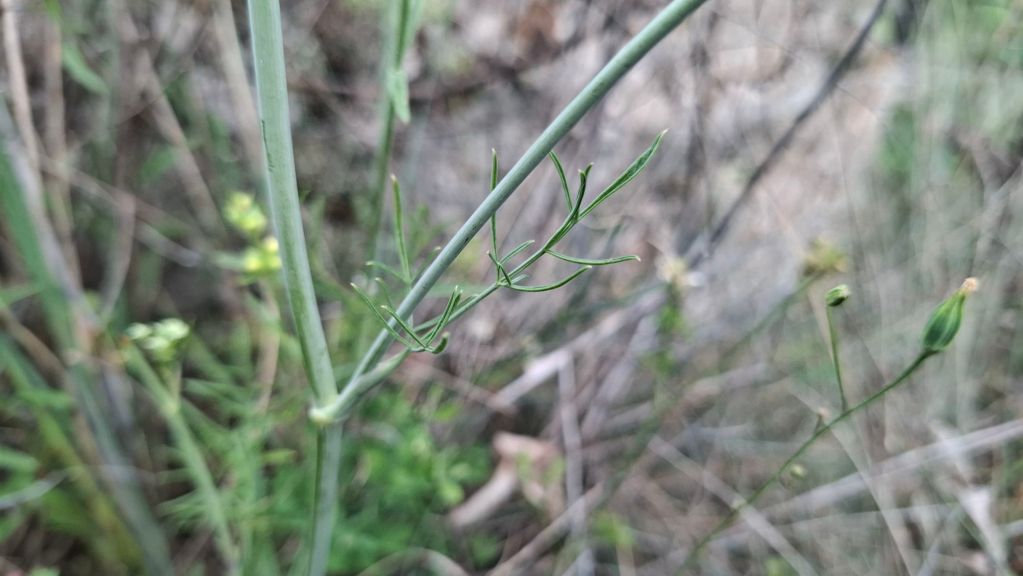
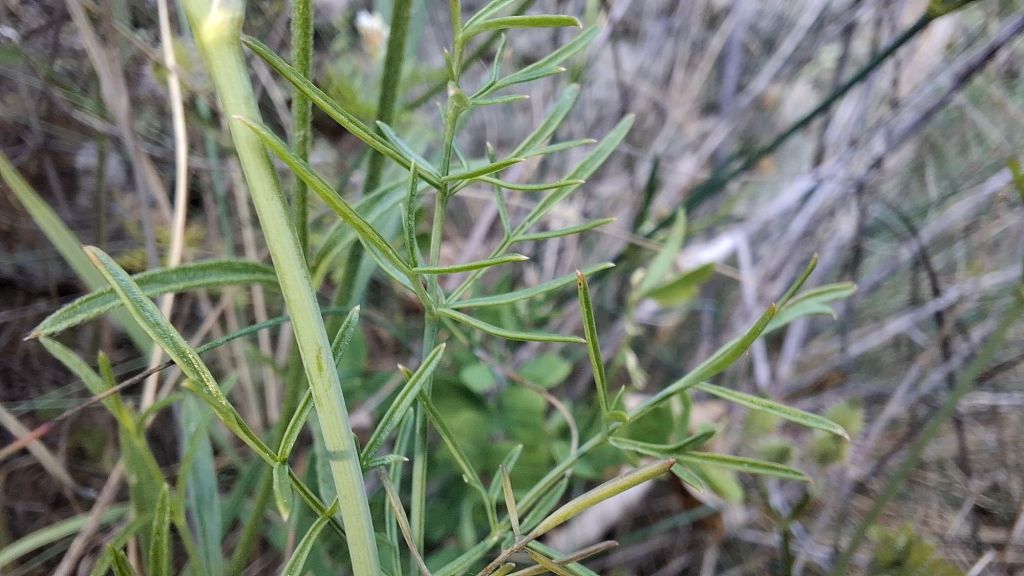
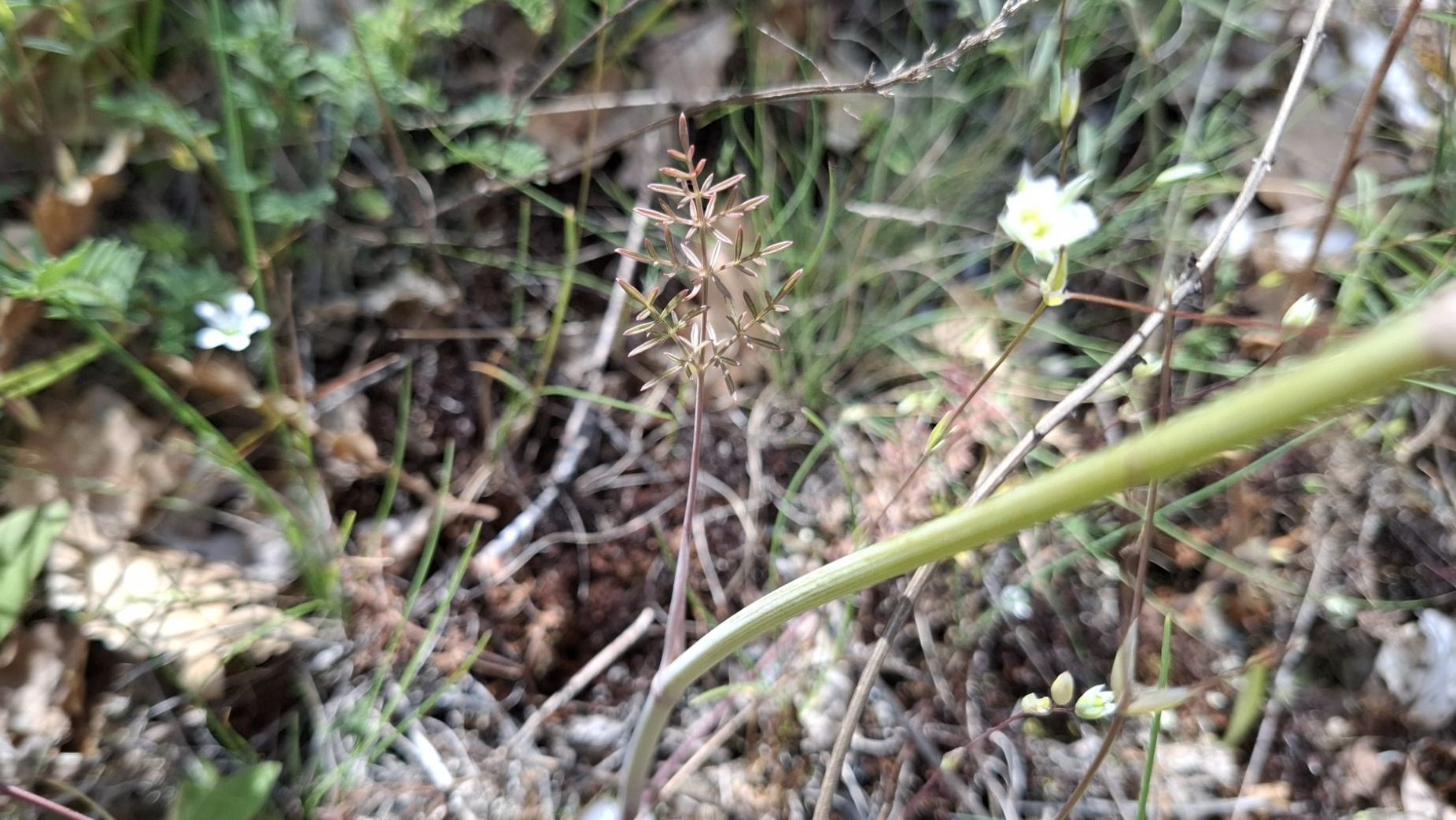
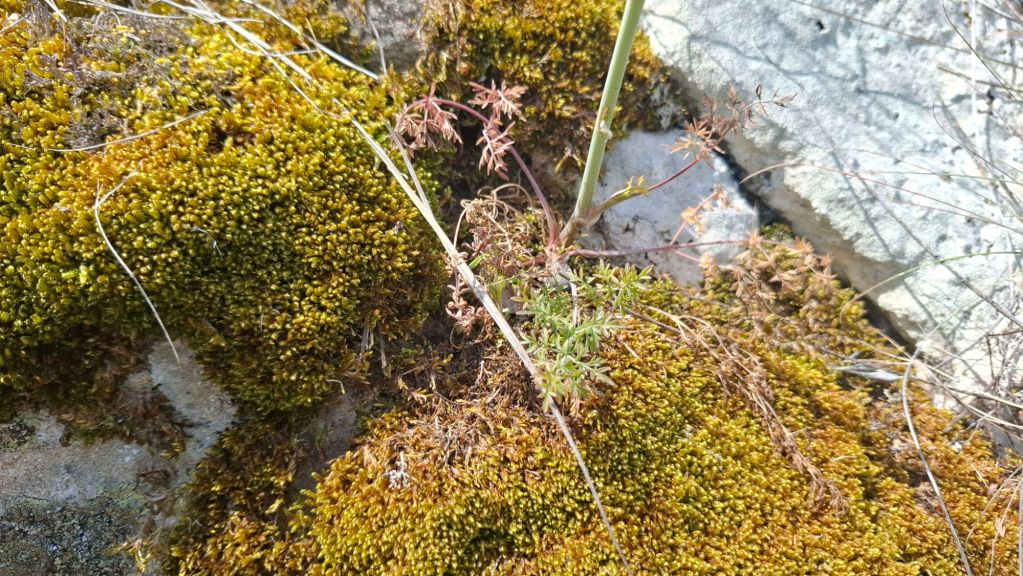
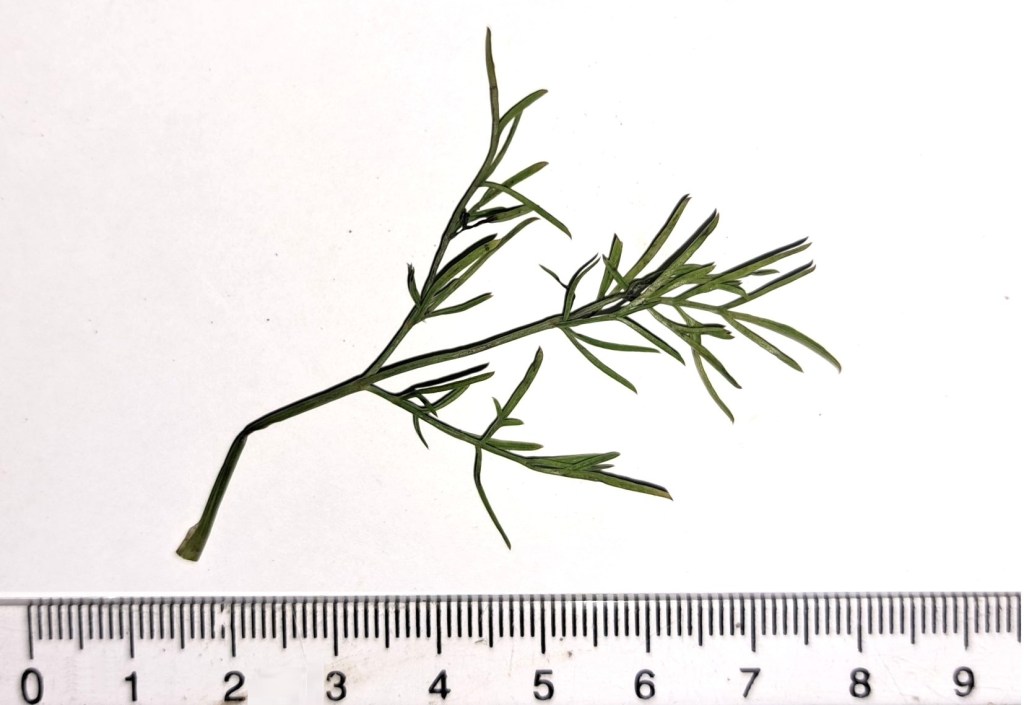
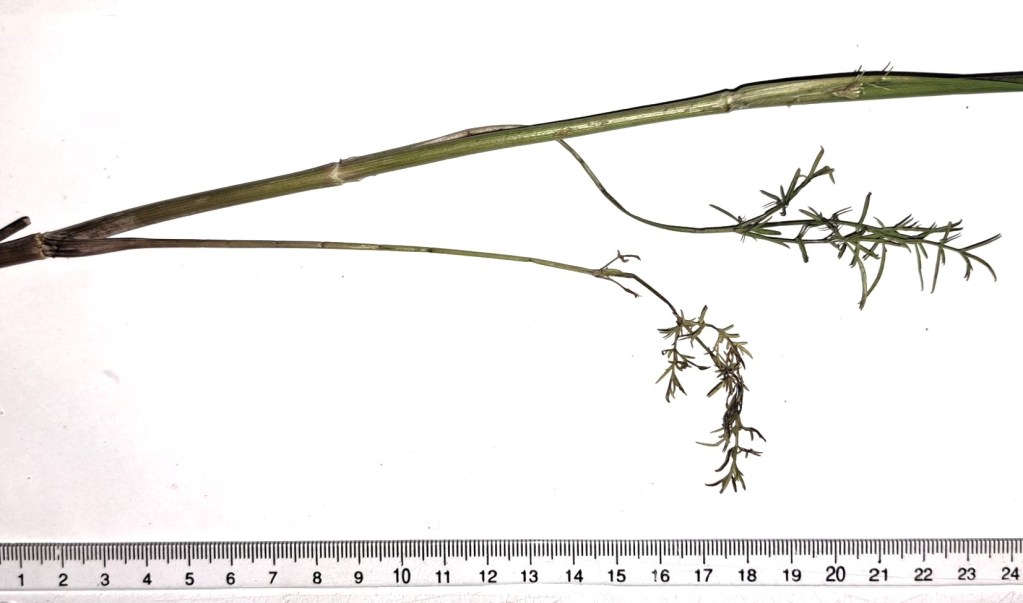
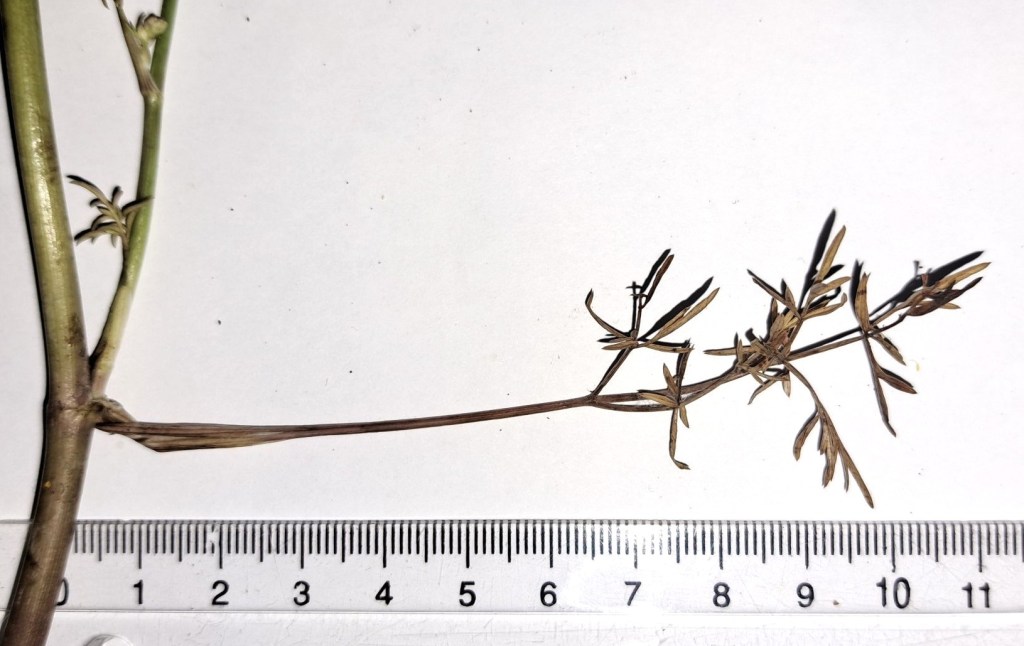
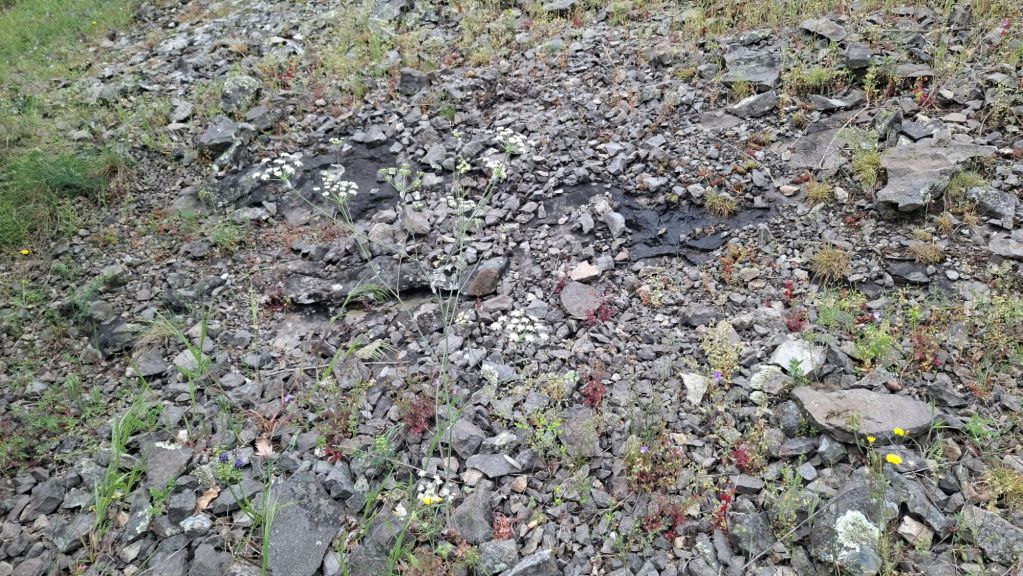
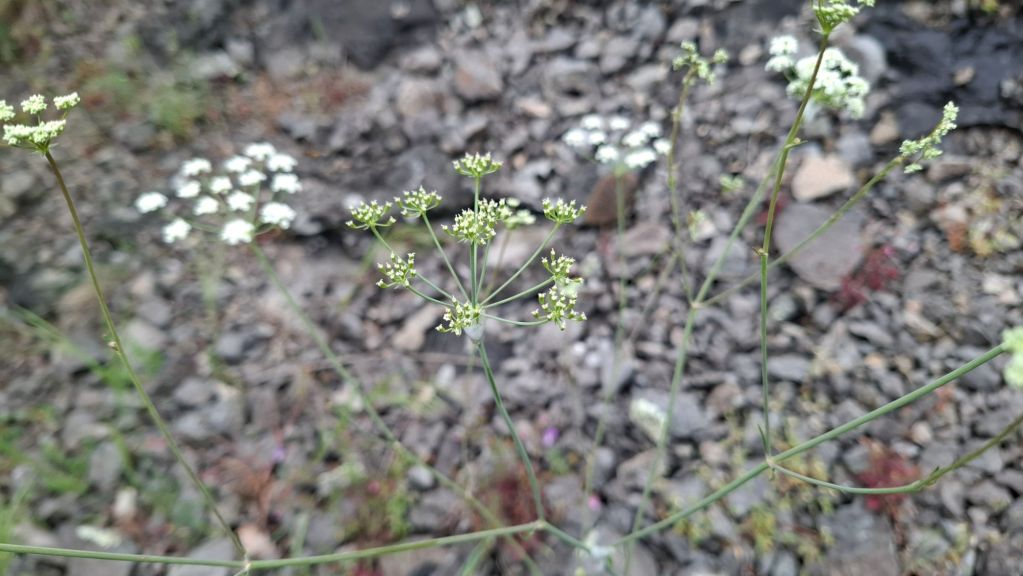
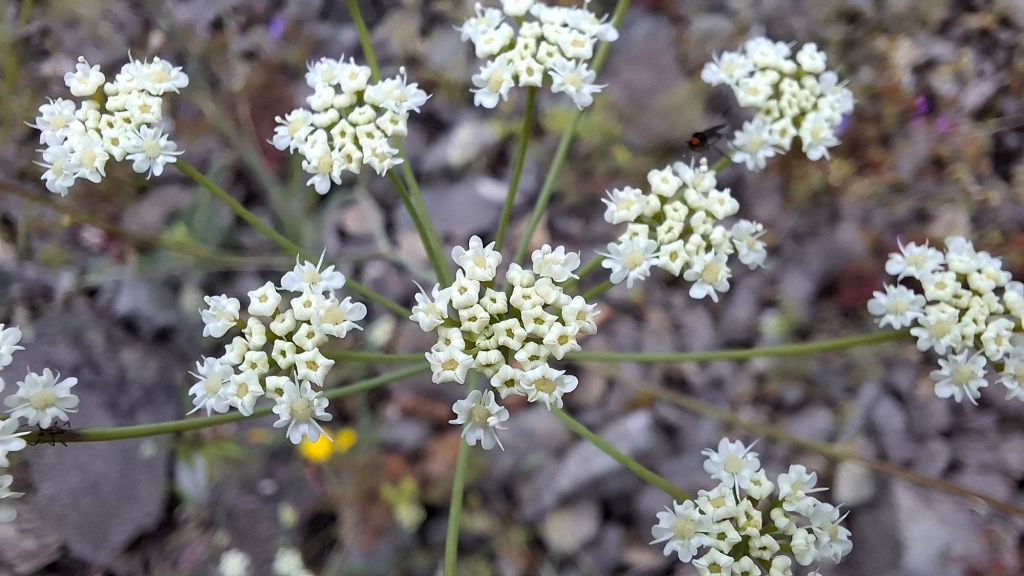
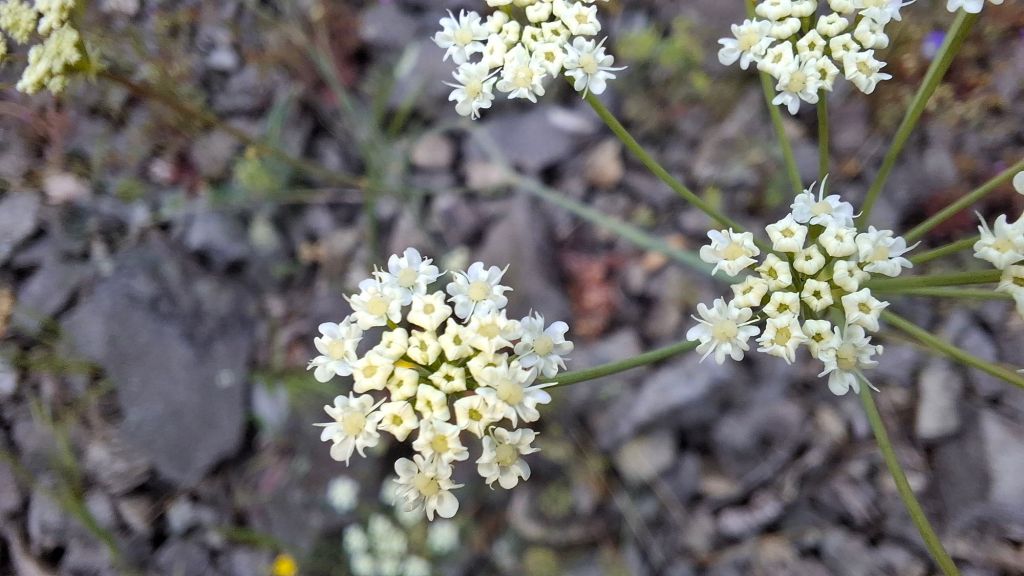
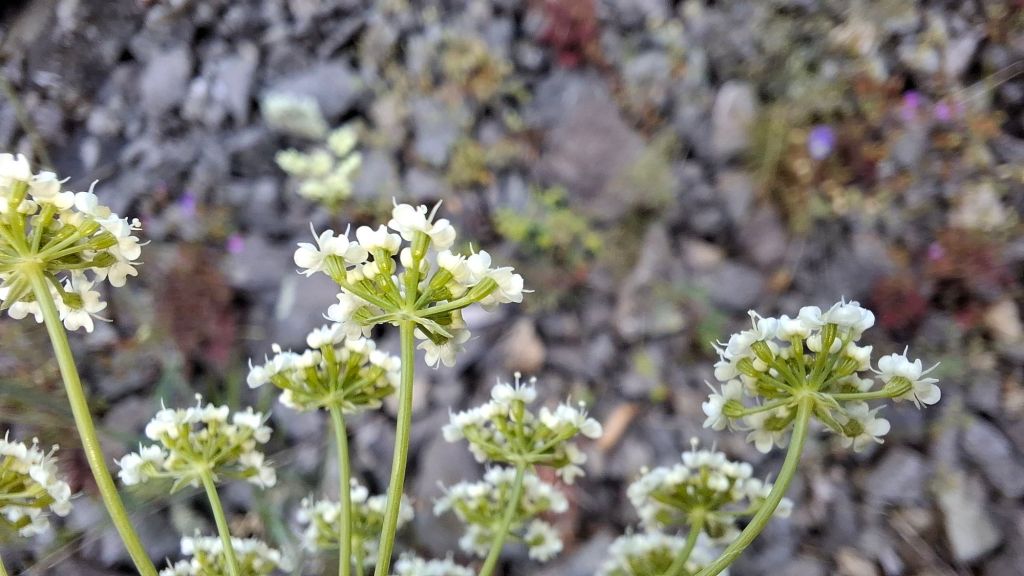
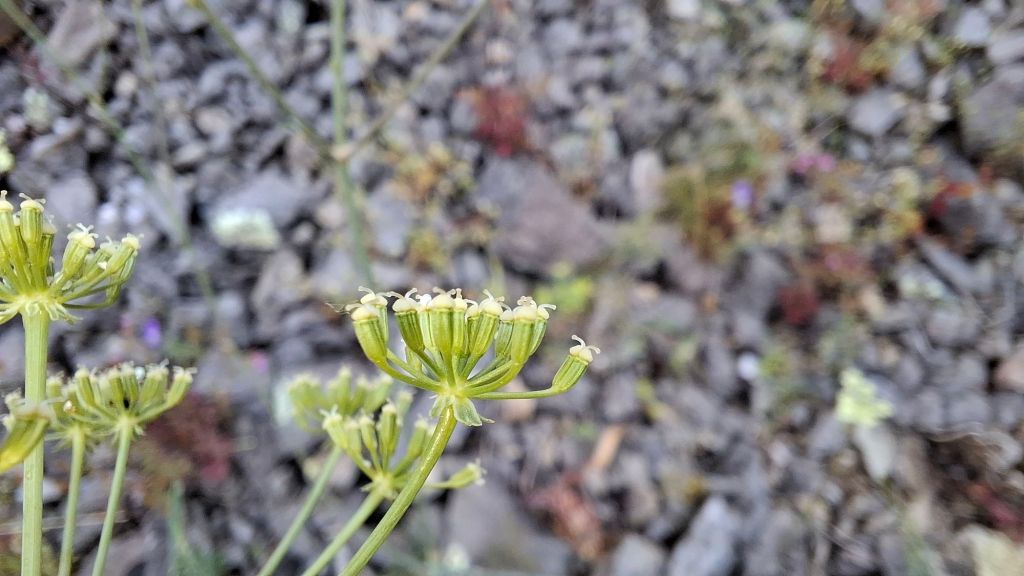
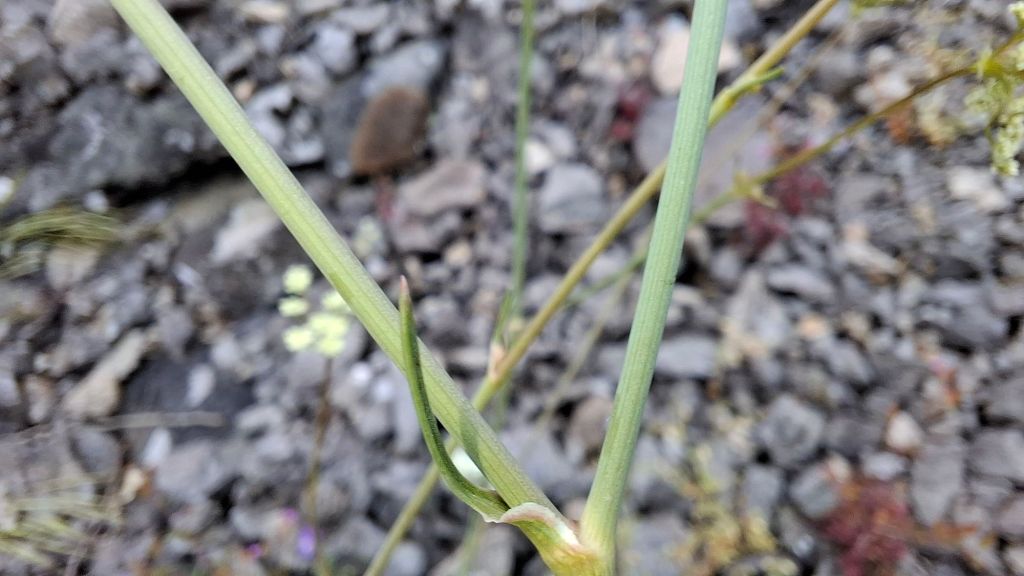
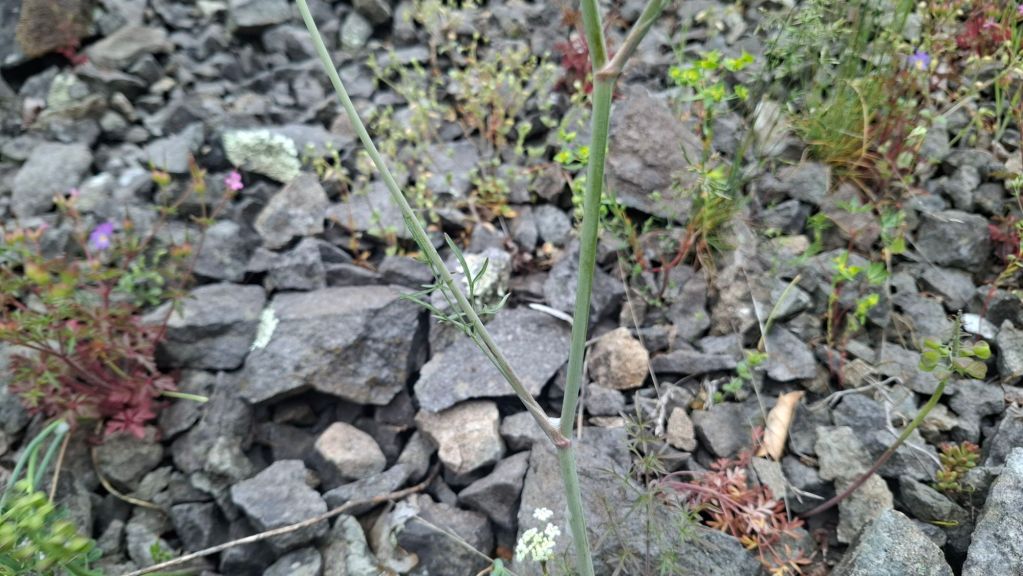
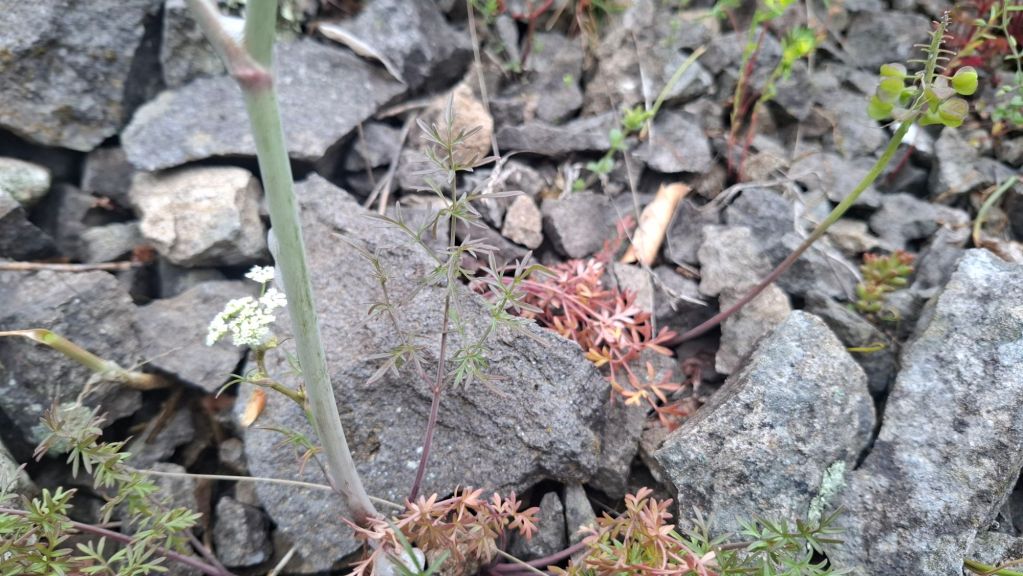
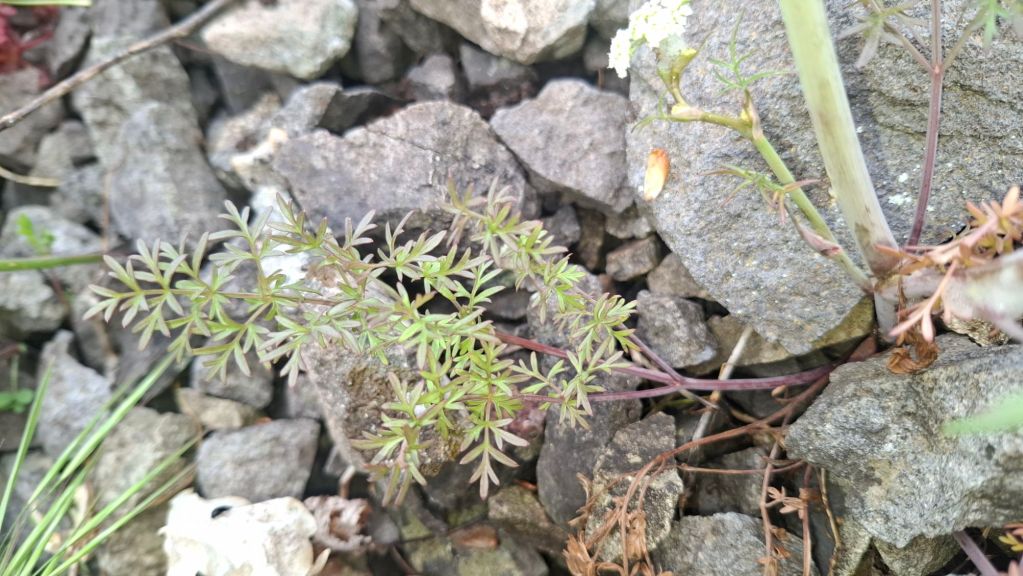
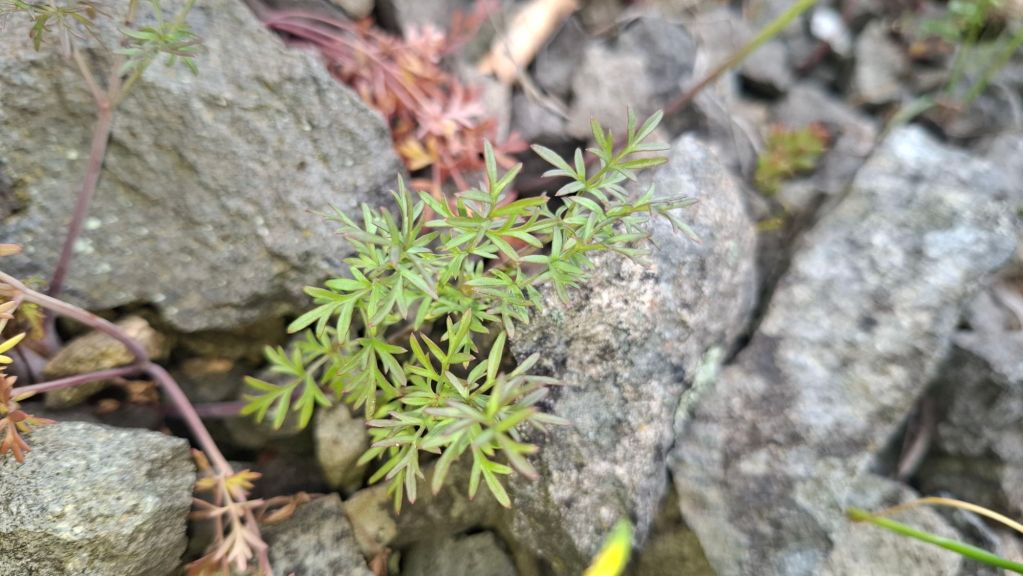
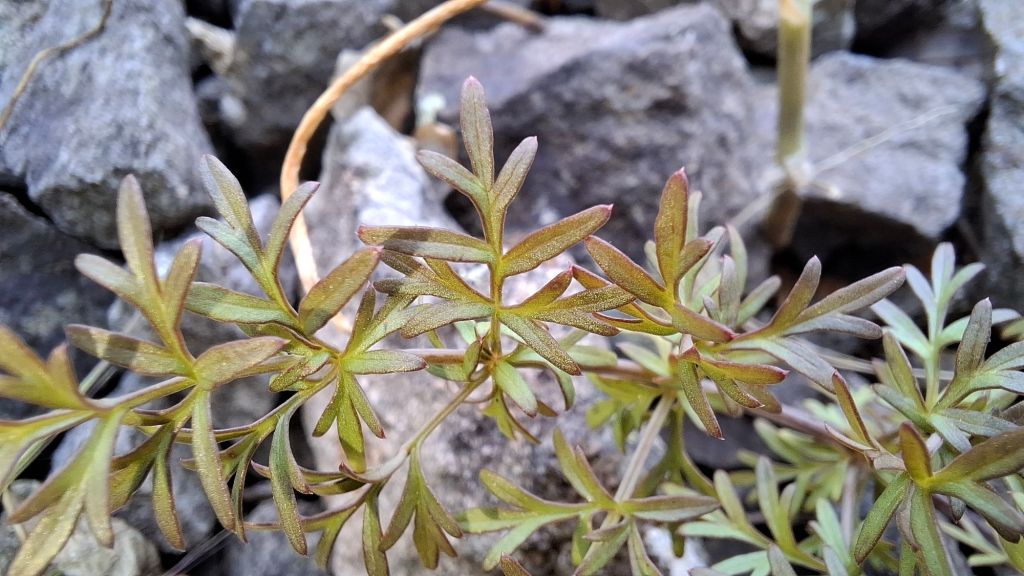
Achillea nobilis– habit in habitat. Probishtip: village of Shtalkovica, 05.07.2026. Photo by Trajche Dimitrovski.Achillea nobilis– habit. Probishtip: village of Shtalkovica, 05.07.2026. Photo by Trajche Dimitrovski.Achillea nobilis– habit. Probishtip: village of Shtalkovica, 05.07.2026. Photo by Trajche Dimitrovski.Achillea nobilis– habit. Probishtip: village of Shtalkovica, 05.07.2026. Photo by Trajche Dimitrovski.Achillea nobilis– habit. Probishtip: village of Shtalkovica, 05.07.2026. Photo by Trajche Dimitrovski.Achillea nobilis– synflorescence with capitula. Probishtip: village of Shtalkovica, 05.07.2026. Photo by Trajche Dimitrovski.Achillea nobilis– synflorescence with capitula. Probishtip: village of Shtalkovica, 05.07.2026. Photo by Trajche Dimitrovski.Achillea nobilis– synflorescence with capitula. Probishtip: village of Shtalkovica, 05.07.2026. Photo by Trajche Dimitrovski.Achillea nobilis– synflorescence with capitula. Probishtip: village of Shtalkovica, 05.07.2026. Photo by Trajche Dimitrovski.Achillea nobilis– synflorescence with capitula. Probishtip: village of Shtalkovica, 05.07.2026. Photo by Trajche Dimitrovski.Achillea nobilis– synflorescence with capitula. Probishtip: village of Shtalkovica, 05.07.2026. Photo by Trajche Dimitrovski.Achillea nobilis– side view of capitula. Probishtip: village of Shtalkovica, 05.07.2026. Photo by Trajche Dimitrovski.Achillea nobilis– side view of capitula. Probishtip: village of Shtalkovica, 05.07.2026. Photo by Trajche Dimitrovski.Achillea nobilis– side view of capitula. Probishtip: village of Shtalkovica, 05.07.2026. Photo by Trajche Dimitrovski.Achillea nobilis– stem with leaves. Probishtip: village of Shtalkovica, 05.07.2026. Photo by Trajche Dimitrovski.Achillea nobilis– stem and upper leaves. Probishtip: village of Shtalkovica, 05.07.2026. Photo by Trajche Dimitrovski.Achillea nobilis– stem and upper leaves. Probishtip: village of Shtalkovica, 05.07.2026. Photo by Trajche Dimitrovski.Achillea nobilis– stem and upper leaves. Probishtip: village of Shtalkovica, 05.07.2026. Photo by Trajche Dimitrovski.Achillea nobilis– stem and cauline leaf. Probishtip: village of Shtalkovica, 05.07.2026. Photo by Trajche Dimitrovski.Achillea nobilis– stem and cauline leaf. Probishtip: village of Shtalkovica, 05.07.2026. Photo by Trajche Dimitrovski.Achillea nobilis– stem and cauline leaf. Probishtip: village of Shtalkovica, 05.07.2026. Photo by Trajche Dimitrovski.Achillea nobilis– stem and cauline leaf. Probishtip: village of Shtalkovica, 05.07.2026. Photo by Trajche Dimitrovski.Achillea nobilis– stem and cauline leaf. Probishtip: village of Shtalkovica, 05.07.2026. Photo by Trajche Dimitrovski.Achillea nobilis– stem and cauline leaf. Probishtip: village of Shtalkovica, 05.07.2026. Photo by Trajche Dimitrovski.Achillea nobilis– stem and cauline leaf. Probishtip: village of Shtalkovica, 05.07.2026. Photo by Trajche Dimitrovski.Achillea nobilis– stem and cauline leaf. Probishtip: village of Shtalkovica, 05.07.2026. Photo by Trajche Dimitrovski.Achillea nobilis– basal leaf. Probishtip: village of Shtalkovica, 05.07.2026. Photo by Trajche Dimitrovski.Achillea nobilis– basal leaf. Probishtip: village of Shtalkovica, 05.07.2026. Photo by Trajche Dimitrovski.Achillea nobilis– basal leaves. Probishtip: village of Shtalkovica, 05.07.2026. Photo by Trajche Dimitrovski.Achillea nobilis– basal leaves. Probishtip: village of Shtalkovica, 05.07.2026. Photo by Trajche Dimitrovski.Achillea nobilis– adaxial side of basal leaves. Probishtip: village of Shtalkovica, 05.07.2026. Photo by Trajche Dimitrovski.Achillea nobilis– adaxial side of basal leaves. Probishtip: village of Shtalkovica, 05.07.2026. Photo by Trajche Dimitrovski.Achillea nobilis– abaxial side of basal leaves. Probishtip: village of Shtalkovica, 05.07.2026. Photo by Trajche Dimitrovski.Achillea nobilis– adaxial side of basal leaves. Probishtip: village of Shtalkovica, 05.07.2026. Photo by Trajche Dimitrovski.
Richardson, I. В. K. 1976. Achillea L. In Tutin, T. G., Heywood, V. H., Burges, N. A., Moore, D. M., Valentine, D. H., Walters, S. M. & Webb, D. A. (eds), Flora Europaea. Volume 4. Plantaginaceae to Compositae (and Rubiaceae). Cambridge: Cambridge University Press, pp. 159–165.
Taxonomy: Fam. Amaryllidaceae// Genus: Allium// Species: Allium albanicum Brullo & al. The classification is given according to The Euro+Med PlantBase.
Determined according to the botanical keys provided by Brullo et al. (2019) and Tan and Strid (2025).
Note:Allium albanicum is a newly described species (Brullo et al., 2019), separated from the historically more widely treated Allium meteoricum Heldr. & Hausskn. ex Halâcsy (Stearn,1980 in Tutin et al.) Recently, a number of species have been distinguished and described within this complex (Tan and Strid, 2025).
Lifeform: Bulbous perennial. Geophyte according to the Raunkiær system.
Distribution: Native to Albania, Greece and Kosovo (Tan and Strid, 2025; Hashani et al., 2023; Brullo et al., 2019). From literature data, A. meteoricum was previously reported for North Macedonia – Suva Gora (Teofilovski, 2011) and Treska (Soška, 1938).
Habitat: Hill pastures in the Zletovo volcanic area.
Flowering period: Summer (JUN, JUL).
Locality: Probishtip: Stari Grad region– hills between the Eshterec Stream and the Shtalkovichka River, 05.07.2026.
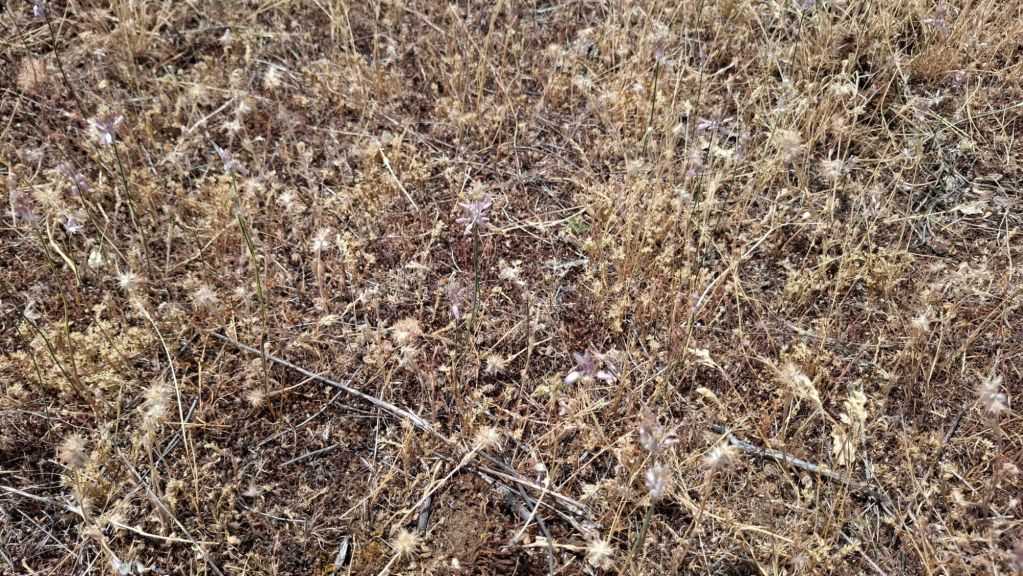
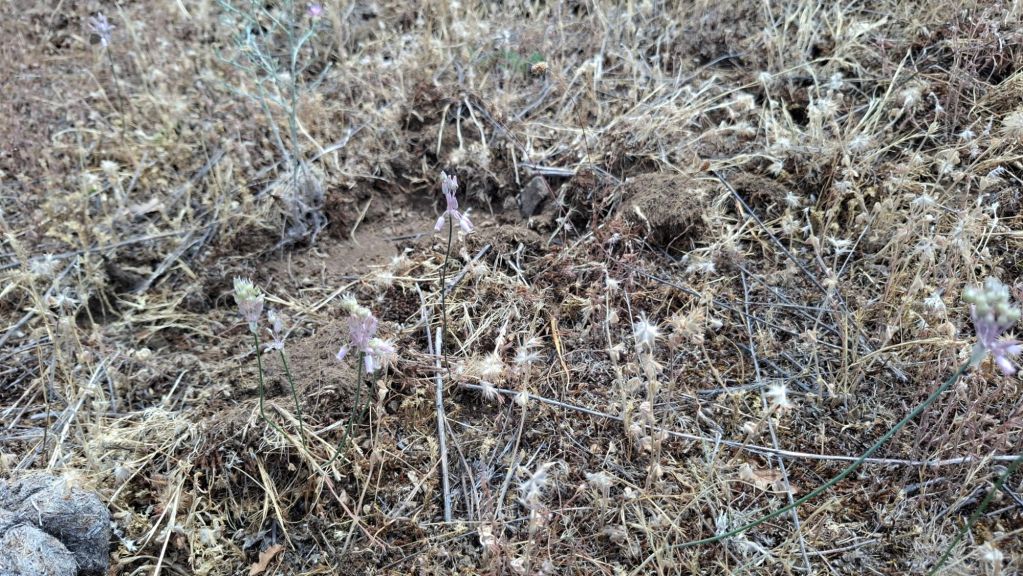
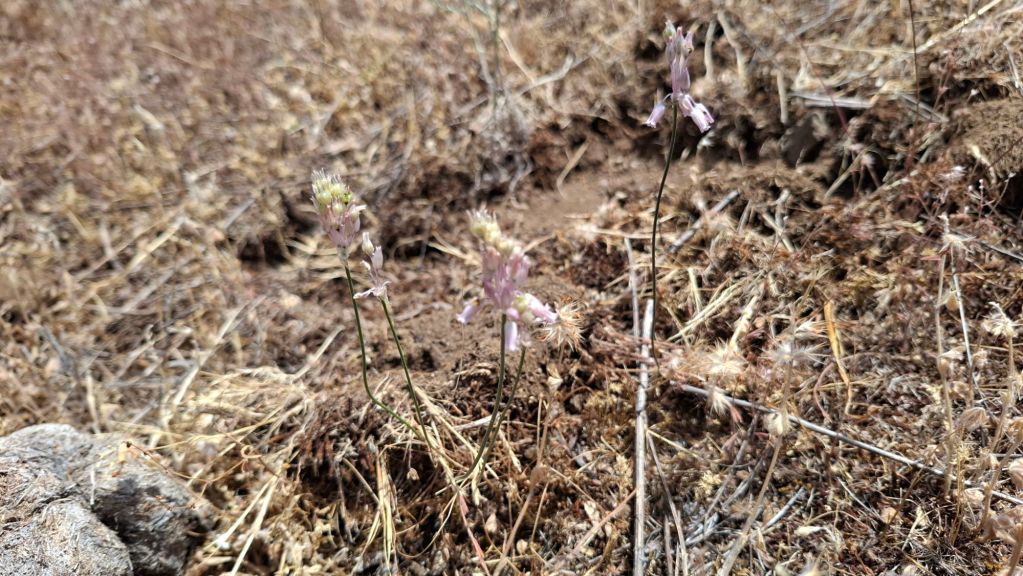
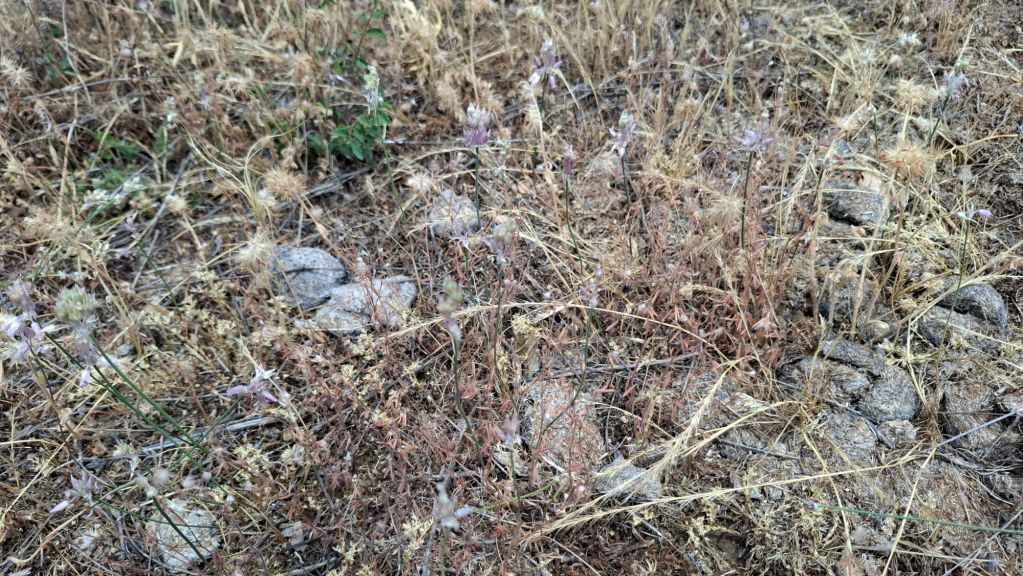
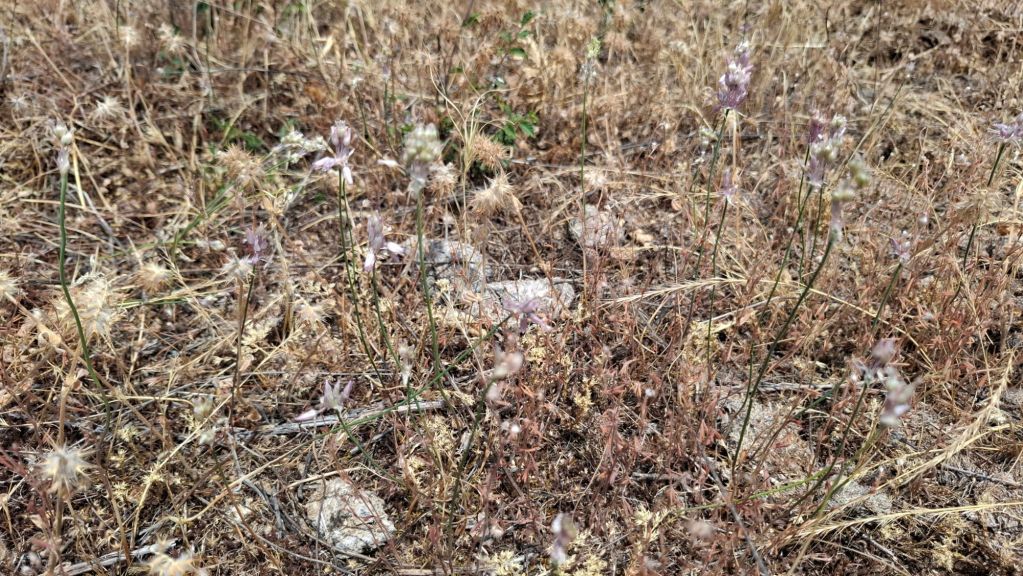
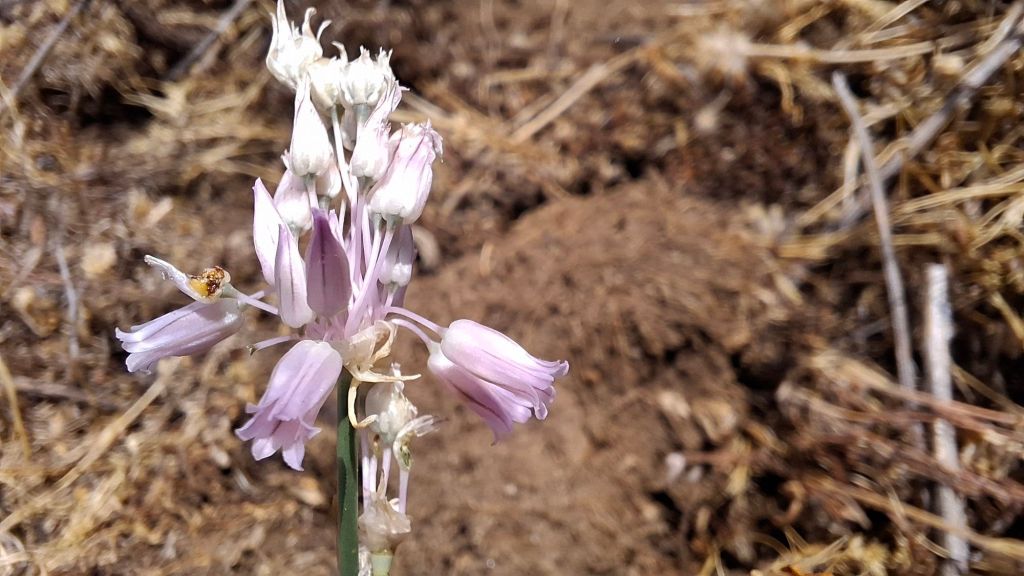
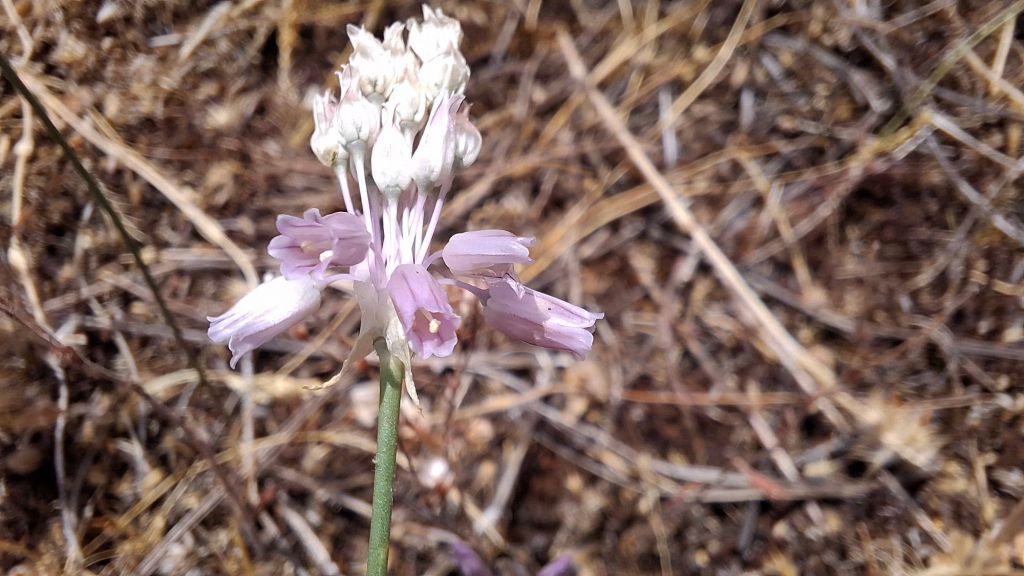
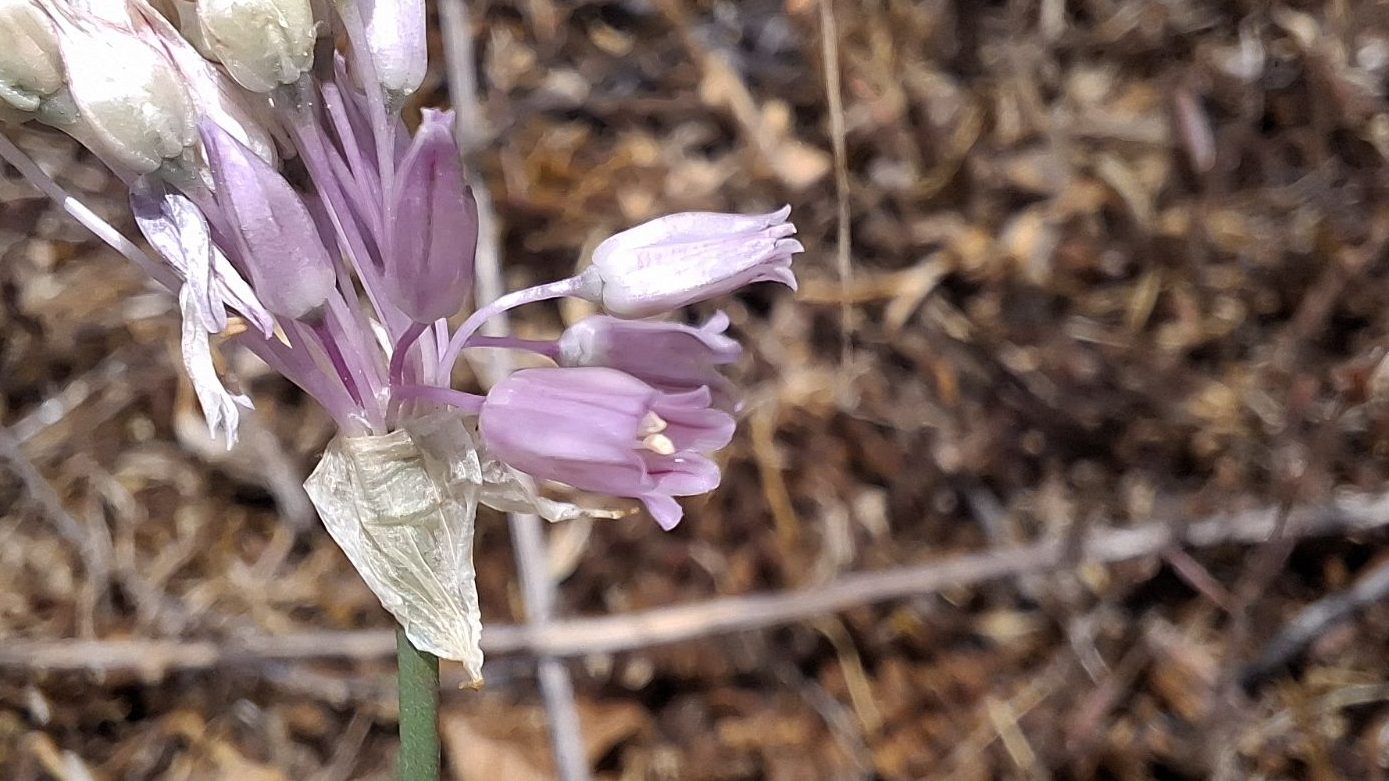
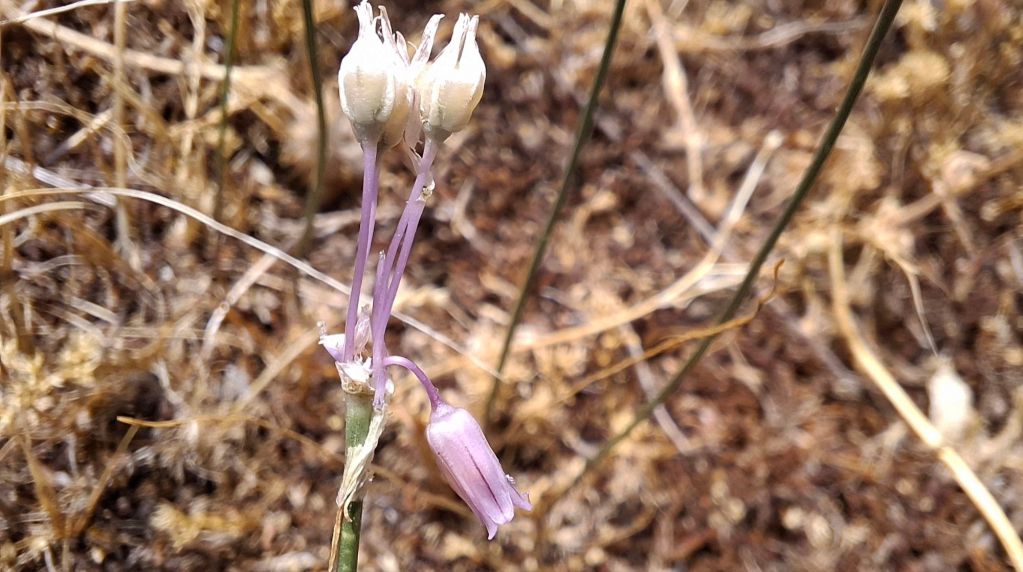
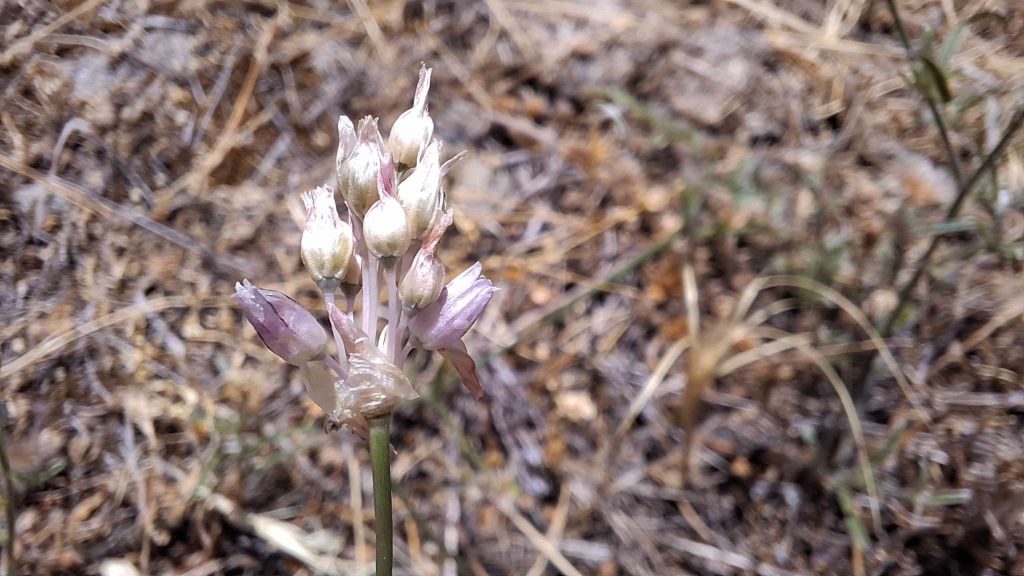
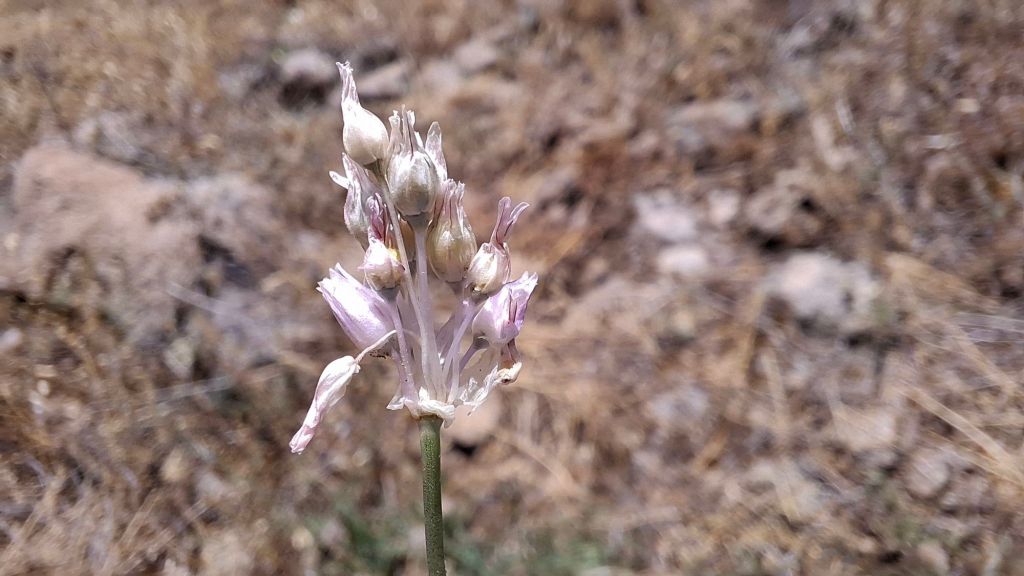
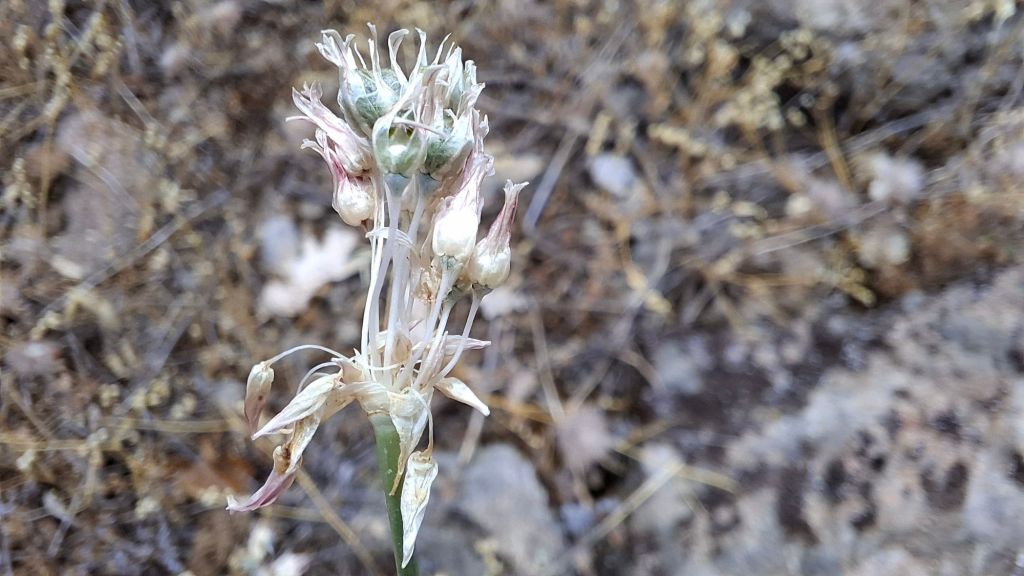
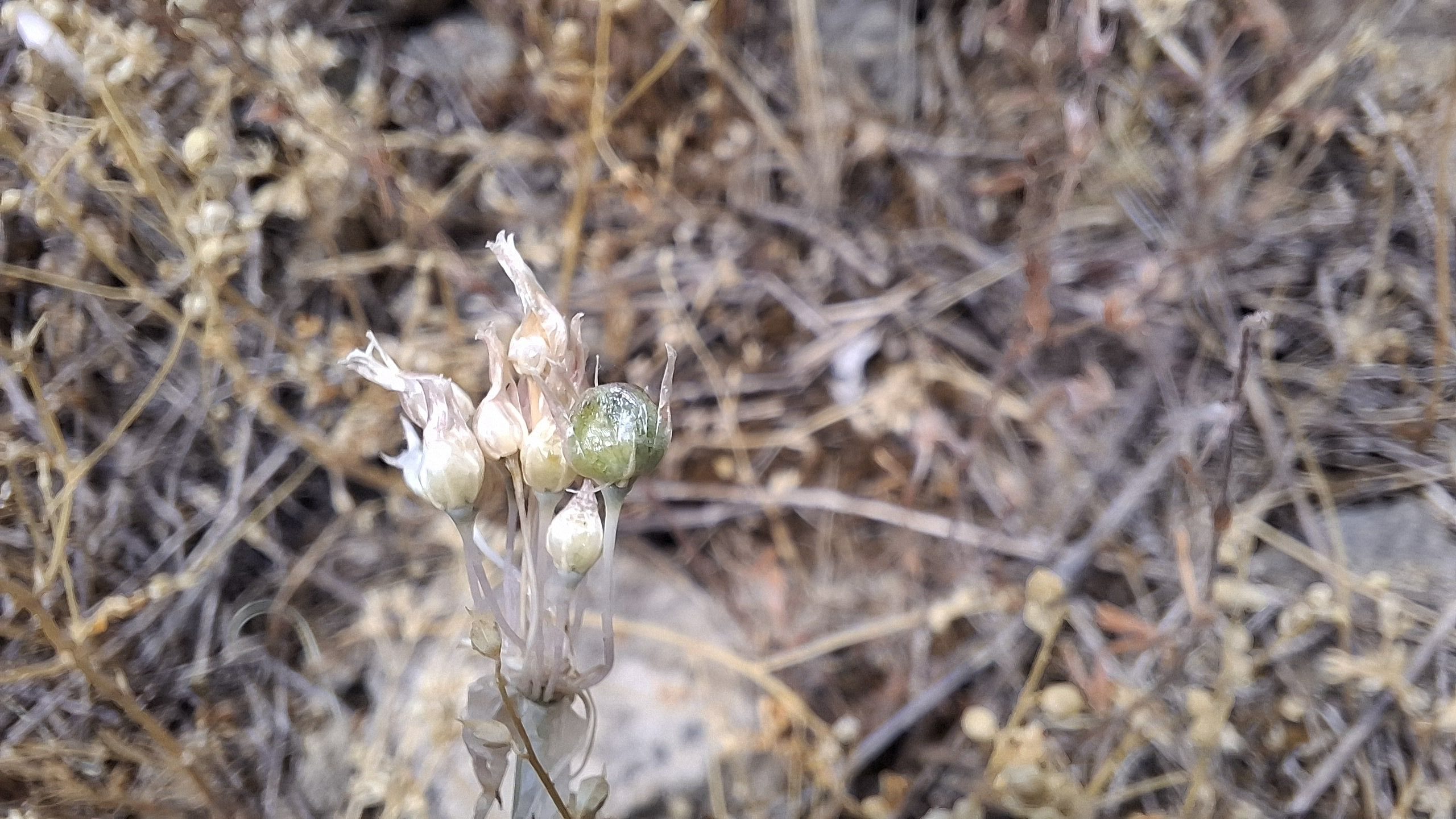
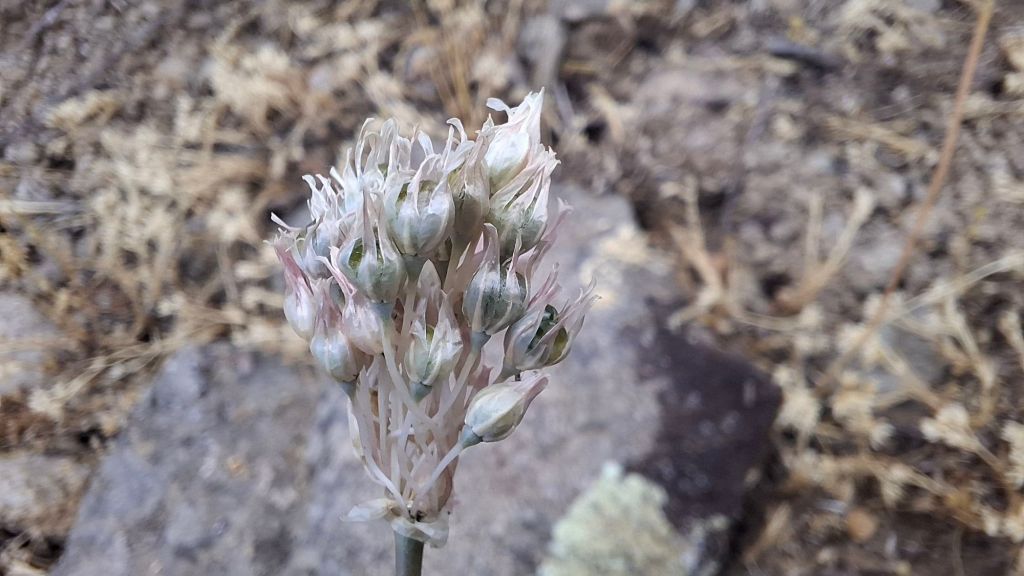
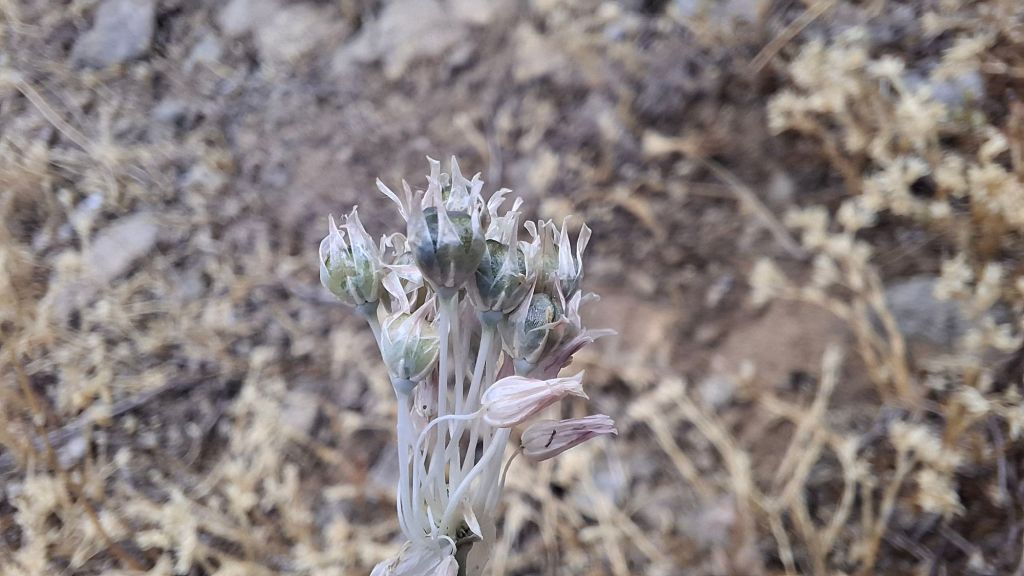
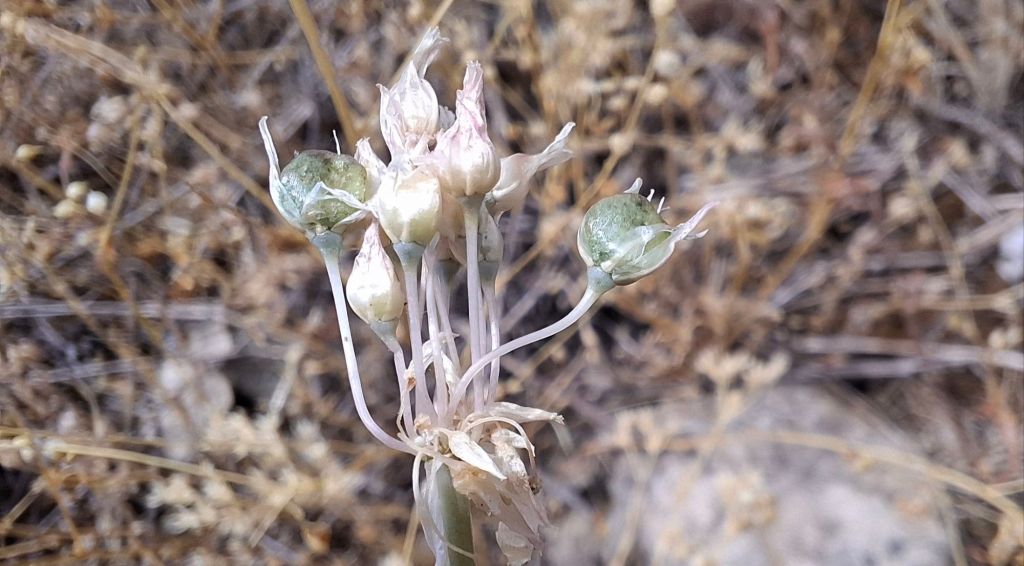
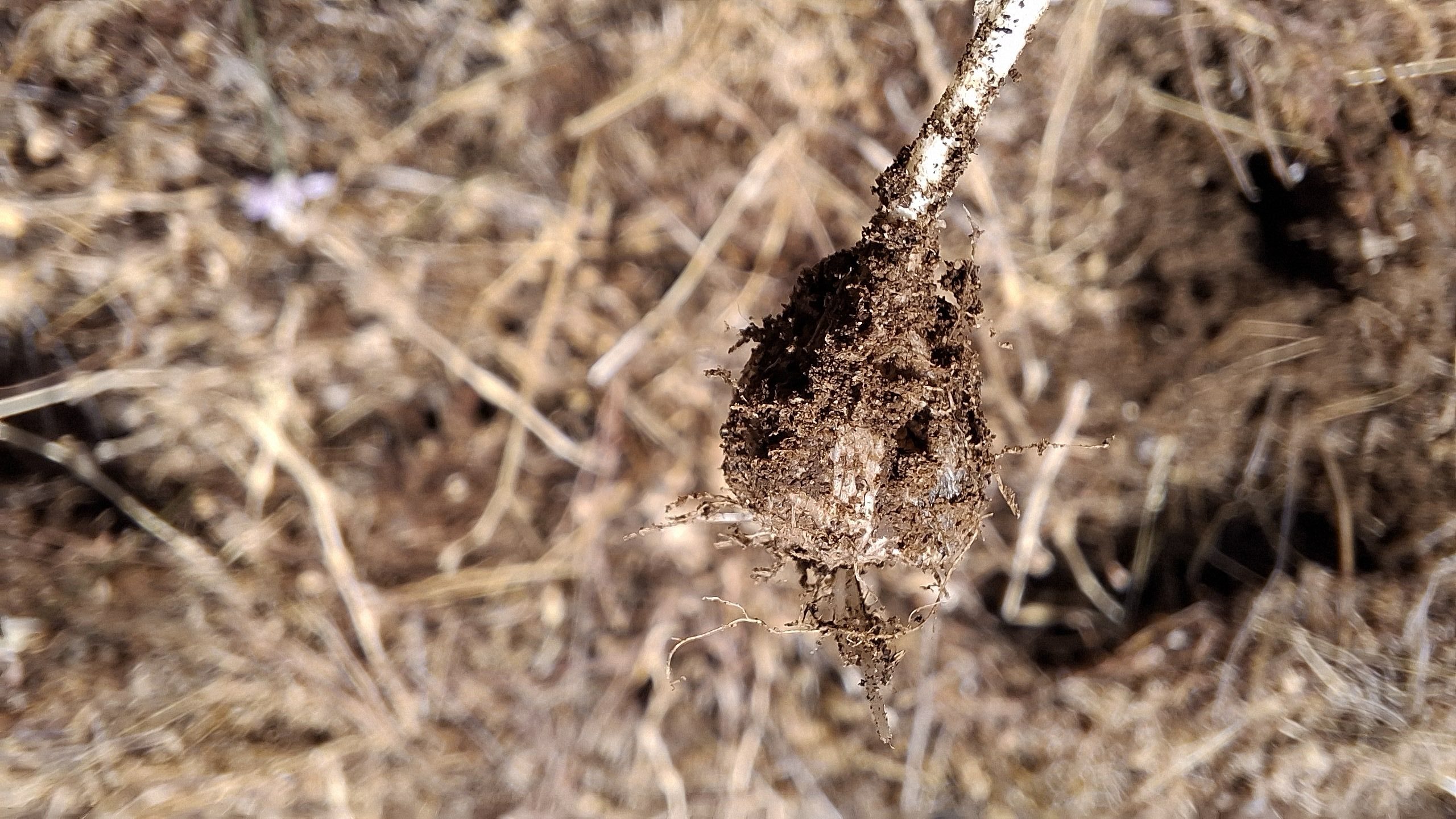
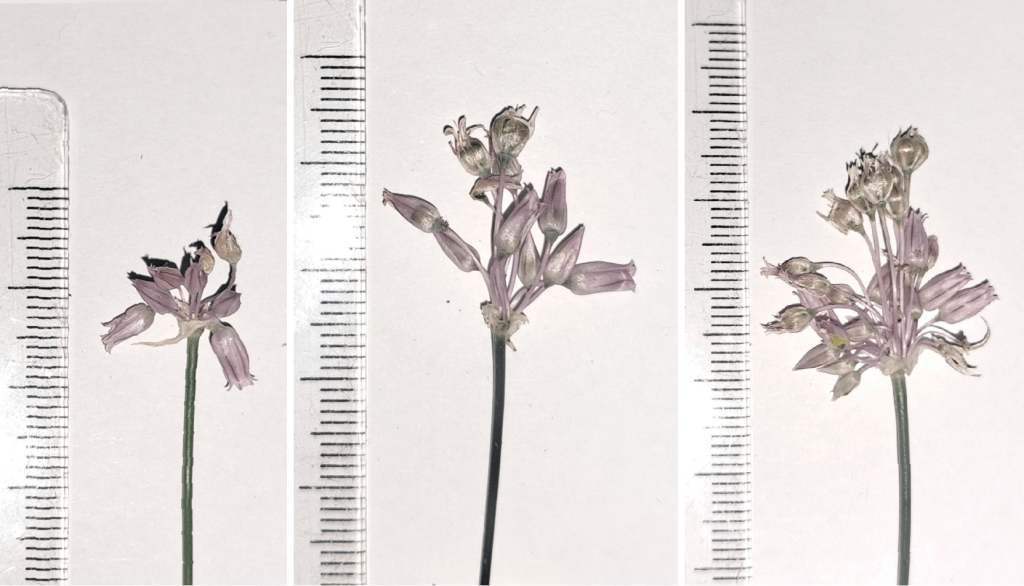
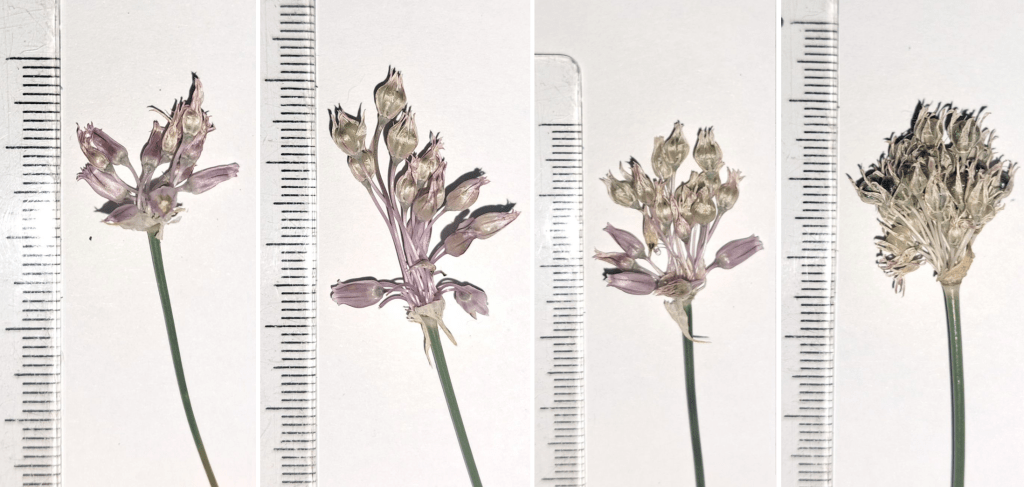
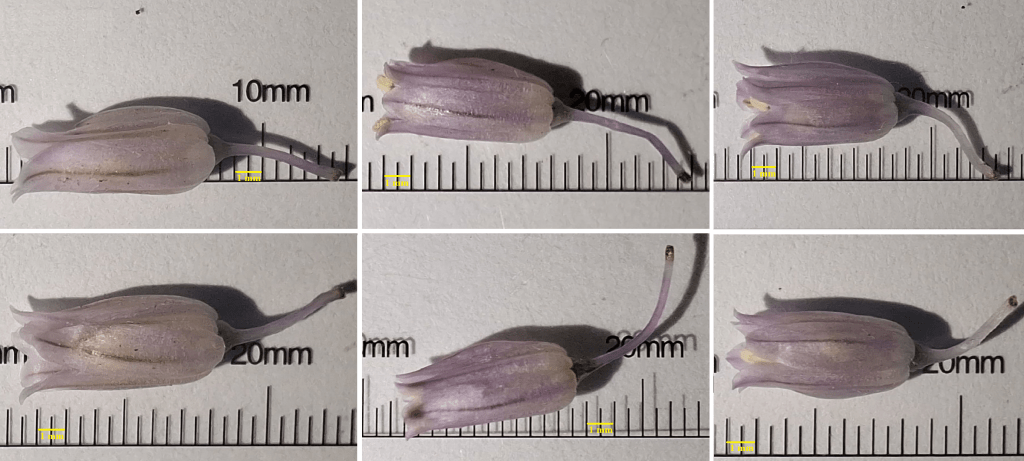
Allium albanicum – habit in habitat. Osogovo -Probishtip: Stari Grad region– hills between the Eshterec Stream and the Shtalkovichka River, 05.07.2026. Photo by Trajche Dimitrovski. Allium albanicum – habit in habitat. Osogovo -Probishtip: Stari Grad region– hills between the Eshterec Stream and the Shtalkovichka River, 05.07.2026. Photo by Trajche Dimitrovski. Allium albanicum – habit in habitat. Osogovo -Probishtip: Stari Grad region– hills between the Eshterec Stream and the Shtalkovichka River, 05.07.2026. Photo by Trajche Dimitrovski. Allium albanicum – habit in habitat. Osogovo -Probishtip: Stari Grad region– hills between the Eshterec Stream and the Shtalkovichka River, 05.07.2026. Photo by Trajche Dimitrovski. Allium albanicum – habit in habitat. Osogovo -Probishtip: Stari Grad region– hills between the Eshterec Stream and the Shtalkovichka River, 05.07.2026. Photo by Trajche Dimitrovski. Allium albanicum – habit in habitat. Osogovo -Probishtip: Stari Grad region– hills between the Eshterec Stream and the Shtalkovichka River, 05.07.2026. Photo by Trajche Dimitrovski. Allium albanicum – inflorescence. Osogovo -Probishtip: Stari Grad region– hills between the Eshterec Stream and the Shtalkovichka River, 05.07.2026. Photo by Trajche Dimitrovski. Allium albanicum – inflorescence. Osogovo -Probishtip: Stari Grad region– hills between the Eshterec Stream and the Shtalkovichka River, 05.07.2026. Photo by Trajche Dimitrovski. Allium albanicum – inflorescence. Osogovo -Probishtip: Stari Grad region– hills between the Eshterec Stream and the Shtalkovichka River, 05.07.2026. Photo by Trajche Dimitrovski. Allium albanicum – inflorescence. Osogovo -Probishtip: Stari Grad region– hills between the Eshterec Stream and the Shtalkovichka River, 05.07.2026. Photo by Trajche Dimitrovski. Allium albanicum – inflorescence. Osogovo -Probishtip: Stari Grad region– hills between the Eshterec Stream and the Shtalkovichka River, 05.07.2026. Photo by Trajche Dimitrovski. Allium albanicum – inflorescence. Osogovo -Probishtip: Stari Grad region– hills between the Eshterec Stream and the Shtalkovichka River, 05.07.2026. Photo by Trajche Dimitrovski. Allium albanicum – inflorescence. Osogovo -Probishtip: Stari Grad region– hills between the Eshterec Stream and the Shtalkovichka River, 05.07.2026. Photo by Trajche Dimitrovski. Allium albanicum – inflorescence. Osogovo -Probishtip: Stari Grad region– hills between the Eshterec Stream and the Shtalkovichka River, 05.07.2026. Photo by Trajche Dimitrovski. Allium albanicum – inflorescence. Osogovo -Probishtip: Stari Grad region– hills between the Eshterec Stream and the Shtalkovichka River, 05.07.2026. Photo by Trajche Dimitrovski. Allium albanicum – inflorescence. Osogovo -Probishtip: Stari Grad region– hills between the Eshterec Stream and the Shtalkovichka River, 05.07.2026. Photo by Trajche Dimitrovski. Allium albanicum – flowers. Osogovo -Probishtip: Stari Grad region– hills between the Eshterec Stream and the Shtalkovichka River, 05.07.2026. Photo by Trajche Dimitrovski. Allium albanicum – flowers. Osogovo -Probishtip: Stari Grad region– hills between the Eshterec Stream and the Shtalkovichka River, 05.07.2026. Photo by Trajche Dimitrovski. Allium albanicum – flowers. Osogovo -Probishtip: Stari Grad region– hills between the Eshterec Stream and the Shtalkovichka River, 05.07.2026. Photo by Trajche Dimitrovski. Allium albanicum – fruiting indloresence. Osogovo -Probishtip: Stari Grad region– hills between the Eshterec Stream and the Shtalkovichka River, 05.07.2026. Photo by Trajche Dimitrovski. Allium albanicum – fruiting indloresence. Osogovo -Probishtip: Stari Grad region– hills between the Eshterec Stream and the Shtalkovichka River, 05.07.2026. Photo by Trajche Dimitrovski. Allium albanicum – fruiting indloresence. Osogovo -Probishtip: Stari Grad region– hills between the Eshterec Stream and the Shtalkovichka River, 05.07.2026. Photo by Trajche Dimitrovski. Allium albanicum – fruiting indloresence. Osogovo -Probishtip: Stari Grad region– hills between the Eshterec Stream and the Shtalkovichka River, 05.07.2026. Photo by Trajche Dimitrovski. Allium albanicum – fruiting indloresence. Osogovo -Probishtip: Stari Grad region– hills between the Eshterec Stream and the Shtalkovichka River, 05.07.2026. Photo by Trajche Dimitrovski. Allium albanicum – fruiting indloresence. Osogovo -Probishtip: Stari Grad region– hills between the Eshterec Stream and the Shtalkovichka River, 05.07.2026. Photo by Trajche Dimitrovski. Allium albanicum – fruiting indloresence. Osogovo -Probishtip: Stari Grad region– hills between the Eshterec Stream and the Shtalkovichka River, 05.07.2026. Photo by Trajche Dimitrovski. Allium albanicum – fruiting indloresence. Osogovo -Probishtip: Stari Grad region– hills between the Eshterec Stream and the Shtalkovichka River, 05.07.2026. Photo by Trajche Dimitrovski. Allium albanicum – capsules. Osogovo -Probishtip: Stari Grad region– hills between the Eshterec Stream and the Shtalkovichka River, 05.07.2026. Photo by Trajche Dimitrovski. Allium albanicum – stems and leaves. Osogovo -Probishtip: Stari Grad region– hills between the Eshterec Stream and the Shtalkovichka River, 05.07.2026. Photo by Trajche Dimitrovski. Allium albanicum – stems and leaves. Osogovo -Probishtip: Stari Grad region– hills between the Eshterec Stream and the Shtalkovichka River, 05.07.2026. Photo by Trajche Dimitrovski. Allium albanicum – stems and leaves. Osogovo -Probishtip: Stari Grad region– hills between the Eshterec Stream and the Shtalkovichka River, 05.07.2026. Photo by Trajche Dimitrovski. Allium albanicum – stem and leaves. Osogovo -Probishtip: Stari Grad region– hills between the Eshterec Stream and the Shtalkovichka River, 05.07.2026. Photo by Trajche Dimitrovski. Allium albanicum – stem. Osogovo -Probishtip: Stari Grad region– hills between the Eshterec Stream and the Shtalkovichka River, 05.07.2026. Photo by Trajche Dimitrovski. Allium albanicum – stems. Osogovo -Probishtip: Stari Grad region– hills between the Eshterec Stream and the Shtalkovichka River, 05.07.2026. Photo by Trajche Dimitrovski. Allium albanicum – stem and leaves. Osogovo -Probishtip: Stari Grad region– hills between the Eshterec Stream and the Shtalkovichka River, 05.07.2026. Photo by Trajche Dimitrovski. Allium albanicum – stem and leaves. Osogovo -Probishtip: Stari Grad region– hills between the Eshterec Stream and the Shtalkovichka River, 05.07.2026. Photo by Trajche Dimitrovski. Allium albanicum – stems and leaves. Osogovo -Probishtip: Stari Grad region– hills between the Eshterec Stream and the Shtalkovichka River, 05.07.2026. Photo by Trajche Dimitrovski. Allium albanicum – bulb. Osogovo -Probishtip: Stari Grad region– hills between the Eshterec Stream and the Shtalkovichka River, 05.07.2026. Photo by Trajche Dimitrovski. Allium albanicum – bulb. Osogovo -Probishtip: Stari Grad region– hills between the Eshterec Stream and the Shtalkovichka River, 05.07.2026. Photo by Trajche Dimitrovski. Allium albanicum – bulb. Osogovo -Probishtip: Stari Grad region– hills between the Eshterec Stream and the Shtalkovichka River, 05.07.2026. Photo by Trajche Dimitrovski.
Scaled images. Specimens from Probishtip: Stari Grad region– hills between the Eshterec Stream and the Shtalkovichka River, 05.07.2026.
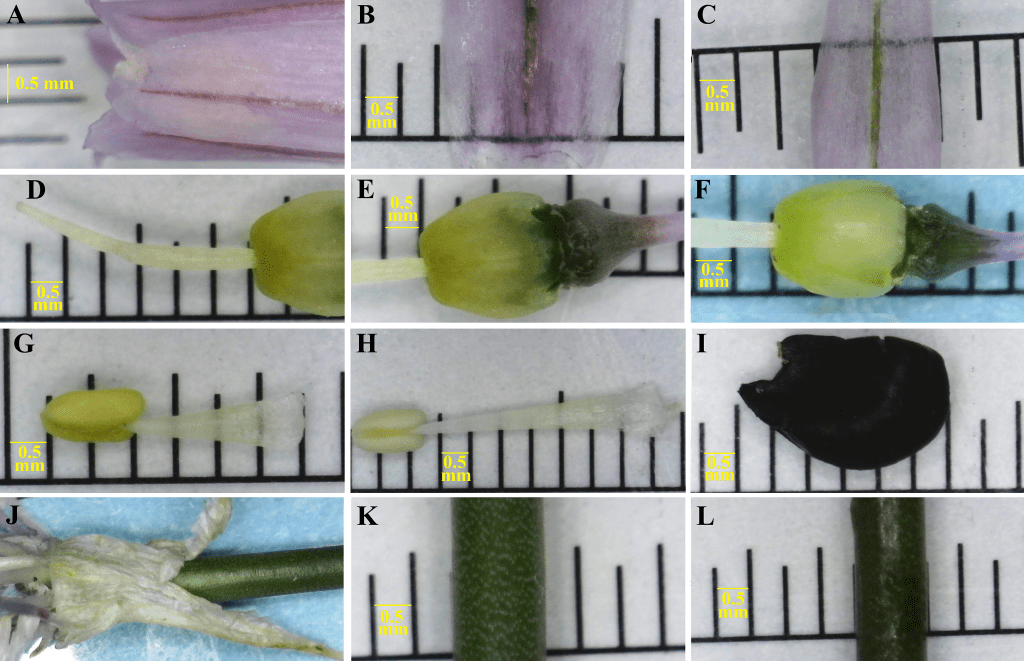
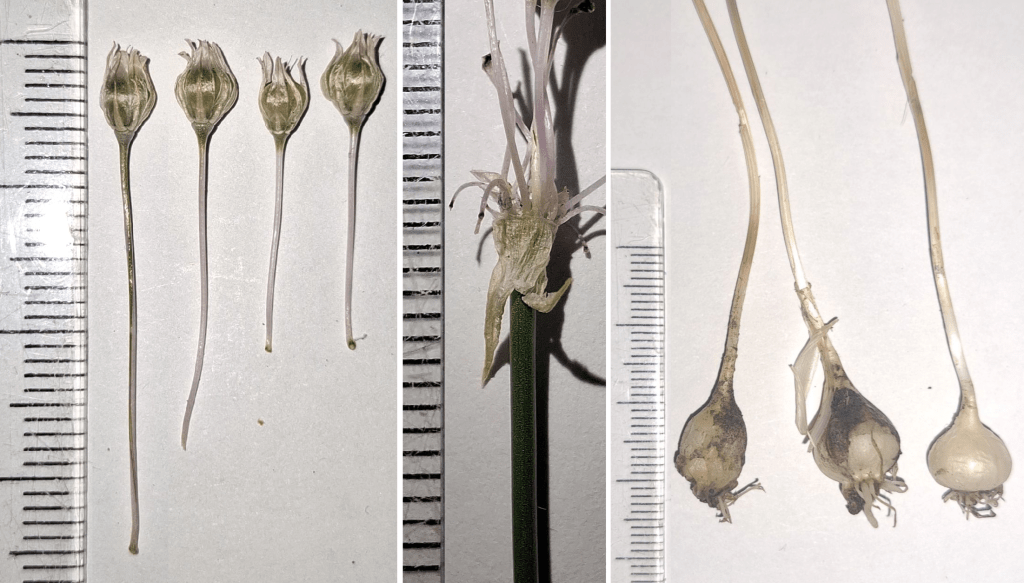
Allium albanicum – habit. Scale in cm. Specimen from Osogovo -Probishtip: Stari Grad region– hills between the Eshterec Stream and the Shtalkovichka River, 05.07.2026. Photo by Trajche Dimitrovski. Allium albanicum – inflorescence. Scale in cm/ mm. Photo by Trajche Dimitrovski. Allium albanicum – inflorescence. Scale in cm/ mm. Photo by Trajche Dimitrovski. Allium albanicum – inflorescence. Scale in cm/ mm. Photo by Trajche Dimitrovski. Allium albanicum – flowers. Scale in mm. Photo by Trajche Dimitrovski. Allium albanicum. A: petals with erose apex. B: outer petal width. C: inner petal width. D: style. E: and F: ovary. G: outer stamen. H: inner stamen. I: seed. J: connate bracts. K and L: stem. Photo by Trajche Dimitrovski. Allium albanicum. Left: capsules and pedicels of differenth. Center: stem and connate bracts. Right: stem base and bulb. Scale in cm/ mm. Photo by Trajche Dimitrovski.
References:
Allium L. Stearn, W.T. in Tutin, T.G., Heywood, V.H., Burges, N.A., Moore, D.M., Valentine, D.H., Walters, S.M. & Webb, D.A. (1980). Flora Europaea. Volume 5: Alismataceae to Orchidaceae (Monocotyledones). Cambridge: Cambridge University Press, pp. 49 – 69.
Brullo, S., Brullo, C., Cambria, S., Giusso del Galdo, G. and Salmeri, C. (2019). Allium albanicum (Amaryllidaceae), a new species from Balkans and its relationships with A. meteoricum Heldr. & Hausskn. ex Halácsy. PhytoKeys 119: 117-136. https://doi.org/10.3897/phytokeys.119.30790 [Accessed 20.07.2026].
Hashani, Z., Mala, X., Maxhuni, Q. & Zeneli, L. (2023). Epimedium alpinum subsp. albanicum new subspecies for the flora of Kosovo. Italian Botanist, Vol. 15, pp: 1–8. doi: 10.3897/italianbotanist.15.91193 [Accessed 29.07.2026].
Tan, K. & Strid, A. (2025). Notes on two new Allium species for Greece: A. kofinae from South Central and A. albanicum from Northwest and North Central Greece. Phytologia Balkanica, Vol. 31, pp. 103-108. DOI 10.3897/phytolbalcan.31.e169789 [Accessed 20.07.2026].
Soška, Th., (1938): Beitrag zur Kenntnis der Schluchtenfloren von Südserbien. I. Glas. SND, Vol.18(6), pp. 223-238.
Taxonomy: Fam. Compositae// Genus: Inula// Species: Inula ensifolia L.
Determined according to the botanical key provided by Ball and Tutin (1976 in Tutin et al.).
Lifeform: Perennial plant. Hemicryptophyte according to the Raunkiær system.
Distribution: Native from Europe to Caucasus according to the distribution information provided by the Plants of the World Online portal, Royal Botanic Gardens, Kew (accepted as Pentanema ensifolium (L.) D.Gut.Larr., Santos-Vicente, Anderb., E.Rico & M.M.Mart.Ort.
Habitat: Clearings and edges of oak forests, on thermophilous sites.
Flowering period: Summer (JUN, JUL).
Locality: Probishtip, Stari Grad – rock cliffs above the Eshterec Stream (Zletovska River basin). Date: 05.07.2026.
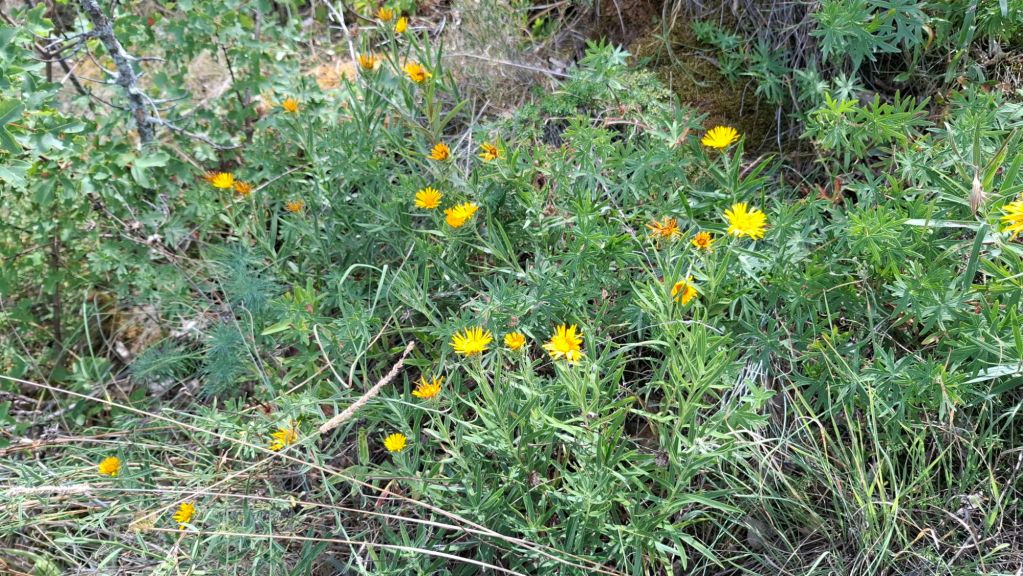
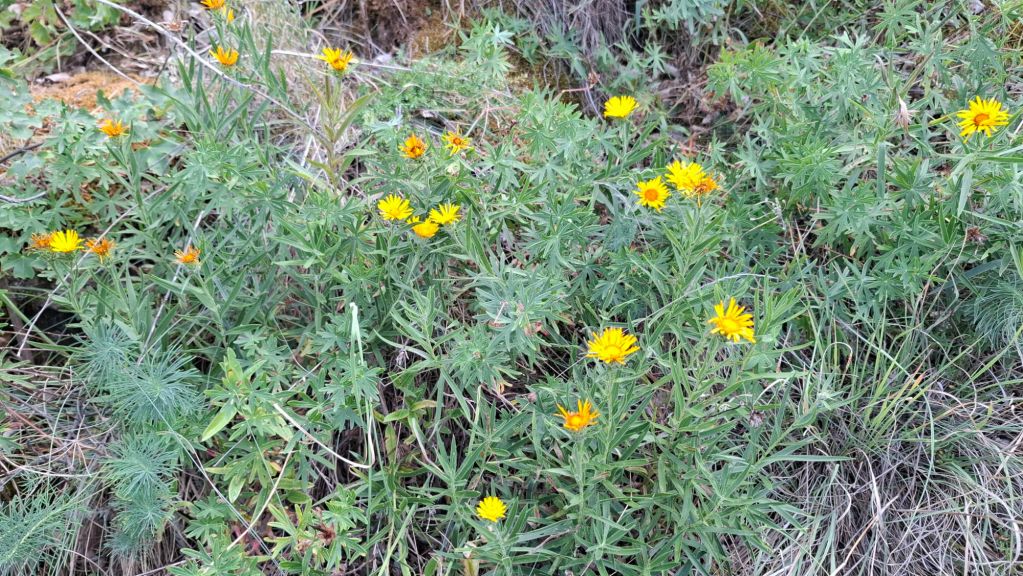
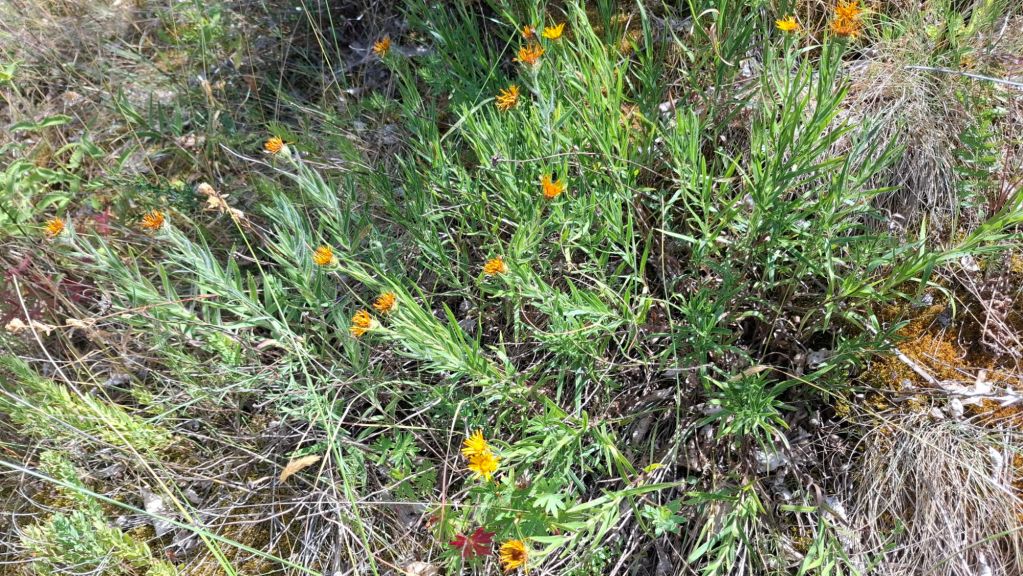
Inula ensifolia – habit. Osogovo -Probishtip: Stari Grad – rock cliffs above the Eshterec Stream (Zletovska River basin), 05.07.2026. Photo by Trajche Dimitrovski. Inula ensifolia – habit. Osogovo -Probishtip: Stari Grad – rock cliffs above the Eshterec Stream (Zletovska River basin), 05.07.2026. Photo by Trajche Dimitrovski.Inula ensifolia – habit. Osogovo -Probishtip: Stari Grad – rock cliffs above the Eshterec Stream (Zletovska River basin), 05.07.2026. Photo by Trajche Dimitrovski.Inula ensifolia – habit.Osogovo -Probishtip: Stari Grad – rock cliffs above the Eshterec Stream (Zletovska River basin), 05.07.2026. Photo by Trajche Dimitrovski. Inula ensifolia – habit. Osogovo -Probishtip: Stari Grad – rock cliffs above the Eshterec Stream (Zletovska River basin), 05.07.2026. Photo by Trajche Dimitrovski. Inula ensifolia – habit. Osogovo -Probishtip: Stari Grad – rock cliffs above the Eshterec Stream (Zletovska River basin), 05.07.2026. Photo by Trajche Dimitrovski. Inula ensifolia – habit. Osogovo -Probishtip: Stari Grad – rock cliffs above the Eshterec Stream (Zletovska River basin), 05.07.2026. Photo by Trajche Dimitrovski. Inula ensifolia – habit. Osogovo -Probishtip: Stari Grad – rock cliffs above the Eshterec Stream (Zletovska River basin), 05.07.2026. Photo by Trajche Dimitrovski. Inula ensifolia – habit. Osogovo -Probishtip: Stari Grad – rock cliffs above the Eshterec Stream (Zletovska River basin), 05.07.2026. Photo by Trajche Dimitrovski. Inula ensifolia – habit. Osogovo -Probishtip: Stari Grad – rock cliffs above the Eshterec Stream (Zletovska River basin), 05.07.2026. Photo by Trajche Dimitrovski. Inula ensifolia – habit. Osogovo -Probishtip: Stari Grad – rock cliffs above the Eshterec Stream (Zletovska River basin), 05.07.2026. Photo by Trajche Dimitrovski. Inula ensifolia – habit. Osogovo -Probishtip: Stari Grad – rock cliffs above the Eshterec Stream (Zletovska River basin), 05.07.2026. Photo by Trajche Dimitrovski. Inula ensifolia – habit. Osogovo -Probishtip: Stari Grad – rock cliffs above the Eshterec Stream (Zletovska River basin), 05.07.2026. Photo by Trajche Dimitrovski. Inula ensifolia – flowering stems. Osogovo -Probishtip: Stari Grad – rock cliffs above the Eshterec Stream (Zletovska River basin), 05.07.2026. Photo by Trajche Dimitrovski. Inula ensifolia – flowering stems. Osogovo -Probishtip: Stari Grad – rock cliffs above the Eshterec Stream (Zletovska River basin), 05.07.2026. Photo by Trajche Dimitrovski. Inula ensifolia – flowering stems. Osogovo -Probishtip: Stari Grad – rock cliffs above the Eshterec Stream (Zletovska River basin), 05.07.2026. Photo by Trajche Dimitrovski.Inula ensifolia – capitulum. Osogovo -Probishtip: Stari Grad – rock cliffs above the Eshterec Stream (Zletovska River basin), 05.07.2026. Photo by Trajche Dimitrovski.Inula ensifolia – capitulum. Osogovo -Probishtip: Stari Grad – rock cliffs above the Eshterec Stream (Zletovska River basin), 05.07.2026. Photo by Trajche Dimitrovski.Inula ensifolia – capitulum. Osogovo -Probishtip: Stari Grad – rock cliffs above the Eshterec Stream (Zletovska River basin), 05.07.2026. Photo by Trajche Dimitrovski.Inula ensifolia – capitulum. Osogovo -Probishtip: Stari Grad – rock cliffs above the Eshterec Stream (Zletovska River basin), 05.07.2026. Photo by Trajche Dimitrovski.Inula ensifolia – capitulum. Osogovo -Probishtip: Stari Grad – rock cliffs above the Eshterec Stream (Zletovska River basin), 05.07.2026. Photo by Trajche Dimitrovski.Inula ensifolia – capitulum. Osogovo -Probishtip: Stari Grad – rock cliffs above the Eshterec Stream (Zletovska River basin), 05.07.2026. Photo by Trajche Dimitrovski.Inula ensifolia – capitulum. Osogovo -Probishtip: Stari Grad – rock cliffs above the Eshterec Stream (Zletovska River basin), 05.07.2026. Photo by Trajche Dimitrovski.Inula ensifolia – capitulum. Osogovo -Probishtip: Stari Grad – rock cliffs above the Eshterec Stream (Zletovska River basin), 05.07.2026. Photo by Trajche Dimitrovski.Inula ensifolia – capitulum. Osogovo -Probishtip: Stari Grad – rock cliffs above the Eshterec Stream (Zletovska River basin), 05.07.2026. Photo by Trajche Dimitrovski.Inula ensifolia – capitulum. Osogovo -Probishtip: Stari Grad – rock cliffs above the Eshterec Stream (Zletovska River basin), 05.07.2026. Photo by Trajche Dimitrovski.Inula ensifolia – capitulum. Osogovo -Probishtip: Stari Grad – rock cliffs above the Eshterec Stream (Zletovska River basin), 05.07.2026. Photo by Trajche Dimitrovski.Inula ensifolia – capitulum. Osogovo -Probishtip: Stari Grad – rock cliffs above the Eshterec Stream (Zletovska River basin), 05.07.2026. Photo by Trajche Dimitrovski.Inula ensifolia – capitulum. Osogovo -Probishtip: Stari Grad – rock cliffs above the Eshterec Stream (Zletovska River basin), 05.07.2026. Photo by Trajche Dimitrovski.Inula ensifolia – involucre. Osogovo -Probishtip: Stari Grad – rock cliffs above the Eshterec Stream (Zletovska River basin), 05.07.2026. Photo by Trajche Dimitrovski.Inula ensifolia – involucre. Osogovo -Probishtip: Stari Grad – rock cliffs above the Eshterec Stream (Zletovska River basin), 05.07.2026. Photo by Trajche Dimitrovski.Inula ensifolia – involucre. Osogovo -Probishtip: Stari Grad – rock cliffs above the Eshterec Stream (Zletovska River basin), 05.07.2026. Photo by Trajche Dimitrovski.Inula ensifolia – involucre. Osogovo -Probishtip: Stari Grad – rock cliffs above the Eshterec Stream (Zletovska River basin), 05.07.2026. Photo by Trajche Dimitrovski.Inula ensifolia – involucre. Osogovo -Probishtip: Stari Grad – rock cliffs above the Eshterec Stream (Zletovska River basin), 05.07.2026. Photo by Trajche Dimitrovski.Inula ensifolia – involucre. Osogovo -Probishtip: Stari Grad – rock cliffs above the Eshterec Stream (Zletovska River basin), 05.07.2026. Photo by Trajche Dimitrovski.Inula ensifolia – involucre. Osogovo -Probishtip: Stari Grad – rock cliffs above the Eshterec Stream (Zletovska River basin), 05.07.2026. Photo by Trajche Dimitrovski.Inula ensifolia – spent capitula. Osogovo -Probishtip:Stari Grad – rock cliffs above the Eshterec Stream (Zletovska River basin), 05.07.2026. Photo by Trajche Dimitrovski.Inula ensifolia – fruting capitulum. Osogovo -Probishtip: Stari Grad – rock cliffs above the Eshterec Stream (Zletovska River basin), 05.07.2026. Photo by Trajche Dimitrovski.Inula ensifolia – fruting capitulum. Osogovo -Probishtip: Stari Grad – rock cliffs above the Eshterec Stream (Zletovska River basin), 05.07.2026. Photo by Trajche Dimitrovski.Inula ensifolia – fruting capitulum. Osogovo -Probishtip: Stari Grad – rock cliffs above the Eshterec Stream (Zletovska River basin), 05.07.2026. Photo by Trajche Dimitrovski.Inula ensifolia – stems with leaves. Osogovo -Probishtip: Stari Grad – rock cliffs above the Eshterec Stream (Zletovska River basin), 05.07.2026. Photo by Trajche Dimitrovski.Inula ensifolia – stems with leaves. Osogovo -Probishtip: Stari Grad – rock cliffs above the Eshterec Stream (Zletovska River basin), 05.07.2026. Photo by Trajche Dimitrovski.Inula ensifolia – stems with leaves. Osogovo -Probishtip: Stari Grad – rock cliffs above the Eshterec Stream (Zletovska River basin), 05.07.2026. Photo by Trajche Dimitrovski.Inula ensifolia – stems with leaves. Osogovo -Probishtip: Stari Grad – rock cliffs above the Eshterec Stream (Zletovska River basin), 05.07.2026. Photo by Trajche Dimitrovski.Inula ensifolia – stems with leaves. Osogovo -Probishtip:Stari Grad – rock cliffs above the Eshterec Stream (Zletovska River basin), 05.07.2026. Photo by Trajche Dimitrovski.Inula ensifolia – stems with leaves. Osogovo -Probishtip: Stari Grad – rock cliffs above the Eshterec Stream (Zletovska River basin), 05.07.2026. Photo by Trajche Dimitrovski.Inula ensifolia – stem with leaves. Osogovo -Probishtip: Stari Grad – rock cliffs above the Eshterec Stream (Zletovska River basin), 05.07.2026. Photo by Trajche Dimitrovski.Inula ensifolia – stem with leaves. Osogovo -Probishtip: Stari Grad – rock cliffs above the Eshterec Stream (Zletovska River basin), 05.07.2026. Photo by Trajche Dimitrovski.Inula ensifolia – stems with leaves. Osogovo -Probishtip: Stari Grad – rock cliffs above the Eshterec Stream (Zletovska River basin), 05.07.2026. Photo by Trajche Dimitrovski.Inula ensifolia – adaxial side of leaf. Osogovo -Probishtip: Stari Grad – rock cliffs above the Eshterec Stream (Zletovska River basin), 05.07.2026. Photo by Trajche Dimitrovski.Inula ensifolia – adaxial side of leaf. Osogovo -Probishtip: Stari Grad – rock cliffs above the Eshterec Stream (Zletovska River basin), 05.07.2026. Photo by Trajche Dimitrovski.Inula ensifolia – adaxial side of leaf. Osogovo -Probishtip: Stari Grad – rock cliffs above the Eshterec Stream (Zletovska River basin), 05.07.2026. Photo by Trajche Dimitrovski.Inula ensifolia – adaxial side of leaf. Osogovo -Probishtip: Stari Grad – rock cliffs above the Eshterec Stream (Zletovska River basin), 05.07.2026. Photo by Trajche Dimitrovski.Inula ensifolia – abaxial side of leaves. Osogovo -Probishtip: Stari Grad – rock cliffs above the Eshterec Stream (Zletovska River basin), 05.07.2026. Photo by Trajche Dimitrovski.Inula ensifolia – abaxial side of leaves. Osogovo -Probishtip: Stari Grad – rock cliffs above the Eshterec Stream (Zletovska River basin), 05.07.2026. Photo by Trajche Dimitrovski.Inula ensifolia – abaxial side of leaves. Osogovo -Probishtip: Stari Grad – rock cliffs above the Eshterec Stream (Zletovska River basin), 05.07.2026. Photo by Trajche Dimitrovski.Inula ensifolia – adaxial side of leaf. Osogovo -Probishtip: Stari Grad – rock cliffs above the Eshterec Stream (Zletovska River basin), 05.07.2026. Photo by Trajche Dimitrovski.Inula ensifolia – abaxial side of leaves. Osogovo -Probishtip: Stari Grad – rock cliffs above the Eshterec Stream (Zletovska River basin), 05.07.2026. Photo by Trajche Dimitrovski.Inula ensifolia – abaxial side of leaves. Osogovo -Probishtip: Stari Grad – rock cliffs above the Eshterec Stream (Zletovska River basin), 05.07.2026. Photo by Trajche Dimitrovski.Inula ensifolia – abaxial side of leaves. Osogovo -Probishtip: Stari Grad – rock cliffs above the Eshterec Stream (Zletovska River basin), 05.07.2026. Photo by Trajche Dimitrovski.Inula ensifolia – stem. Osogovo -Probishtip: Stari Grad – rock cliffs above the Eshterec Stream (Zletovska River basin), 05.07.2026. Photo by Trajche Dimitrovski.Inula ensifolia – scaled images. A: habit. Scale in cm. B: ligulate florets. Scale in mm. C: achenes. Scale in mm.D: Stem with leaves. Scale in cm. Specimen from Osogovo -Probishtip: Stari Grad – rock cliffs above the Eshterec Stream (Zletovska River basin), 05.07.2026. Photo by Trajche Dimitrovski.
References:
Ball, P. W. and Tutin, T. G. 1976. Inula L. In Tutin, T. G., Heywood, V. H., Burges, N. A., Moore, D. M., Valentine, D. H., Walters, S. M. & Webb, D. A. (eds.), Flora Europaea. Volume 4. Plantaginaceae to Compositae (and Rubiaceae). Cambridge: Cambridge University Press, pp. 133–136.
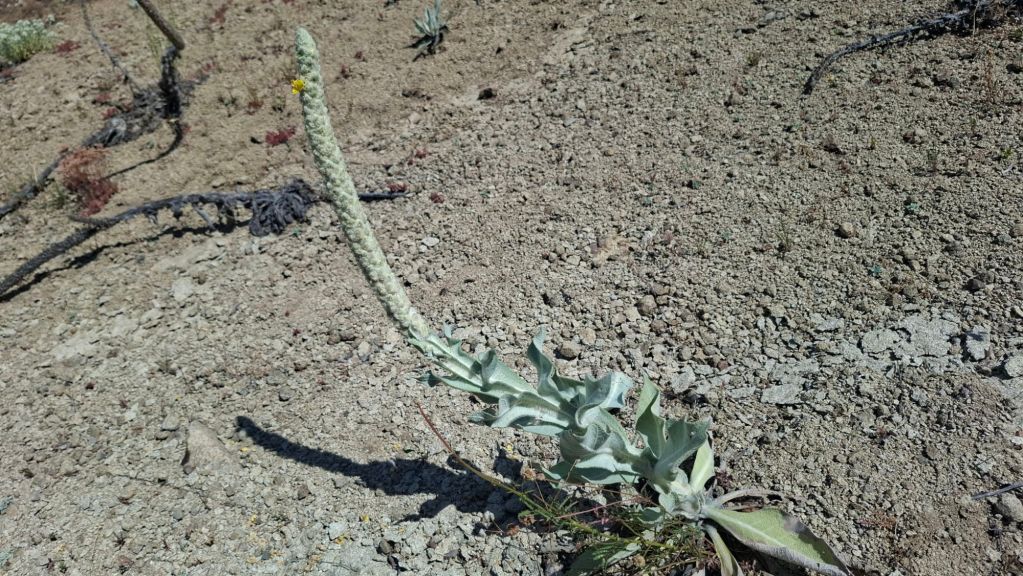
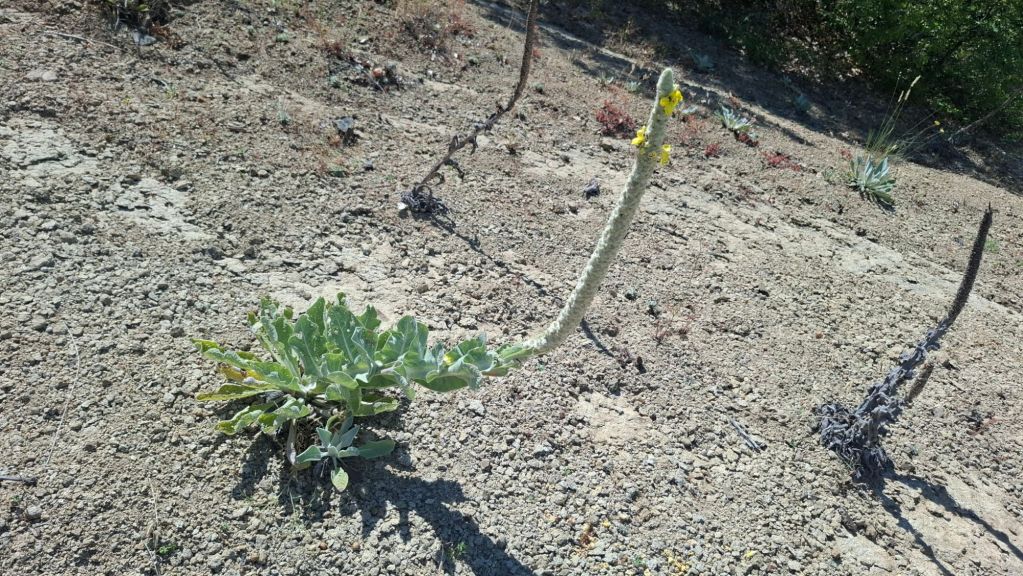
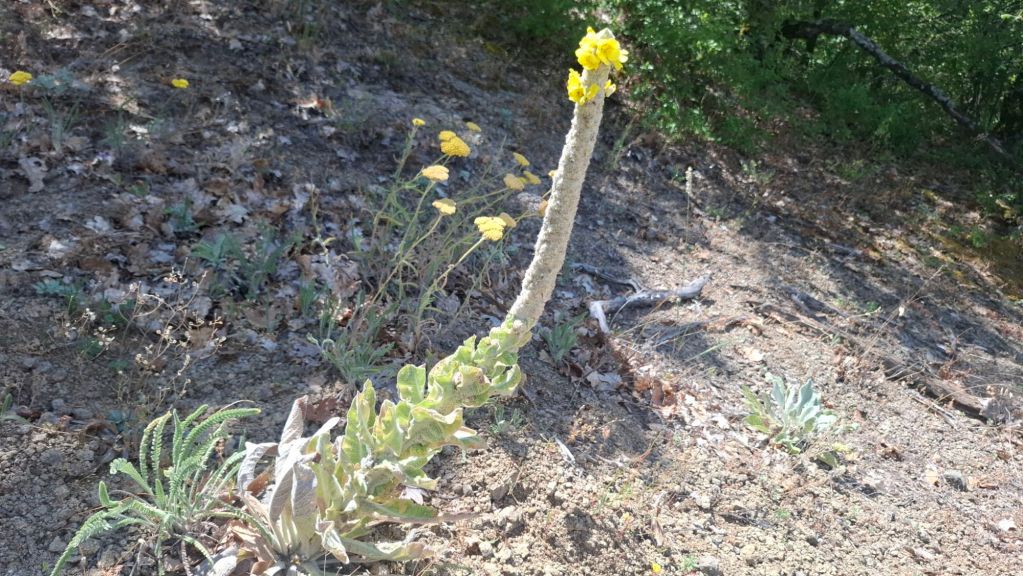
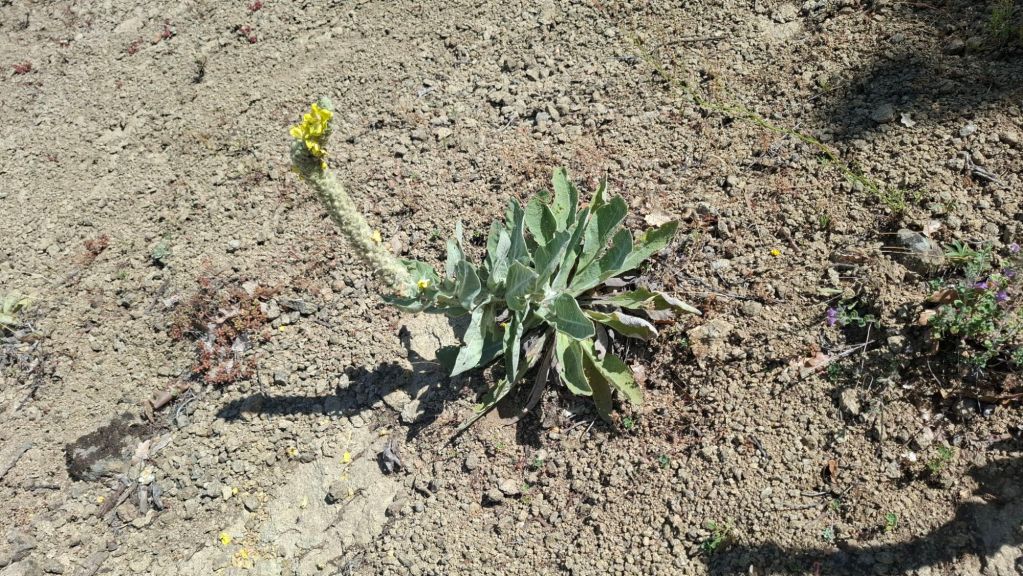
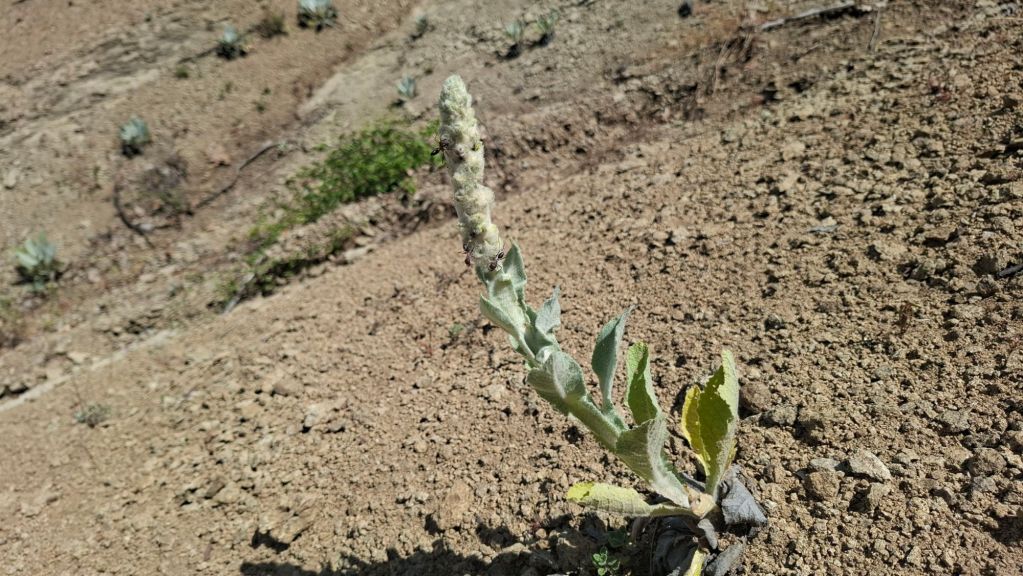
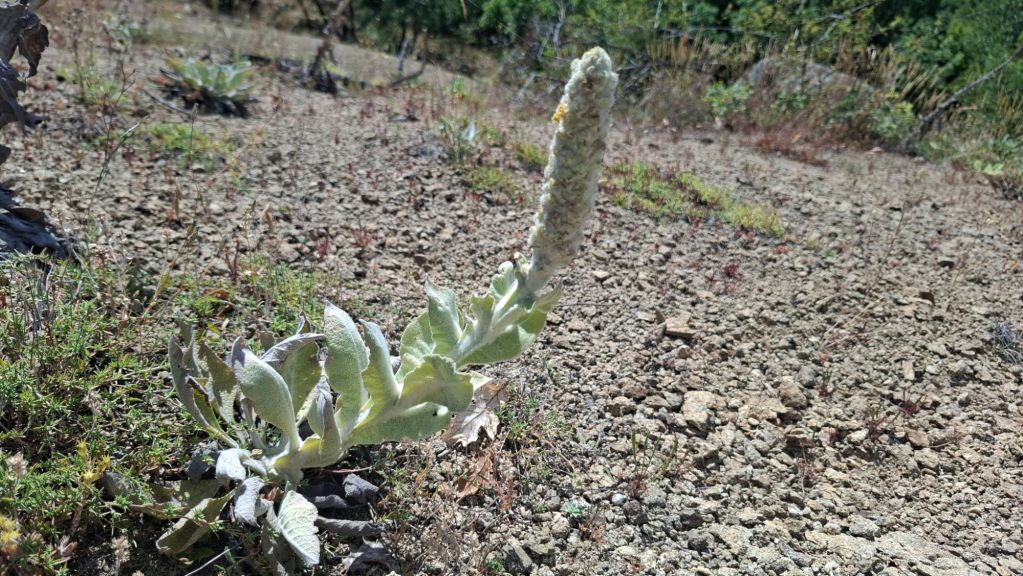
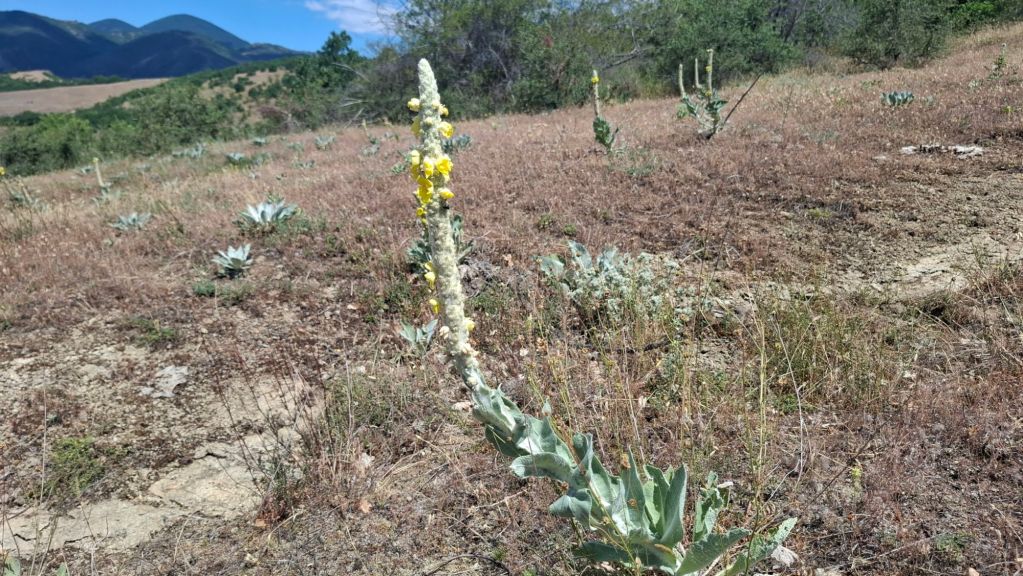
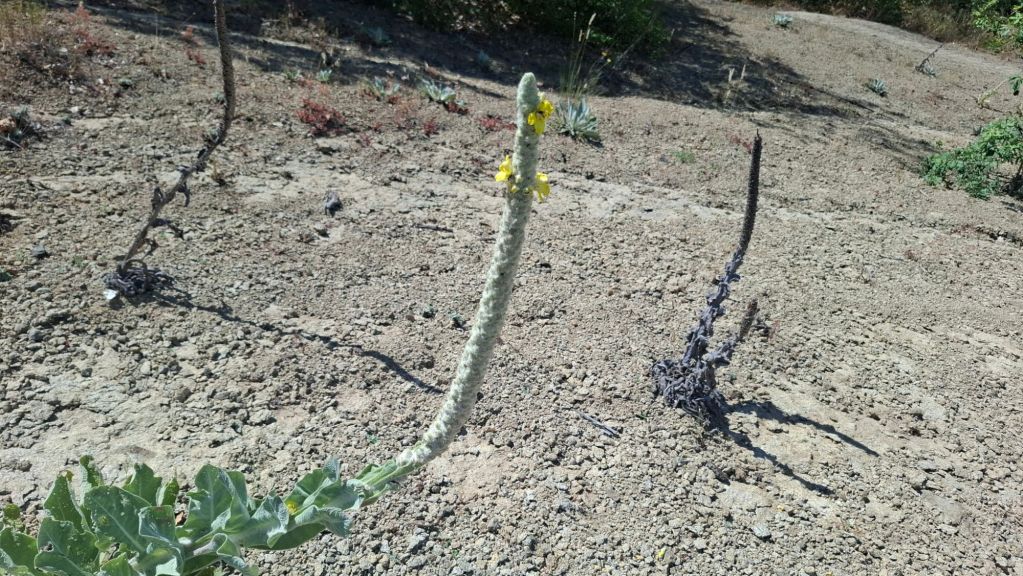
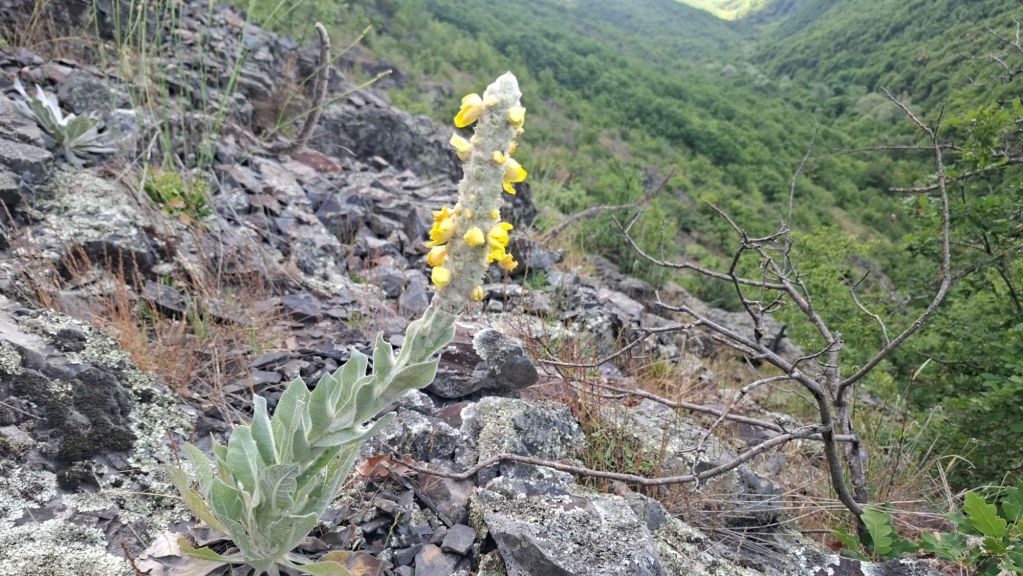
Local endemic from a restricted range in North Macedonia, first described from Osogovo – Lesnovo by Micevski (1996).
Lifeform: Biennial plant – first year of the life cycle is vegetative (basal rosette stage). Flowering and fruiting occur in the second year.
Distribution: North Macedonia – local endemic from the south-western part of the Osogovo Mountain range and near by regions.
Habitat: Open terrains – hill pastures, rocky terrains, barren slopes. In the locus classicus and near by areas it develops on dacitic ignimbrite volcanic rocks. Also found on other silicate substrate in near by areas.
Locus classicus: Probishtip: Lesnovo. Probishtip: Lezovo.
Recorded localities (T. Dimitrovski): Probishtip: Zletovo- hills east of the gorge of the Zletovska River (c. 4 km east of the locus classicus); Probistip: between the village of Ratkovica and the Shtalkovichka River, on rocky outcrops above Mangov Kamen; Kochani: between the village of Rajchani and “Svilanovo” region.
Flowering period: Summer (JUN, JUL, AUG).
Locality: Probishtip: Zletovo- hills east of the gorge of the Zletovska River (c. 4 km east of the locus classicus). Date: 05.07.2026.
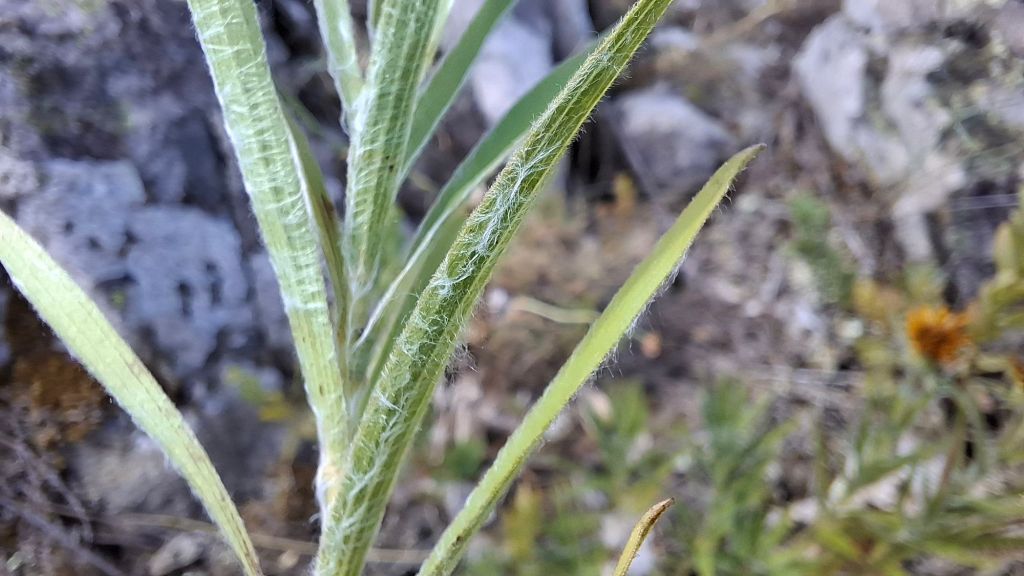
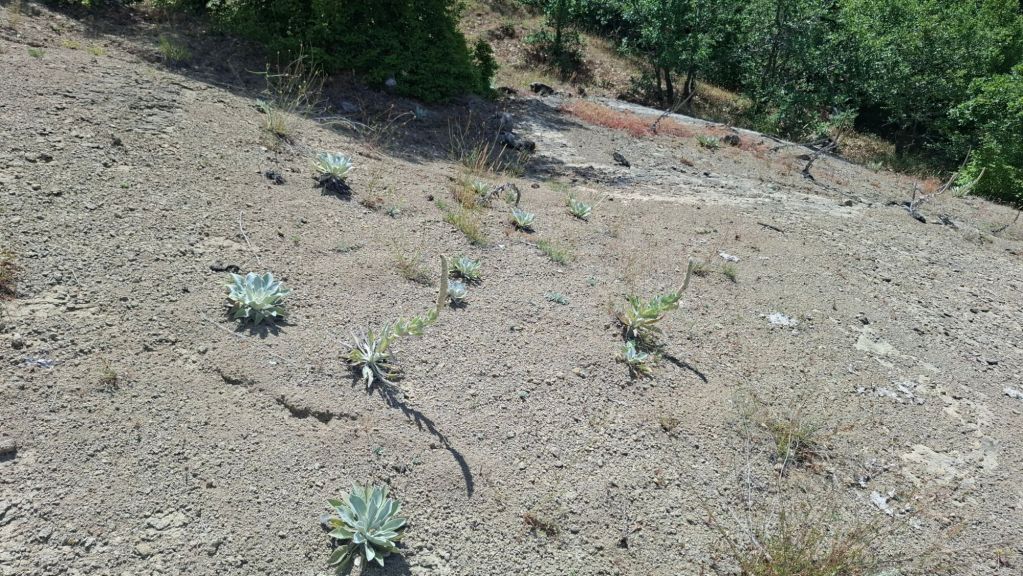
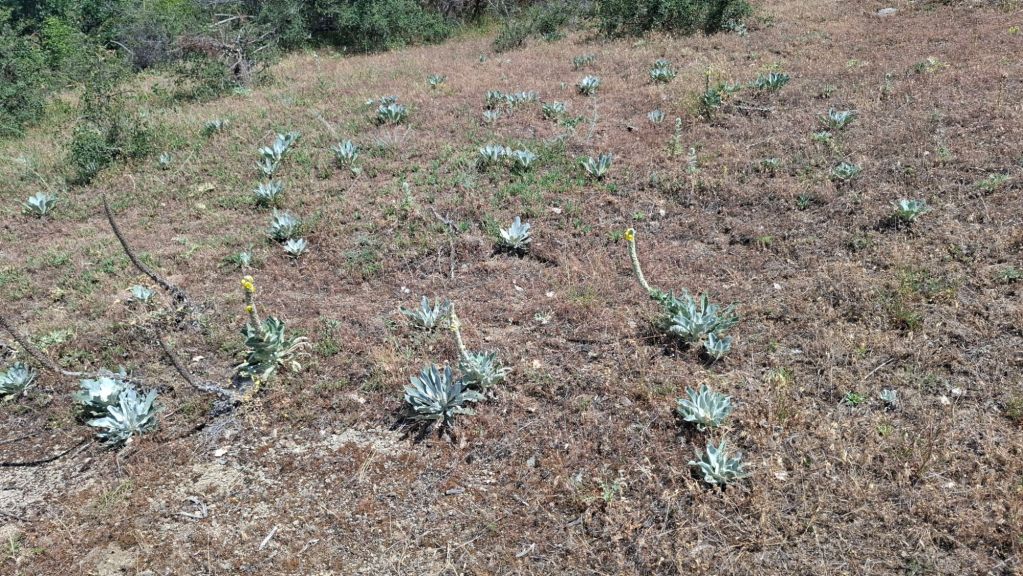
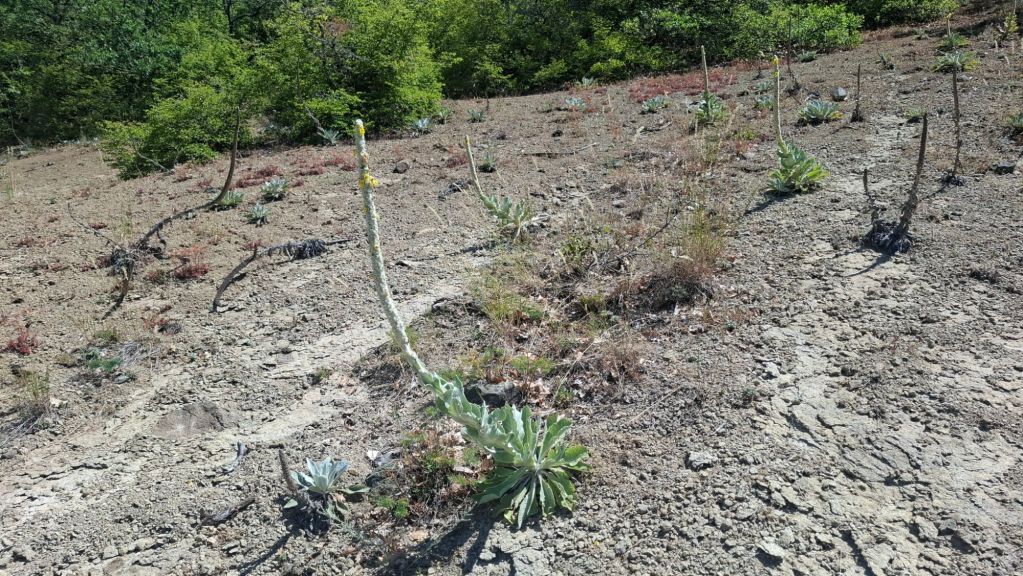
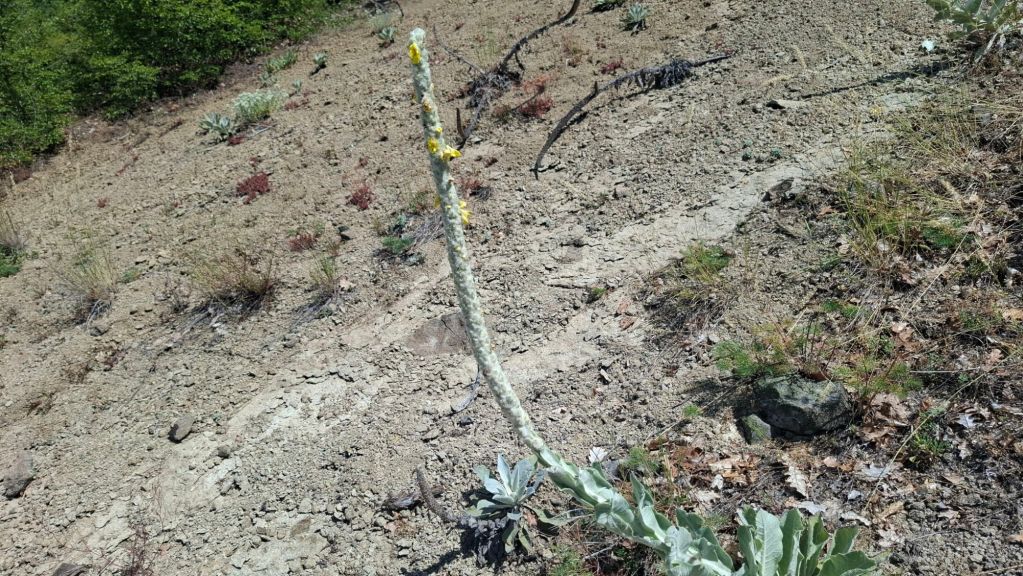
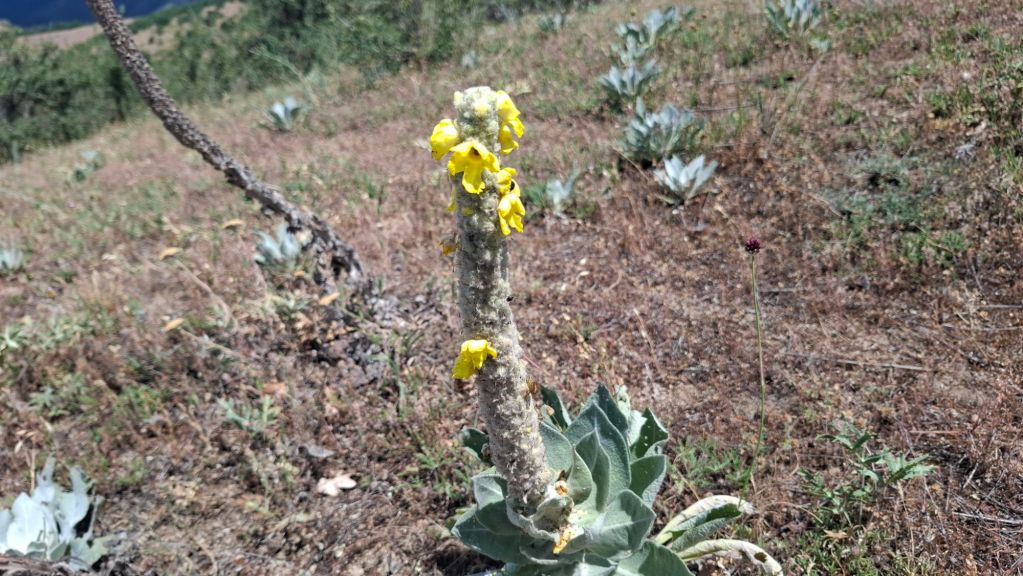
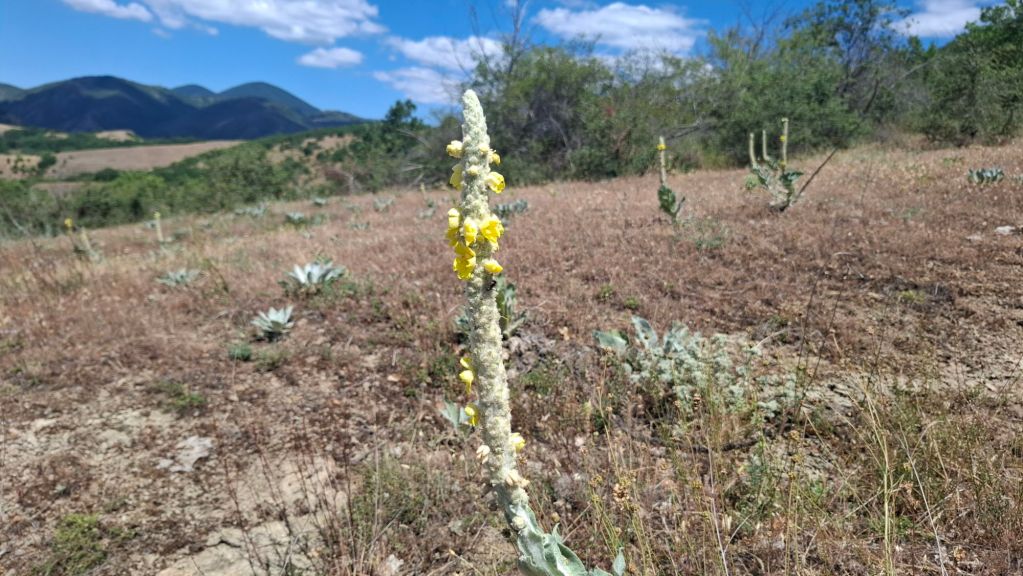
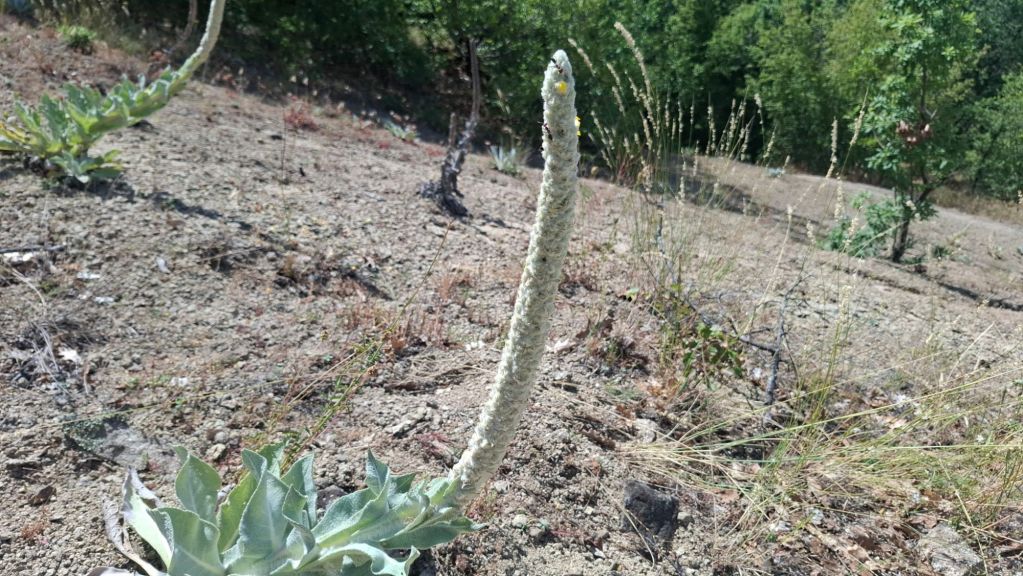
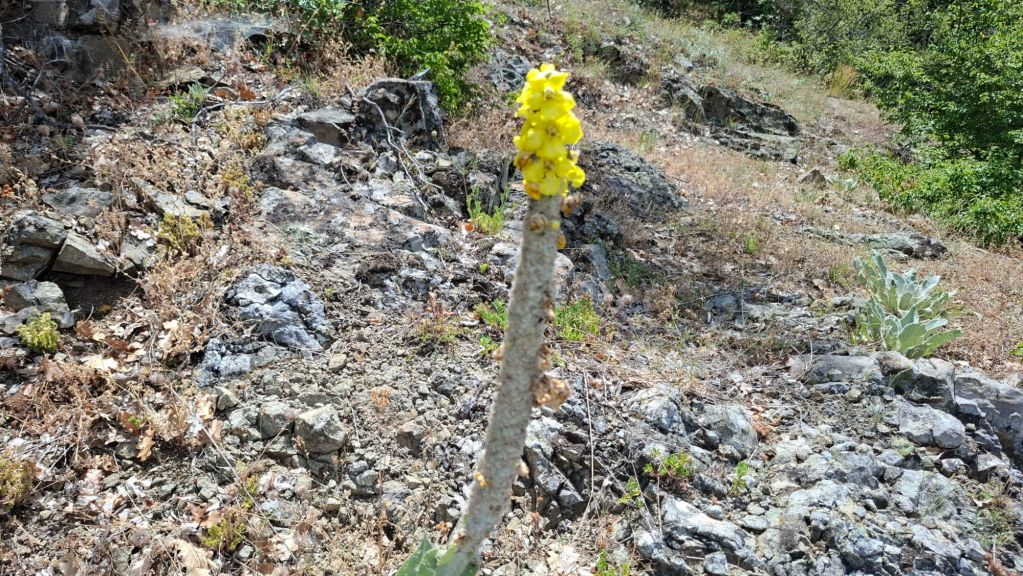
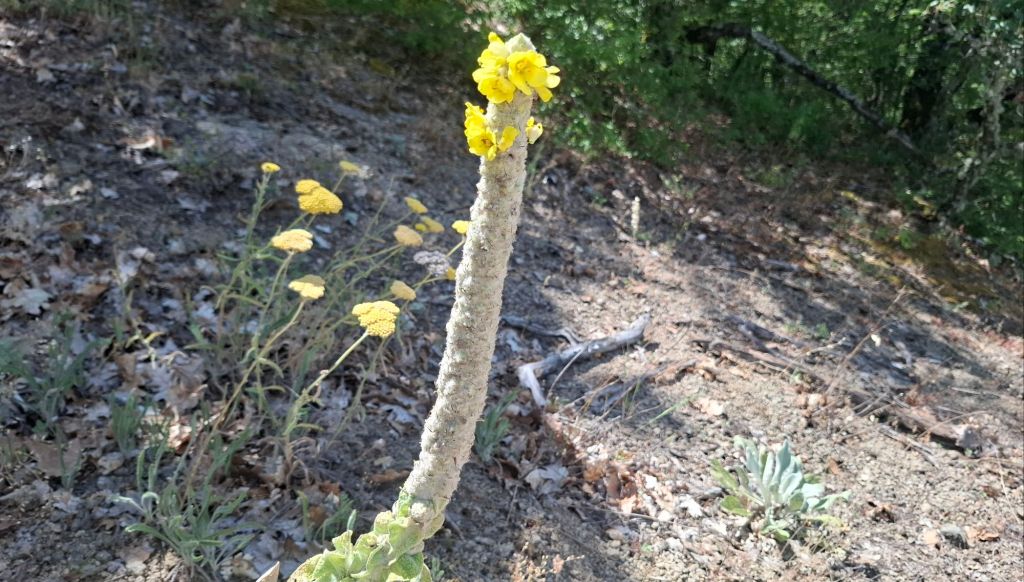
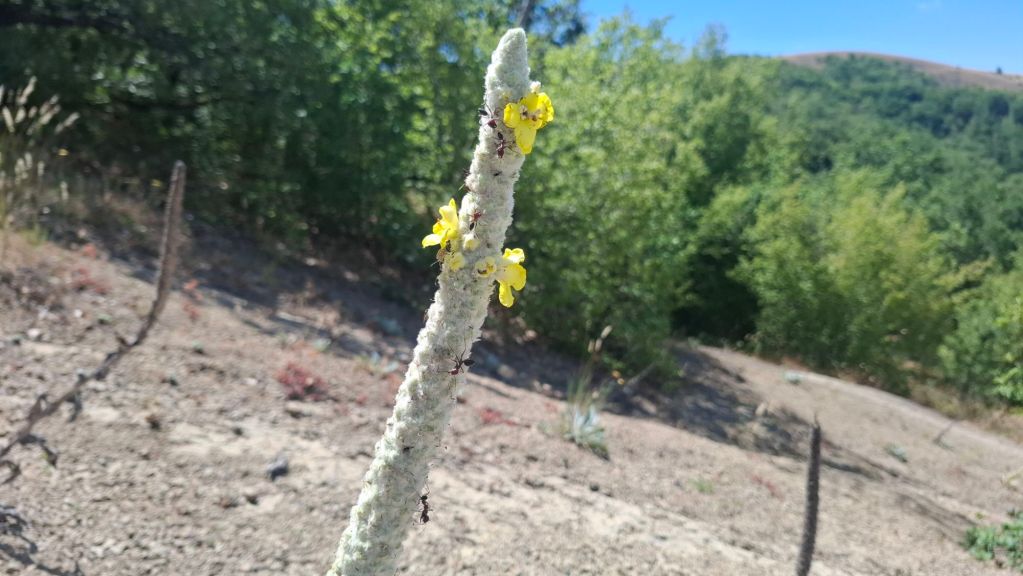
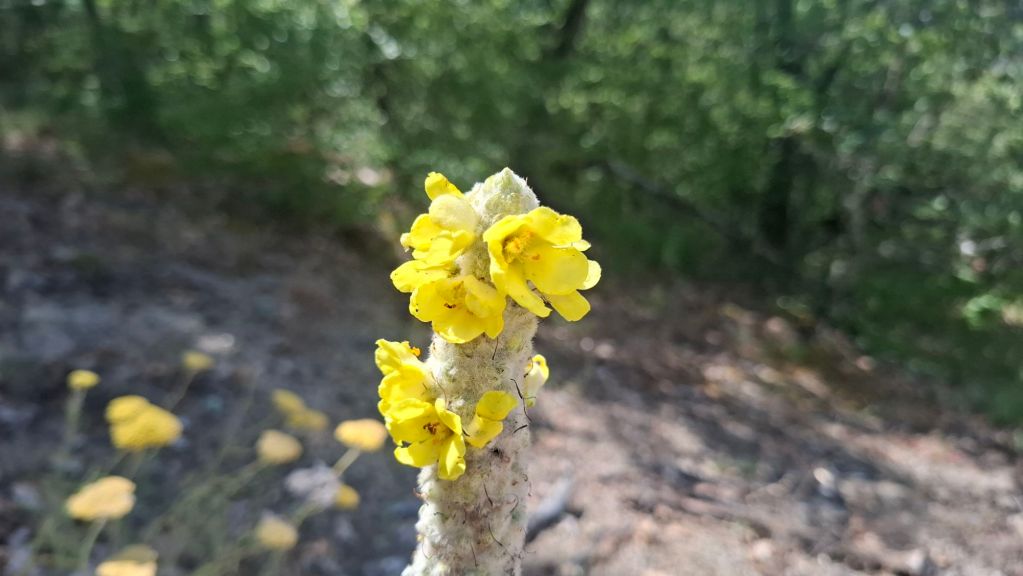
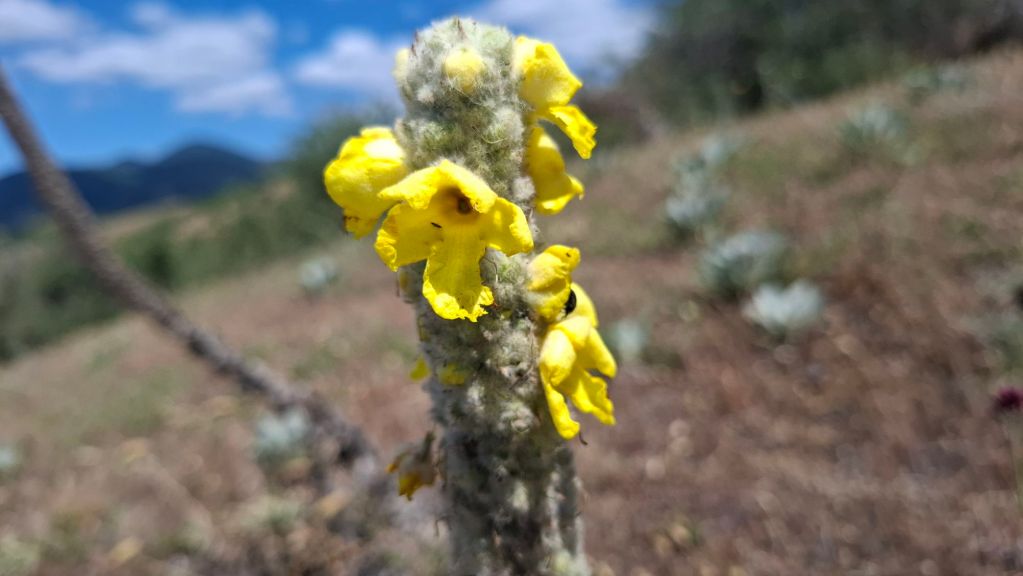
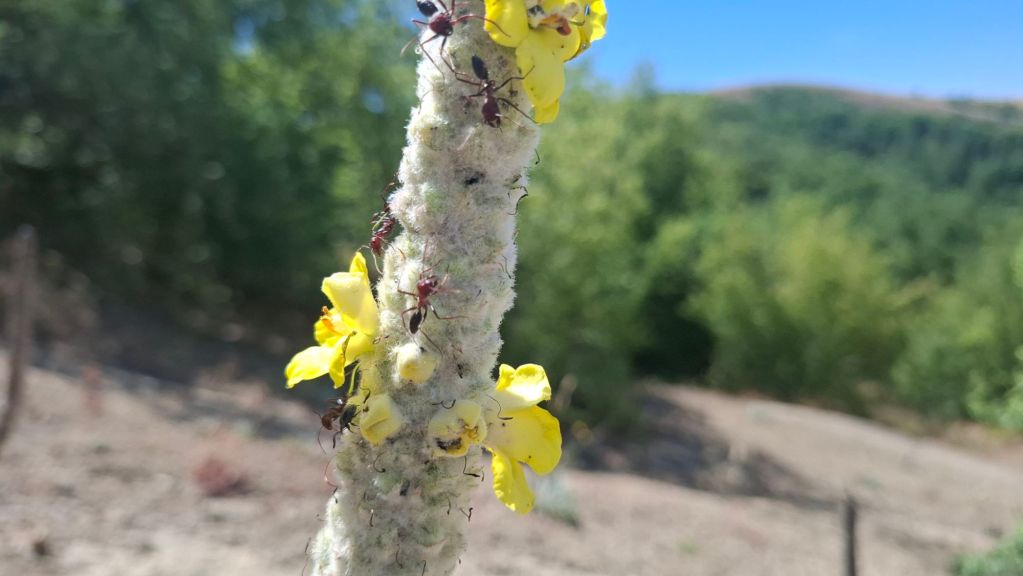
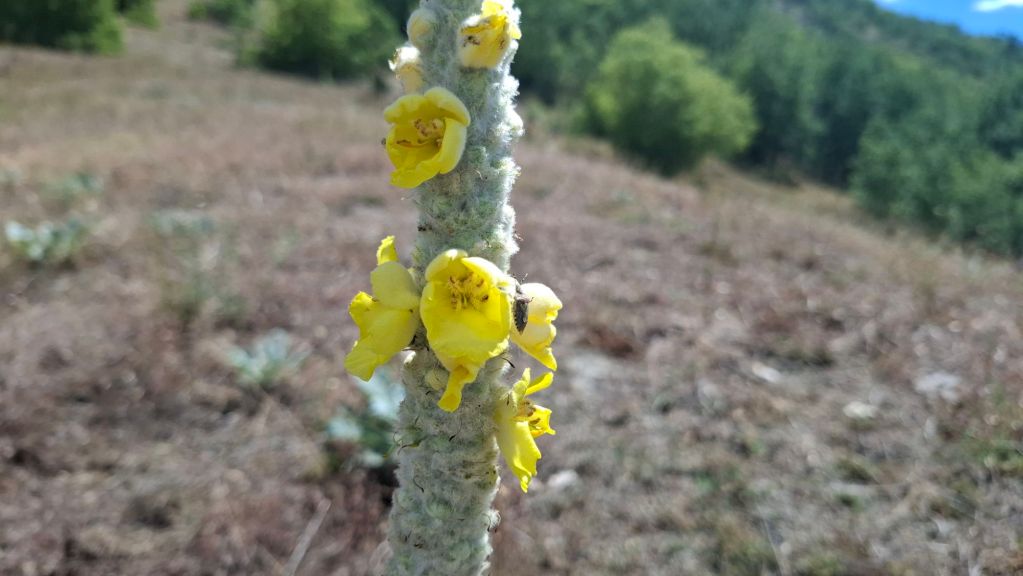
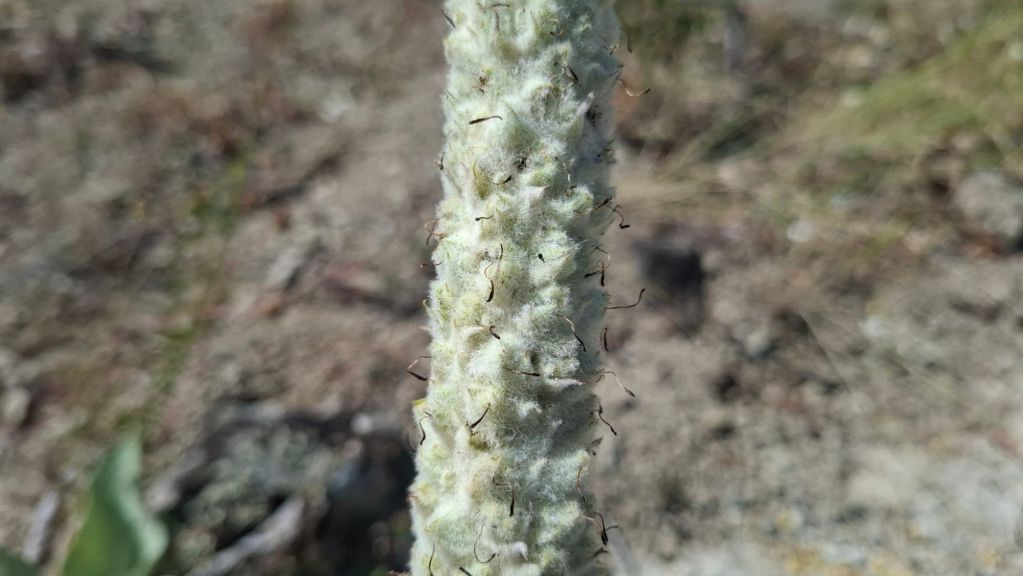
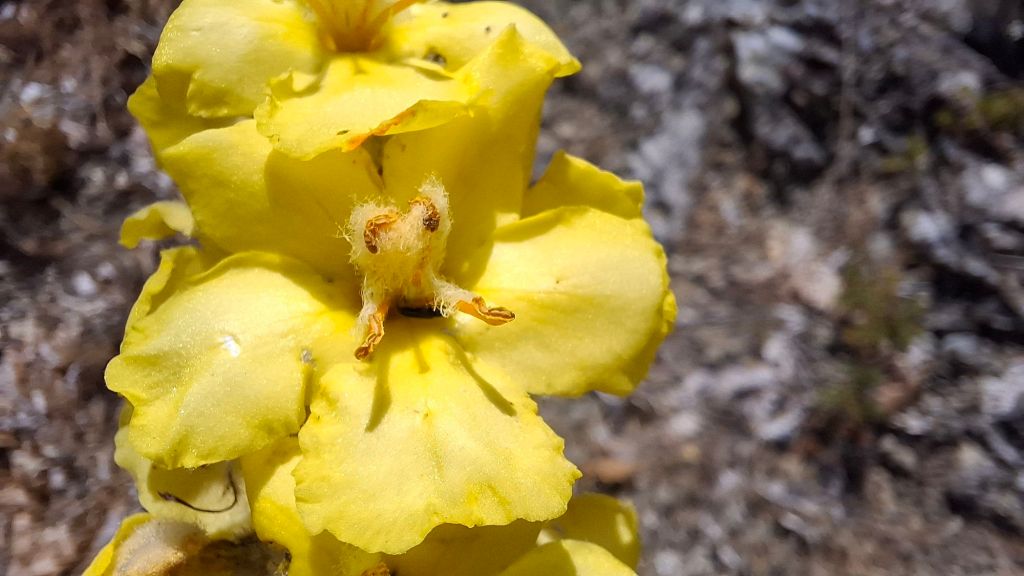
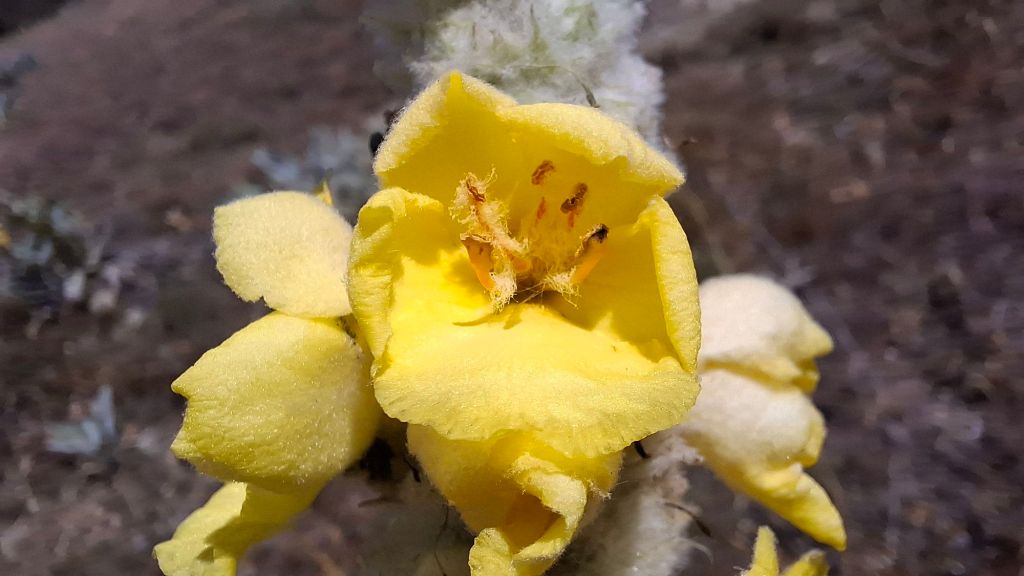
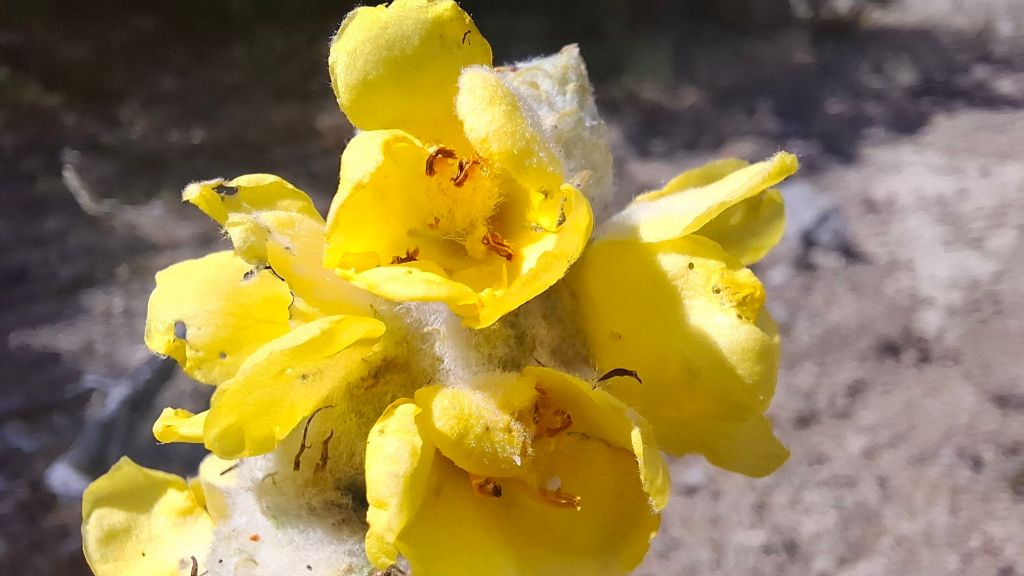
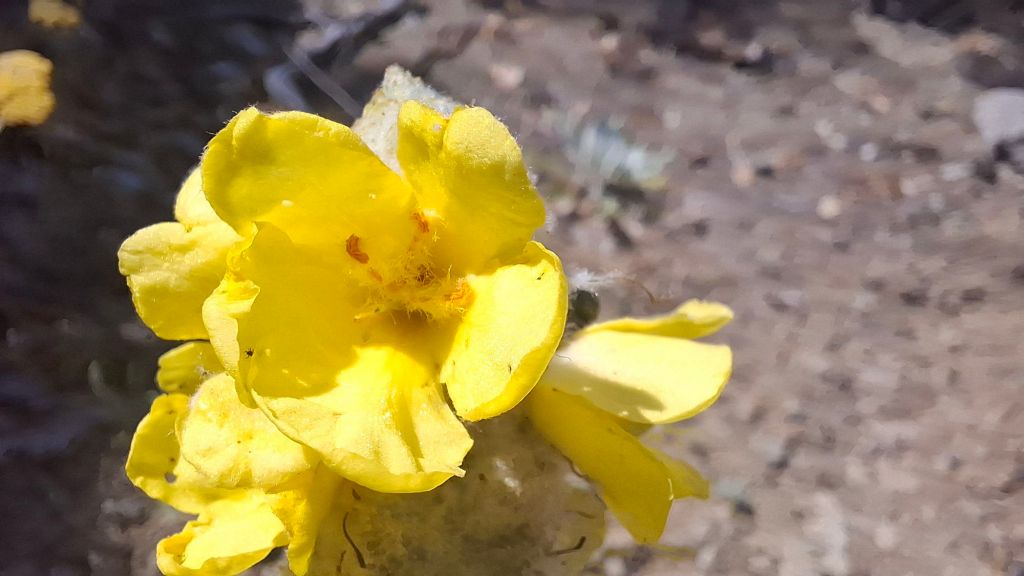
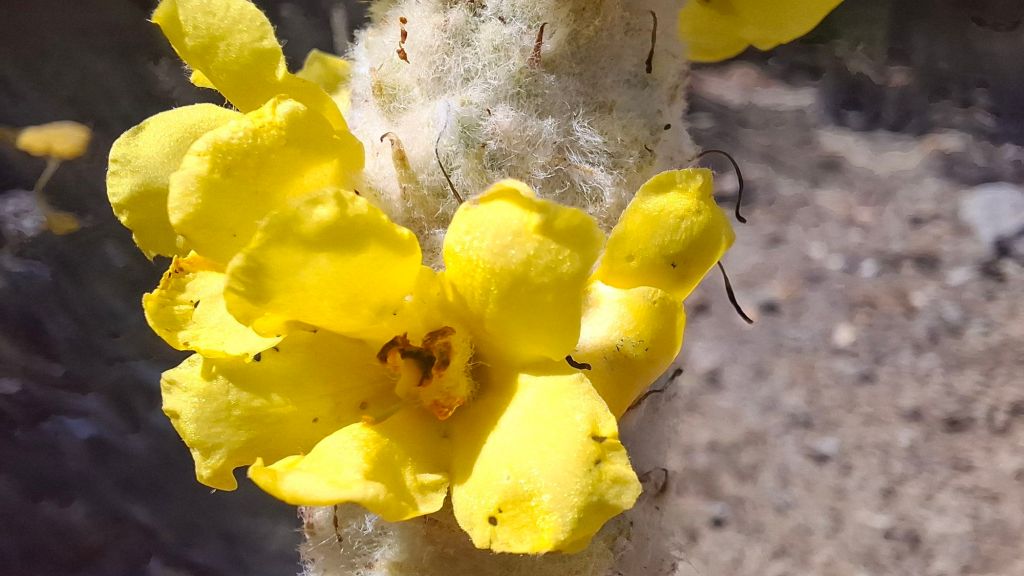
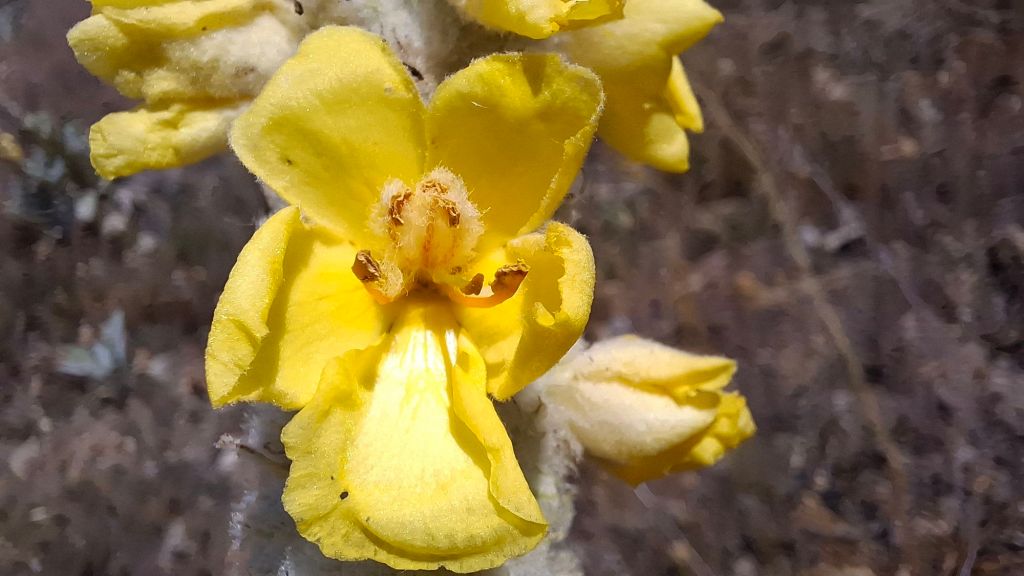
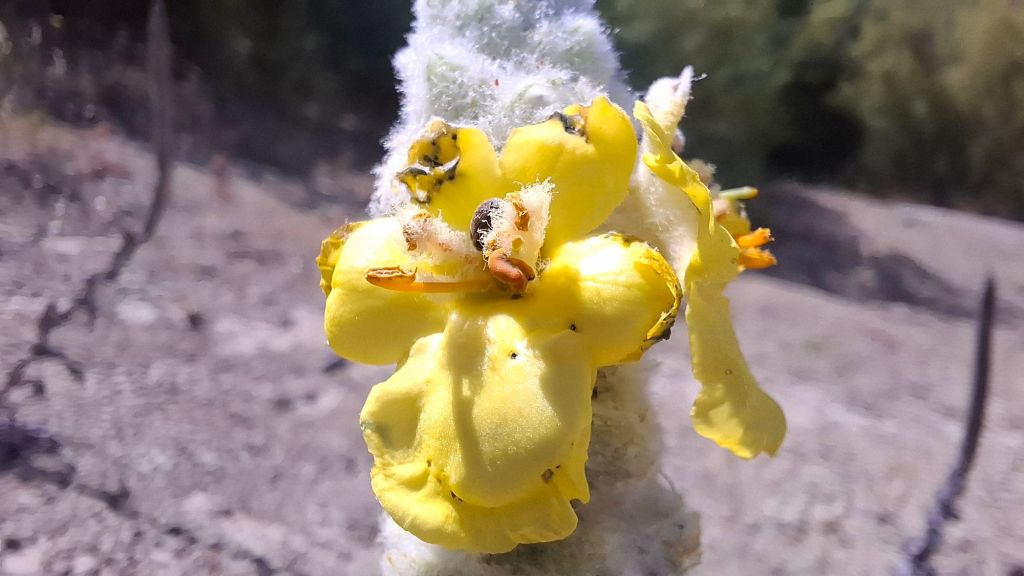
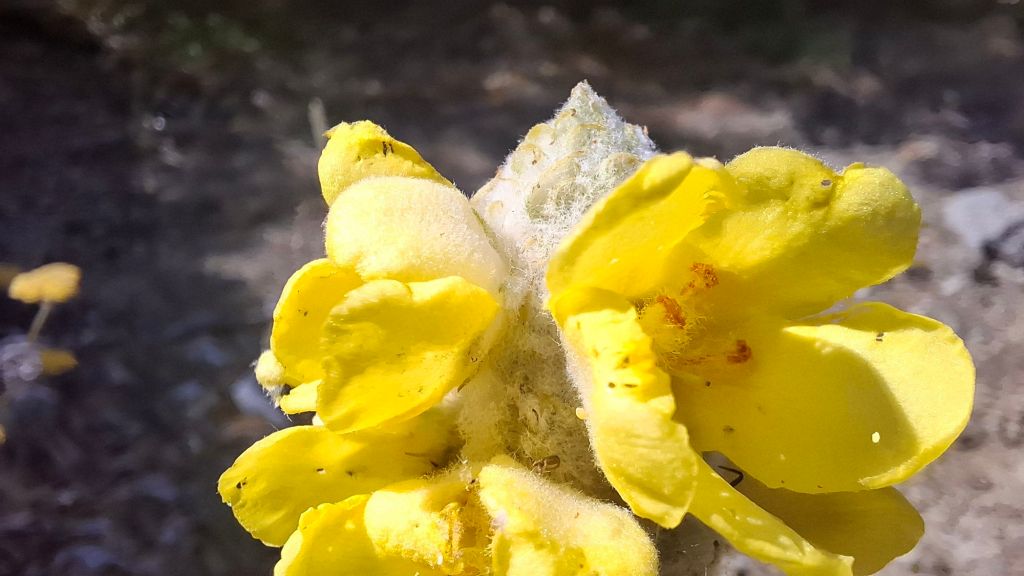
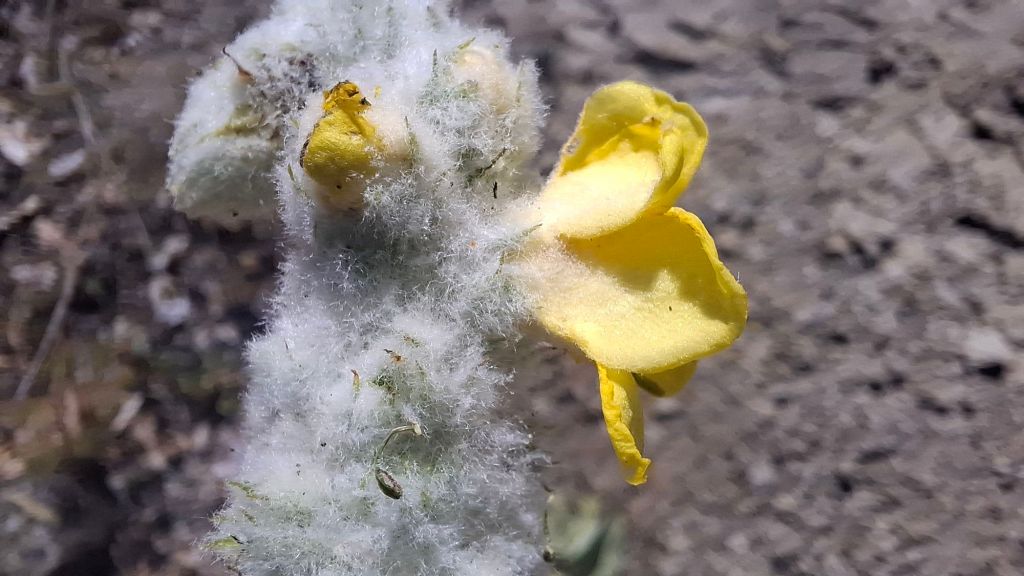
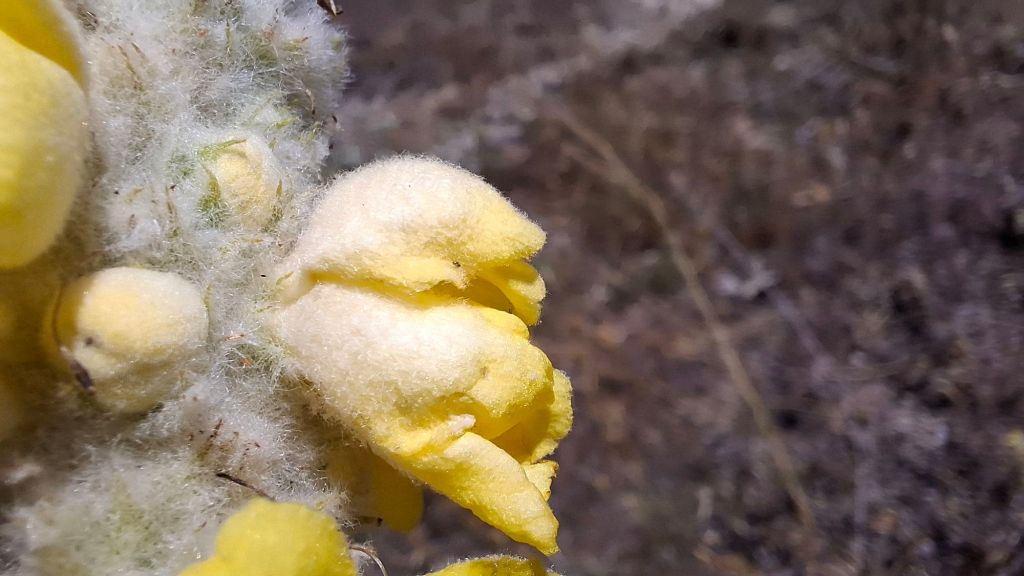
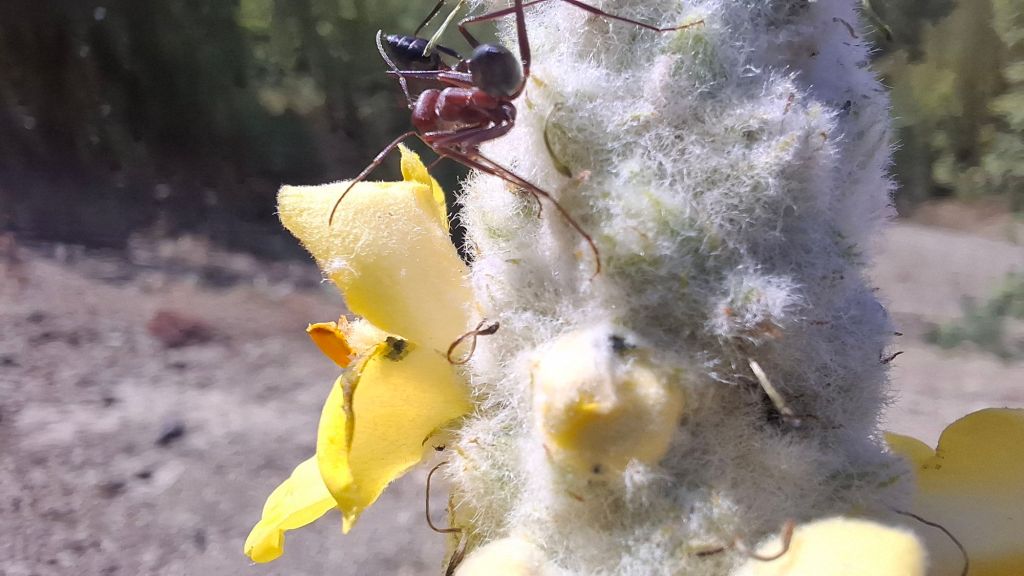
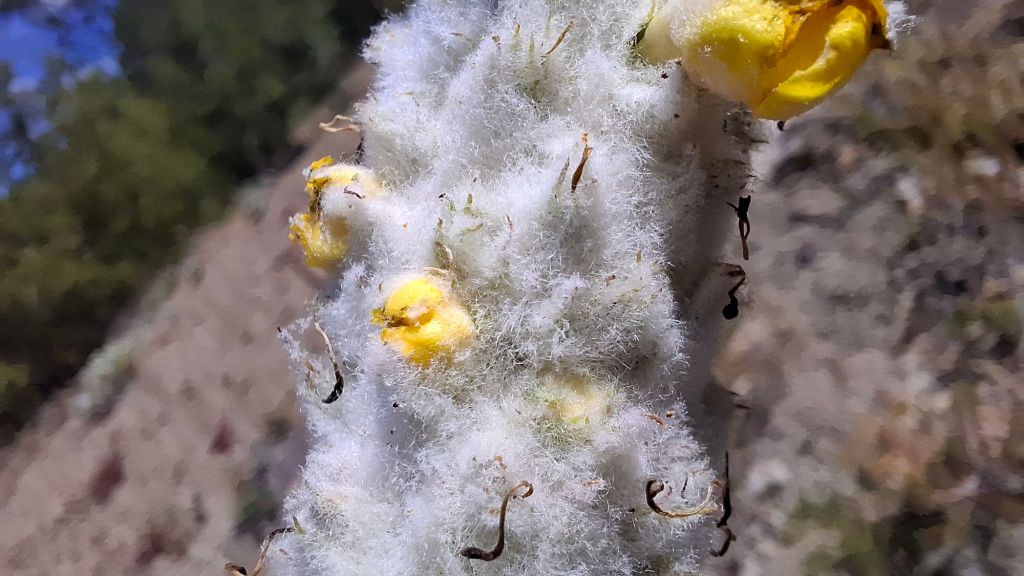
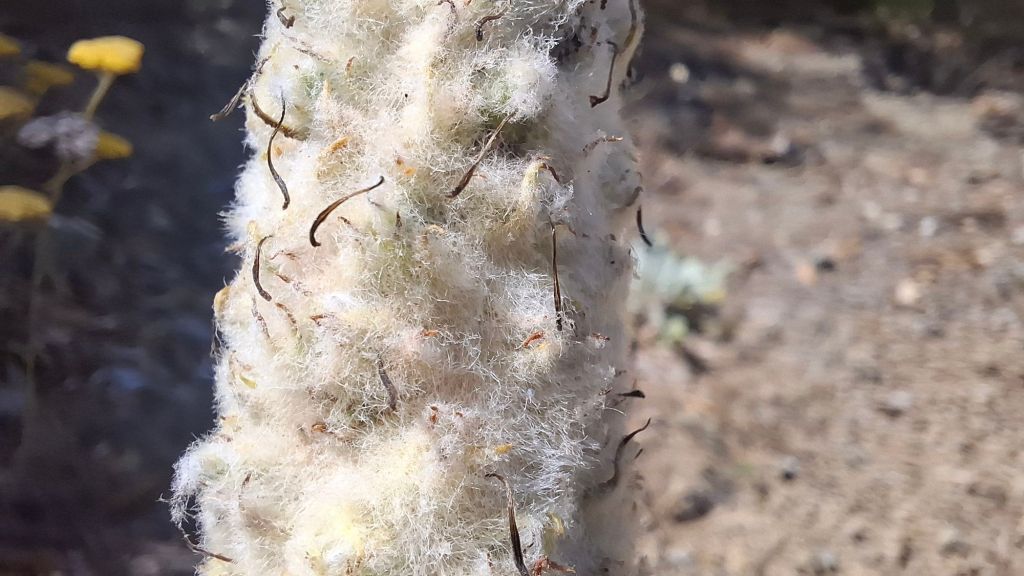
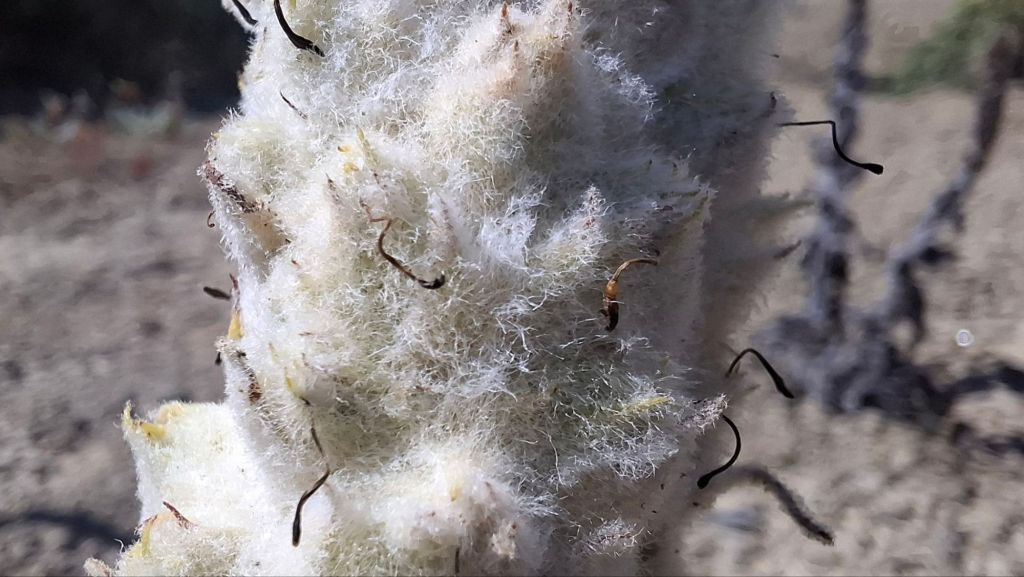
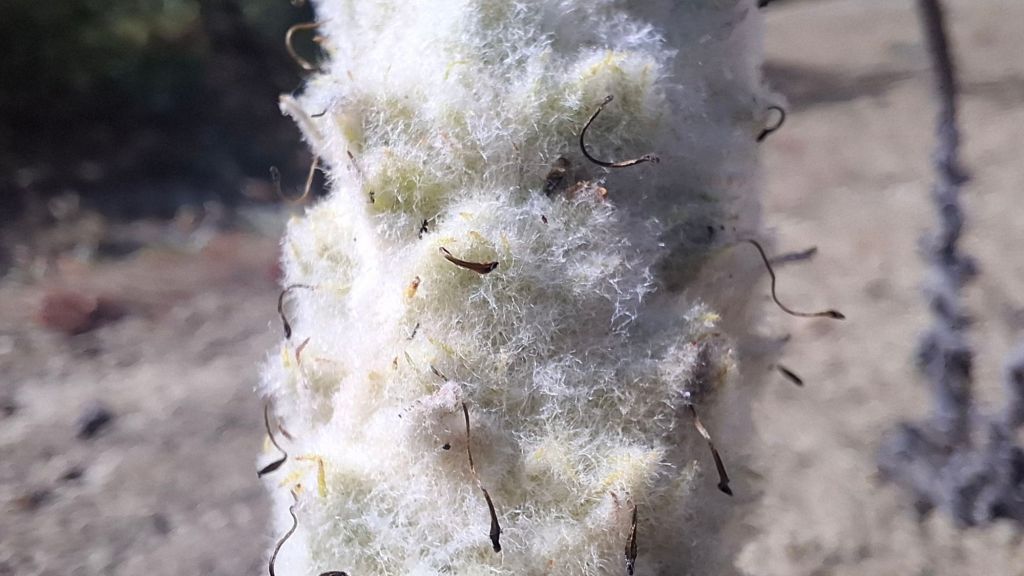
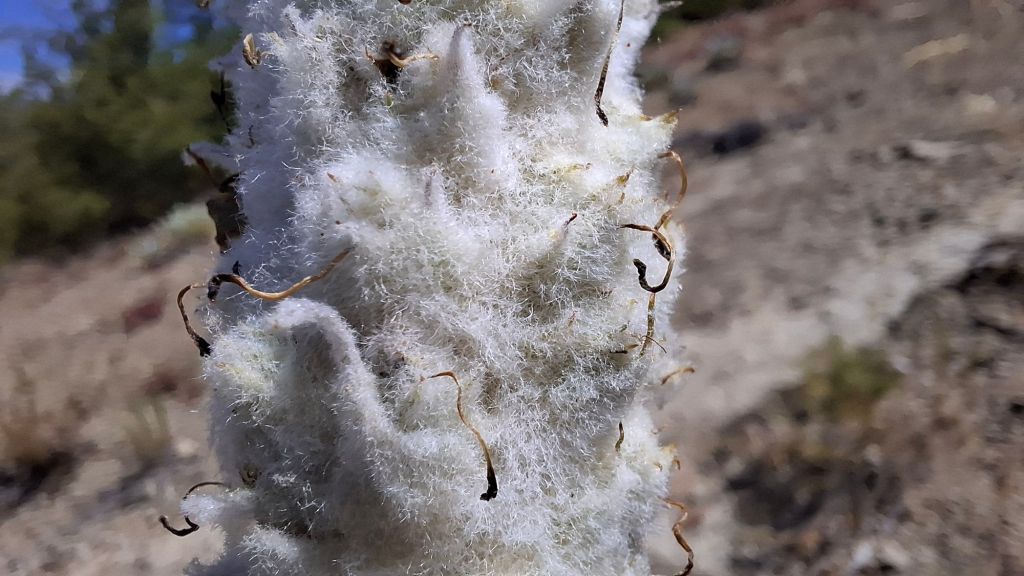
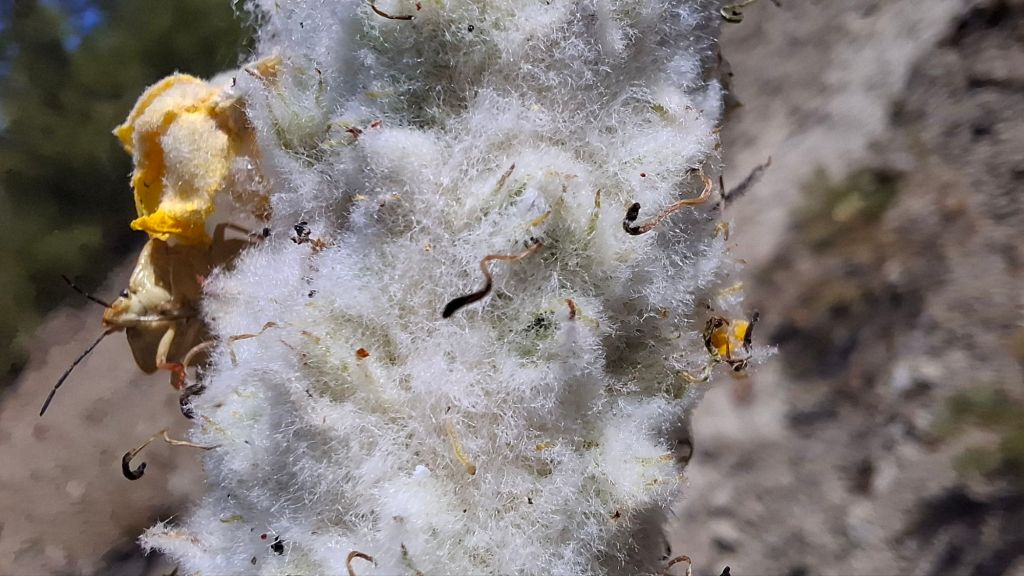
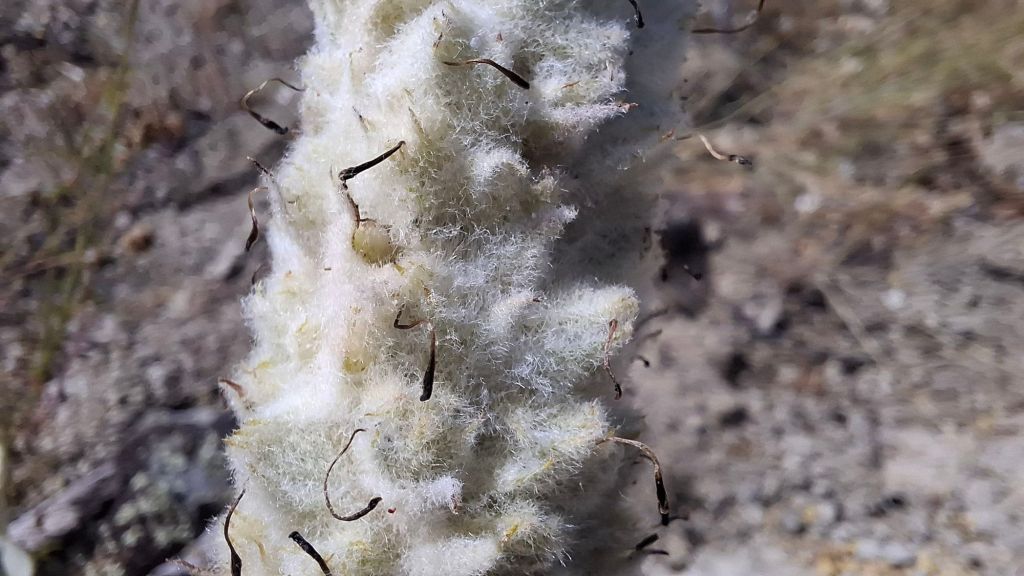
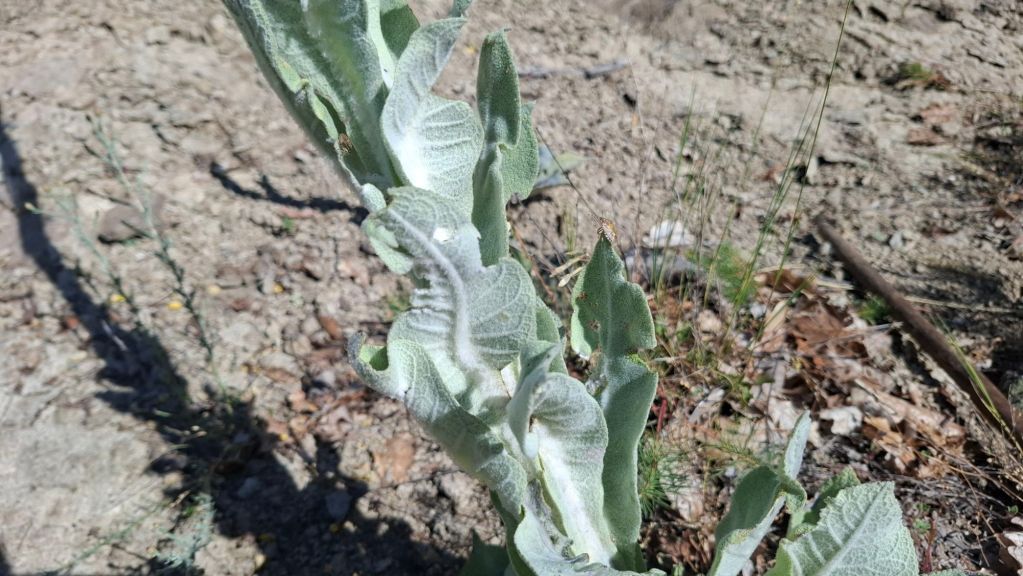
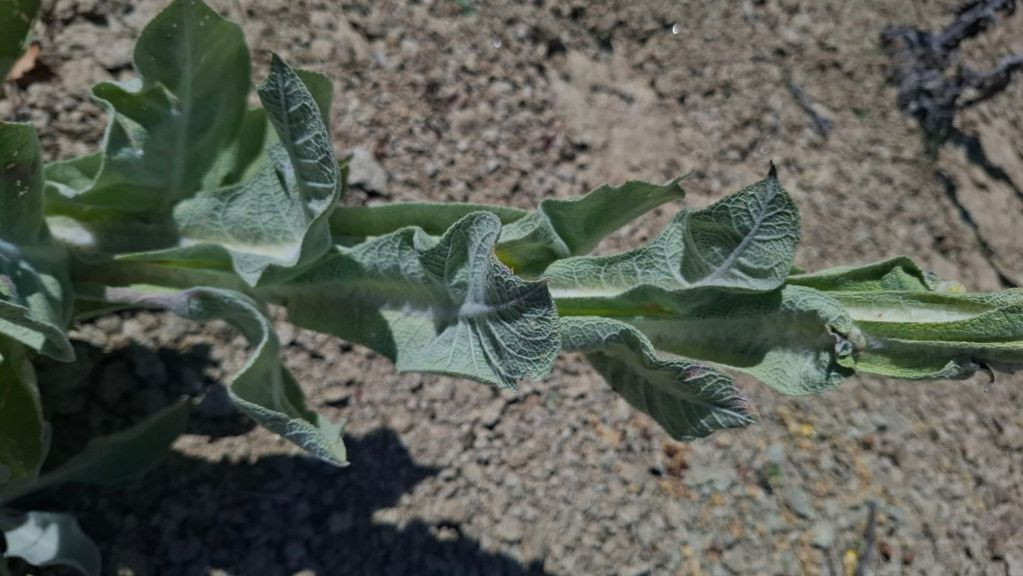
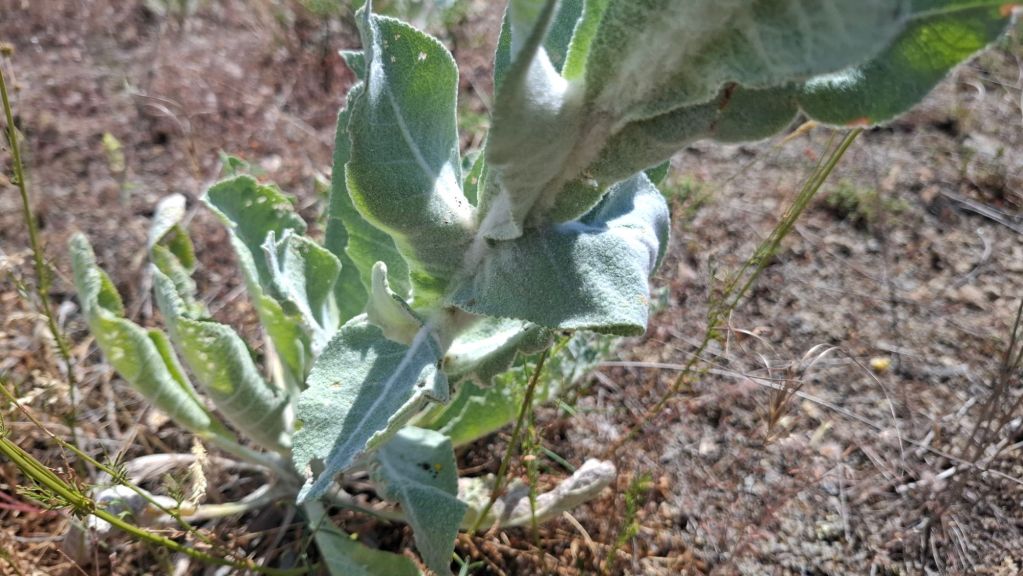
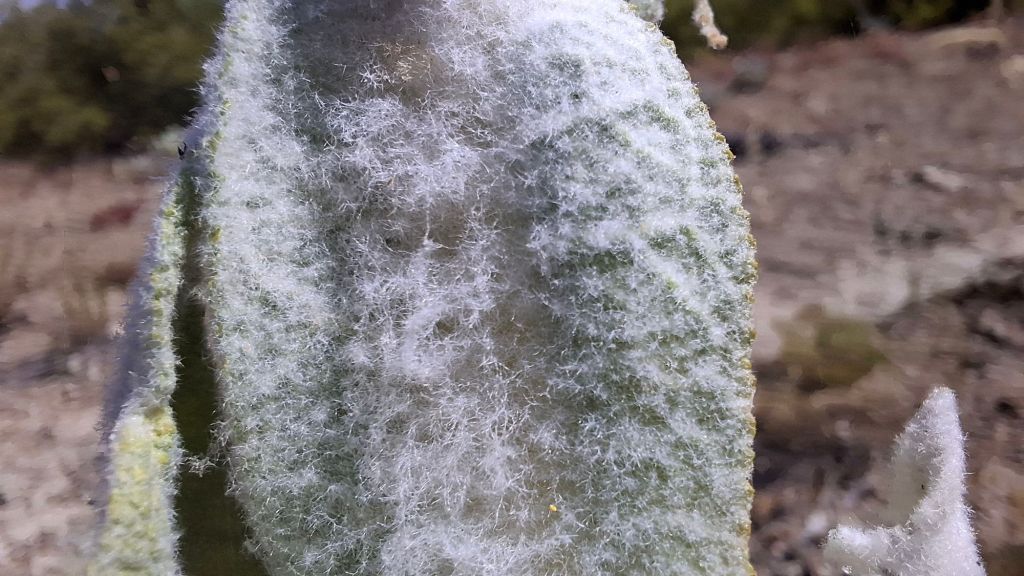
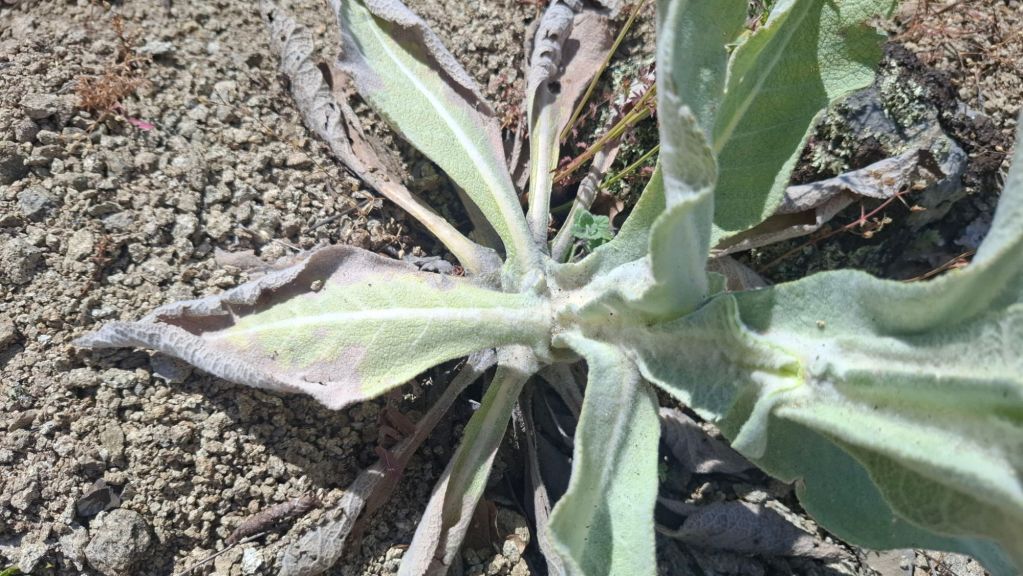
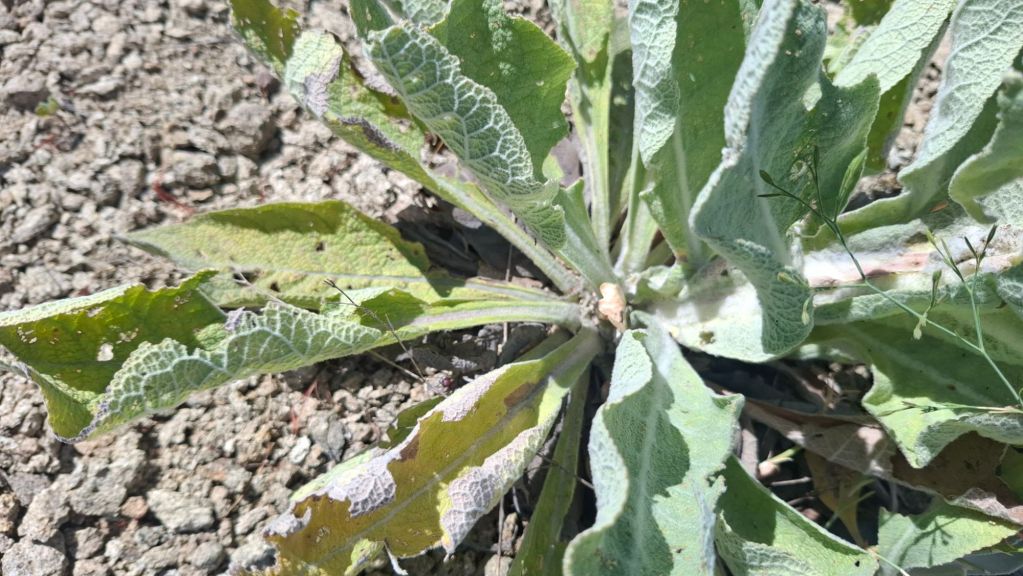
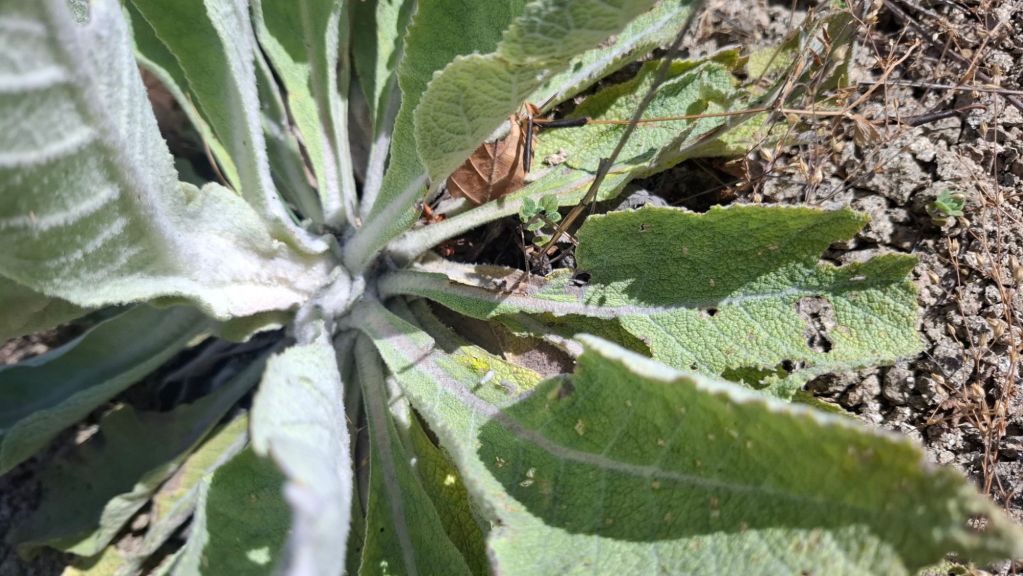
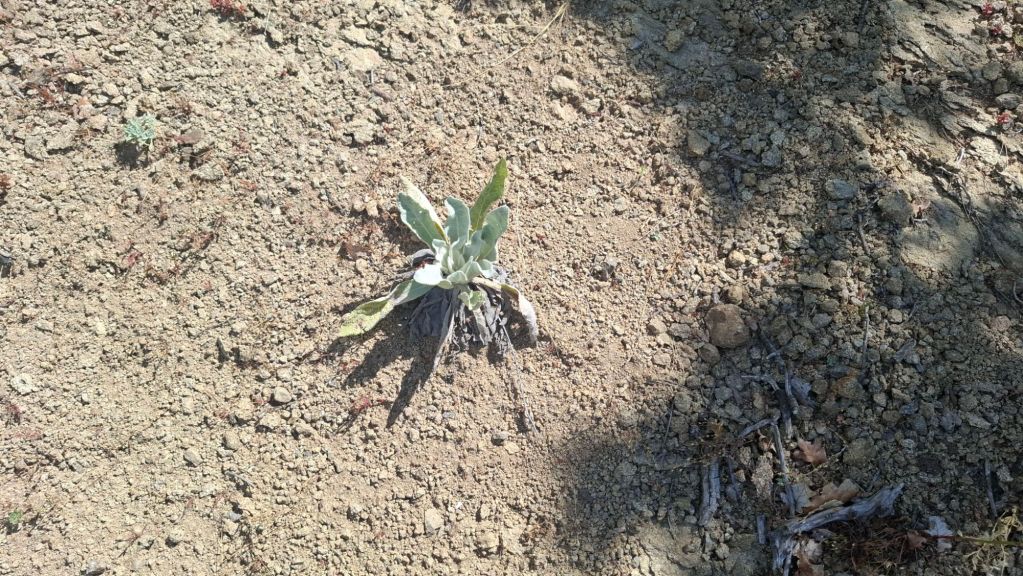
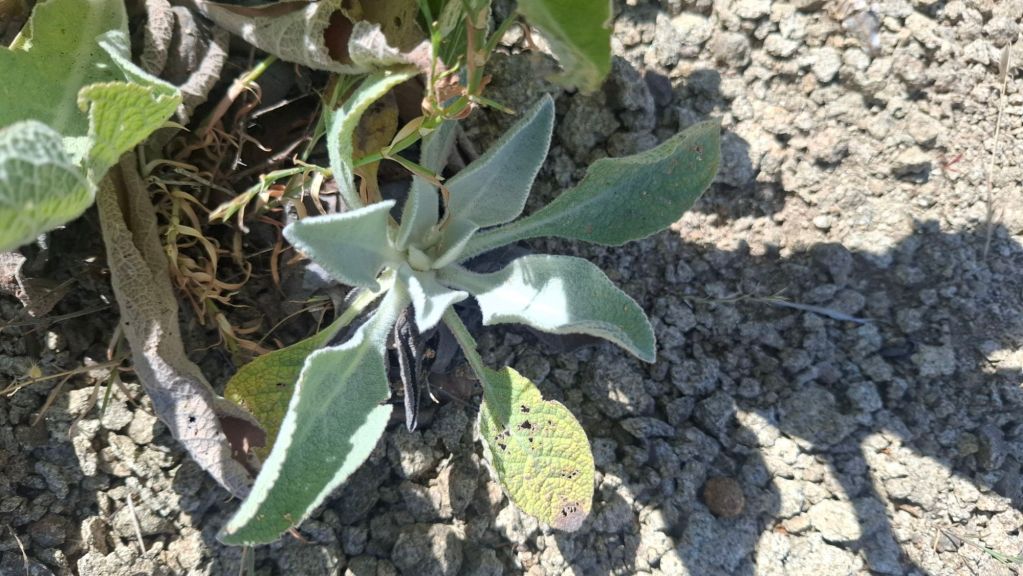
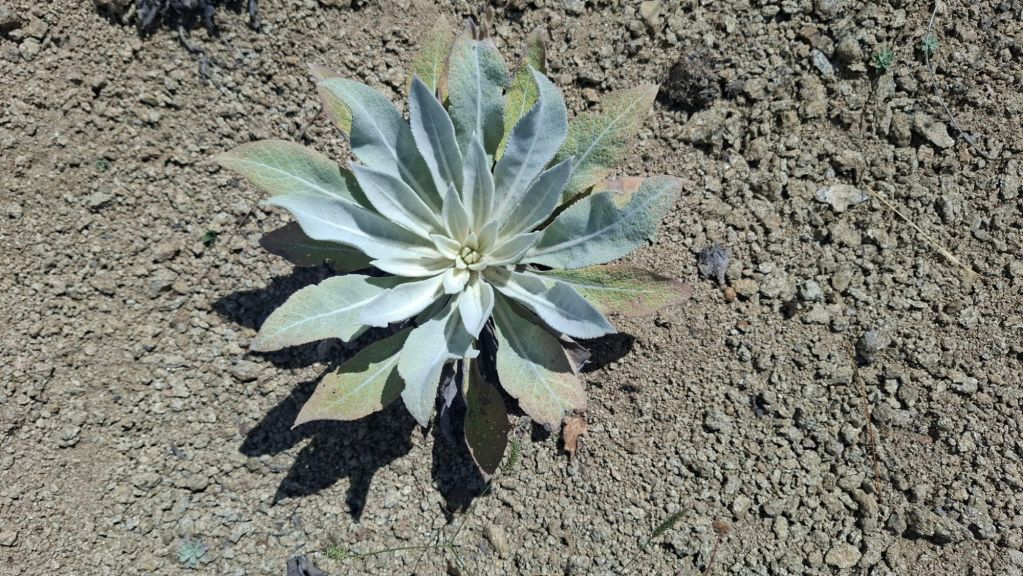
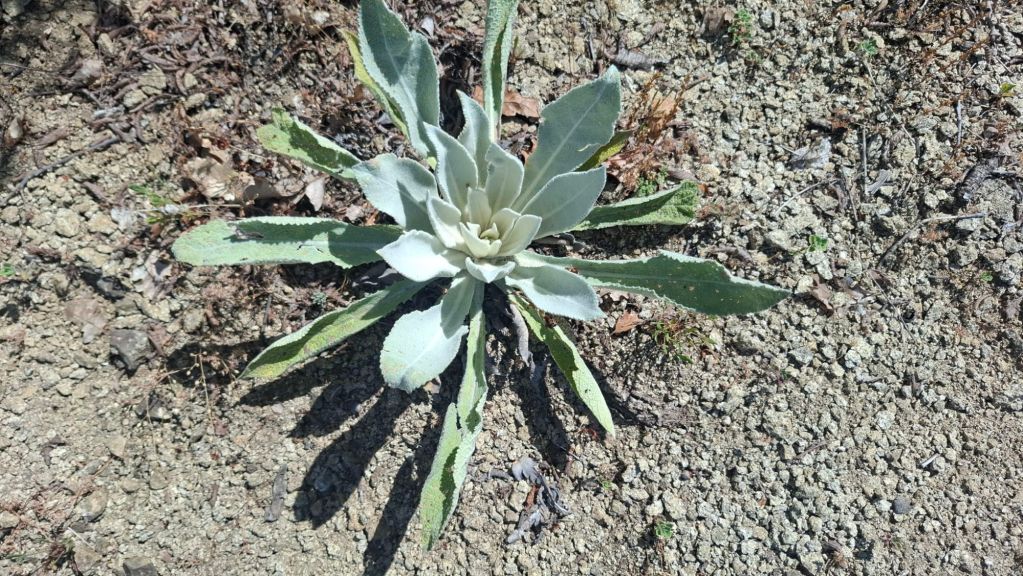
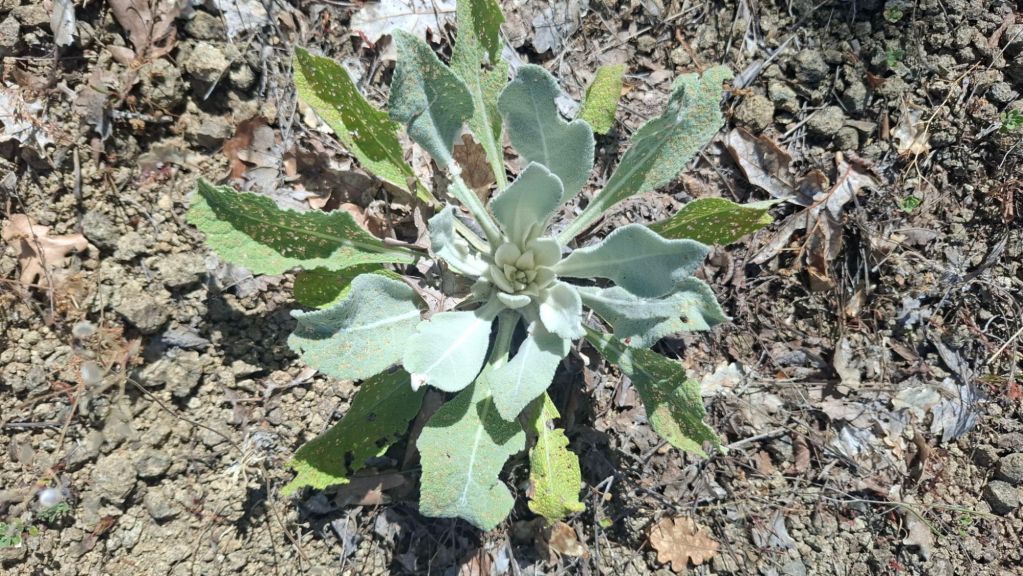
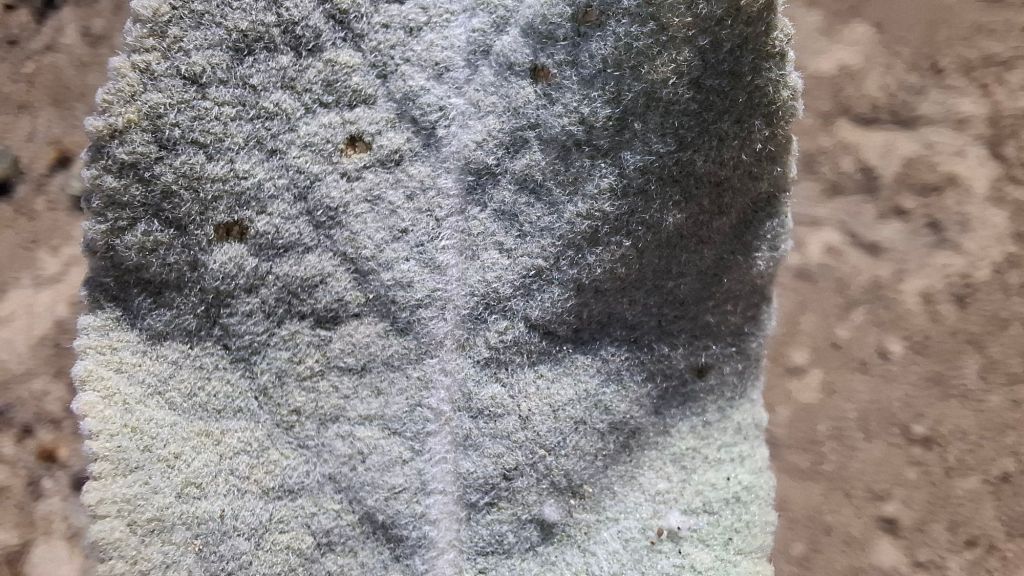
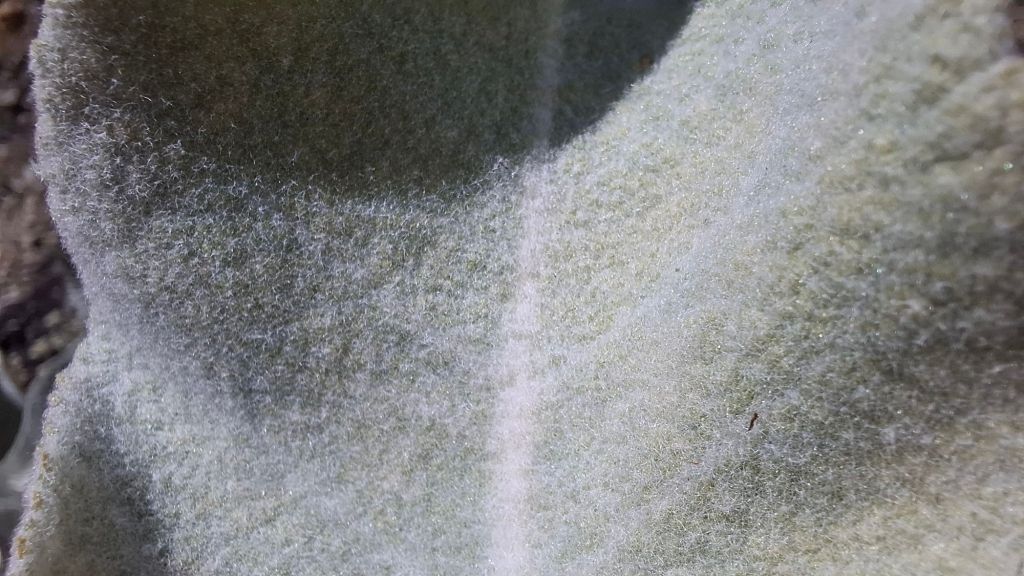
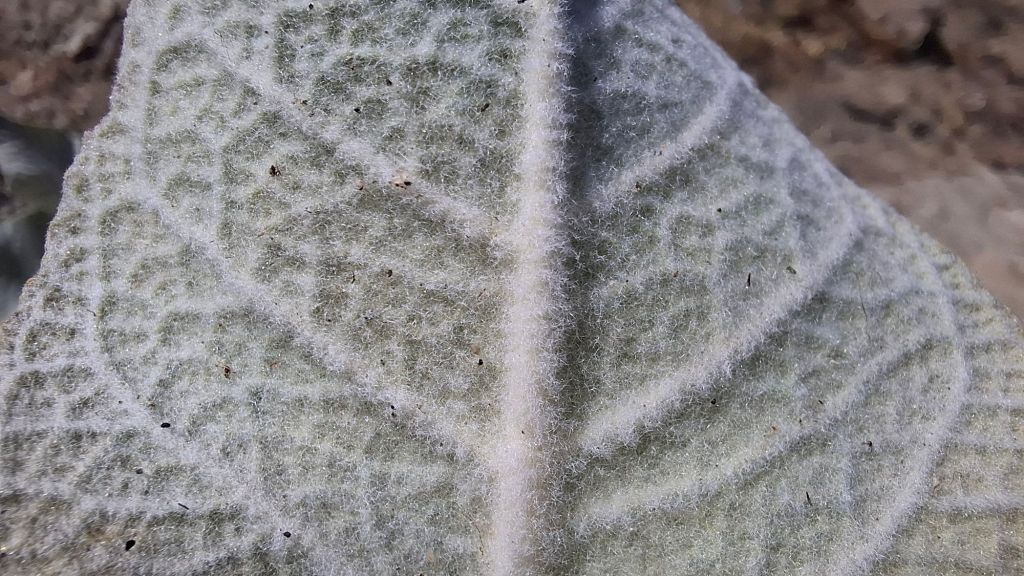
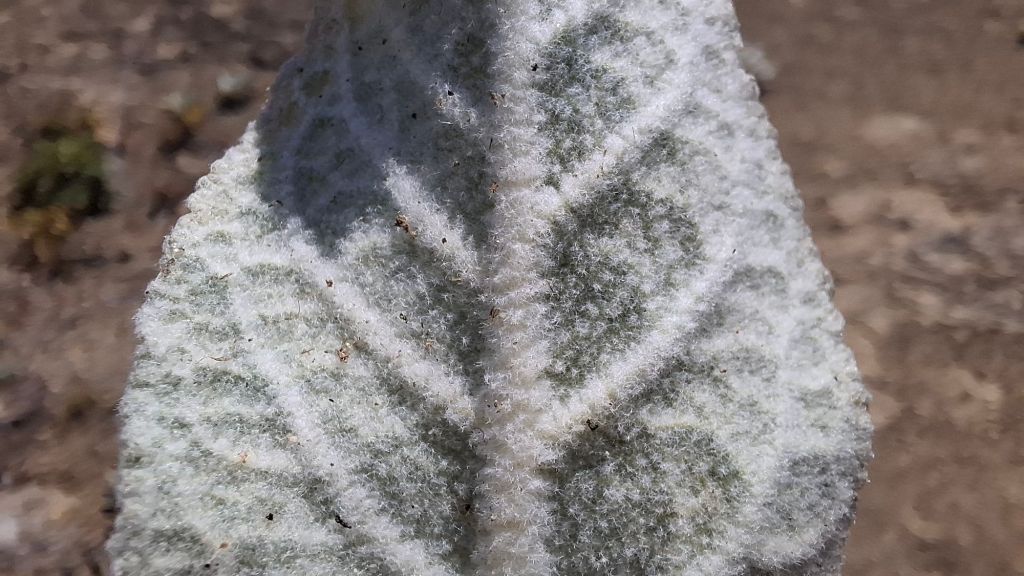
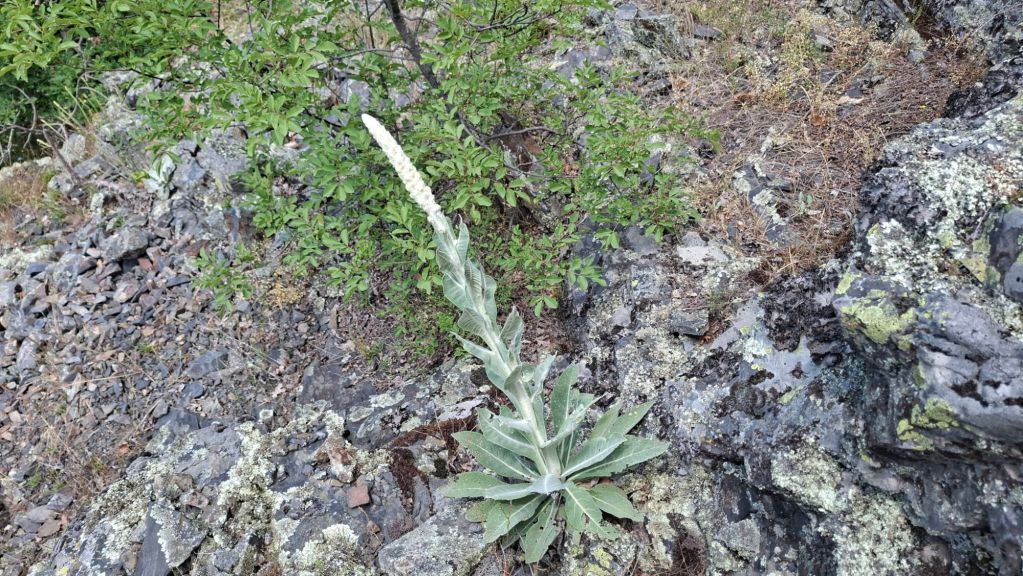
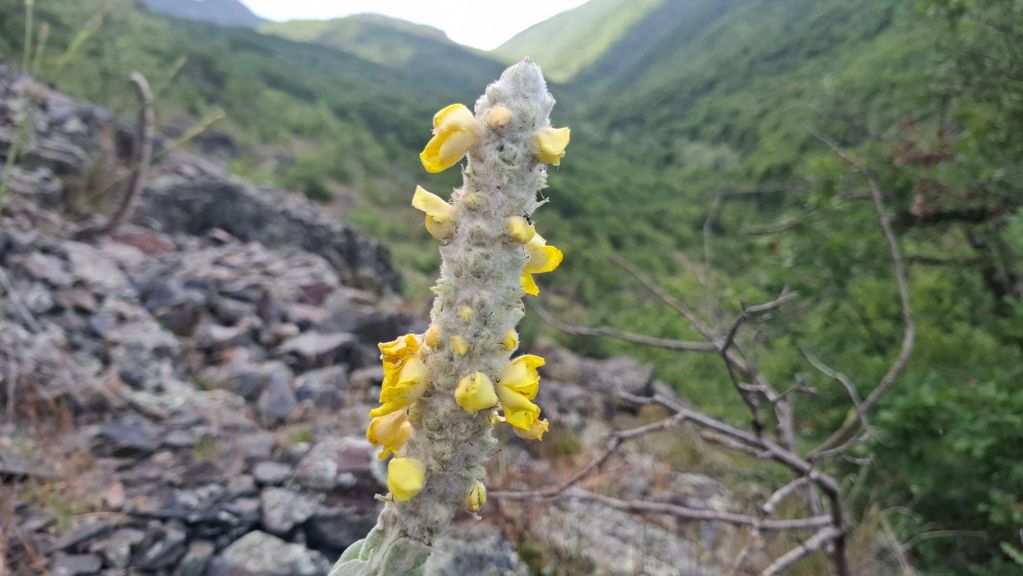
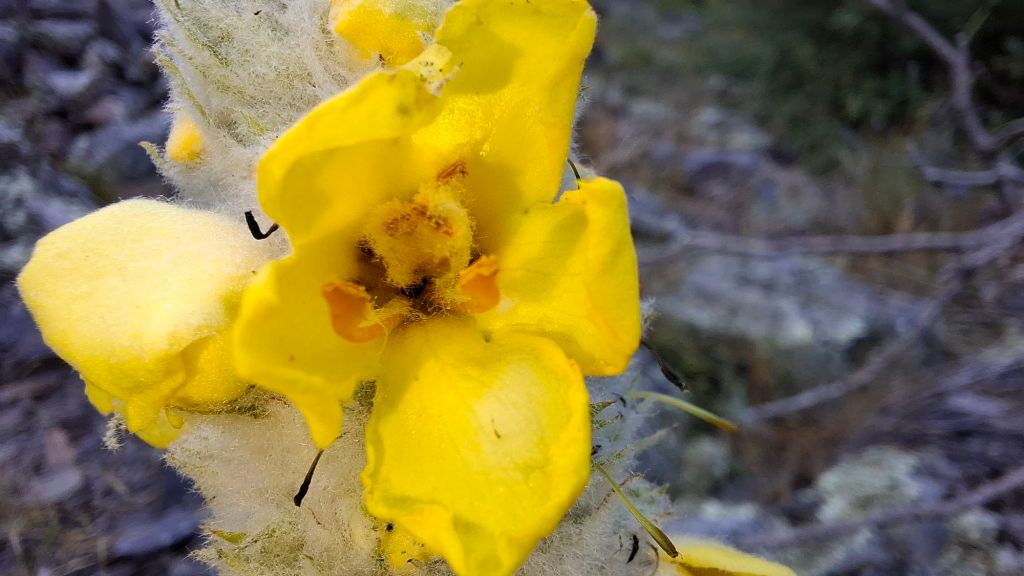
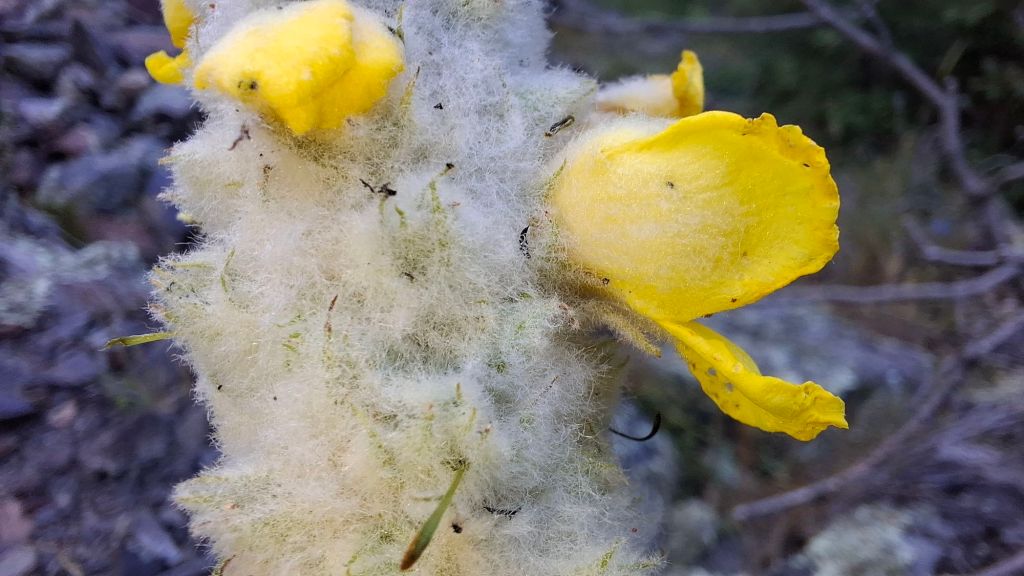
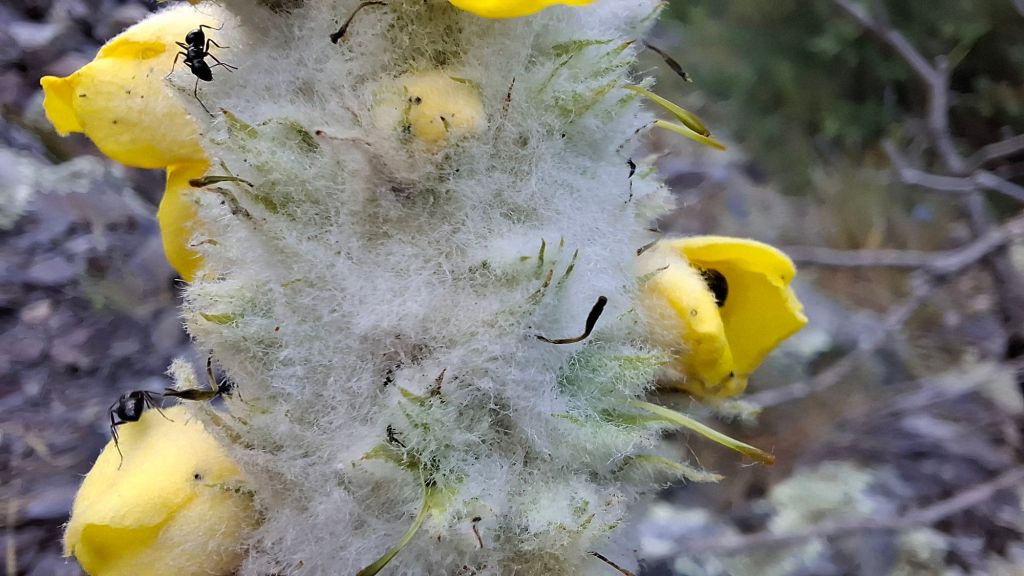
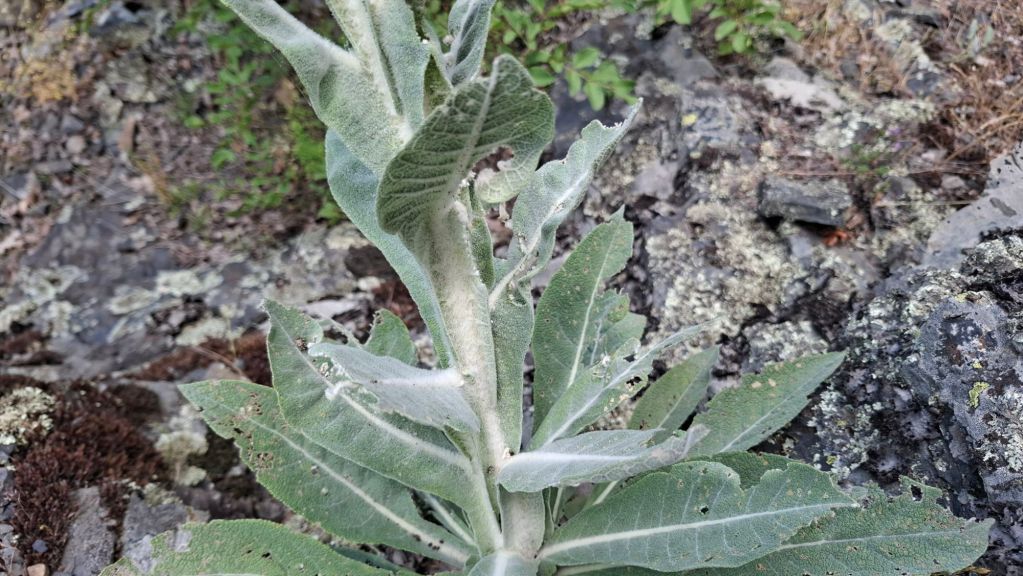
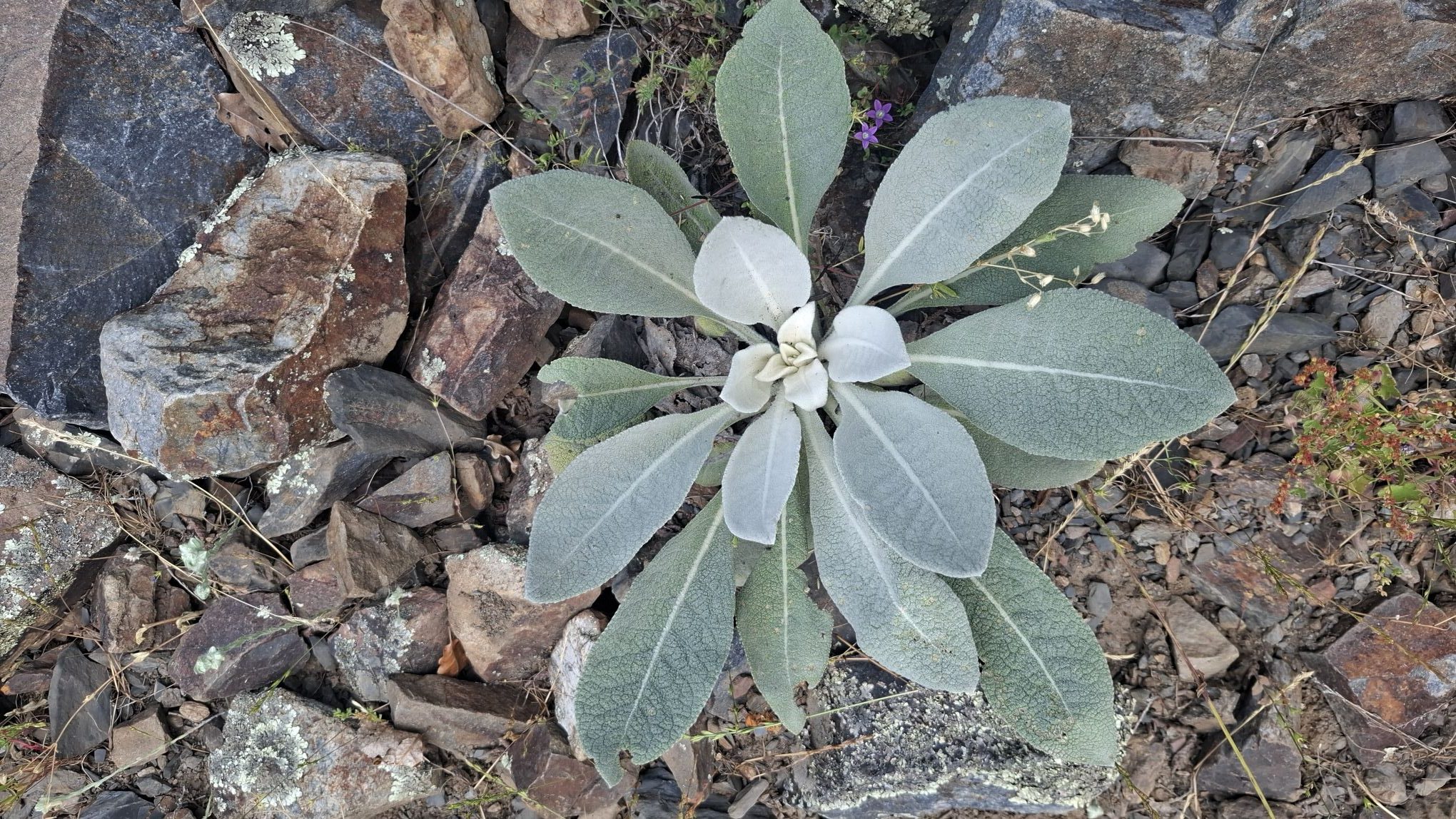
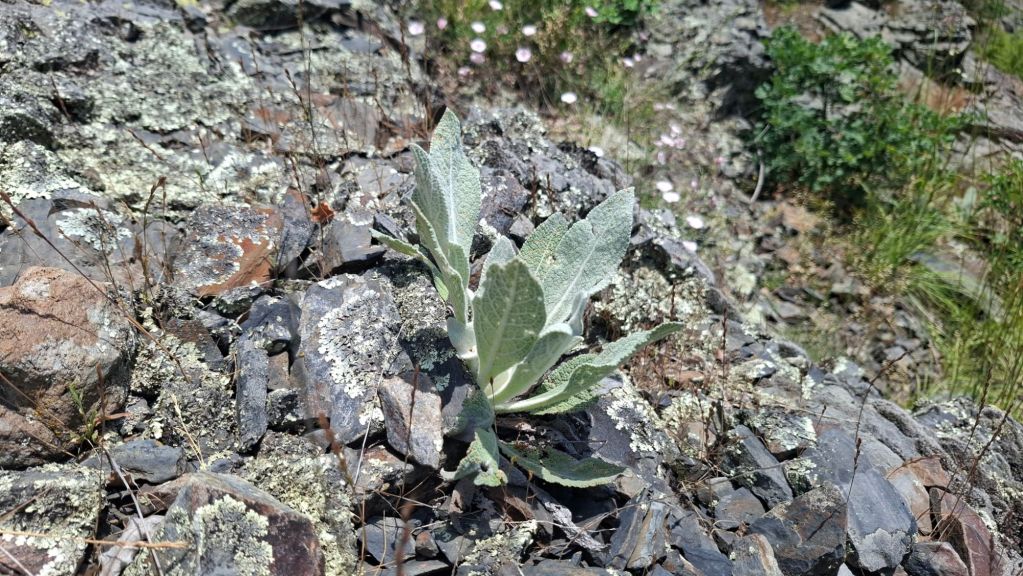
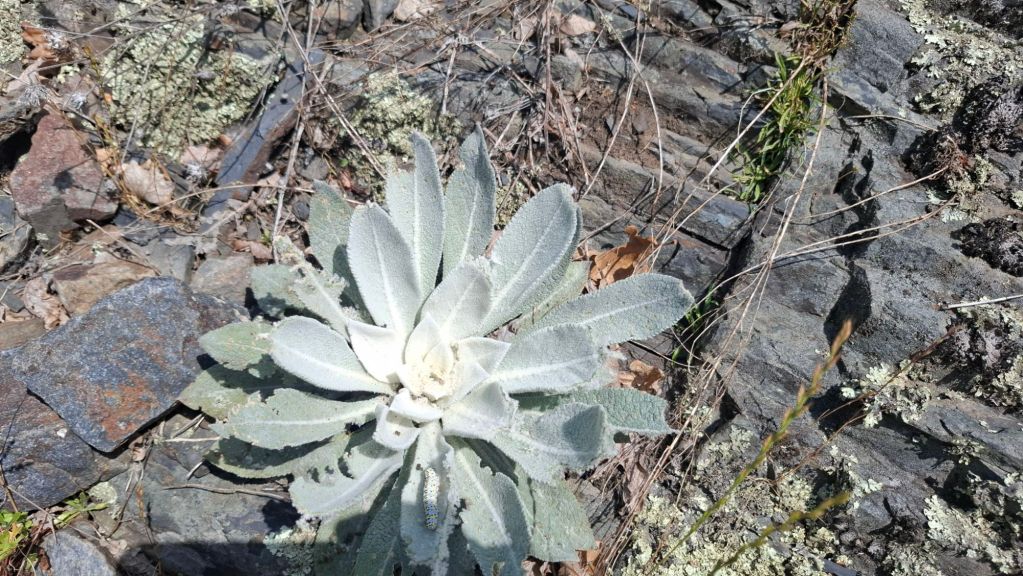
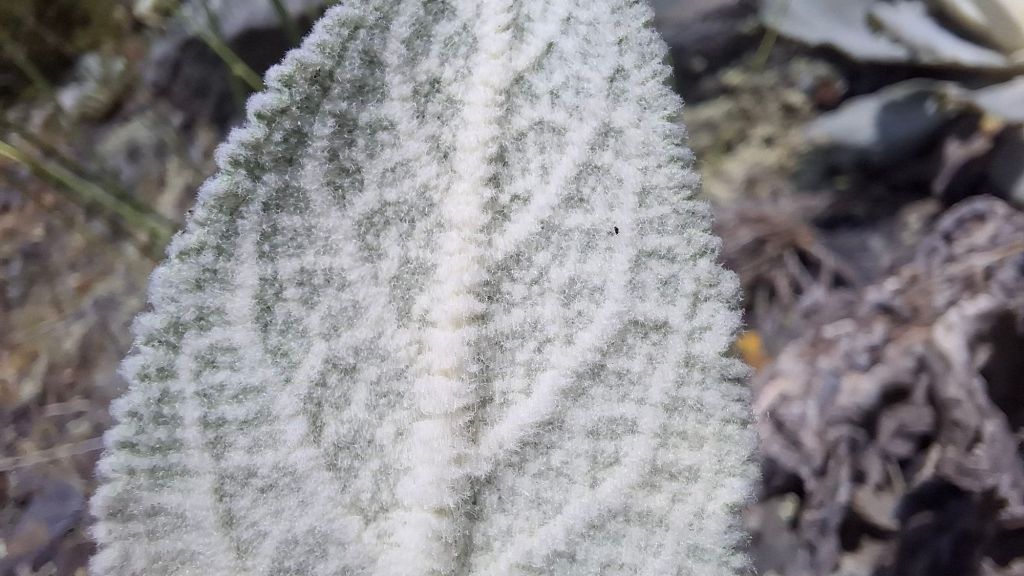
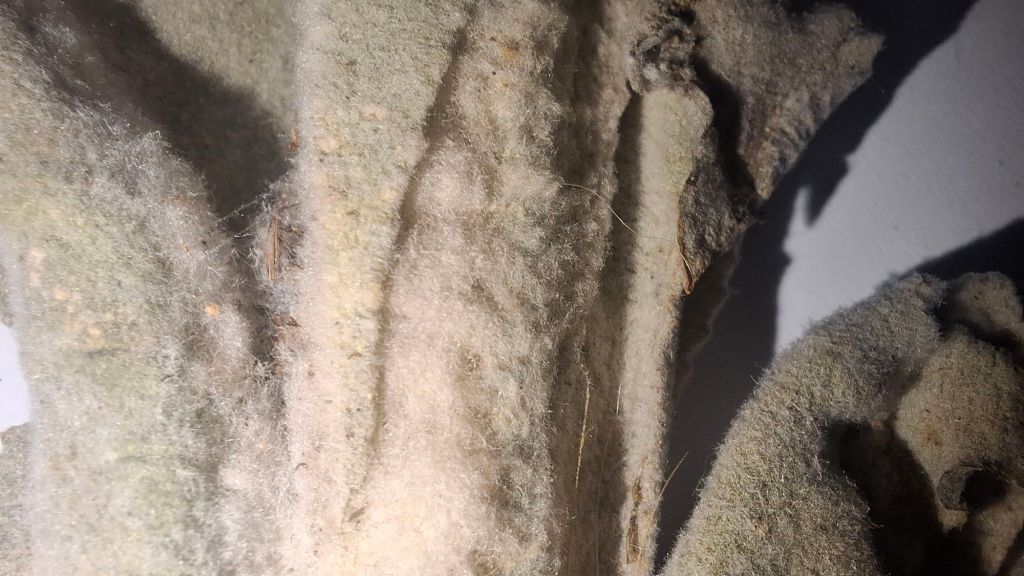
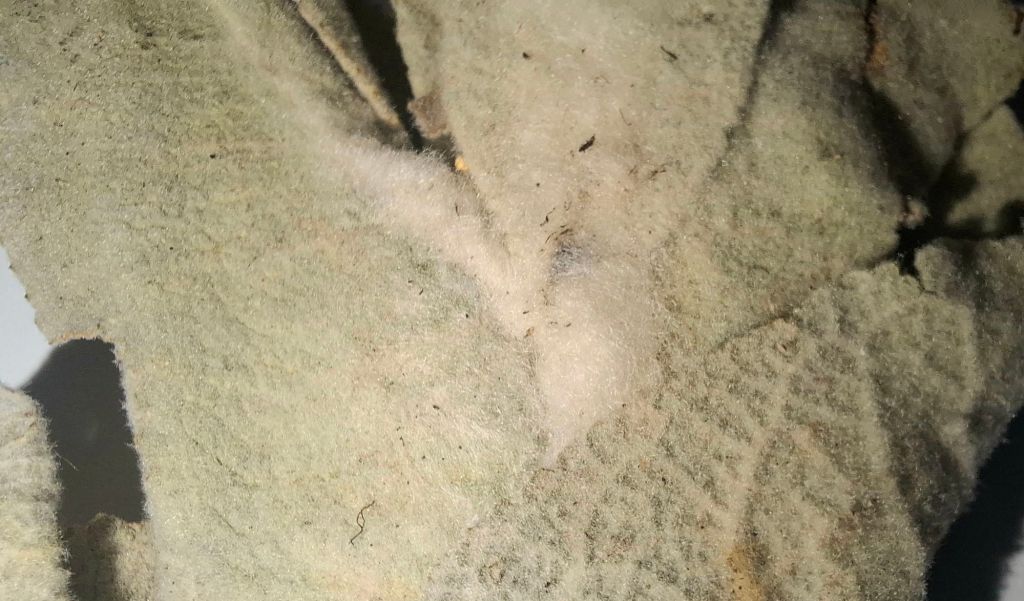
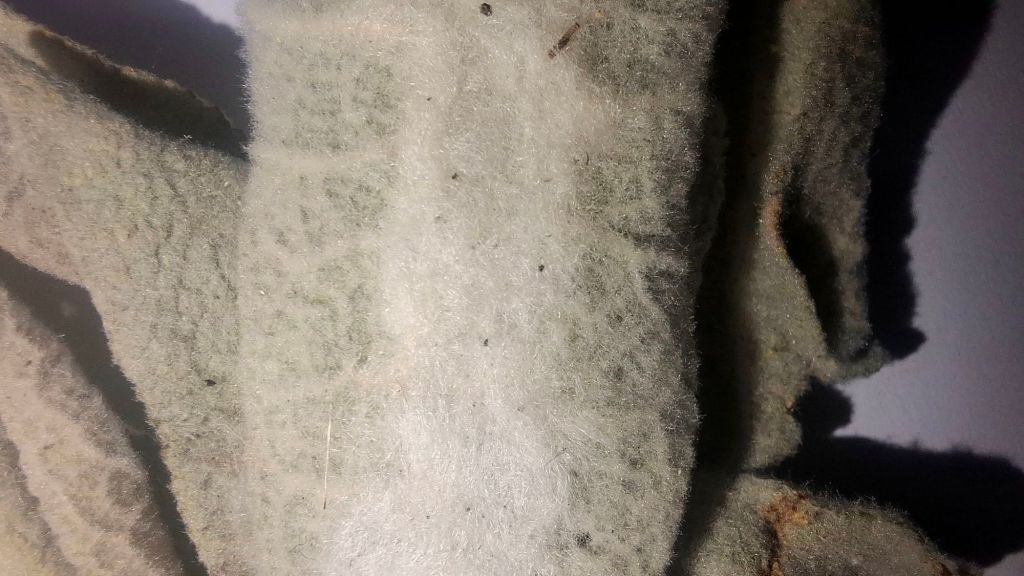
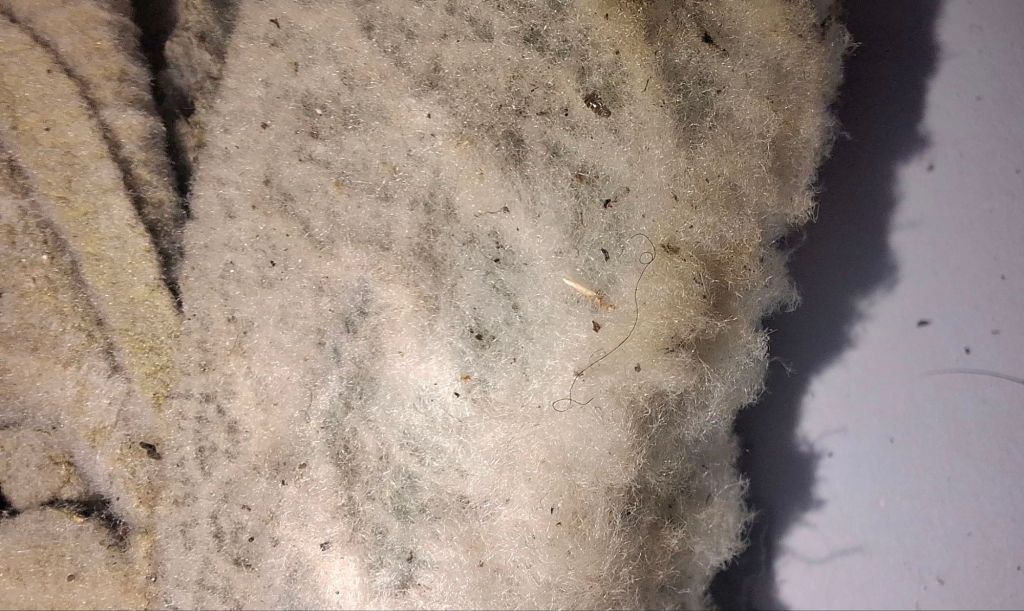
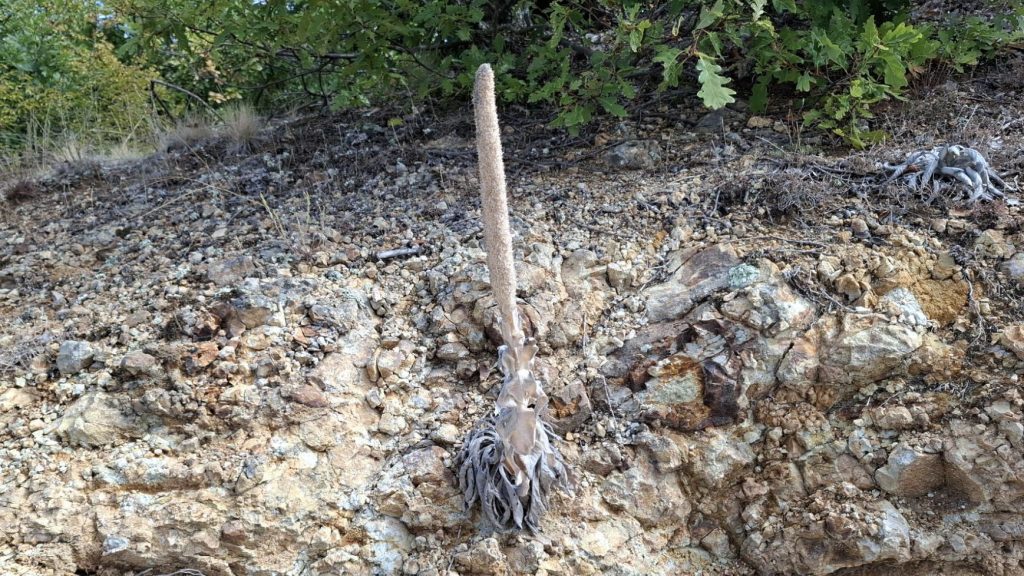
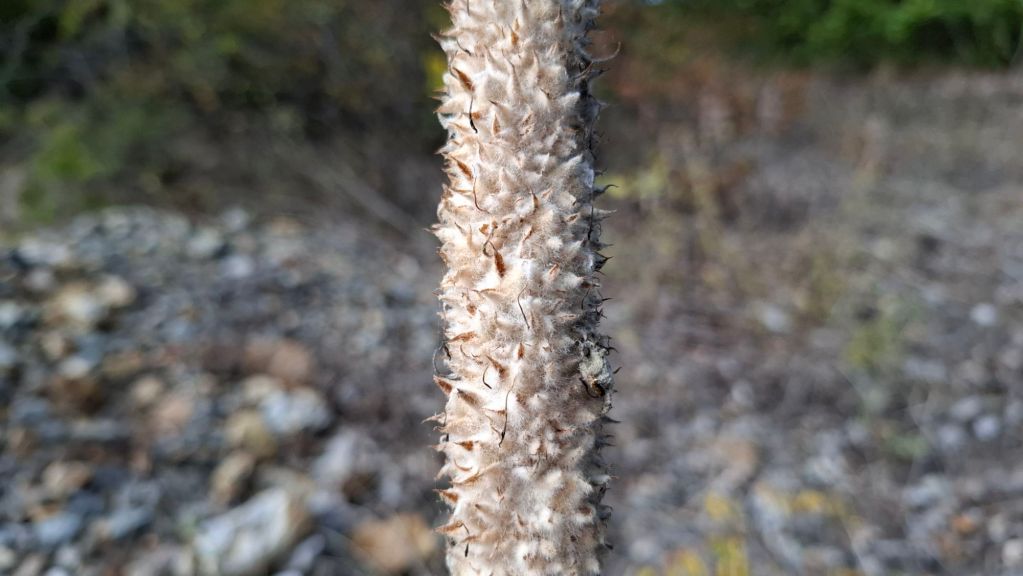
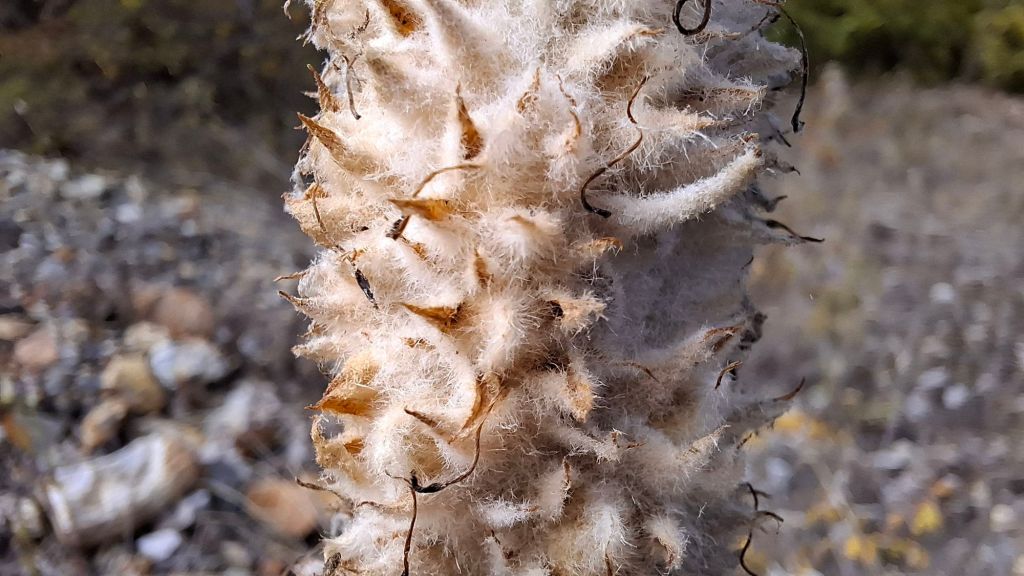
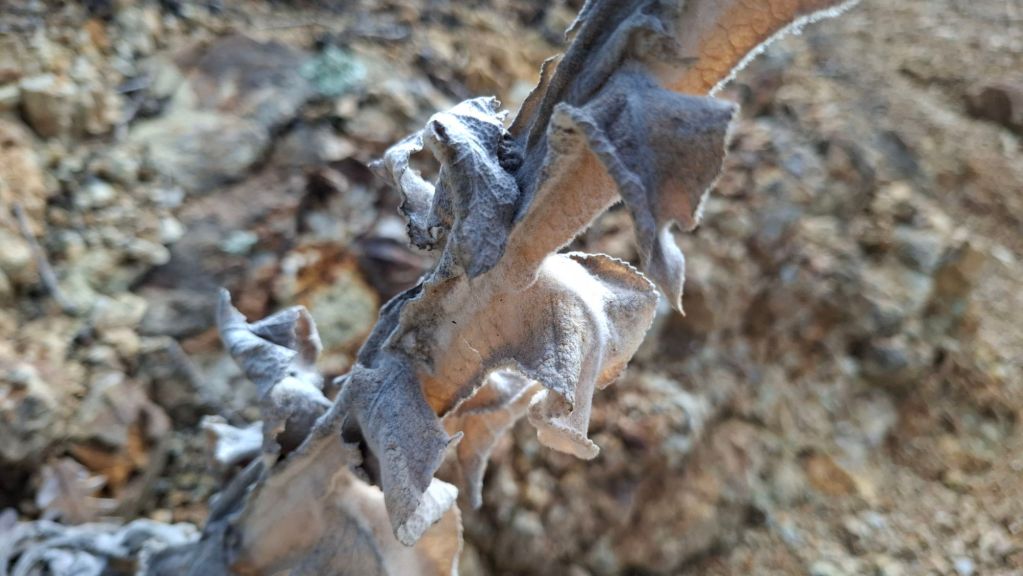
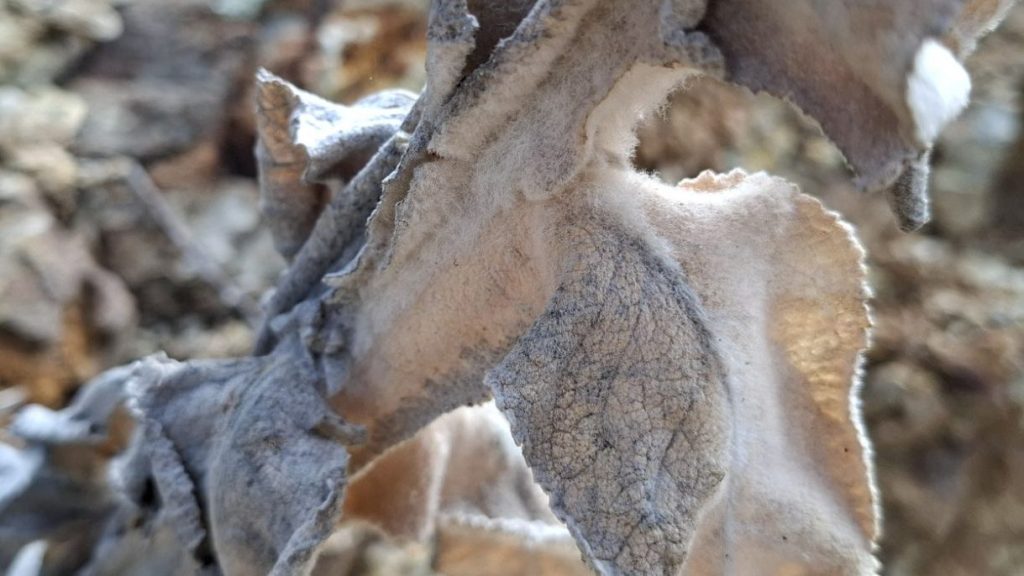
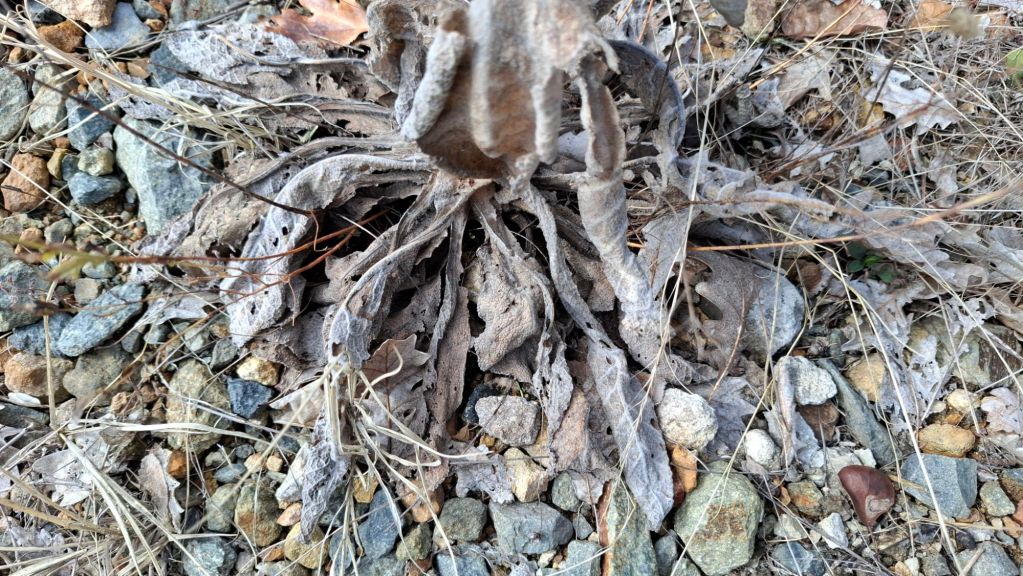
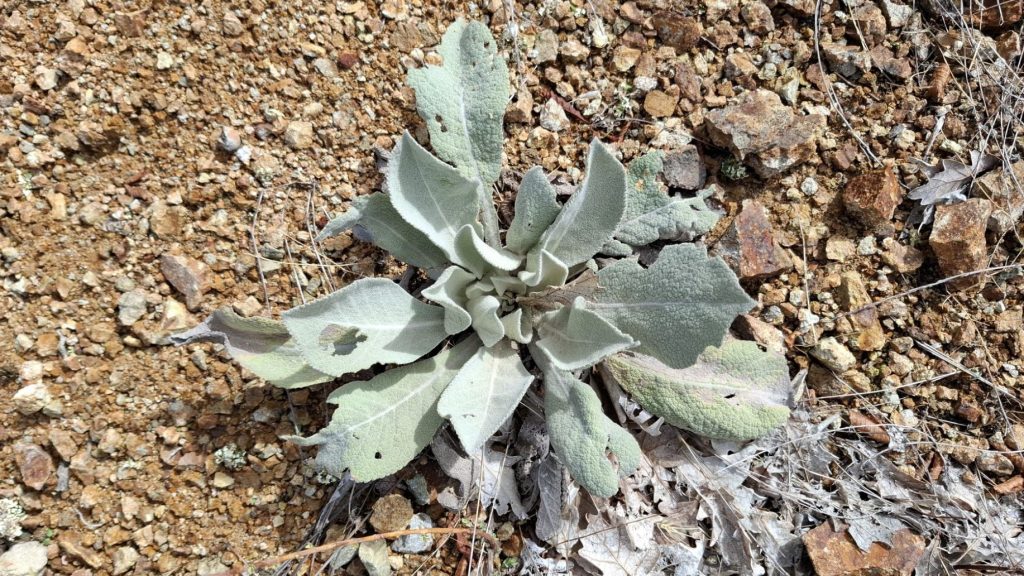
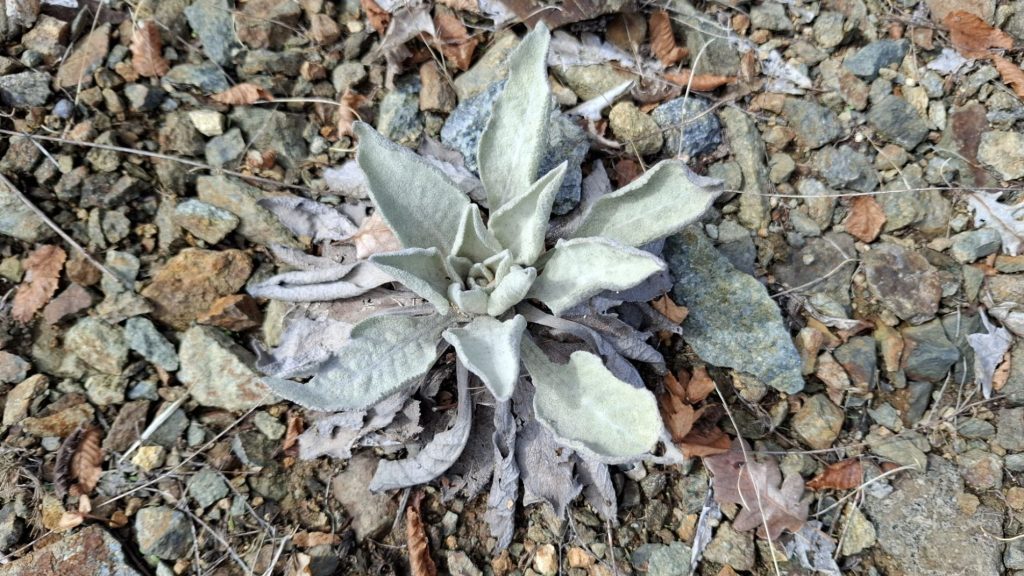
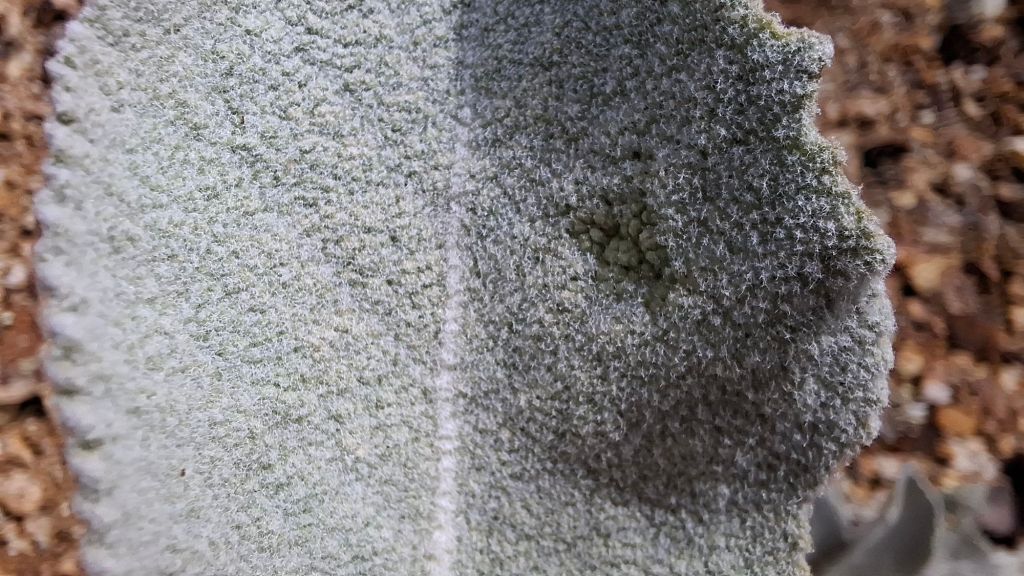
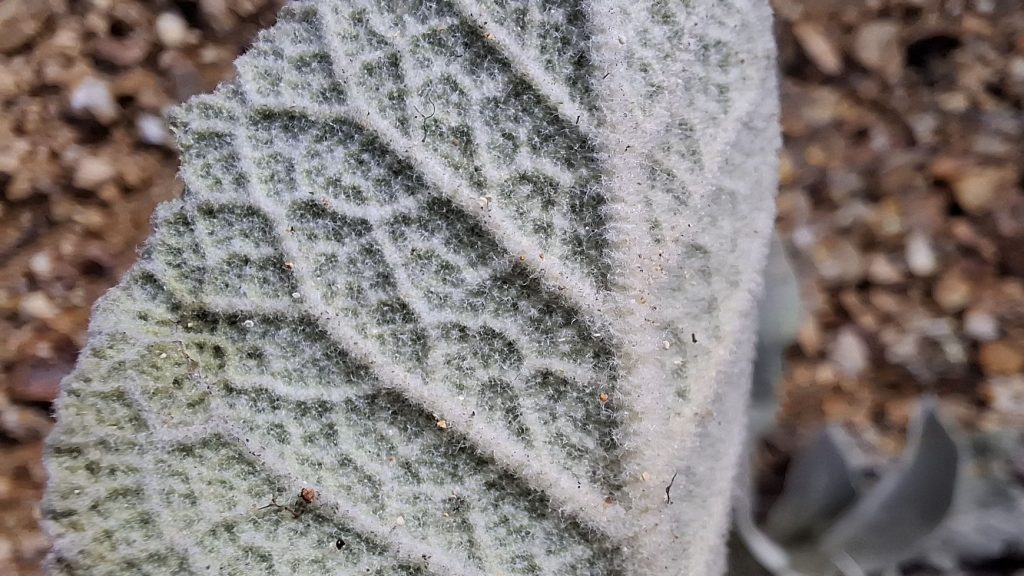
Verbascum lesnovoensis – habit in habitat. Osogovo – Zletovo, hills east of the gorge of the Zletovska River, 05.07.2026. Photo by Trajche Dimitrovski.Verbascum lesnovoensis – habit in habitat. Osogovo – Zletovo, hills east of the gorge of the Zletovska River, 05.07.2026. Photo by Trajche Dimitrovski.Verbascum lesnovoensis – habit in habitat. Osogovo – Zletovo, hills east of the gorge of the Zletovska River, 05.07.2026. Photo by Trajche Dimitrovski.Verbascum lesnovoensis – habit in habitat. Osogovo – Zletovo, hills east of the gorge of the Zletovska River, 05.07.2026. Photo by Trajche Dimitrovski.Verbascum lesnovoensis – habit in habitat. Osogovo – Zletovo, hills east of the gorge of the Zletovska River, 05.07.2026. Photo by Trajche Dimitrovski.Verbascum lesnovoensis – habit. Osogovo – Zletovo, hills east of the gorge of the Zletovska River, 05.07.2026. Photo by Trajche Dimitrovski.Verbascum lesnovoensis – habit. Osogovo – Zletovo, hills east of the gorge of the Zletovska River, 05.07.2026. Photo by Trajche Dimitrovski.Verbascum lesnovoensis – habit. Osogovo – Zletovo, hills east of the gorge of the Zletovska River, 05.07.2026. Photo by Trajche Dimitrovski.Verbascum lesnovoensis – habit. Osogovo – Zletovo, hills east of the gorge of the Zletovska River, 05.07.2026. Photo by Trajche Dimitrovski.Verbascum lesnovoensis – habit. Osogovo – Zletovo, hills east of the gorge of the Zletovska River, 05.07.2026. Photo by Trajche Dimitrovski.Verbascum lesnovoensis – habit. Osogovo – Zletovo, hills east of the gorge of the Zletovska River, 05.07.2026. Photo by Trajche Dimitrovski.Verbascum lesnovoensis – habit. Osogovo – Zletovo, hills east of the gorge of the Zletovska River, 05.07.2026. Photo by Trajche Dimitrovski.Verbascum lesnovoensis – inflorescence. Osogovo – Zletovo, hills east of the gorge of the Zletovska River, 05.07.2026. Photo by Trajche Dimitrovski.Verbascum lesnovoensis – inflorescence. Osogovo – Zletovo, hills east of the gorge of the Zletovska River, 05.07.2026. Photo by Trajche Dimitrovski.Verbascum lesnovoensis – inflorescence. Osogovo – Zletovo, hills east of the gorge of the Zletovska River, 05.07.2026. Photo by Trajche Dimitrovski.Verbascum lesnovoensis – inflorescence. Osogovo – Zletovo, hills east of the gorge of the Zletovska River, 05.07.2026. Photo by Trajche Dimitrovski.Verbascum lesnovoensis – inflorescence. Osogovo – Zletovo, hills east of the gorge of the Zletovska River, 05.07.2026. Photo by Trajche Dimitrovski.Verbascum lesnovoensis – inflorescence. Osogovo – Zletovo, hills east of the gorge of the Zletovska River, 05.07.2026. Photo by Trajche Dimitrovski.Verbascum lesnovoensis – inflorescence. Osogovo – Zletovo, hills east of the gorge of the Zletovska River, 05.07.2026. Photo by Trajche Dimitrovski.Verbascum lesnovoensis – inflorescence. Osogovo – Zletovo, hills east of the gorge of the Zletovska River, 05.07.2026. Photo by Trajche Dimitrovski.Verbascum lesnovoensis – inflorescence. Osogovo – Zletovo, hills east of the gorge of the Zletovska River, 05.07.2026. Photo by Trajche Dimitrovski.Verbascum lesnovoensis – inflorescence. Osogovo – Zletovo, hills east of the gorge of the Zletovska River, 05.07.2026. Photo by Trajche Dimitrovski.Verbascum lesnovoensis – top of inflorescence. Osogovo – Zletovo, hills east of the gorge of the Zletovska River, 05.07.2026. Photo by Trajche Dimitrovski.Verbascum lesnovoensis – top of inflorescence. Osogovo – Zletovo, hills east of the gorge of the Zletovska River, 05.07.2026. Photo by Trajche Dimitrovski.Verbascum lesnovoensis – top of inflorescence. Osogovo – Zletovo, hills east of the gorge of the Zletovska River, 05.07.2026. Photo by Trajche Dimitrovski.Verbascum lesnovoensis – top of inflorescence. Osogovo – Zletovo, hills east of the gorge of the Zletovska River, 05.07.2026. Photo by Trajche Dimitrovski.Verbascum lesnovoensis – inflorescence with flowers. Osogovo – Zletovo, hills east of the gorge of the Zletovska River, 05.07.2026. Photo by Trajche Dimitrovski.Verbascum lesnovoensis – inflorescence with flowers. Osogovo – Zletovo, hills east of the gorge of the Zletovska River, 05.07.2026. Photo by Trajche Dimitrovski.Verbascum lesnovoensis – part of the inflorescence with spent flowers. Osogovo – Zletovo, hills east of the gorge of the Zletovska River, 05.07.2026. Photo by Trajche Dimitrovski.Verbascum lesnovoensis – part of the inflorescence with spent flowers. Osogovo – Zletovo, hills east of the gorge of the Zletovska River, 05.07.2026. Photo by Trajche Dimitrovski.Verbascum lesnovoensis – flower. Osogovo – Zletovo, hills east of the gorge of the Zletovska River, 05.07.2026. Photo by Trajche Dimitrovski.Verbascum lesnovoensis – flower. Osogovo – Zletovo, hills east of the gorge of the Zletovska River, 05.07.2026. Photo by Trajche Dimitrovski.Verbascum lesnovoensis – flower. Osogovo – Zletovo, hills east of the gorge of the Zletovska River, 05.07.2026. Photo by Trajche Dimitrovski.Verbascum lesnovoensis – flowers. Osogovo – Zletovo, hills east of the gorge of the Zletovska River, 05.07.2026. Photo by Trajche Dimitrovski.Verbascum lesnovoensis – flowers. Osogovo – Zletovo, hills east of the gorge of the Zletovska River, 05.07.2026. Photo by Trajche Dimitrovski.Verbascum lesnovoensis – flowers. Osogovo – Zletovo, hills east of the gorge of the Zletovska River, 05.07.2026. Photo by Trajche Dimitrovski.Verbascum lesnovoensis – flowers. Osogovo – Zletovo, hills east of the gorge of the Zletovska River, 05.07.2026. Photo by Trajche Dimitrovski.Verbascum lesnovoensis – flower. Osogovo – Zletovo, hills east of the gorge of the Zletovska River, 05.07.2026. Photo by Trajche Dimitrovski.Verbascum lesnovoensis – flowers. Osogovo – Zletovo, hills east of the gorge of the Zletovska River, 05.07.2026. Photo by Trajche Dimitrovski.Verbascum lesnovoensis – flowers. Osogovo – Zletovo, hills east of the gorge of the Zletovska River, 05.07.2026. Photo by Trajche Dimitrovski.Verbascum lesnovoensis – flowers. Osogovo – Zletovo, hills east of the gorge of the Zletovska River, 05.07.2026. Photo by Trajche Dimitrovski.Verbascum lesnovoensis – flowers. Osogovo – Zletovo, hills east of the gorge of the Zletovska River, 05.07.2026. Photo by Trajche Dimitrovski.Verbascum lesnovoensis – outer side of corolla. Osogovo – Zletovo, hills east of the gorge of the Zletovska River, 05.07.2026. Photo by Trajche Dimitrovski.Verbascum lesnovoensis – outer side of corolla. Osogovo – Zletovo, hills east of the gorge of the Zletovska River, 05.07.2026. Photo by Trajche Dimitrovski.Verbascum lesnovoensis – outer side of corolla. Osogovo – Zletovo, hills east of the gorge of the Zletovska River, 05.07.2026. Photo by Trajche Dimitrovski.Verbascum lesnovoensis – flower buds. Osogovo – Zletovo, hills east of the gorge of the Zletovska River, 05.07.2026. Photo by Trajche Dimitrovski.Verbascum lesnovoensis – spent flowers. Osogovo – Zletovo, hills east of the gorge of the Zletovska River, 05.07.2026. Photo by Trajche Dimitrovski.Verbascum lesnovoensis – spent flowers. Osogovo – Zletovo, hills east of the gorge of the Zletovska River, 05.07.2026. Photo by Trajche Dimitrovski.Verbascum lesnovoensis – spent flowers. Osogovo – Zletovo, hills east of the gorge of the Zletovska River, 05.07.2026. Photo by Trajche Dimitrovski.Verbascum lesnovoensis – spent flowers. Osogovo – Zletovo, hills east of the gorge of the Zletovska River, 05.07.2026. Photo by Trajche Dimitrovski.Verbascum lesnovoensis – spent flowers. Osogovo – Zletovo, hills east of the gorge of the Zletovska River, 05.07.2026. Photo by Trajche Dimitrovski.Verbascum lesnovoensis – spent flowers. Osogovo – Zletovo, hills east of the gorge of the Zletovska River, 05.07.2026. Photo by Trajche Dimitrovski.Verbascum lesnovoensis – spent flowers. Osogovo – Zletovo, hills east of the gorge of the Zletovska River, 05.07.2026. Photo by Trajche Dimitrovski.Verbascum lesnovoensis – stem with cauline leaves. Osogovo – Zletovo, hills east of the gorge of the Zletovska River, 05.07.2026. Photo by Trajche Dimitrovski.Verbascum lesnovoensis – stem with cauline leaves. Osogovo – Zletovo, hills east of the gorge of the Zletovska River, 05.07.2026. Photo by Trajche Dimitrovski.Verbascum lesnovoensis – stem with cauline leaves. Osogovo – Zletovo, hills east of the gorge of the Zletovska River, 05.07.2026. Photo by Trajche Dimitrovski.Verbascum lesnovoensis – stem with cauline leaves. Osogovo – Zletovo, hills east of the gorge of the Zletovska River, 05.07.2026. Photo by Trajche Dimitrovski.Verbascum lesnovoensis – indumentum of cauline leaf. Osogovo – Zletovo, hills east of the gorge of the Zletovska River, 05.07.2026. Photo by Trajche Dimitrovski.Verbascum lesnovoensis – lower cauline leaves and basal leaves. Osogovo – Zletovo, hills east of the gorge of the Zletovska River, 05.07.2026. Photo by Trajche Dimitrovski.Verbascum lesnovoensis – basal leaves. Osogovo – Zletovo, hills east of the gorge of the Zletovska River, 05.07.2026. Photo by Trajche Dimitrovski.Verbascum lesnovoensis – basal leaves. Osogovo – Zletovo, hills east of the gorge of the Zletovska River, 05.07.2026. Photo by Trajche Dimitrovski.Verbascum lesnovoensis – witheringleaves. Osogovo – Zletovo, hills east of the gorge of the Zletovska River, 05.07.2026. Photo by Trajche Dimitrovski.Verbascum lesnovoensis – abaxial side of basal leaf. Osogovo – Zletovo, hills east of the gorge of the Zletovska River, 05.07.2026. Photo by Trajche Dimitrovski.Verbascum lesnovoensis – plant in vegetative stage (basal leaf rosette). Osogovo – Zletovo, hills east of the gorge of the Zletovska River, 05.07.2026. Photo by Trajche Dimitrovski.Verbascum lesnovoensis – plants in vegetative stage (basal leaf rosette). Osogovo – Zletovo, hills east of the gorge of the Zletovska River, 05.07.2026. Photo by Trajche Dimitrovski.Verbascum lesnovoensis – plant in vegetative stage (basal leaf rosette). Osogovo – Zletovo, hills east of the gorge of the Zletovska River, 05.07.2026. Photo by Trajche Dimitrovski.Verbascum lesnovoensis – plant in vegetative stage (basal leaf rosette). Osogovo – Zletovo, hills east of the gorge of the Zletovska River, 05.07.2026. Photo by Trajche Dimitrovski.Verbascum lesnovoensis – plant in vegetative stage (basal leaf rosette). Osogovo – Zletovo, hills east of the gorge of the Zletovska River, 05.07.2026. Photo by Trajche Dimitrovski.Verbascum lesnovoensis – plant in vegetative stage (basal leaf rosette). Osogovo – Zletovo, hills east of the gorge of the Zletovska River, 05.07.2026. Photo by Trajche Dimitrovski.Verbascum lesnovoensis – adaxial side of basal leaf. Osogovo – Zletovo, hills east of the gorge of the Zletovska River, 05.07.2026. Photo by Trajche Dimitrovski.Verbascum lesnovoensis – adaxial side of basal leaf. Osogovo – Zletovo, hills east of the gorge of the Zletovska River, 05.07.2026. Photo by Trajche Dimitrovski.Verbascum lesnovoensis – abaxial side of basal leaf. Osogovo – Zletovo, hills east of the gorge of the Zletovska River, 05.07.2026. Photo by Trajche Dimitrovski.Verbascum lesnovoensis – abaxial side of basal leaf. Osogovo – Zletovo, hills east of the gorge of the Zletovska River, 05.07.2026. Photo by Trajche Dimitrovski.
Locality: Probishtip: between Shtalkovichka River and the village of Ratkovica- rocky terrain above Mangov Kamen. Date: 07.06.2026.
Verbascum lesnovoensis – habit. Osogovo – between Shtalkovichka River and the village of Ratkovica- rocky terrain above Mangov Kamen, 07.06.2026. Photo by Trajche Dimitrovski.Verbascum lesnovoensis – habit. Osogovo – between Shtalkovichka River and the village of Ratkovica- rocky terrain above Mangov Kamen, 07.06.2026. Photo by Trajche Dimitrovski.Verbascum lesnovoensis – inflorescence. Osogovo – between Shtalkovichka River and the village of Ratkovica- rocky terrain above Mangov Kamen, 07.06.2026. Photo by Trajche Dimitrovski.Verbascum lesnovoensis – top of inflorescence. Osogovo – between Shtalkovichka River and the village of Ratkovica- rocky terrain above Mangov Kamen, 07.06.2026. Photo by Trajche Dimitrovski.Verbascum lesnovoensis – flower. Osogovo – between Shtalkovichka River and the village of Ratkovica- rocky terrain above Mangov Kamen, 07.06.2026. Photo by Trajche Dimitrovski.Verbascum lesnovoensis – outer side of corolla. Osogovo – between Shtalkovichka River and the village of Ratkovica- rocky terrain above Mangov Kamen, 07.06.2026. Photo by Trajche Dimitrovski.Verbascum lesnovoensis – flower buds and sent flower. Osogovo – between Shtalkovichka River and the village of Ratkovica- rocky terrain above Mangov Kamen, 07.06.2026. Photo by Trajche Dimitrovski.Verbascum lesnovoensis – stem with cauline leaves. Osogovo – between Shtalkovichka River and the village of Ratkovica- rocky terrain above Mangov Kamen, 07.06.2026. Photo by Trajche Dimitrovski.Verbascum lesnovoensis – stem with cauline leaves. Osogovo – between Shtalkovichka River and the village of Ratkovica- rocky terrain above Mangov Kamen, 07.06.2026. Photo by Trajche Dimitrovski.Verbascum lesnovoensis – specimen from the previous season. Osogovo – between Shtalkovichka River and the village of Ratkovica- rocky terrain above Mangov Kamen, 07.06.2026. Photo by Trajche Dimitrovski.Verbascum lesnovoensis – dried inflorescence with capsules. Osogovo – between Shtalkovichka River and the village of Ratkovica- rocky terrain above Mangov Kamen, 07.06.2026. Photo by Trajche Dimitrovski.Verbascum lesnovoensis – dried inflorescence with capsules. Osogovo – between Shtalkovichka River and the village of Ratkovica- rocky terrain above Mangov Kamen, 07.06.2026. Photo by Trajche Dimitrovski.Verbascum lesnovoensis – plant in vegetative (basal rosette) stage. Osogovo – between Shtalkovichka River and the village of Ratkovica- rocky terrain above Mangov Kamen, 07.06.2026. Photo by Trajche Dimitrovski.Verbascum lesnovoensis – plant in vegetative (basal rosette) stage. Osogovo – between Shtalkovichka River and the village of Ratkovica- rocky terrain above Mangov Kamen, 07.06.2026. Photo by Trajche Dimitrovski.Verbascum lesnovoensis – plant in vegetative (basal rosette) stage. Osogovo – between Shtalkovichka River and the village of Ratkovica- rocky terrain above Mangov Kamen, 07.06.2026. Photo by Trajche Dimitrovski.Verbascum lesnovoensis – plant in vegetative (basal rosette) stage. Osogovo – between Shtalkovichka River and the village of Ratkovica- rocky terrain above Mangov Kamen, 07.06.2026. Photo by Trajche Dimitrovski.Verbascum lesnovoensis – adaxial side of basal leaf. Osogovo – between Shtalkovichka River and the village of Ratkovica- rocky terrain above Mangov Kamen, 07.06.2026. Photo by Trajche Dimitrovski.Verbascum lesnovoensis – abaxial side of basal leaf. Osogovo – between Shtalkovichka River and the village of Ratkovica- rocky terrain above Mangov Kamen, 07.06.2026. Photo by Trajche Dimitrovski.
Scaled images and close-ups.
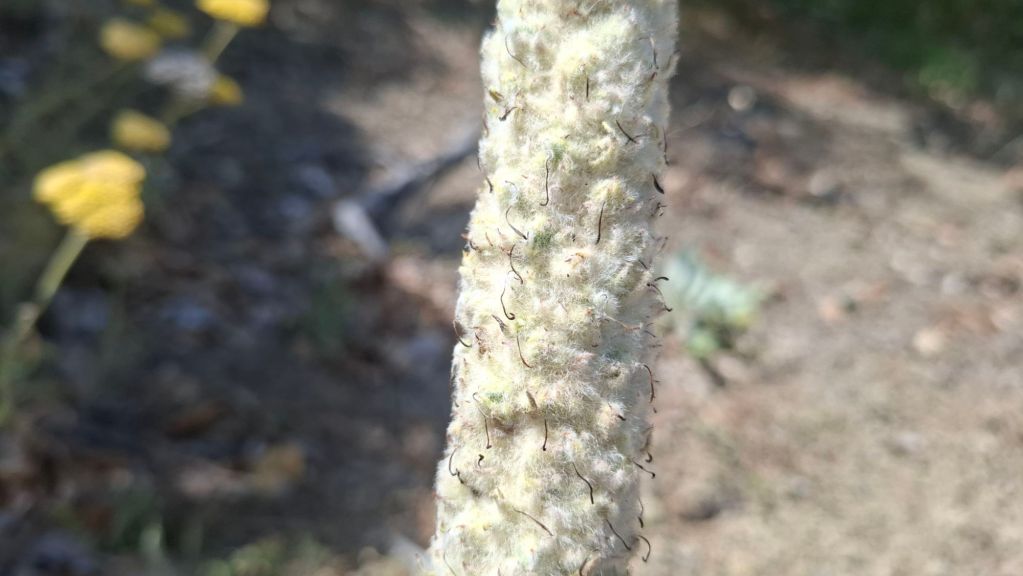
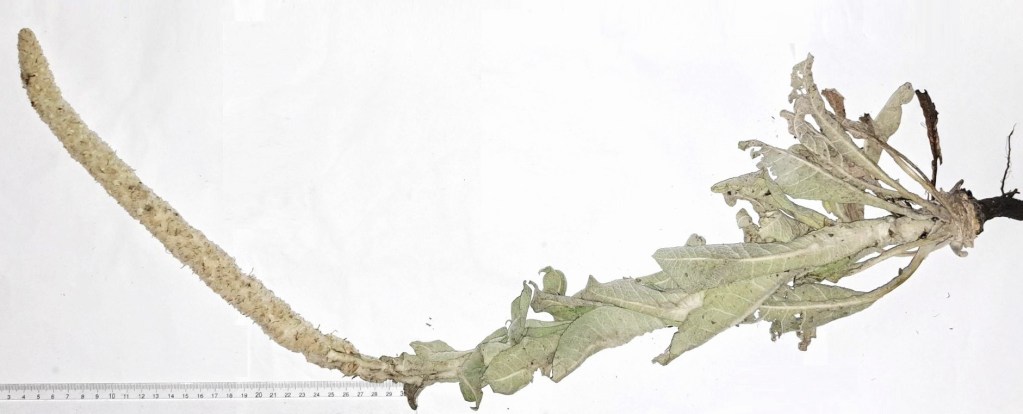
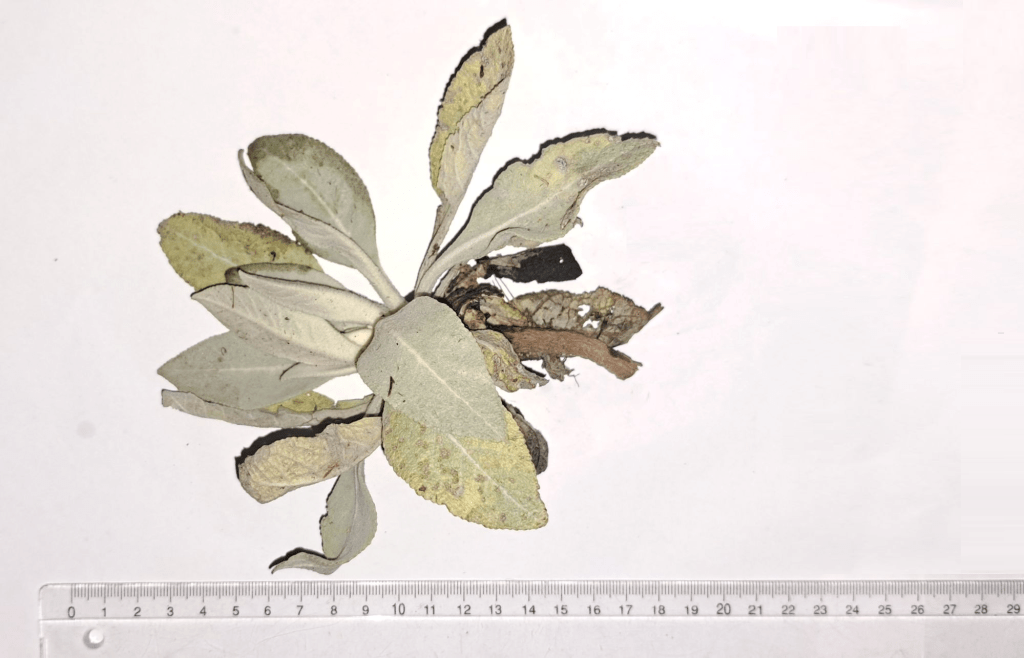
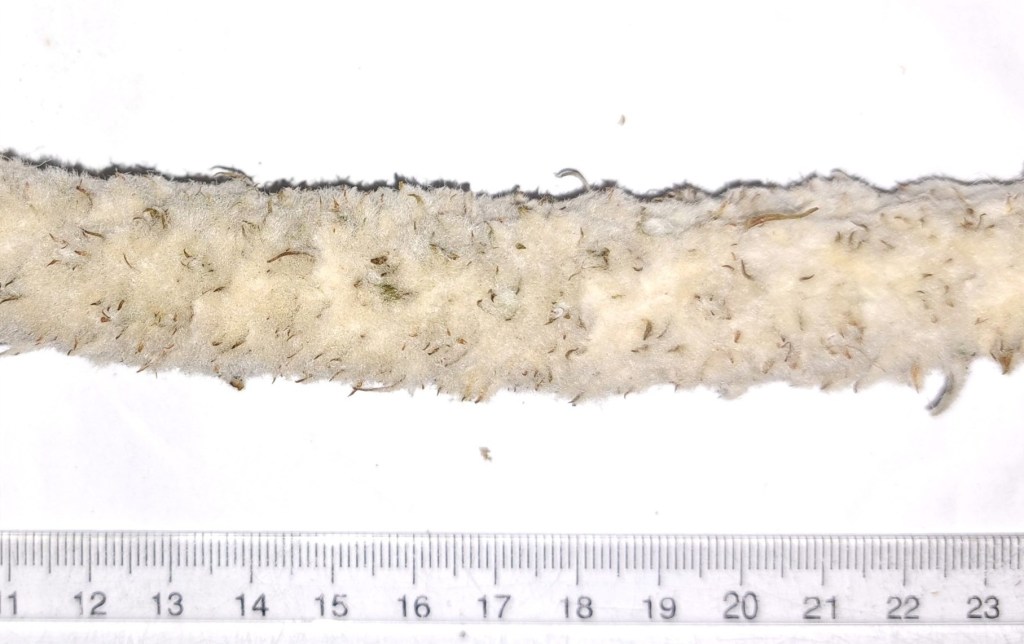
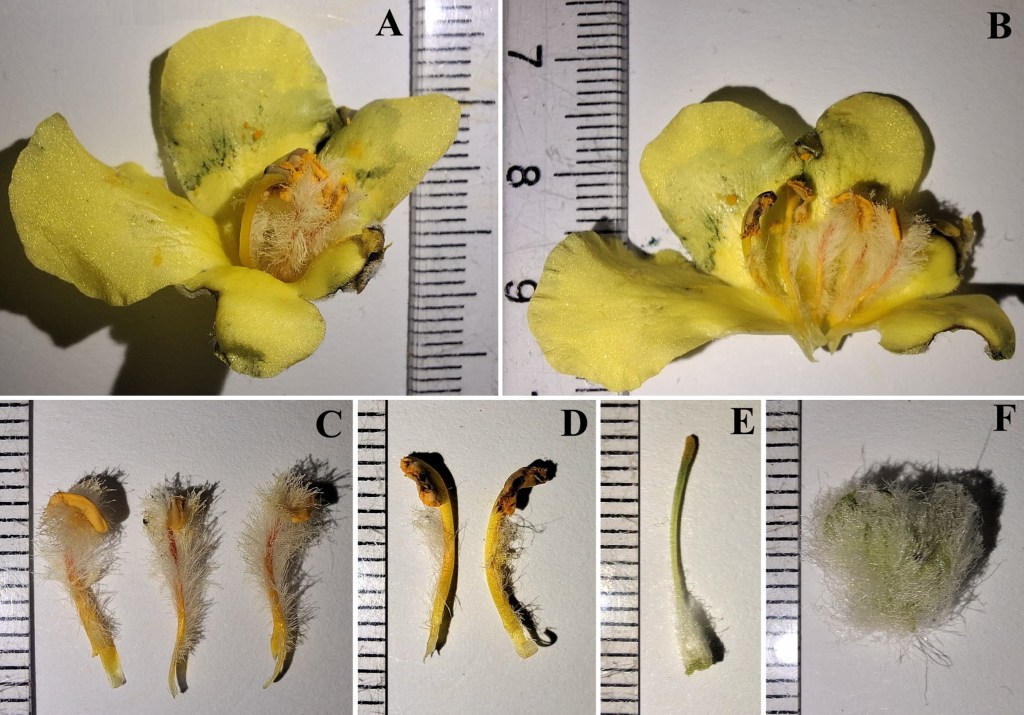
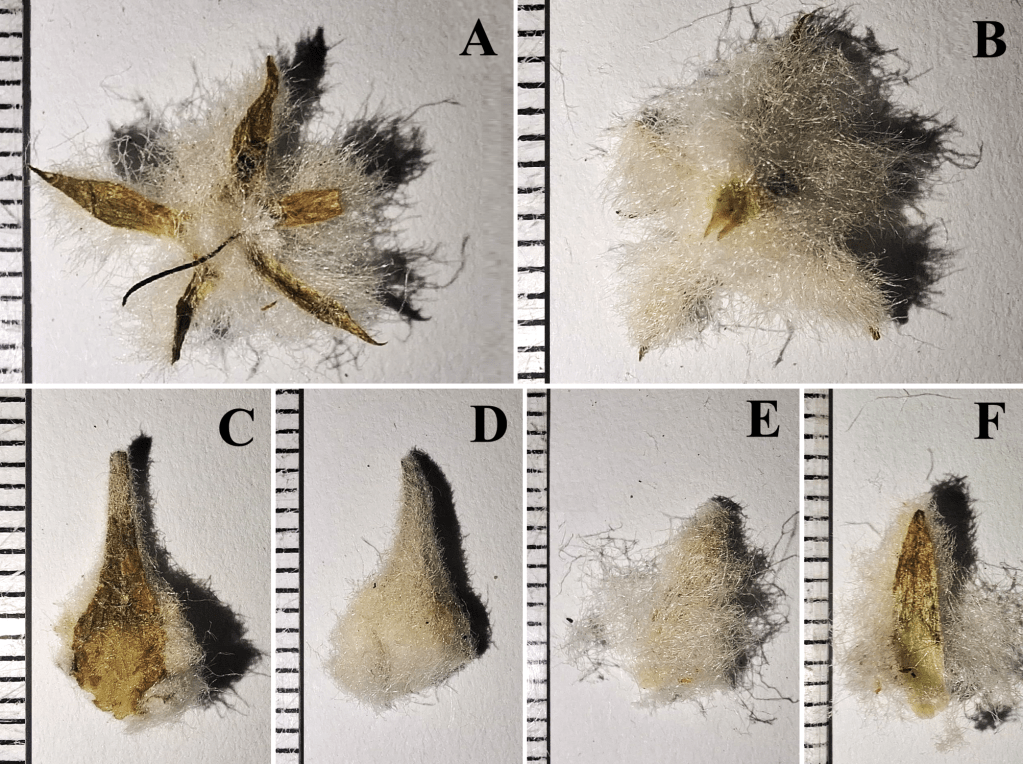
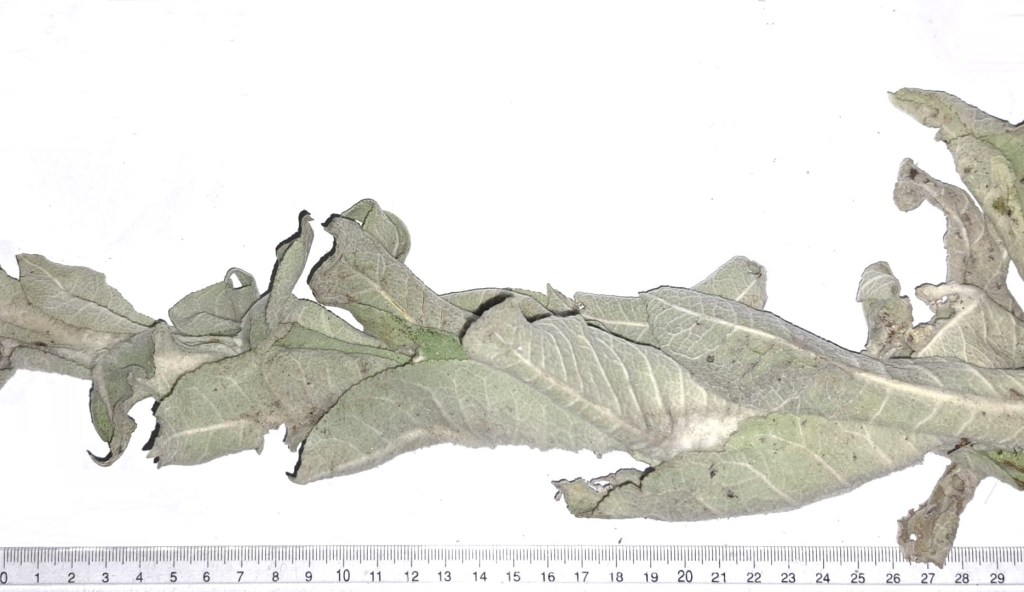
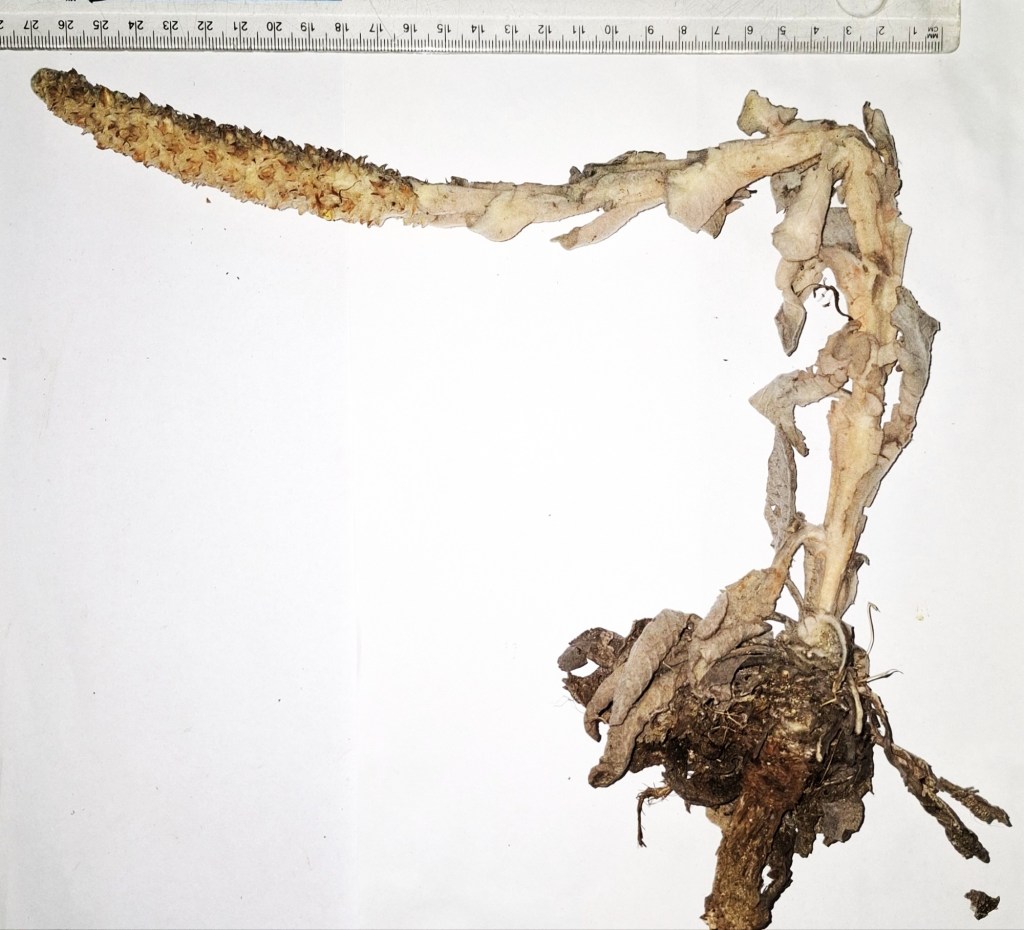
Verbascum lesnovoensis – habit. Scale in cm. Specimen from Osogovo – Zletovo, hills east of the gorge of the Zletovska River, 05.07.2026. Photo by Trajche Dimitrovski.Verbascum lesnovoensis – habit. Scale in cm. Specimen from Osogovo – Zletovo, hills east of the gorge of the Zletovska River, 05.07.2026. Photo by Trajche Dimitrovski.Verbascum lesnovoensis – habit of plant in vegetative stage (first year of growth). Scale in cm. Specimen from Osogovo – Zletovo, hills east of the gorge of the Zletovska River, 05.07.2026. Photo by Trajche Dimitrovski.Verbascum lesnovoensis – inflorescence. Scale in cm. Specimen from Osogovo – Zletovo, hills east of the gorge of the Zletovska River, 05.07.2026. Photo by Trajche Dimitrovski.Verbascum lesnovoensis – flower elements. A and B: petals and corolla. Scale in cm. Specimen from Osogovo – between Shtalkovichka River and the village of Ratkovica- rocky terrain above Mangov Kamen, 07.06.2026. Photo by Trajche Dimitrovski.Verbascum lesnovoensis – flower elements. A and B: petals and corolla. Scale in cm. Specimen from Osogovo – between Shtalkovichka River and the village of Ratkovica- rocky terrain above Mangov Kamen, 07.06.2026. Photo by Trajche Dimitrovski.Verbascum lesnovoensis. A and B: inner and outer side of calyx. C and D: inner and outer side of bracteole. E and F: innner and outer side of bract. Scale in mm. Specimen from Osogovo – Zletovo, hills east of the gorge of the Zletovska River, 05.07.2026. Photo by Trajche Dimitrovski.Verbascum lesnovoensis. A and B: inner and outer side of calyx. C and D: inner and outer side of bracteole. E and F: innner and outer side of bract. Scale in mm. Specimen from Osogovo – Zletovo, hills east of the gorge of the Zletovska River, 05.07.2026. Photo by Trajche Dimitrovski.Verbascum lesnovoensis. Indumentum of calyx and isolated hair (right lower corner). Specimen from Osogovo – Zletovo, hills east of the gorge of the Zletovska River, 05.07.2026. Photo by Trajche Dimitrovski.Verbascum lesnovoensis. Stem with cauline leaves. Scale in cm. Specimen from Osogovo – Zletovo, hills east of the gorge of the Zletovska River, 05.07.2026. Photo by Trajche Dimitrovski.Verbascum lesnovoensis. Indumentum of cauline leaves. Specimen from Osogovo – Zletovo, hills east of the gorge of the Zletovska River, 05.07.2026. Photo by Trajche Dimitrovski.Verbascum lesnovoensis. Indumentum of cauline leaves. Specimen from Osogovo – Zletovo, hills east of the gorge of the Zletovska River, 05.07.2026. Photo by Trajche Dimitrovski.Verbascum lesnovoensis. Indumentum of cauline leaves. Specimen from Osogovo – Zletovo, hills east of the gorge of the Zletovska River, 05.07.2026. Photo by Trajche Dimitrovski.Verbascum lesnovoensis. Indumentum of cauline leaves. Specimen from Osogovo – Zletovo, hills east of the gorge of the Zletovska River, 05.07.2026. Photo by Trajche Dimitrovski.Verbascum lesnovoensis. Basal leaves. Scale in cm. Specimen from Osogovo – Zletovo, hills east of the gorge of the Zletovska River, 05.07.2026. Photo by Trajche Dimitrovski.
Locality: Kochani: hills between the village of Rajchani and “Svilanovo” region Date: 05.10.2025.
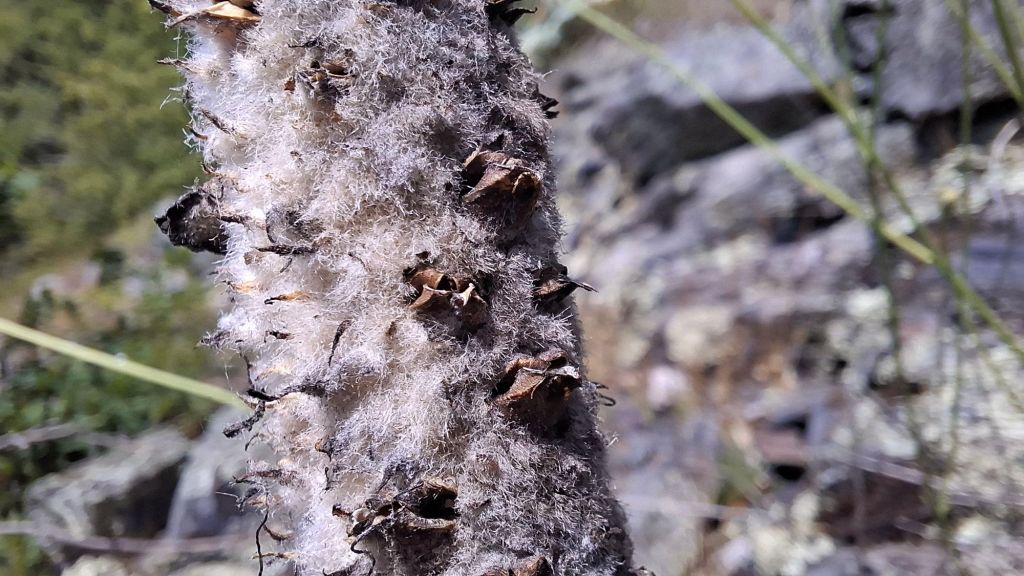
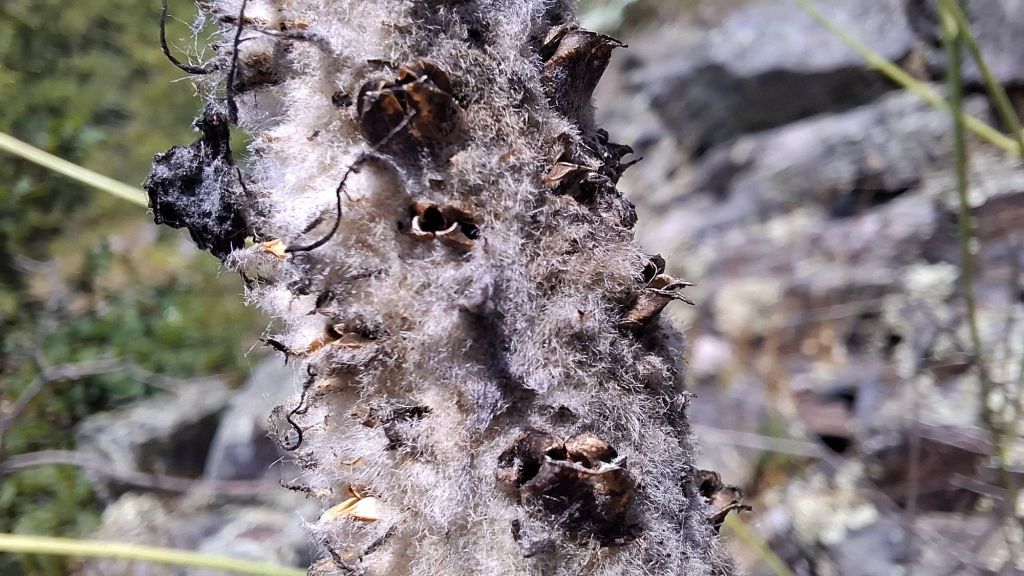
Verbascum lesnovoensis – habit. Osogovo –hills between the village of Rajchani and “Svilanovo” region, 05.10.2025. Photo by Trajche Dimitrovski.Verbascum lesnovoensis – spent inflorescence. Osogovo –hills between the village of Rajchani and “Svilanovo” region, 05.10.2025. Photo by Trajche Dimitrovski.Verbascum lesnovoensis – spent inflorescence. Osogovo –hills between the village of Rajchani and “Svilanovo” region, 05.10.2025. Photo by Trajche Dimitrovski.Verbascum lesnovoensis – spent inflorescence. Osogovo –hills between the village of Rajchani and “Svilanovo” region, 05.10.2025. Photo by Trajche Dimitrovski.Verbascum lesnovoensis – spent inflorescence. Osogovo –hills between the village of Rajchani and “Svilanovo” region, 05.10.2025. Photo by Trajche Dimitrovski.Verbascum lesnovoensis – spent inflorescence. Osogovo –hills between the village of Rajchani and “Svilanovo” region, 05.10.2025. Photo by Trajche Dimitrovski.Verbascum lesnovoensis – stem with cauline leaves. Osogovo –hills between the village of Rajchani and “Svilanovo” region, 05.10.2025. Photo by Trajche Dimitrovski.Verbascum lesnovoensis – stem with cauline leaf. Osogovo –hills between the village of Rajchani and “Svilanovo” region, 05.10.2025. Photo by Trajche Dimitrovski.Verbascum lesnovoensis – withered basal leaves. Osogovo –hills between the village of Rajchani and “Svilanovo” region, 05.10.2025. Photo by Trajche Dimitrovski.Verbascum lesnovoensis – plant in vegetative stage. Osogovo –hills between the village of Rajchani and “Svilanovo” region, 05.10.2025. Photo by Trajche Dimitrovski.Verbascum lesnovoensis – plant in vegetative stage. Osogovo –hills between the village of Rajchani and “Svilanovo” region, 05.10.2025. Photo by Trajche Dimitrovski.Verbascum lesnovoensis – adaxial side of leaf. Osogovo –hills between the village of Rajchani and “Svilanovo” region, 05.10.2025. Photo by Trajche Dimitrovski.Verbascum lesnovoensis – adaxial side of leaf. Osogovo –hills between the village of Rajchani and “Svilanovo” region, 05.10.2025. Photo by Trajche Dimitrovski.
Scaled images .
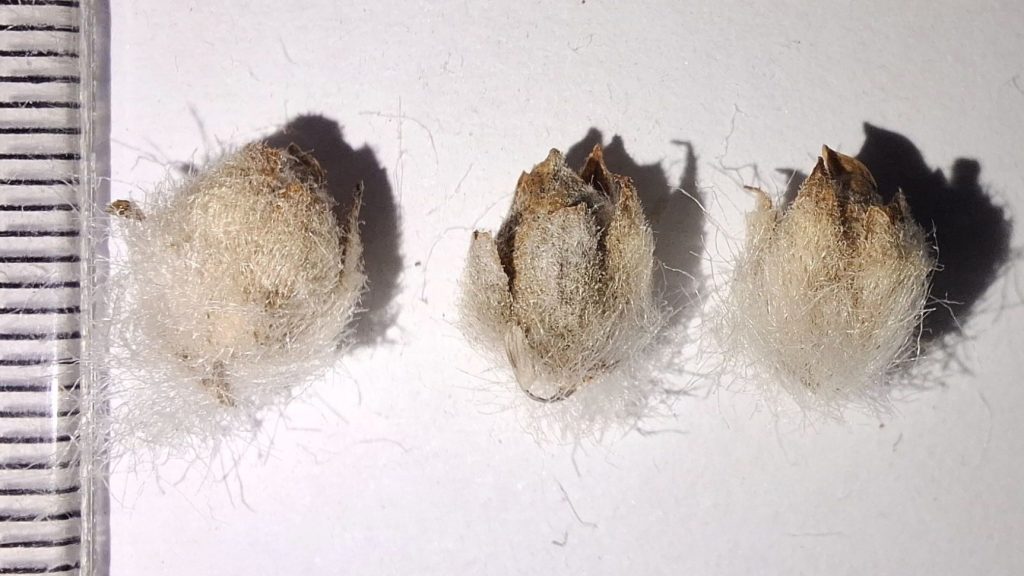
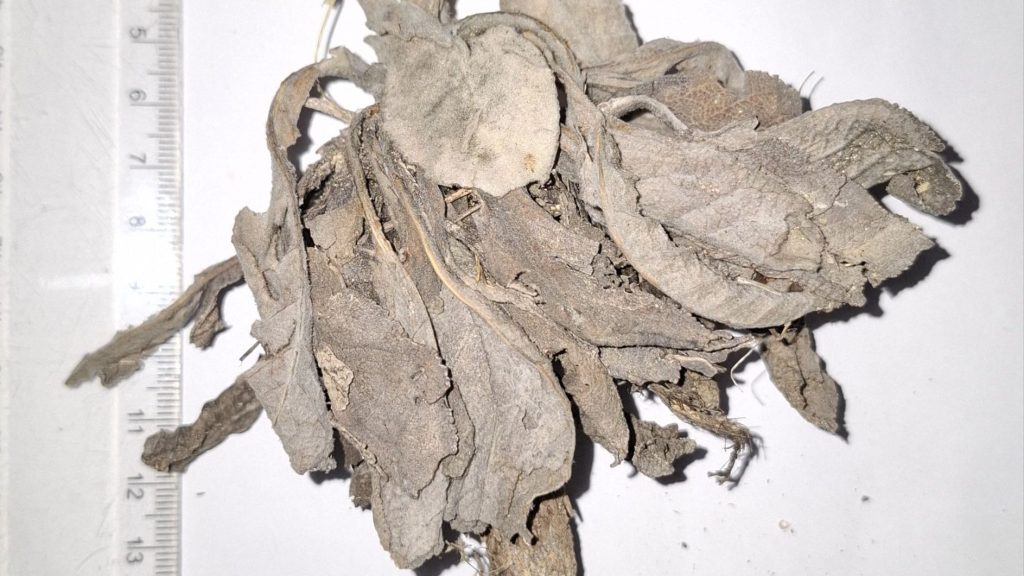
Verbascum lesnovoensis – habit. Scale in cm. Specimen from Osogovo –hills between the village of Rajchani and “Svilanovo” region. Photo by Trajche Dimitrovski.Verbascum lesnovoensis – inflorescence and uppermost leaves. Scale in cm. Specimen from Osogovo –hills between the village of Rajchani and “Svilanovo” region. Photo by Trajche Dimitrovski.Verbascum lesnovoensis – fruiting capsules. Scale in cm. Specimen from Osogovo –hills between the village of Rajchani and “Svilanovo” region. Photo by Trajche Dimitrovski.Verbascum lesnovoensis – basal leaves. Scale in cm. Specimen from Osogovo –hills between the village of Rajchani and “Svilanovo” region. Photo by Trajche Dimitrovski.
References:
References:
Micevski, K. (1996). Verbascum lesnovoensis Micevski spec. nov. vo florata na Republika Makedonija. Prilozi MANU, Odd. biol. med. nauki 17(1–2): 17–24.
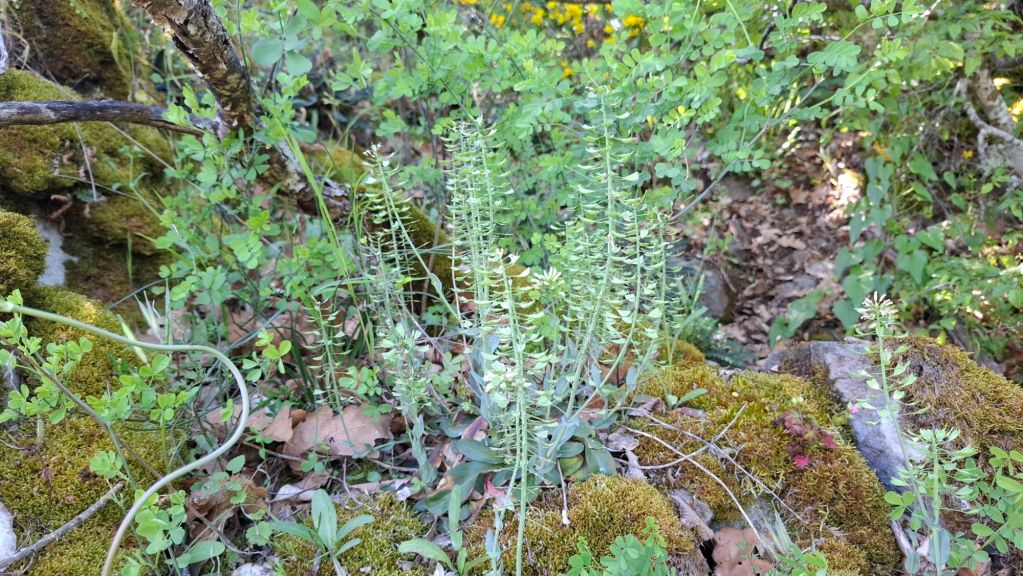
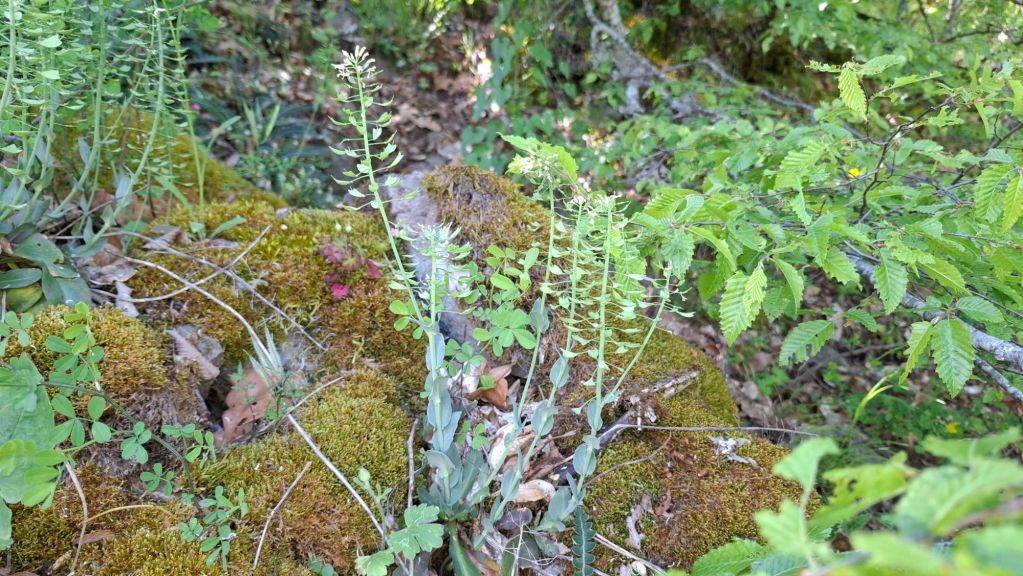
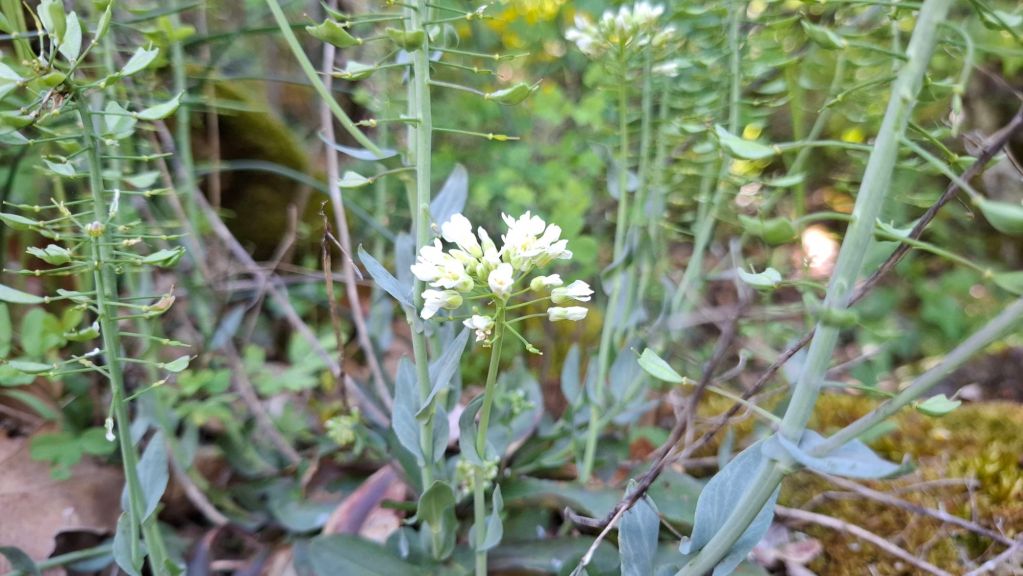
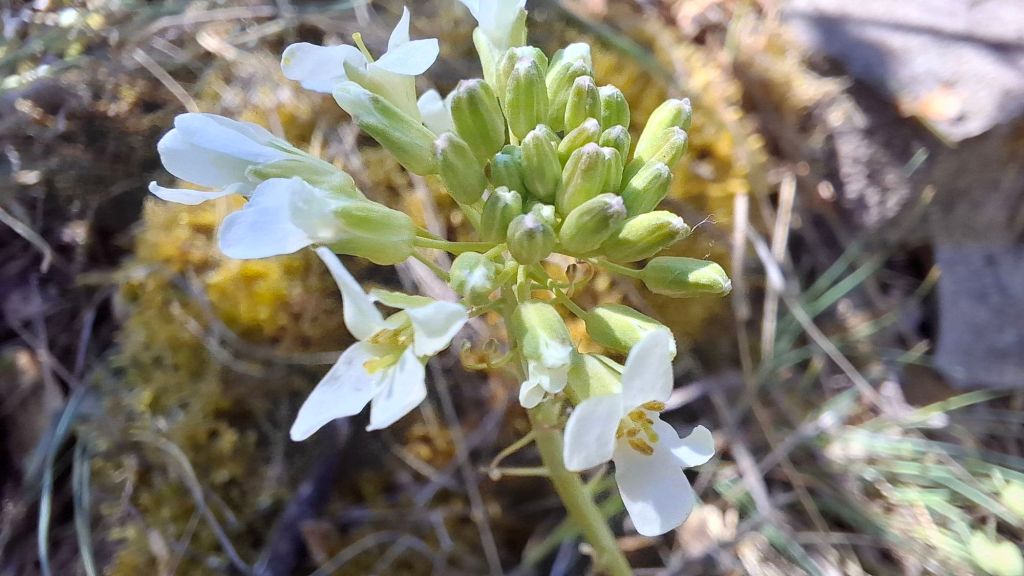
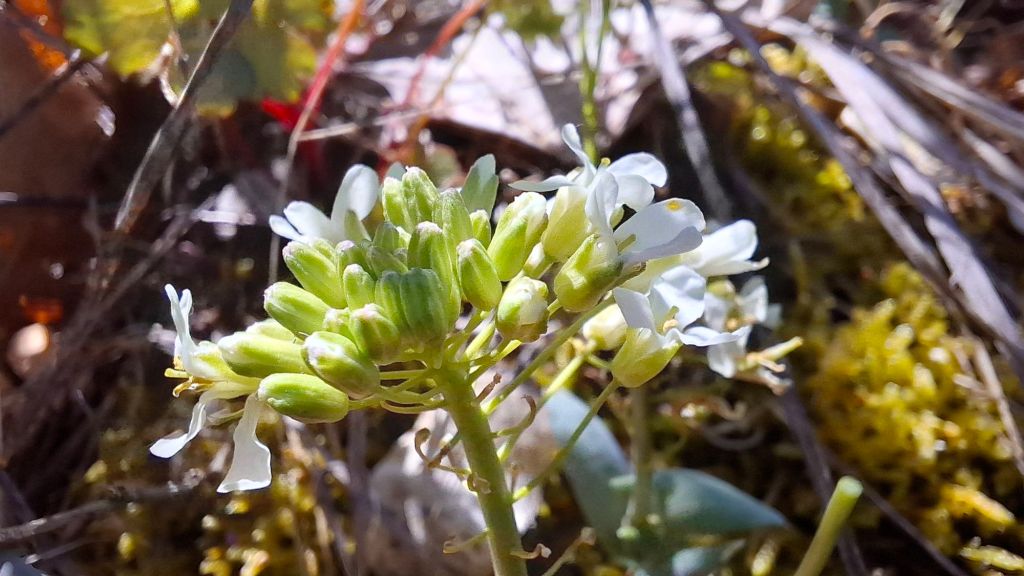
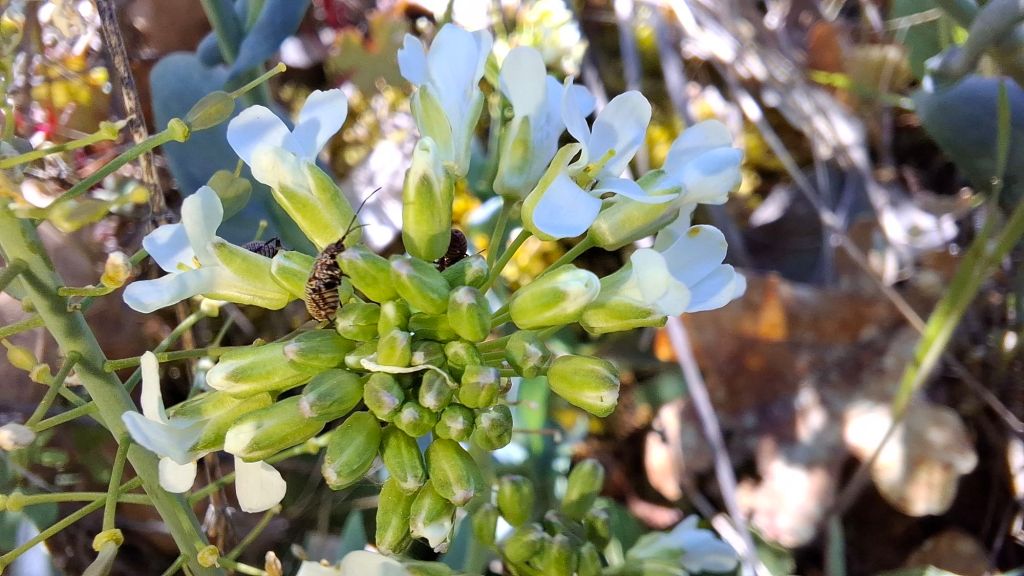
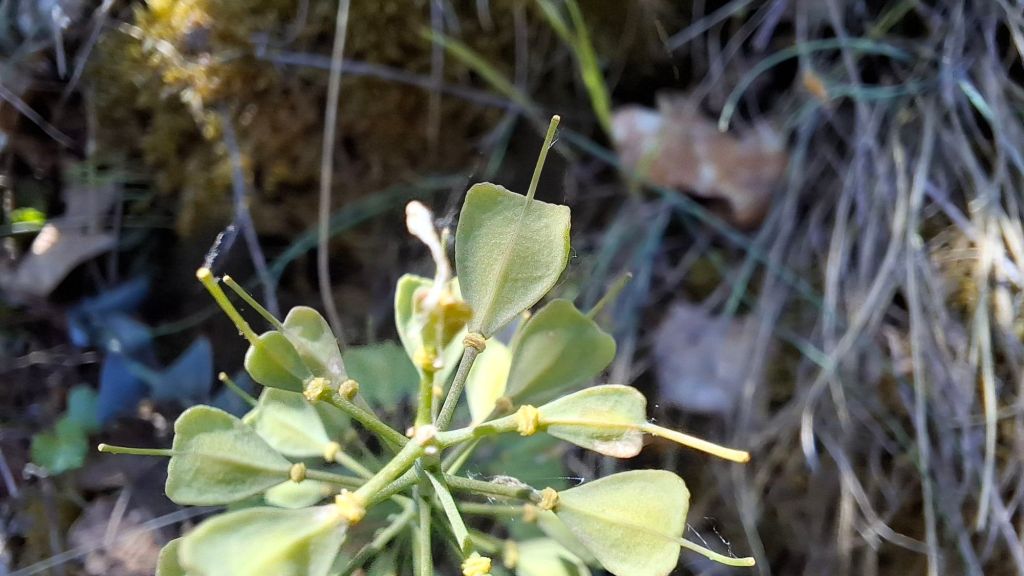
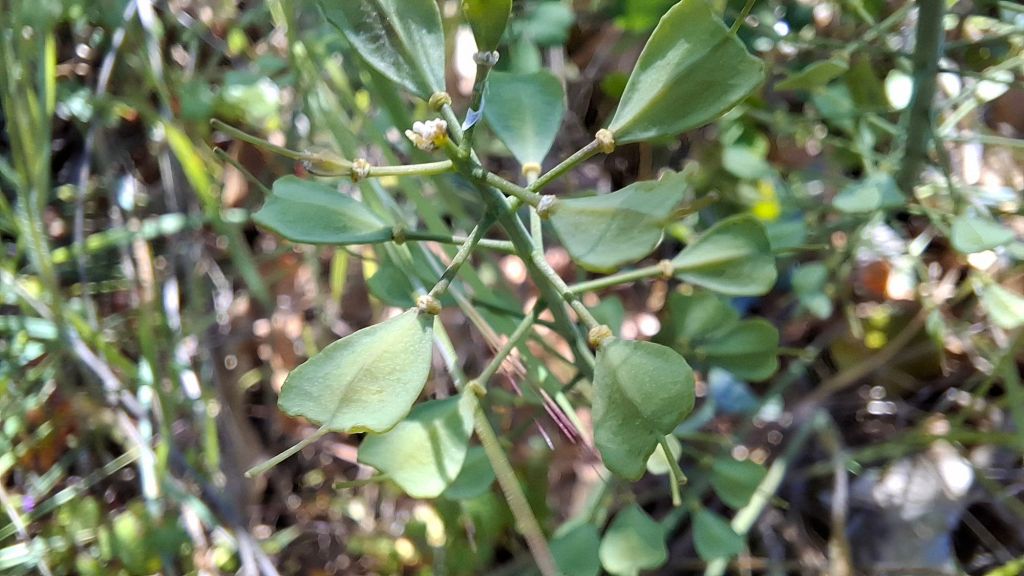
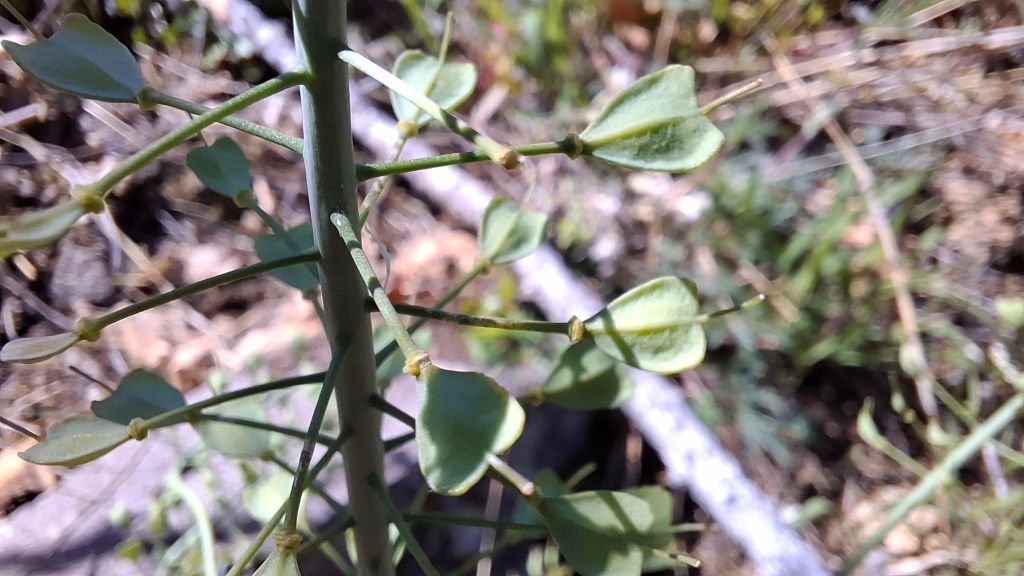
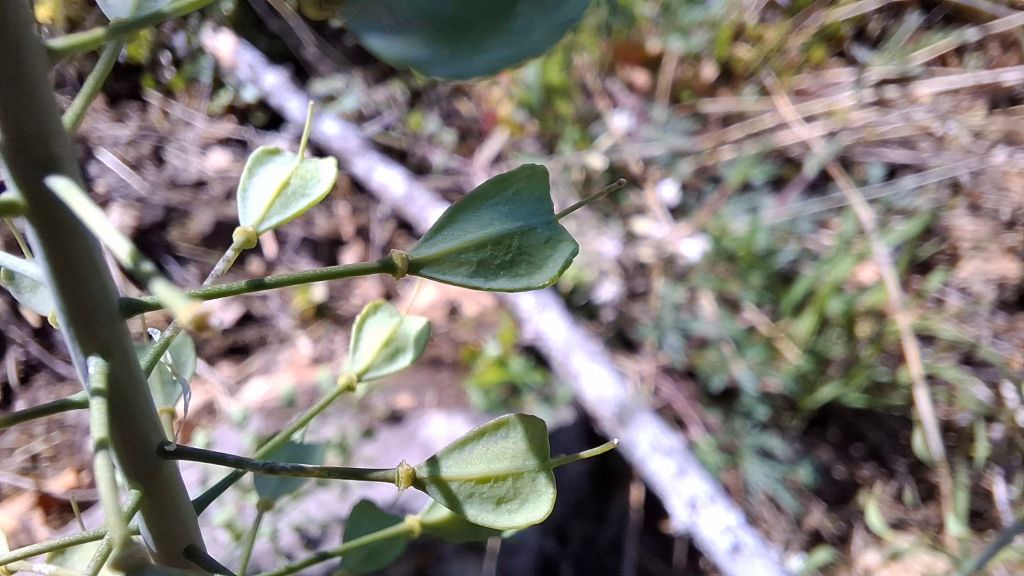
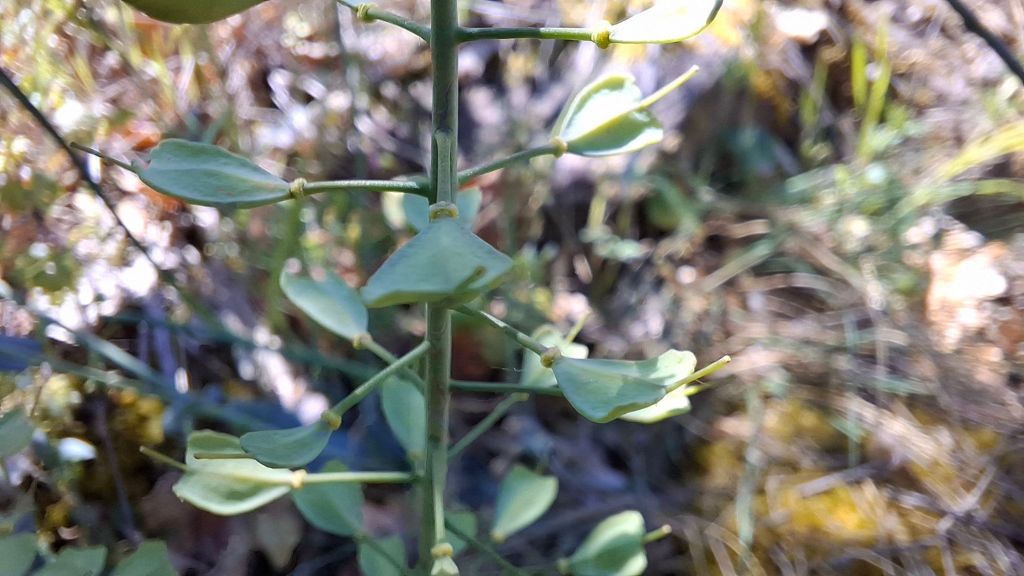
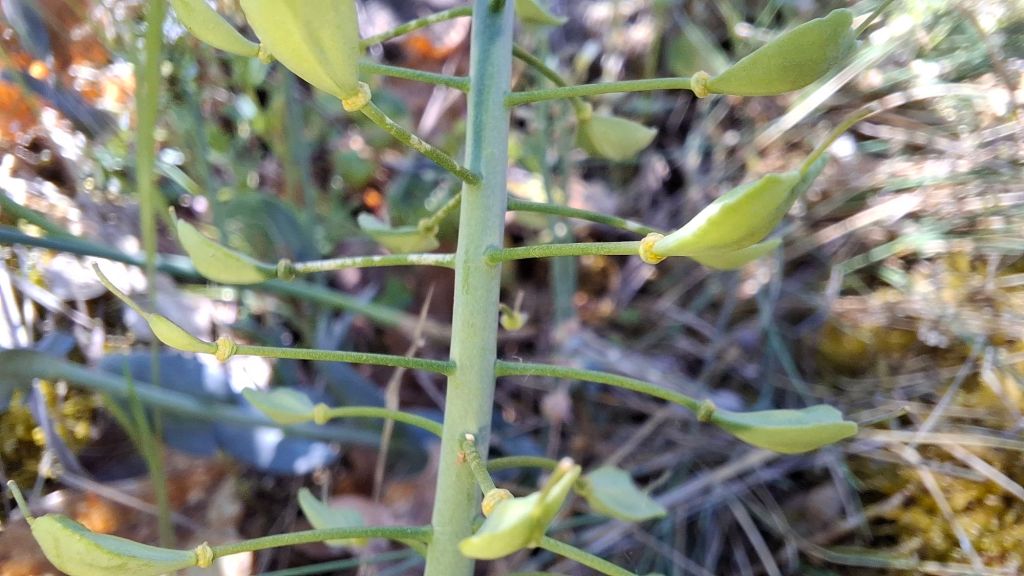
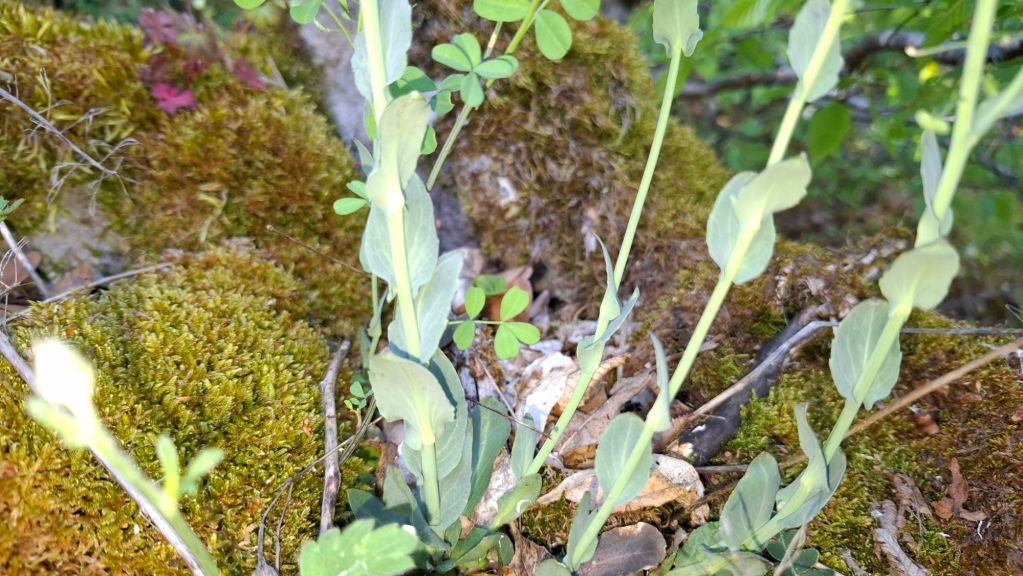
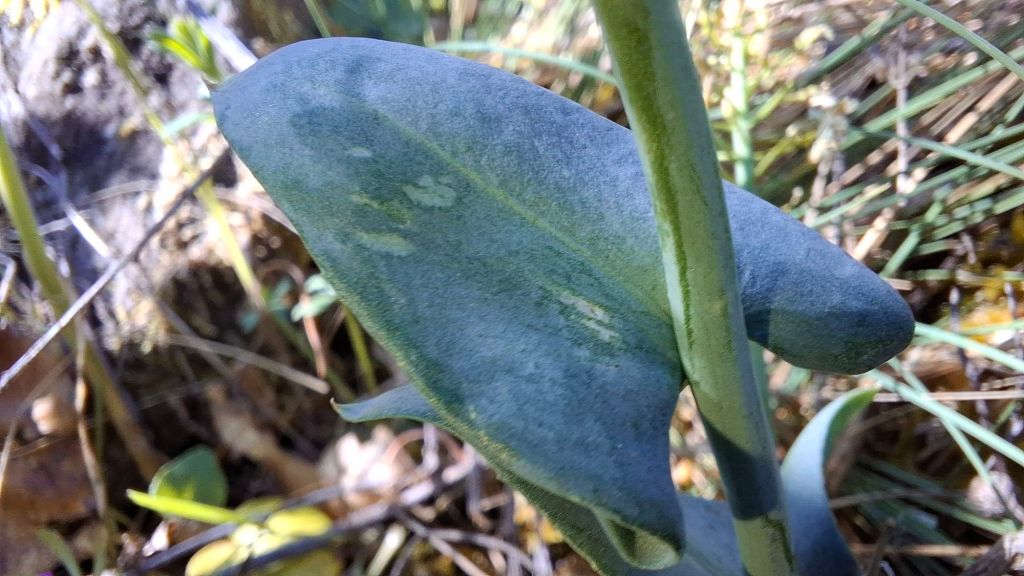
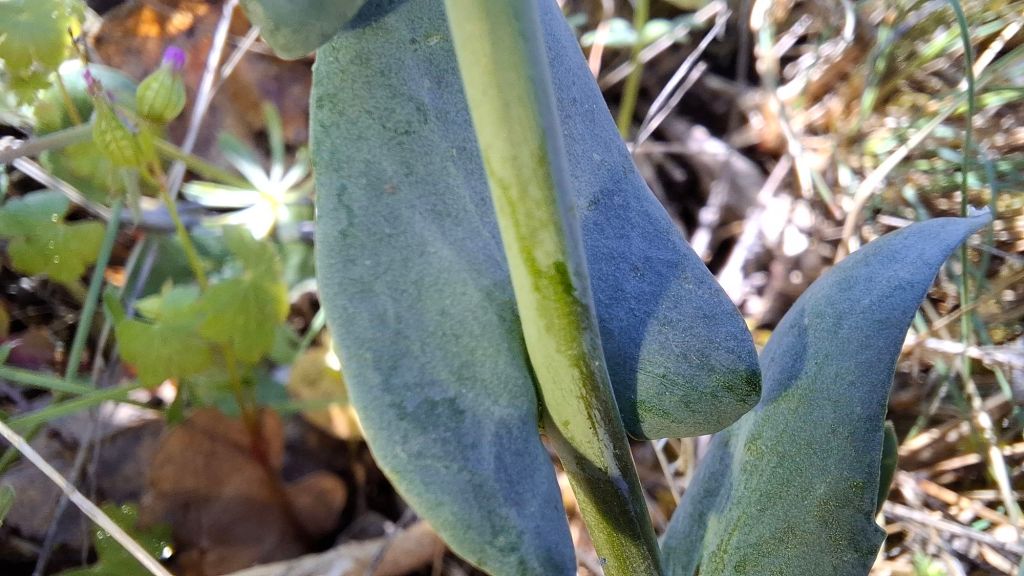
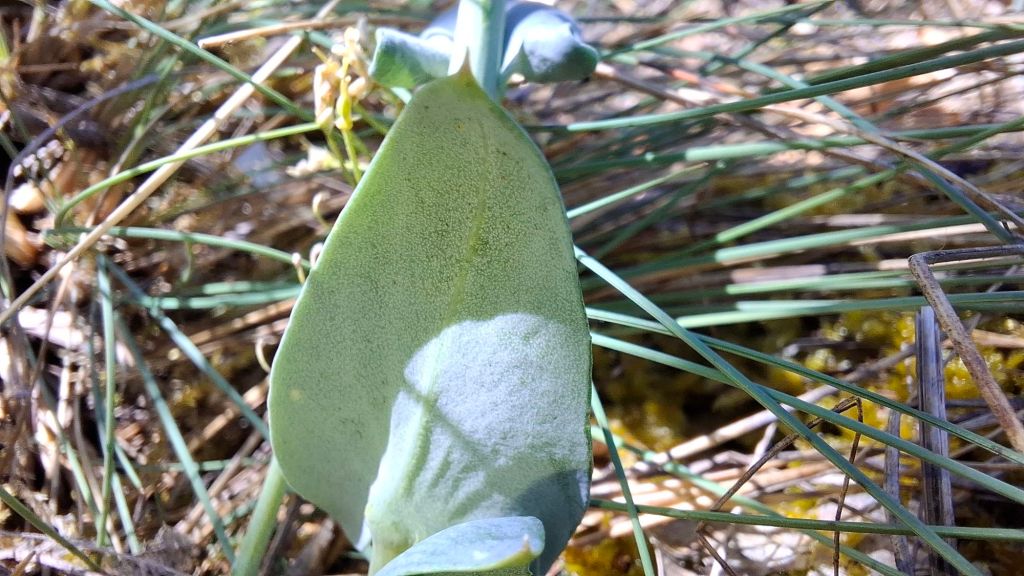
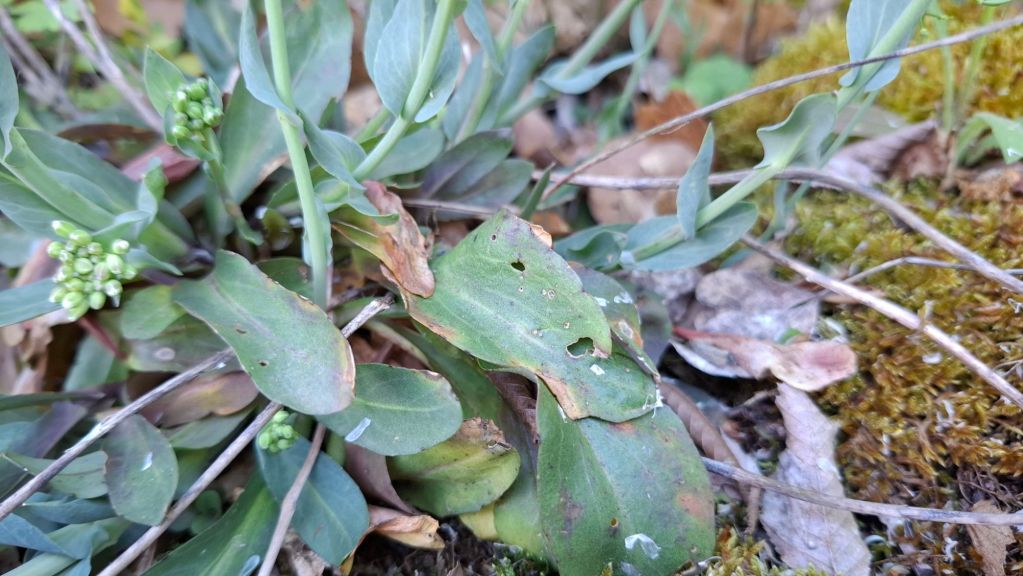
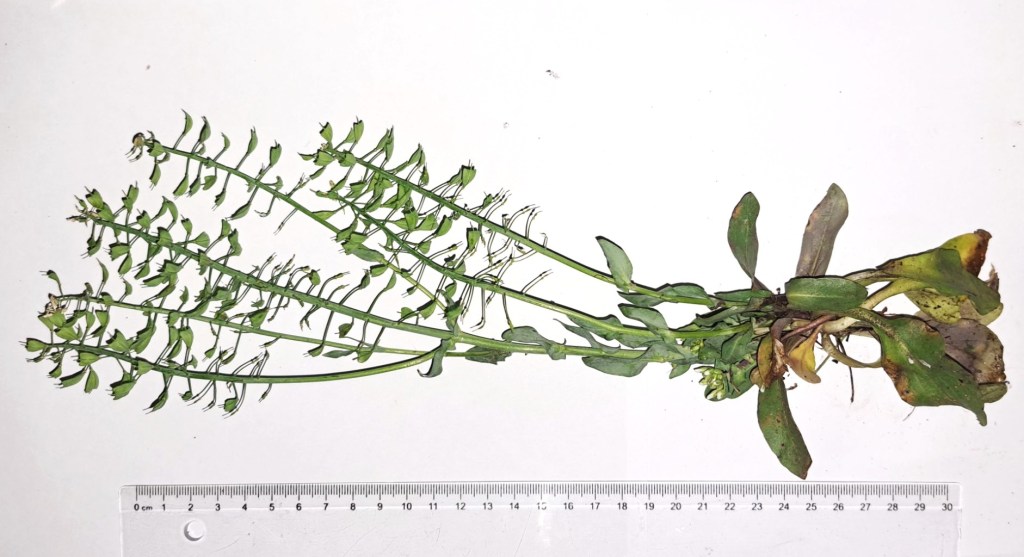
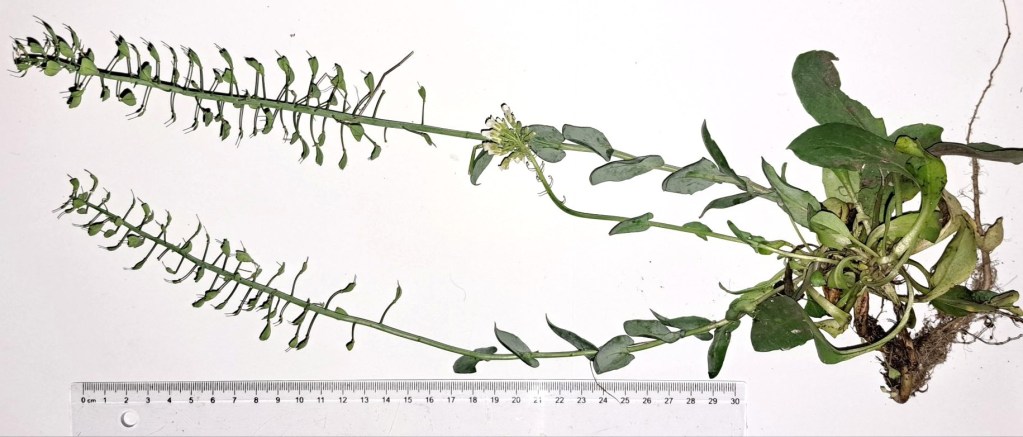
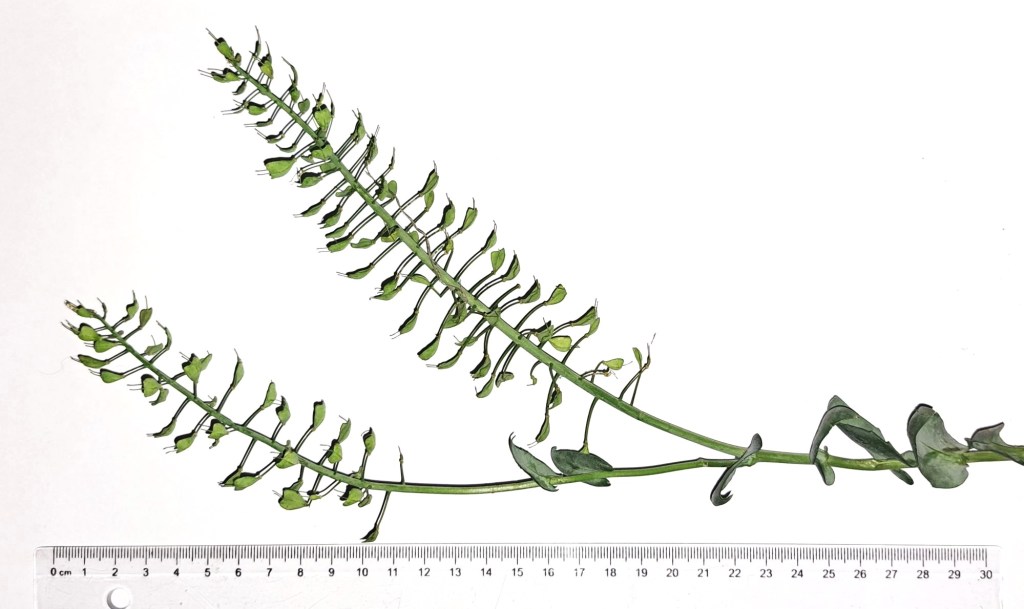
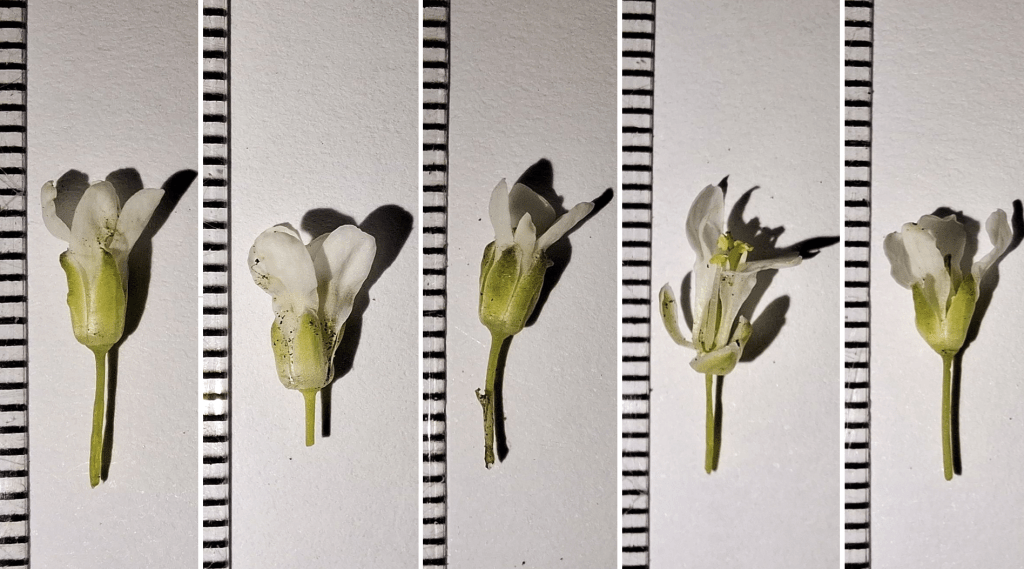
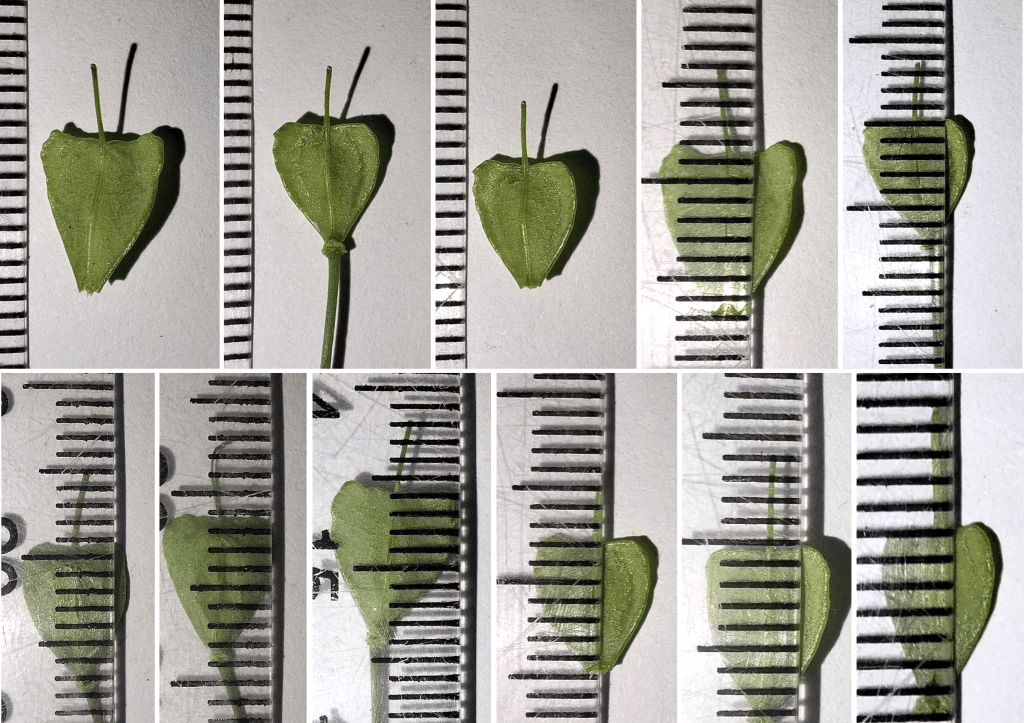
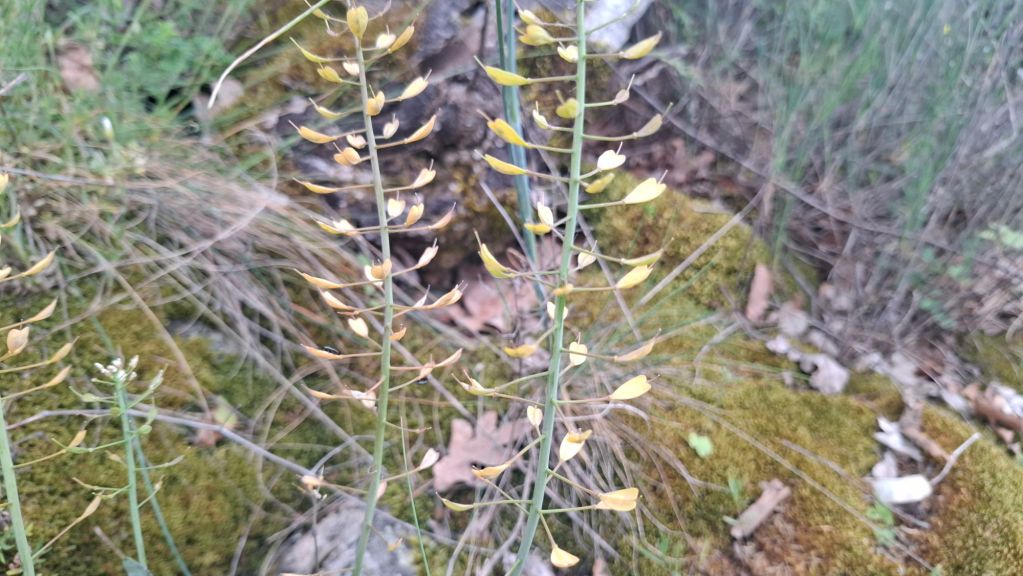
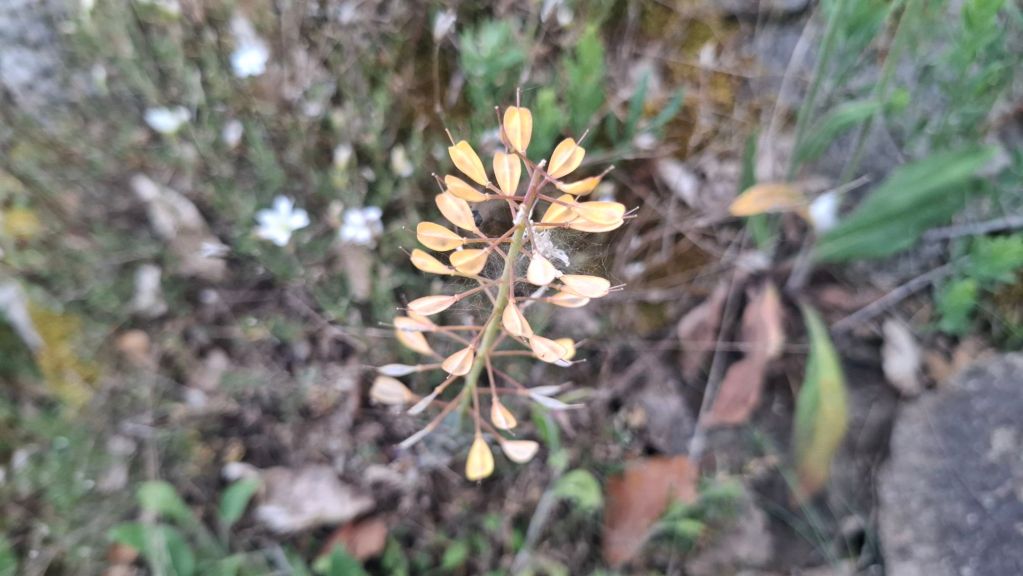
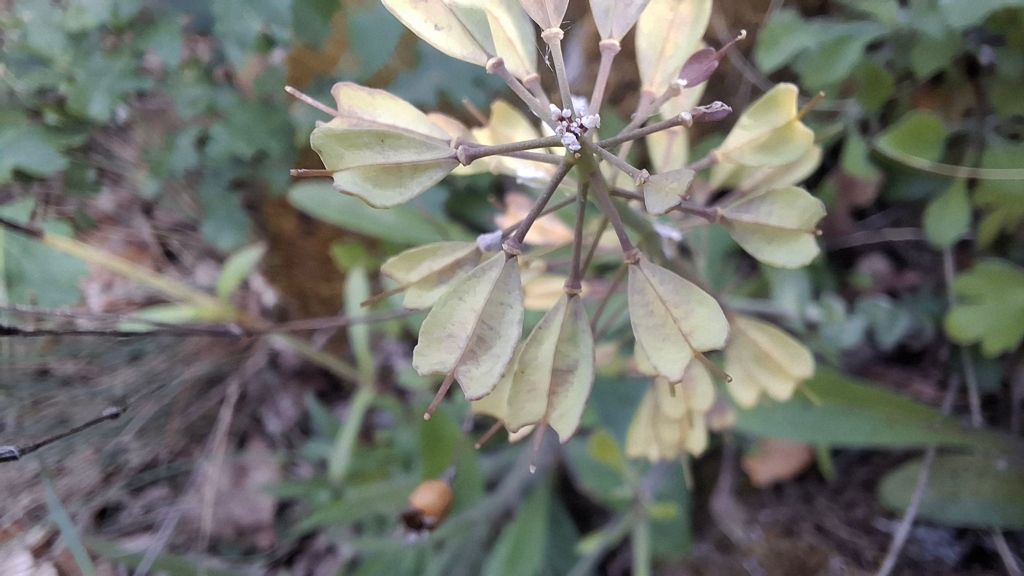
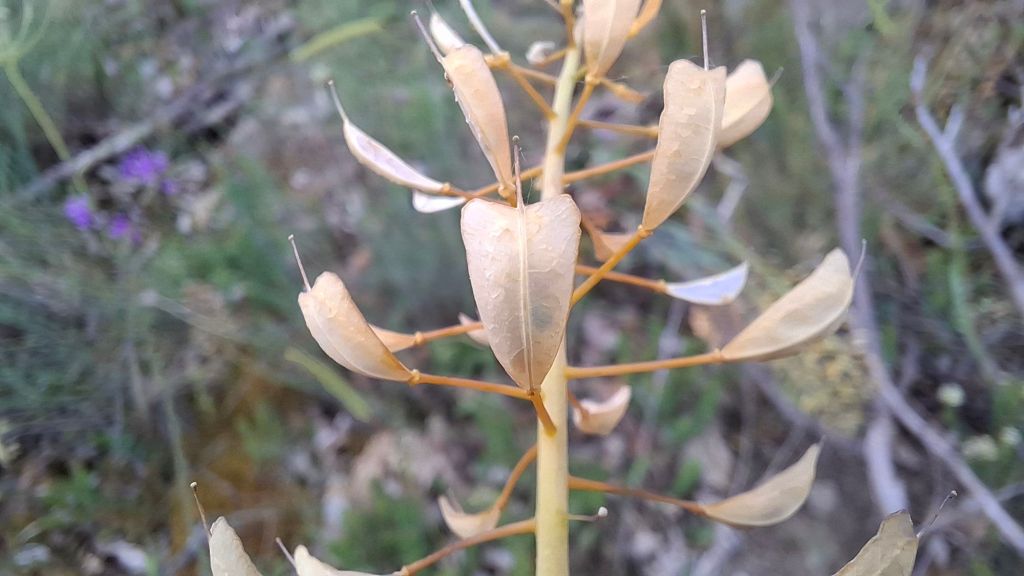
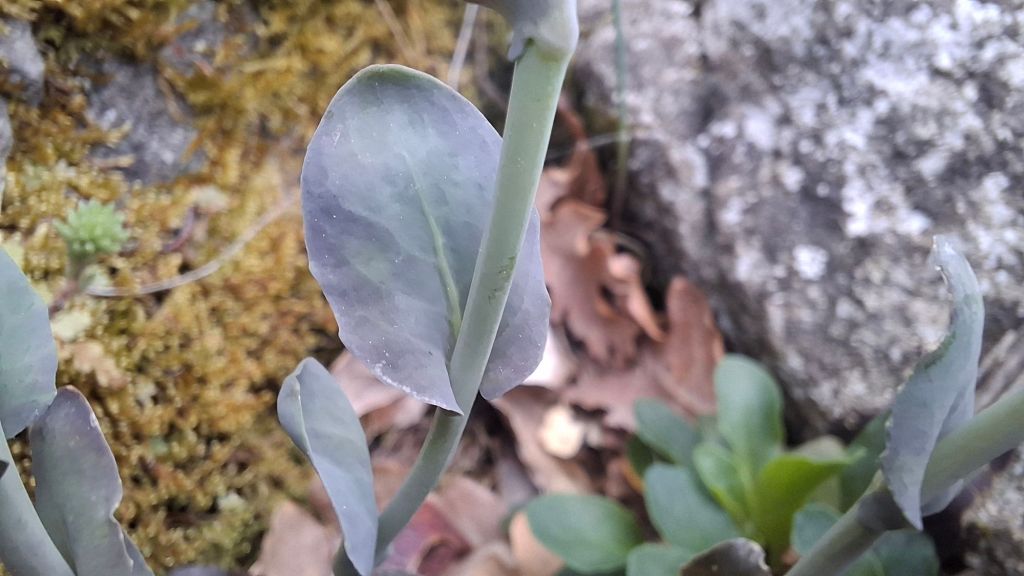
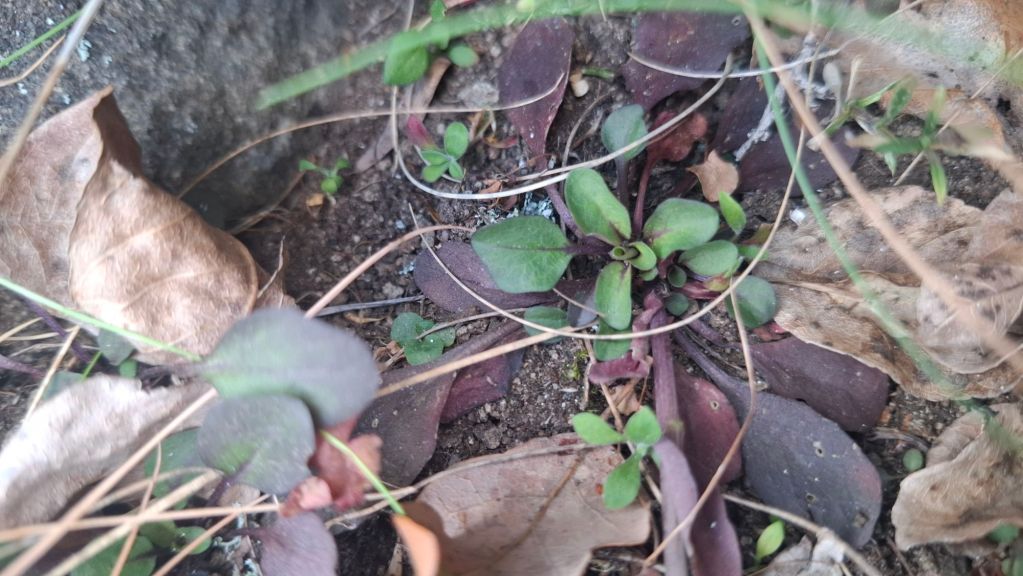
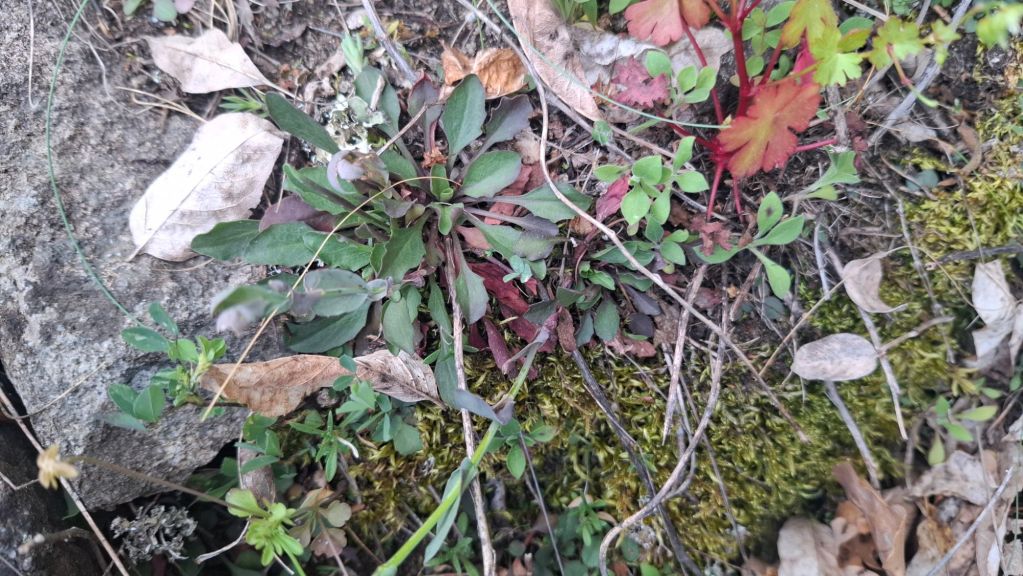
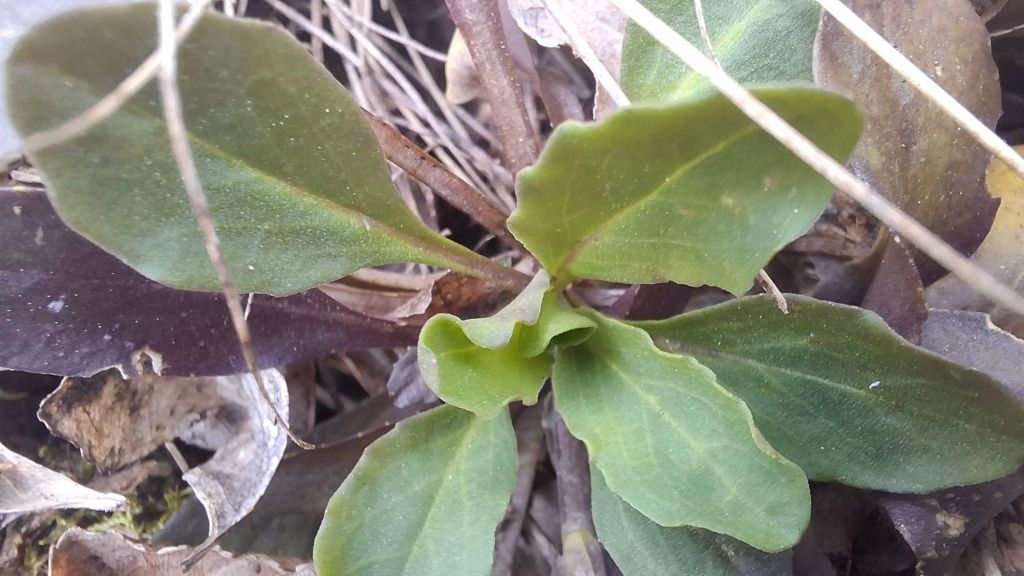
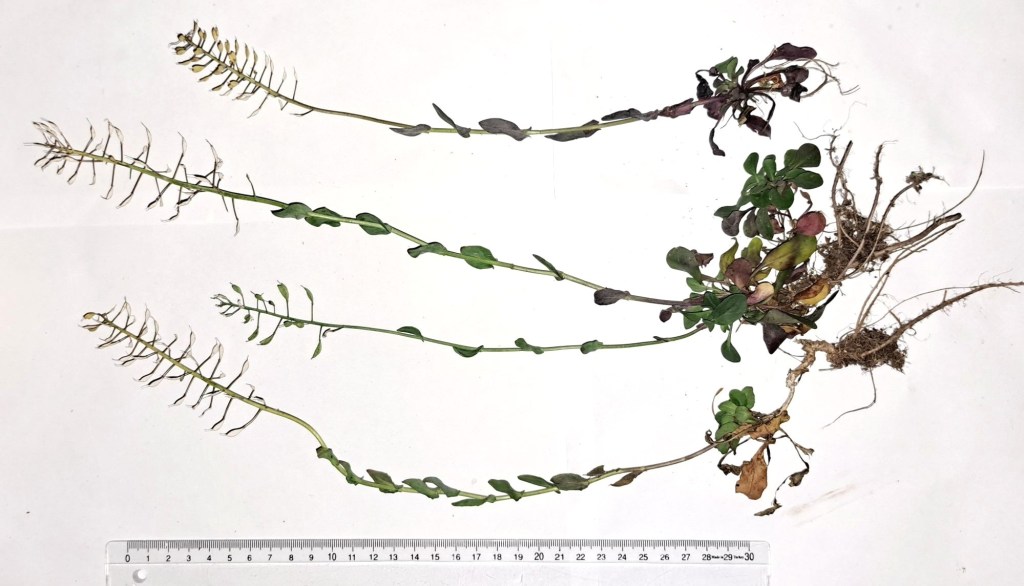
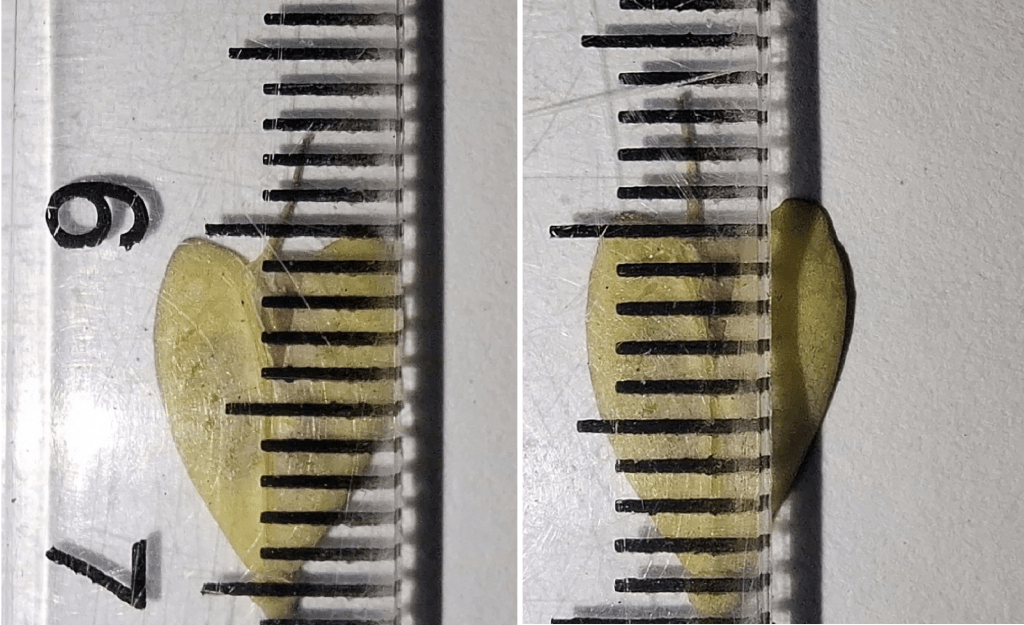
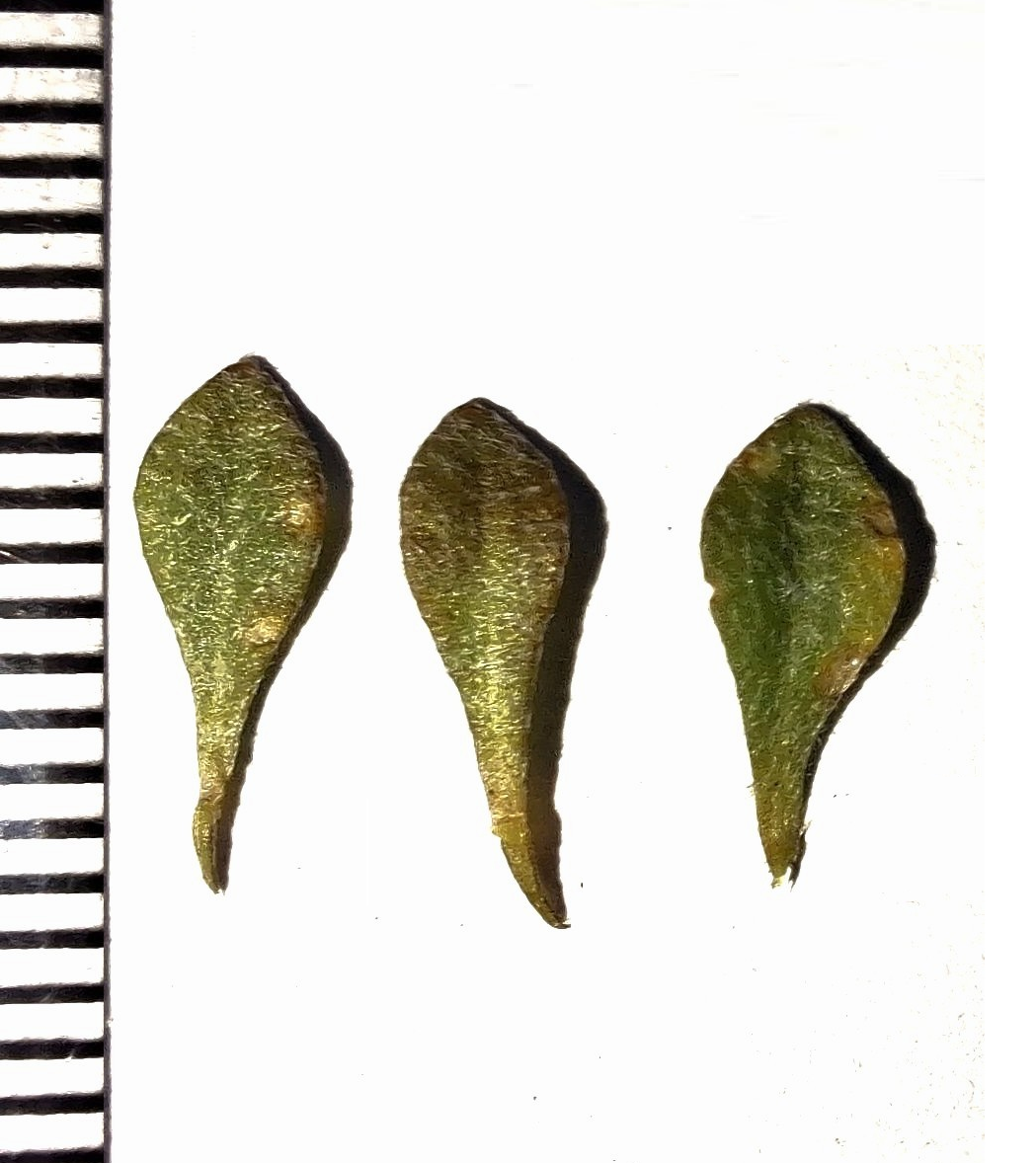
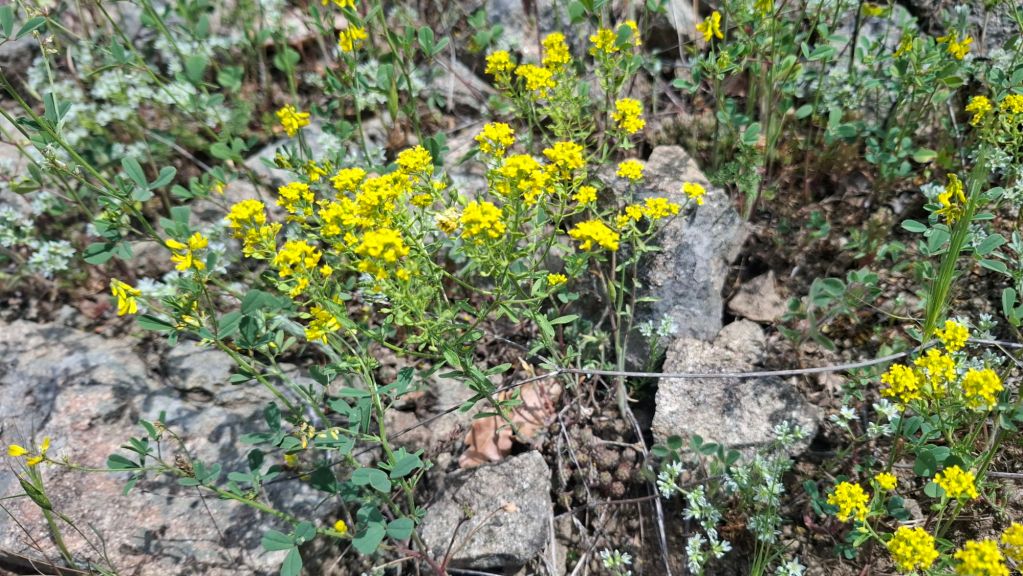
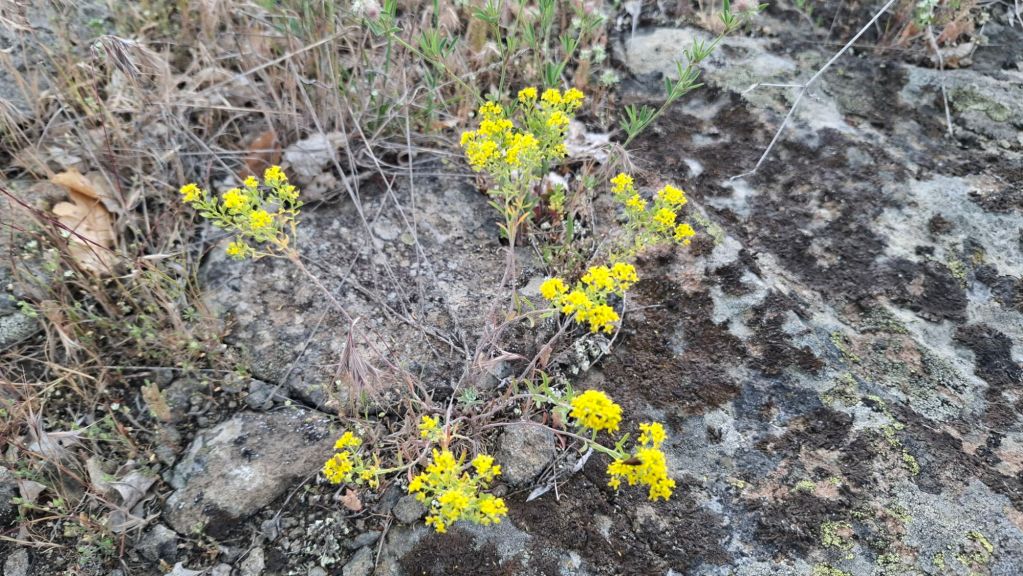
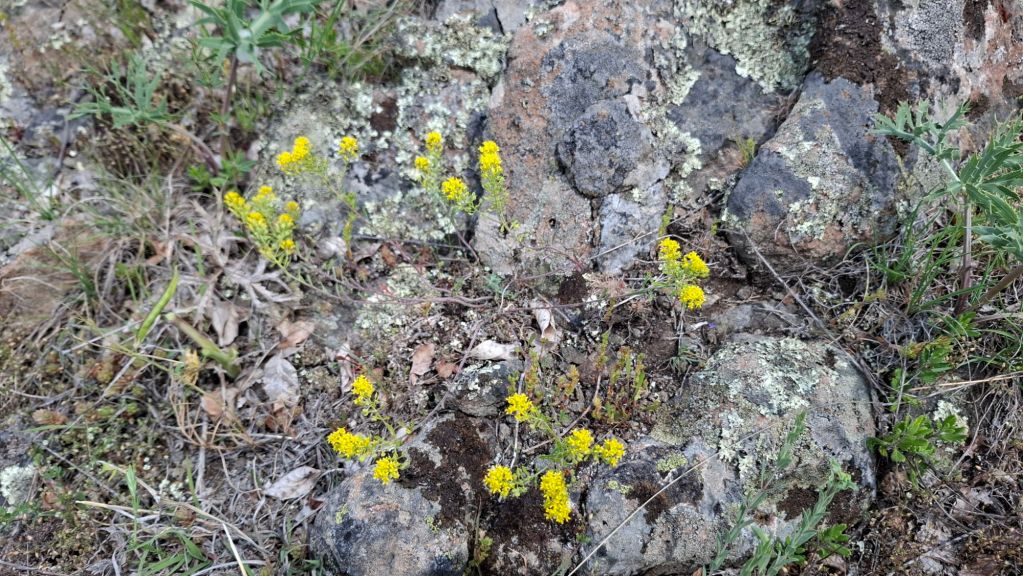
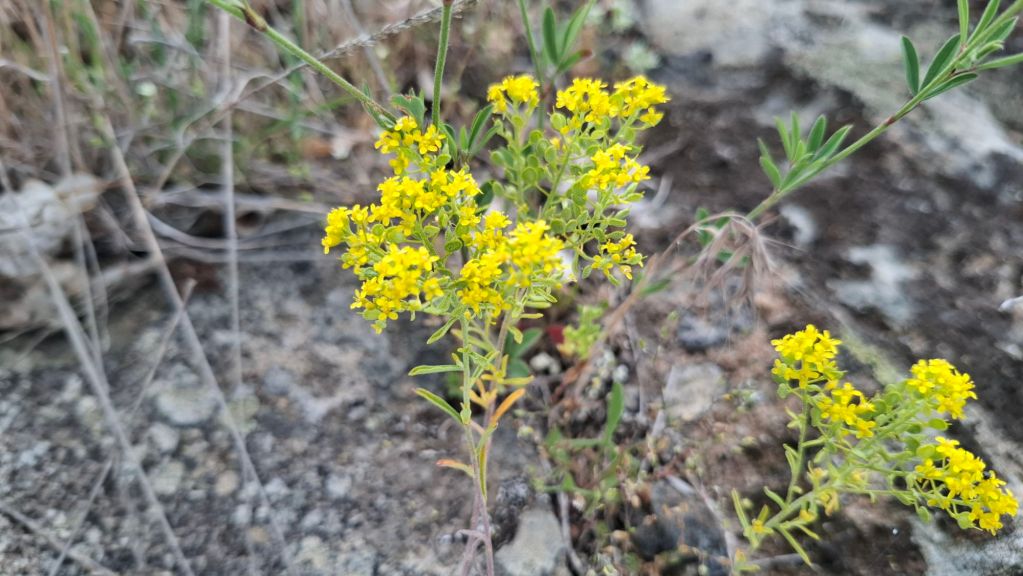
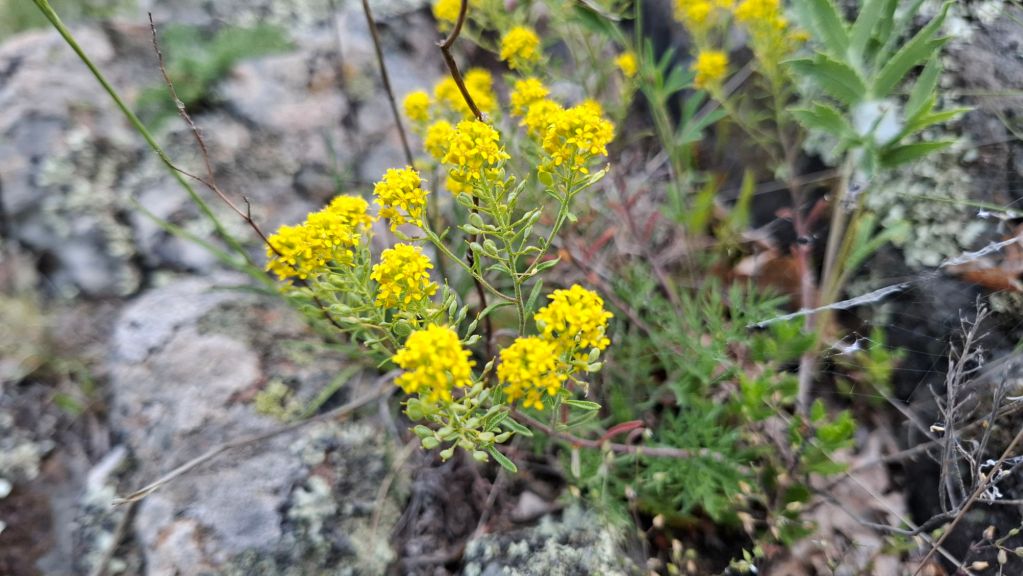
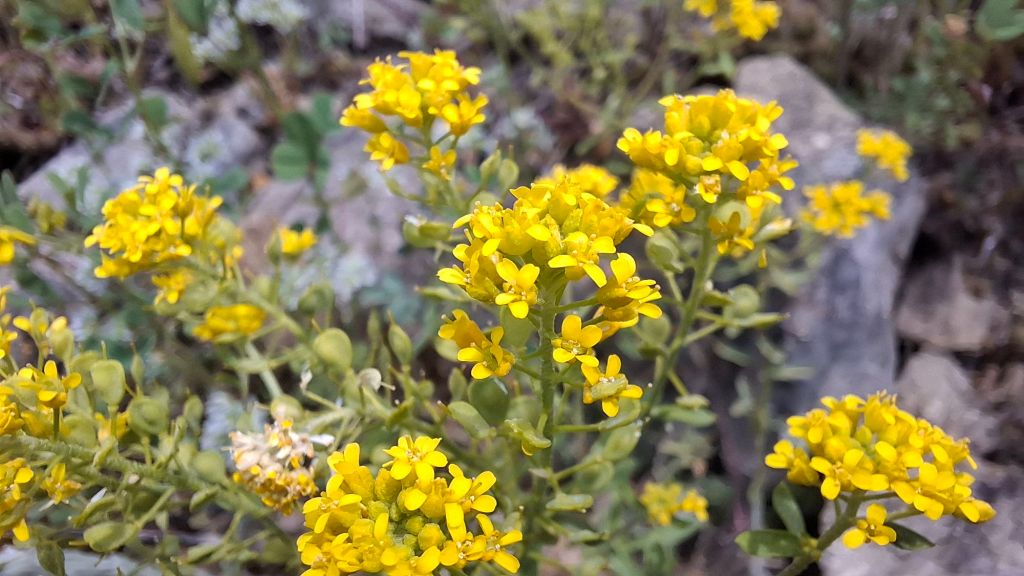
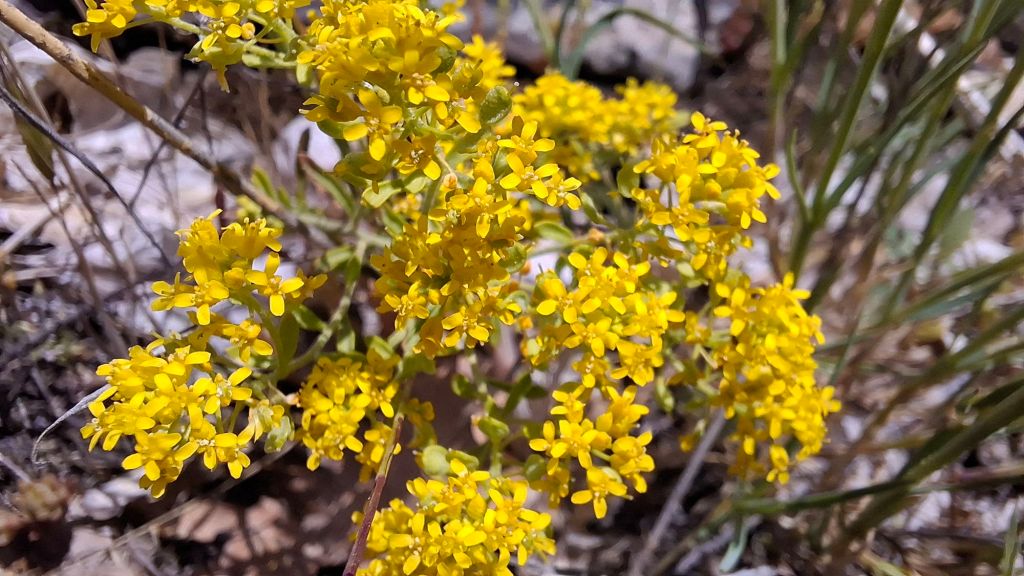
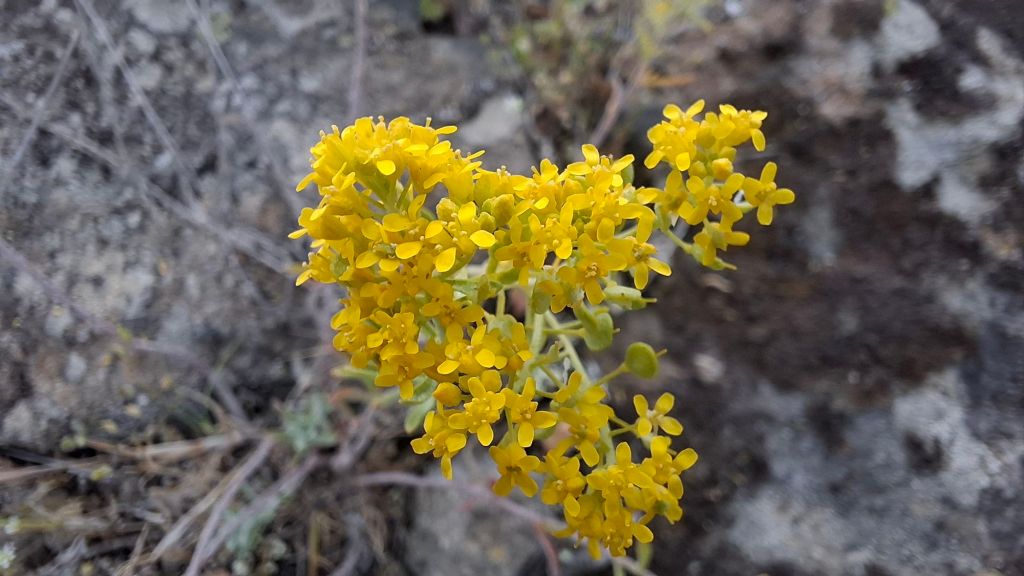
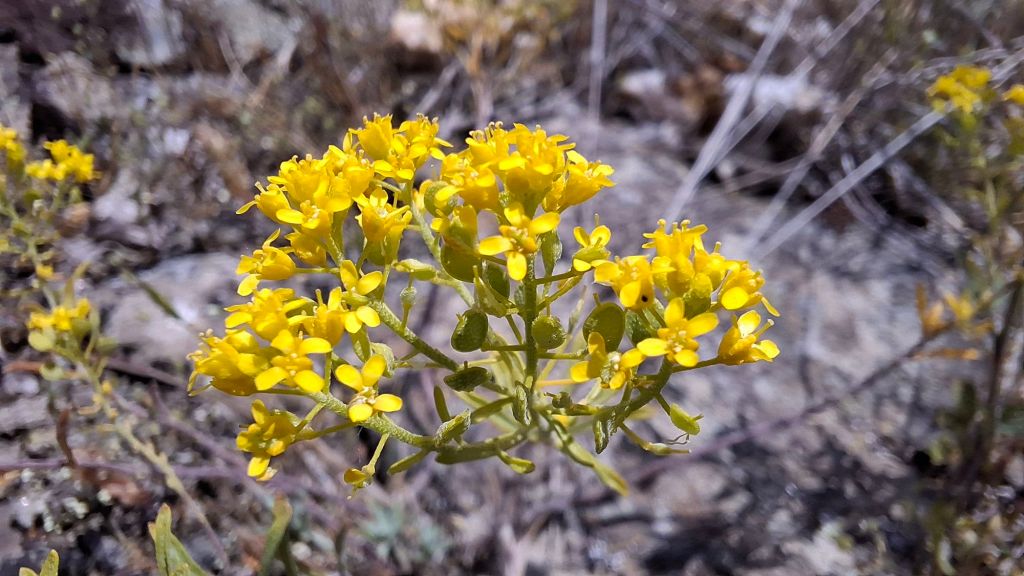
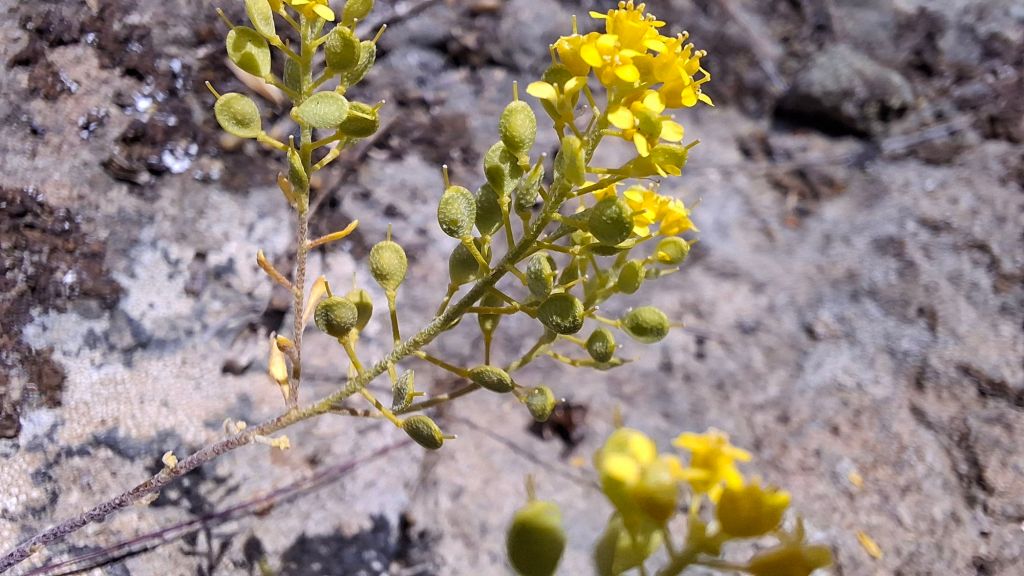
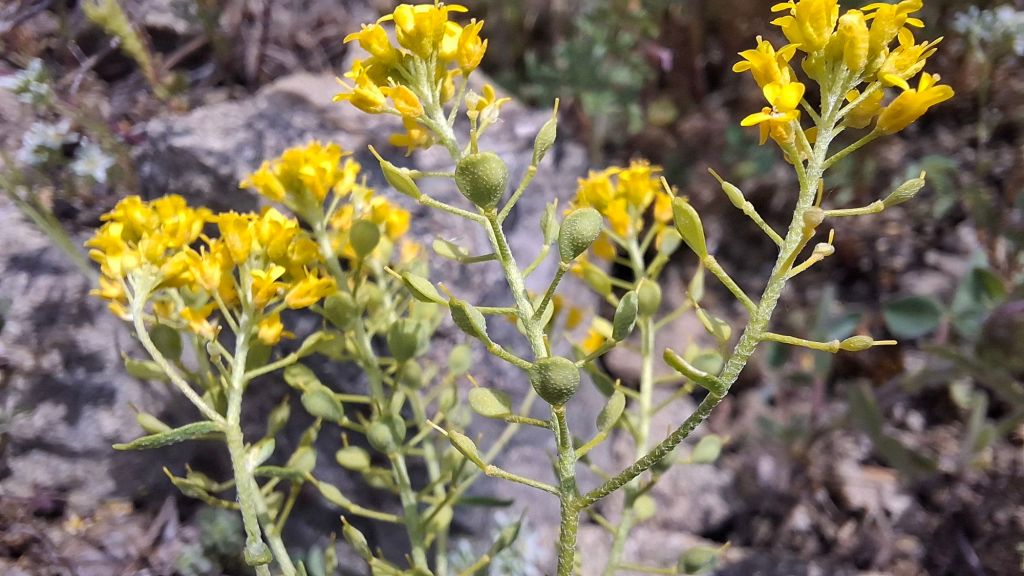
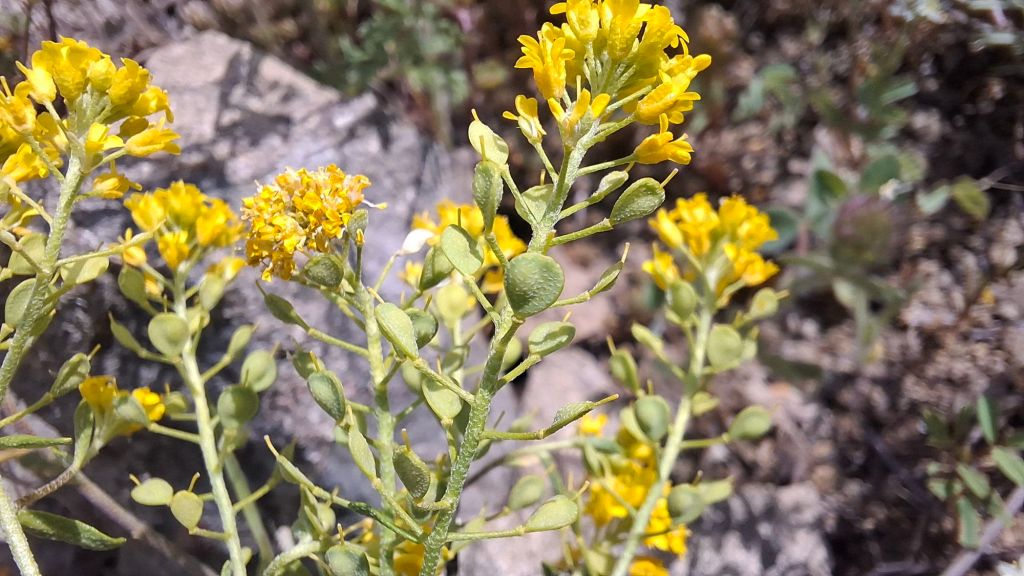
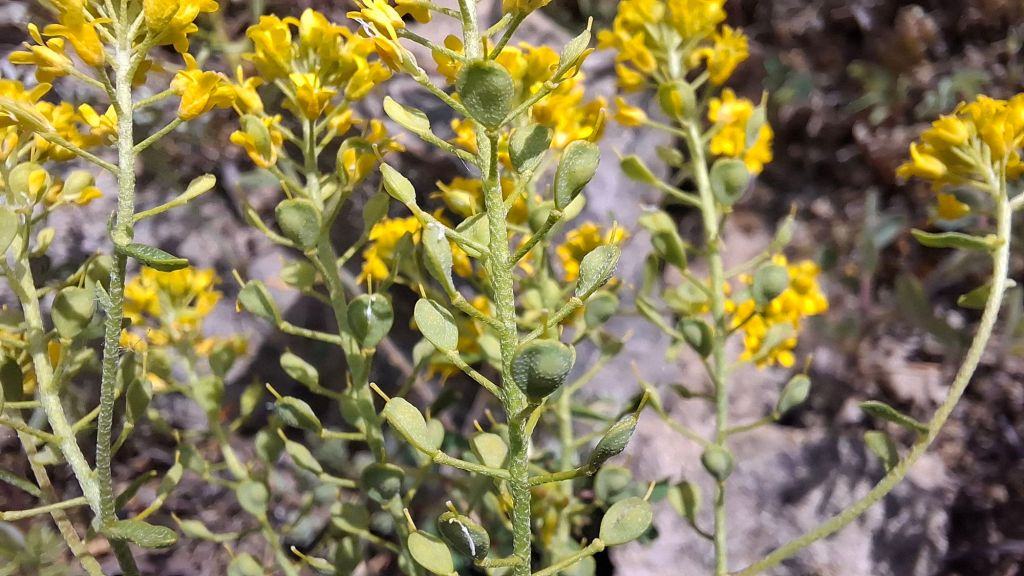
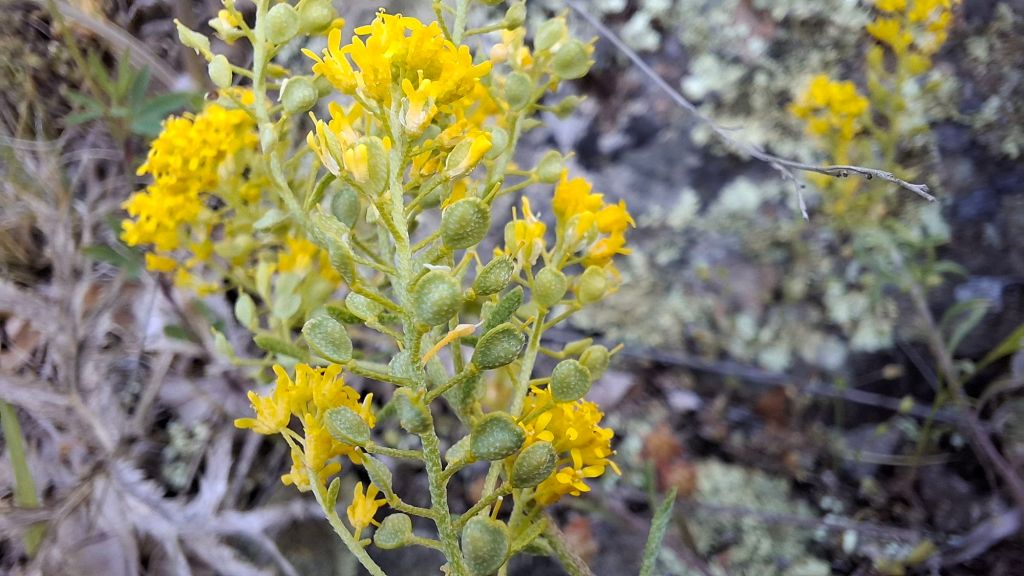
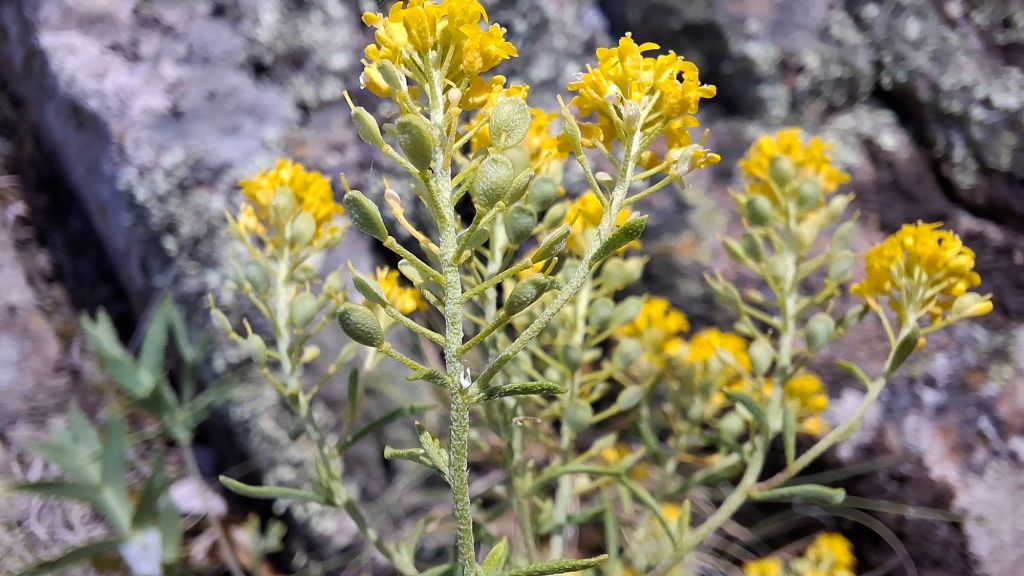
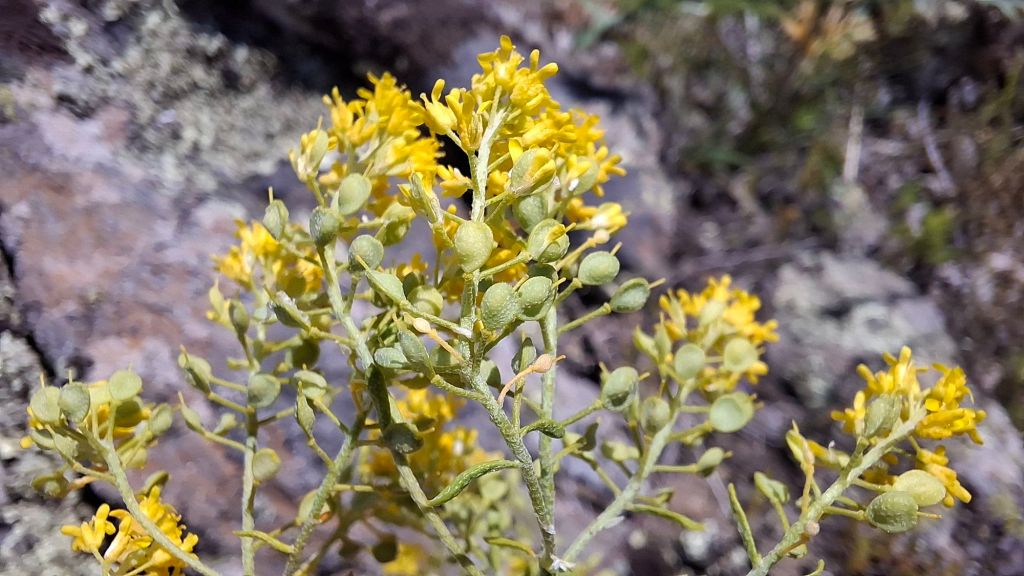
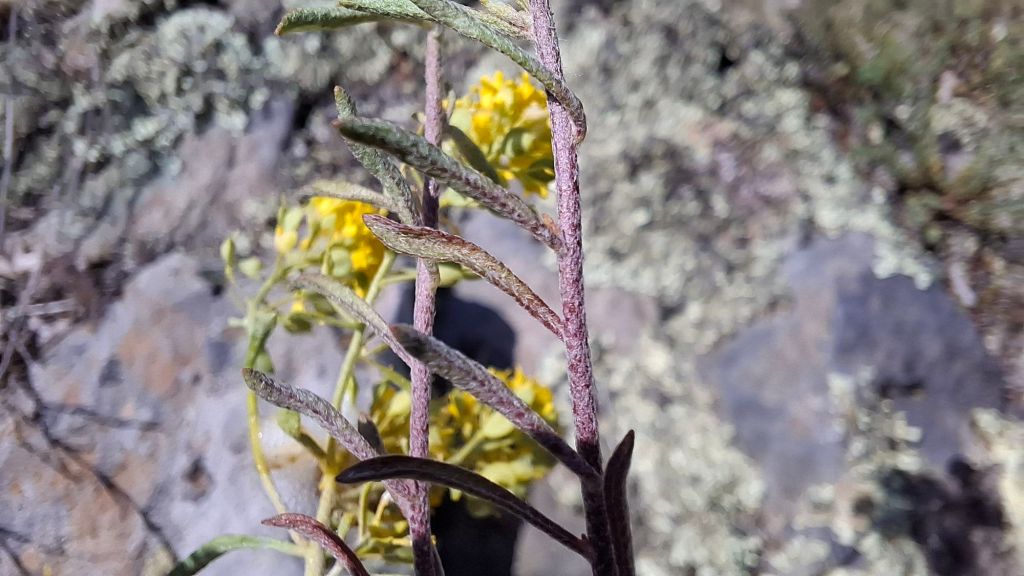
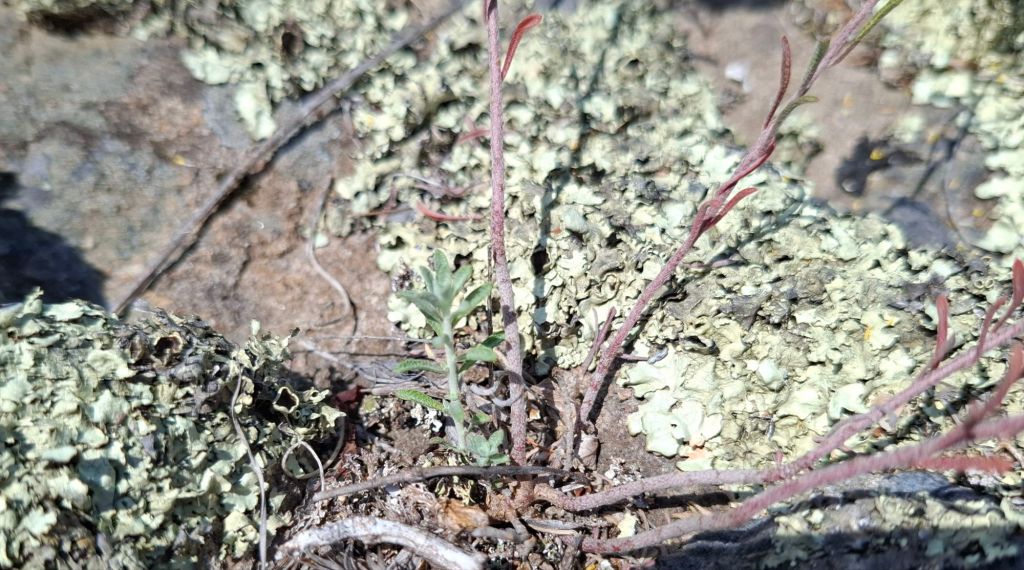
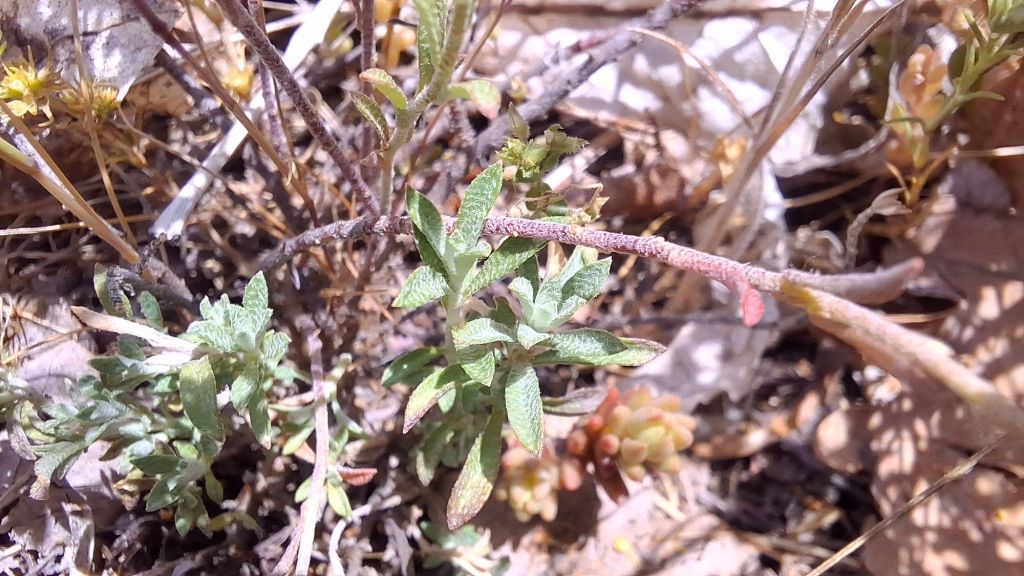
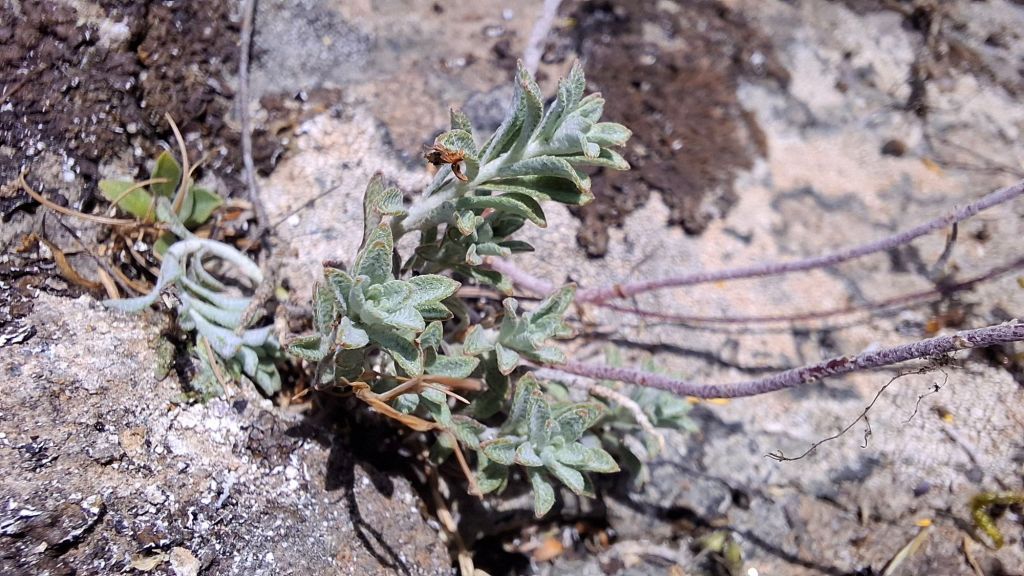
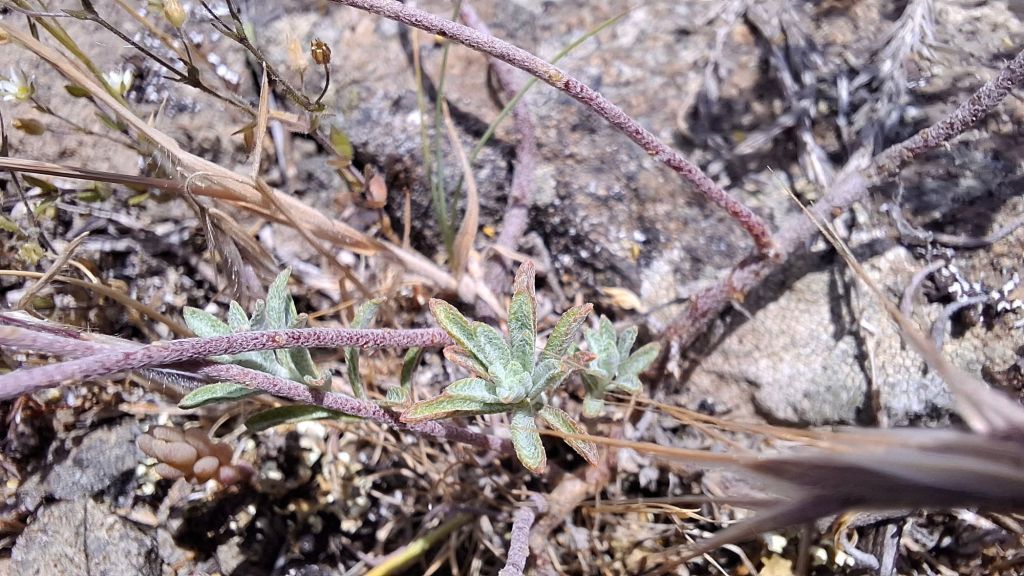
Determined according to the botanical keys provided by Micevski (1995) and Clapham (1964 in Tutin et al.) as Thlaspi ochroleucum Boiss. & Heldr. In both sources, Thlaspi lutescens Velen. is included in T. ochroleucum. According to the new concept and synopsis of Noccea (Schenbaz, 2014), these two taxa are separated, with N. ochroleuca distributed in Turkey, while N. lutescens is native to the Balkan Peninsula. N. lutescens is separated from N. ochroleuca based on the higher number of seeds/ ovules per loculus (4 to 8 vs 2 to 4) and the glaucescent appearance (vs non-glaucus in N. ochroleuca). Based on these traits, the plants from Osogovo correspond to N. lutescens.
Lifeform: Perennial plant. Hemicryptophyte according to the Raunkiaer system.
Distribution: Native to the Balkan Peninsula according to the distribution information provided by The Euro+Med PlantBase (Marhold, 2011+) and the Plants of the World Online portal (Royal Botanic Gardens, Kew).
Habitat: Sparse woods of the Querco-carpinetumorientalis ass., in the Zletovska River region.
Flowering period: Spring: APR, MAY.
Locality: Stari Grad – rock cliffs above the Eshterec Stream (Zletovska River basin). Date: 03.05.2026.
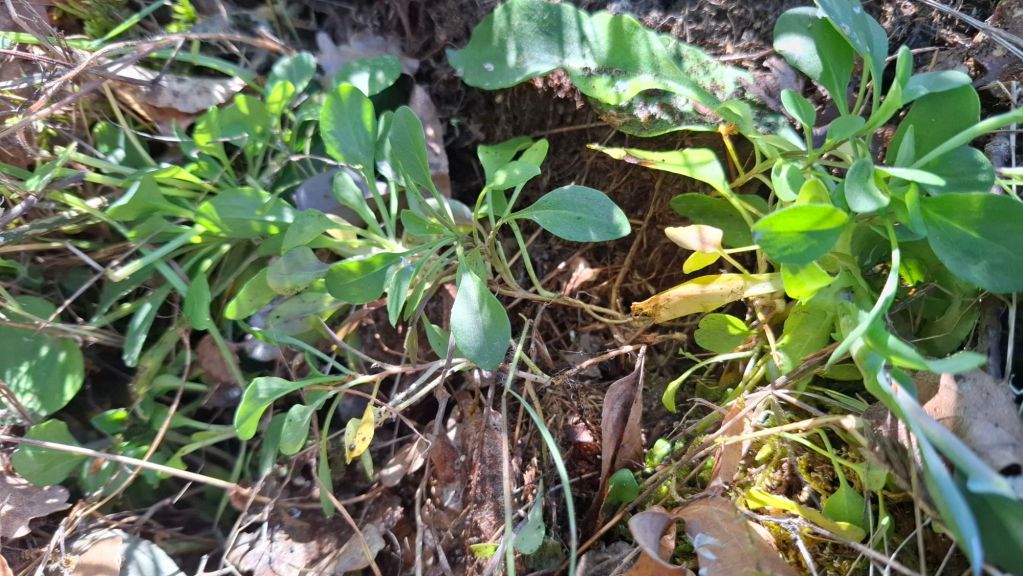
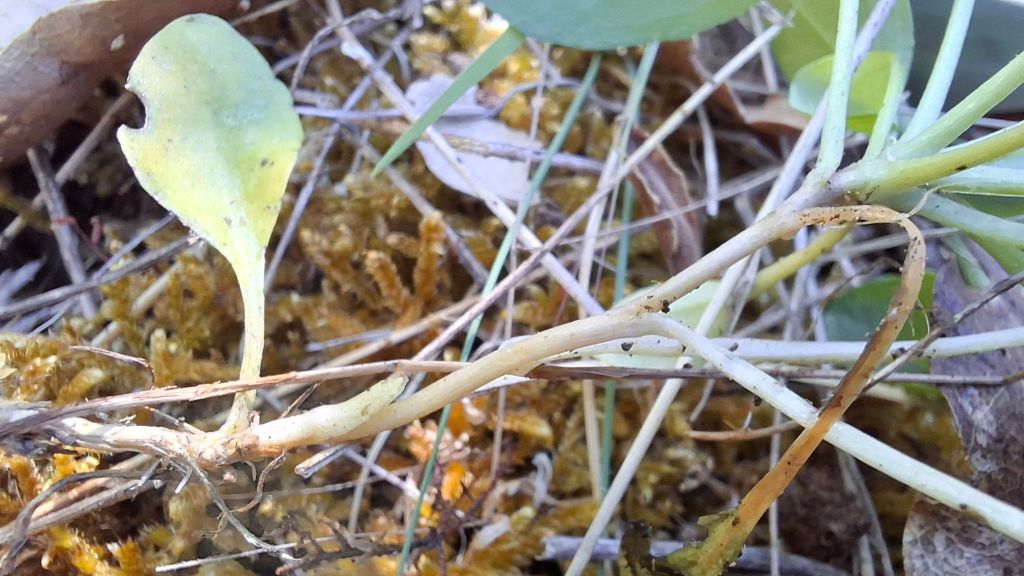
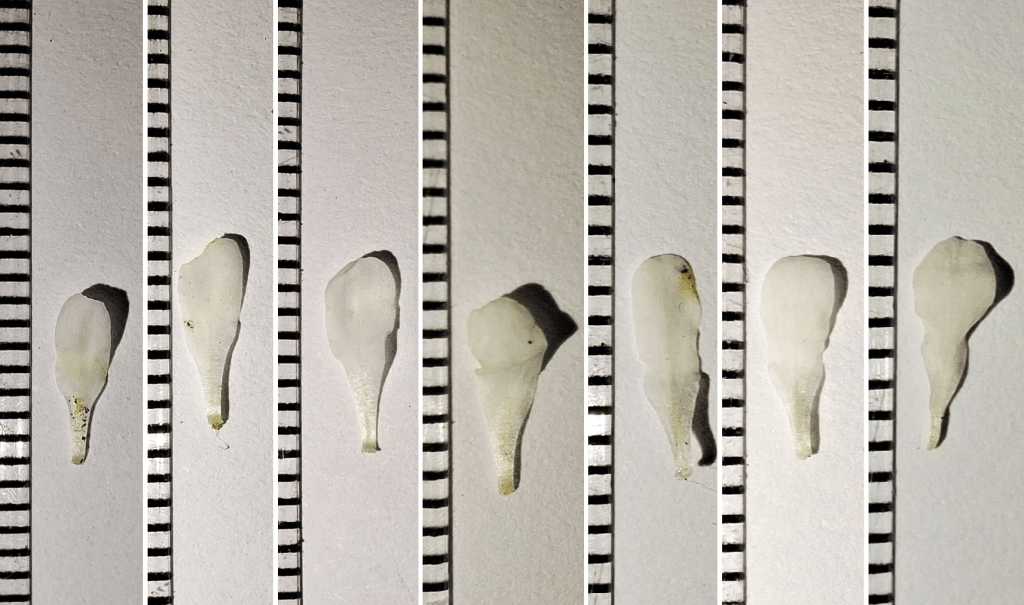
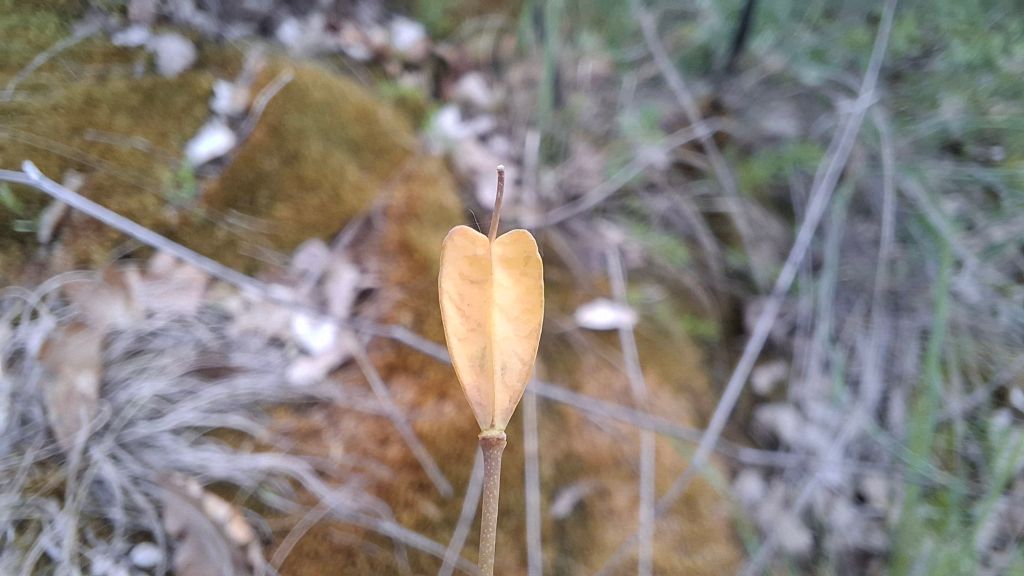
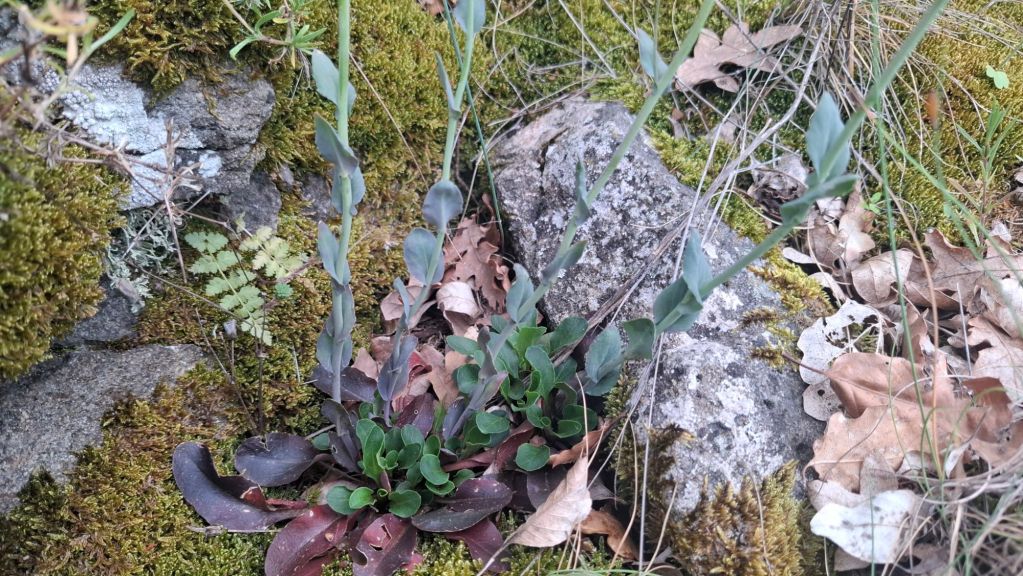
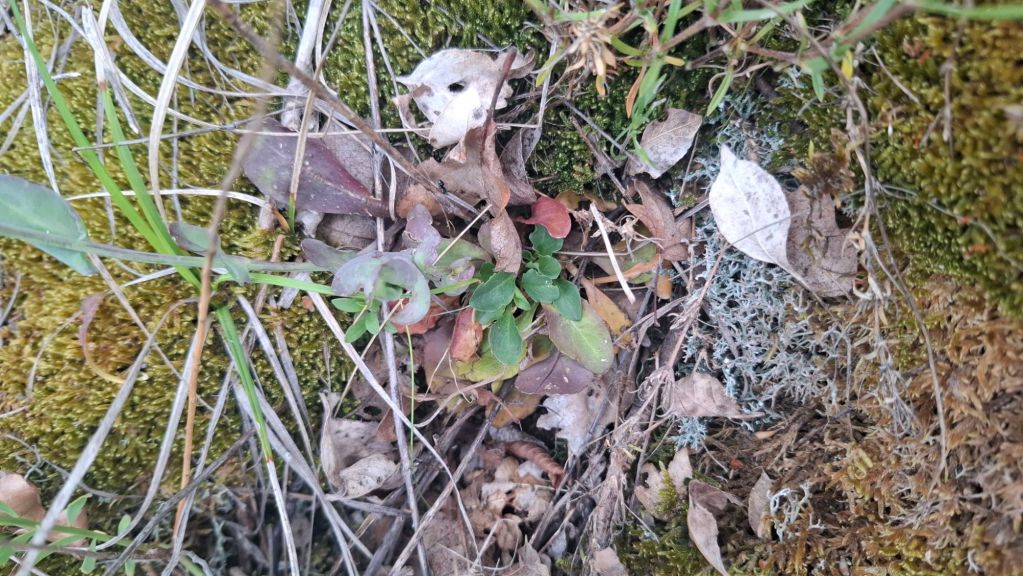
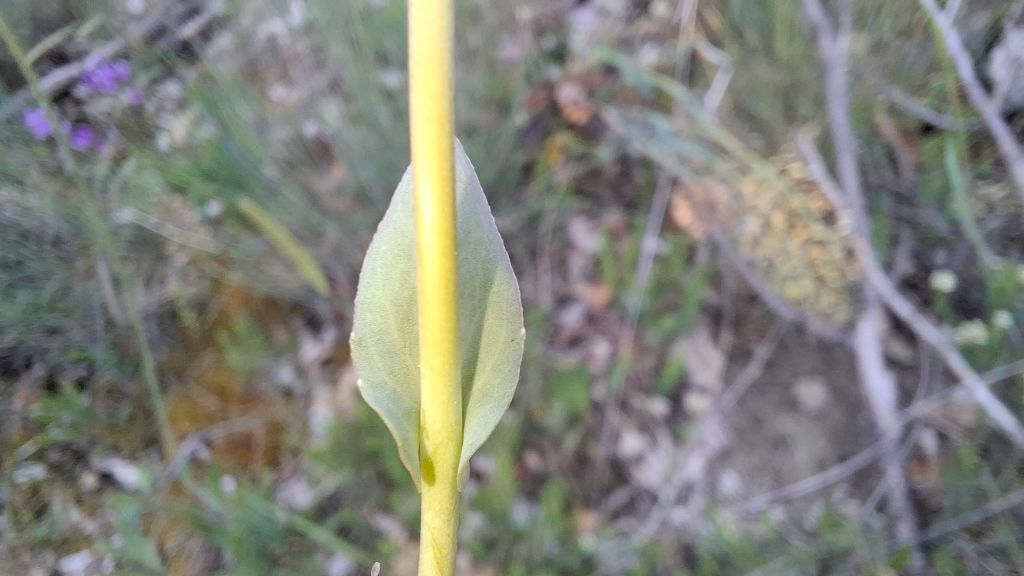
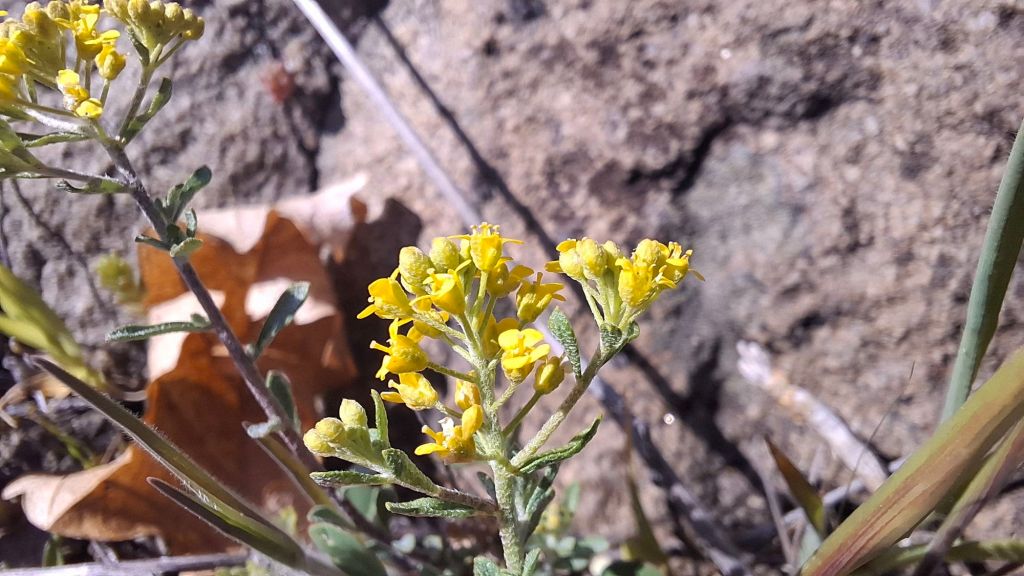
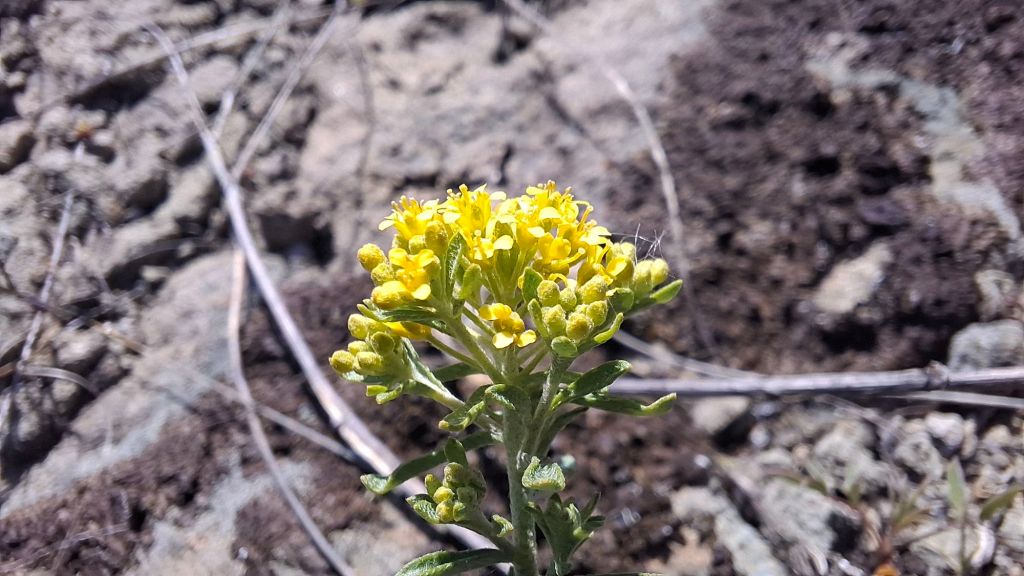
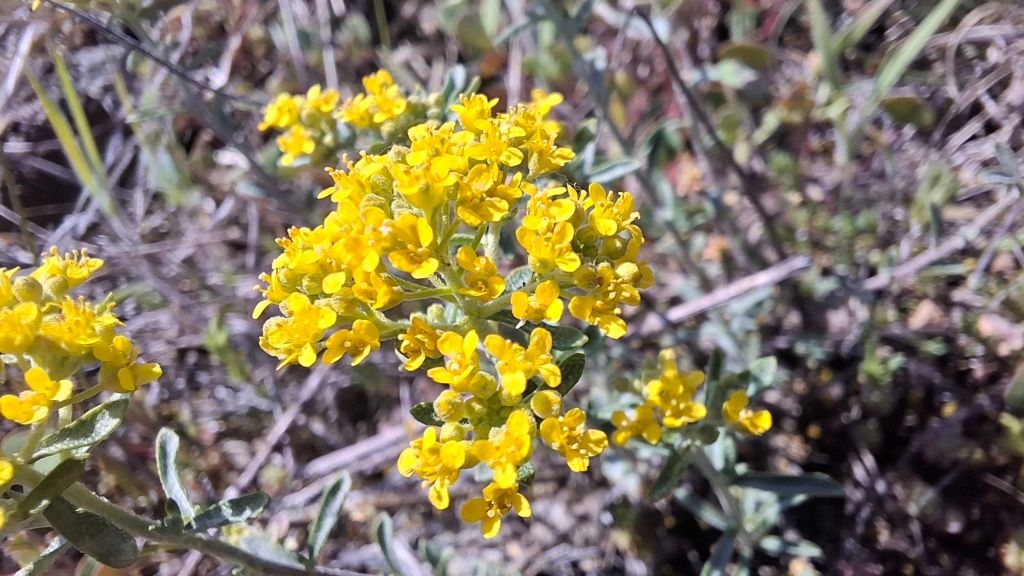
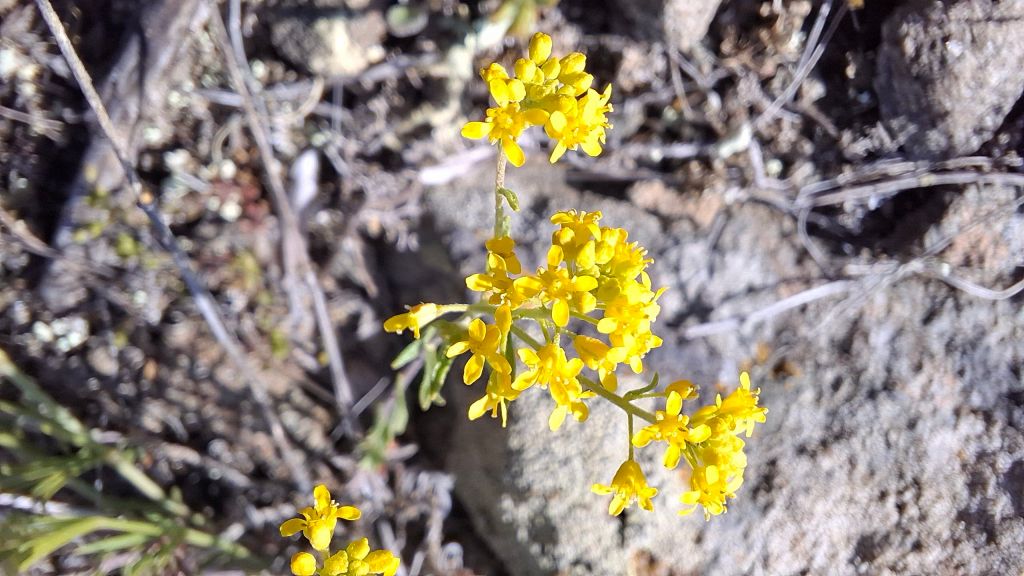
Noccaea lutescens– habit. Stari Grad – rock cliffs above the Eshterec Stream (Zletovska River basin), 03.05.2026. Photo by Trajche Dimitrovski. Noccaea lutescens– habit. Stari Grad – rock cliffs above the Eshterec Stream (Zletovska River basin), 03.05.2026. Photo by Trajche Dimitrovski. Noccaea lutescens– habit. Stari Grad – rock cliffs above the Eshterec Stream (Zletovska River basin), 03.05.2026. Photo by Trajche Dimitrovski. Noccaea lutescens– inflorescence. Stari Grad – rock cliffs above the Eshterec Stream (Zletovska River basin), 03.05.2026. Photo by Trajche Dimitrovski. Noccaea lutescens– inflorescence. Stari Grad – rock cliffs above the Eshterec Stream (Zletovska River basin), 03.05.2026. Photo by Trajche Dimitrovski. Noccaea lutescens– flowers. Stari Grad – rock cliffs above the Eshterec Stream (Zletovska River basin), 03.05.2026. Photo by Trajche Dimitrovski.Noccaea lutescens– inflorescence. Stari Grad – rock cliffs above the Eshterec Stream (Zletovska River basin), 03.05.2026. Photo by Trajche Dimitrovski. Noccaea lutescens– flowers. Stari Grad – rock cliffs above the Eshterec Stream (Zletovska River basin), 03.05.2026. Photo by Trajche Dimitrovski. Noccaea lutescens– flowers. Stari Grad – rock cliffs above the Eshterec Stream (Zletovska River basin), 03.05.2026. Photo by Trajche Dimitrovski.Noccaea lutescens– flowers. Stari Grad – rock cliffs above the Eshterec Stream (Zletovska River basin), 03.05.2026. Photo by Trajche Dimitrovski. Noccaea lutescens– flowers. Stari Grad – rock cliffs above the Eshterec Stream (Zletovska River basin), 03.05.2026. Photo by Trajche Dimitrovski.Noccaea lutescens– flowers. Stari Grad – rock cliffs above the Eshterec Stream (Zletovska River basin), 03.05.2026. Photo by Trajche Dimitrovski. Noccaea lutescens– siliculas. Stari Grad – rock cliffs above the Eshterec Stream (Zletovska River basin), 03.05.2026. Photo by Trajche Dimitrovski.Noccaea lutescens– siliculas. Stari Grad – rock cliffs above the Eshterec Stream (Zletovska River basin), 03.05.2026. Photo by Trajche Dimitrovski.Noccaea lutescens– siliculas. Stari Grad – rock cliffs above the Eshterec Stream (Zletovska River basin), 03.05.2026. Photo by Trajche Dimitrovski.Noccaea lutescens– siliculas. Stari Grad – rock cliffs above the Eshterec Stream (Zletovska River basin), 03.05.2026. Photo by Trajche Dimitrovski.Noccaea lutescens– siliculas. Stari Grad – rock cliffs above the Eshterec Stream (Zletovska River basin), 03.05.2026. Photo by Trajche Dimitrovski.Noccaea lutescens– siliculas. Stari Grad – rock cliffs above the Eshterec Stream (Zletovska River basin), 03.05.2026. Photo by Trajche Dimitrovski.Noccaea lutescens– stems with cauline leaves. Stari Grad – rock cliffs above the Eshterec Stream (Zletovska River basin), 03.05.2026. Photo by Trajche Dimitrovski.Noccaea lutescens– stems with cauline leaves. Stari Grad – rock cliffs above the Eshterec Stream (Zletovska River basin), 03.05.2026. Photo by Trajche Dimitrovski.Noccaea lutescens– stem with cauline leaves. Stari Grad – rock cliffs above the Eshterec Stream (Zletovska River basin), 03.05.2026. Photo by Trajche Dimitrovski.Noccaea lutescens– stems and cauline leaf. Stari Grad – rock cliffs above the Eshterec Stream (Zletovska River basin), 03.05.2026. Photo by Trajche Dimitrovski.Noccaea lutescens– adaxial side of cauline leaf. Stari Grad – rock cliffs above the Eshterec Stream (Zletovska River basin), 03.05.2026. Photo by Trajche Dimitrovski.Noccaea lutescens– abaxial side of cauline leaf. Stari Grad – rock cliffs above the Eshterec Stream (Zletovska River basin), 03.05.2026. Photo by Trajche Dimitrovski.Noccaea lutescens– lower caulin eleaves and vegetatice shoots. Stari Grad – rock cliffs above the Eshterec Stream (Zletovska River basin), 03.05.2026. Photo by Trajche Dimitrovski.Noccaea lutescens– basal leaves of flowering stem. Stari Grad – rock cliffs above the Eshterec Stream (Zletovska River basin), 03.05.2026. Photo by Trajche Dimitrovski.Noccaea lutescens– basal leaves of flowering stem. Stari Grad – rock cliffs above the Eshterec Stream (Zletovska River basin), 03.05.2026. Photo by Trajche Dimitrovski.Noccaea lutescens– adaxial side of basal leaf. Stari Grad – rock cliffs above the Eshterec Stream (Zletovska River basin), 03.05.2026. Photo by Trajche Dimitrovski.Noccaea lutescens– abaxial side of basal leaf. Stari Grad – rock cliffs above the Eshterec Stream (Zletovska River basin), 03.05.2026. Photo by Trajche Dimitrovski.Noccaea lutescens– vegetative shoots. Stari Grad – rock cliffs above the Eshterec Stream (Zletovska River basin), 03.05.2026. Photo by Trajche Dimitrovski.Noccaea lutescens– vegetative shoots. Stari Grad – rock cliffs above the Eshterec Stream (Zletovska River basin), 03.05.2026. Photo by Trajche Dimitrovski.Noccaea lutescens– vegetative shoot. Stari Grad – rock cliffs above the Eshterec Stream (Zletovska River basin), 03.05.2026. Photo by Trajche Dimitrovski.Noccaea lutescens– petals of herbarized specimen. The petals turn pale yellow upon drying. Specimen from Stari Grad – rock cliffs above the Eshterec Stream (Zletovska River basin), 03.05.2026. Photo by Trajche Dimitrovski.
Scaled images. Specimens from Stari Grad – rock cliffs above the Eshterec Stream (Zletovska River basin), 03.05.2026.
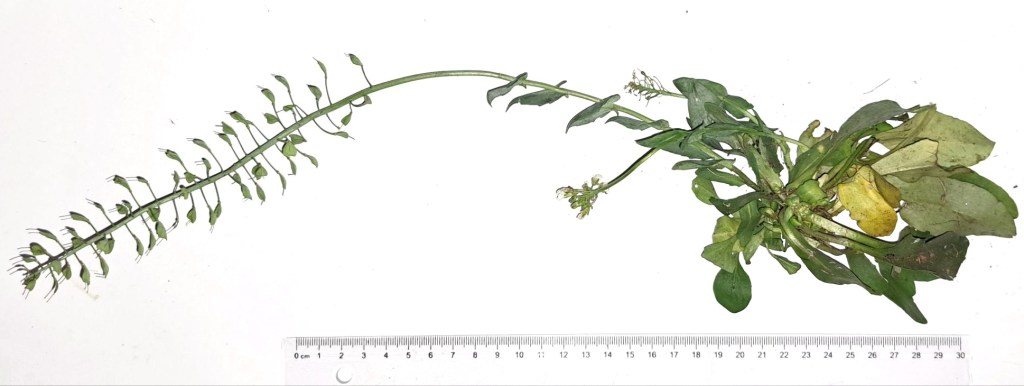
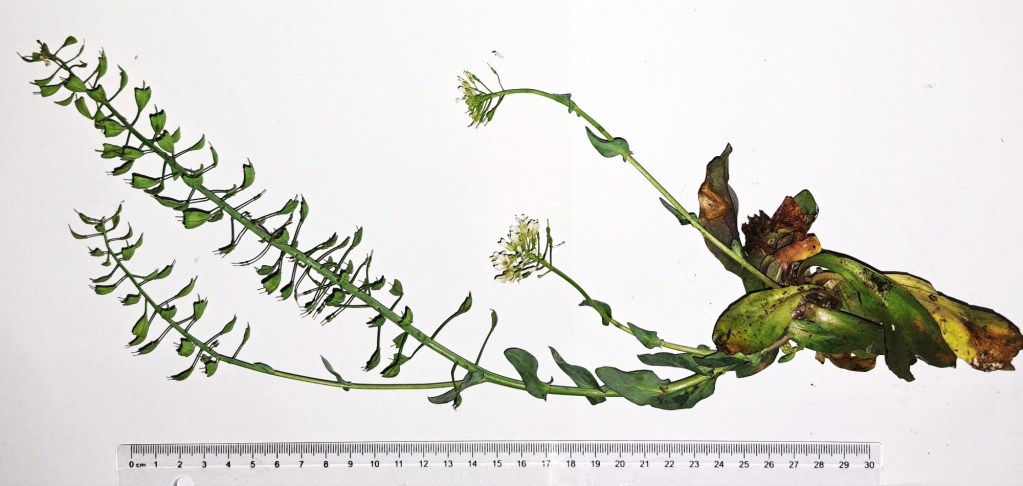
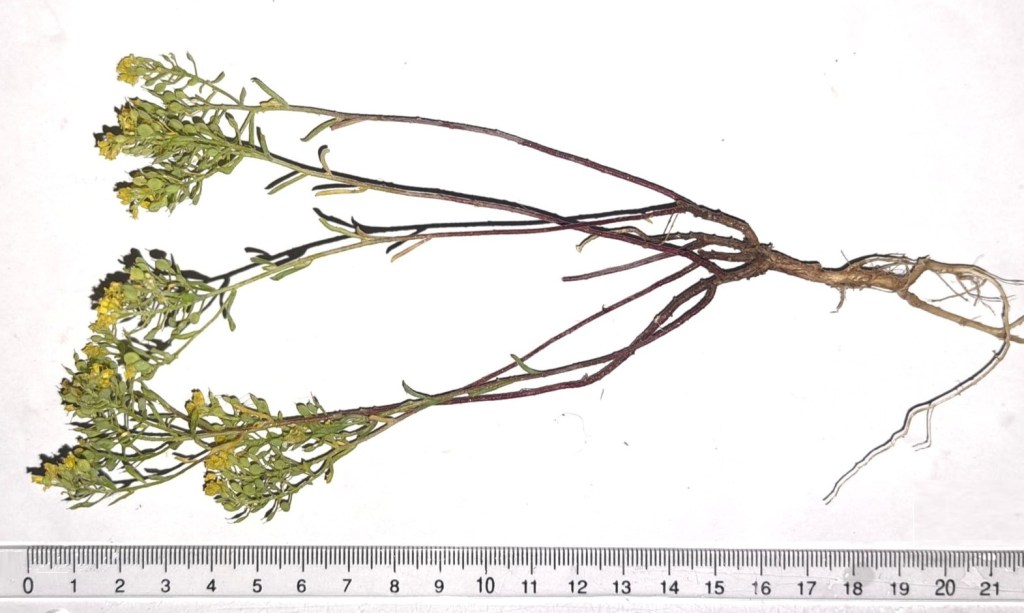
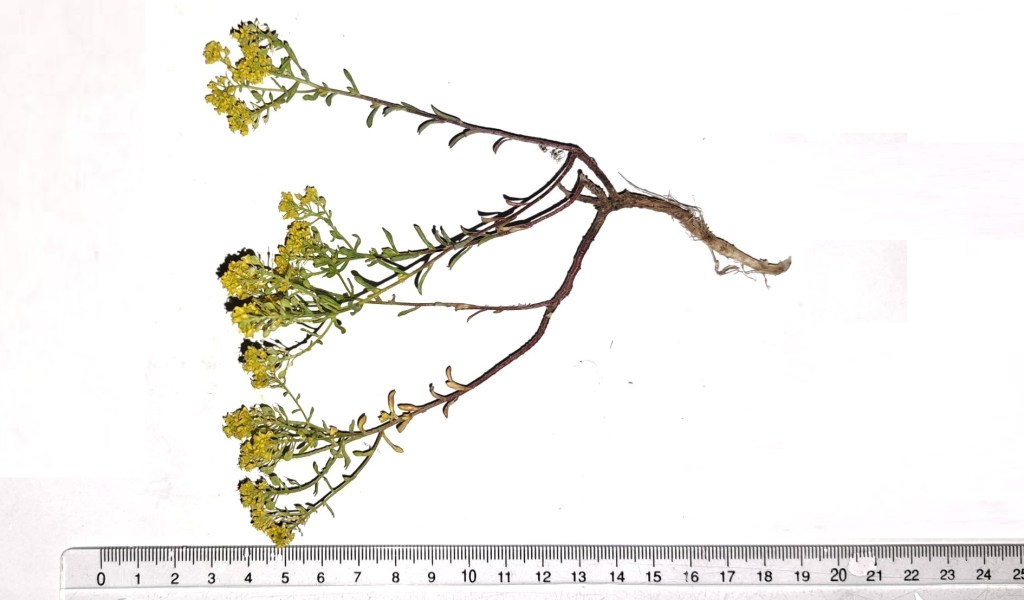
Noccaea lutescens– habit. Scale in cm. Specimen from Stari Grad – rock cliffs above the Eshterec Stream (Zletovska River basin), 03.05.2026. Photo by Trajche Dimitrovski.Noccaea lutescens– habit. Scale in cm. Specimen from Stari Grad – rock cliffs above the Eshterec Stream (Zletovska River basin), 03.05.2026. Photo by Trajche Dimitrovski.Noccaea lutescens– habit. Scale in cm. Specimen from Stari Grad – rock cliffs above the Eshterec Stream (Zletovska River basin), 03.05.2026. Photo by Trajche Dimitrovski.Noccaea lutescens– habit. Scale in cm. Specimen from Stari Grad – rock cliffs above the Eshterec Stream (Zletovska River basin), 03.05.2026. Photo by Trajche Dimitrovski.Noccaea lutescens– habit. Scale in cm. Specimen from Stari Grad – rock cliffs above the Eshterec Stream (Zletovska River basin), 03.05.2026. Photo by Trajche Dimitrovski.Noccaea lutescens– habit. Scale in cm. Specimen from Stari Grad – rock cliffs above the Eshterec Stream (Zletovska River basin), 03.05.2026. Photo by Trajche Dimitrovski.Noccaea lutescens– habit. Scale in cm. Specimen from Stari Grad – rock cliffs above the Eshterec Stream (Zletovska River basin), 03.05.2026. Photo by Trajche Dimitrovski.Noccaea lutescens– fruiting inflorescence. Scale in cm. Photo by Trajche Dimitrovski.Noccaea lutescens– flowers. Scale in cm. Photo by Trajche Dimitrovski.Noccaea lutescens– petals. Scale in cm. Photo by Trajche Dimitrovski.Noccaea lutescens– immature siliculas. Scale in cm. Photo by Trajche Dimitrovski.Noccaea lutescens– stem with cauline leaves. Scale in cm. Photo by Trajche Dimitrovski.Noccaea lutescens– basal leaf. Scale in cm. Photo by Trajche Dimitrovski.Noccaea lutescens– basal leaves. Scale in cm. Photo by Trajche Dimitrovski.
Locality: Stari Grad – rock cliffs above the Eshterec Stream (Zletovska River basin). Date: 25.05.2026.
Noccaea lutescens– habit. Stari Grad – rock cliffs above the Eshterec Stream (Zletovska River basin), 25.05.2026. Photo by Trajche Dimitrovski.Noccaea lutescens– habit. Stari Grad – rock cliffs above the Eshterec Stream (Zletovska River basin), 25.05.2026. Photo by Trajche Dimitrovski.Noccaea lutescens– inflorescence. Stari Grad – rock cliffs above the Eshterec Stream (Zletovska River basin), 25.05.2026. Photo by Trajche Dimitrovski.Noccaea lutescens– inflorescence. Stari Grad – rock cliffs above the Eshterec Stream (Zletovska River basin), 25.05.2026. Photo by Trajche Dimitrovski.Noccaea lutescens– inflorescence. Stari Grad – rock cliffs above the Eshterec Stream (Zletovska River basin), 25.05.2026. Photo by Trajche Dimitrovski.Noccaea lutescens– inflorescence. Stari Grad – rock cliffs above the Eshterec Stream (Zletovska River basin), 25.05.2026. Photo by Trajche Dimitrovski.Noccaea lutescens – siliculas. Stari Grad – rock cliffs above the Eshterec Stream (Zletovska River basin), 25.05.2026. Photo by Trajche Dimitrovski.Noccaea lutescens– siliculas. Stari Grad – rock cliffs above the Eshterec Stream (Zletovska River basin), 25.05.2026. Photo by Trajche Dimitrovski.Noccaea lutescens– siliculas. Stari Grad – rock cliffs above the Eshterec Stream (Zletovska River basin), 25.05.2026. Photo by Trajche Dimitrovski.Noccaea lutescens– siliculas. Stari Grad – rock cliffs above the Eshterec Stream (Zletovska River basin), 25.05.2026. Photo by Trajche Dimitrovski.Noccaea lutescens– stems with cauline leaves and basal leaves. Stari Grad – rock cliffs above the Eshterec Stream (Zletovska River basin), 25.05.2026. Photo by Trajche Dimitrovski.Noccaea lutescens– stem with cauline leaves and basal leaves. Stari Grad – rock cliffs above the Eshterec Stream (Zletovska River basin), 25.05.2026. Photo by Trajche Dimitrovski.Noccaea lutescens– stem and cauline leaf. Stari Grad – rock cliffs above the Eshterec Stream (Zletovska River basin), 25.05.2026. Photo by Trajche Dimitrovski.Noccaea lutescens– stem and cauline leaf. Stari Grad – rock cliffs above the Eshterec Stream (Zletovska River basin), 25.05.2026. Photo by Trajche Dimitrovski.Noccaea lutescens – basal leaves of flowering stem and developing vegetative shoot. Stari Grad – rock cliffs above the Eshterec Stream (Zletovska River basin), 25.05.2026. Photo by Trajche Dimitrovski.Noccaea lutescens – vegetative shoots. Stari Grad – rock cliffs above the Eshterec Stream (Zletovska River basin), 25.05.2026. Photo by Trajche Dimitrovski.Noccaea lutescens – leaves of vegetative shoots. Stari Grad – rock cliffs above the Eshterec Stream (Zletovska River basin), 25.05.2026. Photo by Trajche Dimitrovski.Noccaea lutescens – the silicles have 4 or more ovules per loculus. Stari Grad – rock cliffs above the Eshterec Stream (Zletovska River basin), 25.05.2026. Photo by Trajche Dimitrovski.
Scaled images. Specimens from Stari Grad – rock cliffs above the Eshterec Stream (Zletovska River basin), 03.05.2026.
Noccaea lutescens – habit. Scale in cm. Specimen from Stari Grad – rock cliffs above the Eshterec Stream (Zletovska River basin), 25.05.2026. Photo by Trajche Dimitrovski.Noccaea lutescens – habit. Scale in cm. Specimen from Stari Grad – rock cliffs above the Eshterec Stream (Zletovska River basin), 25.05.2026. Photo by Trajche Dimitrovski.Noccaea lutescens – habit. Scale in cm. Specimen from Stari Grad – rock cliffs above the Eshterec Stream (Zletovska River basin), 25.05.2026. Photo by Trajche Dimitrovski.Noccaea lutescens – stem with cauline leaves, basal leaves and vegetative shoots. Scale in cm. Photo by Trajche Dimitrovski.Noccaea lutescens – stem with cauline leaves and basal leaves. Scale in cm. Photo by Trajche Dimitrovski.Noccaea lutescens – mature siliculas. Scale in cm/ mm. Photo by Trajche Dimitrovski.
Clapham, A. R. 1964. Thlaspi L. In Tutin, T. G., Heywood, V. H., Burges, N. A., Moore, D. M., Valentine, D. H., Walters, S. M. & Webb, D. A. (eds.), Flora Europaea. Volume 1. Lycopodiaceae to Platanaceae. Cambridge: Cambridge University Press, pp. 318–322.
Micevski, V. 1995. Thlaspi L., The Flora of the Republic of Macedonia Vol. I, Book 3. Skopje: Macedonian Academy of Sciences and Arts, pp. 709–717.
Determined according to the botanical key provided by Sell in Tutin et al. (1976).
Lifeform: Annual plant. Therophyte according to the Raunkiær system.
Distribution: Native from Europe to Iran according to the distribution information provided by the Plants of the World Online portal (Royal Botanic Gardens, Kew).
Habitat: Rocky terrains, edges of oak forest.
Flowering period: Late spring – early summer: MAY, JUN.
Locality: gorge of the Kochanska River. Date: 24.05.2026.
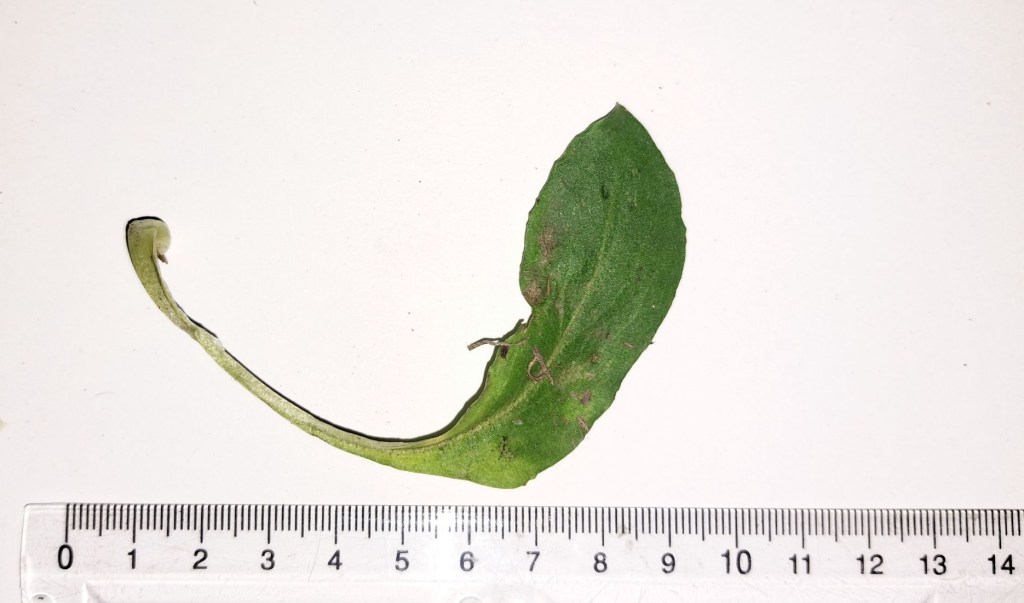
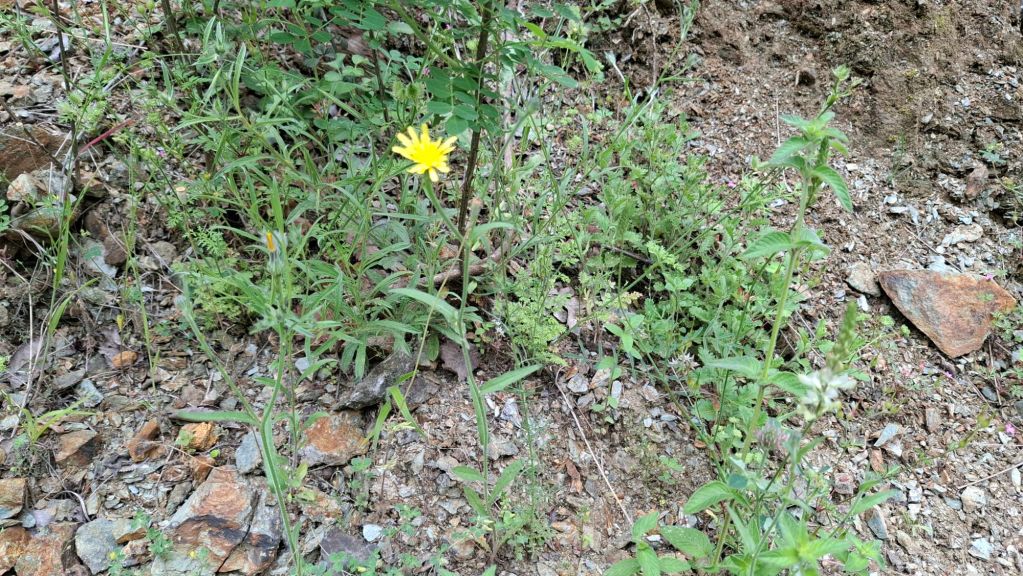
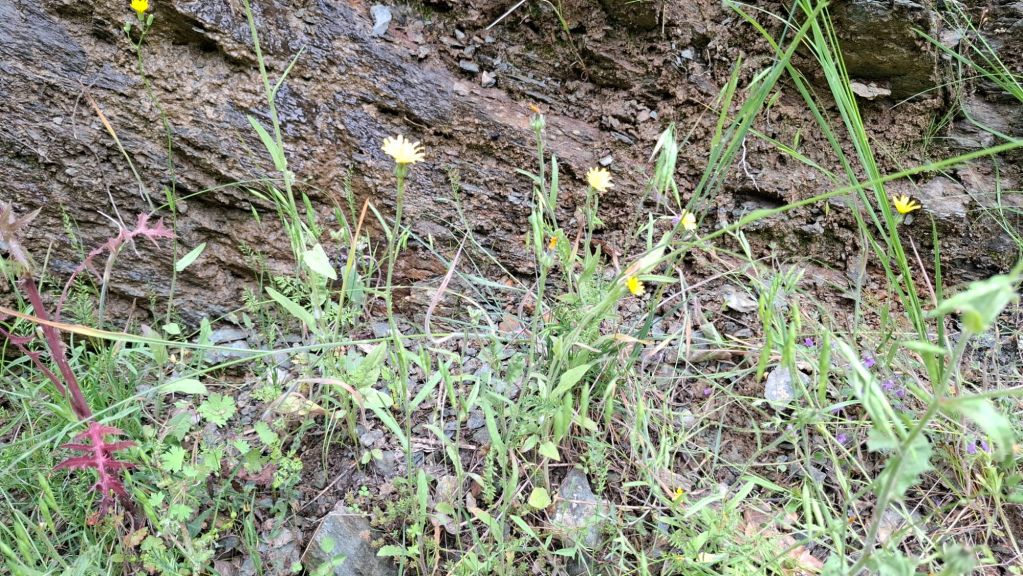
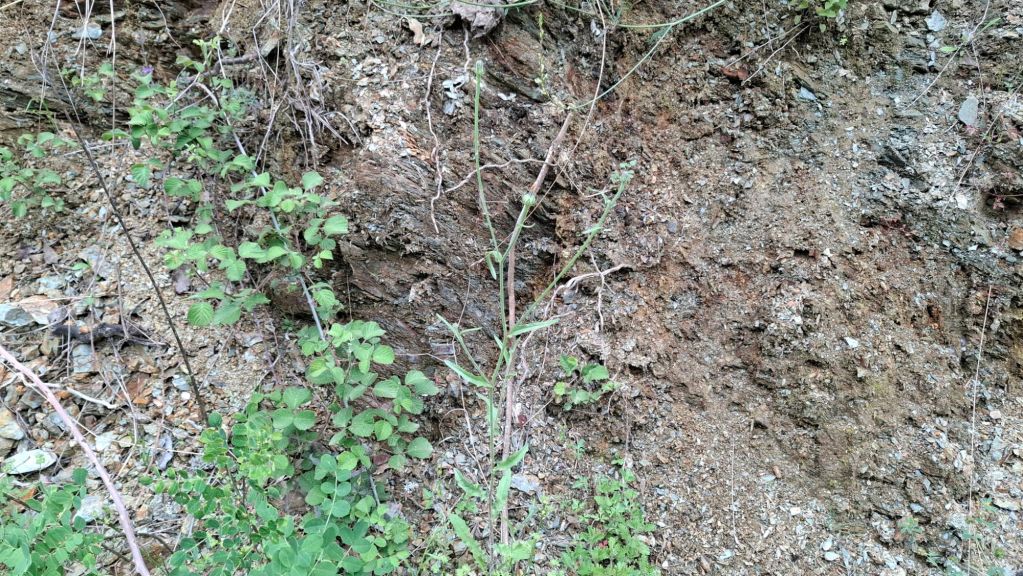
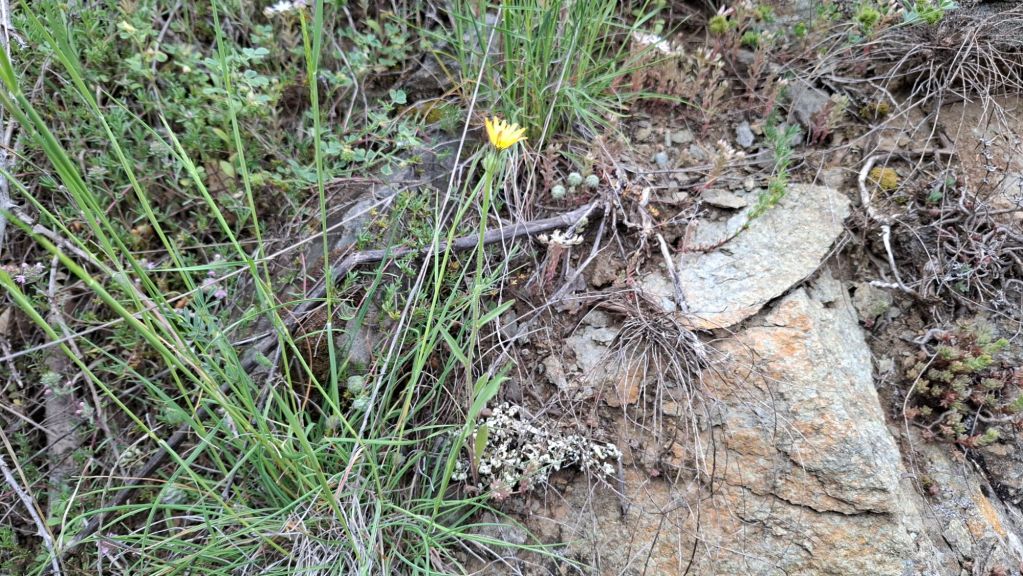
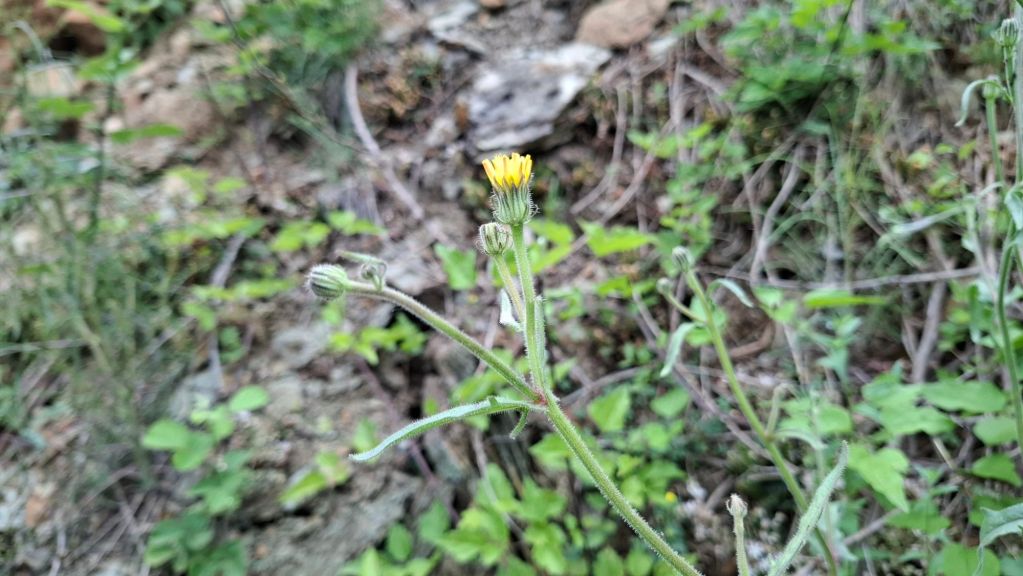
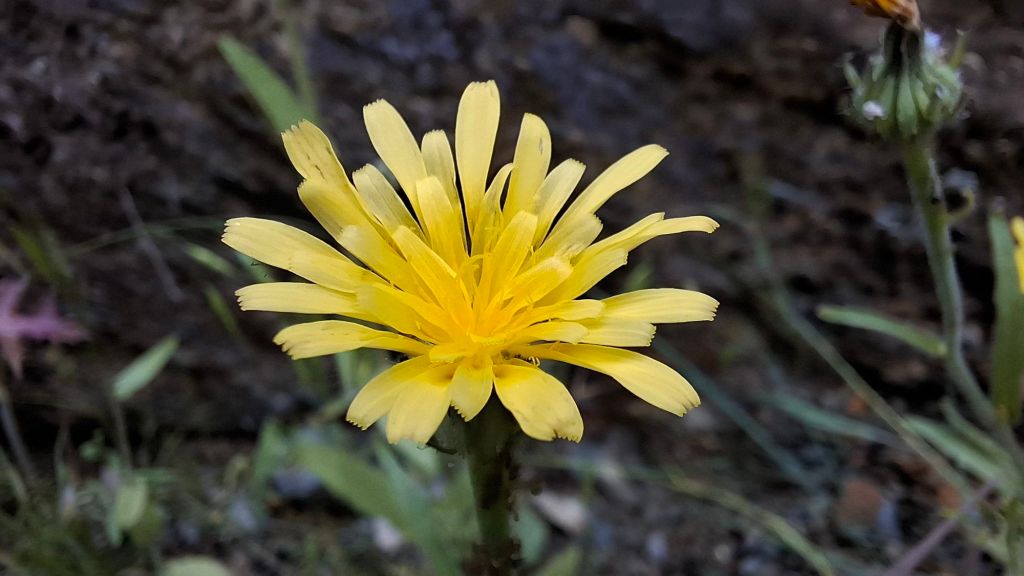
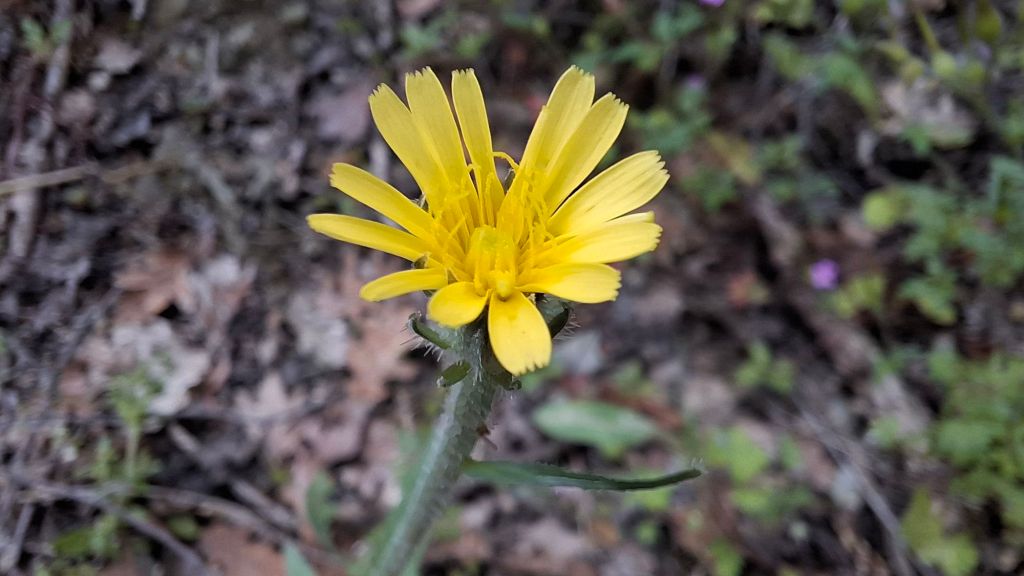
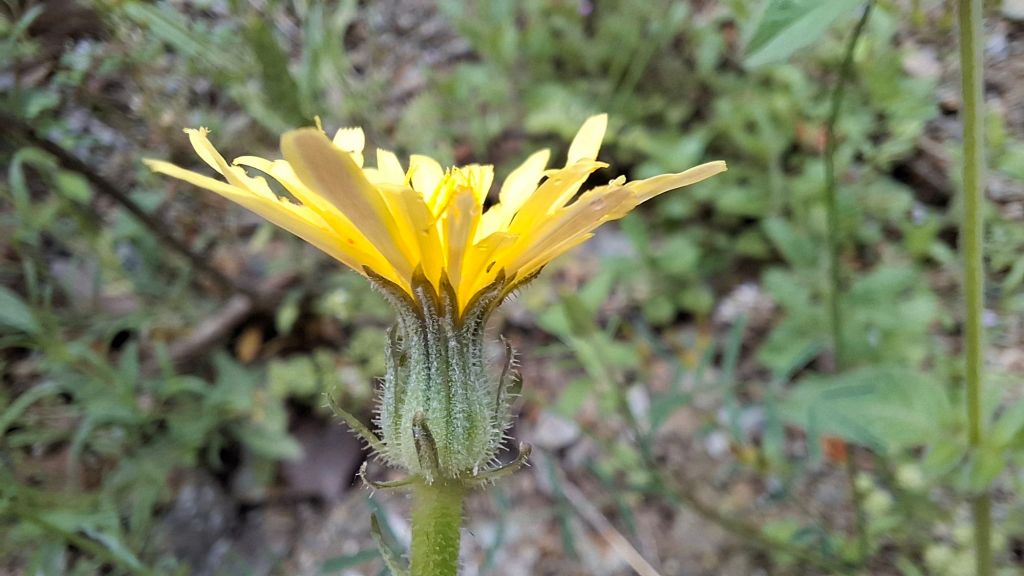
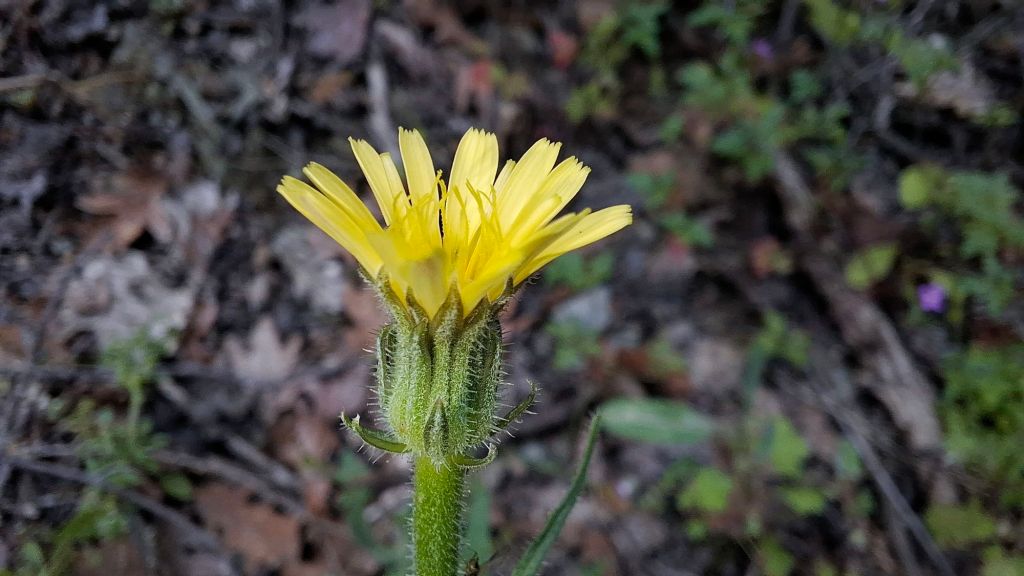
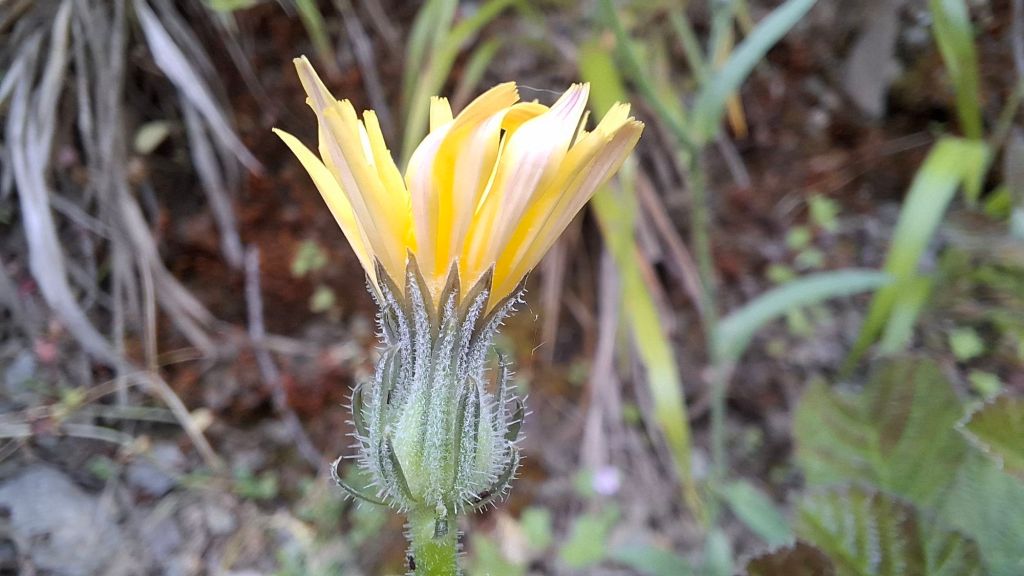
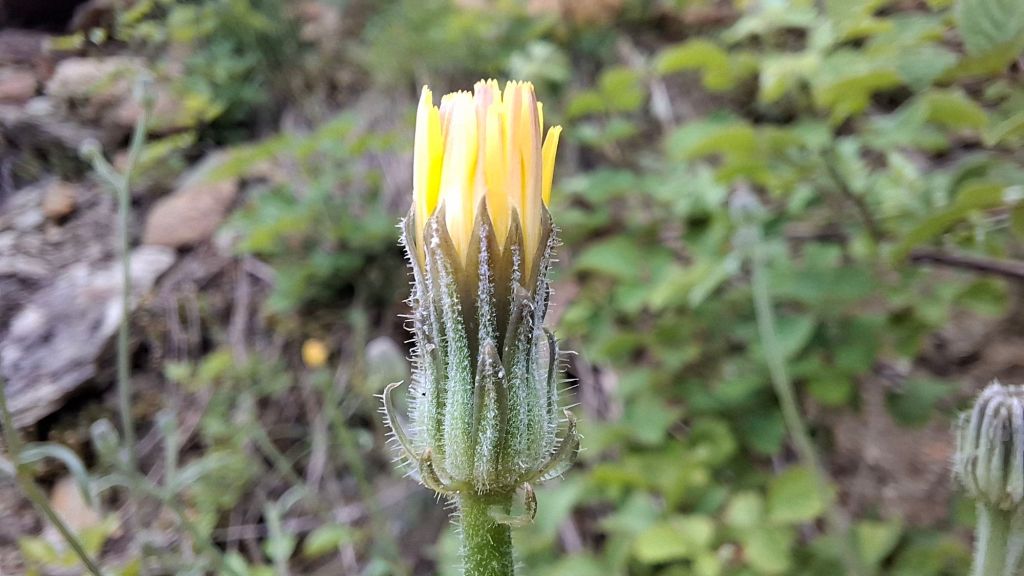
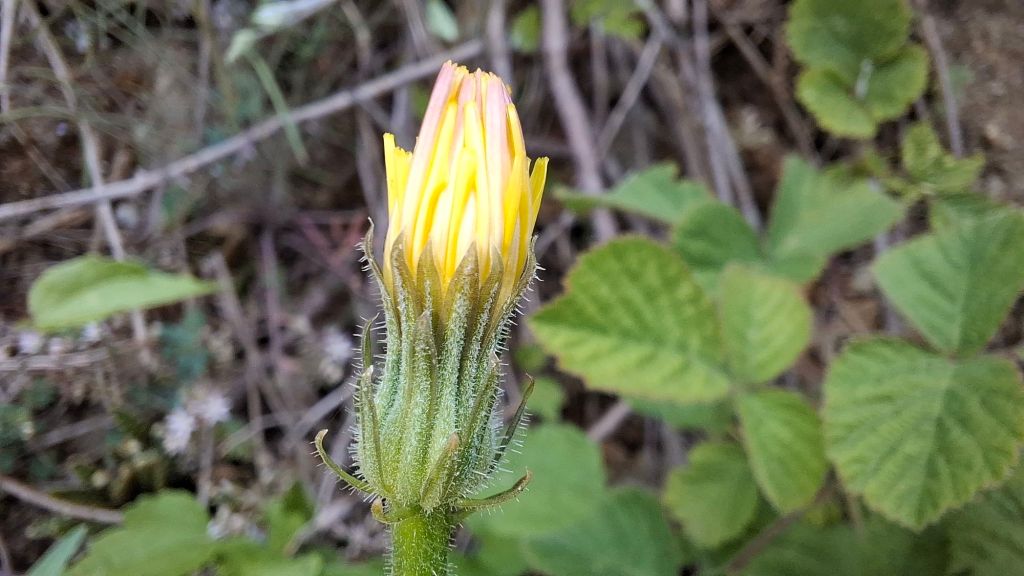
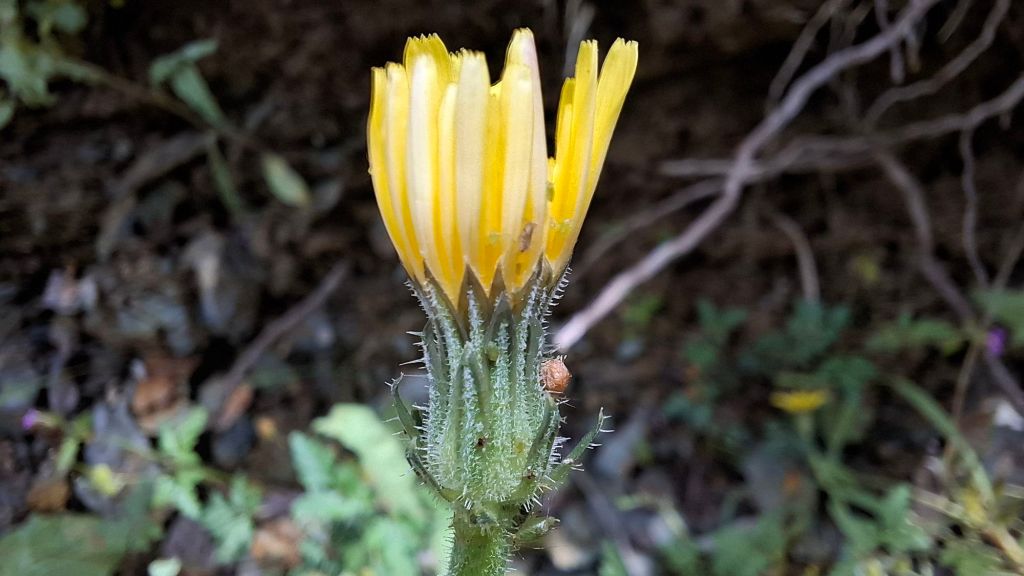
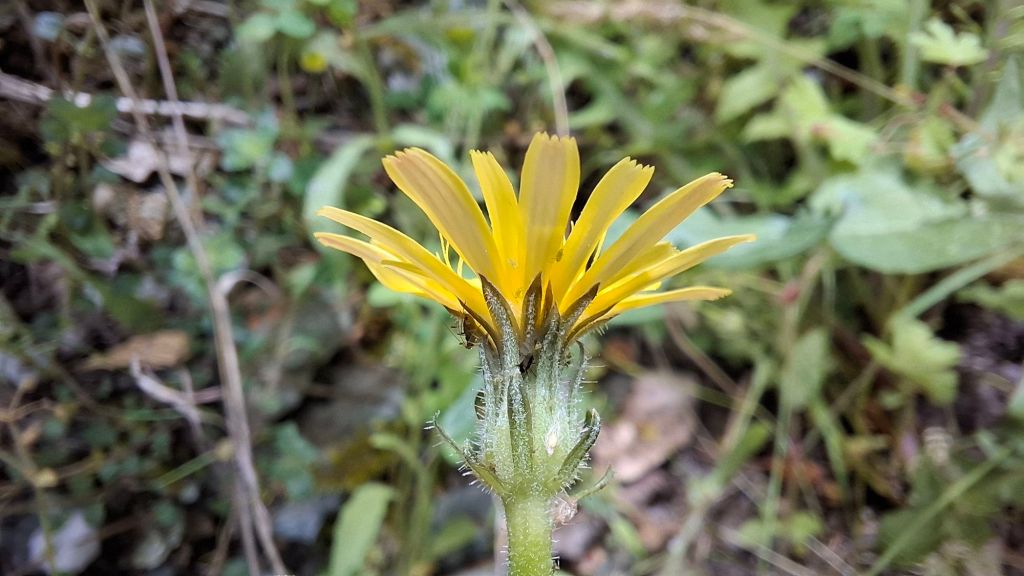
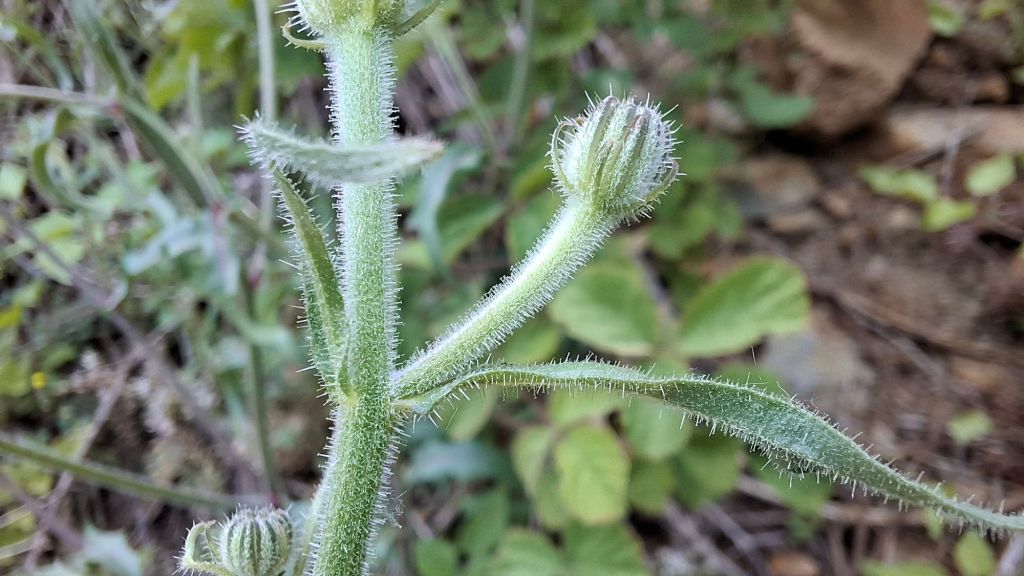
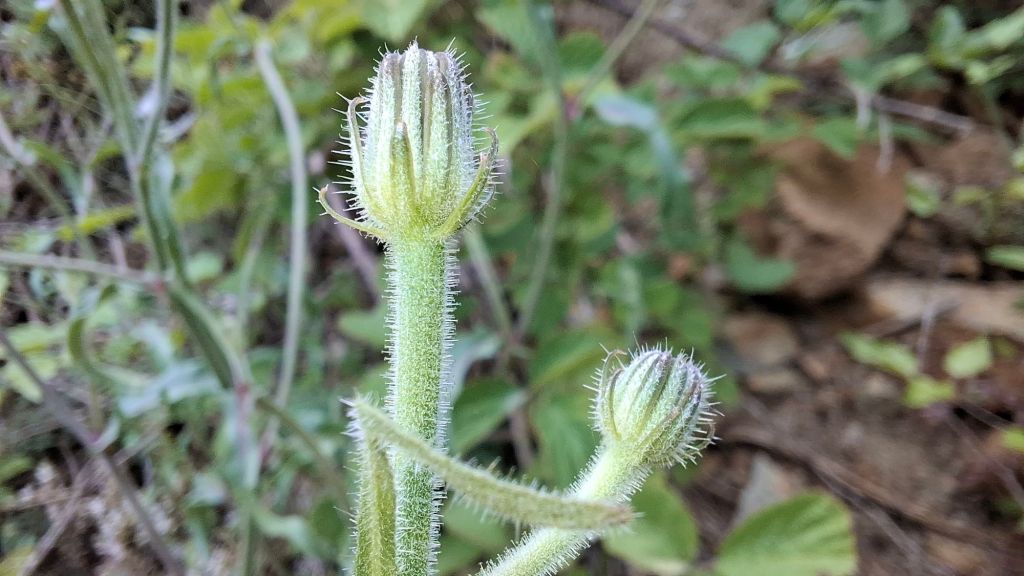
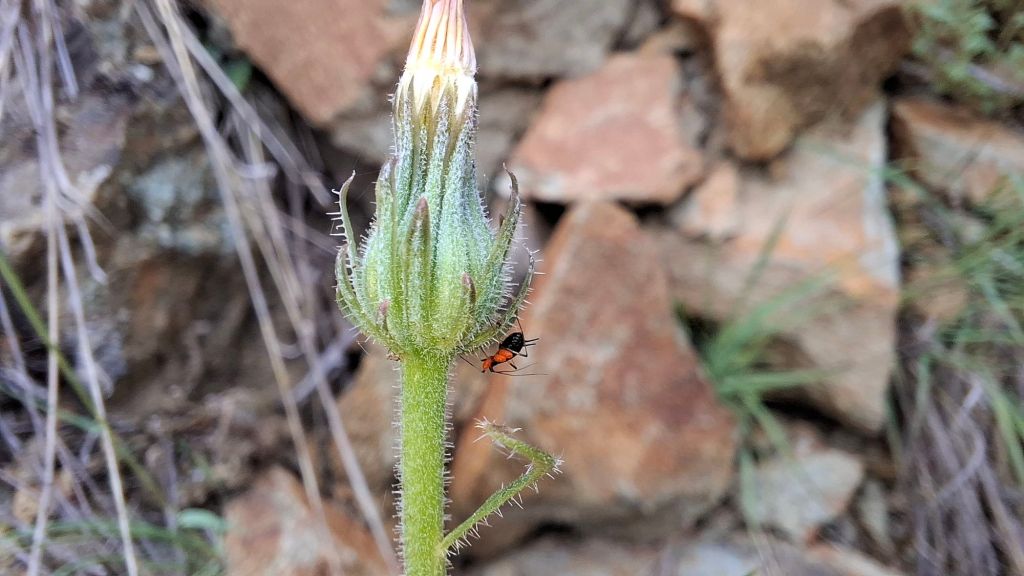
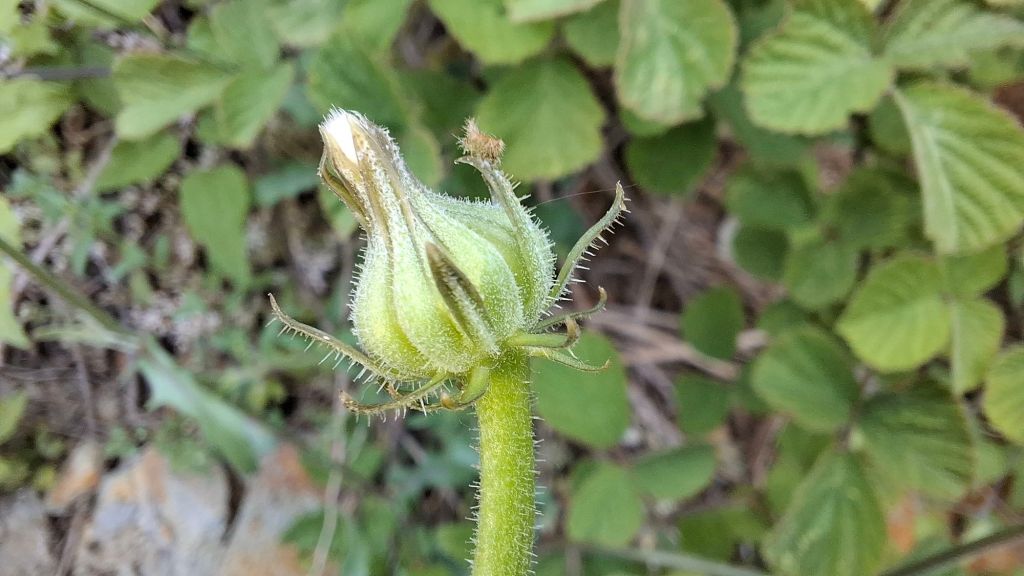
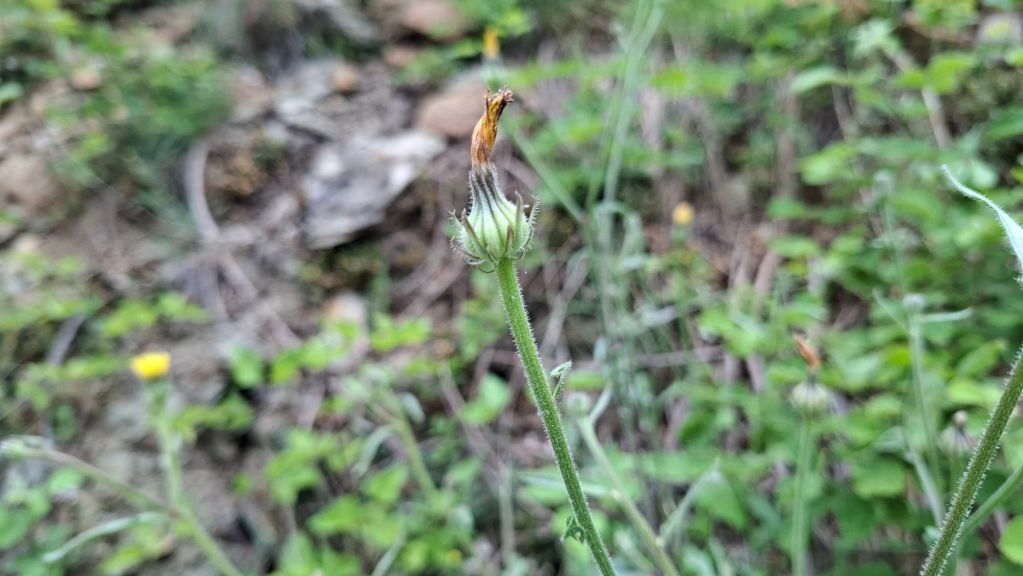
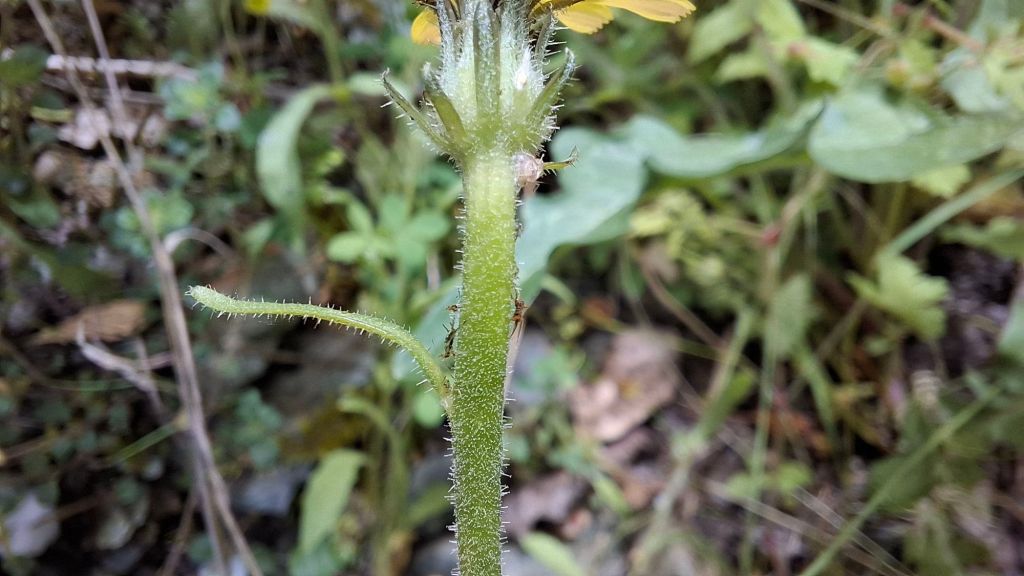
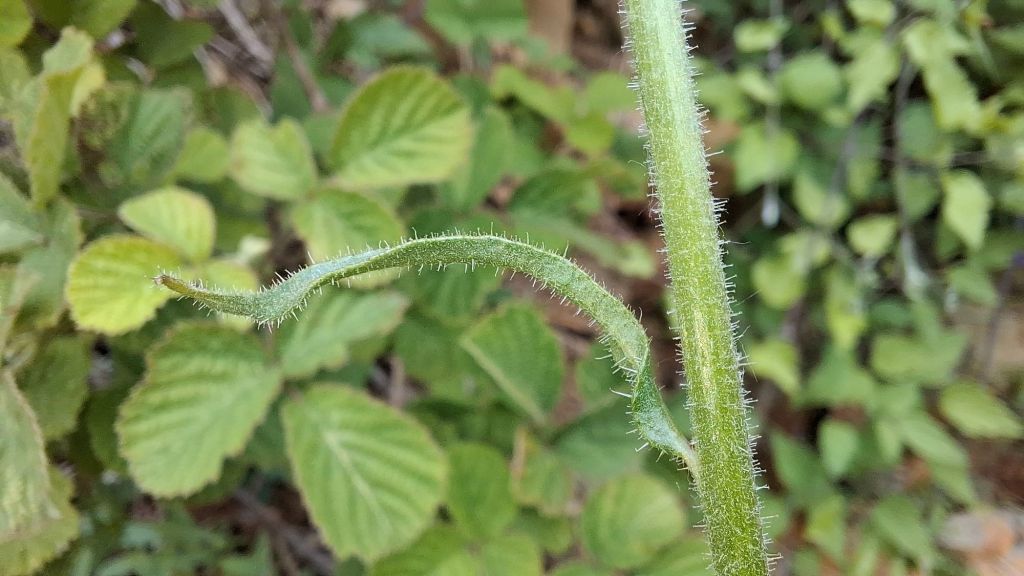
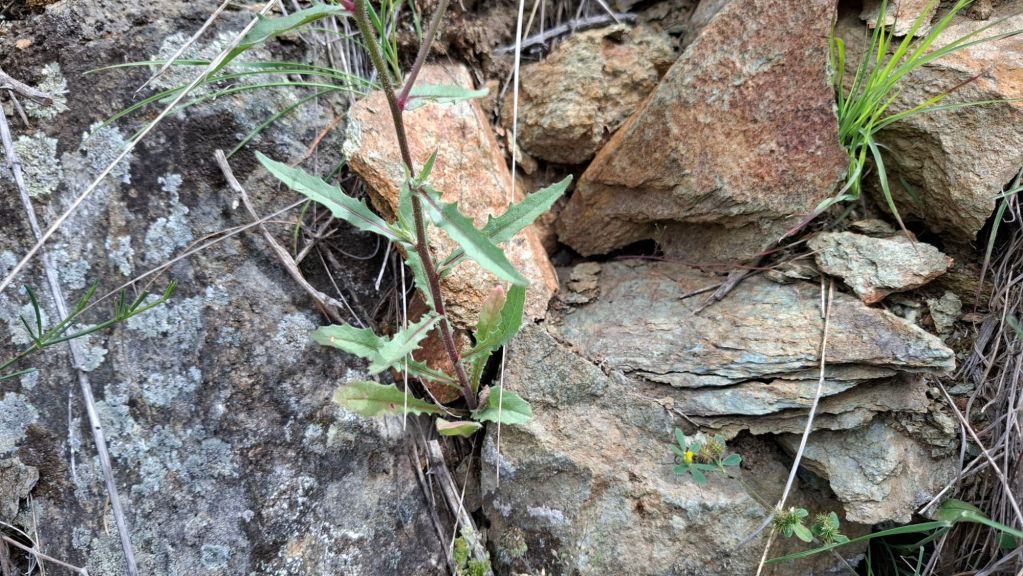
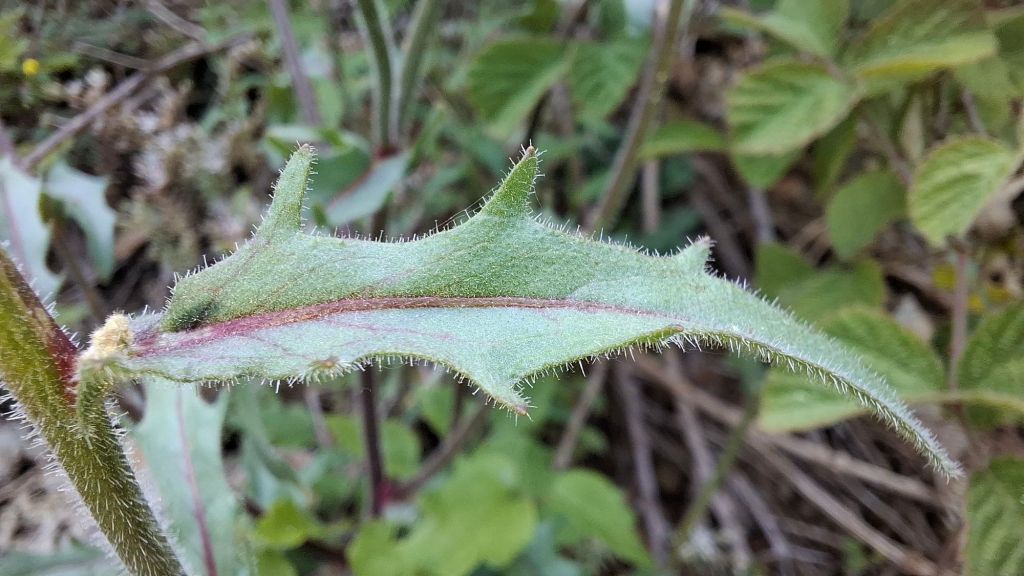
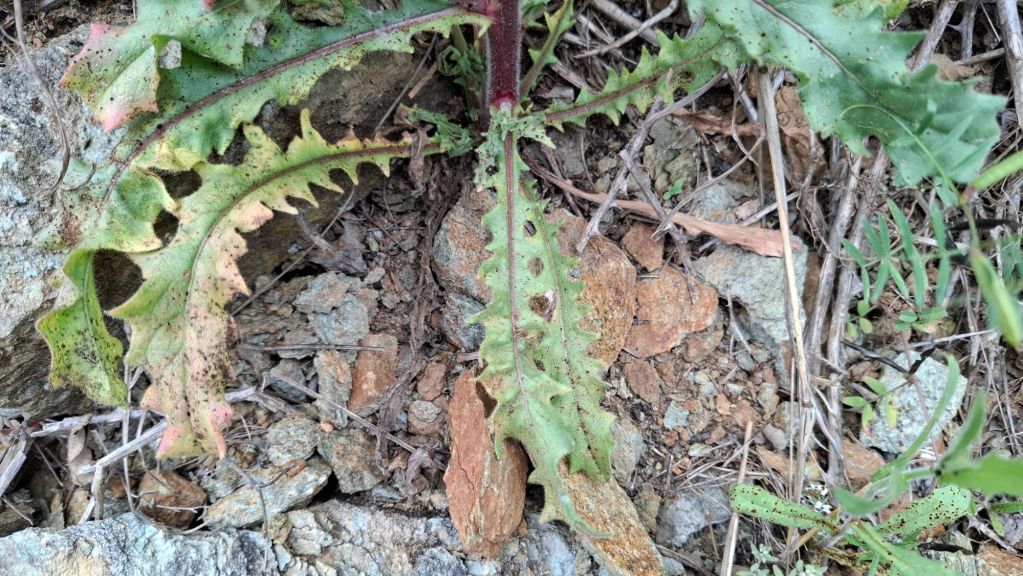
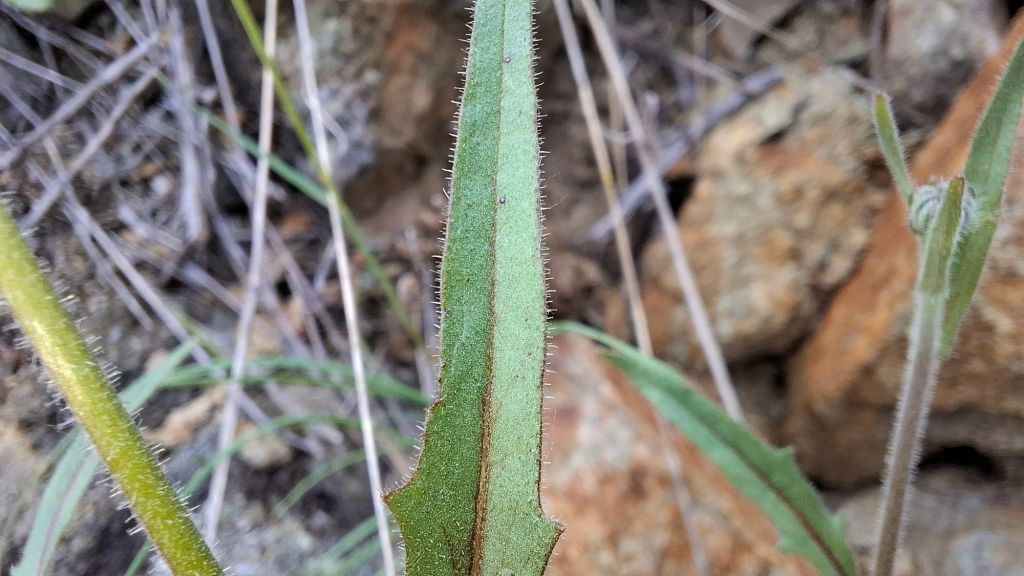
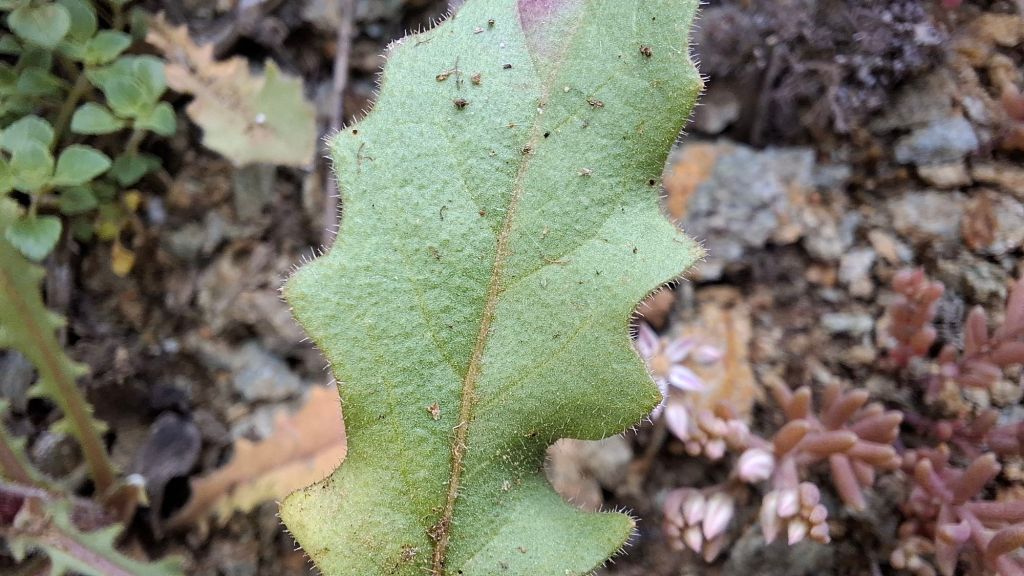
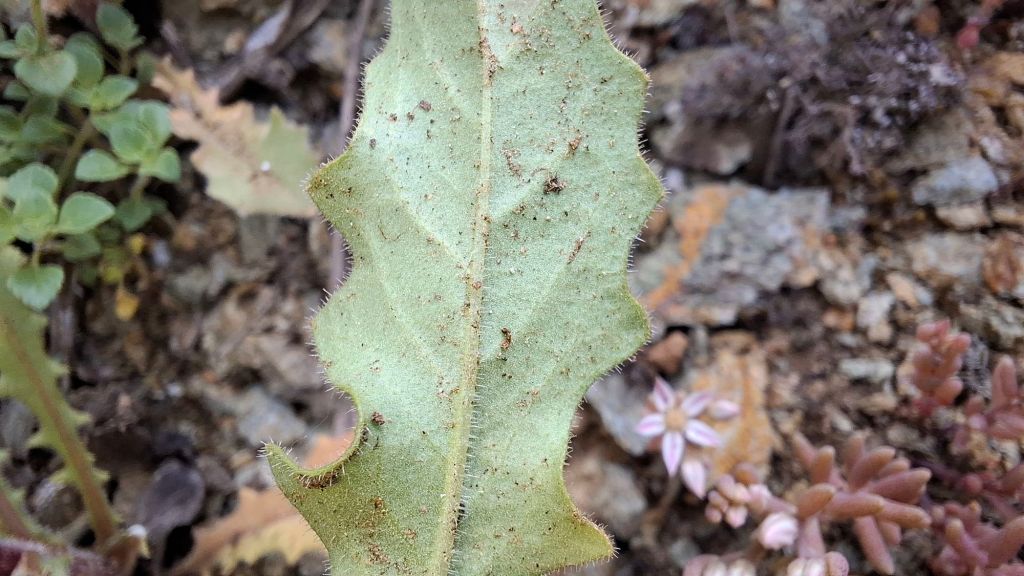
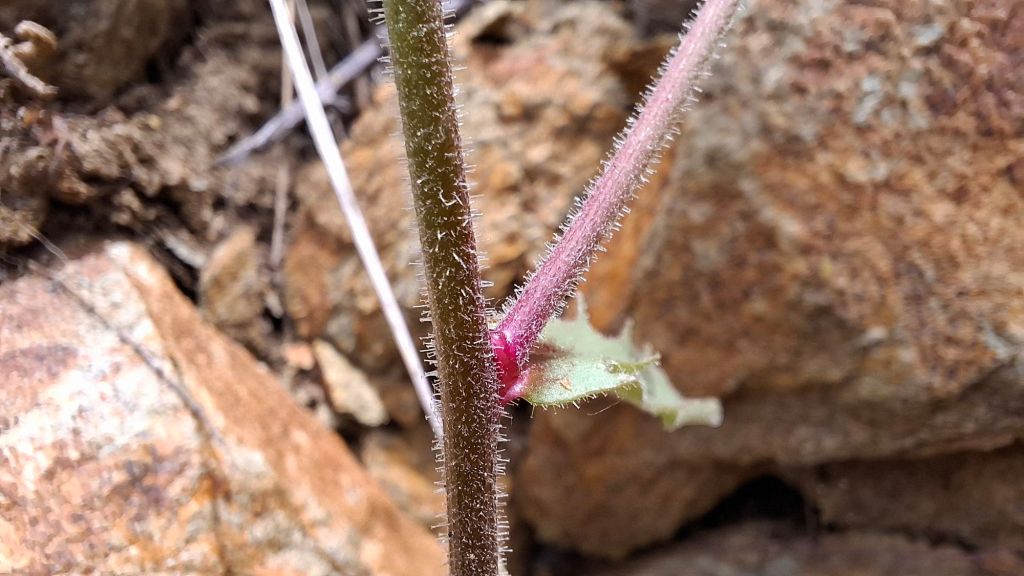
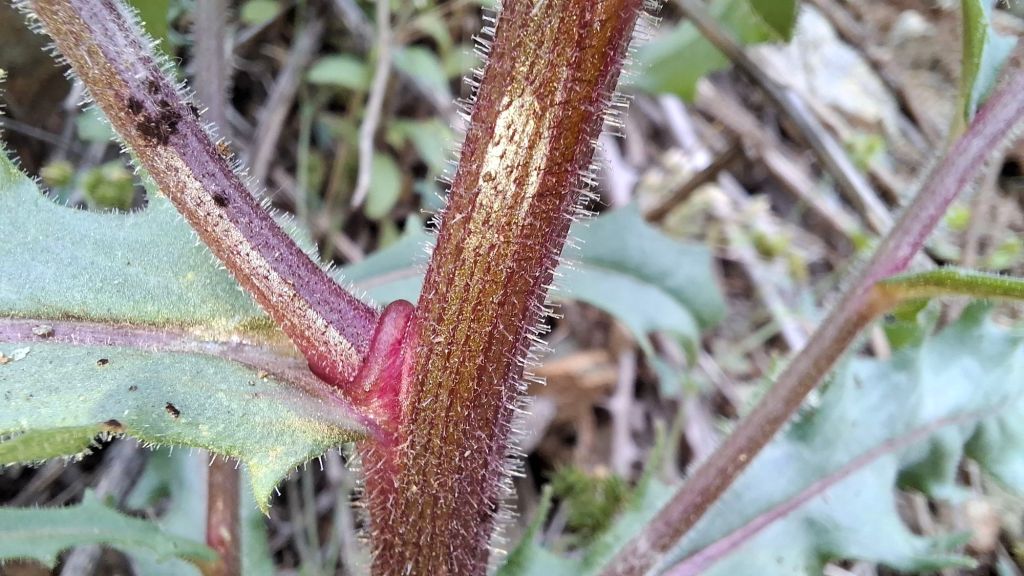
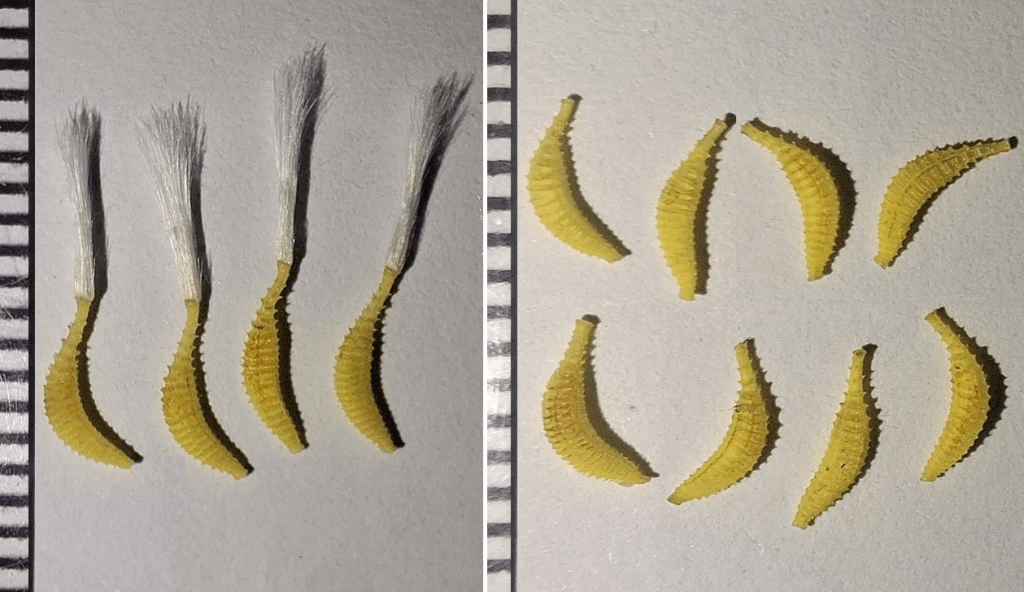
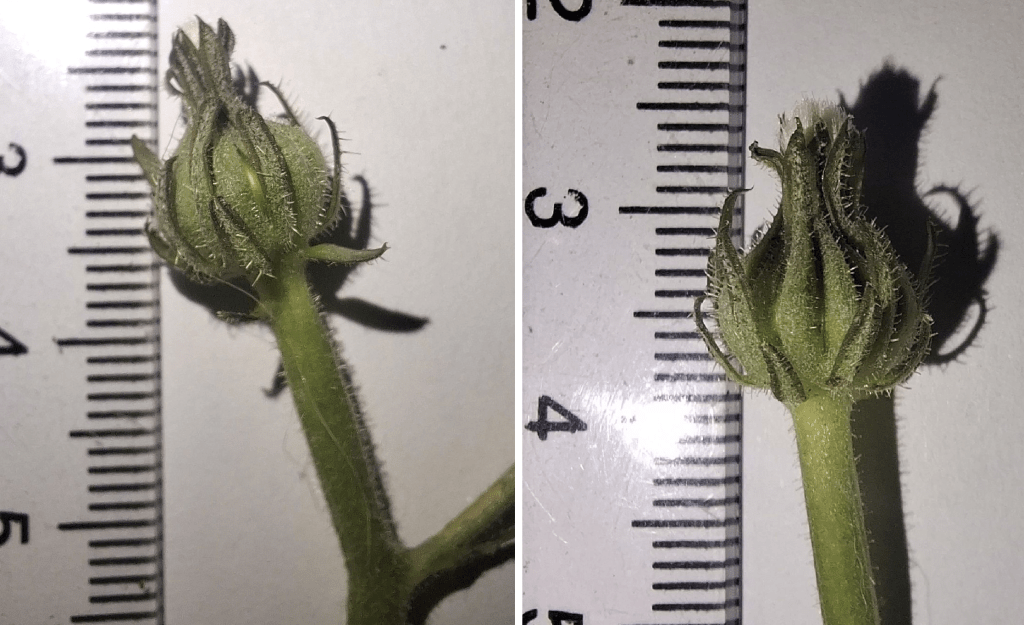
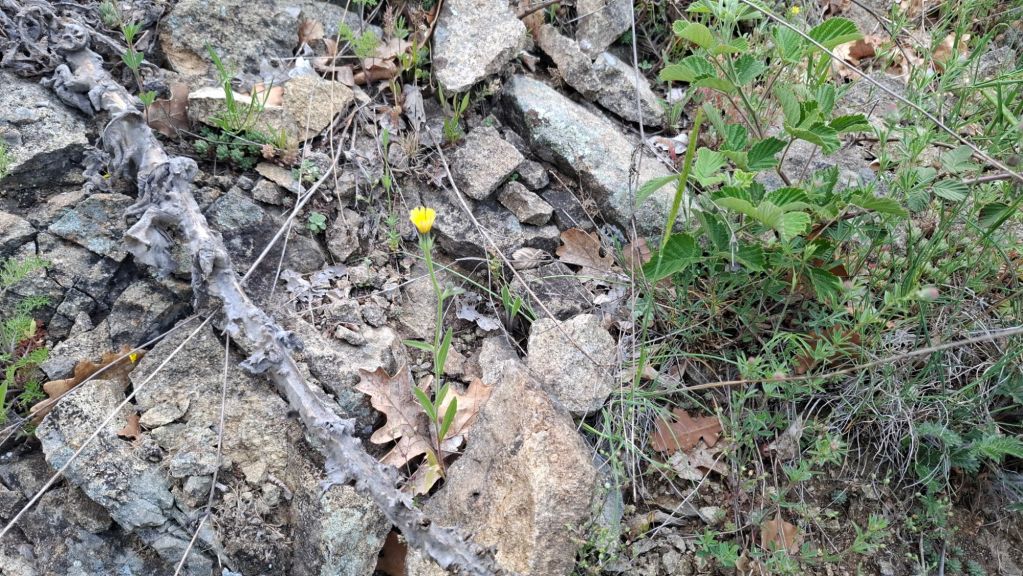
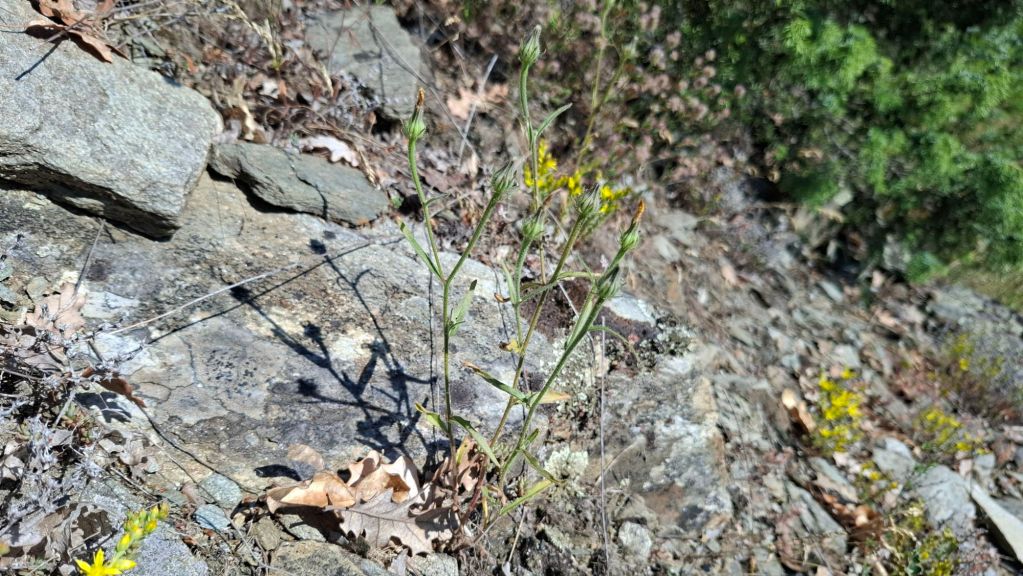
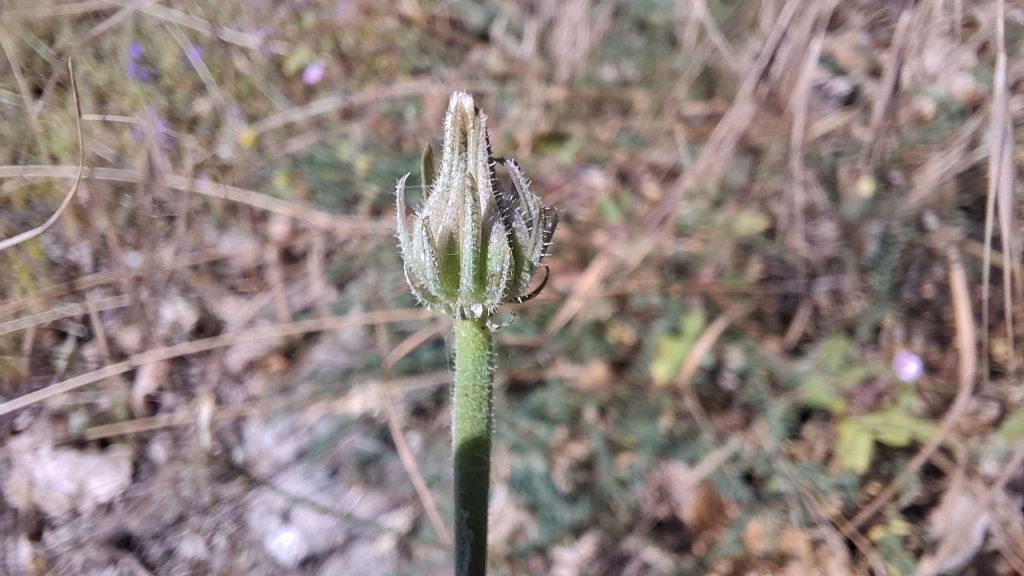
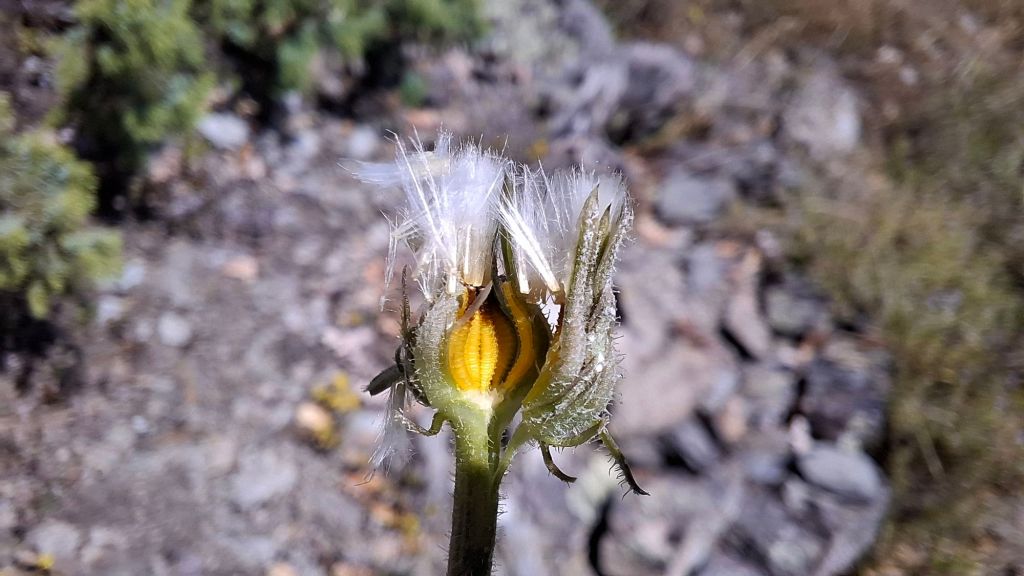
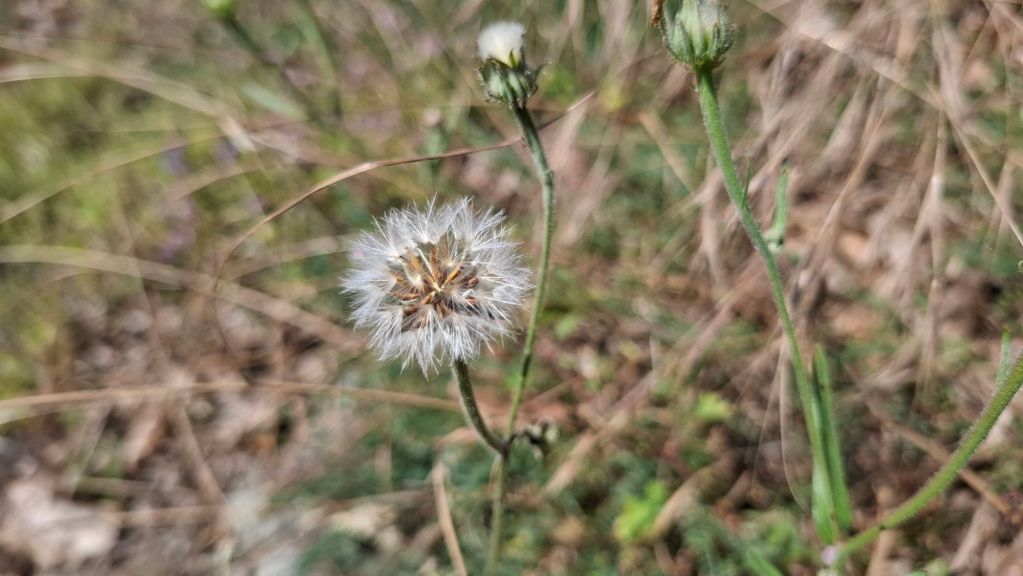
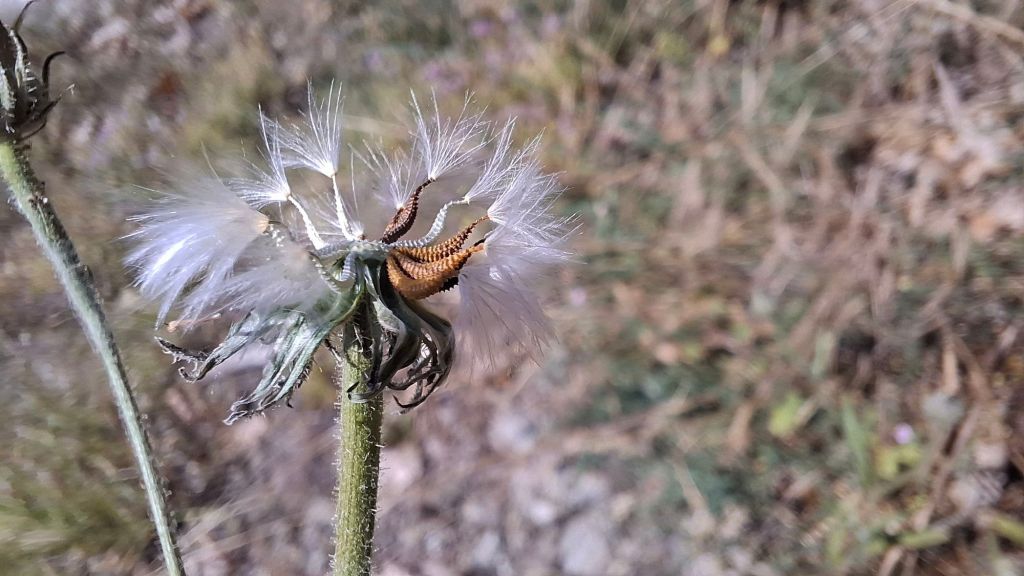
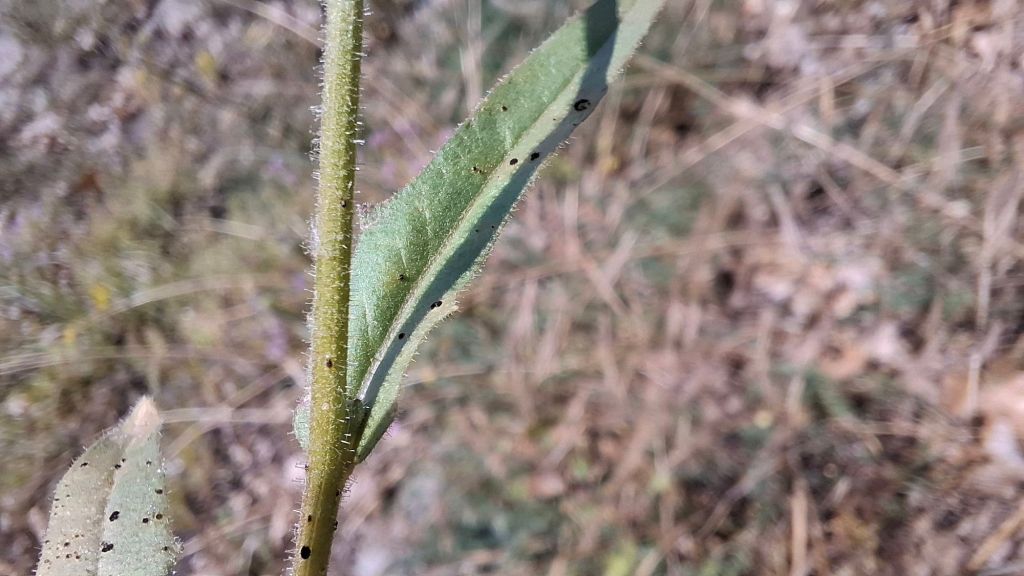
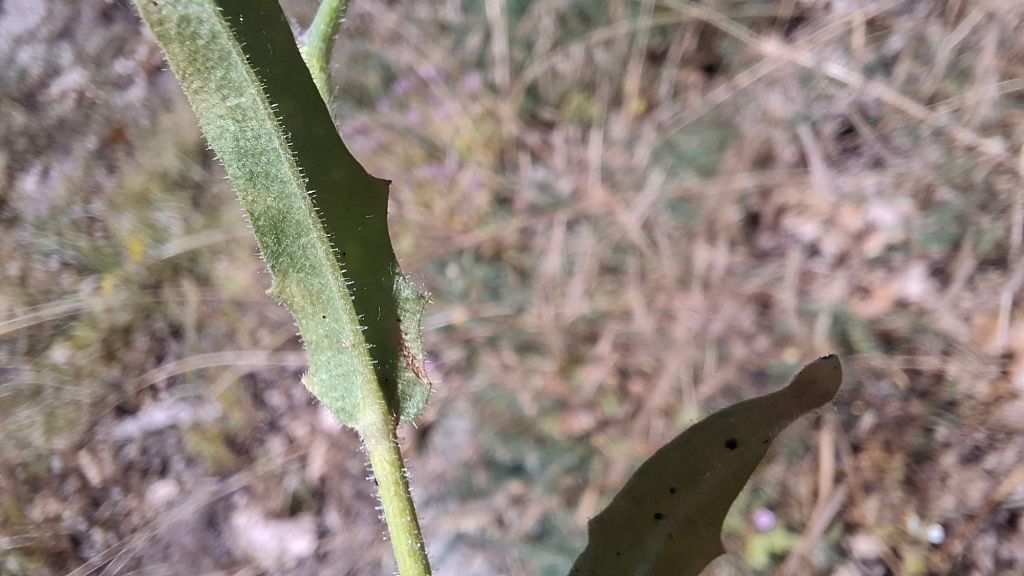
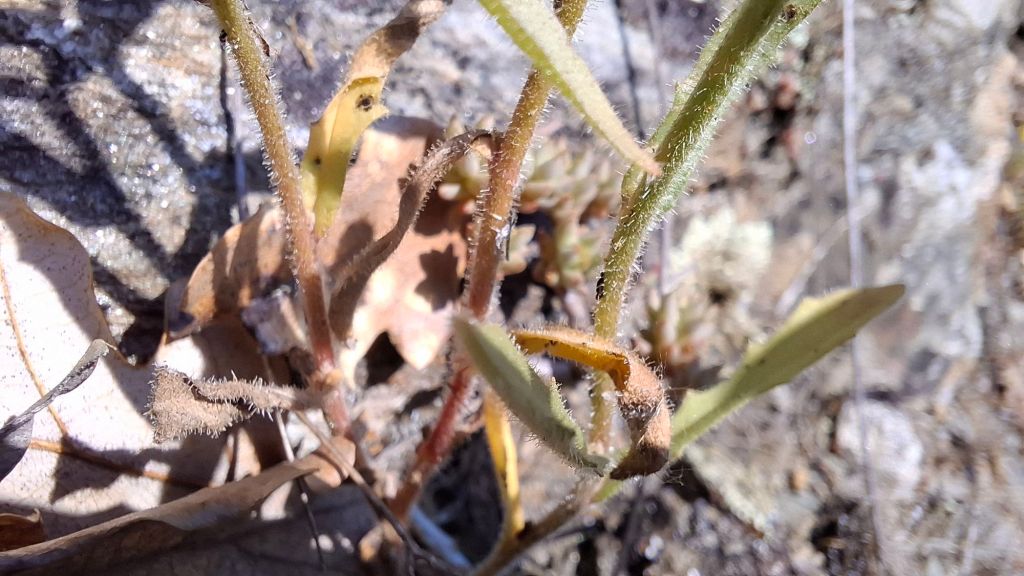
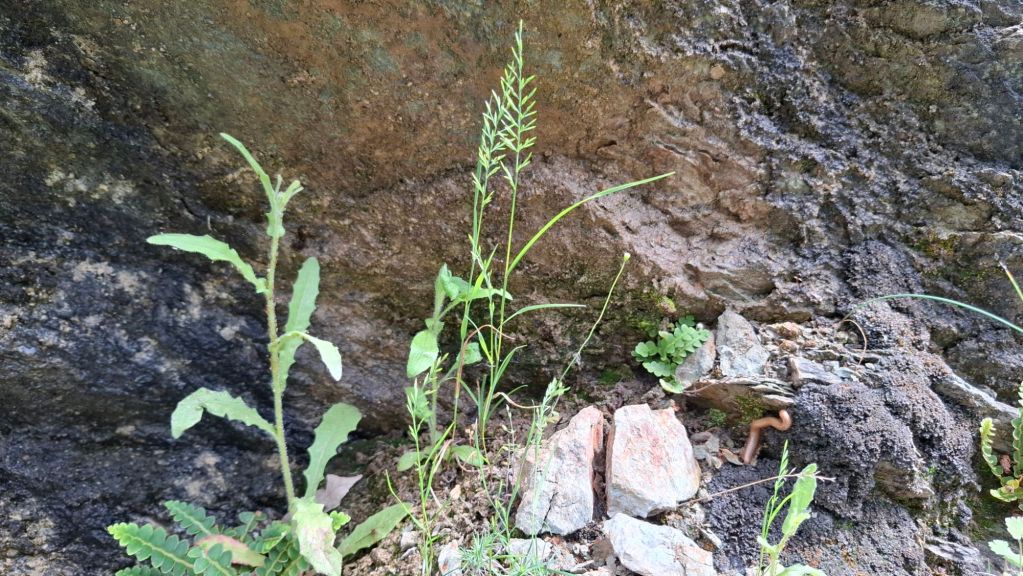
Picris pauciflora– habit. Osogovo – gorge of the Kochanska River, 24.05.2026. Photo by Trajche Dimitrovski.Picris pauciflora– habit. Osogovo – gorge of the Kochanska River, 24.05.2026. Photo by Trajche Dimitrovski.Picris pauciflora– habit. Osogovo – gorge of the Kochanska River, 24.05.2026. Photo by Trajche Dimitrovski.Picris pauciflora– habit. Osogovo – gorge of the Kochanska River, 24.05.2026. Photo by Trajche Dimitrovski.Picris pauciflora– habit. Osogovo – gorge of the Kochanska River, 24.05.2026. Photo by Trajche Dimitrovski.Picris pauciflora– habit. Osogovo – gorge of the Kochanska River, 24.05.2026. Photo by Trajche Dimitrovski.Picris pauciflora– habit. Osogovo – gorge of the Kochanska River, 24.05.2026. Photo by Trajche Dimitrovski.Picris pauciflora– habit. Osogovo – gorge of the Kochanska River, 24.05.2026. Photo by Trajche Dimitrovski.Picris pauciflora– habit. Osogovo – gorge of the Kochanska River, 24.05.2026. Photo by Trajche Dimitrovski.Picris pauciflora– habit. Osogovo – gorge of the Kochanska River, 24.05.2026. Photo by Trajche Dimitrovski.Picris pauciflora– stem with capitula. Osogovo – gorge of the Kochanska River, 24.05.2026. Photo by Trajche Dimitrovski.Picris pauciflora– stems with capitula. Osogovo – gorge of the Kochanska River, 24.05.2026. Photo by Trajche Dimitrovski.Picris pauciflora– capitulum. Osogovo – gorge of the Kochanska River, 24.05.2026. Photo by Trajche Dimitrovski.Picris pauciflora– capitulum. Osogovo – gorge of the Kochanska River, 24.05.2026. Photo by Trajche Dimitrovski.Picris pauciflora– capitulum. Osogovo – gorge of the Kochanska River, 24.05.2026. Photo by Trajche Dimitrovski.Picris pauciflora– capitulum. Osogovo – gorge of the Kochanska River, 24.05.2026. Photo by Trajche Dimitrovski.Picris pauciflora– capitulum. Osogovo – gorge of the Kochanska River, 24.05.2026. Photo by Trajche Dimitrovski.Picris pauciflora– capitulum. Osogovo – gorge of the Kochanska River, 24.05.2026. Photo by Trajche Dimitrovski.Picris pauciflora– involucre of capitulum. Osogovo – gorge of the Kochanska River, 24.05.2026. Photo by Trajche Dimitrovski.Picris pauciflora– involucre of capitulum. Osogovo – gorge of the Kochanska River, 24.05.2026. Photo by Trajche Dimitrovski.Picris pauciflora– involucre of capitulum. Osogovo – gorge of the Kochanska River, 24.05.2026. Photo by Trajche Dimitrovski.Picris pauciflora– involucre of capitulum. Osogovo – gorge of the Kochanska River, 24.05.2026. Photo by Trajche Dimitrovski.Picris pauciflora– involucre of capitulum. Osogovo – gorge of the Kochanska River, 24.05.2026. Photo by Trajche Dimitrovski.Picris pauciflora– involucre of capitulum. Osogovo – gorge of the Kochanska River, 24.05.2026. Photo by Trajche Dimitrovski.Picris pauciflora– involucre of capitulum. Osogovo – gorge of the Kochanska River, 24.05.2026. Photo by Trajche Dimitrovski.Picris pauciflora– involucre of capitulum. Osogovo – gorge of the Kochanska River, 24.05.2026. Photo by Trajche Dimitrovski.Picris pauciflora– involucre of capitulum. Osogovo – gorge of the Kochanska River, 24.05.2026. Photo by Trajche Dimitrovski.Picris pauciflora– developing capitulum. Osogovo – gorge of the Kochanska River, 24.05.2026. Photo by Trajche Dimitrovski.Picris pauciflora– developing capitulum. Osogovo – gorge of the Kochanska River, 24.05.2026. Photo by Trajche Dimitrovski.Picris pauciflora– developing capitula. Osogovo – gorge of the Kochanska River, 24.05.2026. Photo by Trajche Dimitrovski.Picris pauciflora– fruiting capitulum. Osogovo – gorge of the Kochanska River, 24.05.2026. Photo by Trajche Dimitrovski.Picris pauciflora– fruiting capitulum. Osogovo – gorge of the Kochanska River, 24.05.2026. Photo by Trajche Dimitrovski.Picris pauciflora– fruiting capitulum. Osogovo – gorge of the Kochanska River, 24.05.2026. Photo by Trajche Dimitrovski.Picris pauciflora– fruiting capitulum. Osogovo – gorge of the Kochanska River, 24.05.2026. Photo by Trajche Dimitrovski.Picris pauciflora– achenes. Osogovo – gorge of the Kochanska River, 24.05.2026. Photo by Trajche Dimitrovski.Picris pauciflora– fruiting capitulum and peduncle. Osogovo – gorge of the Kochanska River, 24.05.2026. Photo by Trajche Dimitrovski.Picris pauciflora– peduncle. Osogovo – gorge of the Kochanska River, 24.05.2026. Photo by Trajche Dimitrovski.Picris pauciflora– upper cauline leaf. Osogovo – gorge of the Kochanska River, 24.05.2026. Photo by Trajche Dimitrovski.Picris pauciflora– upper cauline leaf. Osogovo – gorge of the Kochanska River, 24.05.2026. Photo by Trajche Dimitrovski.Picris pauciflora– upper cauline leaf. Osogovo – gorge of the Kochanska River, 24.05.2026. Photo by Trajche Dimitrovski.Picris pauciflora– upper cauline leaf. Osogovo – gorge of the Kochanska River, 24.05.2026. Photo by Trajche Dimitrovski.Picris pauciflora– stem with leaves. Osogovo – gorge of the Kochanska River, 24.05.2026. Photo by Trajche Dimitrovski.Picris pauciflora– middle cauline leaves. Osogovo – gorge of the Kochanska River, 24.05.2026. Photo by Trajche Dimitrovski.Picris pauciflora– middle cauline leaf. Osogovo – gorge of the Kochanska River, 24.05.2026. Photo by Trajche Dimitrovski.Picris pauciflora– lower cauline and basal leaves. Osogovo – gorge of the Kochanska River, 24.05.2026. Photo by Trajche Dimitrovski.Picris pauciflora– lower cauline and basal leaves. Osogovo – gorge of the Kochanska River, 24.05.2026. Photo by Trajche Dimitrovski.Picris pauciflora– basal leaves. Osogovo – gorge of the Kochanska River, 24.05.2026. Photo by Trajche Dimitrovski.Picris pauciflora– adaxial side of leaf. Osogovo – gorge of the Kochanska River, 24.05.2026. Photo by Trajche Dimitrovski.Picris pauciflora– adaxial side of leaf. Osogovo – gorge of the Kochanska River, 24.05.2026. Photo by Trajche Dimitrovski.Picris pauciflora– adaxial side of leaf. Osogovo – gorge of the Kochanska River, 24.05.2026. Photo by Trajche Dimitrovski.Picris pauciflora– abaxial side of leaf. Osogovo – gorge of the Kochanska River, 24.05.2026. Photo by Trajche Dimitrovski.Picris pauciflora– abaxial side of leaf. Osogovo – gorge of the Kochanska River, 24.05.2026. Photo by Trajche Dimitrovski.Picris pauciflora– abaxial side of leaf. Osogovo – gorge of the Kochanska River, 24.05.2026. Photo by Trajche Dimitrovski.Picris pauciflora– stem. Osogovo – gorge of the Kochanska River, 24.05.2026. Photo by Trajche Dimitrovski.Picris pauciflora– stem. Osogovo – gorge of the Kochanska River, 24.05.2026. Photo by Trajche Dimitrovski.Picris pauciflora– stem. Osogovo – gorge of the Kochanska River, 24.05.2026. Photo by Trajche Dimitrovski.Picris pauciflora– stem. Osogovo – gorge of the Kochanska River, 24.05.2026. Photo by Trajche Dimitrovski.Picris pauciflora– achenes (left) and body of achenes (right). Scale in mm. Specimen from Osogovo – gorge of the Kochanska River, 24.05.2026. Photo by Trajche Dimitrovski.Picris pauciflora– fruiting capitula. Scale in cm/ mm. Specimen from Osogovo – gorge of the Kochanska River, 24.05.2026. Photo by Trajche Dimitrovski.
Locality: hilly region between the Shtalkovichka River and the Eshterec Stream. Date: 25.05.2026.
Picris pauciflora– habit. Osogovo – hilly region between the Shtalkovichka River and the Eshterec Stream, 25.05.2026. Photo by Trajche Dimitrovski.Picris pauciflora– capitulum. Osogovo – hilly region between the Shtalkovichka River and the Eshterec Stream, 25.05.2026. Photo by Trajche Dimitrovski.Picris pauciflora– involucre and peduncle. Osogovo – hilly region between the Shtalkovichka River and the Eshterec Stream, 25.05.2026. Photo by Trajche Dimitrovski.
Locality: gorge of the Golema River (above the Gradche waterfall). Date: 06.06.2026.
Picris pauciflora– habit. Osogovo – gorge of the Golema River (above the Gradche waterfall), 06.06.2026. Photo by Trajche Dimitrovski.Picris pauciflora– habit. Osogovo – gorge of the Golema River (above the Gradche waterfall), 06.06.2026. Photo by Trajche Dimitrovski.Picris pauciflora– capitulum. Osogovo – gorge of the Golema River (above the Gradche waterfall), 06.06.2026. Photo by Trajche Dimitrovski.Picris pauciflora– capitulum. Osogovo – gorge of the Golema River (above the Gradche waterfall), 06.06.2026. Photo by Trajche Dimitrovski.Picris pauciflora– capitulum. Osogovo – gorge of the Golema River (above the Gradche waterfall), 06.06.2026. Photo by Trajche Dimitrovski.Picris pauciflora– achenes. Osogovo – gorge of the Golema River (above the Gradche waterfall), 06.06.2026. Photo by Trajche Dimitrovski.Picris pauciflora– achenes. Osogovo – gorge of the Golema River (above the Gradche waterfall), 06.06.2026. Photo by Trajche Dimitrovski.Picris pauciflora– achenes. Osogovo – gorge of the Golema River (above the Gradche waterfall), 06.06.2026. Photo by Trajche Dimitrovski.Picris pauciflora– stem with leaves. Osogovo – gorge of the Golema River (above the Gradche waterfall), 06.06.2026. Photo by Trajche Dimitrovski.Picris pauciflora– adaxial side of leaf. Osogovo – gorge of the Golema River (above the Gradche waterfall), 06.06.2026. Photo by Trajche Dimitrovski.Picris pauciflora– abaxial side of leaf. Osogovo – gorge of the Golema River (above the Gradche waterfall), 06.06.2026. Photo by Trajche Dimitrovski.Picris pauciflora– plant base. Osogovo – gorge of the Golema River (above the Gradche waterfall), 06.06.2026. Photo by Trajche Dimitrovski.
Sell, P. D. 1976. Picris L. In Tutin, T. G., Heywood, V. H., Burges, N. A., Moore, D. M., Valentine, D. H., Walters, S. M. & Webb, D. A. (eds.), Flora Europaea. Volume 4: Plantaginaceae to Compositae (and Rubiaceae). Cambridge: Cambridge University Press, 315–317.
Determined according to the botanical key provided by Micevski (1985).
Lifeform: Perennial. Hemicryptophyte according to the Raunkiær system.
Distribution: Native from South Europe to Crimean Peninsula and east Mediterranean according to the Plants of the World Online portal (Royal Botanic Garden, Kew).
Habitat: Sparse woods and shrubland in the Zletovska River region.
Flowering period: Summer: JUN, JUL, AUG.
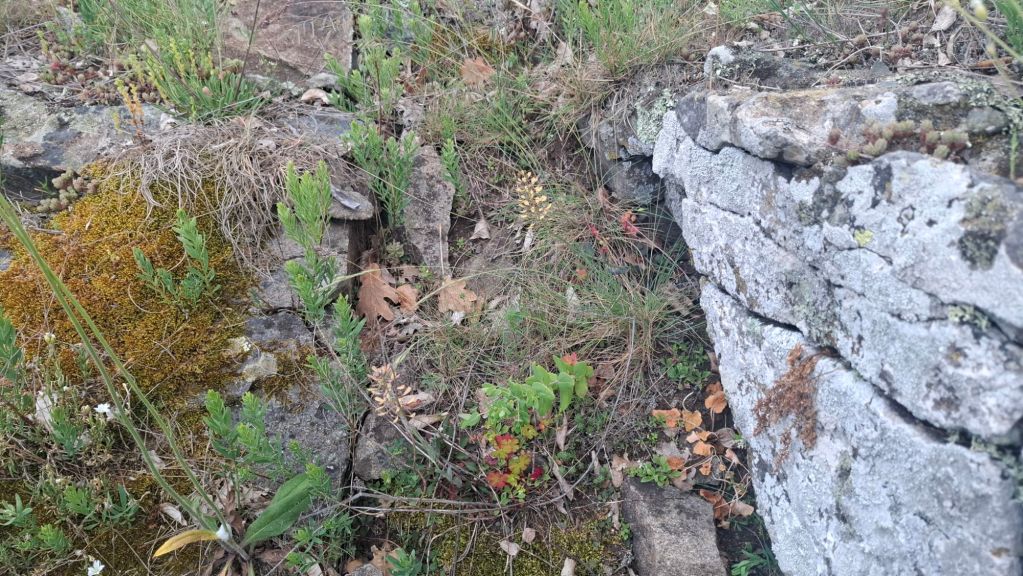
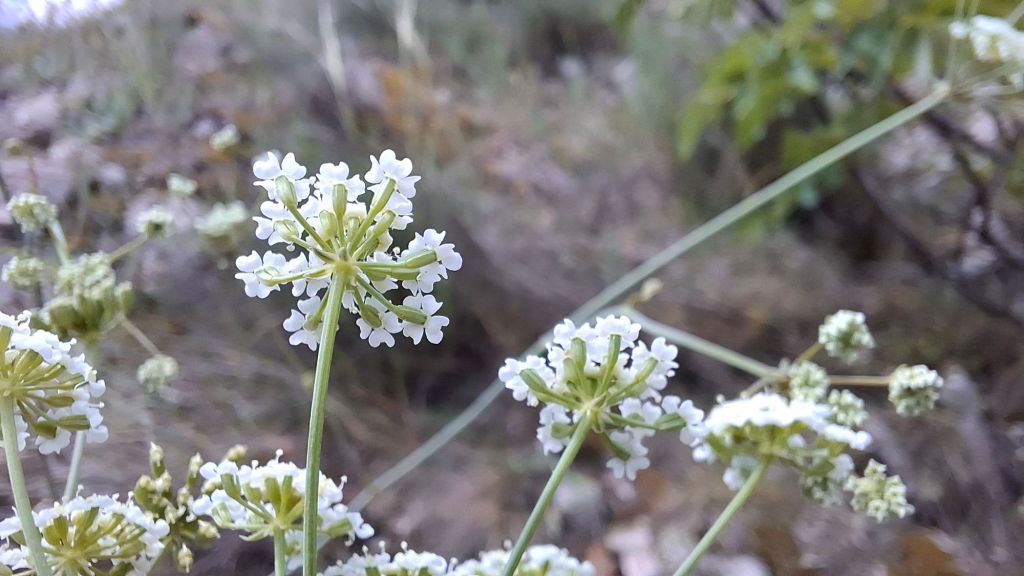
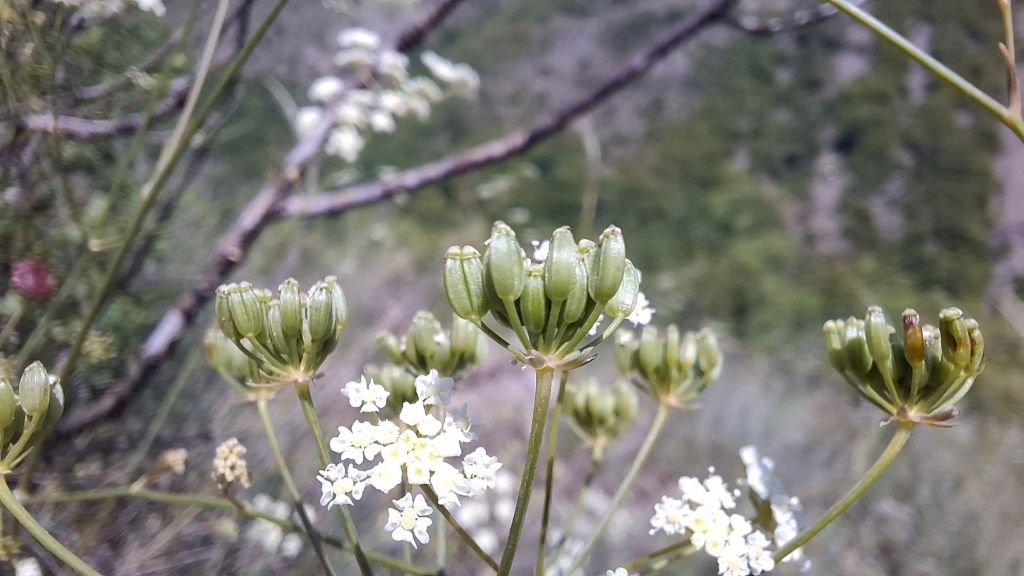
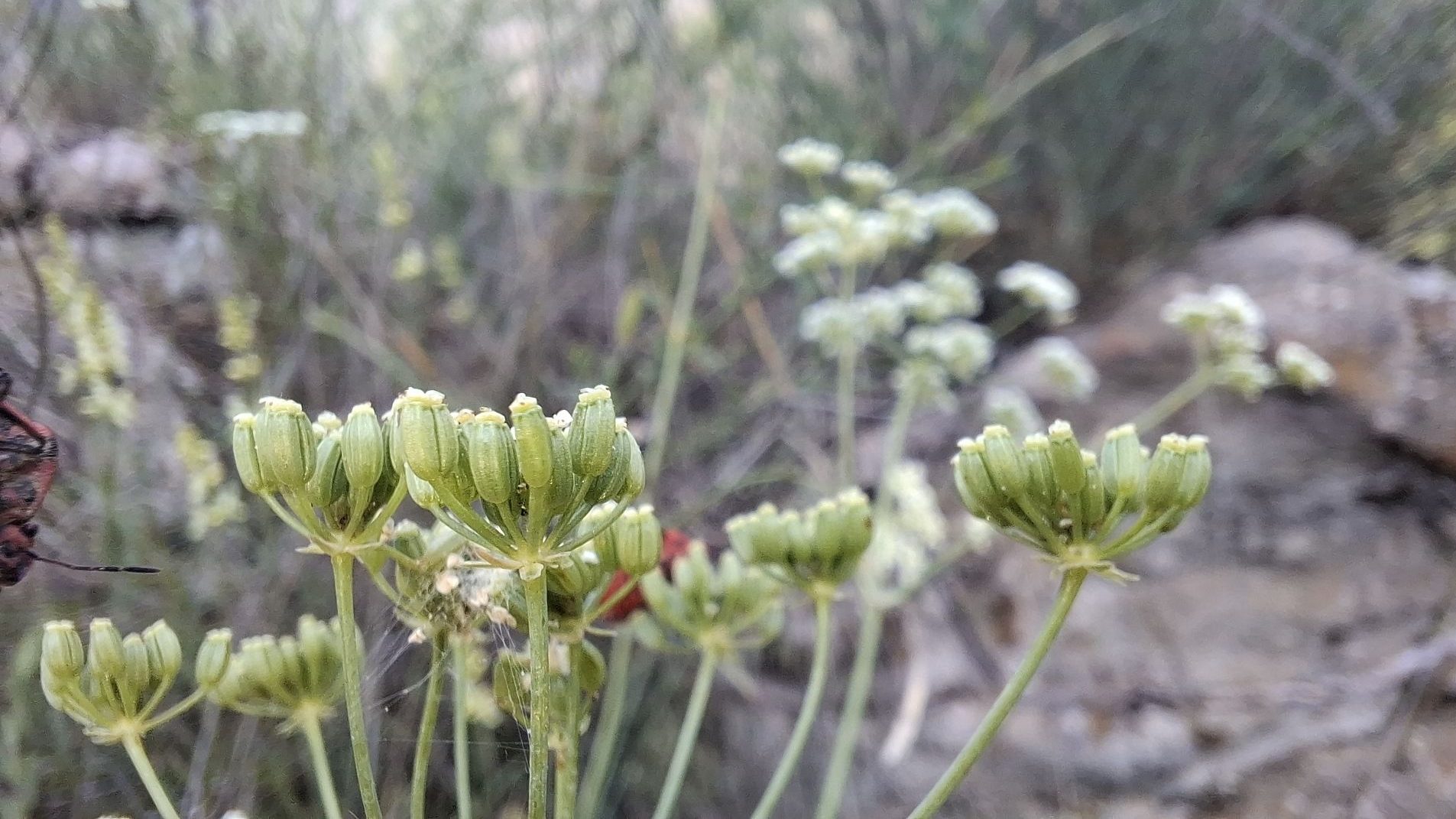
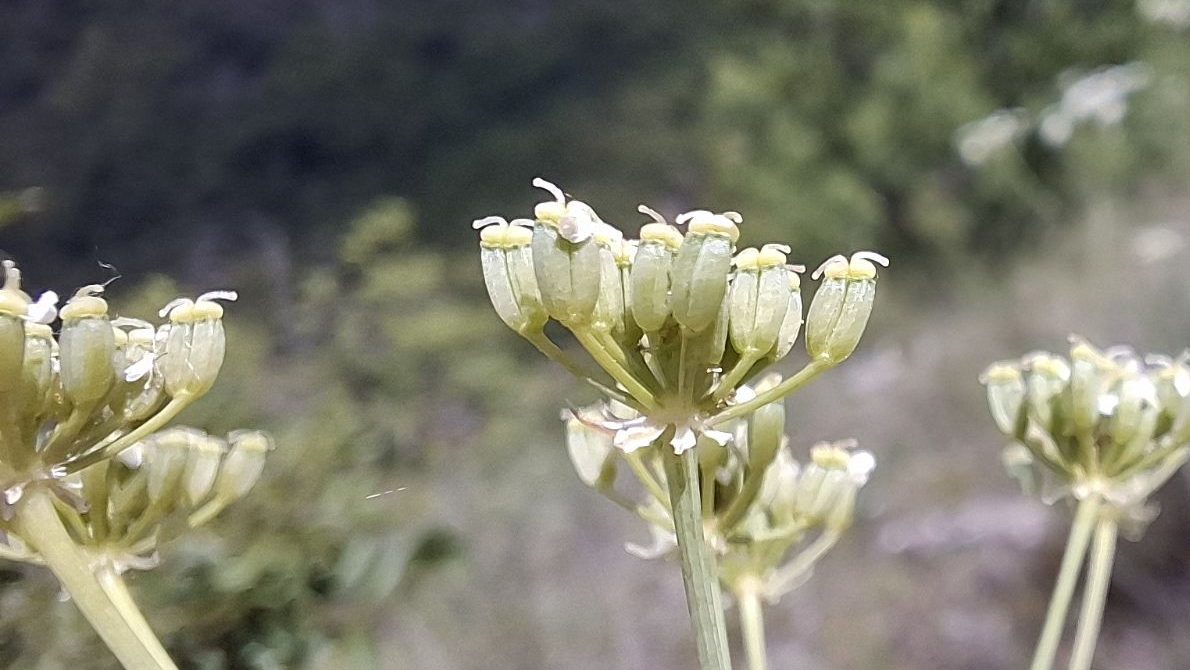
Delphinium fissum– habit. Stari Grad – rock cliffs above the Eshterec Stream (Zletovska River basin), 05.07.2026. Photo by Trajche Dimitrovski. Delphinium fissum– habit. Stari Grad – rock cliffs above the Eshterec Stream (Zletovska River basin), 05.07.2026. Photo by Trajche Dimitrovski.Delphinium fissum– habit. Stari Grad – rock cliffs above the Eshterec Stream (Zletovska River basin), 05.07.2026. Photo by Trajche Dimitrovski.Delphinium fissum– habit. Stari Grad – rock cliffs above the Eshterec Stream (Zletovska River basin), 05.07.2026. Photo by Trajche Dimitrovski.Delphinium fissum– habit. Stari Grad – rock cliffs above the Eshterec Stream (Zletovska River basin), 05.07.2026. Photo by Trajche Dimitrovski.Delphinium fissum– fruiting inflorescence. Stari Grad – rock cliffs above the Eshterec Stream (Zletovska River basin), 05.07.2026. Photo by Trajche Dimitrovski.Delphinium fissum– fruiting inflorescence. Stari Grad – rock cliffs above the Eshterec Stream (Zletovska River basin), 05.07.2026. Photo by Trajche Dimitrovski.Delphinium fissum– inflorescence. Stari Grad – rock cliffs above the Eshterec Stream (Zletovska River basin), 05.07.2026. Photo by Trajche Dimitrovski.Delphinium fissum– flowers. Stari Grad – rock cliffs above the Eshterec Stream (Zletovska River basin), 05.07.2026. Photo by Trajche Dimitrovski.Delphinium fissum– flower. Stari Grad – rock cliffs above the Eshterec Stream (Zletovska River basin), 05.07.2026. Photo by Trajche Dimitrovski.Delphinium fissum– flower. Stari Grad – rock cliffs above the Eshterec Stream (Zletovska River basin), 05.07.2026. Photo by Trajche Dimitrovski.Delphinium fissum– flower. Stari Grad – rock cliffs above the Eshterec Stream (Zletovska River basin), 05.07.2026. Photo by Trajche Dimitrovski.Delphinium fissum– flower. Stari Grad – rock cliffs above the Eshterec Stream (Zletovska River basin), 05.07.2026. Photo by Trajche Dimitrovski.Delphinium fissum– fruits (follicles). Stari Grad – rock cliffs above the Eshterec Stream (Zletovska River basin), 05.07.2026. Photo by Trajche Dimitrovski.Delphinium fissum– fruits (follicles). Stari Grad – rock cliffs above the Eshterec Stream (Zletovska River basin), 05.07.2026. Photo by Trajche Dimitrovski.Delphinium fissum– fruits (follicles). Stari Grad – rock cliffs above the Eshterec Stream (Zletovska River basin), 05.07.2026. Photo by Trajche Dimitrovski.Delphinium fissum– fruits (follicles). Stari Grad – rock cliffs above the Eshterec Stream (Zletovska River basin), 05.07.2026. Photo by Trajche Dimitrovski.Delphinium fissum– stem with leaves. Stari Grad – rock cliffs above the Eshterec Stream (Zletovska River basin), 05.07.2026. Photo by Trajche Dimitrovski.Delphinium fissum– upper leaf. Stari Grad – rock cliffs above the Eshterec Stream (Zletovska River basin), 05.07.2026. Photo by Trajche Dimitrovski.Delphinium fissum– upper leaf. Stari Grad – rock cliffs above the Eshterec Stream (Zletovska River basin), 05.07.2026. Photo by Trajche Dimitrovski.Delphinium fissum– stem with leaf. Stari Grad – rock cliffs above the Eshterec Stream (Zletovska River basin), 05.07.2026. Photo by Trajche Dimitrovski.Delphinium fissum– stem with leaf. Stari Grad – rock cliffs above the Eshterec Stream (Zletovska River basin), 05.07.2026. Photo by Trajche Dimitrovski.Delphinium fissum– stem with leaf. Stari Grad – rock cliffs above the Eshterec Stream (Zletovska River basin), 05.07.2026. Photo by Trajche Dimitrovski.Delphinium fissum– stem with leaf. Stari Grad – rock cliffs above the Eshterec Stream (Zletovska River basin), 05.07.2026. Photo by Trajche Dimitrovski.Delphinium fissum– stem and leaf petiolr. Stari Grad – rock cliffs above the Eshterec Stream (Zletovska River basin), 05.07.2026. Photo by Trajche Dimitrovski.Delphinium fissum– adaxial side of leaf. Stari Grad – rock cliffs above the Eshterec Stream (Zletovska River basin), 05.07.2026. Photo by Trajche Dimitrovski.Delphinium fissum– adaxial side of leaf. Stari Grad – rock cliffs above the Eshterec Stream (Zletovska River basin), 05.07.2026. Photo by Trajche Dimitrovski.Delphinium fissum– abaxial side of leaf. Stari Grad – rock cliffs above the Eshterec Stream (Zletovska River basin), 05.07.2026. Photo by Trajche Dimitrovski.Delphinium fissum– stem. Stari Grad – rock cliffs above the Eshterec Stream (Zletovska River basin), 05.07.2026. Photo by Trajche Dimitrovski.Delphinium fissum– seeds. Specimen from Stari Grad – rock cliffs above the Eshterec Stream (Zletovska River basin), 05.07.2026. Photo by Trajche Dimitrovski.
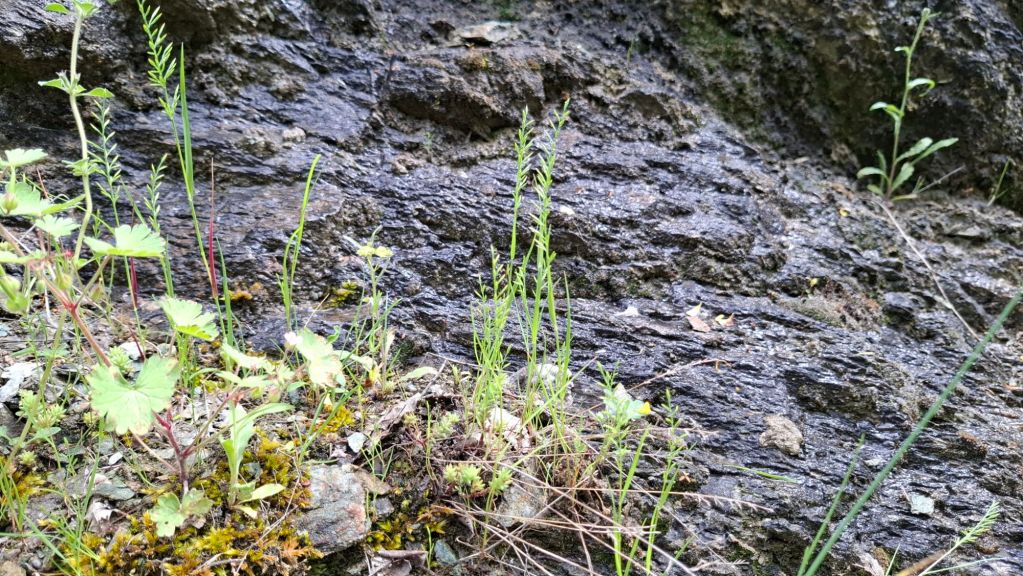
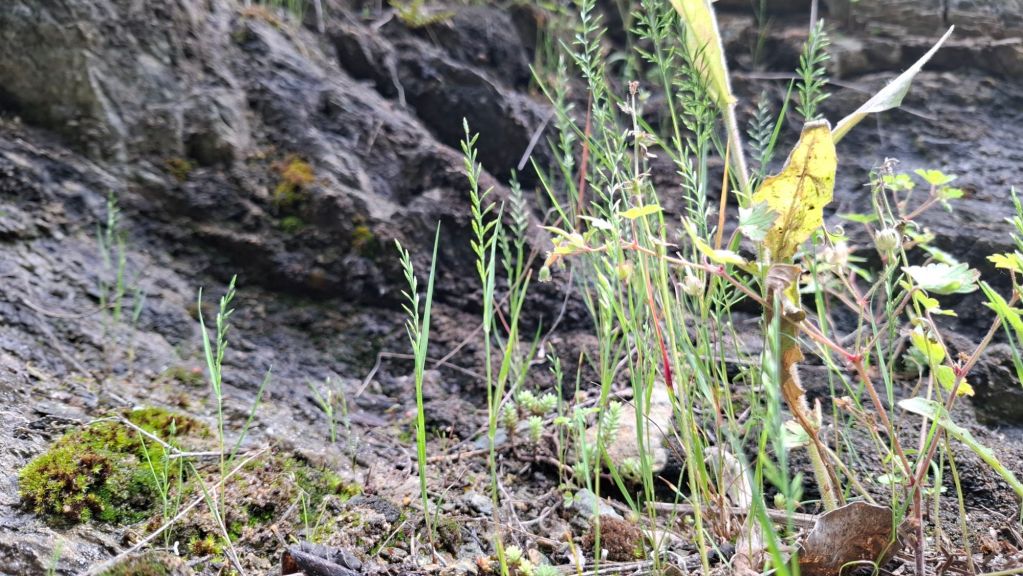
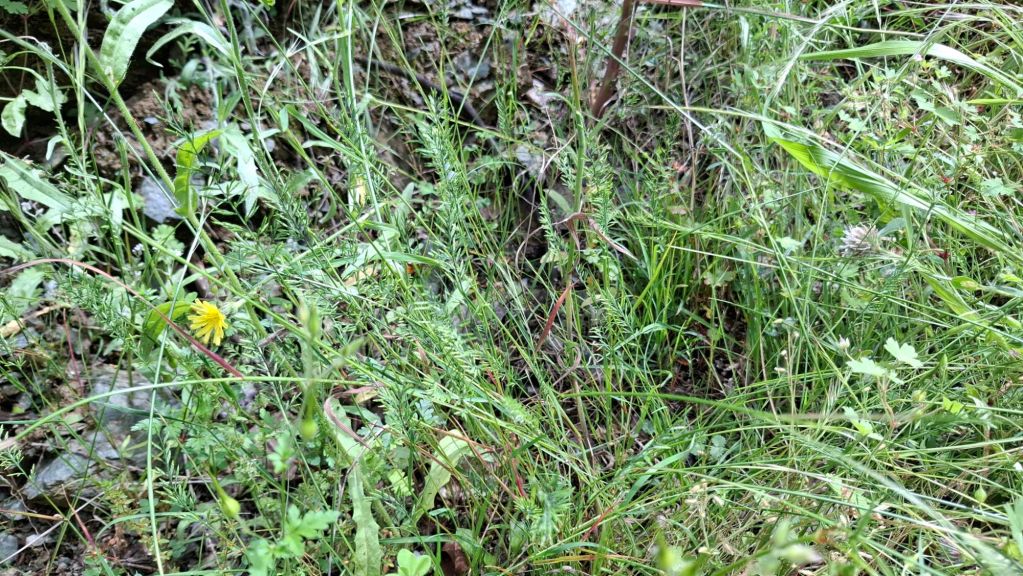
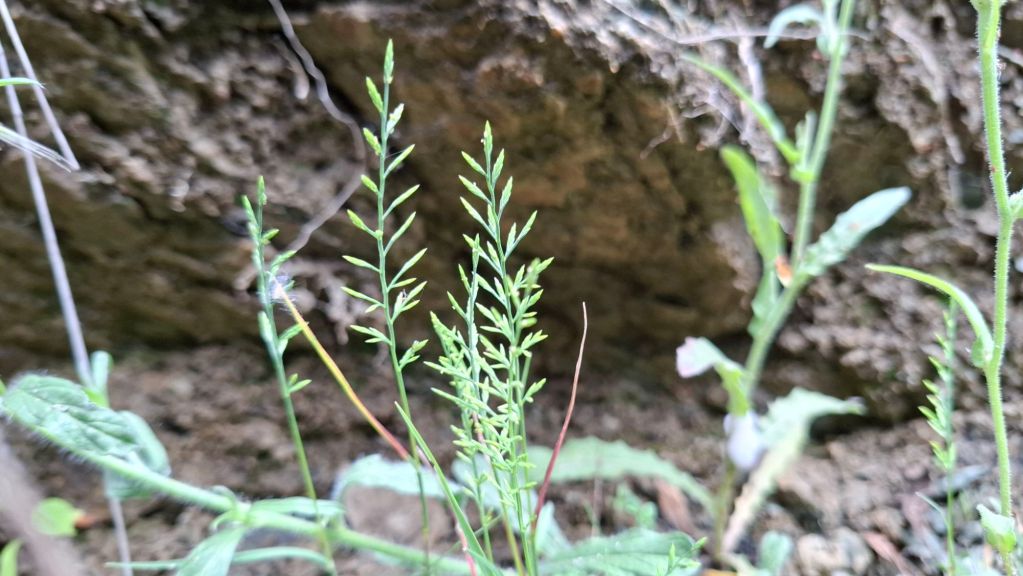
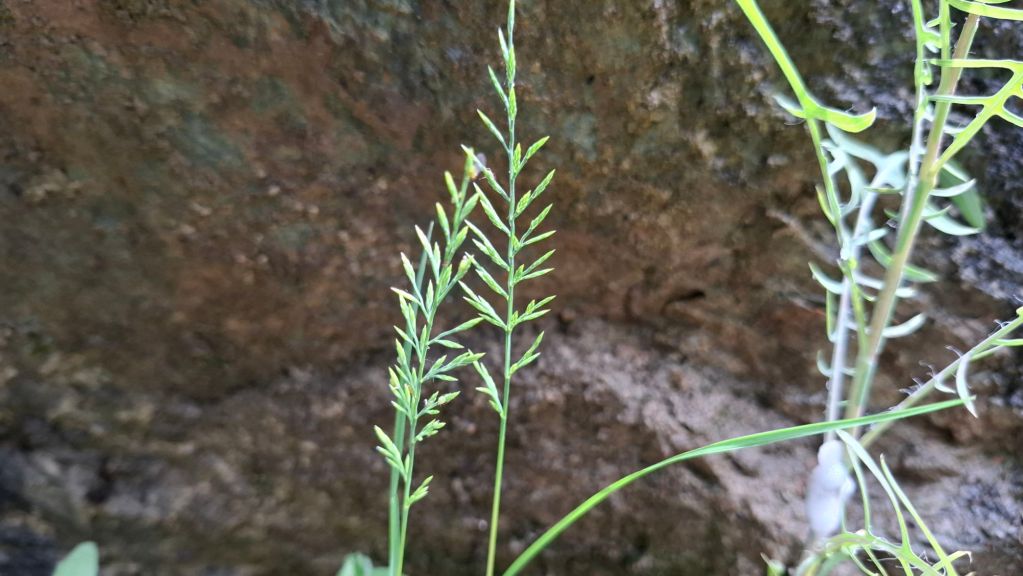
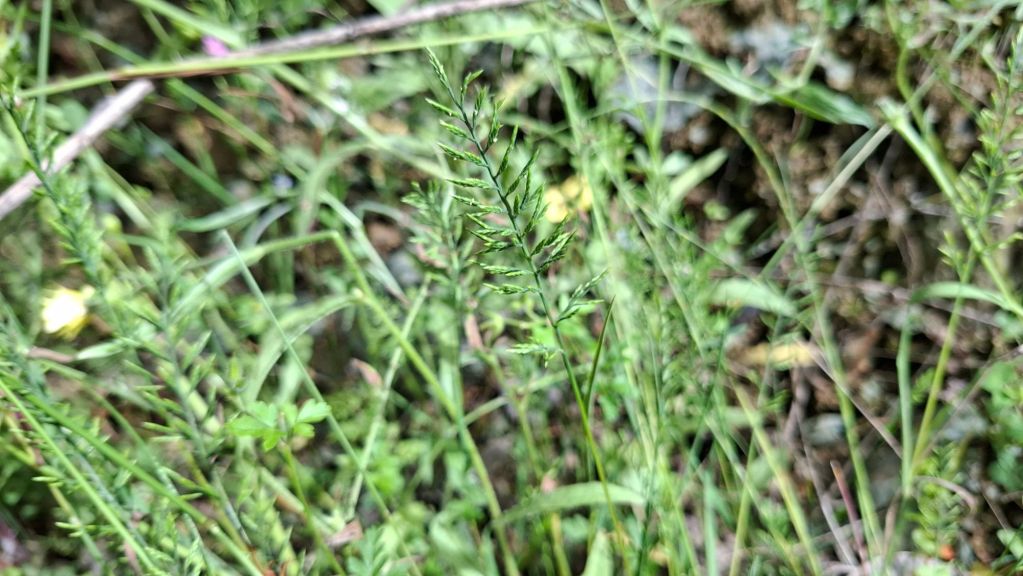
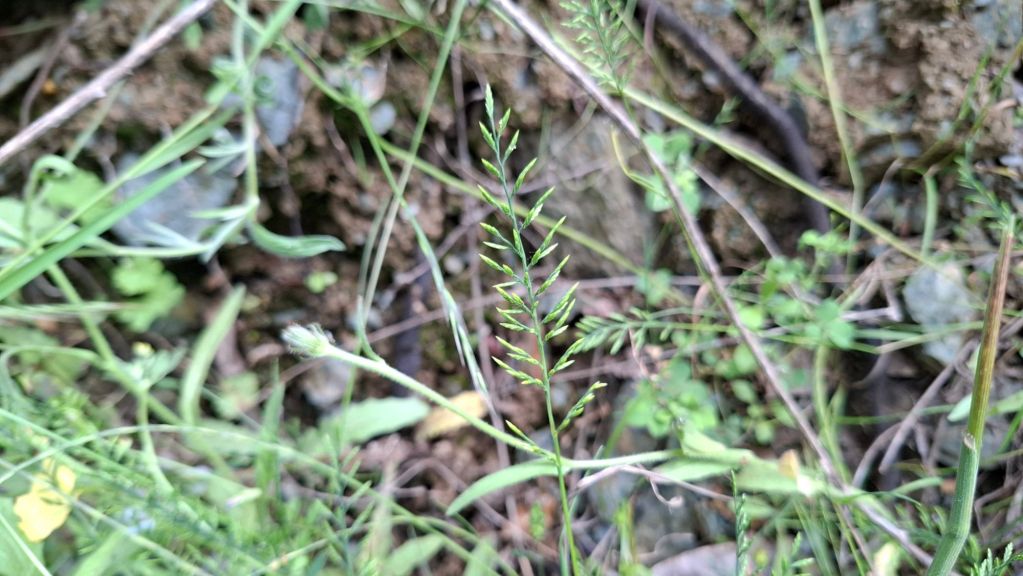
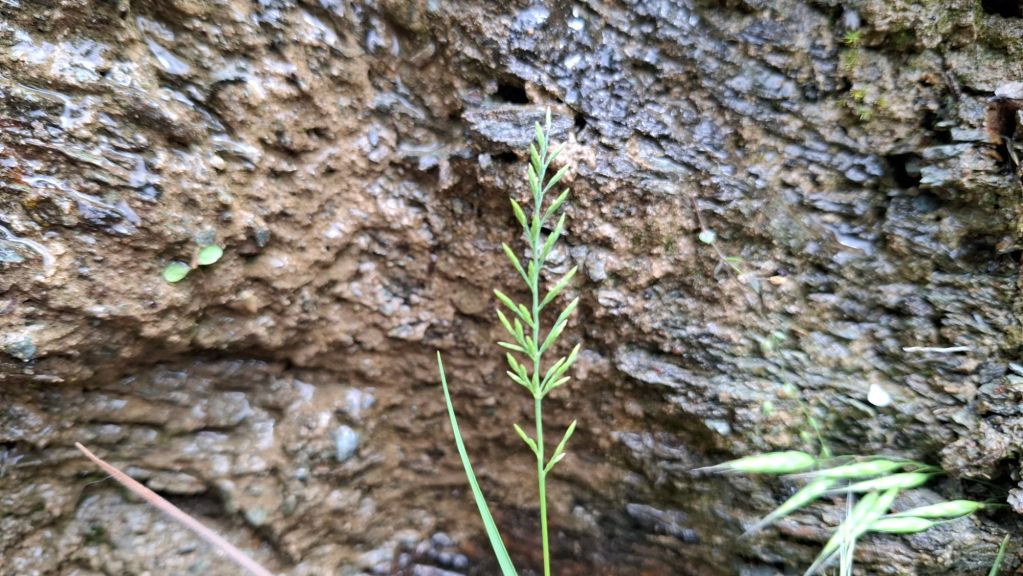
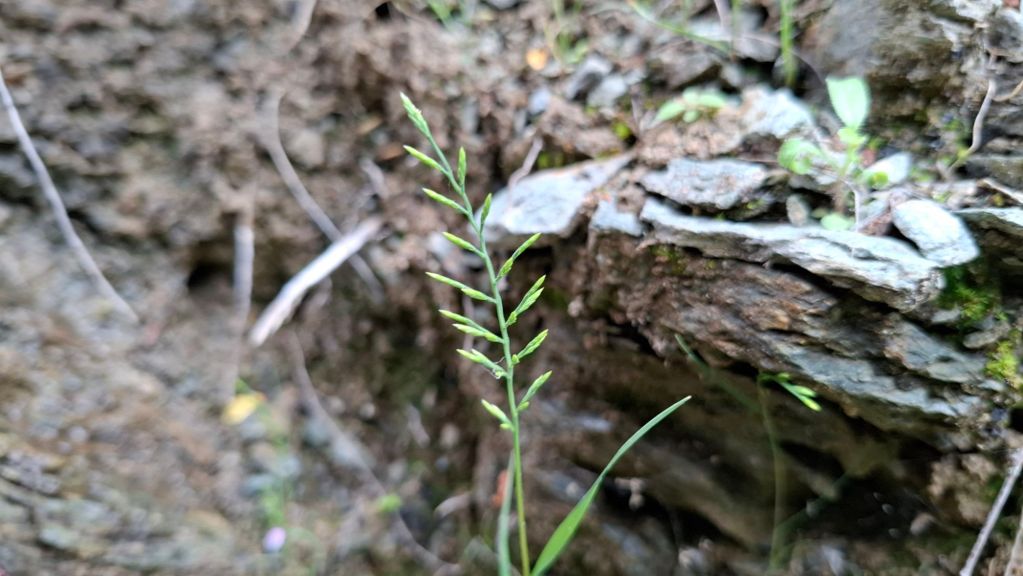
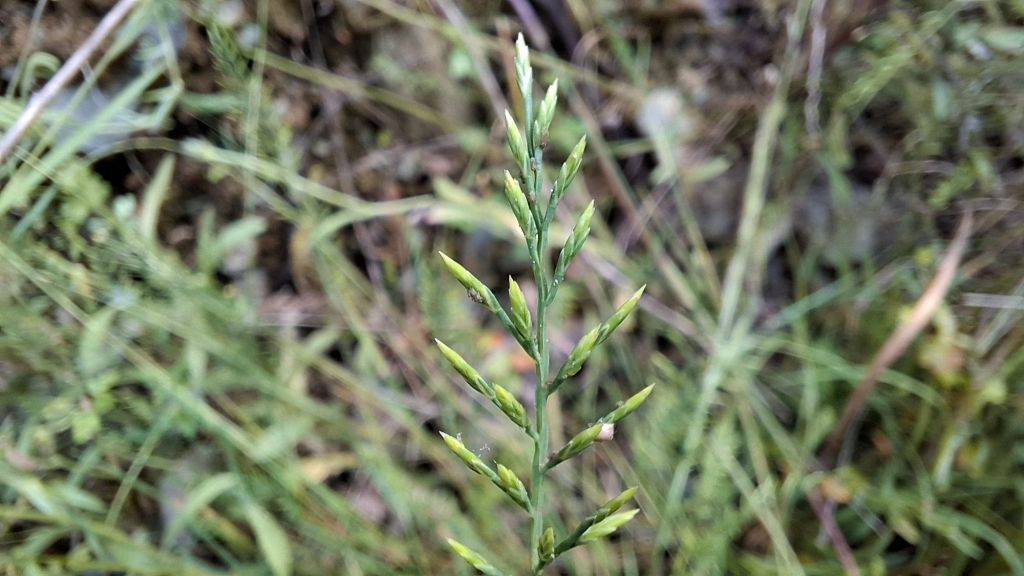
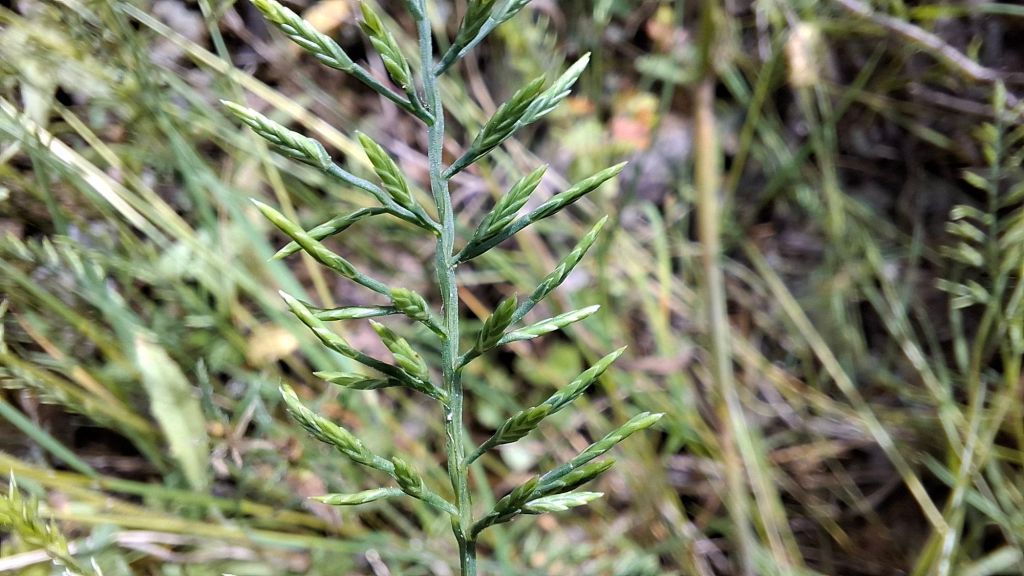
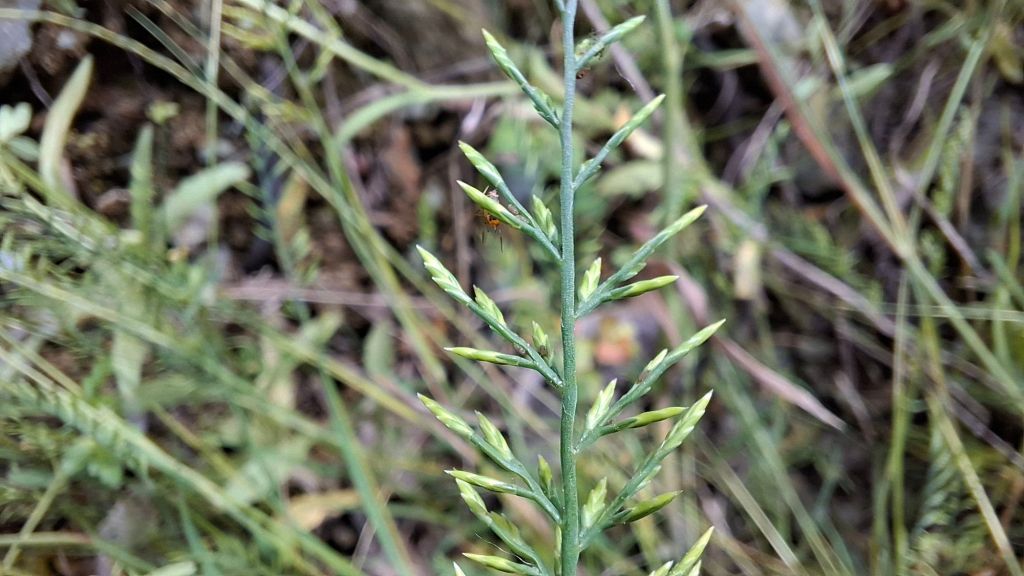
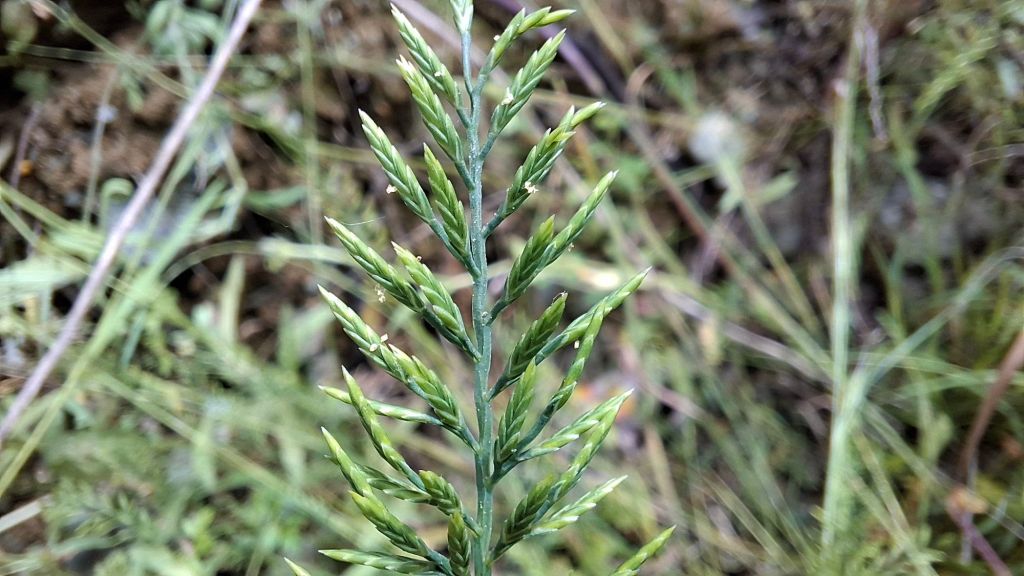
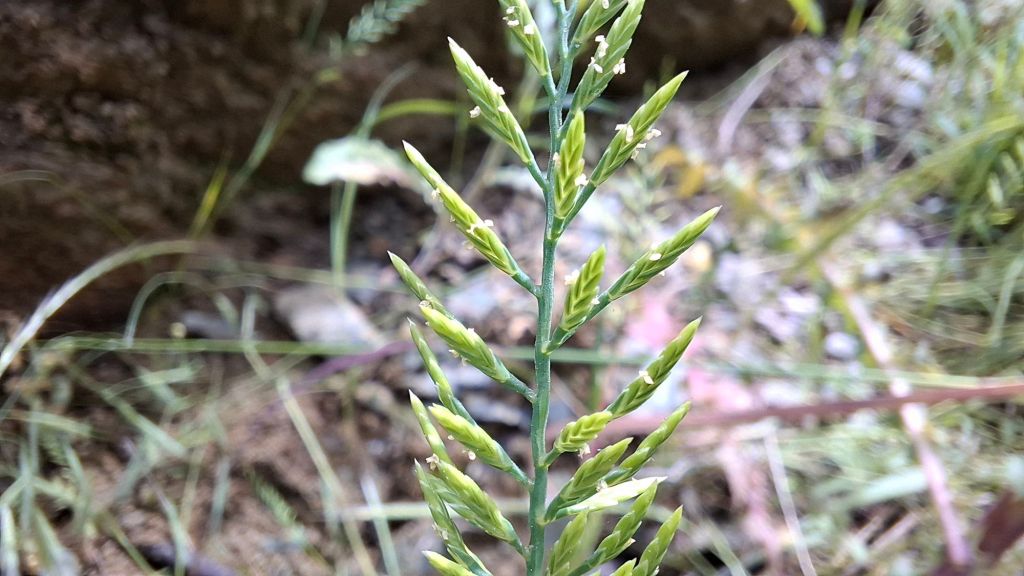
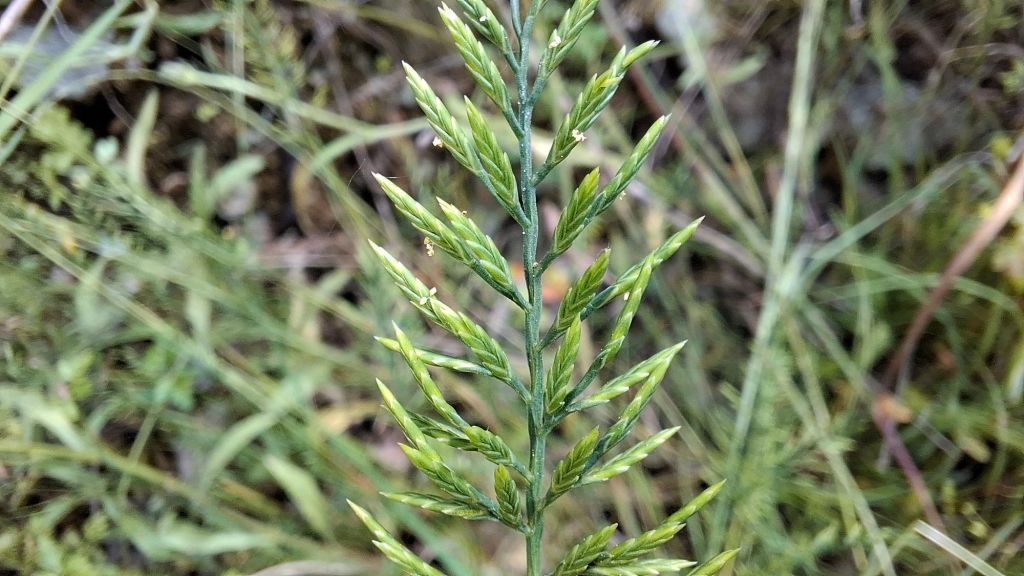
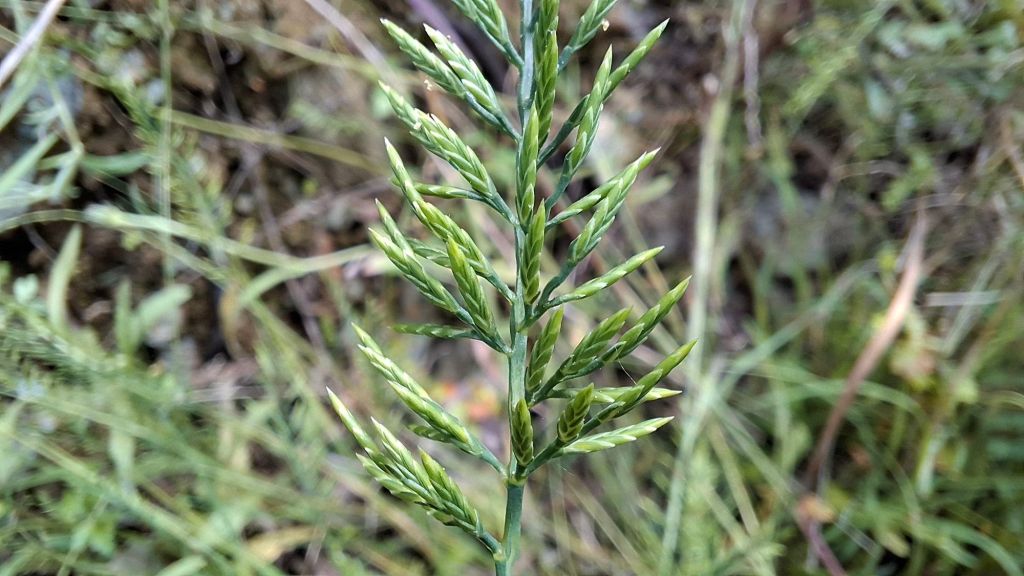
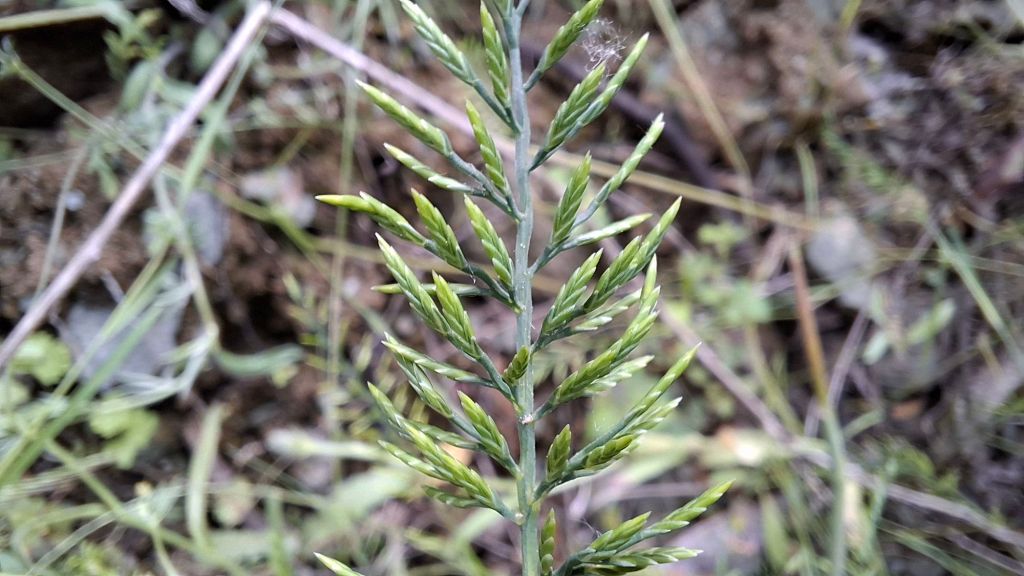
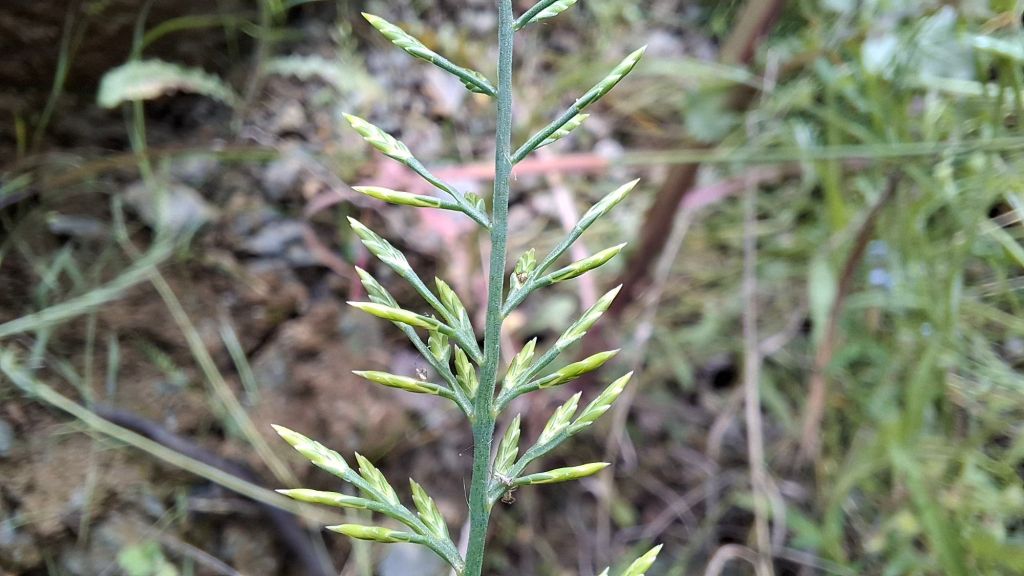
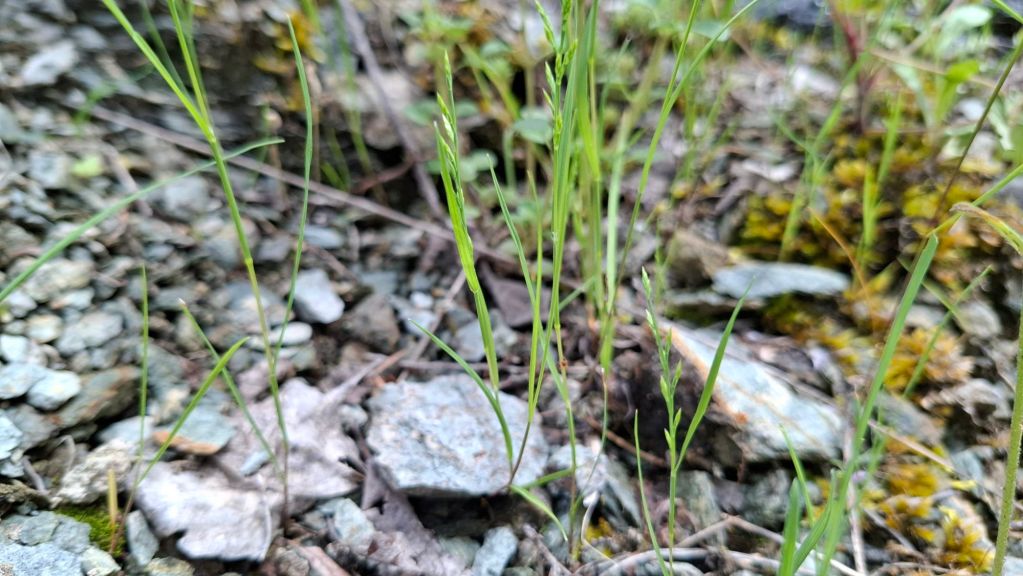
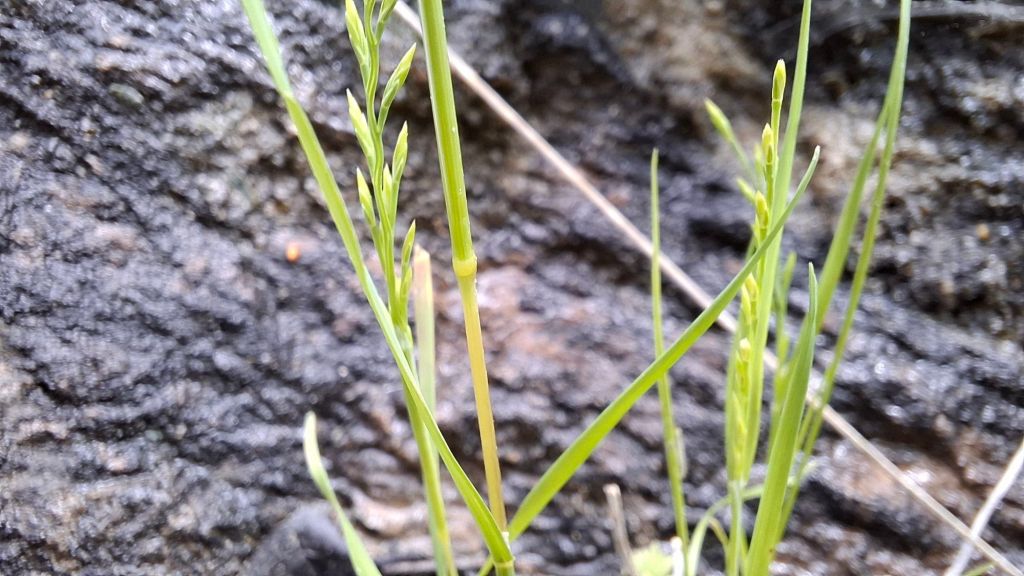
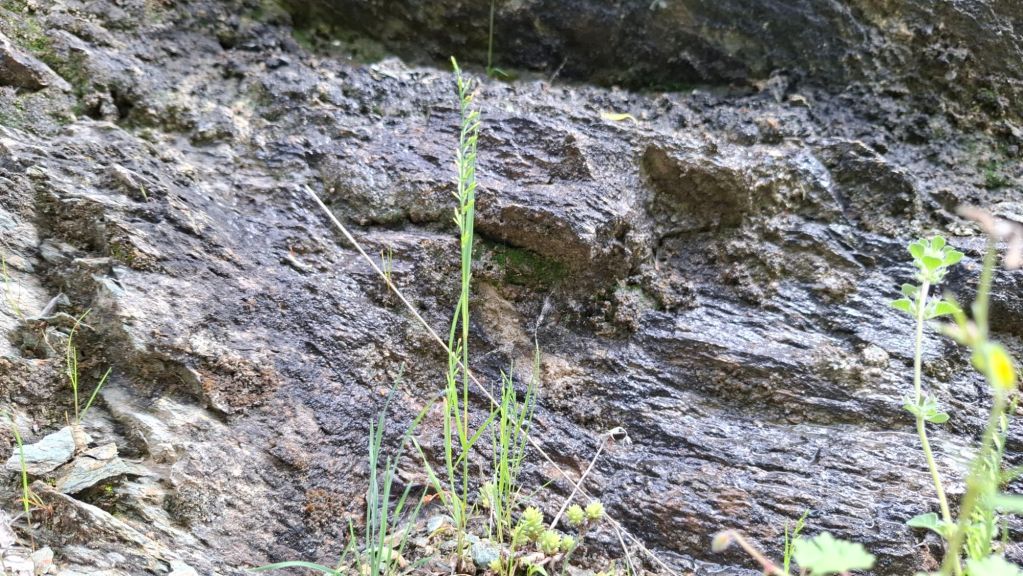
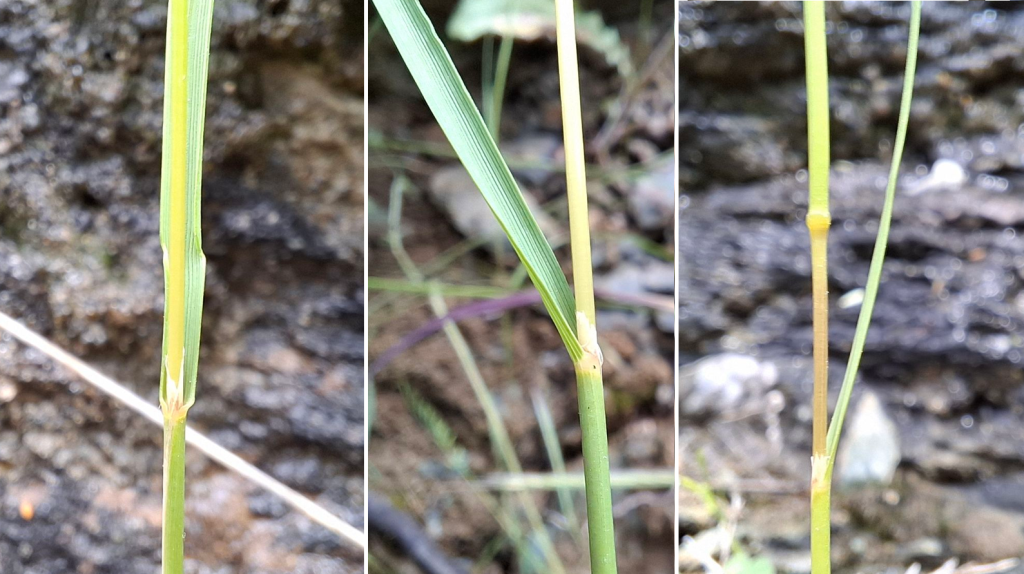
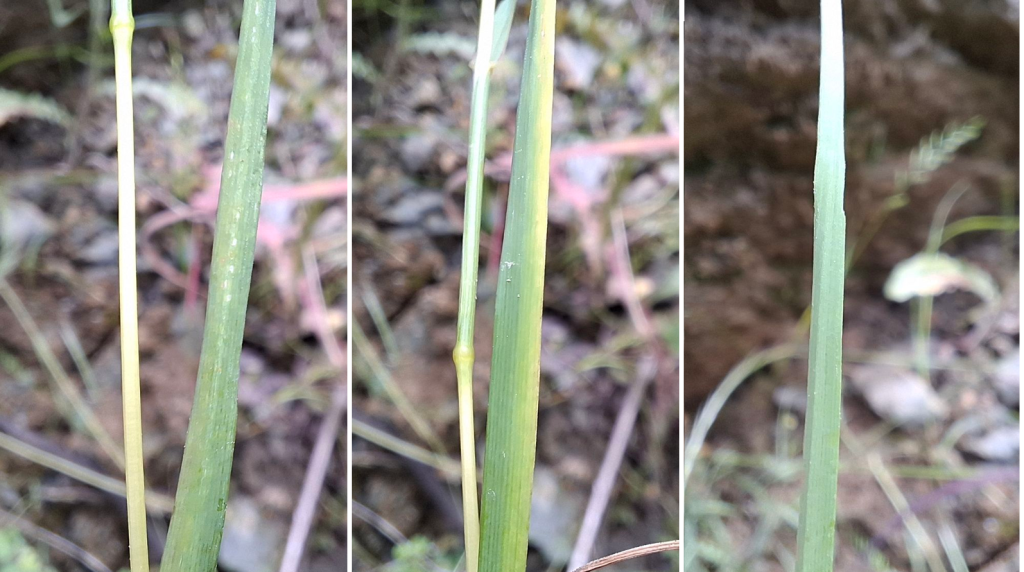
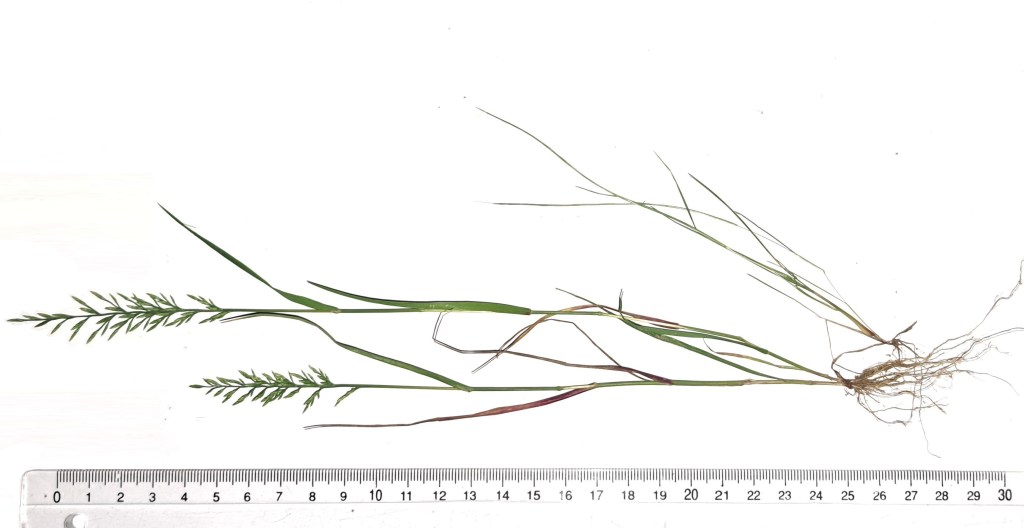
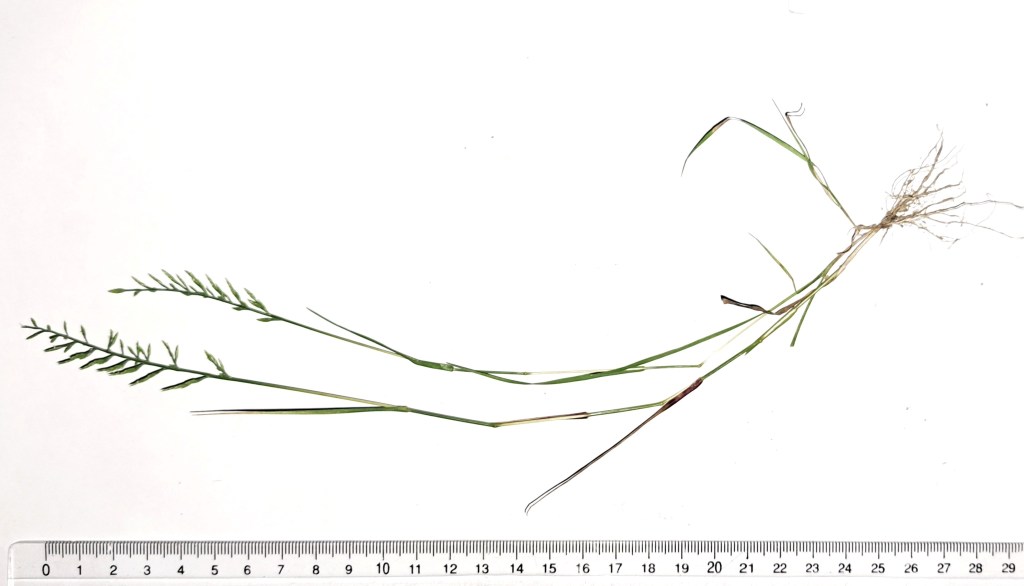
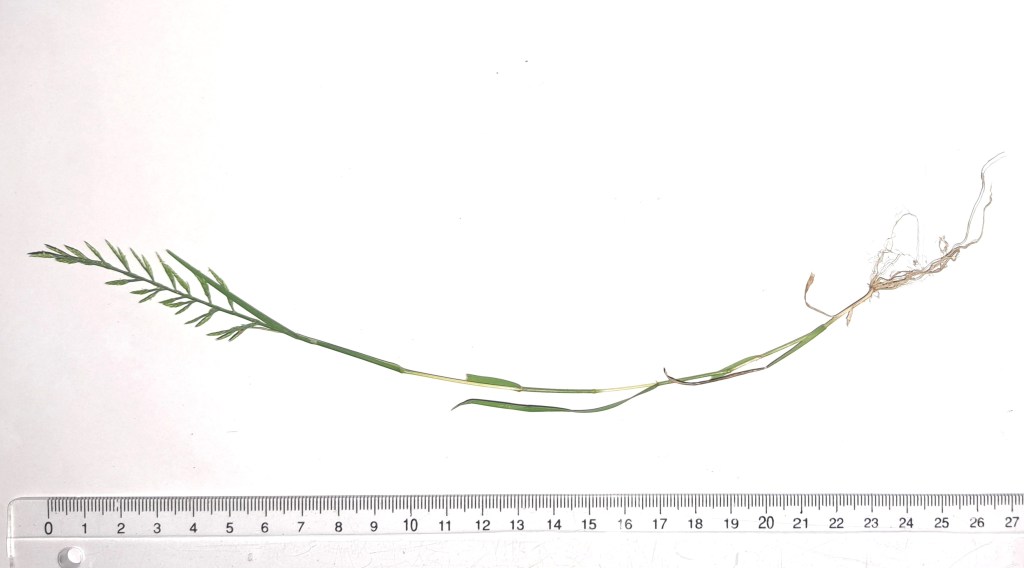
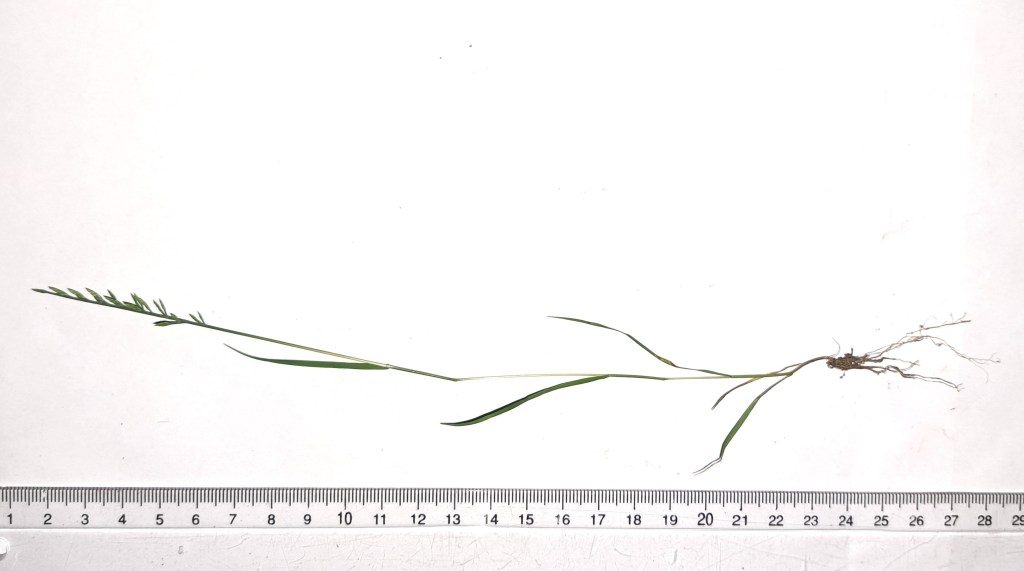
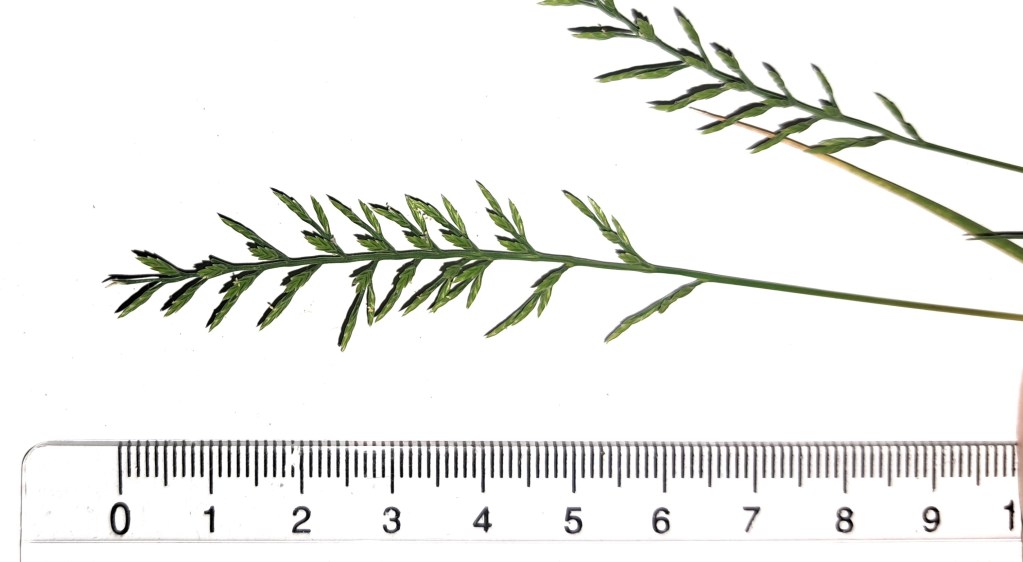
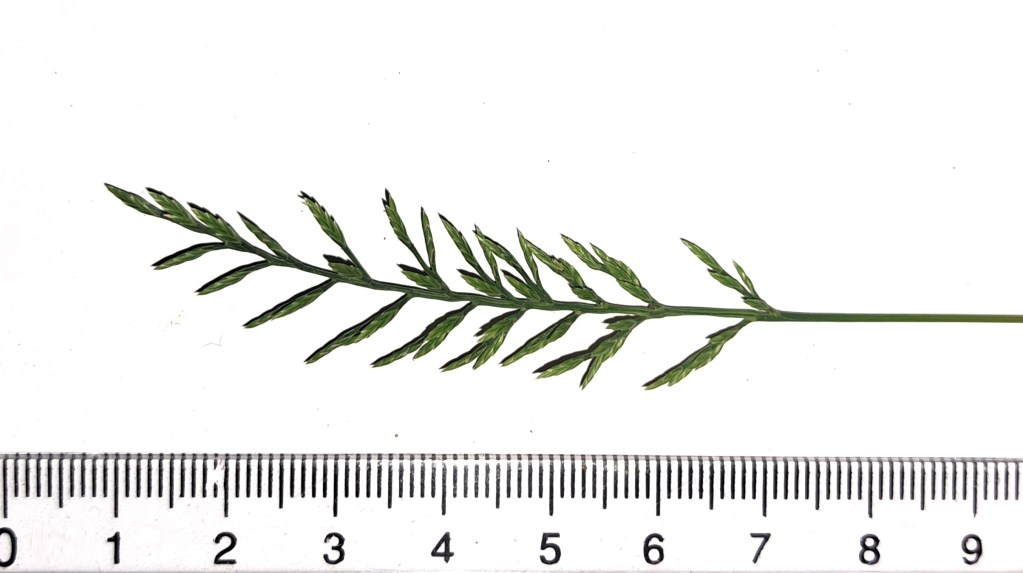
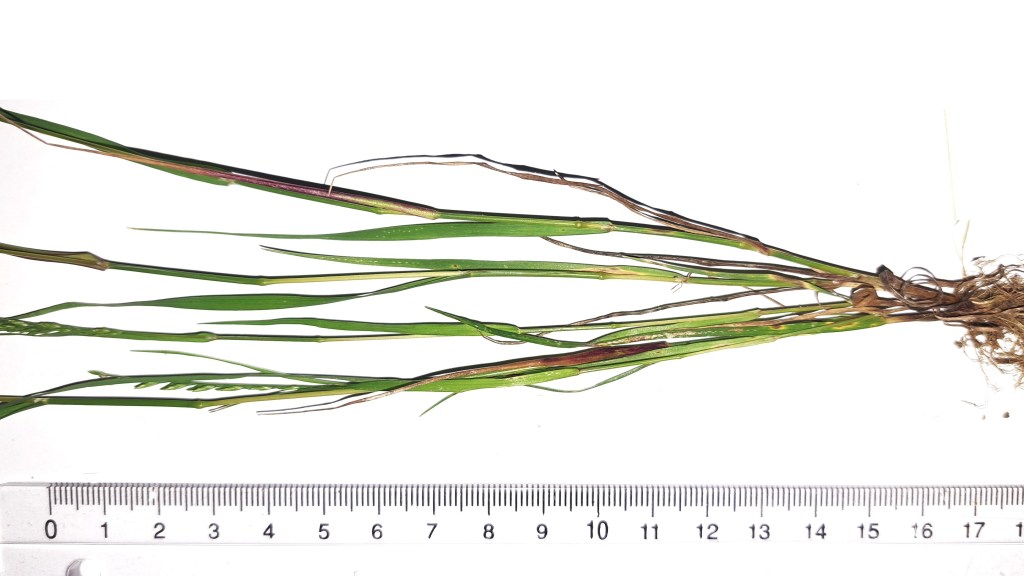
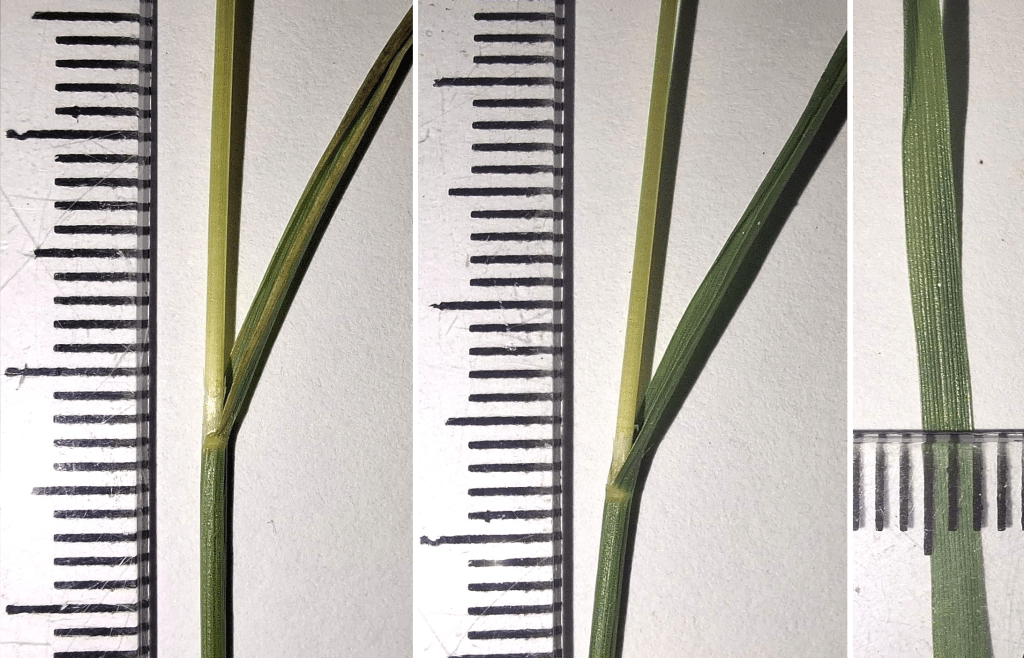
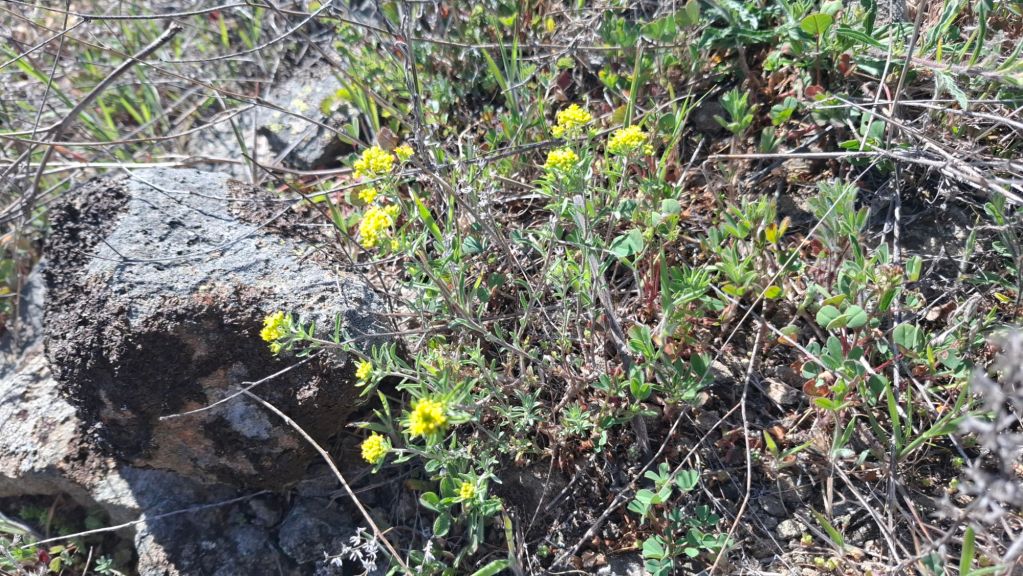
Taxonomy: Fam. Poaceae// Genus: Catapodium// Species: Catapodium rigidum (L.) C. E. Hubb.// Subspecies: Catapodium rigidum (L.) C. E. Hubb. subsp. rigidum.
Determined according to the botanical key provided by Stace (1980 in Tutin et al.) as Desmazeria rigida (L.) Tutin subsp. rigida. The accepted name in The Euro+Med Plantbase (Valdés et al., 2009+) is Catapodium rigidum (L.) C. E. Hubb. subsp. rigidum.
Lifeform: Annual plant. Therophyte according to the Raunkiær system.
Distribution: Native to Macaronesia, West Europe to the Mediterranean and West Asia according to the distribution information provided by the Plants of the World Online portal (Royal Botanic Gardens, Kew).
Habitat: Rocky terrains.
Flowering period: Late spring – early summer. MAY, JUN.
Locality: gorge of the Kochanska River. Date: 24.05.2026.
Catapodium rigidum subsp. rigidum – habit. Osogovo, gorge of the Kochanska River, 24.05.2026. Photo by Trajche Dimitrovski.Catapodium rigidum subsp. rigidum – habit. Osogovo, gorge of the Kochanska River, 24.05.2026. Photo by Trajche Dimitrovski.Catapodium rigidum subsp. rigidum – habit. Osogovo, gorge of the Kochanska River, 24.05.2026. Photo by Trajche Dimitrovski.Catapodium rigidum subsp. rigidum – habit. Osogovo, gorge of the Kochanska River, 24.05.2026. Photo by Trajche Dimitrovski.Catapodium rigidum subsp. rigidum – habit. Osogovo, gorge of the Kochanska River, 24.05.2026. Photo by Trajche Dimitrovski.Catapodium rigidum subsp. rigidum – panicle. Osogovo, gorge of the Kochanska River, 24.05.2026. Photo by Trajche Dimitrovski.Catapodium rigidum subsp. rigidum – panicles. Osogovo, gorge of the Kochanska River, 24.05.2026. Photo by Trajche Dimitrovski.Catapodium rigidum subsp. rigidum – panicles. Osogovo, gorge of the Kochanska River, 24.05.2026. Photo by Trajche Dimitrovski.Catapodium rigidum subsp. rigidum – panicles. Osogovo, gorge of the Kochanska River, 24.05.2026. Photo by Trajche Dimitrovski.Catapodium rigidum subsp. rigidum – panicles. Osogovo, gorge of the Kochanska River, 24.05.2026. Photo by Trajche Dimitrovski.Catapodium rigidum subsp. rigidum – panicle. Osogovo, gorge of the Kochanska River, 24.05.2026. Photo by Trajche Dimitrovski.Catapodium rigidum subsp. rigidum – panicles. Osogovo, gorge of the Kochanska River, 24.05.2026. Photo by Trajche Dimitrovski.Catapodium rigidum subsp. rigidum – panicle. Osogovo, gorge of the Kochanska River, 24.05.2026. Photo by Trajche Dimitrovski.Catapodium rigidum subsp. rigidum – panicle. Osogovo, gorge of the Kochanska River, 24.05.2026. Photo by Trajche Dimitrovski.Catapodium rigidum subsp. rigidum – spikelets. Osogovo, gorge of the Kochanska River, 24.05.2026. Photo by Trajche Dimitrovski.Catapodium rigidum subsp. rigidum – spikelets. Osogovo, gorge of the Kochanska River, 24.05.2026. Photo by Trajche Dimitrovski.Catapodium rigidum subsp. rigidum – spikelets. Osogovo, gorge of the Kochanska River, 24.05.2026. Photo by Trajche Dimitrovski.Catapodium rigidum subsp. rigidum – spikelets. Osogovo, gorge of the Kochanska River, 24.05.2026. Photo by Trajche Dimitrovski.Catapodium rigidum subsp. rigidum – spikelets. Osogovo, gorge of the Kochanska River, 24.05.2026. Photo by Trajche Dimitrovski.Catapodium rigidum subsp. rigidum – spikelets. Osogovo, gorge of the Kochanska River, 24.05.2026. Photo by Trajche Dimitrovski.Catapodium rigidum subsp. rigidum – spikelets. Osogovo, gorge of the Kochanska River, 24.05.2026. Photo by Trajche Dimitrovski.Catapodium rigidum subsp. rigidum – spikelets. Osogovo, gorge of the Kochanska River, 24.05.2026. Photo by Trajche Dimitrovski.Catapodium rigidum subsp. rigidum – spikelets. Osogovo, gorge of the Kochanska River, 24.05.2026. Photo by Trajche Dimitrovski.Catapodium rigidum subsp. rigidum – spikelets. Osogovo, gorge of the Kochanska River, 24.05.2026. Photo by Trajche Dimitrovski.Catapodium rigidum subsp. rigidum – spikelets. Osogovo, gorge of the Kochanska River, 24.05.2026. Photo by Trajche Dimitrovski.Catapodium rigidum subsp. rigidum – spikelets. Osogovo, gorge of the Kochanska River, 24.05.2026. Photo by Trajche Dimitrovski.Catapodium rigidum subsp. rigidum – spikelets. Osogovo, gorge of the Kochanska River, 24.05.2026. Photo by Trajche Dimitrovski.Catapodium rigidum subsp. rigidum – spikelets. Osogovo, gorge of the Kochanska River, 24.05.2026. Photo by Trajche Dimitrovski.Catapodium rigidum subsp. rigidum – spikelets. Osogovo, gorge of the Kochanska River, 24.05.2026. Photo by Trajche Dimitrovski.Catapodium rigidum subsp. rigidum – spikelets. Osogovo, gorge of the Kochanska River, 24.05.2026. Photo by Trajche Dimitrovski.Catapodium rigidum subsp. rigidum – stems with leaves. Osogovo, gorge of the Kochanska River, 24.05.2026. Photo by Trajche Dimitrovski.Catapodium rigidum subsp. rigidum – stems with leaves. Osogovo, gorge of the Kochanska River, 24.05.2026. Photo by Trajche Dimitrovski.Catapodium rigidum subsp. rigidum – stems with leaves. Osogovo, gorge of the Kochanska River, 24.05.2026. Photo by Trajche Dimitrovski.Catapodium rigidum subsp. rigidum – stem with leaves. Osogovo, gorge of the Kochanska River, 24.05.2026. Photo by Trajche Dimitrovski.Catapodium rigidum subsp. rigidum – stems with leaves. Osogovo, gorge of the Kochanska River, 24.05.2026. Photo by Trajche Dimitrovski.Catapodium rigidum subsp. rigidum – stem. Osogovo, gorge of the Kochanska River, 24.05.2026. Photo by Trajche Dimitrovski.Catapodium rigidum subsp. rigidum – stem and leaf sheath with ligule. Osogovo, gorge of the Kochanska River, 24.05.2026. Photo by Trajche Dimitrovski.Catapodium rigidum subsp. rigidum – stem and adaxial side of leaf. Osogovo, gorge of the Kochanska River, 24.05.2026. Photo by Trajche Dimitrovski.Catapodium rigidum subsp. rigidum – stem and abaxial side of leaf. Osogovo, gorge of the Kochanska River, 24.05.2026. Photo by Trajche Dimitrovski.
Scaled images.
Catapodium rigidum subsp. rigidum – habit. Scale in cm. Specimen from Osogovo, gorge of the Kochanska River, 24.05.2026. Photo by Trajche Dimitrovski.Catapodium rigidum subsp. rigidum – habit. Scale in cm. Specimen from Osogovo, gorge of the Kochanska River, 24.05.2026. Photo by Trajche Dimitrovski.Catapodium rigidum subsp. rigidum – habit. Scale in cm. Specimen from Osogovo, gorge of the Kochanska River, 24.05.2026. Photo by Trajche Dimitrovski.Catapodium rigidum subsp. rigidum – habit. Scale in cm. Specimen from Osogovo, gorge of the Kochanska River, 24.05.2026. Photo by Trajche Dimitrovski.Catapodium rigidum subsp. rigidum – habit. Scale in cm. Specimen from Osogovo, gorge of the Kochanska River, 24.05.2026. Photo by Trajche Dimitrovski.Catapodium rigidum subsp. rigidum – panicle. Scale in cm. Photo by Trajche Dimitrovski.Catapodium rigidum subsp. rigidum – panicle. Scale in cm. Photo by Trajche Dimitrovski.Catapodium rigidum subsp. rigidum – panicle. Scale in cm. Photo by Trajche Dimitrovski.Catapodium rigidum subsp. rigidum – panicle branches with spikelets. Scale in mm. Photo by Trajche Dimitrovski.Catapodium rigidum subsp. rigidum – spikelets. Scale in mm. Photo by Trajche Dimitrovski.Catapodium rigidum subsp. rigidum – stems with leaves. Scale in cm. Photo by Trajche Dimitrovski.Catapodium rigidum subsp. rigidum. Left and center: stem, leaf and ligule. Scale in cm/mm. . Right: leaf width. Scale in mm. Photo by Trajche Dimitrovski.
Catapodium rigidumsubsp.rigidum. Valdés, B. & Scholz, H.; with contributions from Raab-Straube, E. von & Parolly, G. 2009+: Poaceae (pro parte majore). – In: Euro+Med PlantBase – the information resource for Euro-Mediterranean plant diversity https://europlusmed.org/. [Accessed 03.07.2026].
Stace, C. A. 1980. Desmazeria Dumort. (incl. Catapodium Link, Scleropoa Griseb.). In Tutin, T. G., Heywood, V. H., Burges, N. A., Moore, D. M., Valentine, D. H., Walters, S. M. & Webb, D. A. (eds.), Flora Europaea. Volume 5. Alismataceae to Orchidaceae (Monocotyledones). Cambridge: Cambridge University Press, pp. 158.
Determined according to the botanical key provided by Micevski (1995) and Ball et al. (1964 in Tutin et al.) as Alyssum corymbosoides Formánek. The accepted name in The Euro+Med Plantbase (Marhold, 2011+) is Odontarrhena chalcidica (Janka) Španiel & al.
Lifeform: Perennial plant. Hemicryptophyte according to the Raunkiær system.
Distribution: Native to the Balkan peninsula and Romania according to the Plants of the World Online portal (Royal Botanic Gardens, Kew) and The Euro+Med PlantBase (Marhold, 2011+).
Habitat: Rocky terrains in the Zletovska River basin, on volcanic rocks.
Flowering period: Spring (APR, MAY).
Locality: Hills between the Shtalkovichka River and the Eshterec Stream (Stari Grad region in the Zletovska River Basin). Date: 25.04.2026.
Odontarrhena corymbosoidea – habit. Hills between the Shtalkovichka River and the Eshterec Stream (Stari Grad), 25.04.2026. Photo by Trajche Dimitrovski.Odontarrhena corymbosoidea – habit. Hills between the Shtalkovichka River and the Eshterec Stream (Stari Grad), 25.04.2026. Photo by Trajche Dimitrovski.Odontarrhena corymbosoidea – habit. Hills between the Shtalkovichka River and the Eshterec Stream (Stari Grad), 25.04.2026. Photo by Trajche Dimitrovski.Odontarrhena corymbosoidea – habit. Hills between the Shtalkovichka River and the Eshterec Stream (Stari Grad), 25.04.2026. Photo by Trajche Dimitrovski.Odontarrhena corymbosoidea – habit. Hills between the Shtalkovichka River and the Eshterec Stream (Stari Grad), 25.04.2026. Photo by Trajche Dimitrovski.Odontarrhena corymbosoidea – inflorescence. Hills between the Shtalkovichka River and the Eshterec Stream (Stari Grad), 25.04.2026. Photo by Trajche Dimitrovski.Odontarrhena corymbosoidea – inflorescence. Hills between the Shtalkovichka River and the Eshterec Stream (Stari Grad), 25.04.2026. Photo by Trajche Dimitrovski.Odontarrhena corymbosoidea – inflorescence. Hills between the Shtalkovichka River and the Eshterec Stream (Stari Grad), 25.04.2026. Photo by Trajche Dimitrovski.Odontarrhena corymbosoidea – inflorescence. Hills between the Shtalkovichka River and the Eshterec Stream (Stari Grad), 25.04.2026. Photo by Trajche Dimitrovski.Odontarrhena corymbosoidea – inflorescence. Hills between the Shtalkovichka River and the Eshterec Stream (Stari Grad), 25.04.2026. Photo by Trajche Dimitrovski.Odontarrhena corymbosoidea – inflorescence. Hills between the Shtalkovichka River and the Eshterec Stream (Stari Grad), 25.04.2026. Photo by Trajche Dimitrovski.Odontarrhena corymbosoidea – inflorescence. Hills between the Shtalkovichka River and the Eshterec Stream (Stari Grad), 25.04.2026. Photo by Trajche Dimitrovski.Odontarrhena corymbosoidea – inflorescence. Hills between the Shtalkovichka River and the Eshterec Stream (Stari Grad), 25.04.2026. Photo by Trajche Dimitrovski.Odontarrhena corymbosoidea – upper leaves. Hills between the Shtalkovichka River and the Eshterec Stream (Stari Grad), 25.04.2026. Photo by Trajche Dimitrovski.Odontarrhena corymbosoidea – stem and cauline leaves. Hills between the Shtalkovichka River and the Eshterec Stream (Stari Grad), 25.04.2026. Photo by Trajche Dimitrovski.Odontarrhena corymbosoidea – stem and cauline leaves. Hills between the Shtalkovichka River and the Eshterec Stream (Stari Grad), 25.04.2026. Photo by Trajche Dimitrovski.Odontarrhena corymbosoidea – stem and cauline leaves. Hills between the Shtalkovichka River and the Eshterec Stream (Stari Grad), 25.04.2026. Photo by Trajche Dimitrovski.Odontarrhena corymbosoidea – stem and cauline leaves. Hills between the Shtalkovichka River and the Eshterec Stream (Stari Grad), 25.04.2026. Photo by Trajche Dimitrovski.Odontarrhena corymbosoidea – lower part of stems with lower leaves. Hills between the Shtalkovichka River and the Eshterec Stream (Stari Grad), 25.04.2026. Photo by Trajche Dimitrovski.Odontarrhena corymbosoidea – lower part of stems with lower leaves. Hills between the Shtalkovichka River and the Eshterec Stream (Stari Grad), 25.04.2026. Photo by Trajche Dimitrovski.Odontarrhena corymbosoidea – lower leaves. Hills between the Shtalkovichka River and the Eshterec Stream (Stari Grad), 25.04.2026. Photo by Trajche Dimitrovski.Odontarrhena corymbosoidea – plant base with woody stems. Hills between the Shtalkovichka River and the Eshterec Stream (Stari Grad), 25.04.2026. Photo by Trajche Dimitrovski.Odontarrhena corymbosoidea – plant base with woody stems. Hills between the Shtalkovichka River and the Eshterec Stream (Stari Grad), 25.04.2026. Photo by Trajche Dimitrovski.Odontarrhena corymbosoidea – plant base with woody stems. Hills between the Shtalkovichka River and the Eshterec Stream (Stari Grad), 25.04.2026. Photo by Trajche Dimitrovski.
Scaled images. Specimens from the Hilly region between the Shtalkovichka River and the Eshterec Stream (Stari Grad region in the Zletovska River Basin). Date: 25.04.2026.
Odontarrhena corymbosoidea – habit. Scale in cm. Specimen from the hills between the Shtalkovichka River and the Eshterec Stream (Stari Grad), 25.04.2026. Photo by Trajche Dimitrovski.Odontarrhena corymbosoidea – habit. Scale in cm. Specimen from the hills between the Shtalkovichka River and the Eshterec Stream (Stari Grad), 25.04.2026. Photo by Trajche Dimitrovski.Odontarrhena corymbosoidea – habit. Scale in cm. Specimen from the hills between the Shtalkovichka River and the Eshterec Stream (Stari Grad), 25.04.2026. Photo by Trajche Dimitrovski.Odontarrhena corymbosoidea – habit. Scale in cm. Specimen from the hills between the Shtalkovichka River and the Eshterec Stream (Stari Grad), 25.04.2026. Photo by Trajche Dimitrovski.Odontarrhena corymbosoidea – habit. Scale in cm. Specimen from the hills between the Shtalkovichka River and the Eshterec Stream (Stari Grad), 25.04.2026. Photo by Trajche Dimitrovski.Odontarrhena corymbosoidea – inflorescence. Scale in cm. Photo by Trajche Dimitrovski.Odontarrhena corymbosoidea – inflorescence. Scale in cm. Photo by Trajche Dimitrovski.Odontarrhena corymbosoidea. A: flowers. Scale in mm. B: flowers and petals. Scale in mm. C: shorter stamen (ss) and longer stamen (ls). Scale in mm. D: shorter stamen under magnification. E: longer stamen under magnification. an- anthers, f- filaments and ap- appendix. Photo by Trajche Dimitrovski.Odontarrhena corymbosoidea – leaves of flowering stem. Scale in cm/ mm. Photo by Trajche Dimitrovski.Odontarrhena corymbosoidea – leaves of flowering stem. Scale in cm/ mm. Photo by Trajche Dimitrovski.Odontarrhena corymbosoidea – leaves of flowering stem. Scale in cm/ mm. Photo by Trajche Dimitrovski.Odontarrhena corymbosoidea – leaves of flowering stem, including the lower wider leaves. Scale in cm/ mm. Photo by Trajche Dimitrovski.Odontarrhena corymbosoidea – leaves of flowering stem. Scale in mm. Photo by Trajche Dimitrovski.Odontarrhena corymbosoidea – leaves of flowering stem. Scale in mm. Photo by Trajche Dimitrovski.
Locality: Hills between the Shtalkovichka River and the Eshterec Stream (Stari Grad region Zletovska River Basin). Date: 25.05.2026.
Odontarrhena corymbosoidea – habit. Hills between the Shtalkovichka River and the Eshterec Stream (Stari Grad), 25.05.2026. Photo by Trajche Dimitrovski.Odontarrhena corymbosoidea – habit. Hills between the Shtalkovichka River and the Eshterec Stream (Stari Grad), 25.05.2026. Photo by Trajche Dimitrovski.Odontarrhena corymbosoidea – habit. Hills between the Shtalkovichka River and the Eshterec Stream (Stari Grad), 25.05.2026. Photo by Trajche Dimitrovski.Odontarrhena corymbosoidea – habit. Hills between the Shtalkovichka River and the Eshterec Stream (Stari Grad), 25.05.2026. Photo by Trajche Dimitrovski.Odontarrhena corymbosoidea – habit. Hills between the Shtalkovichka River and the Eshterec Stream (Stari Grad), 25.05.2026. Photo by Trajche Dimitrovski.Odontarrhena corymbosoidea – inflorescence. Hills between the Shtalkovichka River and the Eshterec Stream (Stari Grad), 25.05.2026. Photo by Trajche Dimitrovski.Odontarrhena corymbosoidea – inflorescence. Hills between the Shtalkovichka River and the Eshterec Stream (Stari Grad), 25.05.2026. Photo by Trajche Dimitrovski.Odontarrhena corymbosoidea – inflorescence. Hills between the Shtalkovichka River and the Eshterec Stream (Stari Grad), 25.05.2026. Photo by Trajche Dimitrovski.Odontarrhena corymbosoidea – flowers. Hills between the Shtalkovichka River and the Eshterec Stream (Stari Grad), 25.05.2026. Photo by Trajche Dimitrovski.Odontarrhena corymbosoidea – flowers. Hills between the Shtalkovichka River and the Eshterec Stream (Stari Grad), 25.05.2026. Photo by Trajche Dimitrovski.Odontarrhena corymbosoidea – flowers. Hills between the Shtalkovichka River and the Eshterec Stream (Stari Grad), 25.05.2026. Photo by Trajche Dimitrovski.Odontarrhena corymbosoidea – flowers. Hills between the Shtalkovichka River and the Eshterec Stream (Stari Grad), 25.05.2026. Photo by Trajche Dimitrovski.Odontarrhena corymbosoidea – flowers. Hills between the Shtalkovichka River and the Eshterec Stream (Stari Grad), 25.05.2026. Photo by Trajche Dimitrovski.Odontarrhena corymbosoidea – flowers and fruits. Hills between the Shtalkovichka River and the Eshterec Stream (Stari Grad), 25.05.2026. Photo by Trajche Dimitrovski.Odontarrhena corymbosoidea – flowers and fruits. Hills between the Shtalkovichka River and the Eshterec Stream (Stari Grad), 25.05.2026. Photo by Trajche Dimitrovski.Odontarrhena corymbosoidea – flowers and fruits. Hills between the Shtalkovichka River and the Eshterec Stream (Stari Grad), 25.05.2026. Photo by Trajche Dimitrovski.Odontarrhena corymbosoidea – flowers and fruits. Hills between the Shtalkovichka River and the Eshterec Stream (Stari Grad), 25.05.2026. Photo by Trajche Dimitrovski.Odontarrhena corymbosoidea – fruits. Hills between the Shtalkovichka River and the Eshterec Stream (Stari Grad), 25.05.2026. Photo by Trajche Dimitrovski.Odontarrhena corymbosoidea – fruits. Hills between the Shtalkovichka River and the Eshterec Stream (Stari Grad), 25.05.2026. Photo by Trajche Dimitrovski.Odontarrhena corymbosoidea – fruits. Hills between the Shtalkovichka River and the Eshterec Stream (Stari Grad), 25.05.2026. Photo by Trajche Dimitrovski.Odontarrhena corymbosoidea – fruits. Hills between the Shtalkovichka River and the Eshterec Stream (Stari Grad), 25.05.2026. Photo by Trajche Dimitrovski.Odontarrhena corymbosoidea – upper leaves. Hills between the Shtalkovichka River and the Eshterec Stream (Stari Grad), 25.05.2026. Photo by Trajche Dimitrovski.Odontarrhena corymbosoidea – stem and leaves. Hills between the Shtalkovichka River and the Eshterec Stream (Stari Grad), 25.05.2026. Photo by Trajche Dimitrovski.Odontarrhena corymbosoidea – stem and leaves. Hills between the Shtalkovichka River and the Eshterec Stream (Stari Grad), 25.05.2026. Photo by Trajche Dimitrovski.Odontarrhena corymbosoidea – stem and leaves. Hills between the Shtalkovichka River and the Eshterec Stream (Stari Grad), 25.05.2026. Photo by Trajche Dimitrovski.Odontarrhena corymbosoidea – lower part of flowering stems and vegetative stems. Hills between the Shtalkovichka River and the Eshterec Stream (Stari Grad), 25.05.2026. Photo by Trajche Dimitrovski.Odontarrhena corymbosoidea – lower part of flowering stems and vegetative stems. Hills between the Shtalkovichka River and the Eshterec Stream (Stari Grad), 25.05.2026. Photo by Trajche Dimitrovski.Odontarrhena corymbosoidea – lower part of flowering stems and vegetative stems. Hills between the Shtalkovichka River and the Eshterec Stream (Stari Grad), 25.05.2026. Photo by Trajche Dimitrovski.Odontarrhena corymbosoidea – lower part of flowering stems and vegetative stems. Hills between the Shtalkovichka River and the Eshterec Stream (Stari Grad), 25.05.2026. Photo by Trajche Dimitrovski.Odontarrhena corymbosoidea – lower part of flowering stems and vegetative stems. Hills between the Shtalkovichka River and the Eshterec Stream (Stari Grad), 25.05.2026. Photo by Trajche Dimitrovski.
Scaled images. Specimens from the Hilly region between the Shtalkovichka River and the Eshterec Stream (Stari Grad region in the Zletovska River Basin). Date: 25.04.2026.
Odontarrhena corymbosoidea – habit. Scale in cm. Specimen from the hills between the Shtalkovichka River and the Eshterec Stream (Stari Grad), 25.05.2026. Photo by Trajche Dimitrovski.Odontarrhena corymbosoidea – habit. Scale in cm. Specimen from the hills between the Shtalkovichka River and the Eshterec Stream (Stari Grad), 25.05.2026. Photo by Trajche Dimitrovski.Odontarrhena corymbosoidea – habit. Scale in cm. Specimen from the hills between the Shtalkovichka River and the Eshterec Stream (Stari Grad), 25.05.2026. Photo by Trajche Dimitrovski.Odontarrhena corymbosoidea – habit. Scale in cm. Specimen from the hills between the Shtalkovichka River and the Eshterec Stream (Stari Grad), 25.05.2026. Photo by Trajche Dimitrovski.Odontarrhena corymbosoidea – inflorescence. Photo by Trajche Dimitrovski.Odontarrhena corymbosoidea. A: flowers. B and C: fruits (silicles). D: Loculus with develiping seed. E: S-shaped transverse section of silicles. D: hair of silicle. Photo by Trajche Dimitrovski.
References:
Ball, P. W. & Dudley, T. R. with the assistance of Nyârâdy, E. I. 1964. Alyssum L. In Tutin, T. G., Heywood, V. H., Burges, N. A., Moore, D. M., Valentine, D. H., Walters, S. M. & Webb, D. A. (eds.), Flora Europaea. Volume 1. Lycopodiaceae to Platanaceae. Cambridge: Cambridge University Press, pp. 297–304.
Micevski, V. 1995. Alyssum L., The Flora of the Republic of Macedonia. Vol. I, Book 3. Macedonian Academy of Sciences and Arts, pp. 653–684.
Determined according to the botanical keys provided by Tutin (1968 in Tutin at al.) and Micevski and Matevski (2005 in Matevski) as Carum multiflorum subsp. strictum (Griseb.) Tutin. The accepted name in The Euro+Med Plantbase (Hand, 2011+) is Hellenocarum strictum (Griseb.) Hand.
Lifeform: Perennial, hemicryptophyte according to the Raunkiaer system.
Distribution: Native to Italy and the Balkan Peninsula according to the distribution information provided by the Plants of the World Online portal (Royal Botanic Gardens, Kew) and The Euro+Med Plantbase (Hand, 2011+).
Habitat: Open rocky terrains (volcanic rocks).
Recorded in the Zletovska River basin: in the gorge of the Zletovska River (17.05.2026) and in Stari Grad region- on the rock cliffs above Eshterec stream, on volcanic rocks (25.05.2026).
Flowering period: Late spring- early summer (MAY, JUN).
Locality: Stari Grad region- rock cliffs above Eshterec stream. Date: 25.05.2026.
Hellenocarum strictum – habit. Stari Grad – rock cliffs above the Eshterec Stream (Zletovska River basin), 25.05.2026. Photo by Trajche Dimitrovski.
Hellenocarum strictum – habit. Stari Grad – rock cliffs above the Eshterec Stream (Zletovska River basin), 25.05.2026. Photo by Trajche Dimitrovski. Hellenocarum strictum – habit. Stari Grad – rock cliffs above the Eshterec Stream (Zletovska River basin), 25.05.2026. Photo by Trajche Dimitrovski. Hellenocarum strictum – habit. Stari Grad – rock cliffs above the Eshterec Stream (Zletovska River basin), 25.05.2026. Photo by Trajche Dimitrovski. Hellenocarum strictum – habit. Stari Grad – rock cliffs above the Eshterec Stream (Zletovska River basin), 25.05.2026. Photo by Trajche Dimitrovski. Hellenocarum strictum – habit. Stari Grad – rock cliffs above the Eshterec Stream (Zletovska River basin), 25.05.2026. Photo by Trajche Dimitrovski. Hellenocarum strictum – habit. Stari Grad – rock cliffs above the Eshterec Stream (Zletovska River basin), 25.05.2026. Photo by Trajche Dimitrovski. Hellenocarum strictum – habit. Stari Grad – rock cliffs above the Eshterec Stream (Zletovska River basin), 25.05.2026. Photo by Trajche Dimitrovski. Hellenocarum strictum – habit. Stari Grad – rock cliffs above the Eshterec Stream (Zletovska River basin), 25.05.2026. Photo by Trajche Dimitrovski. Hellenocarum strictum – upper part of plant with umbels. Stari Grad – rock cliffs above the Eshterec Stream (Zletovska River basin), 25.05.2026. Photo by Trajche Dimitrovski. Hellenocarum strictum – upper part of plant with umbels. Stari Grad – rock cliffs above the Eshterec Stream (Zletovska River basin), 25.05.2026. Photo by Trajche Dimitrovski. Hellenocarum strictum – umbel. Stari Grad – rock cliffs above the Eshterec Stream (Zletovska River basin), 25.05.2026. Photo by Trajche Dimitrovski. Hellenocarum strictum – umbel. Stari Grad – rock cliffs above the Eshterec Stream (Zletovska River basin), 25.05.2026. Photo by Trajche Dimitrovski.Hellenocarum strictum – umbel. Stari Grad – rock cliffs above the Eshterec Stream (Zletovska River basin), 25.05.2026. Photo by Trajche Dimitrovski.Hellenocarum strictum – partial umbel with flowers. Stari Grad – rock cliffs above the Eshterec Stream (Zletovska River basin), 25.05.2026. Photo by Trajche Dimitrovski. Hellenocarum strictum – partial umbel with flowers. Stari Grad – rock cliffs above the Eshterec Stream (Zletovska River basin), 25.05.2026. Photo by Trajche Dimitrovski. Hellenocarum strictum – partial umbel with flowers. Stari Grad – rock cliffs above the Eshterec Stream (Zletovska River basin), 25.05.2026. Photo by Trajche Dimitrovski. Hellenocarum strictum – partial umbel with flowers. Stari Grad – rock cliffs above the Eshterec Stream (Zletovska River basin), 25.05.2026. Photo by Trajche Dimitrovski. Hellenocarum strictum – partial umbel with flowers. Stari Grad – rock cliffs above the Eshterec Stream (Zletovska River basin), 25.05.2026. Photo by Trajche Dimitrovski. Hellenocarum strictum – partial umbels and bracteoles. Stari Grad – rock cliffs above the Eshterec Stream (Zletovska River basin), 25.05.2026. Photo by Trajche Dimitrovski. Hellenocarum strictum – partial umbels and bracteoles. Stari Grad – rock cliffs above the Eshterec Stream (Zletovska River basin), 25.05.2026. Photo by Trajche Dimitrovski. Hellenocarum strictum – partial umbels with fruits. Stari Grad – rock cliffs above the Eshterec Stream (Zletovska River basin), 25.05.2026. Photo by Trajche Dimitrovski. Hellenocarum strictum – partial umbels with fruits. Stari Grad – rock cliffs above the Eshterec Stream (Zletovska River basin), 25.05.2026. Photo by Trajche Dimitrovski. Hellenocarum strictum – partial umbels with fruits. Stari Grad – rock cliffs above the Eshterec Stream (Zletovska River basin), 25.05.2026. Photo by Trajche Dimitrovski. Hellenocarum strictum – partial umbels with fruits. Stari Grad – rock cliffs above the Eshterec Stream (Zletovska River basin), 25.05.2026. Photo by Trajche Dimitrovski. Hellenocarum strictum – partial umbels with fruits. Stari Grad – rock cliffs above the Eshterec Stream (Zletovska River basin), 25.05.2026. Photo by Trajche Dimitrovski. Hellenocarum strictum – partial umbels with fruits. Stari Grad – rock cliffs above the Eshterec Stream (Zletovska River basin), 25.05.2026. Photo by Trajche Dimitrovski. Hellenocarum strictum – partial umbels with fruits. Stari Grad – rock cliffs above the Eshterec Stream (Zletovska River basin), 25.05.2026. Photo by Trajche Dimitrovski. Hellenocarum strictum – peduncle, rays, bracts and bracteoles. Stari Grad – rock cliffs above the Eshterec Stream (Zletovska River basin), 25.05.2026. Photo by Trajche Dimitrovski. Hellenocarum strictum – peduncle, rays and bracts. Stari Grad – rock cliffs above the Eshterec Stream (Zletovska River basin), 25.05.2026. Photo by Trajche Dimitrovski. Hellenocarum strictum – peduncle, rays and bracts. Stari Grad – rock cliffs above the Eshterec Stream (Zletovska River basin), 25.05.2026. Photo by Trajche Dimitrovski. Hellenocarum strictum – peduncle, rays and bracts. Stari Grad – rock cliffs above the Eshterec Stream (Zletovska River basin), 25.05.2026. Photo by Trajche Dimitrovski. Hellenocarum strictum – peduncle, rays and bracts. Stari Grad – rock cliffs above the Eshterec Stream (Zletovska River basin), 25.05.2026. Photo by Trajche Dimitrovski. Hellenocarum strictum – stem. Stari Grad – rock cliffs above the Eshterec Stream (Zletovska River basin), 25.05.2026. Photo by Trajche Dimitrovski. Hellenocarum strictum – stem and upper leaf. Stari Grad – rock cliffs above the Eshterec Stream (Zletovska River basin), 25.05.2026. Photo by Trajche Dimitrovski. Hellenocarum strictum – stem and upper leaf. Stari Grad – rock cliffs above the Eshterec Stream (Zletovska River basin), 25.05.2026. Photo by Trajche Dimitrovski. Hellenocarum strictum – stem and upper leaf. Stari Grad – rock cliffs above the Eshterec Stream (Zletovska River basin), 25.05.2026. Photo by Trajche Dimitrovski. Hellenocarum strictum – stem and middle leaf. Stari Grad – rock cliffs above the Eshterec Stream (Zletovska River basin), 25.05.2026. Photo by Trajche Dimitrovski. Hellenocarum strictum – stem and middle leaf. Stari Grad – rock cliffs above the Eshterec Stream (Zletovska River basin), 25.05.2026. Photo by Trajche Dimitrovski. Hellenocarum strictum – stem and middle leaf. Stari Grad – rock cliffs above the Eshterec Stream (Zletovska River basin), 25.05.2026. Photo by Trajche Dimitrovski. Hellenocarum strictum – stem and middle leaf. Stari Grad – rock cliffs above the Eshterec Stream (Zletovska River basin), 25.05.2026. Photo by Trajche Dimitrovski. Hellenocarum strictum – lower leaf. Stari Grad – rock cliffs above the Eshterec Stream (Zletovska River basin), 25.05.2026. Photo by Trajche Dimitrovski. Hellenocarum strictum – abaxial side of cauline leaf. Stari Grad – rock cliffs above the Eshterec Stream (Zletovska River basin), 25.05.2026. Photo by Trajche Dimitrovski. Hellenocarum strictum – plant base with basal leaves. Stari Grad – rock cliffs above the Eshterec Stream (Zletovska River basin), 25.05.2026. Photo by Trajche Dimitrovski. Hellenocarum strictum – basal leaves. Stari Grad – rock cliffs above the Eshterec Stream (Zletovska River basin), 25.05.2026. Photo by Trajche Dimitrovski. Hellenocarum strictum – basal leaf. Stari Grad – rock cliffs above the Eshterec Stream (Zletovska River basin), 25.05.2026. Photo by Trajche Dimitrovski. Hellenocarum strictum – basal leaves. Stari Grad – rock cliffs above the Eshterec Stream (Zletovska River basin), 25.05.2026. Photo by Trajche Dimitrovski. Hellenocarum strictum – segments of basal leaf. Stari Grad – rock cliffs above the Eshterec Stream (Zletovska River basin), 25.05.2026. Photo by Trajche Dimitrovski. Hellenocarum strictum – abaxial side of basal leaf. Stari Grad – rock cliffs above the Eshterec Stream (Zletovska River basin), 25.05.2026. Photo by Trajche Dimitrovski. Hellenocarum strictum – abaxial side of basal leaf. Stari Grad – rock cliffs above the Eshterec Stream (Zletovska River basin), 25.05.2026. Photo by Trajche Dimitrovski. Hellenocarum strictum – roots. Stari Grad – rock cliffs above the Eshterec Stream (Zletovska River basin), 25.05.2026. Photo by Trajche Dimitrovski. Hellenocarum strictum – roots. Stari Grad – rock cliffs above the Eshterec Stream (Zletovska River basin), 25.05.2026. Photo by Trajche Dimitrovski.
Scaled images. Specimens from Stari Gradi region- rock cliffs above Eshterec stream. Date: 25.05.2026.
Hellenocarum strictum – habit. Scale in cm. Specimen from Stari Grad – rock cliffs above the Eshterec Stream (Zletovska River basin), 25.05.2026. Photo by Trajche Dimitrovski.Hellenocarum strictum – habit. Scale in cm. Specimen from Stari Grad – rock cliffs above the Eshterec Stream (Zletovska River basin), 25.05.2026. Photo by Trajche Dimitrovski.Hellenocarum strictum – habit. Scale in cm. Specimen from Stari Grad – rock cliffs above the Eshterec Stream (Zletovska River basin), 25.05.2026. Photo by Trajche Dimitrovski.Hellenocarum strictum – upper part of plant with umbels. Scale in cm. Photo by Trajche Dimitrovski.Hellenocarum strictum – flowering and fruiting umbel. Scale in cm. Photo by Trajche Dimitrovski.Hellenocarum strictum – flowers and fruits. Scale in mm. Photo by Trajche Dimitrovski.Hellenocarum strictum – stem and upper leaf. Scale in cm. Photo by Trajche Dimitrovski.Hellenocarum strictum – stem and leaves. Scale in cm. Photo by Trajche Dimitrovski.Hellenocarum strictum – middle leaf. Scale in cm. Photo by Trajche Dimitrovski.Hellenocarum strictum – stem and lower leaf. Scale in cm. Photo by Trajche Dimitrovski.Hellenocarum strictum – stem and lower leaf. Scale in cm. Photo by Trajche Dimitrovski.Hellenocarum strictum – lower leaf. Scale in cm. Photo by Trajche Dimitrovski.
Locality: gorge of the Zletovska River. Date: 17.05.2026.
Hellenocarum strictum – habit. Gorge of the Zletovska River, 17.05.2026. Photo by Trajche Dimitrovski. Hellenocarum strictum –flowering umbel. Gorge of the Zletovska River, 17.05.2026. Photo by Trajche Dimitrovski.Hellenocarum strictum –fruiting umbel. Gorge of the Zletovska River, 17.05.2026. Photo by Trajche Dimitrovski. Hellenocarum strictum – partial umbels with flowers. Gorge of the Zletovska River, 17.05.2026. Photo by Trajche Dimitrovski. Hellenocarum strictum – partial umbels with flowers. Gorge of the Zletovska River, 17.05.2026. Photo by Trajche Dimitrovski. Hellenocarum strictum – partial umbels with flowers. Gorge of the Zletovska River, 17.05.2026. Photo by Trajche Dimitrovski. Hellenocarum strictum – bracteoles of partial umbels. Gorge of the Zletovska River, 17.05.2026. Photo by Trajche Dimitrovski. Hellenocarum strictum – partial umbels with fruits. Gorge of the Zletovska River, 17.05.2026. Photo by Trajche Dimitrovski.Hellenocarum strictum – partial umbels with fruits. Gorge of the Zletovska River, 17.05.2026. Photo by Trajche Dimitrovski.Hellenocarum strictum – partial umbels with fruits. Gorge of the Zletovska River, 17.05.2026. Photo by Trajche Dimitrovski.Hellenocarum strictum – peduncle, rays and bracts. Gorge of the Zletovska River, 17.05.2026. Photo by Trajche Dimitrovski.Hellenocarum strictum – stem and upper cauline leaf. Gorge of the Zletovska River, 17.05.2026. Photo by Trajche Dimitrovski.Hellenocarum strictum – stem and upper cauline leaf. Gorge of the Zletovska River, 17.05.2026. Photo by Trajche Dimitrovski.Hellenocarum strictum – stem and cauline leaf. Gorge of the Zletovska River, 17.05.2026. Photo by Trajche Dimitrovski.Hellenocarum strictum – middle cauline leaf. Gorge of the Zletovska River, 17.05.2026. Photo by Trajche Dimitrovski.Hellenocarum strictum – stem. Gorge of the Zletovska River, 17.05.2026. Photo by Trajche Dimitrovski.Hellenocarum strictum – basal leaves. Gorge of the Zletovska River, 17.05.2026. Photo by Trajche Dimitrovski.Hellenocarum strictum – basal leaf. Gorge of the Zletovska River, 17.05.2026. Photo by Trajche Dimitrovski.Hellenocarum strictum – basal leaves. Gorge of the Zletovska River, 17.05.2026. Photo by Trajche Dimitrovski.Hellenocarum strictum – basal leaf. Gorge of the Zletovska River, 17.05.2026. Photo by Trajche Dimitrovski.Hellenocarum strictum – adaxial side of basal leaf. Gorge of the Zletovska River, 17.05.2026. Photo by Trajche Dimitrovski.Hellenocarum strictum – abaxial side of basal leaf. Gorge of the Zletovska River, 17.05.2026. Photo by Trajche Dimitrovski.Hellenocarum strictum – roots. Gorge of the Zletovska River, 17.05.2026. Photo by Trajche Dimitrovski.
Micevski, K. and Matevski, V. 2005. Carum L. In Matevski, V. (ed.), The Flora of the Republic of Macedonia Vol. I, Book 6. Skopje: Macedonian Academy of Sciences and Arts, pp. 1611–1615.
Tutin, T. G. 1968. Carum L. In Tutin, T. G., Heywood, V. H., Burges, N. A., Moore, D. M., Valentine, D. H., Walters, S. M. & Webb, D. A. (eds.), Flora Europaea. Volume 2. Rosaceae to Umbelliferae. Cambridge: Cambridge University Press, p. 354.